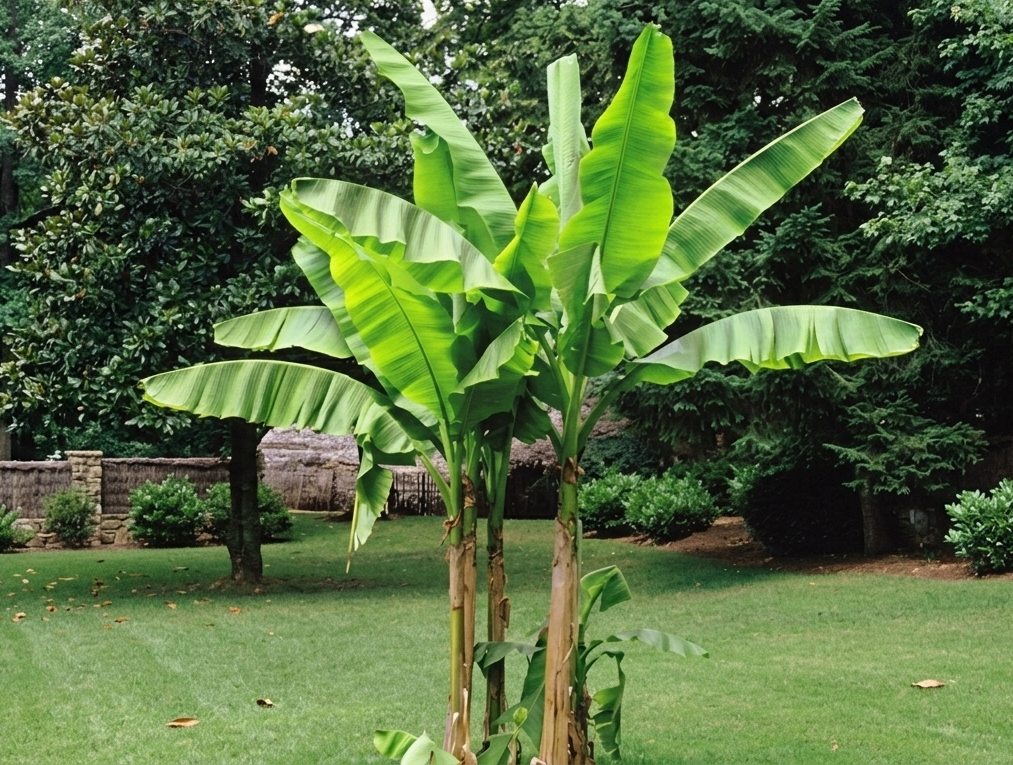
Most banana trees collapse the moment temperatures dip below 28°F. Cold hardy banana trees don’t — and the difference isn’t subtle. I’ve watched a Musa basjoo in zone 6 get hit with a January ice storm, lose every leaf, look completely dead by February, and push up fresh growth in May like nothing happened. These varieties store energy in a dense underground corm that survives freezing winters while everything above ground dies back. Come spring, the plant regrows from that corm, often reaching 6–10 feet within a single season — faster than most perennials you’d ever plant.
If you’re in USDA zones 5 through 10 and want that tropical look without losing the plant every winter, this guide covers the best cold hardy banana tree varieties, how to plant them, care through the growing season, and exactly how to protect them before the first frost.
What Makes a Banana Tree Cold Hardy?
Cold hardiness in banana trees isn’t about the leaves or the trunk — both die at the first hard freeze. It’s about what happens underground. A cold hardy banana tree survives winter through its corm: a dense, starchy root structure sitting 6–12 inches below the soil surface. If you’ve ever dug one up, you know what I mean — it feels almost like a softball made of compressed starch, surprisingly heavy for its size. That stored energy is what fuels spring regrowth.
How Cold Can a Cold Hardy Banana Tree Actually Tolerate?
Soil temperature at corm depth is what determines survival — not air temperature. A night that drops to 5°F with 12 inches of straw mulch over the root zone might keep the corm at 28°F — survivable. The same air temperature with bare soil will kill it.
Musa basjoo, the benchmark variety, has documented corm survival at -10°F under heavy mulch. Most other cold hardy varieties hold between 15–25°F without protection and lower with mulching. Honestly, the mulch matters more than the variety. I’ve lost plants in zone 7b that should have been fine, purely because I skimped on coverage in November.
Do the Roots Survive When the Trunk Dies Back?
In zones 6 and below, expect the pseudostem — the soft, layered “trunk” — to die back to the ground every year. This surprises a lot of first-time growers. The whole thing turns black and mushy after a hard freeze, and it looks like you’ve killed it. You haven’t. The plant re-emerges from the corm each spring and can reach 6–10 feet by fall. In zones 8–10, mild winters often leave the pseudostem intact, which is what allows these plants to eventually flower and produce fruit.
Best Cold Hardy Banana Tree Varieties
Not every banana marketed as “cold hardy” delivers the same performance. I’ve grown three of the five varieties below and tested two others in a friend’s zone 8 garden — here’s what actually happened, not just what the catalog says.
| Variety | Cold Hardiness | USDA Zones | Height | Edible Fruit? | Best For |
|---|---|---|---|---|---|
| Musa basjoo | Down to -10°F (corm, with mulch) | 4–10 | 6–14 ft | No | Foliage, cold zones |
| Blue Java | Down to 20°F with protection | 8–11 | 12–15 ft | Yes — vanilla-custard flavor | Edible fruit, warm climates |
| Dwarf Orinoco | Down to 22°F | 7b–9 | 6–8 ft | Yes — cooking bananas | Southeast US, small yards |
| Red Banana (Musa acuminata) | Down to ~28°F | 8–11 | 8–12 ft | Yes — sweet, creamy | Ornamental, warm zones |
| Raja Puri | Down to ~32°F | 8–10 | 10–12 ft | Yes — fastest to fruit | Fruiting in cool climates |
Musa Basjoo — The Gold Standard, Hardy to Zone 4
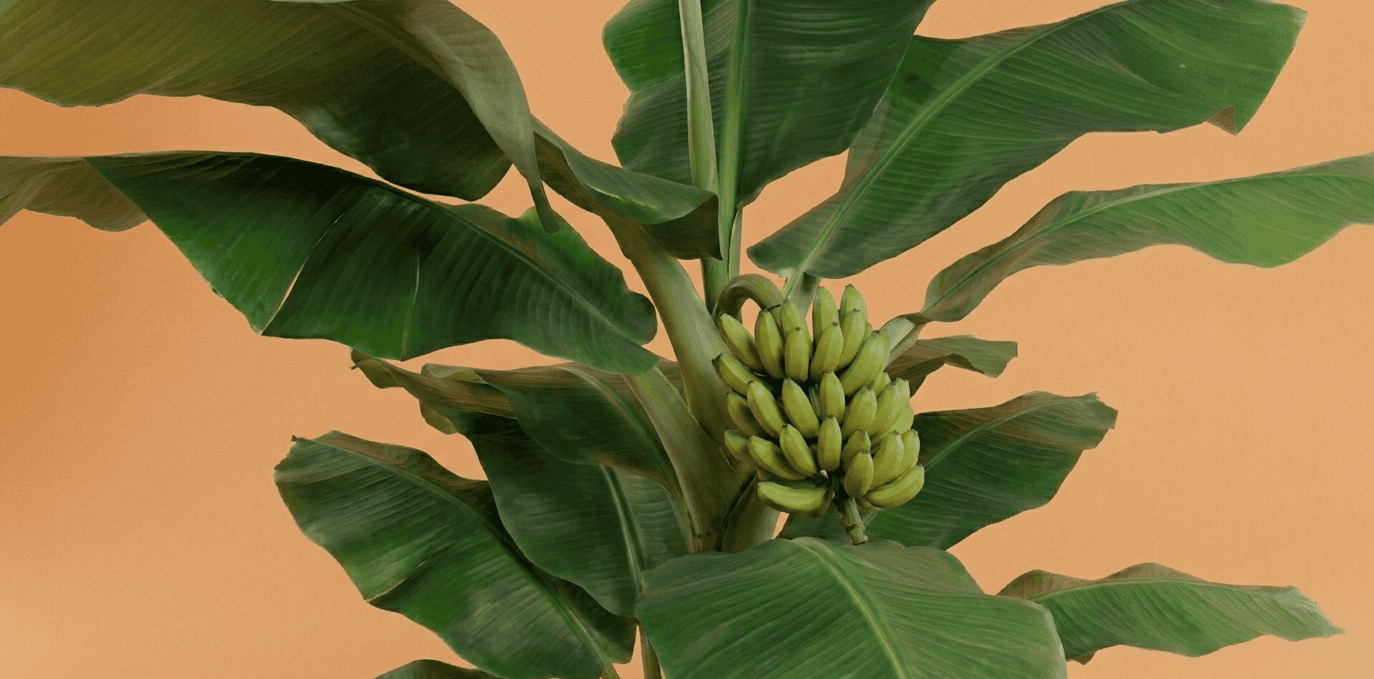
Musa basjoo is the most cold-tolerant banana available to home gardeners. Native to the Ryukyu Islands of Japan, it has been grown in the upper Midwest and northern Europe with corm survival documented at -10°F under mulch. It grows 6–14 feet tall with paddle-shaped leaves up to 6 feet long.
The leaves are impressive — each one unfurls from the center like a scroll over about a week, bright chartreuse when it first emerges and darkening to a deep matte green. The trade-off is fruit: Musa basjoo produces small, seedy, inedible bananas even in warm climates. It’s grown entirely for its dramatic tropical foliage. For most people in zones 5–7, that’s a completely fair deal. You get an 8-foot tropical statement plant that costs nothing to overwinter.
Blue Java Banana — Hardy to Zone 8, Actually Edible
Blue Java (also called Ice Cream Banana) is the right choice when you want both cold tolerance and edible fruit. With frost protection it survives down to 20°F, making it viable in zones 8–11. In the US it typically reaches 12–15 feet.
The fruit flavor is genuinely different from a grocery store banana — closer to vanilla custard than anything you’d call “banana flavored.” My neighbor in zone 9a has been growing it for four years and harvests two to three hands per season. The young fruit has an actual blue-green tint that fades to yellow at ripeness, which is unusual enough to stop people in their tracks.
Dwarf Orinoco — Best for the Southeast US
If you’re in zones 7b–9, Dwarf Orinoco is worth prioritizing over fancier varieties. It tops out at 6–8 feet, handles brief dips to around 22°F, and produces thick-skinned cooking bananas. What I like about it: it bounces back faster after frost damage than any other variety I’ve grown. You can have a hard freeze in late March, come back two weeks later, and it’s already pushing new growth from the base.
Red Banana Tree (Musa acuminata) — Zones 8–11
The red banana tree is the most visually striking option: deep maroon-red pseudostem and leaves, with fruit that ripens to a reddish-orange. It’s less cold-tolerant than Musa basjoo, suited to zones 8–11. The color is the real draw — in late summer, when the pseudostem has fully colored up, it reads almost burgundy from a distance. Nothing else in a garden looks like it.
Red banana fruit is edible — sweeter and creamier than Cavendish, with a soft texture. In zone 8, expect dieback in hard winters. In zones 9–11, the pseudostem often survives year-round.
Raja Puri — Fastest to Fruit in Cool Climates
Raja Puri is a compact variety (10–12 feet) from India, suited to zones 8–10. It’s not frost-tolerant — protect it when temperatures approach freezing. What sets it apart is speed: it flowers in as little as 9 months, with fruit ready to harvest 3–4 months after that. Most banana varieties take 18–24 months from planting to first fruit. Raja Puri cuts that almost in half, which makes a real difference if you’re in zone 8 and working with short windows of pseudostem survival.
Which USDA Zones Can Grow Cold Hardy Banana Plants?
Zones 5 through 10 — but the effort required scales up fast as you move north.
Zones 5–7: It’s Possible, But Takes Real Work
In these zones, cold hardy banana plants die back to the ground every winter without exception. Your entire job from October through April is protecting the corm: 12–18 inches of straw or wood chips over the root zone after the first killing frost. I use cheap straw bales from a local farm supply store — one bale covers a mature Musa basjoo with some left over. I pile it on in early November and pull it back gradually starting in mid-April, not all at once.
Musa basjoo is the only variety reliably suitable here. The plant re-grows from scratch every spring and can reach 6–10 feet by fall. One thing nobody tells you: in zone 6, it rarely if ever flowers. You’re growing it purely as a foliage plant that happens to come back every year. If fruiting is your goal, zone 6 isn’t the right climate without a container setup.
Zones 8–10: The Sweet Spot
This is where cold hardy banana trees perform best. Mild winters often leave the pseudostem intact, which means the plant can build toward flowering year over year. Most varieties produce fruit within 2–3 years from planting. Contrarian take: in zones 9–10, these plants actually do better with some afternoon shade during peak summer. Full sun all day in a Georgia August can stress the leaves — they’ll brown at the edges and slow down. Four to five hours of direct morning sun plus filtered afternoon light produces cleaner foliage.
Growing in Containers — The Practical Solution for Zones 4–6
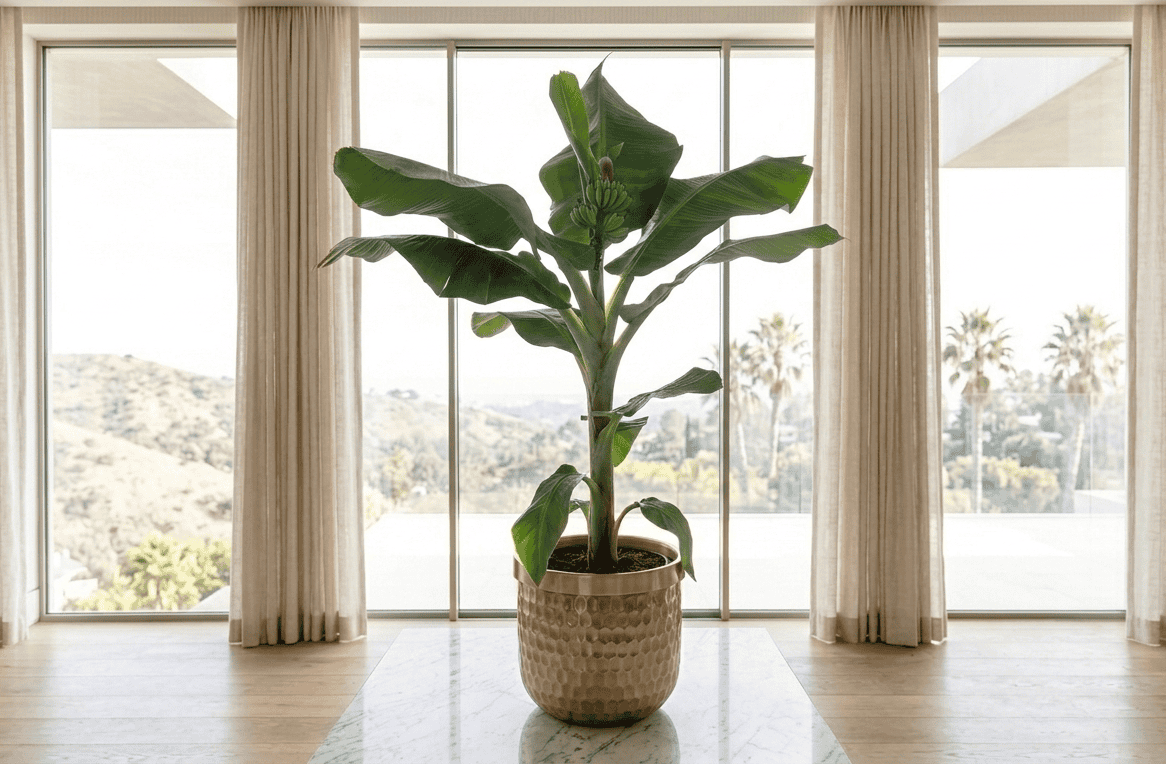
Container growing sidesteps the zone problem entirely. Use a pot at least 24 inches wide with drainage holes — I’ve had good luck with the fabric grow bags, the 25-gallon size. They’re cheaper than ceramic, weigh almost nothing when empty, and the breathable sides prevent the root rot that kills containerized bananas in cold wet winters. Fill with a well-draining mix (equal parts potting soil, perlite, and compost) and move the container to an unheated garage or basement before temperatures drop below 30°F. The plant goes dormant, needs almost no water, and re-emerges in spring.
How to Plant a Cold Hardy Banana Tree
When Should You Plant a Cold Hardy Banana Tree?
Plant after your last frost date — typically late April through May across most of the US. Cold hardy banana trees need a full growing season to build corm energy reserves for winter. I made the mistake of planting a Musa basjoo in early August one year — it looked fine going into October, didn’t come back in spring. The corm simply hadn’t stored enough energy to survive. May or early June gives the plant 5–6 months to establish, which is what you need.
What Soil and Sun Do Cold Hardy Banana Trees Need?
Organically rich, well-draining soil in full sun — at least 6 hours of direct light daily. Banana trees are not drought-tolerant, but waterlogged roots are a faster way to kill them than any freeze. Amend heavy clay soils with compost and coarse sand before planting. Avoid low spots where water pools after rain — this kills more container-moved bananas than anything else when they go back outside in spring.
Wind matters more than most people account for. The leaves on these plants can span 4–6 feet, and they shred in persistent wind. Shredded leaves aren’t just cosmetically bad — they reduce the plant’s ability to photosynthesize and slow the energy storage you need for winter survival. A fence line, wall, or established shrubs on the windward side makes a real difference.
How Deep Should You Plant a Cold Hardy Banana Tree?
Set the corm so its base sits 2–4 inches below soil level. Deeper isn’t better — it slows establishment and increases rot risk. After planting, water deeply and apply 3–4 inches of mulch around the base, keeping it a few inches away from the pseudostem itself.
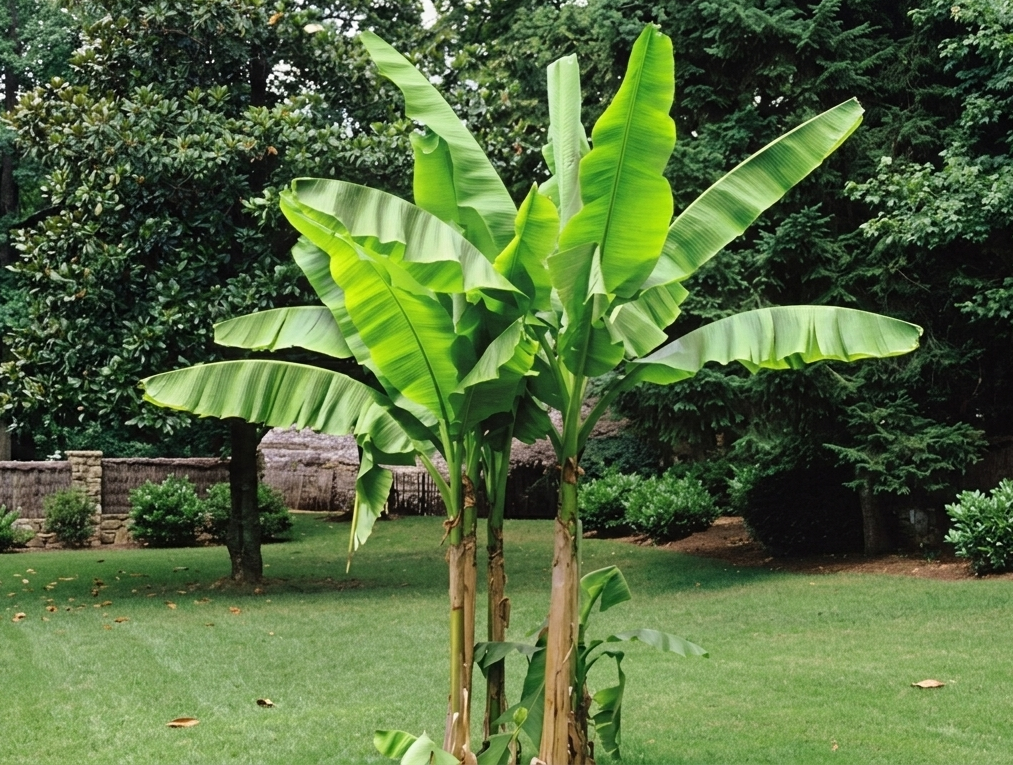
Cold Hardy Banana Tree Care
How Often Should You Water a Cold Hardy Banana Tree?
During active growth, I water deeply every 2–3 days in hot weather — banana trees are thirsty in a way most garden plants aren’t. The soil should stay consistently moist but never waterlogged. In fall, taper off as temperatures drop. Container plants brought indoors need water only once every 3–4 weeks through winter — this is where most people overwater and rot the corm.
A simple moisture meter takes the guesswork out of it. The cheap $8 ones from any garden center work fine. For dormant container plants, I don’t water until the meter reads bone dry, then I give it a small amount — maybe a quart for a 25-gallon pot — and leave it alone for another month.
How to Fertilize a Cold Hardy Banana Tree
Banana trees are heavy feeders during the growing season. A balanced fertilizer high in nitrogen — 10-10-10 applied every 4–6 weeks from May through August — drives the fast growth these plants are capable of. Stop fertilizing by mid-August, not “6–8 weeks before first frost” as most guides say — mid-August is the practical cutoff for most of the US, and it’s easier to remember. Late-season fertilizing pushes soft new growth that gets hammered by the first cold snap.
For fruiting varieties: once the plant begins to flower, switch to a fertilizer higher in potassium (the third number on the bag — something like 4-6-12). Potassium drives fruit development.
Does Compost Help Cold Hardy Banana Trees?
Compost worked into the planting hole and applied as a 2-inch top dressing each spring improves soil structure and feeds slowly through the season. I combine both: compost at planting, then Jobe’s Organics granular fertilizer monthly through summer. Either alone produces decent results; both together is noticeably better — you can see it in the leaf size by midsummer. For a full breakdown of which compost types work best and how much to apply, see my guide on compost for banana trees.
What to Do With Banana Pups (Offshoots)
Established banana plants produce offshoots — called pups — from the base of the corm. This is actually how most gardeners expand their collection without spending money. A single Musa basjoo can throw 3–5 pups in a season once it’s a few years old.
Wait until a pup is at least 12–18 inches tall before separating it — smaller pups don’t have enough root mass to survive on their own. Use a sharp spade to cut it away from the mother plant, keeping as much root as possible. Replant immediately at the same depth, water well, and expect some wilting for the first week while it re-establishes. I’ve had better luck separating pups in late spring when soil temps are already warm — they bounce back faster than pups divided in cool weather.
4 Mistakes That Kill Cold Hardy Banana Trees
Planting Too Late
A banana planted in August in zone 6 has 6–8 weeks to establish before frost. Not enough. The plant looks fine going into fall, then doesn’t come back in spring. Plant in May or early June.
Skipping Mulch in Zones 6–7
The most common reason cold hardy banana trees don’t return after winter in zones 6–7 isn’t the cold — it’s an unprotected corm. Twelve inches of straw, shredded leaves, or wood chips over the root zone is non-negotiable. Apply after the first hard frost kills the foliage. Remove it gradually in spring — pulling it all at once in April exposes the corm to late freezes that a few more weeks of mulch would have blocked.
Cutting the Pseudostem Down Too Early
The pseudostem keeps transferring energy to the corm until frost kills it. I see this mistake every fall — someone cuts it back in September because the leaves look ragged. Ragged leaves are still photosynthesizing. Let frost do the cutting. Then trim the dead material to 6–12 inches above ground before mulching.
Overwatering the Dormant Corm
A dormant corm sitting in wet soil through a cold winter rots. Reduce watering significantly in October. For container plants brought indoors: once every 3–4 weeks at most, and only if the soil is completely dry. When in doubt, don’t water. A slightly dry corm survives dormancy. A wet one doesn’t.
How to Winterize a Cold Hardy Banana Tree — By Zone
Zones 8–10
Most winters need little intervention. If a hard freeze below 28°F is forecast, wrap the pseudostem loosely in burlap and apply 4–6 inches of mulch around the base. Remove the wrap once temperatures recover. I keep a roll of burlap in the garage specifically for this — a 10-foot section handles most plants, and it takes about 15 minutes to wrap and secure with twine.
Zones 6–7
After the first killing frost: cut the dead pseudostem to 6–12 inches above ground. Cover the entire root zone with 12–18 inches of straw, shredded leaves, or wood chips, extending 2–3 feet out from the base. In zone 6, I also wrap the remaining stub in burlap and surround it with a wire mesh cylinder packed with dry leaves — think of it as a insulating jacket for the part of the plant closest to the soil surface. Remove mulch gradually in late March or April, not all at once.
Zone 5 and Below
Even Musa basjoo needs serious help here. Three options:
- Leave in ground with 18+ inches of mulch — works in mild winters, risky in bad ones
- Dig the corm after frost, let it dry for a few days, wrap in barely damp peat moss, and store at 40–50°F in a cool dark spot until spring
- Grow in containers and move to an unheated garage for dormancy
Of these, the container method is the most reliable. Digging and storing corms works, but you lose some plants every year to storage rot. A garage-dormant container plant, watered once a month, almost always comes back.
Do Cold Hardy Banana Trees Actually Produce Fruit?
Musa basjoo: no, not practically. Small, seedy, inedible — grown for foliage only. Edible varieties like Blue Java, Raja Puri, Dwarf Orinoco, and the red banana need the pseudostem to survive intact through winter to flower and fruit the following season. In zones 8–10, this happens regularly. In zones 6–7, the pseudostem dies back every year, so fruiting is rare without container growing.
Container growers have a real advantage here. I know someone in zone 6b who’s had fruiting Blue Java for two years running by keeping the pseudostem intact through garage dormancy. It takes patience — usually 3–4 seasons before the plant is large enough to flower — but it works.
FAQ
Where can I buy a cold hardy banana tree for sale near me?
Large garden centers stock Musa basjoo in spring — it’s the most widely available variety. For Blue Java, Raja Puri, or Dwarf Orinoco, online nurseries specializing in tropical plants are more reliable than local stores. I’ve had good results ordering bare-root corms in late March for May planting — they ship well and establish faster than you’d expect.
How fast does a cold hardy banana tree grow?
Fast — genuinely fast. In zones 7–9 during a warm summer, Musa basjoo can reach 8–10 feet in a single season. The first few weeks after planting are slow while the root system establishes, then it takes off. During the hottest stretch of July and August, you can see up to a foot of new growth per week — by week 6 in warm weather, you’ll have a plant that’s visibly taller than it was the week before.
Is Musa basjoo the same as a Japanese banana tree?
Yes — Musa basjoo, Japanese banana, and Japanese fiber banana all refer to the same plant. The “fiber” name comes from traditional uses of its leaf fibers in Japanese textiles.
Can cold hardy banana plants grow in pots indoors?
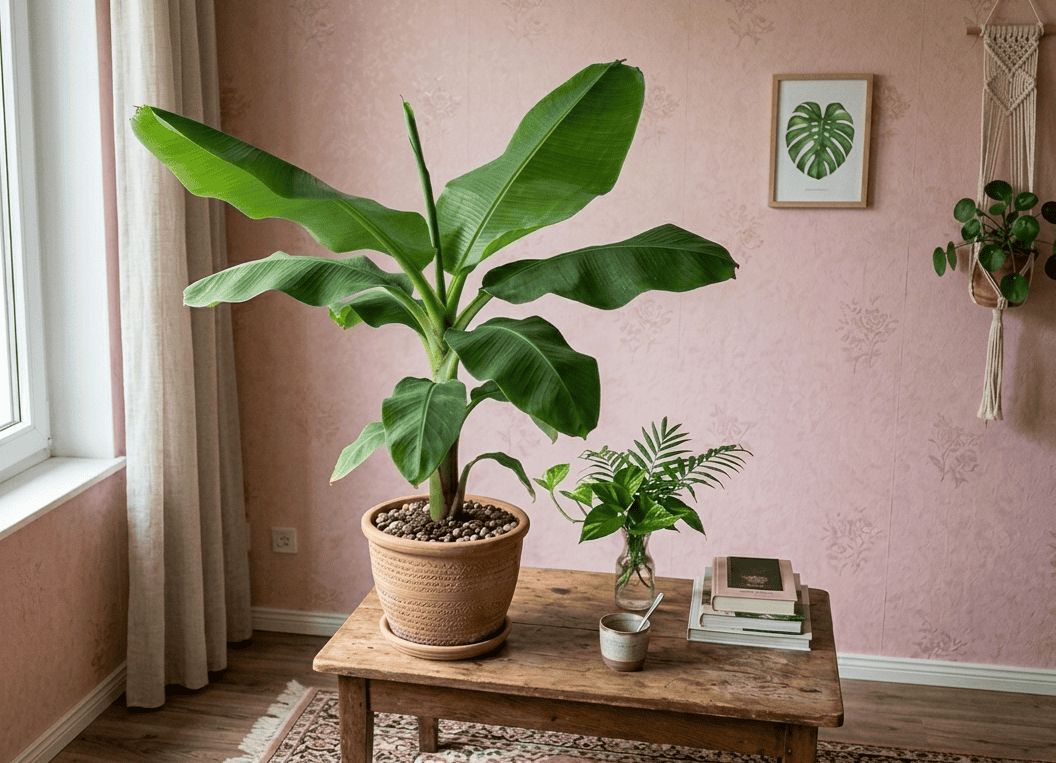
They can be overwintered indoors in pots, but they don’t thrive as permanent houseplants — they need more light than most homes provide during active growth. I tried keeping one as a full-time houseplant for one winter and it survived but looked miserable by March — pale, leggy, and sad. The practical setup: outdoors in a large container from spring through fall, then moved to a cool dark spot indoors for winter dormancy. It’s not a houseplant. It’s a garden plant that tolerates a winter nap indoors.