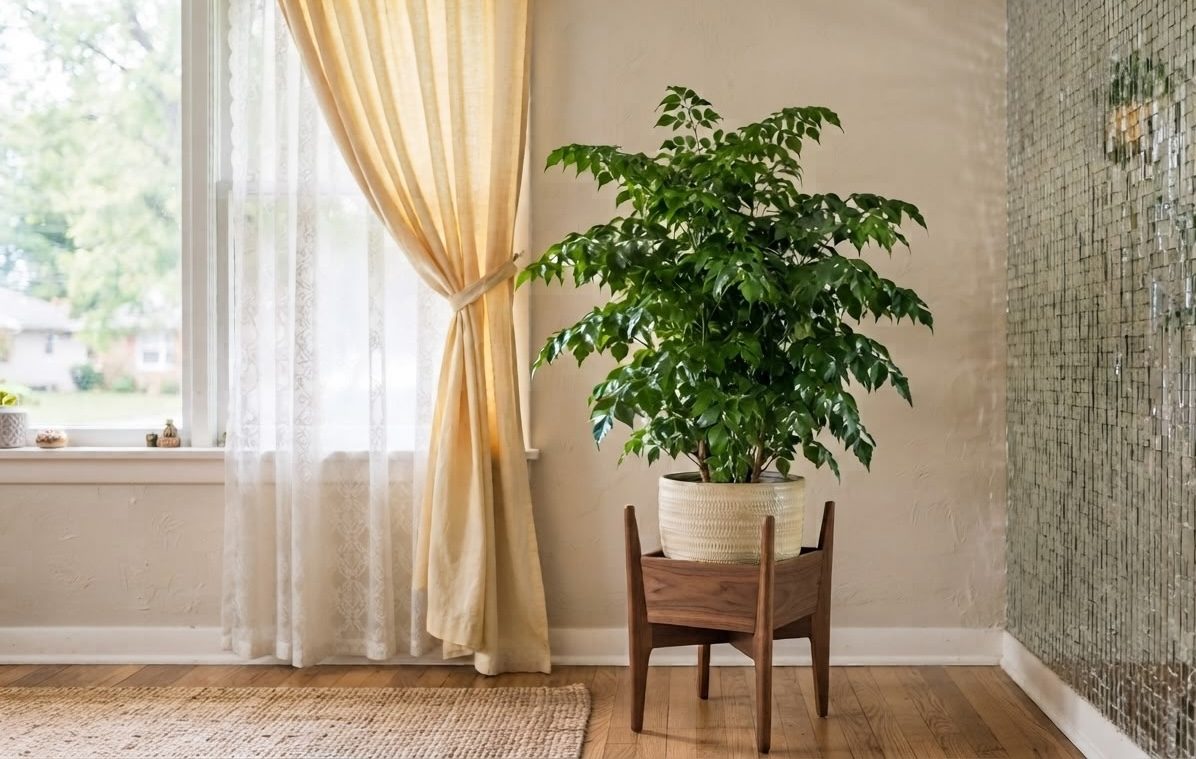
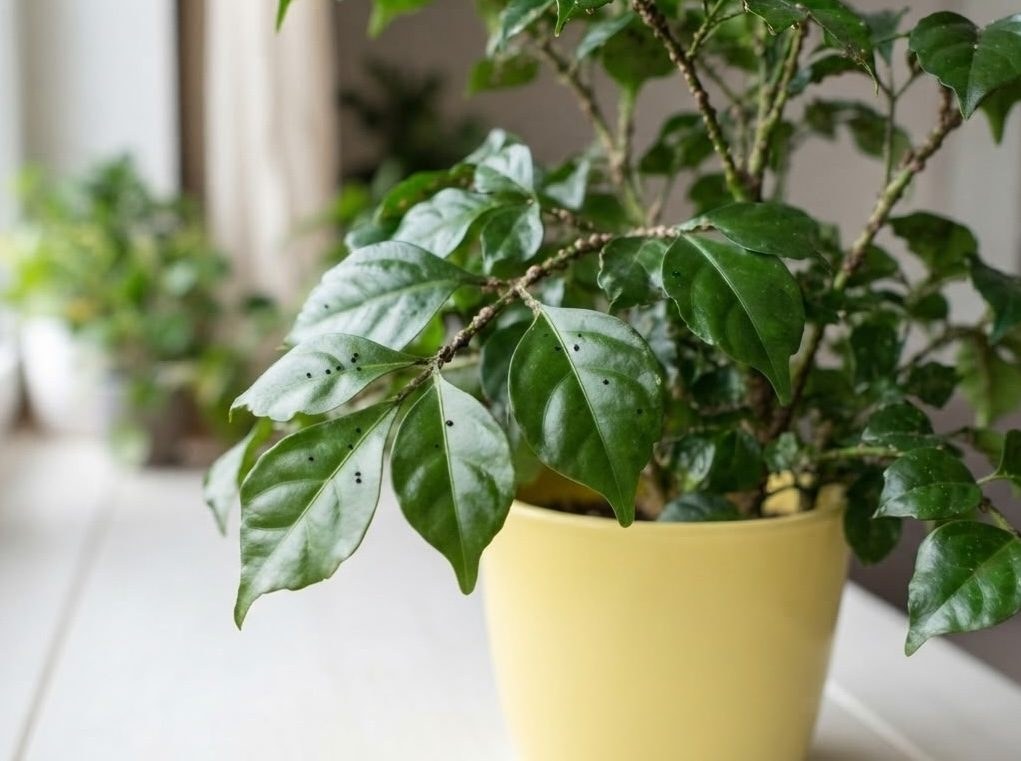
China doll plant (Radermachera sinica) is sold as an attractive, compact indoor tree with delicate, glossy compound leaves. Its reputation is mixed: some owners have kept it healthy for years; many others have watched it drop all its leaves within weeks of purchase and never recover. The difference almost always comes down to three specific triggers that most care guides either get wrong or don’t mention. This article also addresses the pet toxicity question — which has conflicting answers across the internet — with what is and is not actually established.
| Radermachera sinica Quick Care Summary | |
|---|---|
| Light | Bright indirect light consistently; within 2–4 feet of a bright window |
| Water | Every 5–7 days; keep top inch barely dry |
| Humidity | 50–60% |
| Temperature | 60–85°F (15–29°C); away from cold drafts |
| Fertilizer | Monthly spring–early autumn, half-strength balanced |
Why Does China Doll Plant Drop Its Leaves?
Leaf drop is the defining challenge of Radermachera sinica. The plant drops leaves in response to: (For a similar leaf-drop diagnostic on another sensitive houseplant, see our schefflera arboricola guide.)
Any Change in Environment

Moving the plant — even from one well-lit spot to another — triggers leaf drop. China doll is acutely sensitive to changes in light level, temperature, humidity, and air movement. When brought home from a greenhouse or store, the shift in conditions almost always triggers a drop. This is not a sign that care is wrong; it is a predictable stress response. Allow 4-6 weeks for stabilization and do not change the plant’s position again during this period.
Insufficient Light
China doll needs bright indirect light — more than most guides suggest. It is native to the subtropical forests of China and Taiwan, where it grows in bright, open conditions. In dim indoor conditions, it drops leaves progressively as it cannot photosynthesize adequately. A spot within 3-4 feet of a bright south or east window is the target range. If natural light is limited, a grow light on a 12-14 hour daily timer helps significantly.
Inconsistent Watering
Both underwatering (dry soil for multiple days) and overwatering (consistently wet roots) cause leaf drop. The difference: underwatering drops leaves that are still green; overwatering drops yellow leaves and may involve root rot. China doll needs the soil to stay evenly moist — not soaked, not dry. Check soil every 3-4 days. In good light, this typically means watering every 5-7 days. In low light, the soil stays wet much longer and watering frequency should be reduced accordingly.
Is China Doll Plant Toxic to Cats and Dogs?
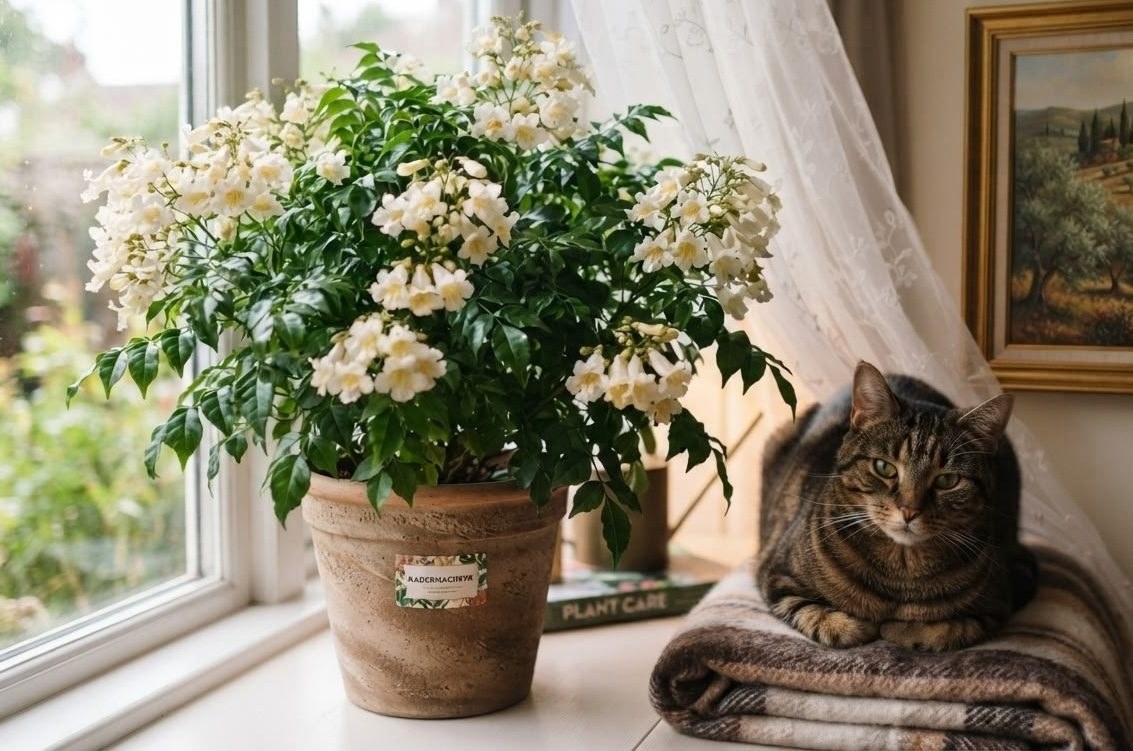
The honest answer is that this is genuinely unclear, and the conflicting information online reflects that uncertainty.
Radermachera sinica is not listed anywhere in the ASPCA toxic or non-toxic plants database. It is absent from the database entirely.

Some websites claim it is “non-toxic” or “ASPCA-certified safe” — but these claims cannot be traced to an actual ASPCA page, because no such listing exists. Other websites claim it is toxic and should be kept away from pets — without citing a specific source or toxicological study.
What is established: Radermachera is in the family Bignoniaceae, which includes plants with a range of phytochemical profiles. Some members of the family contain iridoid glycosides and other compounds. However, no published toxicology study specifically addressing Radermachera sinica and domestic animal toxicity has been identified in the veterinary literature.
Practical recommendation: Treat it as you would any plant of unknown toxicity — keep it out of reach of pets, especially cats prone to chewing plants. Without a definitive ASPCA listing in either direction, caution is warranted.
How to Care for China Doll Plant
What Light Does China Doll Plant Need?
Bright indirect light — consistently. This is a plant that does not adapt well to mediocre light conditions; it needs genuine brightness to stay healthy rather than just surviving. A spot 2-4 feet from a south or east-facing window provides the right balance of brightness without direct afternoon sun. North and west windows generally provide too little light for long-term health. If the plant is dropping leaves progressively in a given location despite correct watering, insufficient light is the most likely cause.
How Often Should You Water China Doll Plant?
Water when the top inch of soil feels barely dry — the goal is to keep the root zone consistently moist without waterlogging. In bright conditions this typically means watering every 5-7 days. Always water thoroughly, allowing excess to drain from the pot. Do not allow the pot to sit in standing water. Check soil moisture directly with your finger rather than watering on a schedule — in variable indoor conditions, the right frequency changes significantly between summer and winter.
What Temperature Does China Doll Plant Need?
60-85°F (15-29°C). China doll is sensitive to cold drafts — a common issue near windows in winter. Keep the plant away from exterior doors and cold glass. Temperature fluctuations are a reliable trigger for leaf drop. If the plant is near a window that gets very cold at night, move it slightly away from the glass or add window insulation.
What Humidity Does China Doll Plant Need?
Moderate humidity — 50-60%. It tolerates standard household air (40-50%) reasonably well, but dry air (below 35%) causes brown leaf tip browning. The plant does not need the high humidity requirements of calathea or alocasia. A pebble tray helps in very dry, heated rooms.
How Often Should You Fertilize China Doll Plant?
Monthly from spring through early autumn with a balanced liquid fertilizer at half strength. Do not fertilize in winter. China doll is a moderate feeder; over-fertilizing produces excessive soft growth that is prone to wilting and pest attack.
Can China Doll Plant Be Pruned?
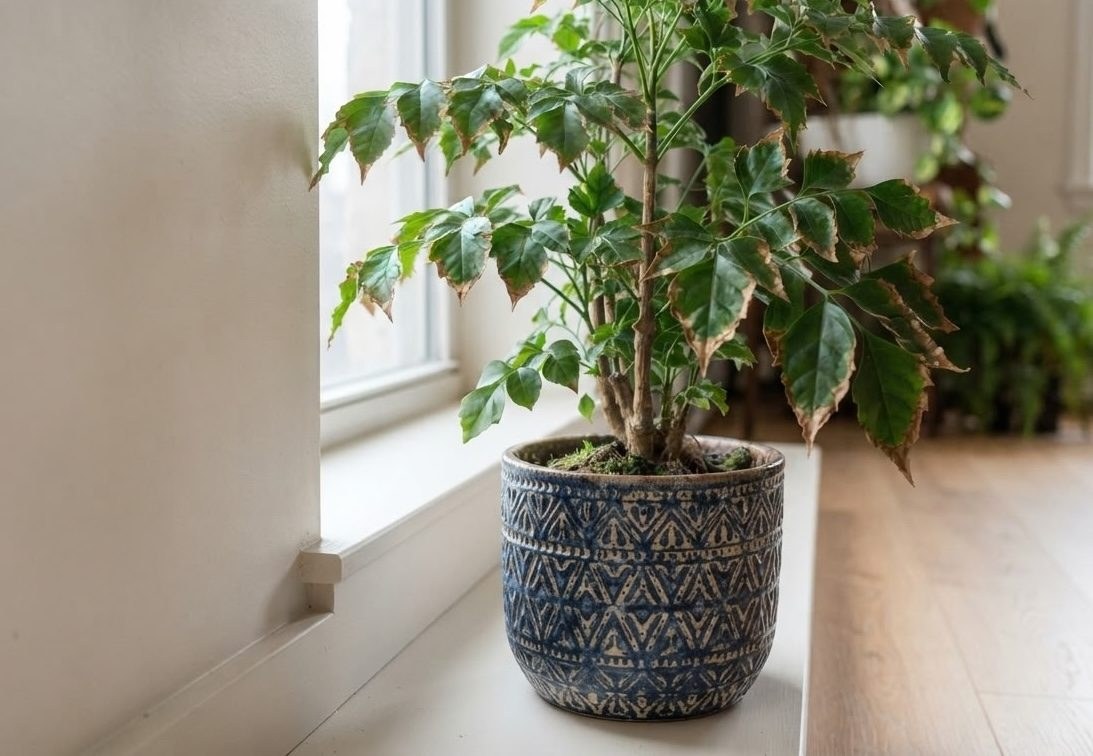
Yes — and pruning is beneficial. China doll tends toward a single-stemmed, top-heavy growth pattern. Pruning back the main stem encourages lateral branching and a bushier shape. Prune in spring before new growth begins. Cut back by up to one-third; new growth emerges from below the cut. Regular light pruning during the growing season keeps the plant compact.
Do not prune in response to leaf drop — this often causes additional drop. Wait until the plant has stabilized in its location before making structural cuts.
How to Propagate China Doll Plant
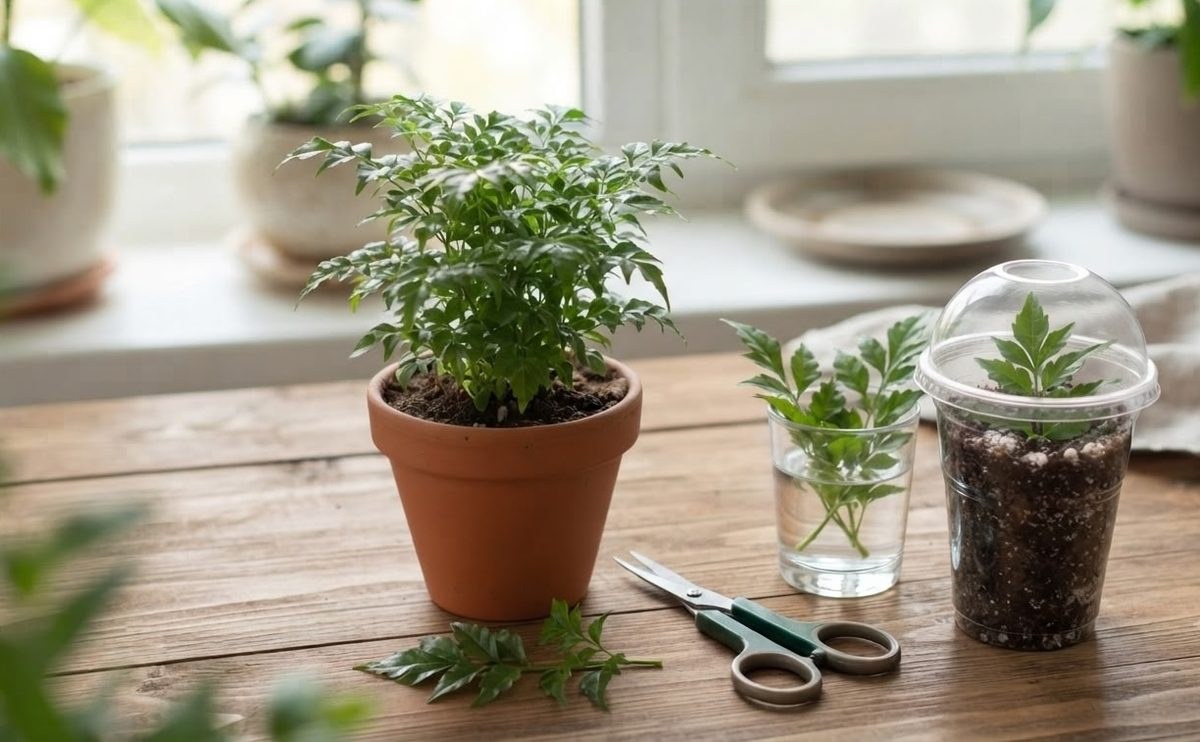
China doll has a reputation among growers as genuinely difficult to propagate from stem cuttings — it’s often described as a race to get roots forming before the cut end rots. If you try cuttings, use green, semi-hardwood stem tips (not older woody stems, which root poorly), 3-6 inches long, taken in spring or early summer during active growth. Dip the cut end in rooting hormone, plant in damp, well-draining potting mix, and cover with a clear bag or propagator lid — humidity is critical. Expect roots in 3-4 weeks under bright, indirect light, with gentle tug resistance as the sign it has taken.
Air layering is generally considered the more reliable method for this species, since the stem stays attached to and fed by the parent plant while it roots — removing the rot-before-rooting risk of cuttings. Girdle about an inch of bark on a healthy stem, wrap the wound in moist sphagnum moss, and seal with plastic wrap to hold humidity. Roots typically develop at the wound site in 4-6 weeks, though new top growth on the separated section can take up to 12 weeks to appear — check for roots by peeling back the plastic before cutting the new plant free.
What Pests Attack China Doll Plant?
Spider Mites
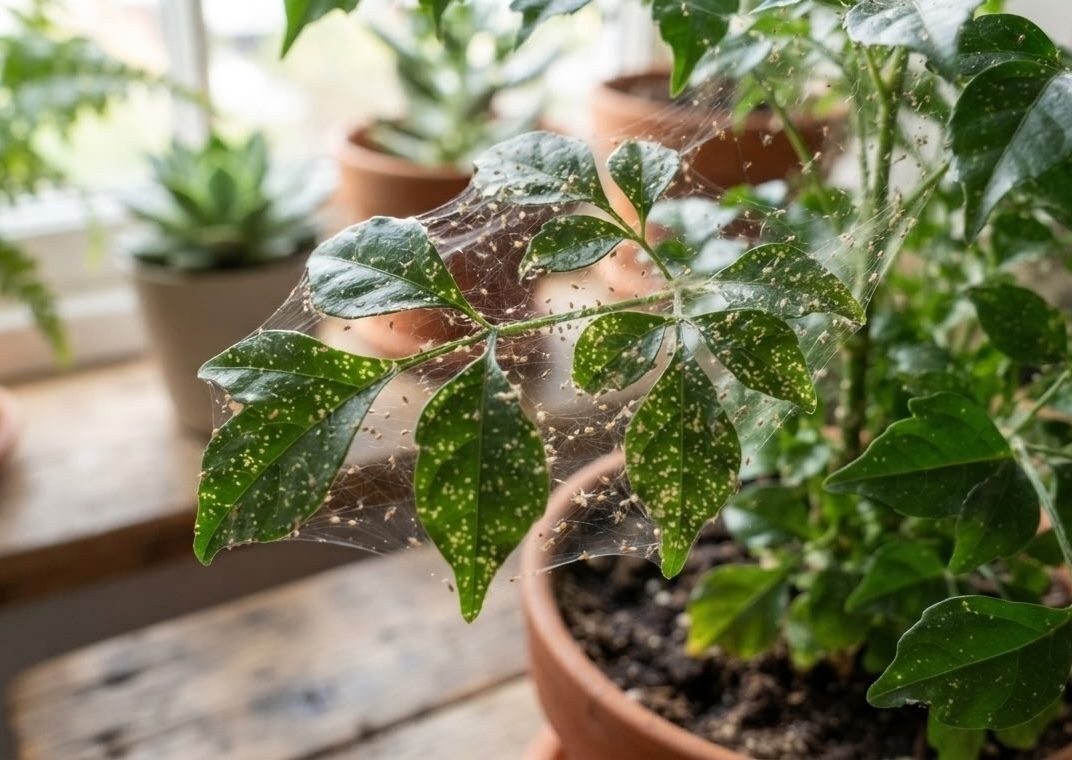
By far the most common pest. The delicate, compound leaves are a prime target. Fine stippling on leaf surfaces, sometimes with webbing on the undersides. Spider mites thrive in warm, dry conditions — raise humidity, rinse the plant, and treat with insecticidal soap or neem oil weekly for 3-4 rounds. Check the undersides of leaves regularly.
Mealybugs
White cottony masses at stem joints and where leaflets attach to stems. Treat with rubbing alcohol on a cotton swab. The compound leaves create many hiding spots — be thorough.
Aphids
Cluster on new growth tips. Dislodge with water, then treat with insecticidal soap. New growth tips are particularly vulnerable on recently pruned plants.
Common Mistakes With China Doll Plant
Moving it frequently after it drops leaves. When the plant drops leaves in a new location, the instinct is to move it somewhere better. This triggers another round of environmental stress and another leaf drop. Choose the best available spot, place it there, and do not move it for 4-6 weeks regardless of what happens.
Overwatering in response to leaf drop. Leaf drop causes concern; concern causes extra watering; extra watering causes root rot; root rot causes more leaf drop. Check the soil before adding water. If it’s moist, the issue is not drought.
Treating it like a low-light plant. China doll’s compact, attractive appearance suggests a shade-tolerant plant. It is not. It needs genuine bright indirect light to maintain its foliage and will decline progressively in dim conditions.
Frequently Asked Questions
Can China doll plant recover after losing all its leaves?
Sometimes — if the stem is still green and firm and the roots have not rotted. Move to a bright location, reduce watering, and wait. New leaf buds may emerge from the main stem within 4-6 weeks. If the stem is wrinkled, soft, or dark, the plant is unlikely to recover.
How fast does China doll plant grow?
Moderate to fast in good conditions (bright light, consistent moisture, monthly fertilizing). In a well-lit spot it can grow several inches per month during the growing season and quickly become top-heavy without pruning.
Is China doll plant the same as China doll tree?
Yes — same plant, different common names. It is also sometimes called Asian bell, Emerald tree, or serpent tree. The Radermachera genus has several species, but sinica is the one sold as a houseplant.
Why is my China doll plant getting leggy?
Leggy growth (long internodes, widely spaced leaves) indicates insufficient light. Move to a brighter spot and prune back the leggy stems to encourage compact branching. The plant grows toward available light sources — rotating it weekly helps prevent one-sided growth.
Recommended Products
As an Amazon Associate, Two Leaf Garden earns from qualifying purchases.