Ficus Audrey has become one of the most recommended large-leaf houseplants for people who love the look of a fiddle leaf fig but are tired of hearing about how difficult it is. That reputation is mostly deserved — Ficus Audrey (Ficus benghalensis) is genuinely more forgiving, drops leaves less dramatically when stressed, and tolerates the kind of imperfect conditions that most homes actually have.
That doesn’t mean it’s low-maintenance. It has preferences, and ignoring them shows up in the leaves. This guide covers everything that actually matters for keeping one healthy.
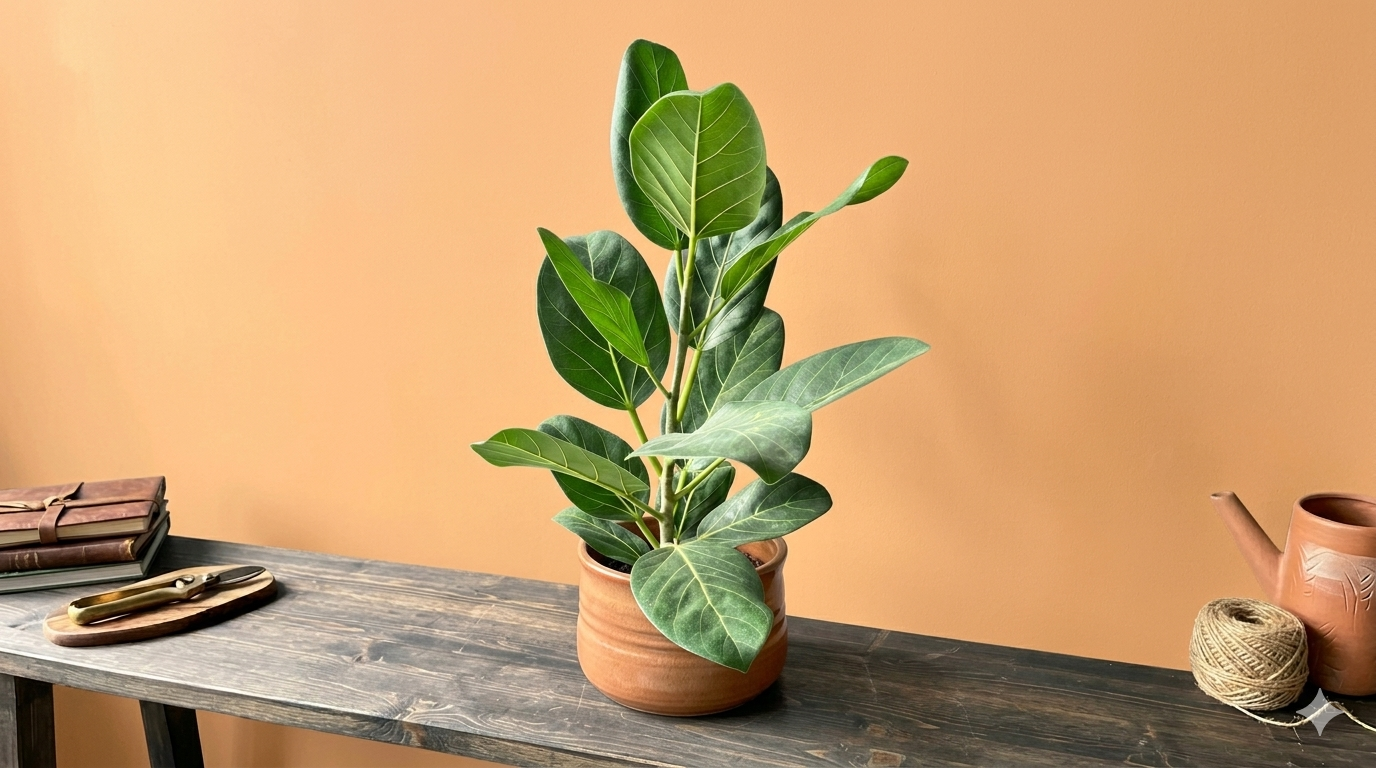
Ficus Audrey Quick Reference
| Care Factor | What You Need |
|---|---|
| Botanical name | Ficus benghalensis |
| Common names | Ficus Audrey, Bengal Fig, Indian Banyan, Banyan tree |
| Light | Bright indirect light; some direct morning sun is fine |
| Watering | When top 1–2 inches of soil are dry |
| Soil | Well-draining potting mix; add perlite |
| Temperature | 60–85°F; protect from drafts and temps below 55°F |
| Humidity | 40–60% is ideal; avoid extremes in either direction |
| Fertilizer | Monthly during spring and summer |
| Mature size (indoors) | 6–10 feet tall |
| Toxicity | Toxic to cats, dogs, and humans |
Ficus Audrey vs. Fiddle Leaf Fig: What’s the Difference?
They look similar from across the room — both have large, dramatic leaves and can grow into statement trees — but they’re different species with genuinely different temperaments.
Fiddle Leaf Fig (Ficus lyrata) is notorious for dropping leaves in response to any change: moved it across the room, dropped leaves. Watered it wrong once, dropped leaves. Looked at it sideways on a cloudy day, dropped leaves. Ficus Audrey doesn’t behave like this. It acclimatizes more gradually, holds its leaves better under stress, and recovers from mistakes without the drama.
The leaves are also different up close. Fiddle leaf fig leaves are wavy-edged, stiff, and deeply veined with a glossy finish. Ficus Audrey leaves are smoother in outline, more oval, and have a distinctive velvety matte texture with prominent pale veins running against the deep green. Once you know what you’re looking at, they’re easy to tell apart.
How Much Light Does Ficus Audrey Need?
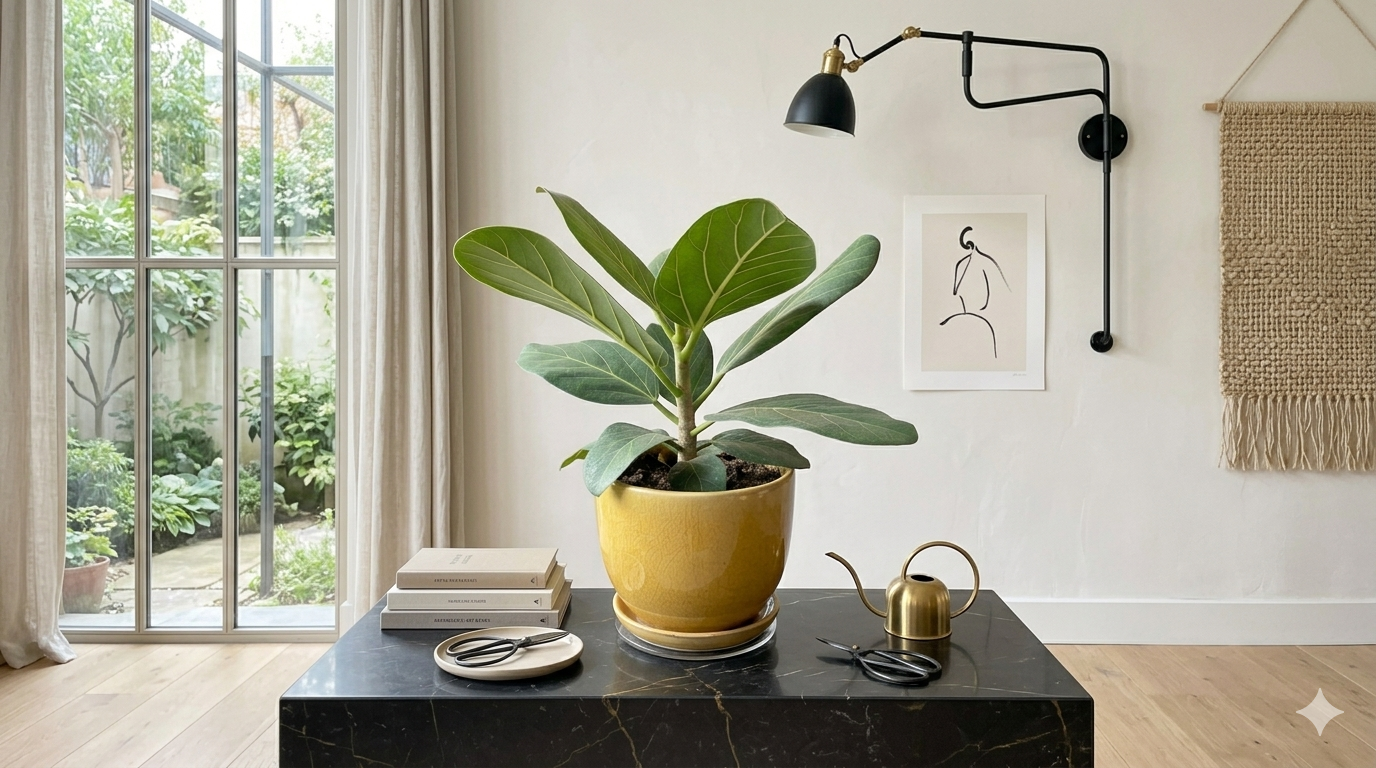
Ficus Audrey wants bright light. It will survive in medium indirect light, but “survive” is the right word — growth slows significantly, leaves may lose some of their deep green color, and the plant becomes more vulnerable to overwatering because it’s not actively using water.
The ideal spot is close to a south- or east-facing window where it gets several hours of bright indirect light and possibly some gentle direct morning sun. It handles a few hours of direct sun better than most ficus species, as long as you’re not putting it in a south-facing window at peak summer intensity where the leaves can scorch.
When you move a Ficus Audrey to a new location — especially from a nursery to your home — expect some leaf drop in the first few weeks. This is normal acclimatization, not failure. Give it 4–6 weeks in a stable spot before concluding something is wrong.
Watering a Ficus Audrey
Check the soil before every watering rather than following a fixed schedule. Stick your finger about 2 inches into the soil — if it’s dry at that depth, water thoroughly until it drains from the bottom. If it’s still moist, wait a few more days.
In summer with good light, that typically means watering every 7–10 days. In winter, every 2–3 weeks. The exact interval doesn’t matter as much as responding to what the soil is actually doing.
Signs of Overwatering vs. Underwatering
| Symptom | Overwatered | Underwatered |
|---|---|---|
| Leaves | Yellow, soft, falling off | Dry, curling, drooping |
| Soil | Stays wet for more than a week | Bone dry, pulling from pot edges |
| Stems | Soft at base | Firm but brittle |
Overwatering is the more common problem. Ficus Audrey tolerates drying out better than it tolerates sitting in wet soil — if you’re not sure whether to water, wait another day or two.
Soil and Repotting
Use a well-draining potting mix. Standard indoor potting soil works, but adding 20–30% perlite improves drainage significantly and reduces the risk of root rot. Ficus Audrey roots need oxygen — compacted, waterlogged soil cuts off that supply before you see any visible symptoms.
Repot every 2–3 years, or when roots start circling the bottom of the pot or pushing through drainage holes. Go up one pot size at a time — oversized pots hold excess moisture around roots that aren’t ready to use it. Spring is the best time; avoid repotting in winter or when the plant is already stressed.
Humidity: What Ficus Audrey Actually Needs
Ficus Audrey prefers 40–60% relative humidity — more than the 30–40% that most heated or air-conditioned homes run in winter. The plant doesn’t immediately show stress from dry air, but over time it shows up as brown, crispy leaf edges and increased susceptibility to spider mites (which thrive in dry conditions).
The most effective ways to raise humidity for a Ficus Audrey:
- Humidifier — the most reliable method. A cool-mist humidifier placed nearby maintains consistent levels without waterlogging the soil or wetting the leaves.
- Grouping plants — keeping multiple plants together raises the local humidity through transpiration. This works better in smaller rooms.
- Pebble tray — a tray of pebbles with water underneath the pot raises local humidity slightly as the water evaporates. Less effective than a humidifier but better than nothing.
Avoid misting the leaves directly — it can promote fungal spots on the leaf surface without providing meaningful humidity benefits. And don’t try to push humidity above 70%; at that level you’re creating conditions for root rot and fungal disease rather than helping the plant.
Fertilizing a Ficus Audrey
Once a month during spring and summer with a balanced liquid fertilizer at half strength is enough. Ficus Audrey isn’t a heavy feeder — consistent moderate feeding through the growing season is better than sporadic heavy applications. Stop fertilizing in fall and winter when growth slows.
Signs of over-fertilizing: brown leaf tips, white salt crust on the soil surface. If this happens, flush the pot thoroughly with water and skip a month or two of fertilizing.
How Big Does Ficus Audrey Get Indoors?
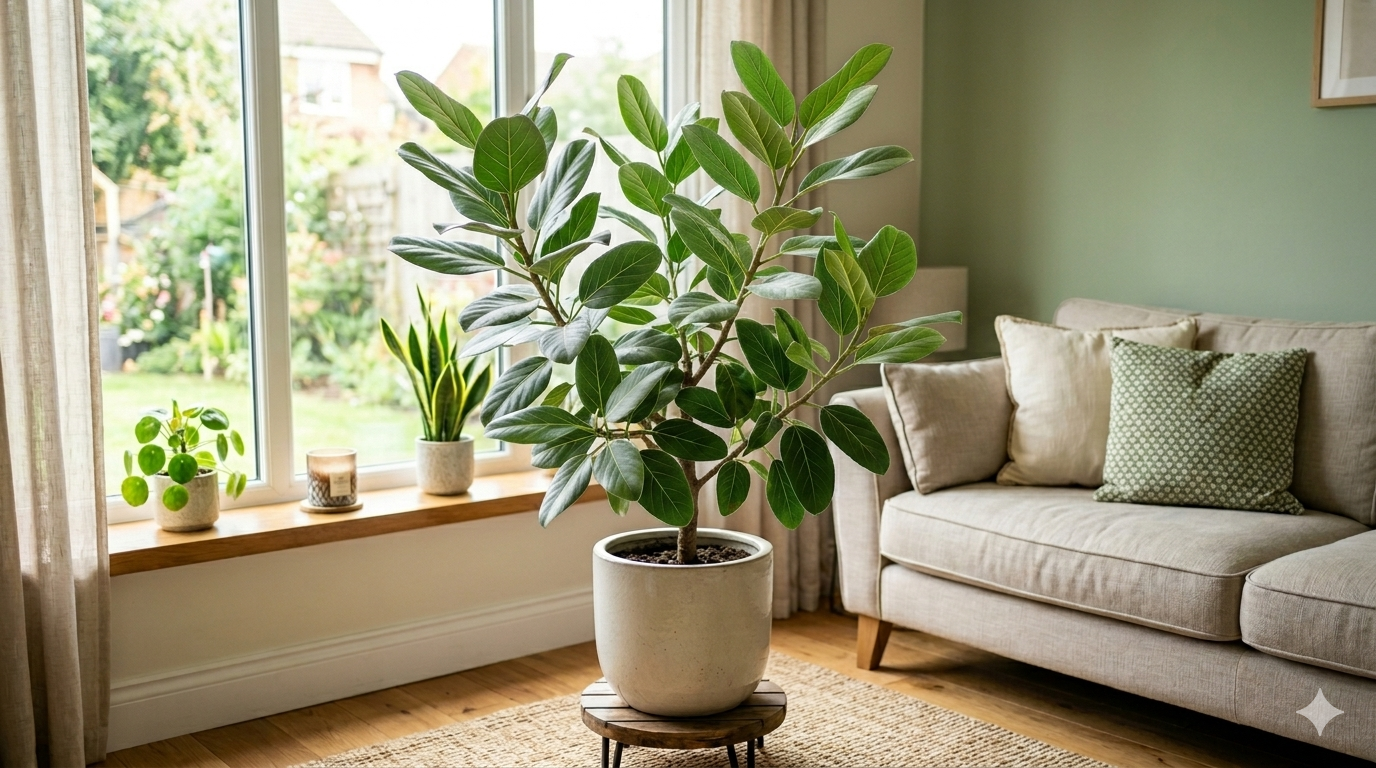
With good light and consistent care, Ficus Audrey can reach 6–10 feet indoors. Growth is medium-paced — faster than fiddle leaf fig, slower than pothos. Expect 1–2 feet of new growth per year under ideal conditions, less in lower light.
In its native range across the Indian subcontinent, Ficus benghalensis is one of the world’s largest trees — the Great Banyan Tree in Howrah (near Kolkata) covers approximately 4.7 acres — making it one of the widest trees on earth by canopy spread. Indoors, it stays much more manageable, but it will eventually become a significant-sized plant. If space is a concern, pruning in late winter or early spring keeps it contained without harming the plant. Remove any leggy or crossing branches, and cut back to just above a leaf node to encourage bushier growth. Always wear gloves — the latex sap that comes out of pruning cuts is a skin irritant. After cutting, you can seal the wound with a small amount of cinnamon powder (a natural antifungal) to reduce the risk of disease entering through the cut.
Why Is My Ficus Audrey Dropping Leaves?
Some leaf drop is normal — especially in the first few weeks after you bring it home or move it. The plant is adjusting to different light conditions, and the adjustment shows. As long as new growth is appearing at the tips, the plant is fine.
Problematic leaf drop — leaves dropping continuously from multiple areas, including new growth — points to one of these causes:
- Overwatering. The most common cause. Check the roots for rot (soft, brown, mushy) and improve drainage.
- Cold drafts or temperature swings. Ficus Audrey is sensitive to cold air from AC vents, windows in winter, or doors that open to the outside. Keep it away from these.
- Too little light. Gradual, steady leaf loss from the lower plant usually means insufficient light. Move it closer to a window.
- Root bound. If the plant hasn’t been repotted in years and roots are circling the bottom of the pot, it may be struggling to take up water efficiently.
How to Propagate Ficus Audrey
Stem cuttings are the most reliable propagation method for Ficus Audrey. Take a 4–6 inch cutting just below a leaf node in spring or summer, let the milky latex sap dry at the cut end for an hour, then plant in a moist, well-draining mix. Cover with a clear plastic bag to maintain humidity and place in bright indirect light. Roots typically form in 4–8 weeks.
One thing to expect: the cutting will ooze white latex sap from the cut end. Let it dry before planting — it can cause rot if it goes directly into wet soil. Wear gloves, as the sap irritates skin.
Air layering is more reliable for larger branches and produces a stronger root system, but it requires more time and materials. For most home growers, stem cuttings are the more practical option.
Common Pests and Problems
Ficus Audrey is relatively pest-resistant, but a few show up occasionally:
- Scale insects — brown bumps on stems; treat with neem oil or rubbing alcohol on a cotton swab
- Spider mites — fine webbing on leaves, usually in dry conditions; increase humidity and treat with neem oil
- Mealybugs — white cottony deposits at leaf joints; remove manually and treat with insecticidal soap
One issue specific to ficus species: the milky latex sap that comes out of cut or damaged stems can cause skin and eye irritation. Wear gloves when pruning, and wash your hands afterwards.
Is Ficus Audrey Toxic to Cats and Dogs?
Yes. Like most ficus species, Ficus Audrey contains a milky latex sap that is toxic to cats and dogs. Ingestion causes oral irritation, excessive drooling, vomiting, and loss of appetite. The ASPCA lists ficus species as toxic to cats and dogs — specifically noting the latex/ficin compounds that cause irritation. While the ASPCA’s detailed listing cites Ficus benjamina (weeping fig), the same toxic mechanism applies across the ficus genus including Ficus benghalensis.
Keep it out of reach of pets that chew plants. The plant is also a skin irritant for people — the latex sap from cut stems causes contact dermatitis in some individuals.
If you’re interested in growing ficus outdoors as a privacy hedge, take a look at our guide to ficus nitida care — a popular choice for screening in warmer climates.
Frequently Asked Questions
Is Ficus Audrey easy to care for?
Easier than fiddle leaf fig, but not truly low-maintenance. It tolerates imperfect conditions better than most large-leaf ficus species and drops leaves less dramatically when stressed. The key requirements — bright indirect light and proper watering — still need to be right for the plant to thrive.
How fast does Ficus Audrey grow?
Faster than most people expect in the right conditions. With good light, spring through summer is when you’ll see most of the growth — new leaves unfurl from the growing tips every few weeks. In low light or winter, the same plant can stay completely static for months. The difference in growth rate between a bright spot and a dim corner is dramatic enough that light placement matters more than any other variable.
Why does my Ficus Audrey have yellow leaves?
Yellow leaves on Ficus Audrey usually mean overwatering or poor drainage. Check the soil — if it’s staying wet for more than a week, the plant isn’t draining properly. Less commonly, yellowing can indicate a nutrient deficiency (if the plant hasn’t been fertilized in over a year) or cold damage from drafts.
Can Ficus Audrey tolerate low light?
Short answer: yes, it survives. Long answer: the plant you get in low light is a shadow of what it can be. Leaves stay smaller, internodes stretch longer (giving a leggy look), and the deep green color fades. More practically, a plant in low light uses water much more slowly — which makes it very easy to accidentally overwater. If your brightest spot is still pretty dim, a grow light is worth considering.
What is the difference between Ficus Audrey and rubber plant?
Both are ficus species, but they’re quite different. Rubber plant (Ficus elastica) has thick, glossy, stiff leaves that are often dark green or burgundy. Ficus Audrey has softer, velvety, matte leaves with visible pale veins. Rubber plants are generally more tolerant of low light than Ficus Audrey.