Ficus nitida is one of the most widely planted trees in warm-climate US cities — lining streets in Los Angeles, forming privacy hedges in Phoenix, and filling commercial atriums across California and Florida. It’s valued for its dense, glossy evergreen canopy, tolerance of shaping, and fast-growing privacy screening. It also has a few characteristics that catch homeowners off guard: aggressive surface roots, dramatic leaf drop when stressed, and a strong preference for staying put once established.
This guide covers ficus nitida whether you’re growing it as an outdoor tree, shaping it into a privacy hedge, or keeping it as a large indoor floor plant.

Ficus Nitida Quick Reference
| Care Factor | What You Need |
|---|---|
| Botanical name | Ficus microcarpa (trade name “nitida”) |
| Common names | Indian laurel fig, Indian laurel, Chinese banyan |
| Type | Evergreen tree |
| Light | Full sun outdoors; bright indirect light indoors |
| Watering | Regular until established; drought-tolerant once mature |
| Hardiness zones | 9–11 outdoors; zone 9 is marginal (frost risk below 24°F); containers in colder zones |
| Mature size (outdoors) | 40–60 feet tall; 40–60 feet wide canopy (unpruned); much smaller with regular maintenance |
| Mature size (indoors) | 6–12 feet in containers |
| Toxicity | Toxic to cats, dogs, and humans (latex sap) |
| Root system | Aggressive surface roots — plan placement carefully |
Ficus Nitida as a Tree, Hedge, or Indoor Plant
Most people encounter ficus nitida in one of three forms, and the care priorities differ enough between them that it’s worth being specific about which situation you’re in.
- As a street or shade tree — left to grow naturally, ficus nitida develops a broad, dense canopy that provides significant shade. This is where the root problem becomes relevant: the roots are aggressive, shallow, and will lift pavement, damage underground pipes, and invade planting beds if planted too close to hardscape. Minimum clearance from pavement: 8–10 feet from sidewalks, 20+ feet from foundations.
- As a hedge or privacy screen — regular shearing keeps it dense and columnar. Ficus nitida shears well and holds its shape, making it popular for tall privacy screening in California and Arizona. Regular trimming also controls root spread to some degree by redirecting energy to foliage rather than roots.
- As an indoor plant — in containers, ficus nitida can be maintained at 6–12 feet as a statement floor plant. It behaves similarly to other indoor ficus species: sensitive to being moved, prone to leaf drop during adjustment, needs bright indirect light to stay healthy long-term.
How Much Sun Does Ficus Nitida Need?
Outdoors, ficus nitida thrives in full sun — 6 or more hours of direct sunlight per day. It grows faster, develops a denser canopy, and is generally healthier in full sun than in part shade. In hot desert climates like Phoenix or Las Vegas, it handles intense summer heat well once established, though young trees benefit from supplemental watering in extreme heat.
Indoors, the standard is bright indirect light. A large south- or east-facing window is the minimum for a container plant to stay healthy. Insufficient light causes slow growth and makes the plant more vulnerable to overwatering, since it uses water more slowly.
Watering Ficus Nitida
Young trees and newly planted ficus nitida need consistent watering while they establish — typically twice a week in summer and weekly in cooler months for the first 1–2 years. Once established, ficus nitida is genuinely drought tolerant and requires far less irrigation. In mild coastal climates, established trees often get by on rainfall alone. In desert climates, supplemental watering every 2–3 weeks in summer keeps them looking their best.
For indoor container plants, check the top 2 inches of soil and water when dry. Overwatering is the most common problem with container ficus nitida — the soil needs to partially dry out between waterings.
Soil Requirements
Ficus nitida is adaptable and tolerates a wide range of soil types including clay, loam, and sandy soils. The main requirement is reasonable drainage — it won’t tolerate consistently waterlogged roots. For in-ground planting, amending heavy clay soil with compost improves drainage and establishment speed. For containers, use a well-draining potting mix with added perlite.
Soil pH is not critical; ficus nitida grows across a range of 6.0–7.5 without significant problems. In highly alkaline soils above pH 8.0 (common in parts of Arizona), iron chlorosis — yellowing leaves with green veins — can appear.
How Big Does Ficus Nitida Get?

Left unpruned outdoors, ficus nitida can eventually reach 40–60 feet tall with a similar canopy spread — some specimens in optimal conditions exceed that. In typical maintained landscapes, regular pruning keeps trees at 15–25 feet. It’s a large tree by any measure. Growth rate is medium — typically up to 2 feet per year under normal conditions, faster (up to 3–4 feet) in warm climates with regular irrigation. An unmanaged hedge can require significant shearing every few months in summer.
In containers, the root restriction naturally limits size to 6–12 feet with regular pruning, making it manageable as an indoor or patio tree. Commercial settings like the one above use ficus nitida precisely because it scales impressively — it’s one of the few indoor plants that can fill the vertical space of a high-ceiling atrium without looking out of place.
How Long Does It Take Ficus Nitida to Form a Privacy Hedge?
This is the question most people actually want answered before they plant. The honest answer depends on how tall you start and how fast you want results.
Starting from 5-gallon nursery plants (typically 3–5 feet tall), expect 2–3 years to reach 8–10 feet with good irrigation and fertilizing. Starting from 15-gallon specimens (6–8 feet tall), you can have an 8–10 foot privacy screen in one growing season. Many commercial landscapers buy box specimens (15–25 feet) for instant screening, though the cost is significant.
Spacing for hedge planting: Plant 2–4 feet apart on center for a dense hedge. Closer spacing fills in faster but requires more maintenance once established. 3 feet on center is a common starting point for residential privacy screens.
Noise reduction: A mature ficus nitida hedge also reduces noise transmission. The dense, evergreen canopy absorbs and deflects sound — useful for properties near roads or commercial areas.
Ficus Nitida Hedge and Columns: Pruning Guide
Ficus nitida’s tolerance of heavy shearing is one of its most useful characteristics. It can be pruned into tight hedges, formal columns, lollipop standards, and espalier forms without harm to the tree.
For hedges and columns, trim 2–3 times per year in warm climates — once in early spring, once in midsummer, and once in early fall. This keeps the form tight without removing so much at once that you’re cutting into old wood. Use hedge shears for large formal shapes; hand pruners for selective shaping and interior thinning.
Always wear gloves when pruning — the white latex sap that bleeds from cuts irritates skin. One timing caution specific to ficus nitida: avoid heavy pruning in late summer in desert climates. Removing significant canopy exposes interior bark to intense heat and sun, which can cause bark burns — a common problem in Phoenix and Las Vegas in August and September. Late winter through spring is the safest window for major shaping. Clean tools with rubbing alcohol after pruning to prevent spreading any fungal issues between cuts.
Why Is My Ficus Nitida Dropping Leaves?
Leaf drop is the most common complaint with ficus nitida, and it’s almost always triggered by a change rather than an ongoing problem. The most common triggers:
- Being moved or relocated — ficus nitida is notorious for dropping leaves when moved, even from one room to another. The adjustment period typically lasts 2–6 weeks. New growth after the drop indicates the plant is adapting.
- Temperature changes — cold drafts, proximity to air conditioning vents, or a sudden drop in temperature. Keep the plant away from these.
- Overwatering — soggy soil is the most common cause of persistent, ongoing leaf drop rather than adjustment-related drop. Check the roots for rot if watering seems fine but leaves continue falling.
- Seasonal change — outdoor trees may drop some leaves in late fall in response to shorter days and cooler temperatures, even in zones 9–11. This is usually temporary.
Ficus Nitida Root Warning for Homeowners
This is the characteristic that most people discover too late. Ficus nitida has aggressive, fast-spreading surface roots that will lift concrete pavement, crack foundations, invade sewer lines, and compete aggressively with nearby plants. This is not a plant to install within 10 feet of any hardscape, underground utilities, or a building foundation.
If you’re planting ficus nitida in a residential setting, give it as much open soil radius as possible. San Francisco banned new ficus street tree plantings in the late 1990s specifically because of sidewalk damage — the root problem is well-documented and real. Root barriers can help redirect growth in tight spaces but don’t eliminate the problem. Ficus nitida is best suited to large open areas, commercial landscapes with professional management, or containers that physically restrict root spread. Root barriers can redirect growth in tight spaces but require professional installation to be effective.
Growing Ficus Nitida Indoors
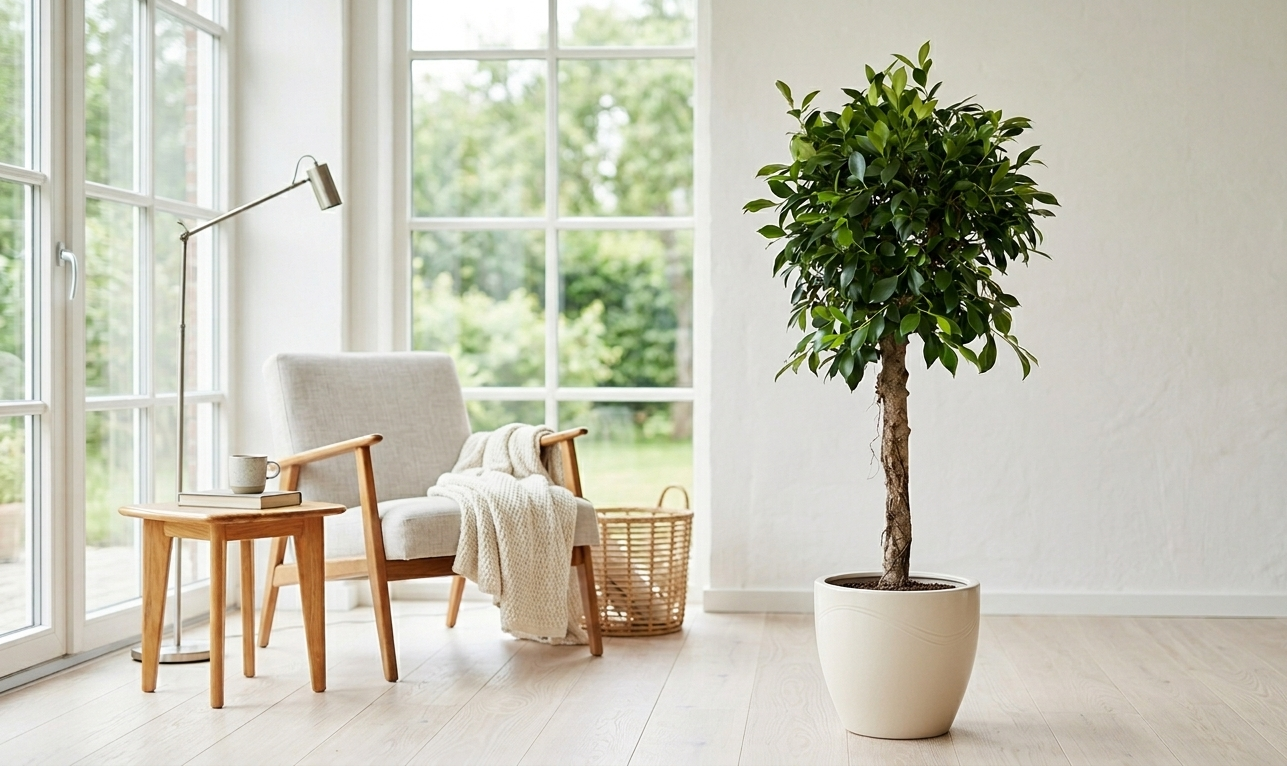
As a large indoor plant, ficus nitida is a strong choice for spaces that need a tree-scale focal point. It tolerates the conditions of most well-lit indoor spaces better than fiddle leaf fig, and its small, dense leaves give it a more formal appearance than Ficus Audrey‘s large tropical look.
The key to keeping it healthy indoors: choose its spot and commit to it. Moving a container ficus nitida triggers significant leaf drop every time. Once you find a spot with bright indirect light away from drafts and heating vents, leave it there. Rotate it a quarter turn every month to keep growth even, but don’t relocate it seasonally unless necessary.
Frequently Asked Questions
Is ficus nitida the same as ficus microcarpa?
Essentially yes. Ficus nitida as used in the nursery trade refers to Ficus microcarpa. “Nitida” is an informal trade name — it does not correspond to a currently accepted botanical variety. In nurseries and landscaping the names are used interchangeably. Indian laurel fig and Chinese banyan are common names for both.
How fast does ficus nitida grow?
In warm climates with regular water and sun, ficus nitida grows 2–4 feet per year. This makes it a fast-establishing privacy hedge or shade tree, but it also means an unmanaged tree requires consistent pruning to stay in bounds. Indoors, growth is slower — typically 1–2 feet per year with good light.
Can you keep ficus nitida small by pruning?
Yes — ficus nitida responds well to regular pruning and can be maintained at almost any size with consistent shearing. For hedges, trimming 2–3 times per year keeps the form tight. For containers, annual root pruning combined with canopy trimming in late winter keeps the plant manageable at 6–10 feet indefinitely.
Why is my ficus nitida losing leaves?
Usually because something changed — it was moved, experienced a temperature shift, or had a change in watering. Leaf drop during adjustment is normal and temporary; new growth appearing at the tips means the plant is recovering. Persistent leaf drop without any obvious change usually points to overwatering or root rot.
Are ficus nitida roots invasive?
Yes — aggressively so. Ficus nitida produces fast-spreading surface roots that lift pavement, crack foundations, and invade sewer lines. It should not be planted within 10 feet of any sidewalk or paved surface, or within 20 feet of a building foundation. This is one of the most important considerations when choosing a planting location.
Is ficus nitida evergreen?
Yes — ficus nitida is evergreen in zones 9–11, holding its leaves year-round. In zone 9 during an unusually cold winter, it may drop some leaves temporarily but will typically recover as temperatures warm. This year-round foliage is one of its main advantages as a privacy screen or shade tree.
Recommended Products
As an Amazon Associate, Two Leaf Garden earns from qualifying purchases.