ZZ plant leaves (also called zee zee plant leaves) turn yellow most often from overwatering — but that’s not the only reason, and it’s worth ruling out the others before you change anything. Nine things cause yellowing in ZZ plants: overwatering, root rot, underwatering, direct sun, nutrient deficiency, natural aging, temperature stress, transplant shock, and pests. Most cases come down to the first two. Here’s how to figure out which one you’re dealing with and what to do about it.
Overwatering — The Most Common Cause
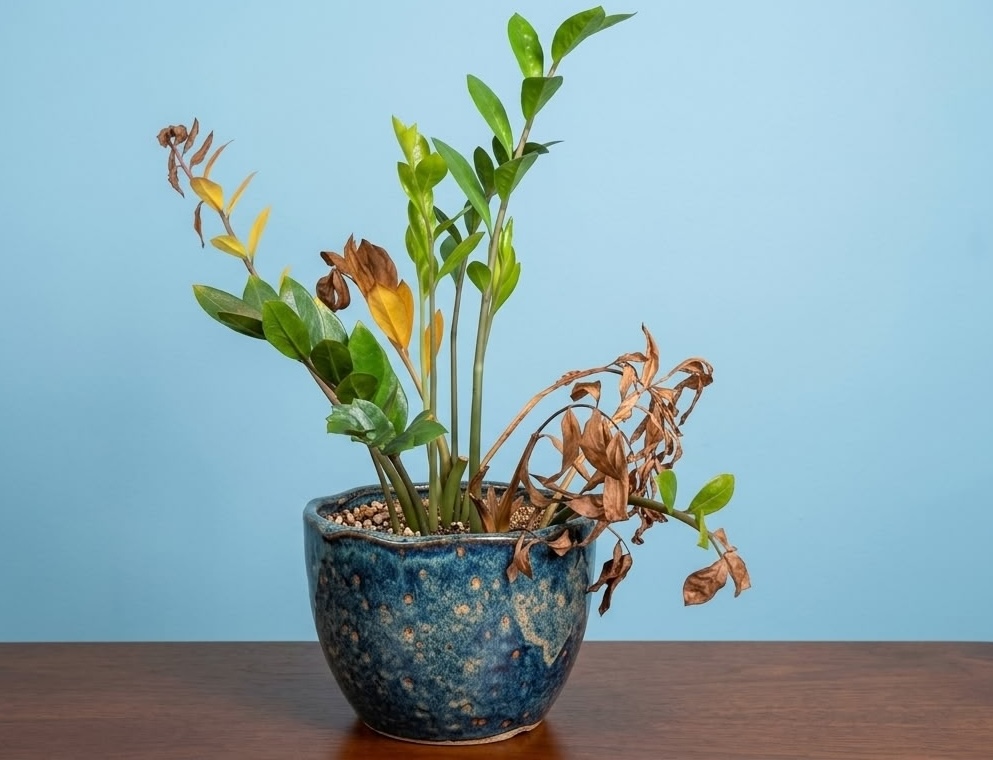
If your ZZ plant has yellow leaves and the soil feels consistently damp, overwatering is almost certainly the cause. ZZ plants store water in their rhizomes — the thick, potato-like underground structures — which makes them exceptionally drought-tolerant and highly vulnerable to sitting in wet soil. Those rhizomes hold water for weeks; the soil doesn’t need to help.
Signs of overwatering:
- Yellowing starts on the lower, older leaves first and moves upward
- Soil stays wet longer than two weeks
- Stems feel soft or mushy at the base
- Potting mix smells musty or sour
Fix: Stop watering immediately. Move the pot to a brighter spot to help the soil dry faster. Let the top 2 inches dry completely before watering again. Caught early, the plant recovers without repotting.
I overwatered my first ZZ plant for almost three months without realizing it — I was watering every week because I thought the drooping meant thirst. It wasn’t. By the time I unpotted it, one rhizome had gone completely soft, like pressing a rotten grape. The plant made it, but it spent the rest of the growing season recovering rather than pushing new growth.
Root Rot
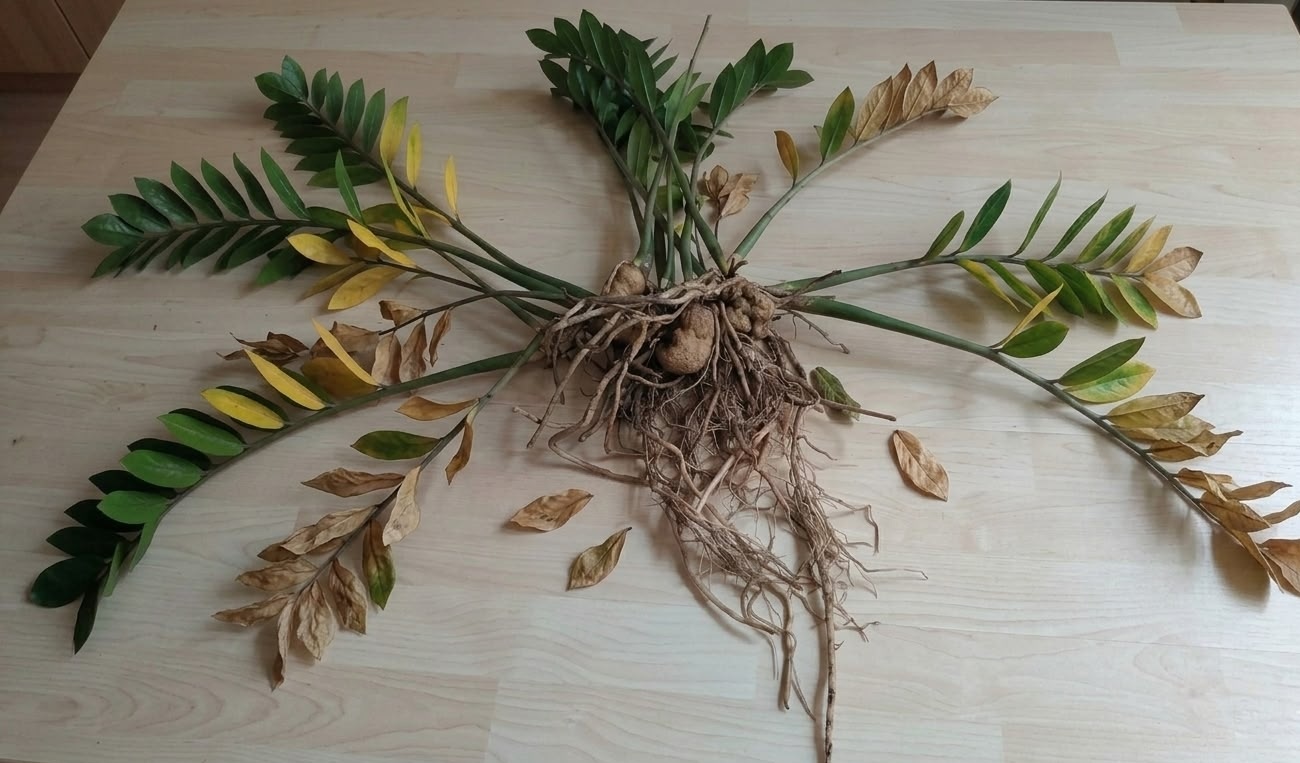
If overwatering goes on long enough, root rot follows. This is when the rhizomes — and sometimes the roots — break down from sitting in waterlogged soil. Root rot is more serious than simple overwatering, but it’s still fixable if you catch it before the whole root system is gone.
Signs of root rot beyond yellow leaves:
- Stems turn yellow-brown and feel mushy when squeezed
- A sour or decay smell when you lift the pot
- Black, dark brown, or slimy roots and rhizomes when unpotted
Fix:
- Remove the plant from its pot and shake off the soil to expose the roots.
- Cut away any black, soft, or slimy roots with clean scissors. Healthy roots are firm and white or tan.
- Let the root system air-dry for a few hours.
- Optionally: spray cut surfaces with a 2:1 water-to-hydrogen-peroxide solution to address bacterial residue.
- Repot in fresh, dry, well-draining mix. Don’t water for at least one week.
Is My ZZ Plant Underwatered?
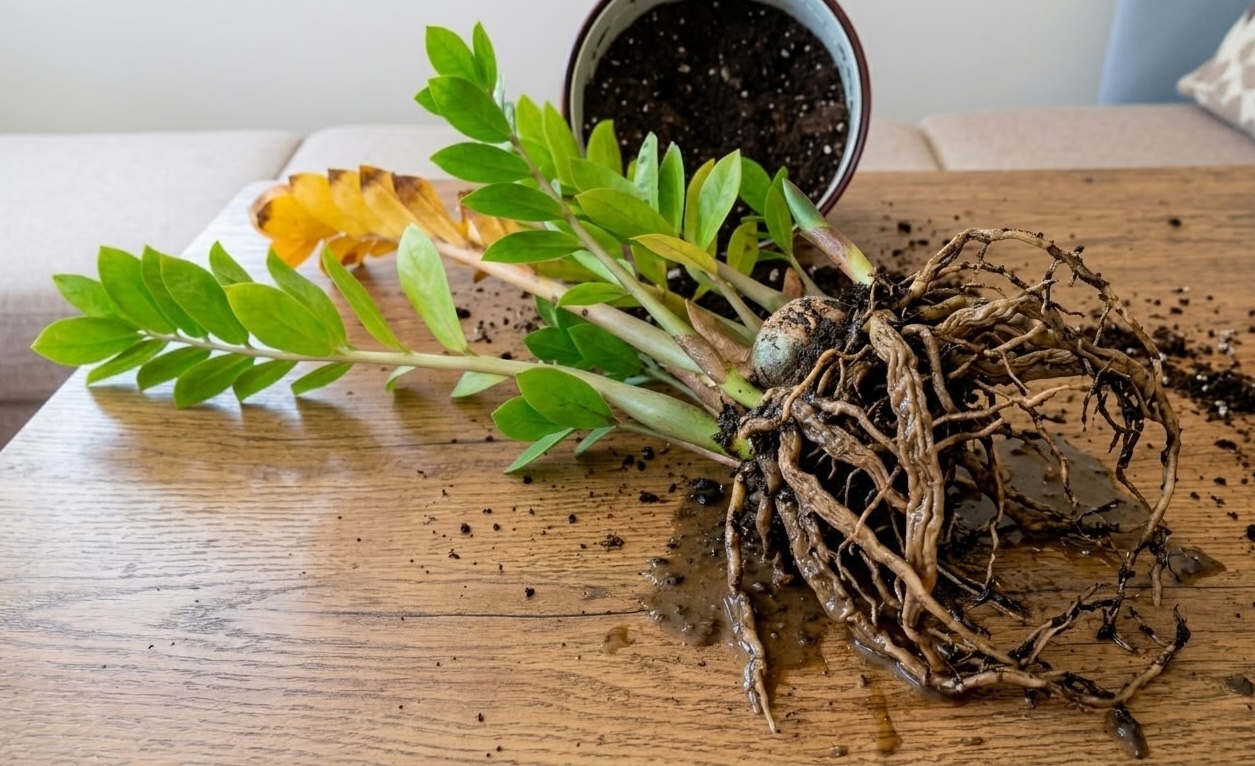
Less common than overwatering, but real. ZZ plants are drought-tolerant — not drought-proof. If yours has been bone dry for months, the rhizomes eventually run out of stored water and the plant starts shedding leaves to conserve resources. The roots in an underwatered plant look completely different from an overwatered one: dry, wiry, and pale rather than wet and dark.
Signs of underwatering:
- Yellowing comes with slightly wrinkled or shriveled stems
- Soil is bone dry and pulling away from the pot edges
- Leaves are dry-edged rather than soft and mushy
Fix: Water thoroughly — pour slowly until water drains from the bottom. Or try the 30-minute soak method: set the pot in a tray of water and let it absorb from the bottom up. One deep watering is enough; avoid going from bone-dry to waterlogged in one go.
Too Much Direct Light
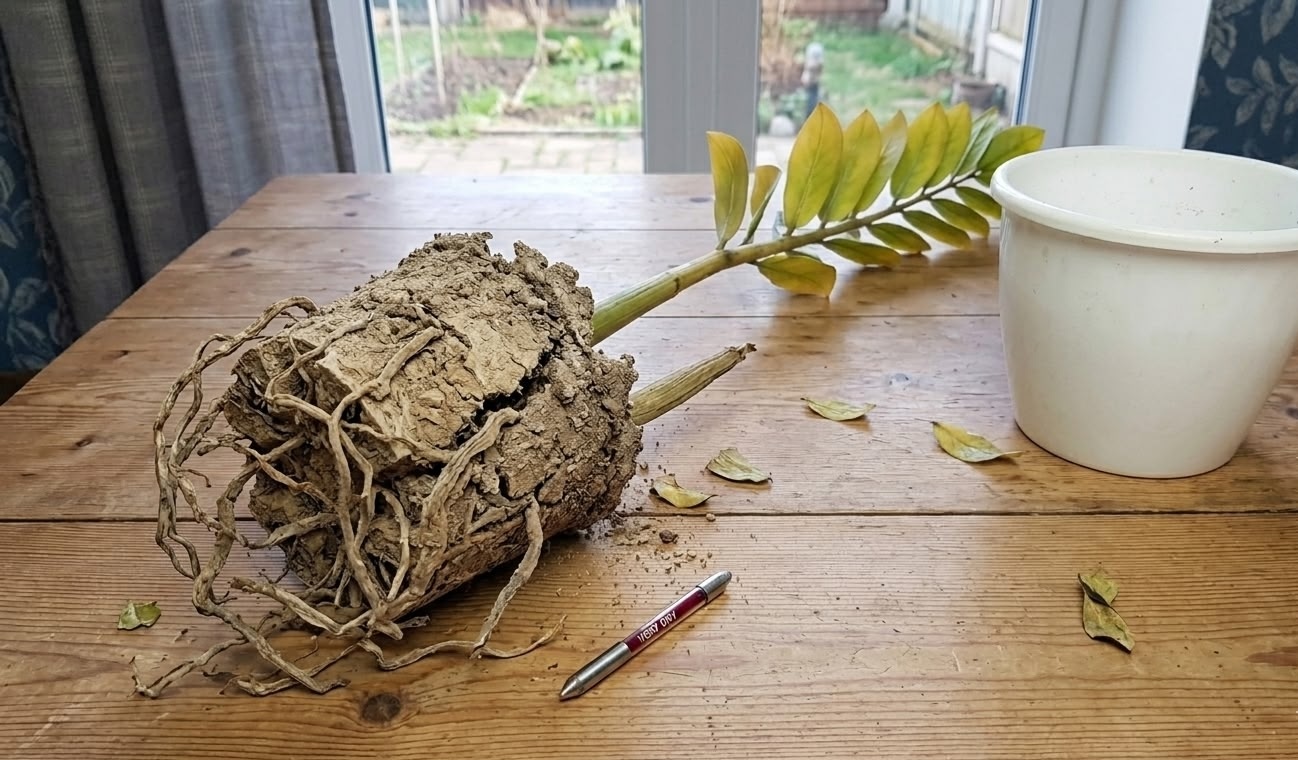
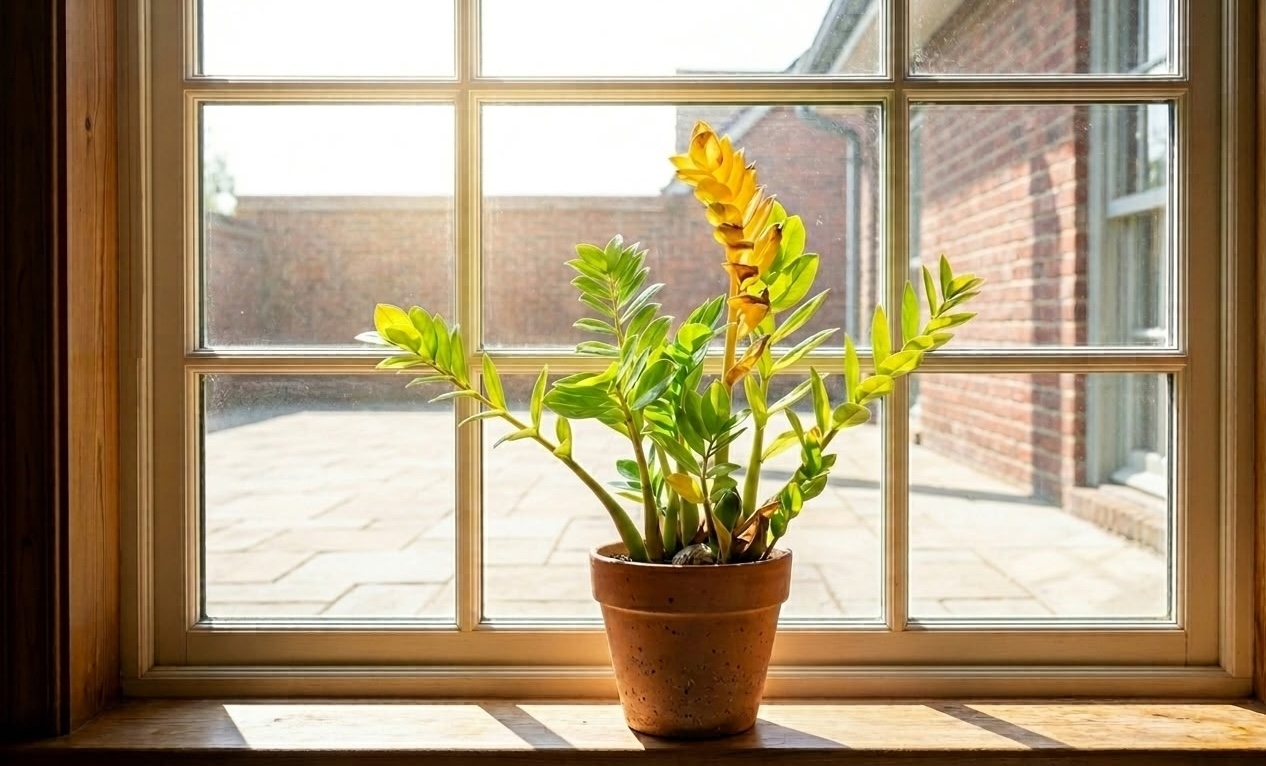
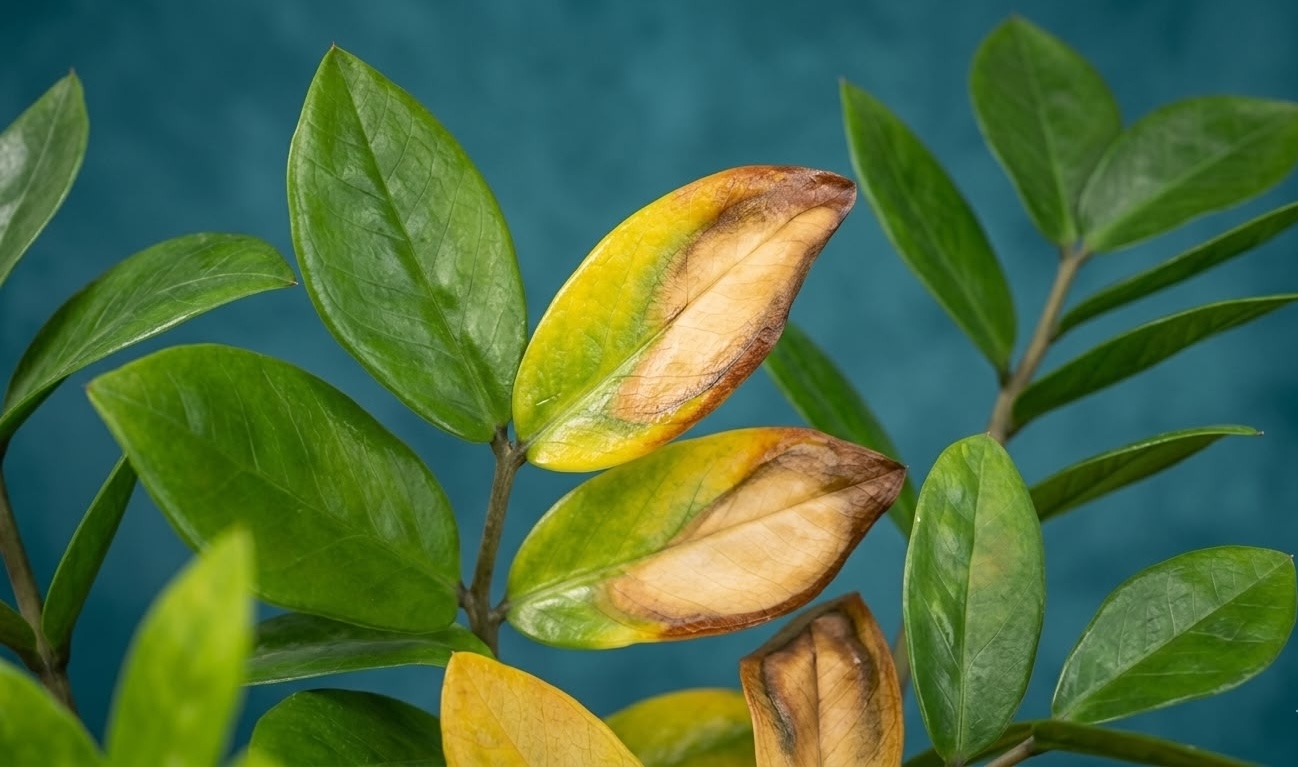
ZZ plants tolerate low light well, but extended direct sun — especially through south- or west-facing windows in summer — scorches the leaves. They go pale yellow first, then develop crispy brown edges as the damage progresses.
Direct-sun yellowing looks different from overwatering yellowing: it starts at the tips and edges of leaves closest to the window, not at the base of the plant. I moved a ZZ to a south-facing window in June thinking the extra light would speed up growth. Within two weeks, the leaves nearest the glass had gone from glossy dark green to washed-out lime yellow. The ones farther back stayed fine.
Fix: Move the plant back from the window, or filter the light with a sheer curtain. ZZ plants do best with 4–6 hours of bright indirect light daily — no direct sun on the leaves.
Could Nutrient Deficiency Be Causing the Yellowing?
ZZ plants are light feeders, but in soil that’s been depleted over years without repotting or fertilizing, deficiencies show up as yellowing — and the pattern tells you which nutrient is missing.
| Deficiency | Pattern of yellowing |
|---|---|
| Nitrogen | Oldest, lowest leaves turn uniformly yellow |
| Potassium | Yellow at leaf edges and tips only |
| Magnesium | Yellow between veins on older leaves (veins stay green) |
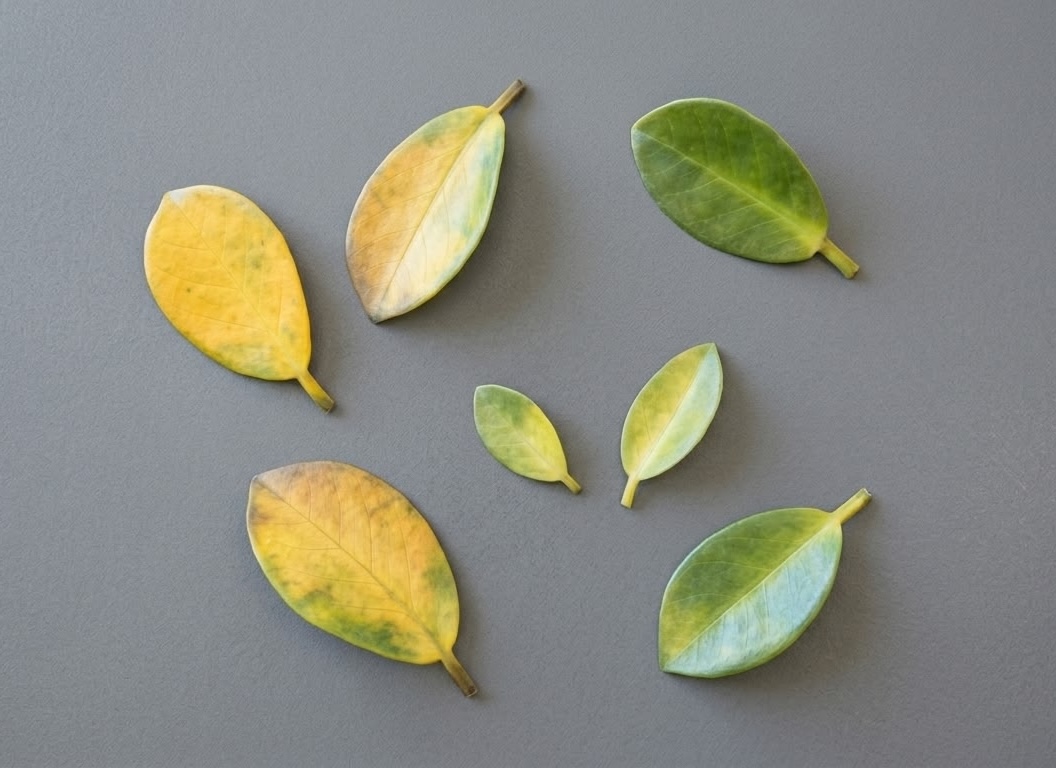
| Iron | New leaves emerge yellow while older leaves stay green |
Fix: A balanced liquid fertilizer (10-10-10 or similar) at half strength every 4–6 weeks during spring and summer addresses all four. Don’t over-fertilize trying to fix yellowing faster — fertilizer burn (brown tips, white salt crust on soil) creates its own problems.
Are These Yellow Leaves Normal? (Natural Aging)
This is the cause most guides skip, and it’s probably why a lot of people end up here. ZZ plants naturally shed their oldest leaves as new fronds push up from the center. The lower leaves on the outermost stems turn yellow and drop — it’s the plant cycling out old growth, not a problem.
How to tell if it’s normal aging:
- Yellowing is limited to the lowest 1–2 leaves on the outermost stems
- The rest of the plant looks healthy and green
- New growth is actively emerging from the base
- It’s happening in late summer or fall as growth naturally slows
If only a few lower leaves are yellowing and the top of the plant looks fine, there’s nothing to fix. Remove the yellow leaves and move on. The first time this happened to my ZZ, I repotted the whole thing, changed the soil, and adjusted my watering schedule — completely unnecessarily. Three leaves yellowed because they were old.
Temperature Stress
ZZ plants are comfortable between 65°F and 85°F (18–29°C). Below 60°F (15°C), cold stress triggers yellowing. Drafts from windows, AC vents, or exterior doors in winter are common culprits — the plant can be in a 72°F room and still getting hit with cold air from a nearby window.
Signs of temperature stress:
- Yellowing appears after a seasonal change or cold spell
- Leaves closest to a cold window or exterior wall are affected first
- The rest of the plant looks healthy
Fix: Move away from cold drafts and AC vents. If you moved it outdoors for summer and back inside in fall, some temporary yellowing is normal as it adjusts.
Why Did My ZZ Plant Turn Yellow After Repotting?
If yellowing appeared shortly after repotting, transplant shock is the likely cause. Even careful repotting disturbs the root system, and ZZ plants sometimes drop a few leaves while redirecting energy toward re-establishing roots.
This comes up a lot: “I just repotted and now the leaves are turning yellow — did I do something wrong?” Usually no. Don’t overcompensate by watering more. Water lightly, wait about a week, then resume a normal schedule. New fronds emerging from the base is the sign it has recovered. For more on the repotting process, see our ZZ plant care guide.
Pests
Less common than watering issues, but real. Spider mites, mealybugs, and aphids can all cause yellowing by feeding on the plant’s sap, which disrupts the leaf cells and leads to pale, stippled, or uniformly yellow patches.
Signs of pest damage:
- Tiny pale or yellow speckling across multiple leaves (spider mites)
- White cottony clusters at stem junctions or leaf bases (mealybugs)
- Sticky residue on leaves or surface below the plant (aphids or scale)
- Yellowing doesn’t match any watering or light pattern
The first time I noticed spider mites on a ZZ, I assumed the pale patches were water spots from misting. By the time I looked closely and saw the fine webbing underneath the leaves, the mites had spread to two other plants nearby.
Fix: Isolate the plant immediately. Wipe leaves with a damp cloth to remove visible pests. Apply neem oil or insecticidal soap, making sure to cover both leaf surfaces and stem junctions. Repeat every 7–10 days for at least three applications. For mealybugs, a cotton swab dipped in rubbing alcohol applied directly to the clusters works well.
How to Diagnose Why Your ZZ Plant Is Turning Yellow
If you’re not sure which cause applies, use this table:
| What you see | Most likely cause | Fix |
|---|---|---|
| Lower leaves yellow, soil is wet | Overwatering | Stop watering, let soil dry fully |
| Mushy stems, sour smell from pot | Root rot | Unpot, trim damaged roots, repot dry |
| Wrinkled stems, bone-dry soil | Underwatering | Deep water using soak method |
| Yellowing at tips and edges only | Direct sun | Move back or add sheer curtain |
| Older leaves turn solid yellow | Nitrogen deficiency | Balanced fertilizer at half strength |
| Yellow at leaf edges only | Potassium deficiency | Balanced fertilizer at half strength |
| Yellow between veins, old leaves | Magnesium deficiency | Balanced fertilizer at half strength |
| New growth comes in yellow | Iron deficiency or low light | Fertilizer + move to brighter spot |
| 1–2 bottom leaves, rest looks fine | Natural aging | Remove and ignore |
| Yellowing after season change | Temperature stress or lower light | Move from drafts, assess light |
| Appeared right after repotting | Transplant shock | Wait 4–6 weeks, water lightly |
| Pale speckling, webbing, or cottony deposits | Pests | Neem oil or insecticidal soap, repeat weekly |
Should I Cut Off Yellow ZZ Plant Leaves?
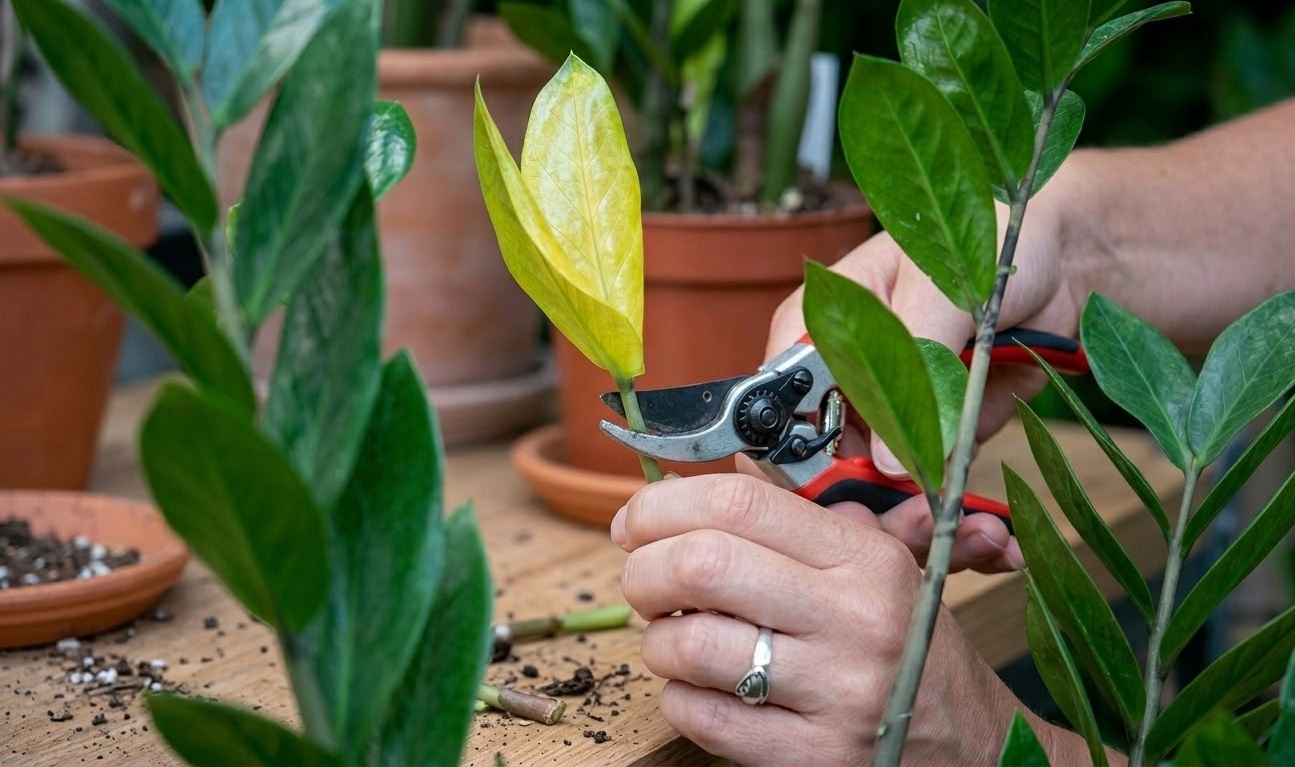
Yes — once a ZZ plant leaf has turned yellow, it won’t recover. Removing it is better than leaving it attached: it redirects the plant’s energy toward healthy growth, and yellow leaves are more prone to fungal issues if they stay on the plant.
I made the mistake of leaving three obviously yellow leaves on my ZZ for weeks, hoping they’d come back. They didn’t — they went from yellow to papery brown and then started collecting moisture at the base where they attached to the stem. Better to remove them cleanly as soon as you’re sure they won’t recover.
How to cut yellow ZZ plant leaves:
- Use clean, sharp scissors or pruning shears — dull blades crush the stem
- Cut as close to the main stem as possible, leaving no stub
- Wipe the blade with rubbing alcohol before and after
- Wear gloves — ZZ plant sap irritates skin (see our ZZ plant toxicity guide for details)
Don’t remove more than one-third of the plant’s leaves at once. If yellowing is widespread, take the worst leaves first and wait a few weeks before removing more.
Will Yellow Leaves Turn Green Again?
No. Once a ZZ plant leaf turns yellow, the chlorophyll is gone and it won’t come back. The leaf is done — remove it and focus on fixing the underlying cause.
The recovery you’re actually watching for is new fronds emerging from the base. That’s the signal the plant is healthy and growing again — not the yellow leaves changing color. Fix the problem, and the new growth that follows will come in healthy and green.
How Do I Stop My ZZ Plant Leaves From Turning Yellow?
Most yellowing is preventable with three habits:
- Water less than you think you need to. Every 2–3 weeks in summer, once a month or less in winter. Check the top 2 inches of soil first — water only when completely dry.
- Keep it in bright indirect light. Not a dark corner, not direct sun. Three to five feet from a bright window is ideal for most homes.
- Repot every 2–3 years. Fresh soil restores nutrients and improves drainage — addressing the two most common causes of yellowing at once.
For propagation by division during repotting, see our ZZ plant propagation guide.
Frequently Asked Questions
What does an overwatered ZZ plant look like?
An overwatered ZZ plant has yellow leaves starting from the lowest, oldest stems and working upward. The soil stays wet for more than two weeks, and the base of stems may feel soft or mushy. In more severe cases, the pot smells sour or like decay — a sign root rot has set in. Pull the plant out and check the rhizomes: healthy ones are firm and white or tan; affected ones are dark brown, black, or soft.
Can yellow ZZ plant leaves turn green again?
No. Once a ZZ plant leaf turns yellow, the chlorophyll is gone and the discoloration is permanent. Remove yellow leaves with clean scissors and focus on fixing the underlying cause. New growth that emerges after the problem is corrected will come in healthy and green — that’s the recovery sign to watch for, not the yellow leaves changing color.
Do ZZ plant leaves turn yellow in fall?
Yes, often from natural aging rather than a problem. As light levels drop and growth slows in fall and winter, ZZ plants shed their oldest leaves. If yellowing is limited to the bottom one or two leaves on the outermost stems and the rest of the plant looks healthy, this is normal seasonal behavior — not overwatering or disease.
Why is the new growth on my ZZ plant yellow?
New growth that emerges yellow instead of the bright lime green that’s normal usually indicates an iron deficiency or insufficient light. Iron deficiency causes yellowing between the veins of new leaves while the veins stay green. A balanced liquid fertilizer at half strength typically resolves it. Moving the plant to brighter indirect light also helps if light levels are low.
Why are my ZZ plant leaves turning yellow after repotting?
Post-repotting yellowing is transplant shock — the plant’s normal response to root disturbance. ZZ plants may drop a few leaves in the 2–4 weeks after repotting. Don’t overcompensate by watering more; water lightly and give the plant 4–6 weeks to settle. New fronds emerging from the base confirm it has recovered.
Why are my ZZ plant leaves turning yellow and brown?
Yellow leaves with brown edges usually point to a combination of factors: overwatering causing the yellow, and low humidity, fertilizer salt buildup, or fluoride in tap water causing the brown tips. Check soil moisture first. If the soil is fine, try switching to filtered water and flushing the soil with water every few months to clear salt buildup.