Is the ZZ plant toxic to cats and dogs? Yes — and that part is confirmed by the ASPCA. But “toxic” covers a wide range, and understanding what actually happens when a pet chews on a ZZ plant matters a lot more than a blanket warning. Most exposures are unpleasant rather than dangerous, and the plant’s bitter taste tends to stop pets after a first taste. That said, knowing the symptoms and what to do makes a real difference if your pet does ingest it.
Is the ZZ Plant Toxic to Cats?
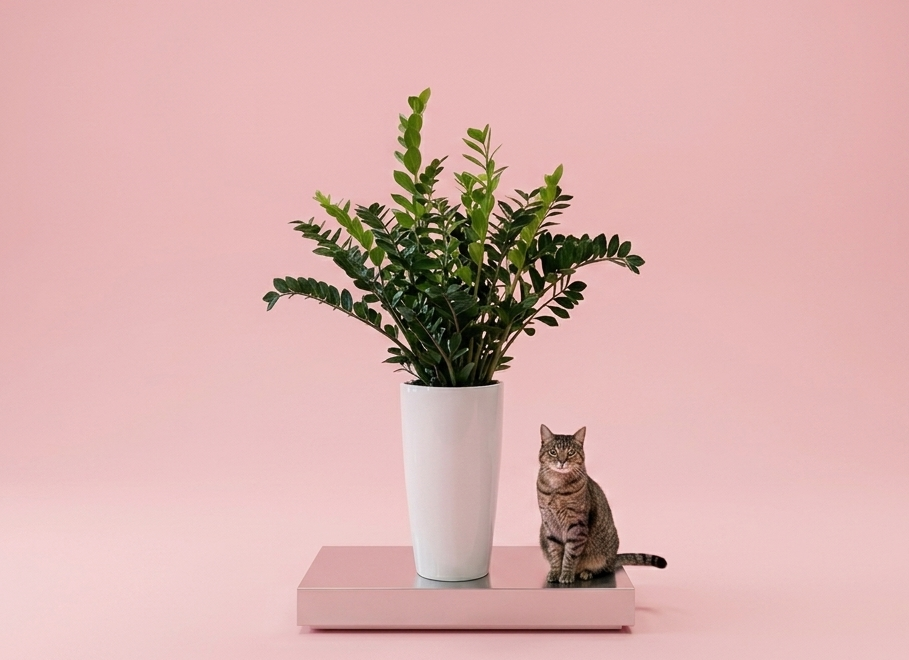
Yes. The ASPCA lists ZZ plants as toxic to cats. The plant contains insoluble calcium oxalate crystals — microscopic needle-like structures called raphides — that cause immediate irritation when a cat chews on the leaves, stems, or any other part of the plant. The reaction is mechanical: the crystals physically irritate the soft tissues of the mouth and throat on contact.
Symptoms in cats typically appear within minutes of chewing and include drooling, pawing at the mouth, and retching. Vomiting sometimes follows. Most cats stop eating the plant immediately because of the pain — which is actually why serious ZZ plant poisoning in cats is relatively rare. The plant announces itself as harmful before much is ingested.

Is the ZZ Plant Toxic to Dogs?
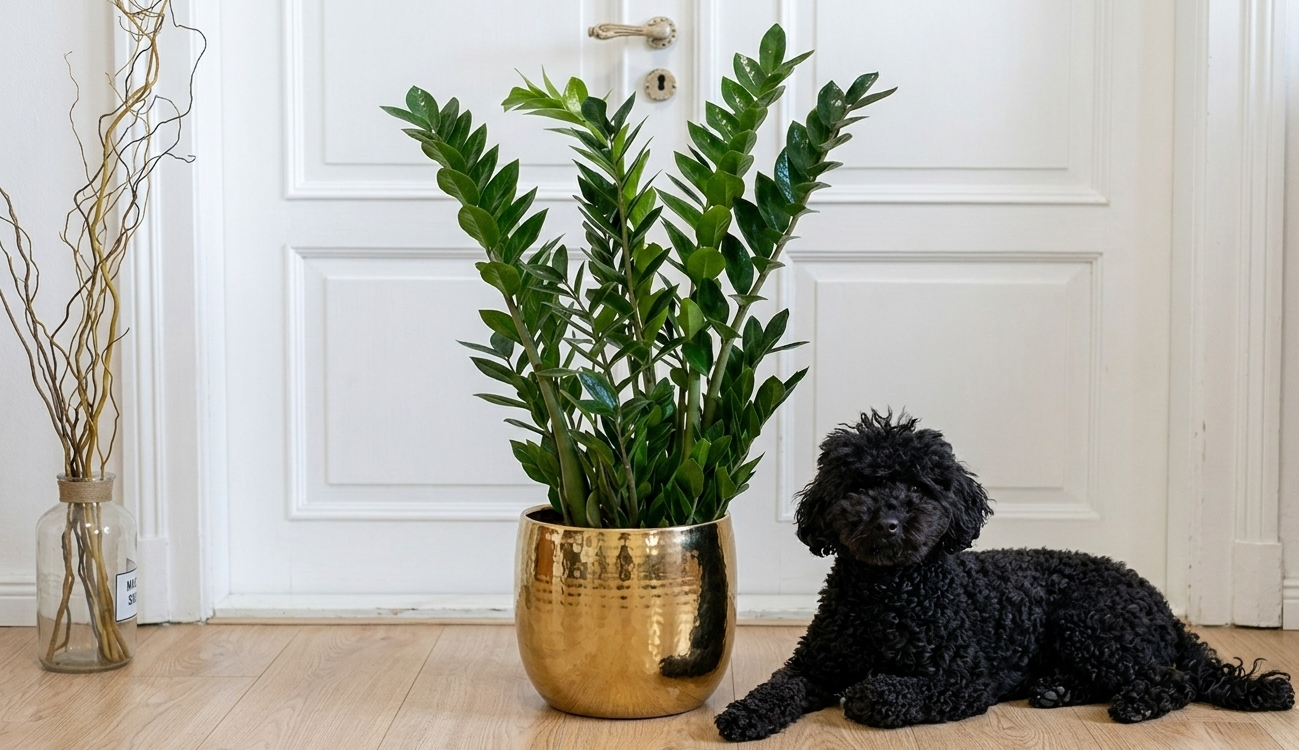
Yes, and through the same mechanism. The calcium oxalate crystals cause the same immediate oral irritation in dogs as in cats. Dogs tend to be less discriminating chewers than cats, which means they’re sometimes more likely to get a larger mouthful before stopping — but the reaction is the same: drooling, mouth pawing, and potential vomiting.
The ASPCA also lists ZZ plants as toxic to dogs — the same calcium oxalate crystals, the same symptoms, the same self-limiting outcome in most cases. As with cats, the toxicity is generally mild to moderate rather than life-threatening when limited to leaf or stem chewing. The concern rises with larger dogs that might ingest more material, or in cases where rhizomes are chewed — rhizomes are part of the plant and contain the same calcium oxalate crystals, though authoritative sources don’t quantify concentration differences between plant parts.
What Makes ZZ Plants Toxic?
The toxic agent is insoluble calcium oxalate crystals — specifically raphides, which are bundles of needle-shaped crystals packed into specialized cells throughout the plant. When a cell is disrupted by chewing, these crystals are released and embed themselves in the soft mucous membranes of the mouth, throat, and digestive tract.
The crystals don’t dissolve (hence “insoluble”) and can’t be neutralized by stomach acid. The irritation is purely physical. All parts of the ZZ plant contain these crystals: leaves, stems, rhizomes, and the sap that leaks from cut surfaces — though the ASPCA and other authoritative sources don’t quantify concentration differences between individual plant parts.
ZZ plants are not in the same category as plants that contain alkaloids, glycosides, or other systemic toxins that cause organ damage. The calcium oxalate mechanism is painful and unpleasant but doesn’t typically cause long-term damage in the amounts a pet would consume from chewing a houseplant.
Symptoms of ZZ Plant Poisoning in Cats and Dogs
| Symptom | Timing | Notes |
|---|---|---|
| Drooling excessively | Within minutes | Body’s response to oral irritation |
| Pawing at the mouth | Within minutes | Sign of oral discomfort |
| Retching or vomiting | Within 30 minutes | More common in cats; possible in dogs |
| Difficulty swallowing | Varies | If throat tissues are affected |
| Loss of appetite | Hours after | Usually temporary |
| Eye or skin irritation | On contact with sap | If sap gets into eyes or on skin |
Symptoms that are NOT typically associated with ZZ plant ingestion in normal amounts: seizures, organ failure, respiratory distress, or collapse. If any of these occur after suspected plant ingestion, contact a veterinarian immediately — they suggest a more serious cause than calcium oxalate irritation.
What to Do If Your Cat or Dog Eats a ZZ Plant
- Don’t panic. Most cases of ZZ plant ingestion result in mild, self-limiting symptoms. The irritation is real but typically resolves on its own.
- Remove access to the plant. Move it out of reach immediately so no more is consumed.
- Rinse the mouth if possible. For dogs especially, gently rinsing the mouth with water can help remove residual crystal particles. Most cats won’t tolerate this.
- Try a small amount of dairy. The ASPCA recommends offering a small amount of milk, plain yogurt, or vanilla ice cream immediately after exposure. Dairy products help coat the irritated mouth tissues and may reduce the burning sensation from the crystals.
- Offer water. Encourage your pet to drink — it helps flush the mouth and throat.
- Monitor for symptoms. Watch for the next 2–4 hours. Mild drooling and retching should subside. If vomiting is persistent, symptoms are worsening, or your pet seems in significant distress, call your vet.
- Contact poison control if unsure. The ASPCA Animal Poison Control Center is available 24/7 at (888) 426-4435 (note: there is a consultation fee). Your vet can also advise based on your pet’s size and how much was consumed.
I keep my ZZ plant on a high shelf specifically because of this — not because I expect serious harm, but because watching a cat drool and paw at its mouth for an hour is genuinely distressing even when you know it’ll pass.
How Serious Is ZZ Plant Toxicity?
Mild to moderate for leaf and stem chewing; potentially more serious for rhizome ingestion. The ASPCA and NC State Extension both classify ZZ plants as having medium toxicity to cats and dogs — significantly less dangerous than plants like lilies (which cause kidney failure in cats from tiny amounts), sago palm, or oleander.
The size of the animal matters too. A 70-pound dog chewing a leaf will likely have a milder reaction than a 7-pound cat eating the same amount relative to body weight. Puppies and kittens are more vulnerable than adults.
The realistic scenario for most pet owners: your cat chews a leaf, drools dramatically for an hour, and then avoids the plant forever. The more concerning scenario — rhizome ingestion in a small animal — is rare because pets would have to dig up the root system to access it.
How to Keep Pets Safe Around ZZ Plants
You have a few practical options:
- Elevate the plant. ZZ plants do well on high shelves, hanging planters, or plant stands out of reach. This is the simplest solution and doesn’t require rehoming the plant.
- Use a room your pets don’t access. A home office, bathroom, or bedroom that stays closed works well — ZZ plants tolerate low light and irregular attention.
- Physical barriers. Some pet owners use decorative cages or terrariums around plants. This works but adds visual bulk.
- Rehome the plant if needed. If you have a young kitten or puppy that chews everything and can’t be kept away, rehoming the plant is the right call. No houseplant is worth a vet emergency. For general care tips, see our ZZ plant care guide.

Are ZZ Plants Toxic to Humans?
Yes, in the same way — calcium oxalate crystals cause oral and skin irritation on contact. The main concern for humans is the sap, which can irritate skin and eyes when handling cut stems or rhizomes. Wear gloves when pruning or repotting your ZZ plant, and wash your hands after any contact with cut plant material. Keep cut stems away from your face.
Ingesting ZZ plant material would cause the same mouth and throat irritation as in pets — unpleasant but not typically dangerous in small amounts for adults. Keep the plant out of reach of young children who might chew on leaves.
Pet-Safe Plant Alternatives to Consider
If your home situation makes a ZZ plant too risky — a persistent chewer, a young kitten, or a small dog — these popular houseplants are confirmed non-toxic to cats and dogs by the ASPCA:
- Spider plant (Chlorophytum comosum) — nearly indestructible, tolerates low light, safe for cats and dogs
- Parlor palm (Chamaedorea elegans) — similar tropical look to ZZ plant, non-toxic, does well in indirect light
- Calathea — striking patterned leaves, low light tolerant, non-toxic
- Peperomia — compact, easy to care for, non-toxic
- Boston fern — classic hanging plant, non-toxic, needs a bit more humidity
The ASPCA maintains a searchable database of toxic and non-toxic plants at aspca.org — worth bookmarking if you regularly bring new plants into a home with pets.
Frequently Asked Questions
How long do ZZ plant poisoning symptoms last in cats and dogs?
Mild symptoms — drooling, pawing at the mouth — typically resolve within 1–2 hours once the pet stops chewing and the irritation subsides. Vomiting, if it occurs, usually passes within a few hours. Loss of appetite may last a day or two. If symptoms persist beyond 4–6 hours or worsen, contact your vet.
Should I take my pet to the vet after eating a ZZ plant?
For mild symptoms (brief drooling, pawing at the mouth), a vet visit is usually not necessary — monitor at home and offer water. Call your vet or the ASPCA Poison Control Center at (888) 426-4435 if vomiting is persistent, symptoms are worsening after 2 hours, your pet is very small or young, or you’re unsure how much was consumed.
Can I keep a ZZ plant if I have cats?
Yes — with precautions. Elevate the plant on a high shelf or in a room your cats don’t access. ZZ plants do well in low light and tolerate irregular care, so keeping them in a closed room is a practical option. Most cats that encounter a ZZ plant once learn to avoid it, but cats that actively chew plants are a higher risk.
Is ZZ plant more toxic to cats or dogs?
The toxicity mechanism is the same for both. Cats may be at slightly higher relative risk because they’re smaller — the same amount of plant material represents a larger dose per body weight. Dogs, especially large breeds, are more likely to chew aggressively and get a larger mouthful before stopping, but serious toxicity is uncommon in both species.
What are some pet-safe alternatives to ZZ plants?
Several popular houseplants are non-toxic to cats and dogs: spider plants (Chlorophytum comosum), parlor palms (Chamaedorea elegans), calathea, peperomia, and Boston ferns. The ASPCA maintains a complete list of non-toxic plants at aspca.org if you want to verify a specific plant.
Does the ASPCA classify ZZ plant as toxic to cats and dogs?
Yes. The ASPCA explicitly lists ZZ plant (Zamioculcas zamiifolia) as toxic to both cats and dogs. The classification is based on the plant’s insoluble calcium oxalate crystals, which cause oral irritation, drooling, and vomiting on contact. The ASPCA Animal Poison Control Center is available 24/7 at (888) 426-4435 if your pet has ingested any part of a ZZ plant.