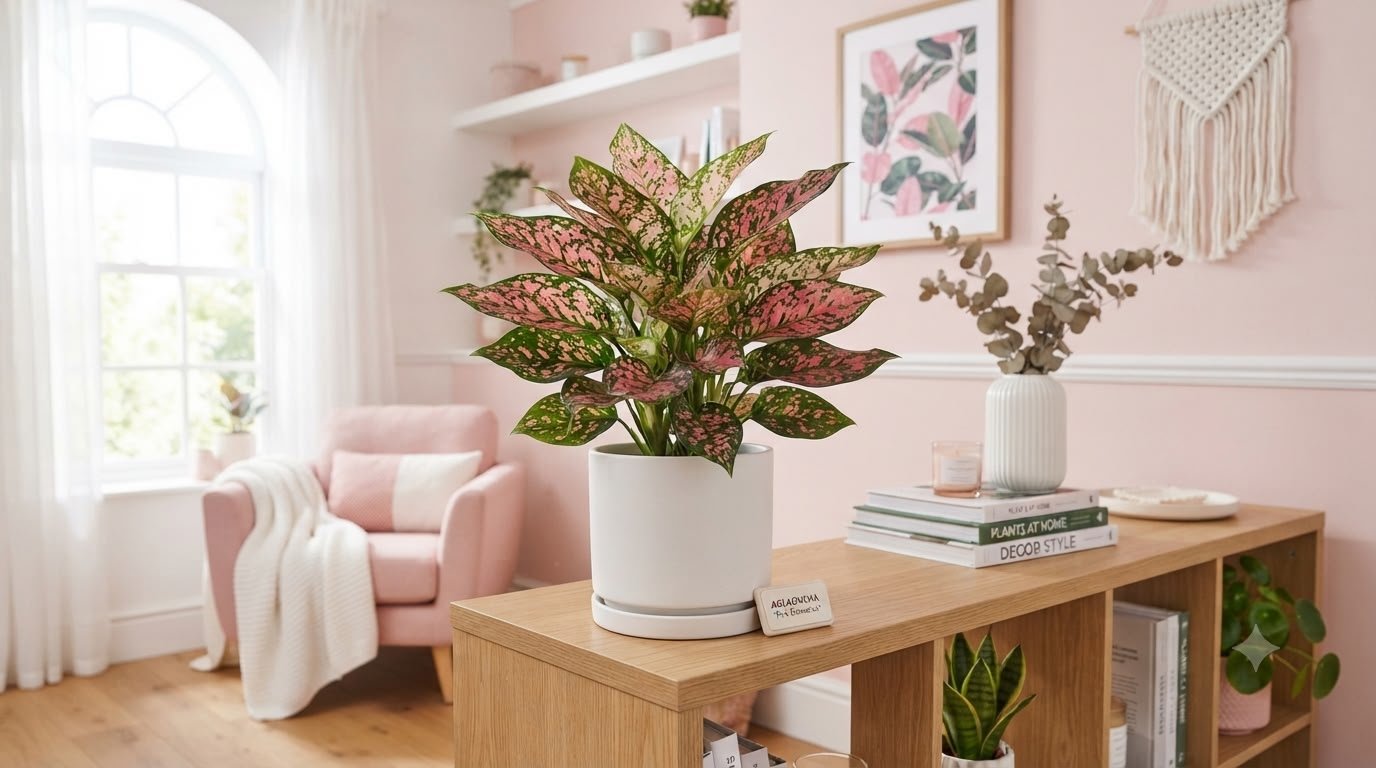
Aglaonema earns its reputation as the plant for rooms that kill everything else. It’s an understory species from the rainforest floors of Southeast Asia, evolved to survive on whatever scraps of light filter down through a forest canopy — which is exactly the lighting situation in most apartments. The tradeoff: the more dramatically variegated a cultivar is, the less true that tolerance becomes, and knowing which type of aglaonema plant you have changes how you should treat it.
| Aglaonema Quick Care Summary | |
|---|---|
| Light | Low to bright indirect; variegated types need more light than solid green |
| Water | Let top 1-2 inches dry between waterings |
| Humidity | Tolerates average home humidity; no misting required |
| Temperature | 68-80°F (20-27°C); chilling injury below 50°F |
| Fertilizer | Monthly spring-summer; reduce or stop in fall-winter |
What Is Aglaonema, and Why “Chinese Evergreen”?
Aglaonema is a genus of roughly 21 to 26 species in the Araceae family, native to the tropical and subtropical understory of Southeast Asia and New Guinea — Malaysia, Indonesia, the Philippines, Thailand, with some species reaching southern China and India. This evergreen Aglaonema earned the trade name “Chinese Evergreen” not because of where it actually comes from; China was an early hub for cultivating and exporting it, and the name stuck even though most species originate further south.
Which Aglaonema Cultivar Do You Have?
Almost everything sold under this name is a hybrid cultivar rather than a wild species, and the differences between them matter for how much light yours needs:
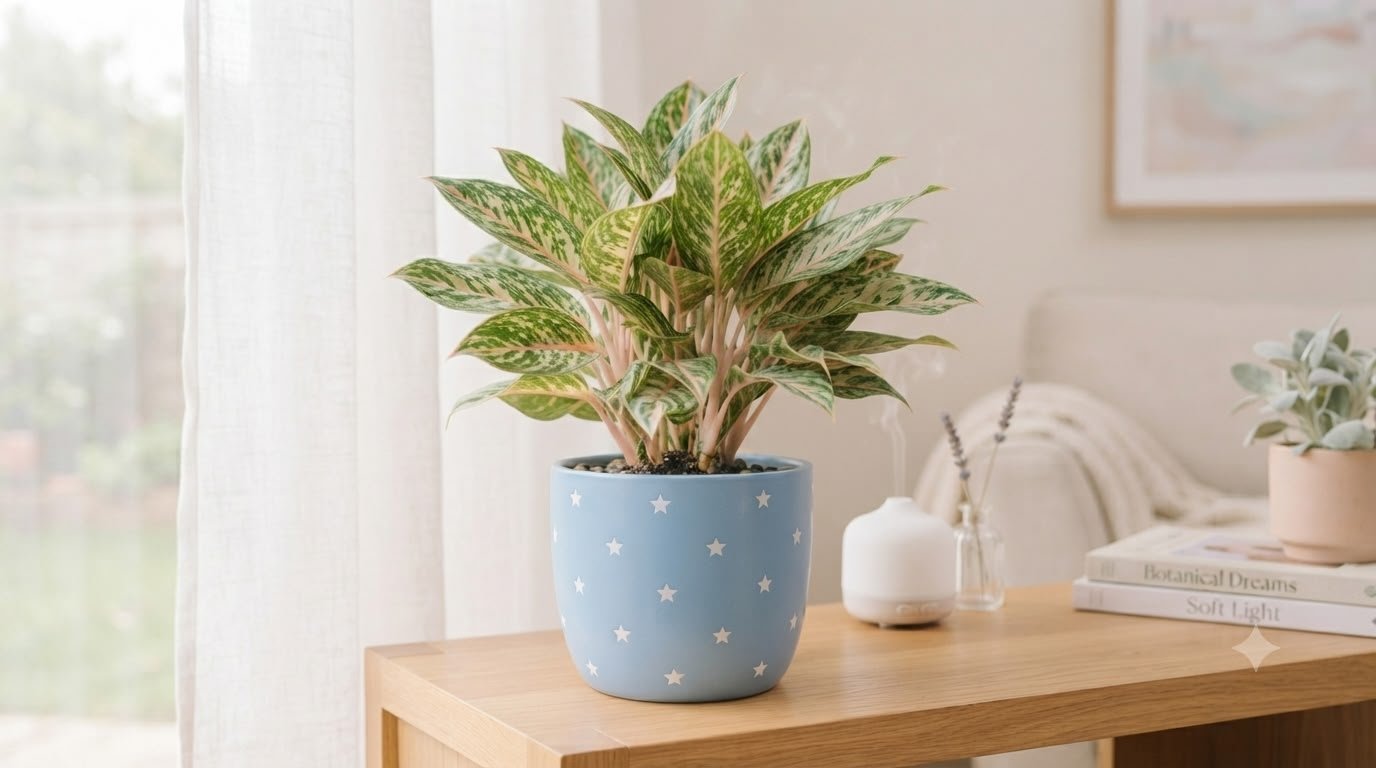
- Silver Bay — silver-green with dark green edges, a vigorous, fast grower for the genus.
- Maria / Emerald Beauty — deep solid green, slow-growing, and the most shade-tolerant of the common types.
- Silver Queen — green with heavy silver marbling, can reach up to 3 feet.
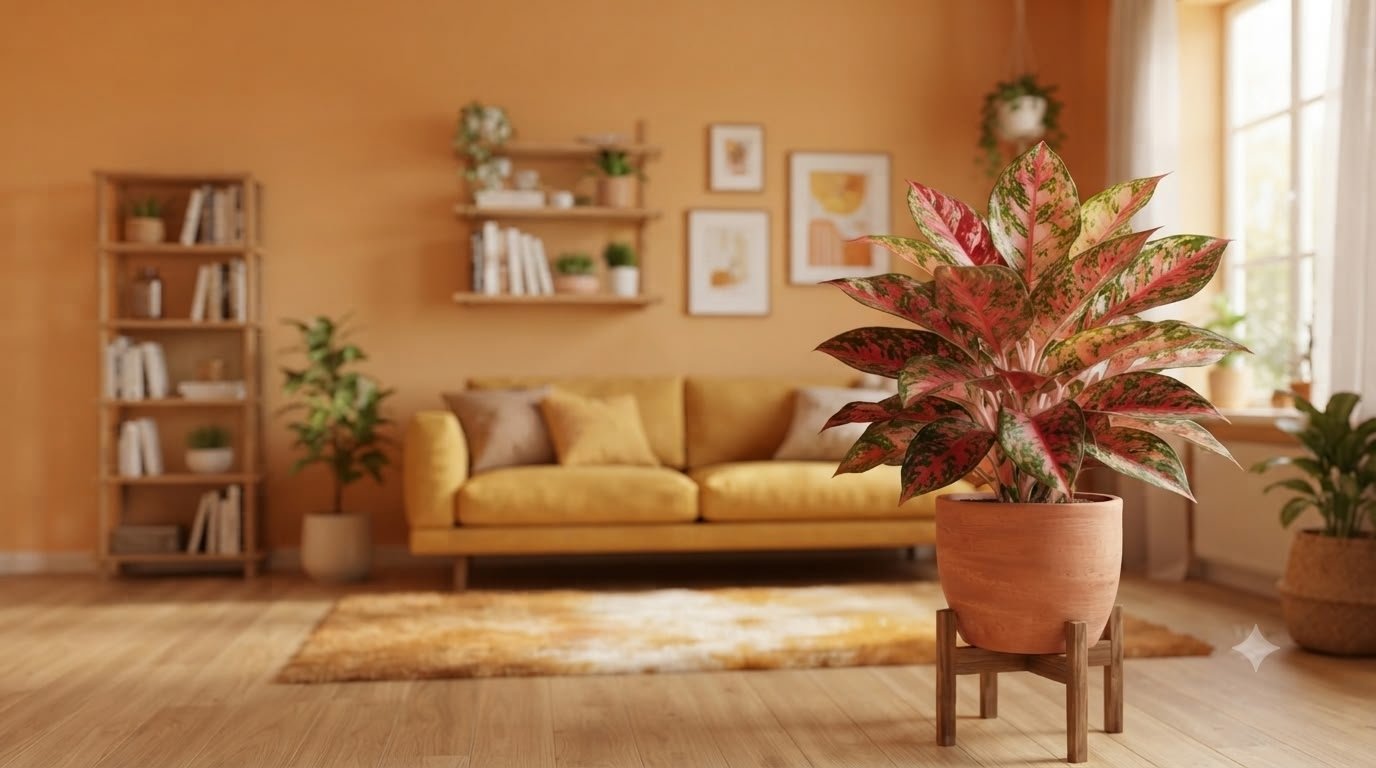
- Red Valentine — pink and red speckled foliage, compact and slow.
- Siam Aurora — pink and silver over green, needs brighter light than the others to hold its color.
None of these are the same plant as Aglaonema pictum ‘Tricolor’ — a genuinely wild species with a camouflage-patterned leaf, distinct from every hybrid on this list.
What Light Does Aglaonema Need?
Low-light tolerance is the hallmark trait of this genus, and Clemson HGIC confirms it as a defining characteristic — but that tolerance isn’t equal across cultivars. Solid green types like Maria and Emerald Beauty handle genuinely dim rooms well. Variegated cultivars need low-to-moderate — meaning better, brighter — indirect light specifically to maintain their patterning; in low light they don’t die, but the variegation fades toward solid green over time as the plant prioritizes chlorophyll-producing tissue.
How Often Should You Water Aglaonema?
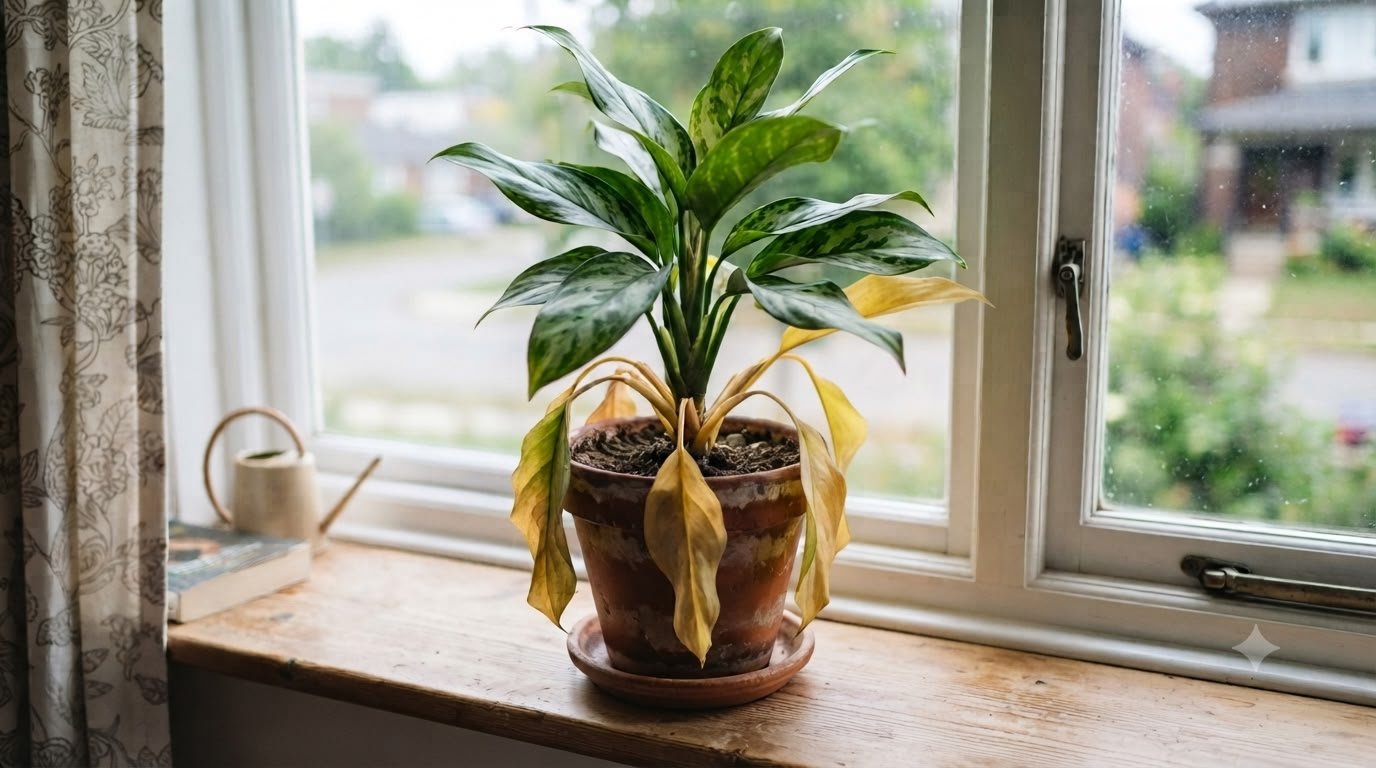
Let the top 1 to 2 inches of soil dry out before watering again, then water thoroughly with room-temperature water. Both NC State Extension and Clemson HGIC agree that overwatering is the bigger risk than underwatering here — root rot from consistently wet soil, especially combined with cold water or poor drainage, is the most common way this plant dies. A pot without drainage holes is a real liability with this species.
What Soil Does Aglaonema Need?
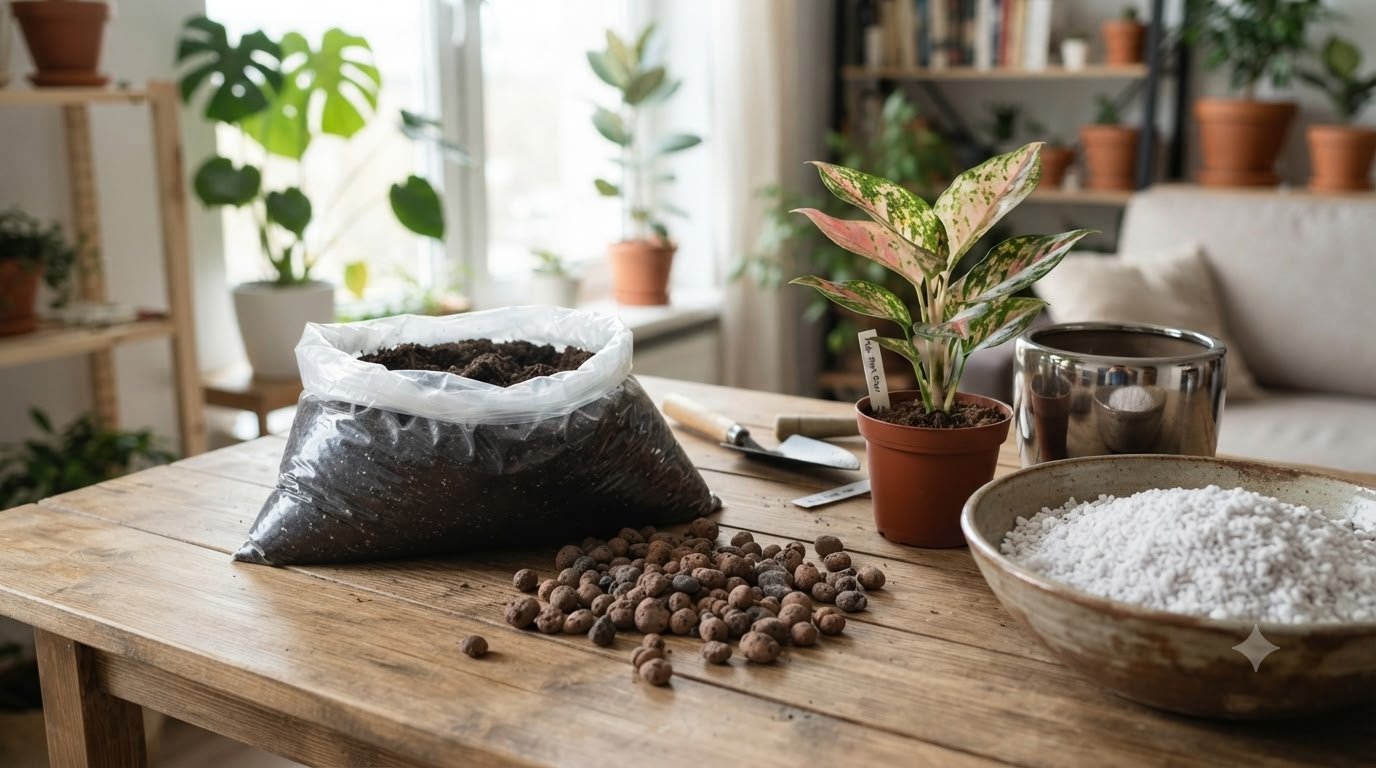
A well-draining, soilless potting mix with added humus, perlite, or bark, according to Clemson HGIC. The specific ratio matters less than making sure the mix doesn’t stay soggy — this plant’s roots are notably intolerant of standing water.
What Temperature and Humidity Does It Need?
68-80°F (20-27°C) is the ideal range. NC State Extension and UF/IFAS both note tolerance down to around 55°F, but chilling injury sets in below 50°F — keep it away from cold drafts, unheated porches, and windows in winter. On humidity, Clemson HGIC is direct: it tolerates low humidity and prefers moderate, which in practice means average home air is fine — this isn’t a plant that needs a humidifier or regular misting to thrive.
How Often Should You Fertilize Aglaonema?
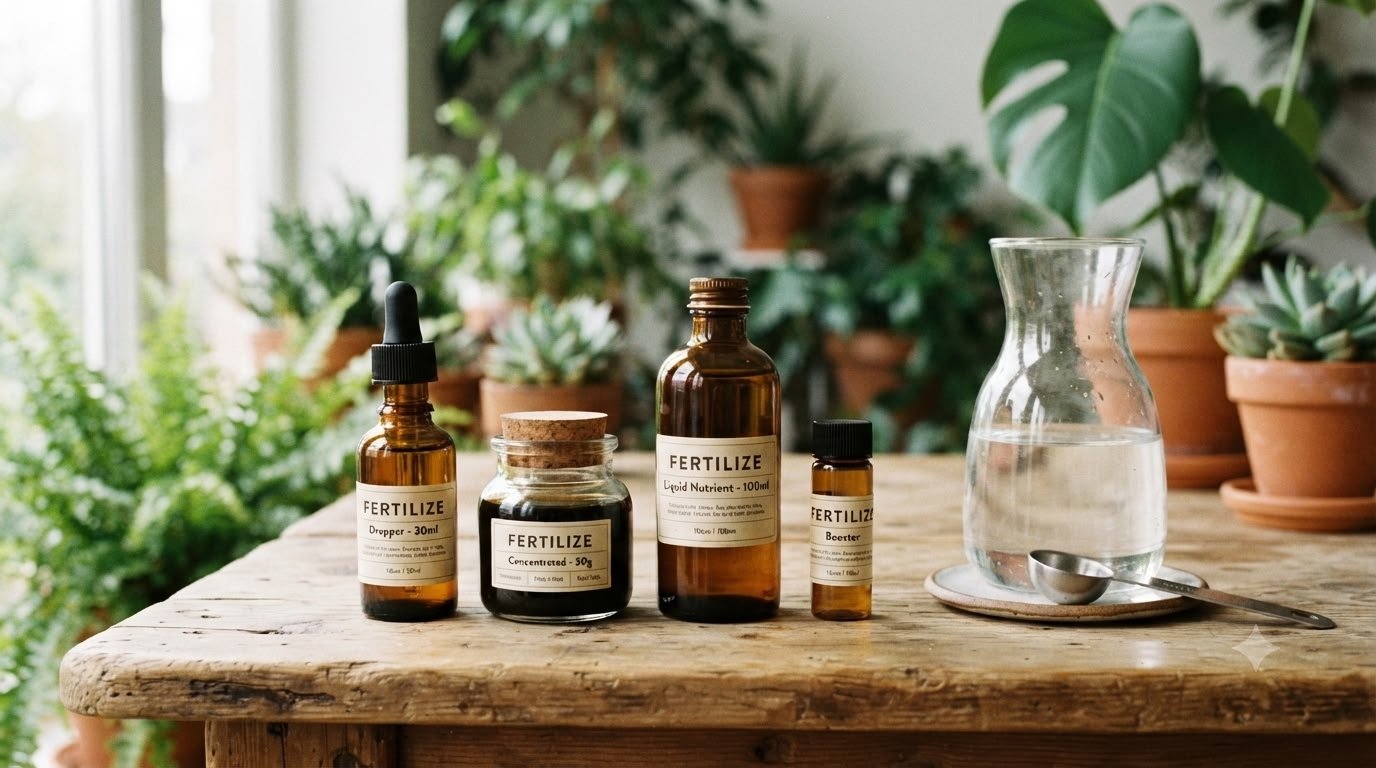
A balanced liquid fertilizer, diluted per the label, monthly during spring and summer growth — Clemson HGIC doesn’t specify an exact NPK ratio, just a balanced formula. Reduce to every two to three months, or stop entirely, once growth slows in fall and winter. Clemson HGIC’s specific warning here: excess fertilizer causes leaf-tip and edge burn, so this is a plant where less is genuinely safer than more.
How to Propagate Aglaonema
Two methods work, both confirmed by Clemson HGIC: stem cuttings and division.
Stem Cuttings
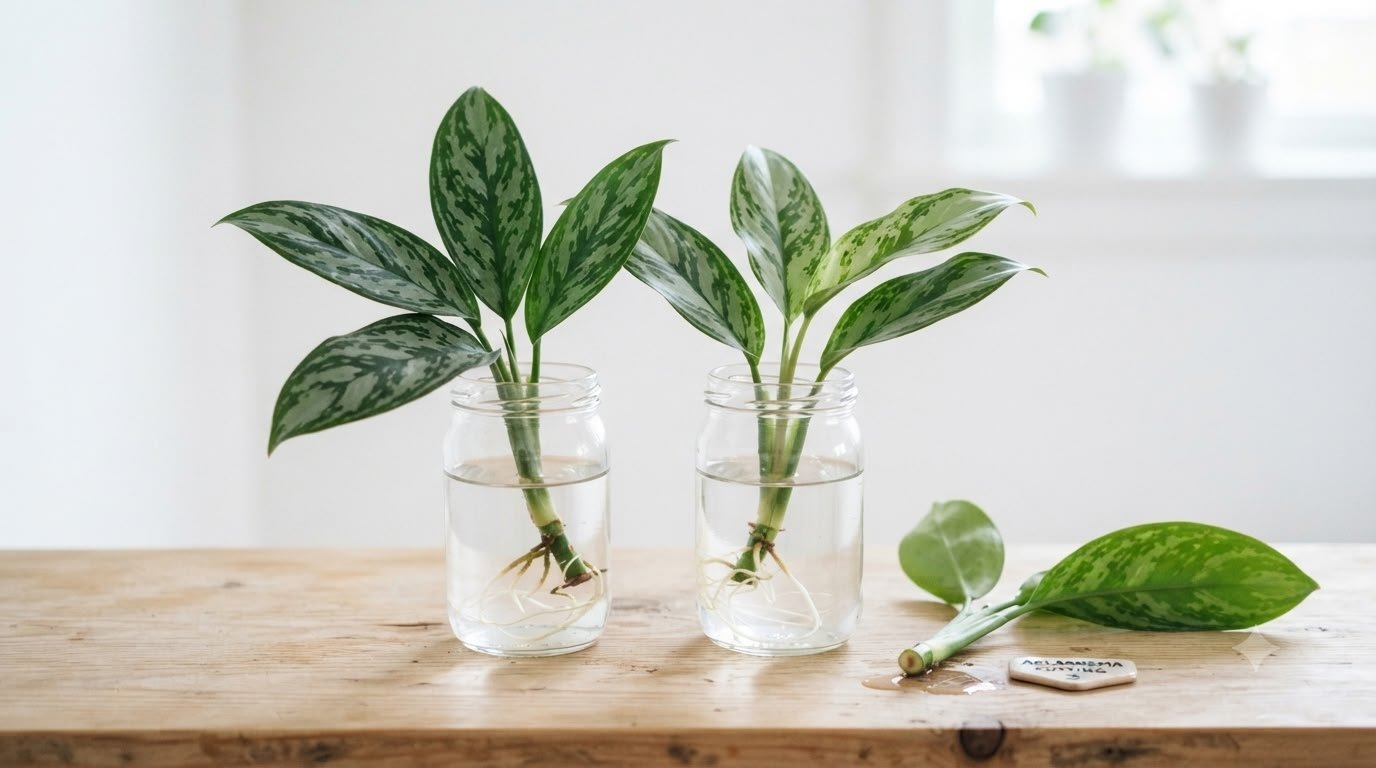
Take a cutting with an angled cut just above a node, then root it in water or moist potting mix. Clemson HGIC confirms both stem cuttings and division as valid methods but doesn’t give a specific rooting timeline — water propagation lets you monitor root progress directly, while soil propagation skips the later transplant step.
Division
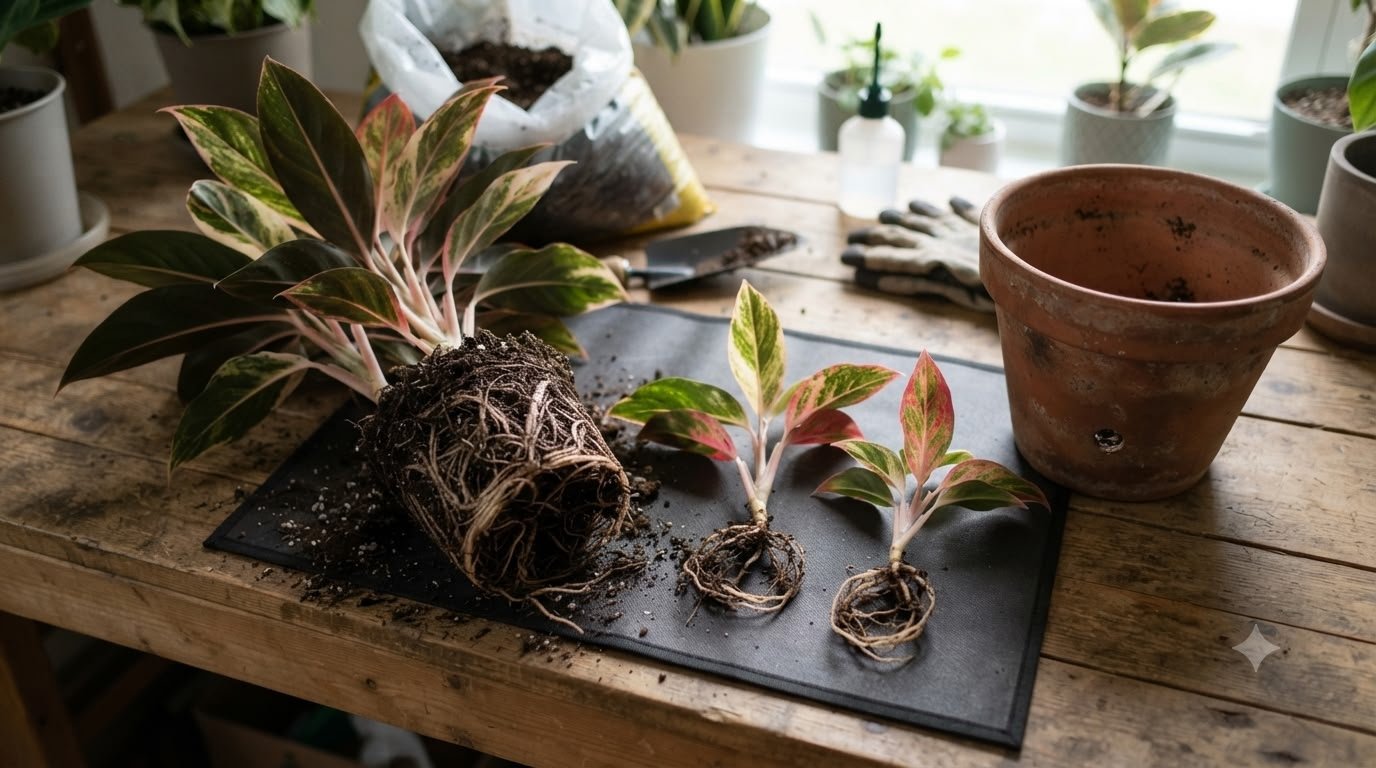
If your plant has produced offsets — smaller shoots growing from the base — separate them with their own roots attached and pot individually. Division typically establishes faster than cuttings since the new plant already has a working root system rather than needing to grow one from scratch.
Is Aglaonema Toxic to Cats and Dogs?
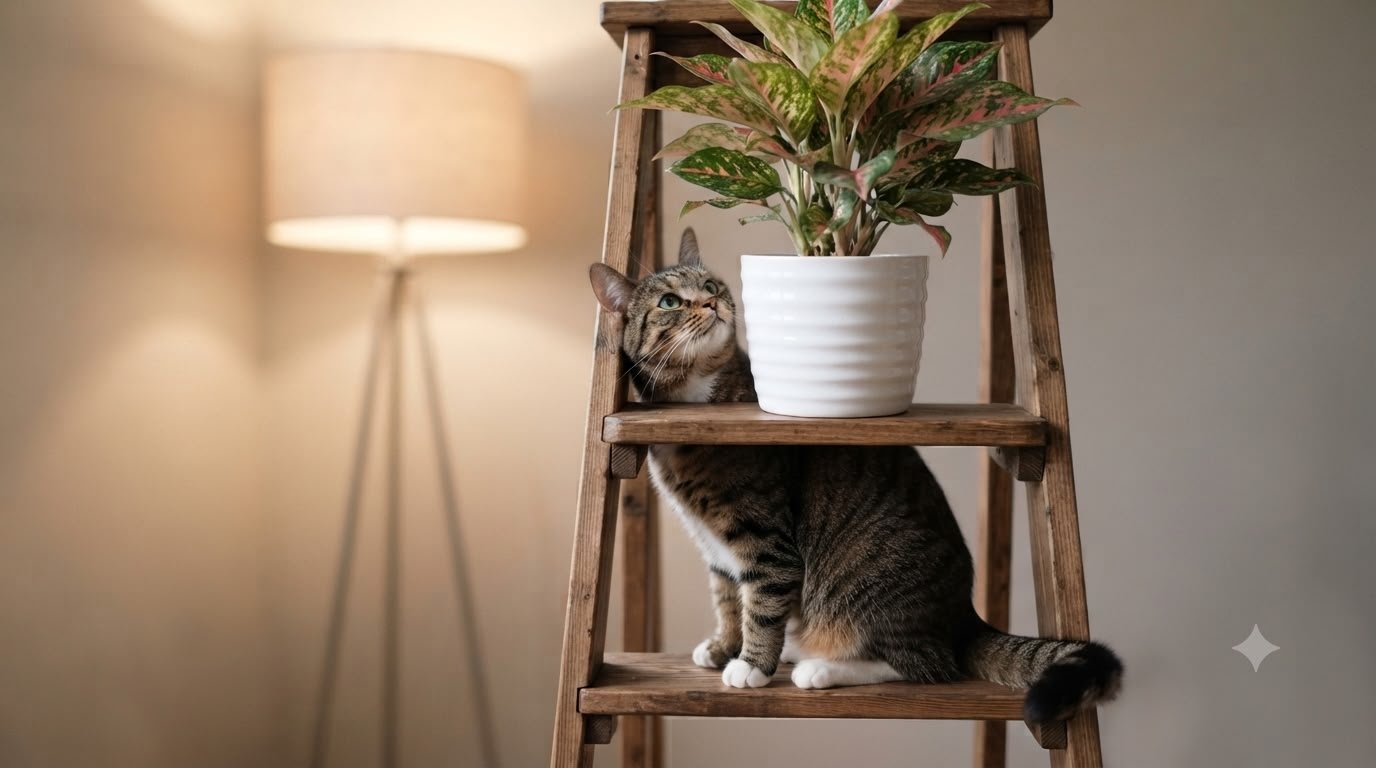
Yes. The ASPCA’s listing for Chinese Evergreen (naming Aglaonema modestum specifically) is direct: “Toxic to Dogs, Toxic to Cats, Toxic to Horses.” The toxic principle is insoluble calcium oxalate crystals, and clinical signs include oral irritation, pain and swelling of the mouth, tongue, and lips, excessive drooling, vomiting (in dogs and cats, not horses), and difficulty swallowing. This toxicity mechanism is common across calcium-oxalate-bearing Araceae, so it’s reasonable to treat all Aglaonema cultivars with the same caution rather than assuming any particular variety is exempt.
What Pests Attack Aglaonema?
Clemson HGIC names mealybugs, aphids, scale, and spider mites as the pests to watch for.
Mealybugs
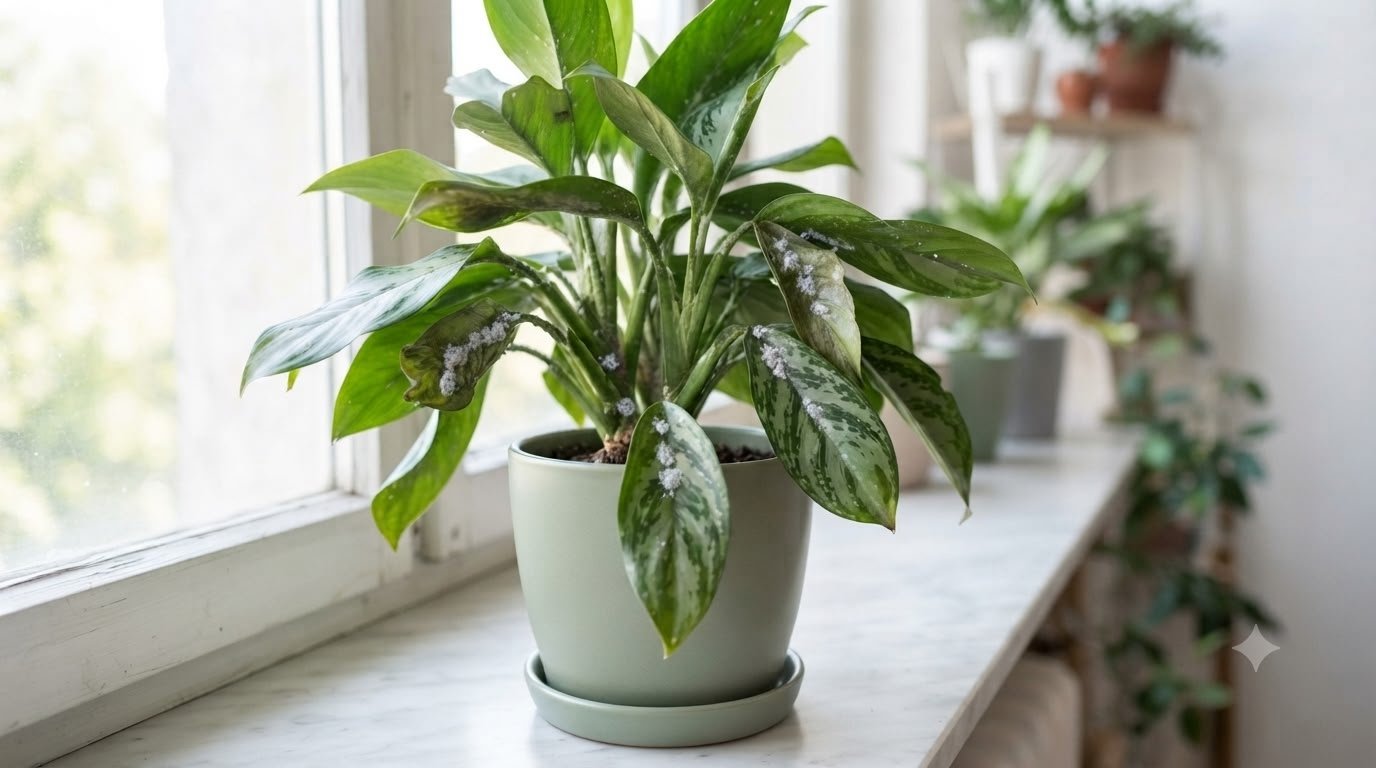
Small white cottony clusters, typically at stem joints and leaf bases. Dab individual colonies with rubbing alcohol on a cotton swab; treat larger infestations with insecticidal soap or neem oil.
Spider Mites
Fine webbing on leaf undersides paired with stippled or yellowing discoloration. Rinse the plant to knock down populations, then follow with insecticidal soap or neem oil.
Scale
Small, immobile brown bumps along stems and leaf midribs. Scrape off by hand, then treat with neem oil to catch anything missed.
Common Mistakes With Aglaonema
Watering on a fixed schedule instead of checking the soil. Overwatering is the single most common way to kill this plant — root rot from consistently wet soil is far more likely than any problem from underwatering. Check the top few inches before adding water, don’t just water every Sunday regardless.
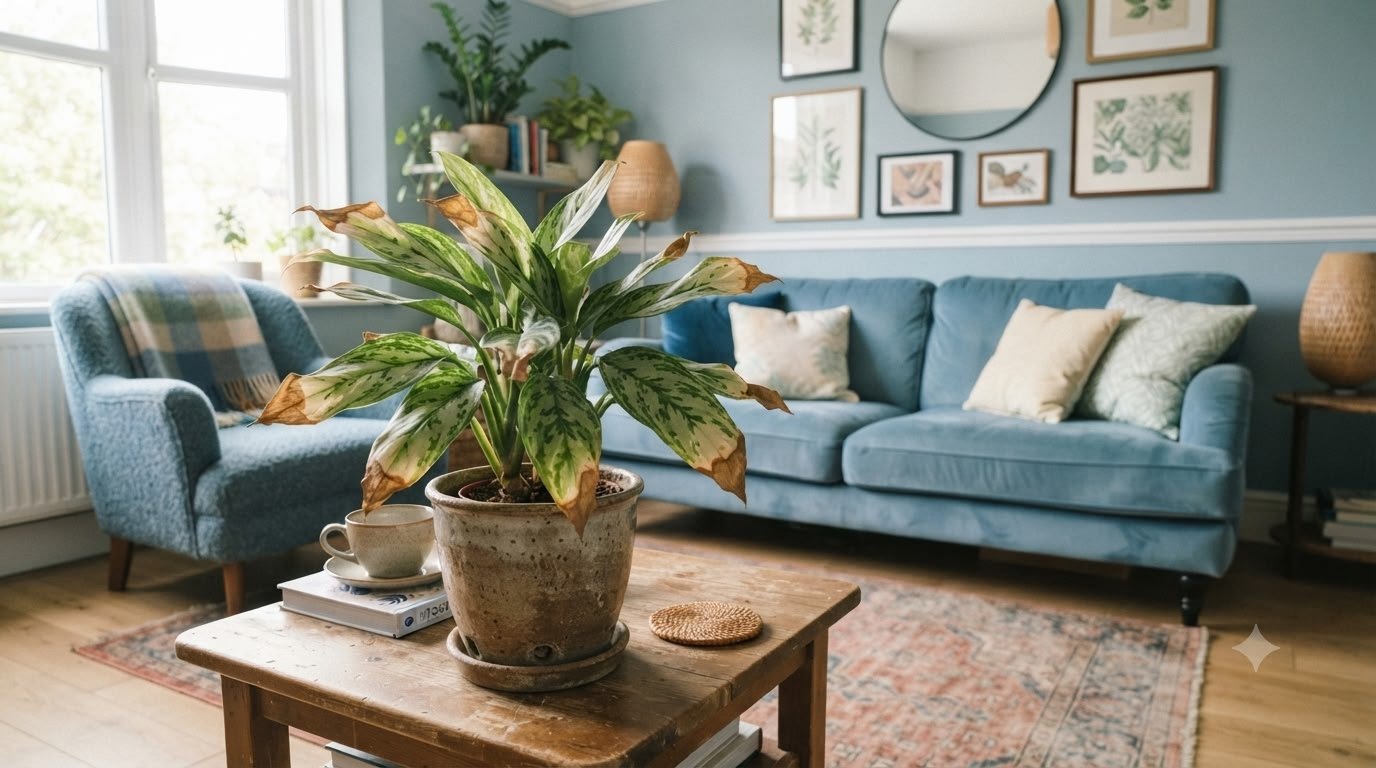
Expecting a variegated cultivar to thrive in the same dim corner a solid green one would. Maria and Emerald Beauty tolerate genuinely low light; Silver Queen and Siam Aurora will slowly lose their pattern there. Match the cultivar to the light you actually have.
Chasing brown tips with more water or humidity. Brown leaf tips and edges are more often caused by dry air combined with cold drafts, or by fertilizer salt buildup, than by underwatering. Adding more water to a plant with brown tips can make root rot the actual problem instead.
Frequently Asked Questions
How fast does Aglaonema grow?
Slowly to moderately, depending on cultivar — Silver Bay is one of the more vigorous types, while Maria and Red Valentine are notably slow. Expect a few new leaves per growing season rather than rapid fill-out.
Why are my Aglaonema leaves turning yellow?
Usually overwatering. Check whether the soil has been staying wet between waterings and whether the roots look dark or mushy when you check the pot. Natural aging of a lower, older leaf while the rest of the plant looks healthy is normal and not a sign of a problem.
Is Aglaonema the same as Chinese Evergreen?
Yes, “Chinese Evergreen” is simply the common trade name for the genus Aglaonema — not a reference to where the plant is actually native, but to an early hub for its cultivation and export.
Can Aglaonema grow in low light with no windows?
Solid green cultivars like Maria and Emerald Beauty tolerate low light better than almost any other common houseplant, but “low light” still means some ambient daylight — a windowless room lit only by artificial light will cause slow decline over time, not indefinite survival.