Portulacaria afra is one of the most frequently misidentified plants in succulent collections. It has the same small, round, fleshy leaves and woody stems as jade plant (Crassula ovata), and they are sold side by side in garden centers. They are completely different plants — different families, different native habitats, different care requirements, and a different toxicity profile. This guide explains what Portulacaria actually needs, what makes it a better choice than jade plant in some situations, and why the confusion persists.
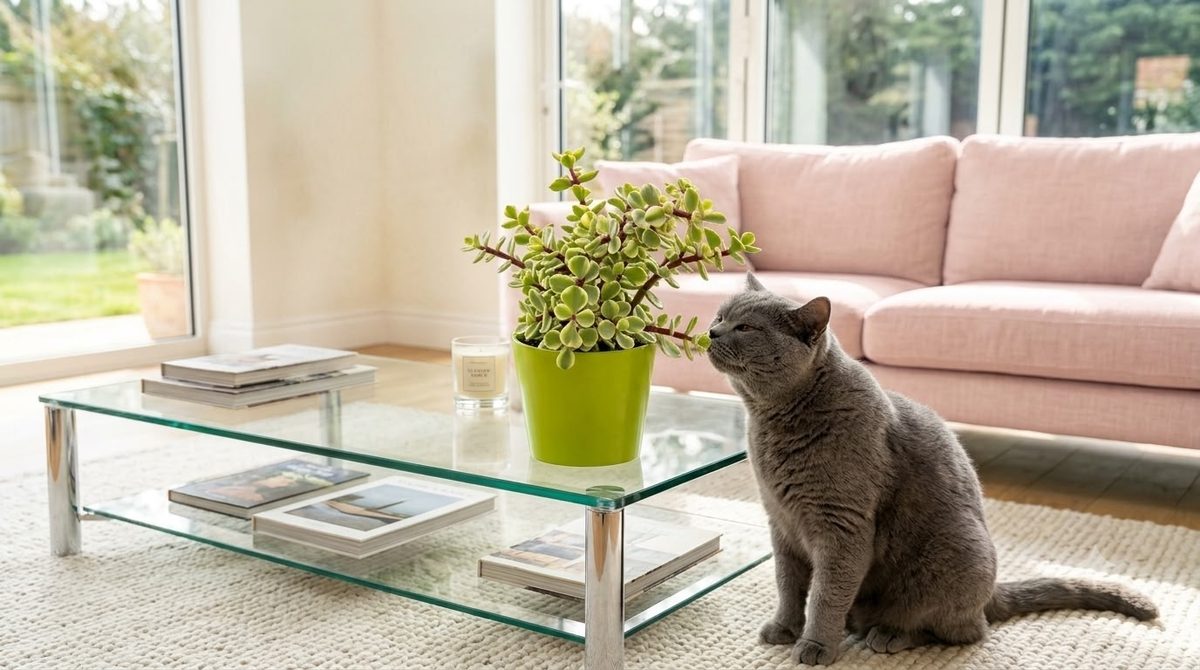
| Portulacaria afra Quick Care Summary | |
|---|---|
| Light | Full sun to bright indirect; direct sun ideal |
| Water | Every 14–21 days; let soil dry completely |
| Humidity | 40–50%; drought-tolerant |
| Temperature | 65–85°F (18–29°C); min 50°F (10°C) |
| Fertilizer | Monthly spring–summer, diluted balanced or cactus fertilizer |
Is Portulacaria Afra the Same as Jade Plant?
No — and the distinction matters. Both plants produce small, oval, fleshy leaves on woody stems and are sold under the common name “jade” in various forms. The key differences:
- Family: Portulacaria afra belongs to the Didiereaceae family. Jade plant (Crassula ovata) is in the Crassulaceae family. They are not related.
- Leaf size: Portulacaria leaves are noticeably smaller and rounder than most jade plant varieties. The leaves sit closer together on the stems.
- Growth rate: Portulacaria afra grows faster than Crassula ovata, especially outdoors. Indoors the difference is less dramatic.
- Cultural use: Portulacaria afra is edible — in South Africa, where it is called spekboom (Afrikaans for “bacon tree”), the leaves are eaten raw or used in salads and stews. Jade plant is not edible.
- Pet toxicity: Jade plant (Crassula ovata) is listed by the ASPCA as toxic to cats and dogs. Portulacaria afra is not listed by ASPCA as toxic; it does not appear on either the toxic or non-toxic list, and given its widespread edible use in South Africa, toxicity to pets is generally not considered a concern.
Is Portulacaria Afra Safe for Cats and Dogs?
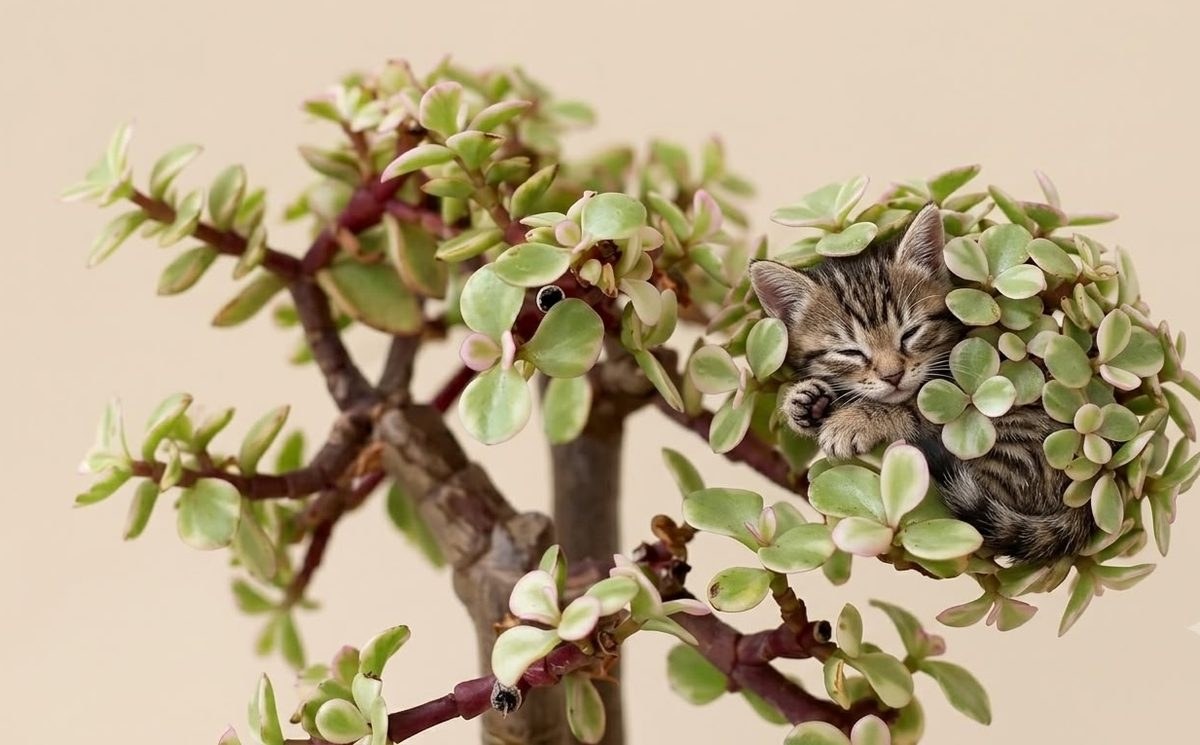
Portulacaria afra is not included in the ASPCA toxic plants database — it appears neither on the toxic list nor the non-toxic list. This is a meaningful distinction from jade plant (Crassula ovata), which is explicitly listed by the ASPCA as toxic to cats, dogs, and horses.
Beyond the database absence, Portulacaria afra has been used as a food plant by humans in South Africa for generations. The leaves are eaten raw in salads and cooked in traditional dishes. No toxicity has been documented in either humans or domesticated animals. While not a formal ASPCA clearance, the combination of food use history and absence from toxicity databases makes Portulacaria afra the safer option compared to jade plant if you have pets.
How to Care for Portulacaria Afra
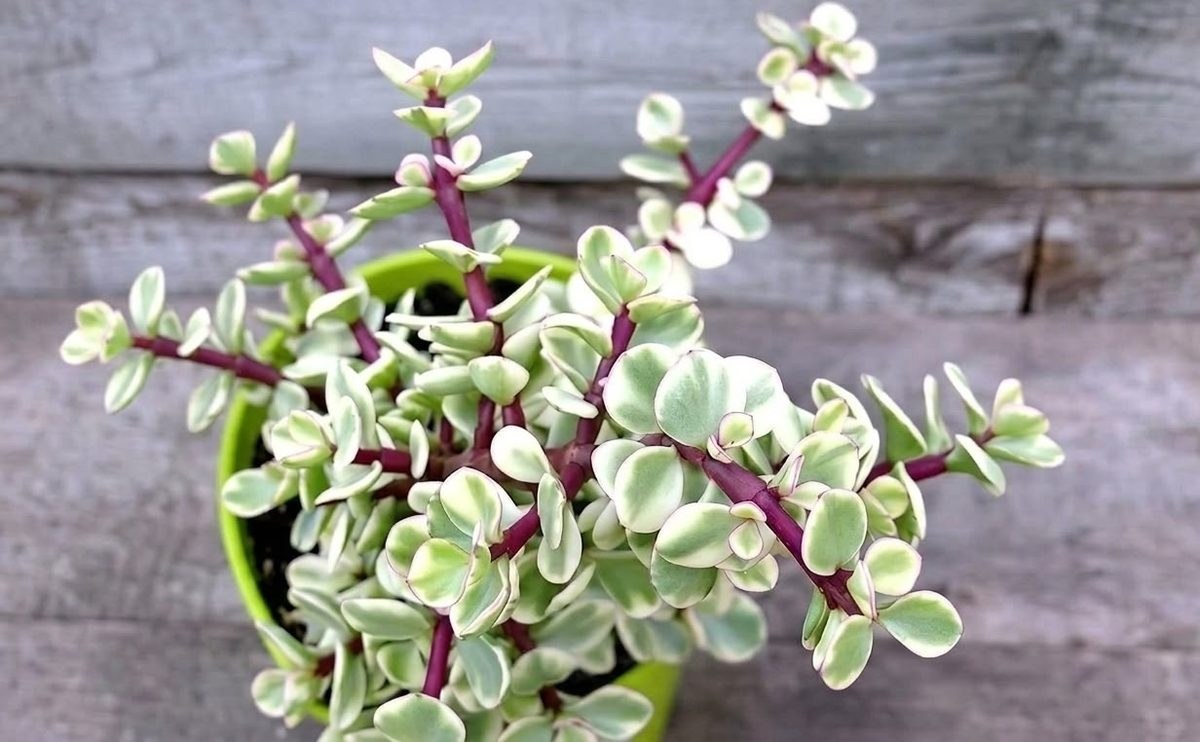
What Light Does Portulacaria Afra Need?
Full sun to bright indirect light — this is a plant from the arid, rocky slopes of South Africa’s Eastern Cape, Limpopo, and KwaZulu-Natal provinces. Outdoors, it thrives in full sun. Indoors, place it in the brightest available spot: a south-facing window with direct sun is ideal. It tolerates partial shade better than many succulents, but grows noticeably faster and produces more compact, attractive growth in full sun. In low light, it becomes leggy and etiolated (stretched, with wide-spaced leaves).
How Often Should You Water Portulacaria Afra?
Water thoroughly, then allow the soil to dry completely before watering again. This typically means every 2-3 weeks in summer, every 4-6 weeks in winter. Portulacaria afra is adapted to summer drought — it stores water in its leaves and stems, and its native habitat has distinct wet and dry seasons. Overwatering is the most common cause of failure; the plant is far more tolerant of underwatering than overwatering. If in doubt, wait another week.
What Soil Does Portulacaria Afra Need?
Well-draining succulent or cactus mix. A standard cactus potting mix, or regular potting soil with 50% perlite added, provides the sharp drainage Portulacaria roots need. The soil should feel completely dry 5-7 days after watering. If it stays moist longer, either add more perlite or switch to a pot with more drainage holes.
What Temperature Does Portulacaria Afra Tolerate?
25-95°F (-4 to 35°C) — exceptionally wide tolerance for a succulent. It can handle brief frosts and hot summer temperatures equally well. Sustained freezing causes damage; bring inside before temperatures drop below 25°F (-4°C). Standard household temperatures are ideal year-round.
Does Portulacaria Afra Need High Humidity?
No — it tolerates low humidity (30-50%) without any supplementation. This is a plant from semi-arid environments. Standard household air is more humid than its native habitat. No misting, pebble trays, or humidifiers needed.
How Often Should You Fertilize Portulacaria Afra?
Monthly during spring and summer with a diluted cactus or succulent fertilizer (half strength). Do not fertilize in autumn or winter. Over-fertilizing in low light produces soft, weak growth that is susceptible to rot.
Can Portulacaria Afra Be Grown as Bonsai?
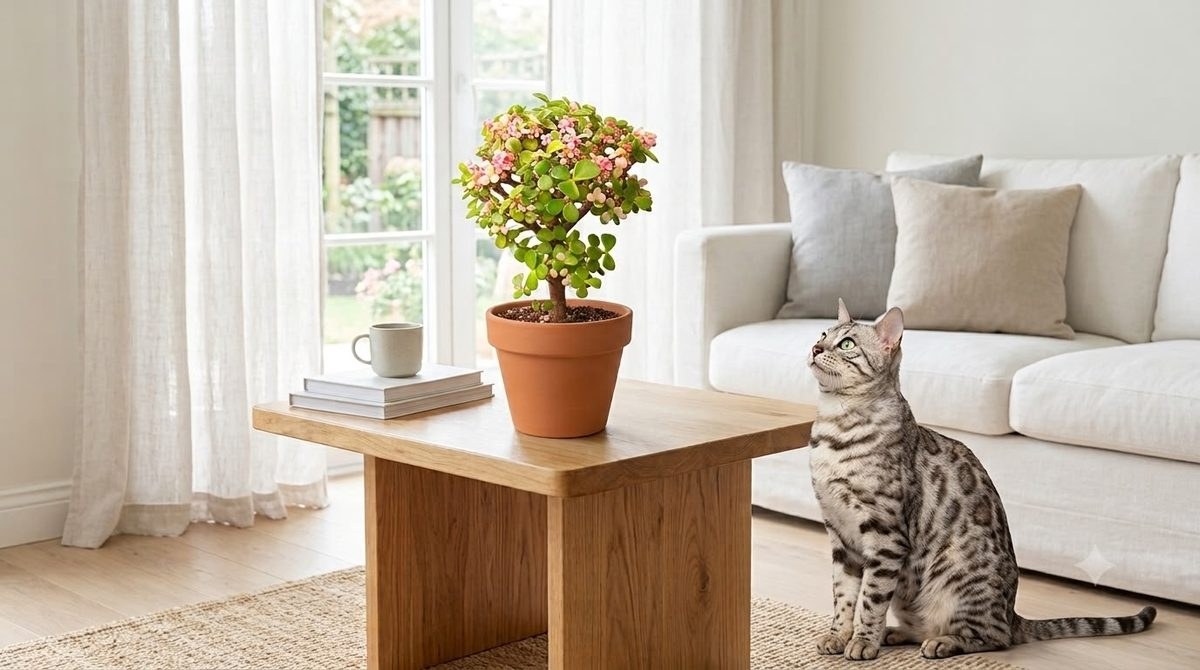
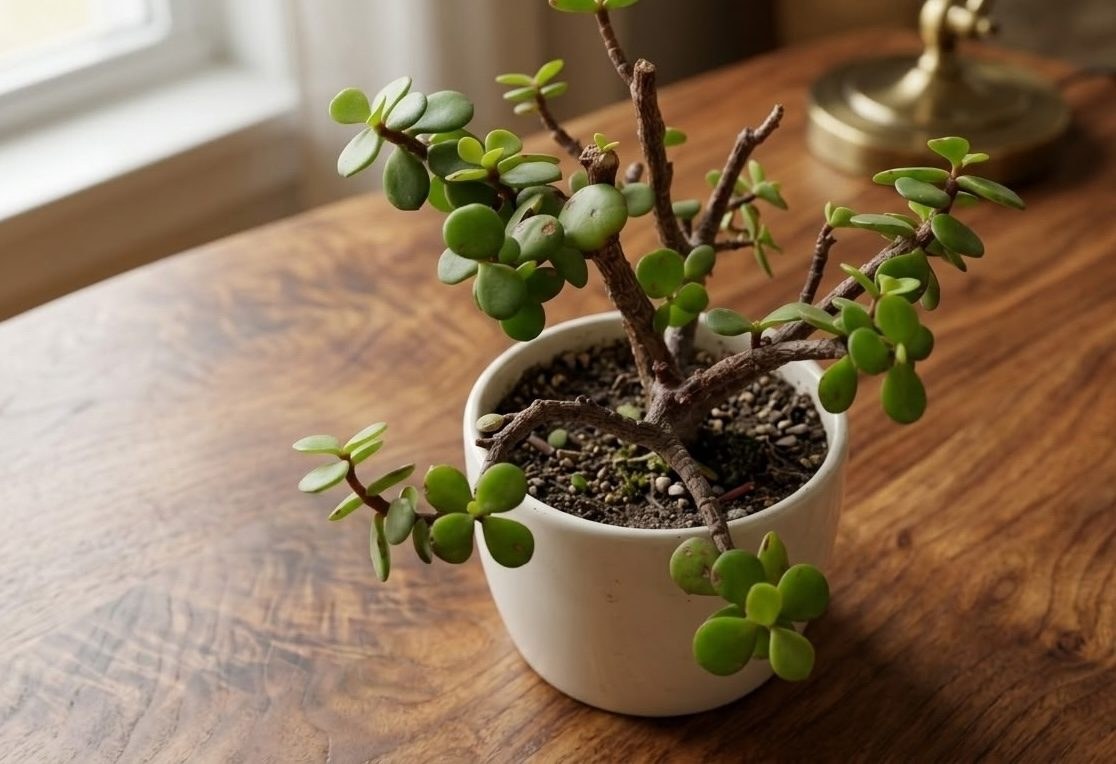
Yes — and it is one of the most popular bonsai subjects in South Africa, where it has a long tradition as a bonsai tree. Several characteristics make it well-suited for bonsai:
- Fast growth response to pruning (produces back-budding on old wood readily)
- Attractive, naturally gnarled trunk development with age
- Small leaf size that scales well to bonsai proportions
- High tolerance for root pruning during repotting
- Tolerates a wide range of styles (informal upright, windswept, forest groups)
For bonsai, repot every 1-2 years in spring before new growth begins. Prune roots back by one-third and reduce the canopy proportionally. Keep in full sun outdoors in summer; protect from hard frost in winter.
How to Propagate Portulacaria Afra
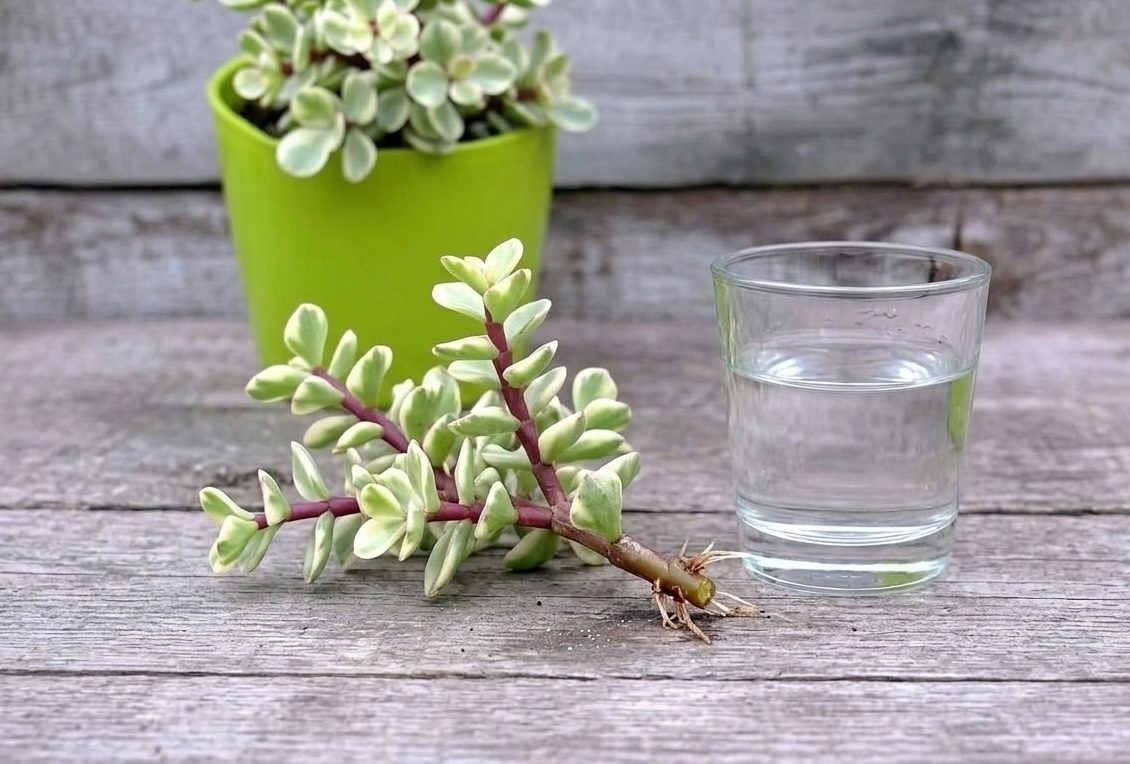
Portulacaria afra is one of the easiest succulents to propagate from stem cuttings, ideally taken in spring or summer while the plant is actively growing. Cut a stem section just below a node (cutting through a node reportedly slows rooting), leaving several leaves attached — grower sources note even short cuttings with a handful of leaves root readily.
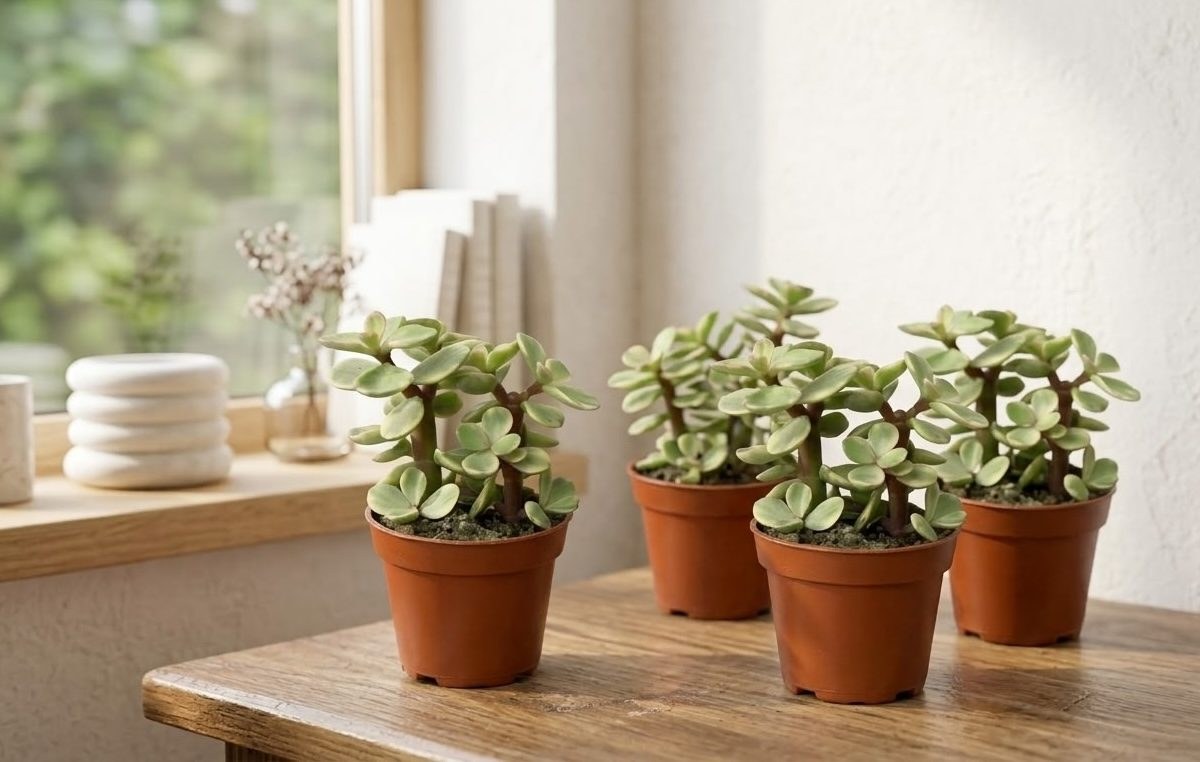
Let the cut end dry and callous over for a few days before planting — this is standard succulent practice that prevents the wound from rotting once it’s in soil. Rooting hormone isn’t necessary for this species. Both soil and water work, but a fast-draining succulent mix produces sturdier roots than water rooting. Expect roots in 1-6 weeks depending on conditions; gentle resistance when tugged and new leaf growth signal it has taken.
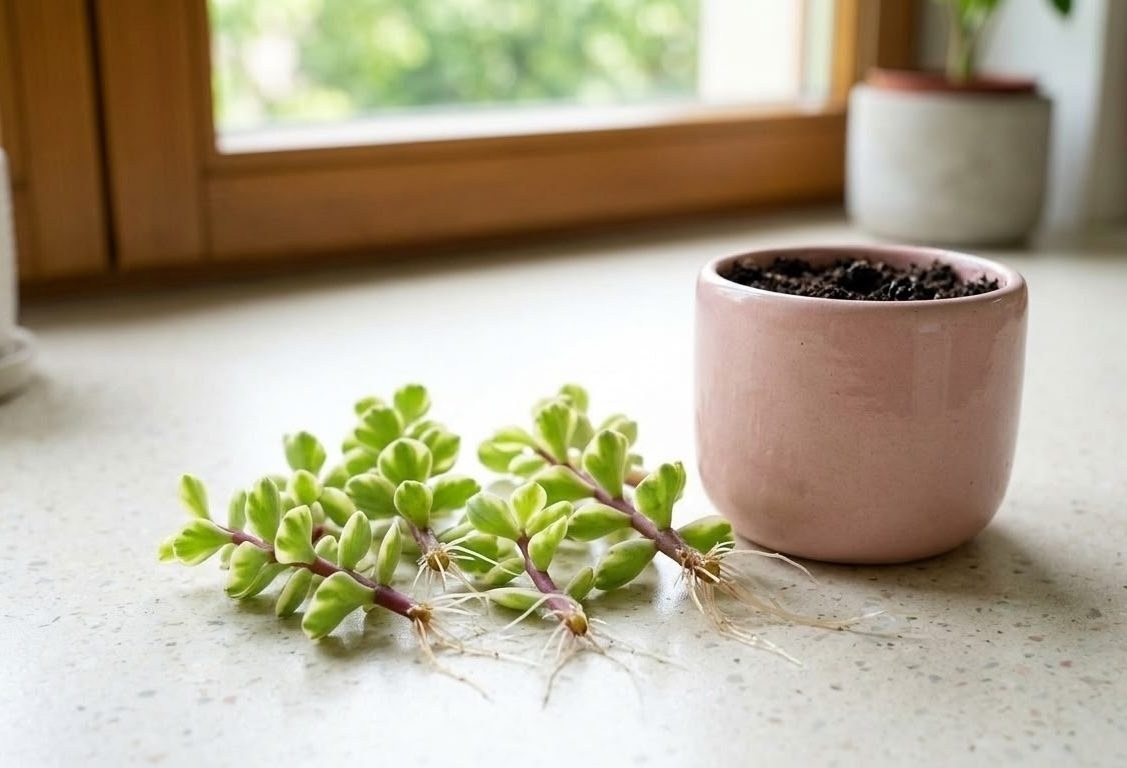
The most common way a propagation fails is overwatering before roots are established — let the soil dry out between waterings just as you would for the mature plant.
What Pests Attack Portulacaria Afra?
Mealybugs
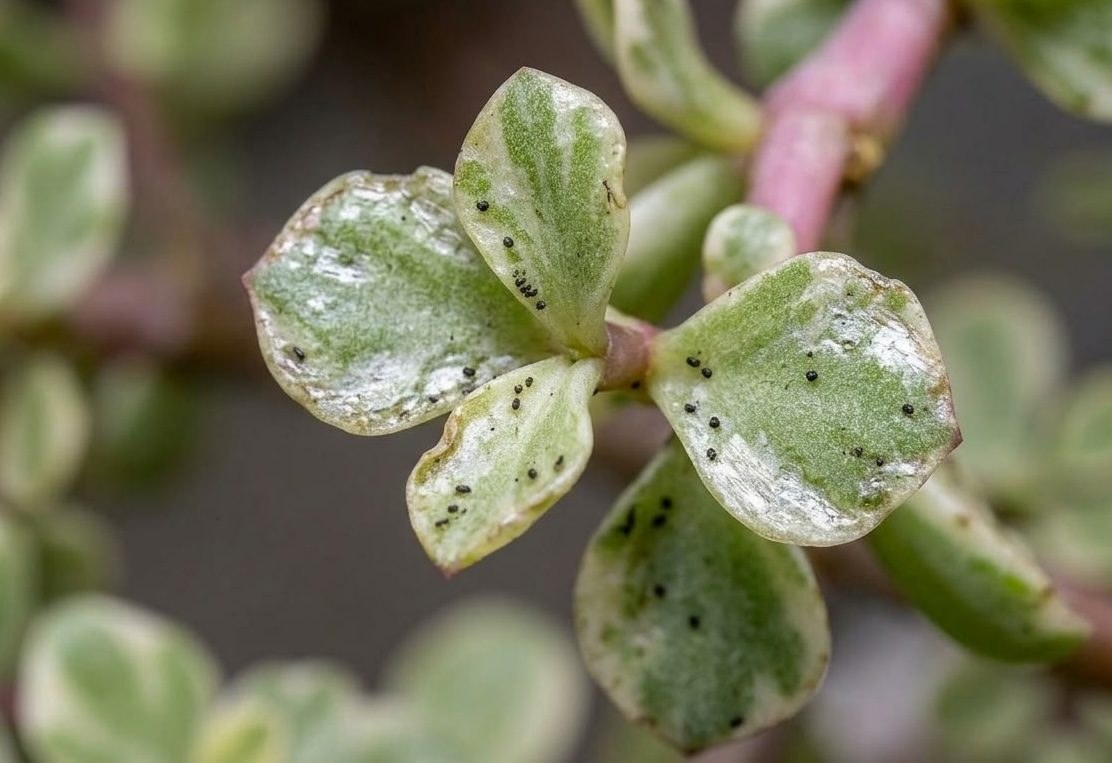
White cottony clusters at stem joints and leaf bases. Treat with rubbing alcohol on a cotton swab applied directly to each colony. For larger infestations, spray with diluted insecticidal soap or neem oil. Repeat every 7 days until clear. The dense leaf arrangement of some varieties creates many hiding spots — inspect carefully.
Scale Insects
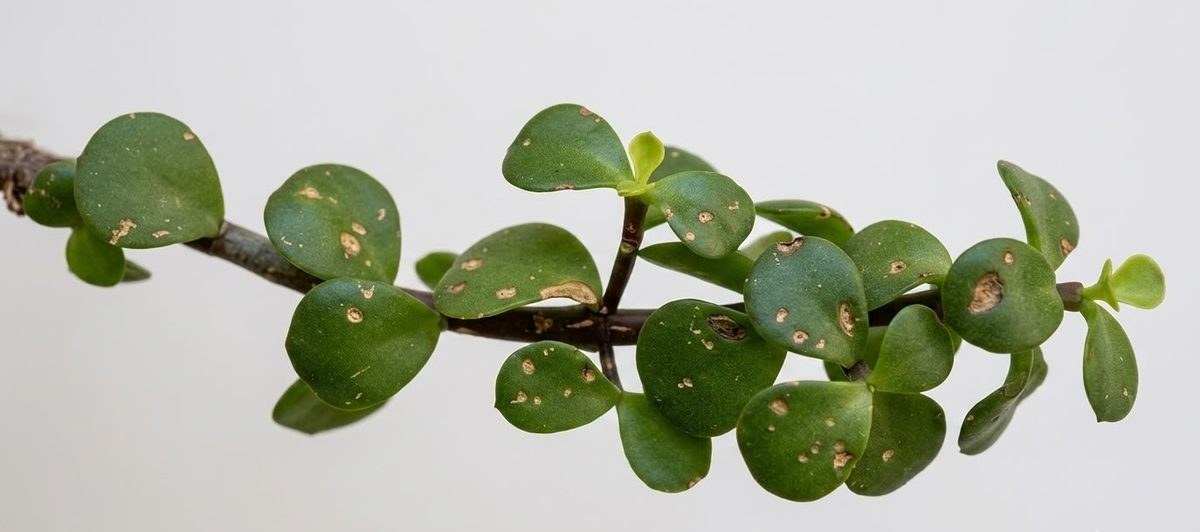
Less common but possible on older woody stems. Brown dome-shaped bumps that don’t move. Scrape off manually, then treat with neem oil. Check monthly as part of routine inspection.
Root Rot
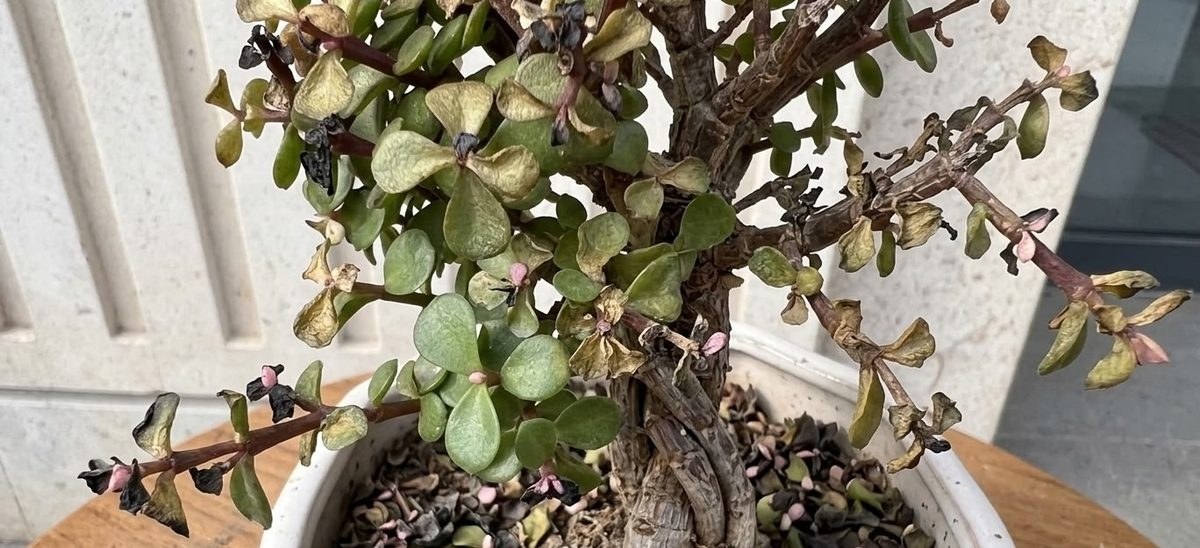
Not a pest, but the most common cause of plant death. Soft, translucent stems at the base indicate root rot from overwatering. Remove from soil, cut away all blackened or mushy roots and stem sections, allow the cut surfaces to callous over for 24-48 hours, then repot in fresh, dry cactus mix. Do not water for 1-2 weeks after repotting.
Common Mistakes With Portulacaria Afra
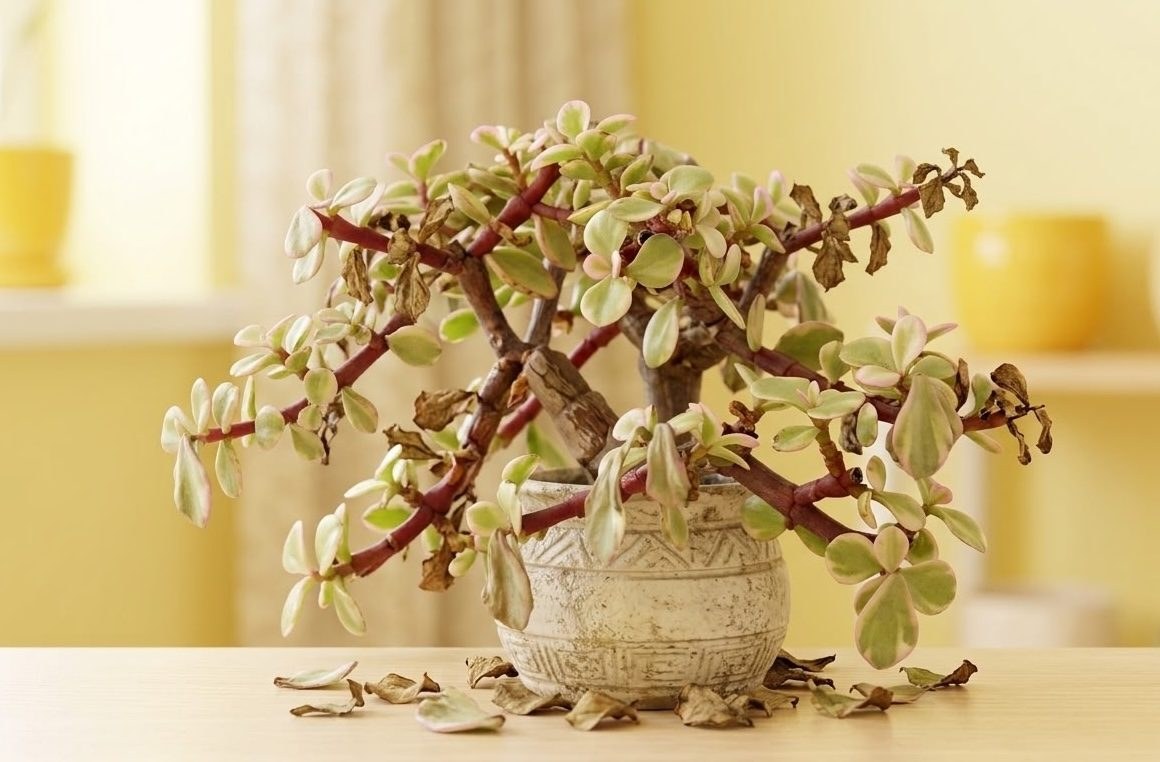
Overwatering it like a tropical houseplant. Portulacaria is a succulent from a semi-arid environment. Watering on a regular weekly schedule the way you might water a fern or calathea will kill it. The soil must dry completely between waterings.
Not giving it enough sun. In low light, Portulacaria becomes leggy with widely spaced leaves. This is not a shade plant — it needs the brightest spot available indoors, ideally with some direct sun through a window.
Confusing it with jade plant and using the same watering schedule. Even though the two plants look similar and have similar drought tolerance, jade plant tends to be slightly more forgiving of overwatering. Portulacaria is less so — its roots are more susceptible to rot in consistently moist soil.
Frequently Asked Questions
Does Portulacaria afra flower indoors?
Rarely. Portulacaria afra produces small pink flowers in clusters, but flowering requires prolonged outdoor conditions including a drought stress period followed by rainfall. Indoor plants do not typically flower.
How fast does Portulacaria afra grow?
In good conditions (full sun, warm temperatures, regular fertilizing), it grows faster than jade plant — 6-12 inches per year outdoors. Indoors growth is more moderate: 3-6 inches per year in a bright window.
Can I eat Portulacaria afra leaves?
Yes — in South Africa, the leaves are eaten raw in salads or used in cooking. The taste is slightly tart and succulent. This edibility is part of why the plant is generally not considered toxic to pets, unlike jade plant.
Why is my Portulacaria afra dropping leaves?
Sudden leaf drop is usually caused by overwatering (root rot), cold temperatures, or relocation stress. Check the soil — if it’s consistently moist and roots look dark and mushy, root rot is the cause. If conditions are otherwise fine and the plant is newly moved, allow 2-3 weeks for adjustment.