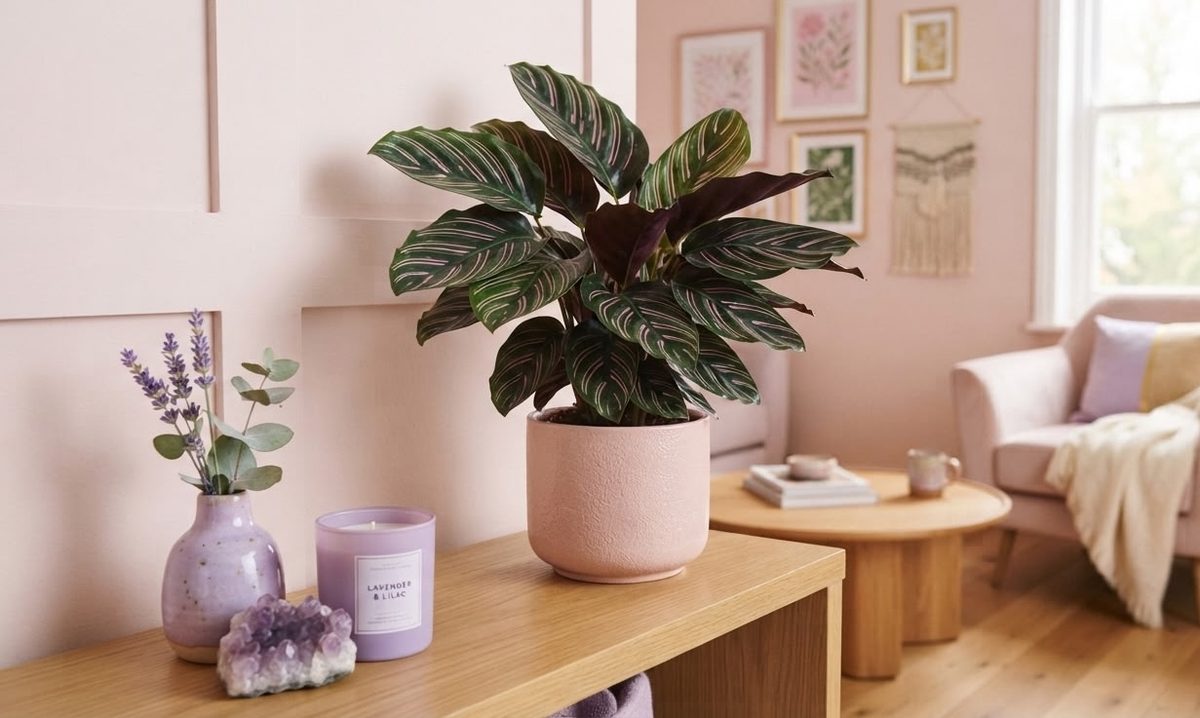
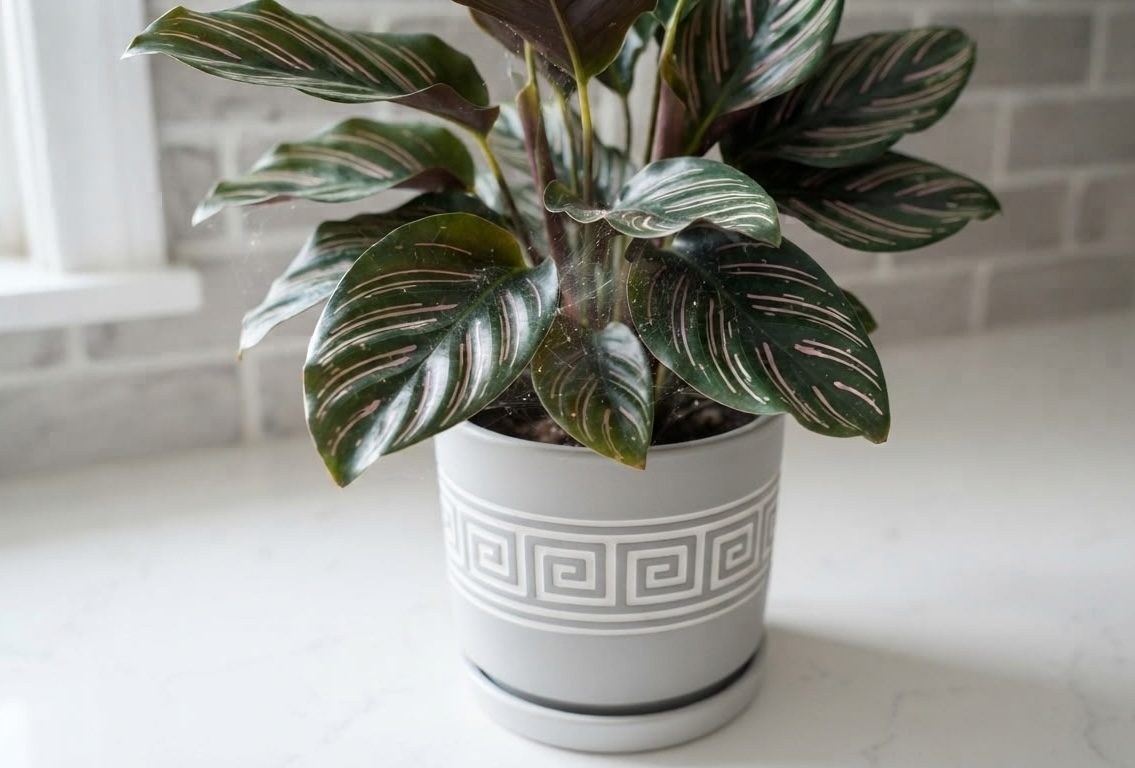
Calathea ornata, commonly called pinstripe calathea or sometimes calathea pinstripe, has some of the most striking foliage of any houseplant. Deep green leaves carry fine pink or white lines running parallel from the midrib to the leaf edge, as if someone applied them with a fine paintbrush, giving this pink calathea its signature look. It is also one of the more demanding calatheas to keep in perfect condition, and brown crispy tips are a very common complaint among its owners. This guide explains what causes those brown tips (usually more than one factor at once), and everything else about what this plant actually needs.
| Calathea ornata Quick Care Summary | |
|---|---|
| Light | Bright to medium indirect light; no direct sun |
| Water | Keep soil evenly moist; water when the surface starts to dry |
| Humidity | Around 60% is ideal; 40–60% is workable indoors |
| Temperature | 65–80°F (18–27°C) |
| Fertilizer | Monthly spring–summer, half-strength balanced |
Why Does Calathea Ornata Get Brown Tips?
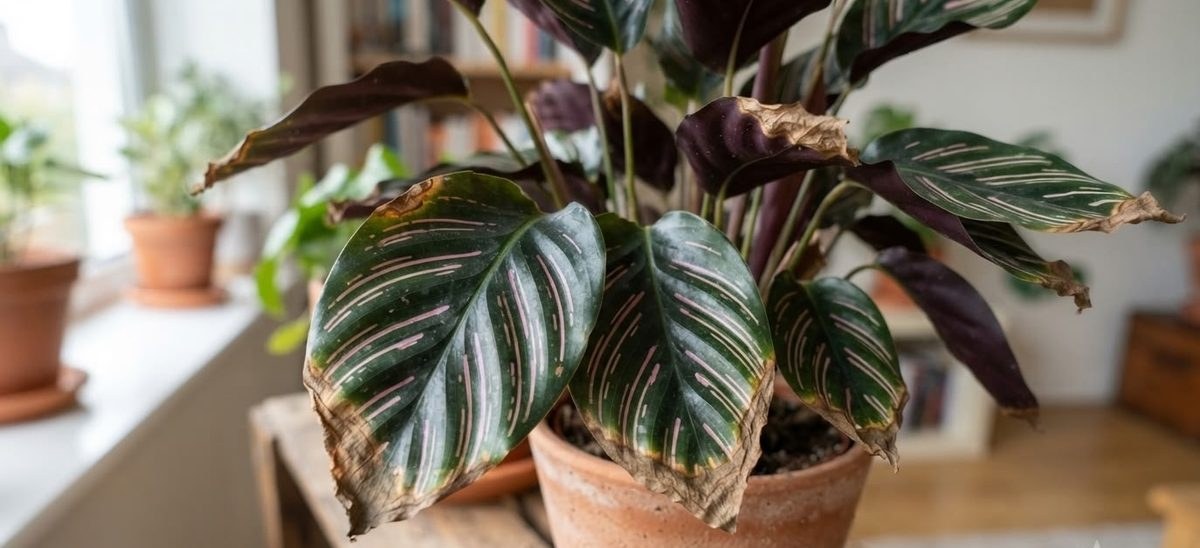
Brown tips on calathea ornata usually have more than one cause. Extension sources point to low humidity, cold drafts, too much direct sun, fertilizer salts and fluoride, and the two below are the ones most worth checking first:
Water Mineral Content (Fluoride and Chlorine)
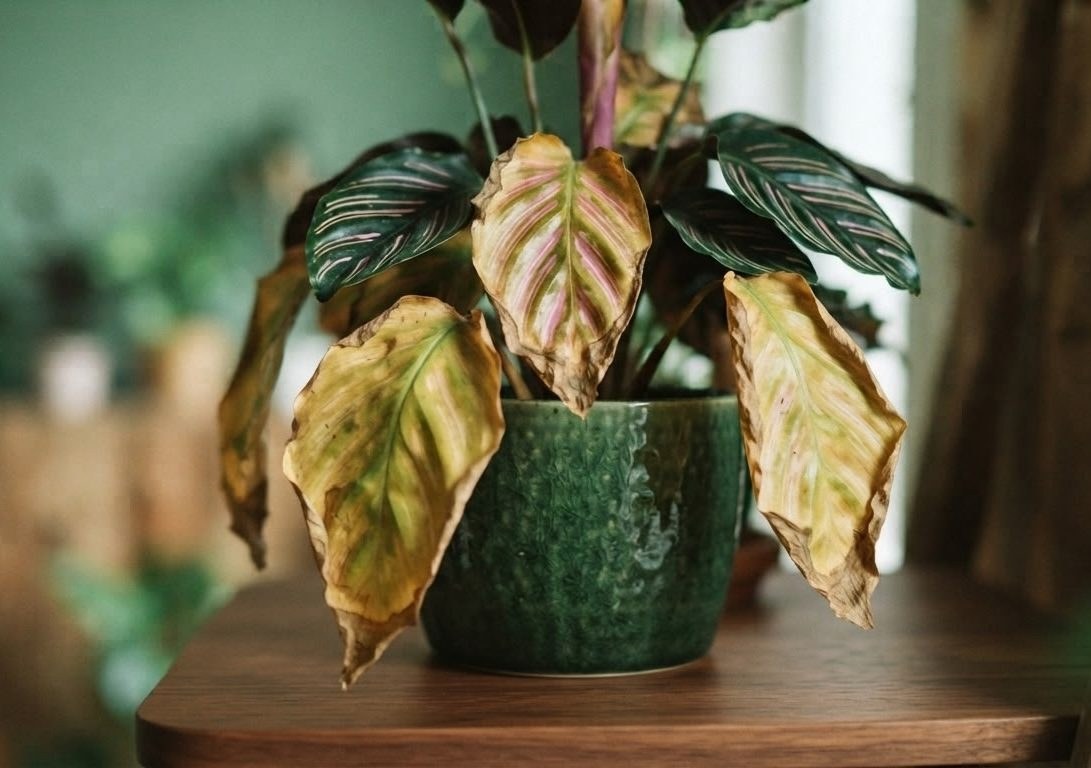
Calatheas are sensitive to what is dissolved in their water. UF/IFAS links dead spots near the leaf margins of calathea to fluoride toxicity and advises avoiding water and fertilizer that contain fluoride; the same guide links leaf margin and tip necrosis to low pH and excess fertilizer salts. Minerals from tap water and fertilizer build up in the potting mix over months, so the damage tends to appear gradually, usually at the tips first and then along the edges.
The fix: if your tap water is fluoridated or hard, water with rainwater, distilled water, or reverse osmosis water. A standard carbon pitcher filter reduces chlorine but does not remove fluoride; Virginia Tech Extension lists activated alumina, distillation, reverse osmosis and ion exchange as the methods that do. My advice is to skip the pitcher filter for this plant and collect rainwater or buy distilled water instead. Also flush the soil every few months by watering slowly and thoroughly until plenty of water runs from the drainage hole, which washes out accumulated salts. You will not see improvement overnight; new leaves growing after the switch will be cleaner than the affected old ones.
Low Humidity (Below 60%)
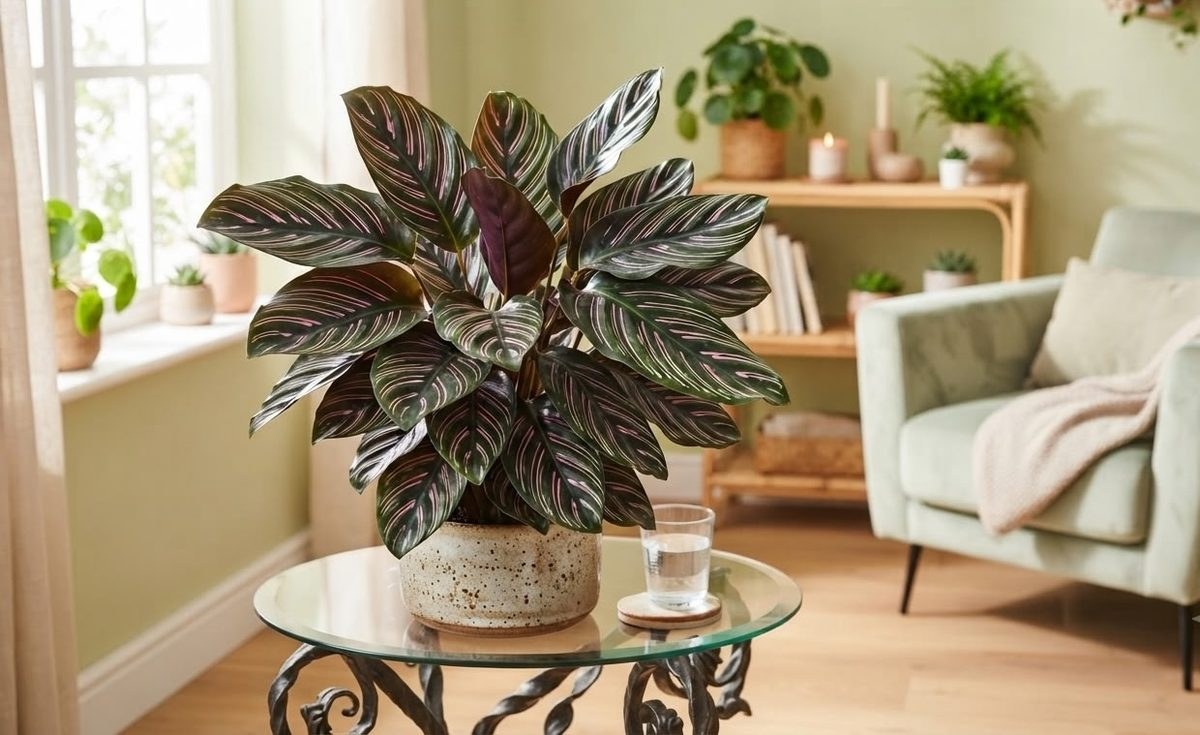
NC State Extension recommends keeping humidity around 60% for this plant, and UF/IFAS notes that calatheas keep their looks better indoors when relative humidity stays between 40% and 60%. Heated rooms in winter are often drier than that, and low humidity can brown leaf tips even when the water is fine. NC State suggests a humidifier or a tray of wet pebbles. If I had to pick one, I would put the money into a small humidifier, because a pebble tray only raises humidity right around the pot.
The causes overlap, so if brown tips keep appearing after you fix one, check the others: humidity, water and fertilizer salts, cold drafts, and soil that dries out between waterings.
What Is the Difference Between Calathea Ornata and Goeppertia Ornata?
The same plant. A 2012 revision of the prayer plant family, based on DNA studies, moved many ornamental calatheas from the genus Calathea to the genus Goeppertia. The pinstripe calathea’s scientific name is now correctly Goeppertia ornata, though Calathea ornata remains the name used in trade and on plant labels. Both names refer to the same plant, which is native to the rainforest understory of southeast Colombia and southwest Venezuela. Because of the color of its stripes, it’s also sold informally as “pink calathea” or “calathea pink”; these are common names, not separate cultivars.
How to Care for Calathea Ornata
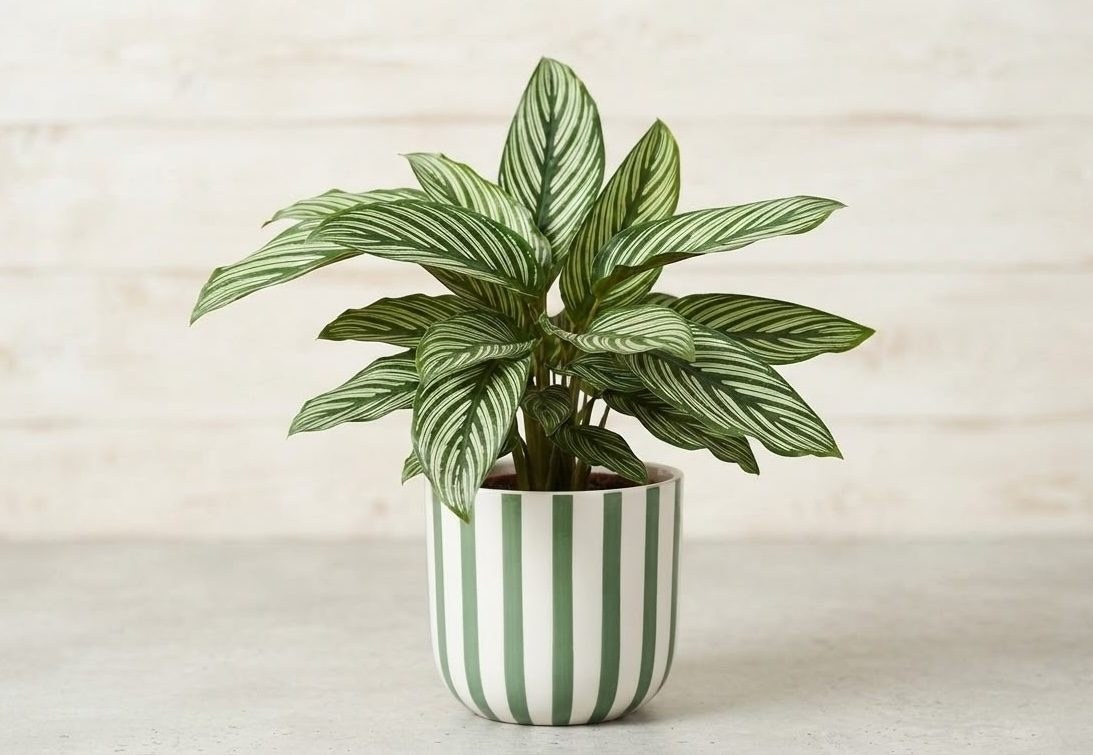
What Light Does Calathea Ornata Need?
Bright to medium indirect light, with no direct sun. NC State lists bright indirect light or partial shade, and UF/IFAS notes that calatheas tolerate quite low indoor light but do best in moderate light. Young leaves are bright green with pale pinkish-white stripes and darken as they mature, and the stripes on older leaves often look paler and whiter than on new ones, which is normal aging rather than a care problem. Direct sun is a different matter: NC State lists too much direct sun as a cause of brown leaves. A spot 3-5 feet from a bright window, or directly in front of a north-facing window, works well.
How Often Should You Water Calathea Ornata?
Keep the soil evenly moist: not waterlogged, not dry. Water when the surface feels barely dry but the soil below is still slightly damp. How often that happens depends on light, warmth and pot size, so check the soil rather than the calendar; growth is slower in winter, so the plant needs less water then. Use rainwater or distilled water if your tap water is fluoridated or hard, and make sure the pot drains well. Never allow the pot to sit in standing water: overwatering leads to root rot that shows as yellowing leaves and wilting despite moist soil.
What Temperature Does Calathea Ornata Need?
65–80°F (18–27°C) indoors, according to UF/IFAS. RHS gives a minimum of 16°C (61°F), and UF/IFAS warns that temperatures below 55°F (13°C) can cause chilling injury. Consistent warmth is important, so avoid cold drafts from windows, doors and air conditioning vents; NC State lists cold drafts as a cause of brown leaves. Leaf curl (the leaves roll inward along the midrib) is most often a sign of dry soil, but if the soil is moist and leaves curl in summer, check for cold air from AC units nearby.
How Often Should You Fertilize Calathea Ornata?
Monthly from March through September with a balanced liquid fertilizer at half strength. Do not fertilize in winter. Always water first before applying fertilizer to avoid burning roots. Excess fertilizer is itself linked to brown leaf tips and margins in calatheas (UF/IFAS), so I would rather underfeed this plant than overfeed it, and flush the soil now and then.
How Does Calathea Ornata Move Its Leaves?
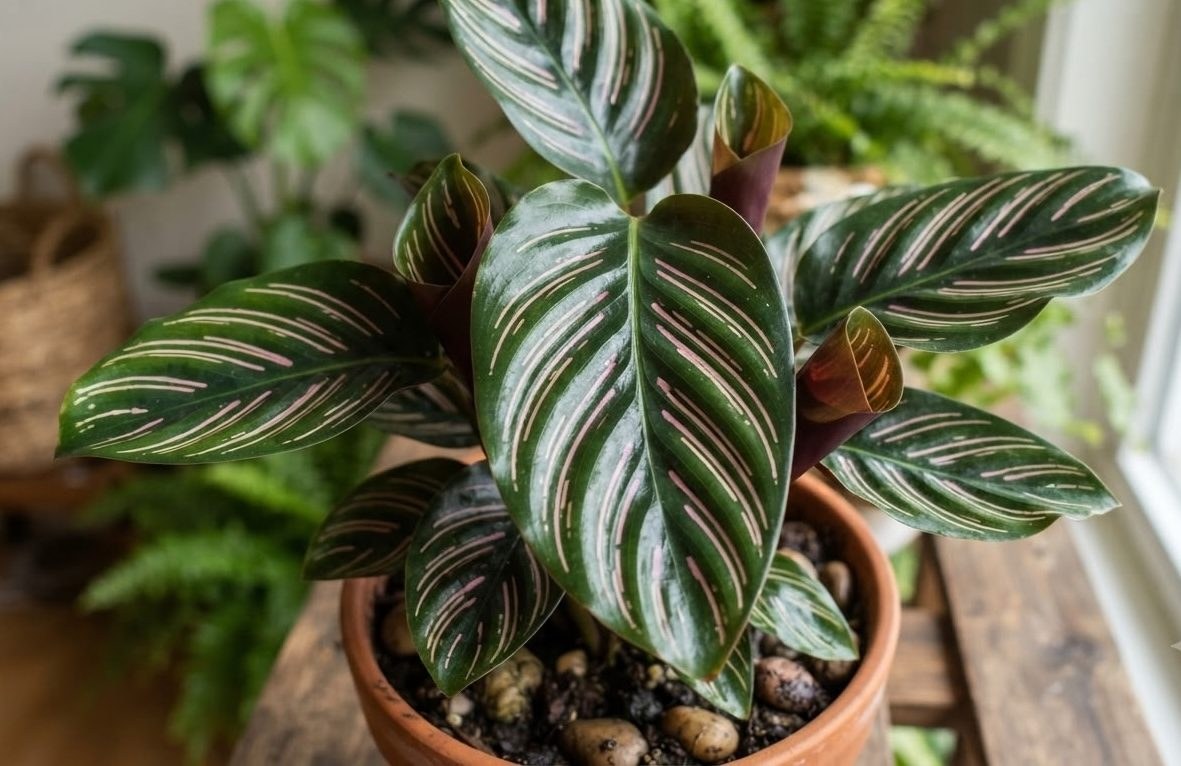
Calathea ornata is a prayer plant: it shows nyctinasty, folding its leaves upward at dusk and reopening in the morning. The undersides of the leaves are deep burgundy-purple, which becomes visible when the leaves fold at night. The movement is driven by turgor pressure changes in the pulvinus, a small thickened joint where the leaf stalk meets the leaf blade. Stromanthe tricolor, a close Marantaceae relative, does the same: its magenta undersides show when the leaves fold at dusk.
If the leaves stop moving, low light or root problems are worth checking, although the movement can be subtle and easy to miss.
Is Calathea Ornata Toxic to Cats and Dogs?
No. The ASPCA lists calathea as non-toxic to cats, dogs, and horses. This applies to Calathea ornata and calatheas generally. That makes it a good choice for homes with cats or dogs, although the ASPCA notes that eating any plant material may cause vomiting and stomach upset. See our detailed guide at Is Calathea Toxic to Cats? for the full breakdown.
For the full breakdown across all calathea varieties, see our complete calathea cat safety guide.
How to Propagate Calathea Ornata by Division
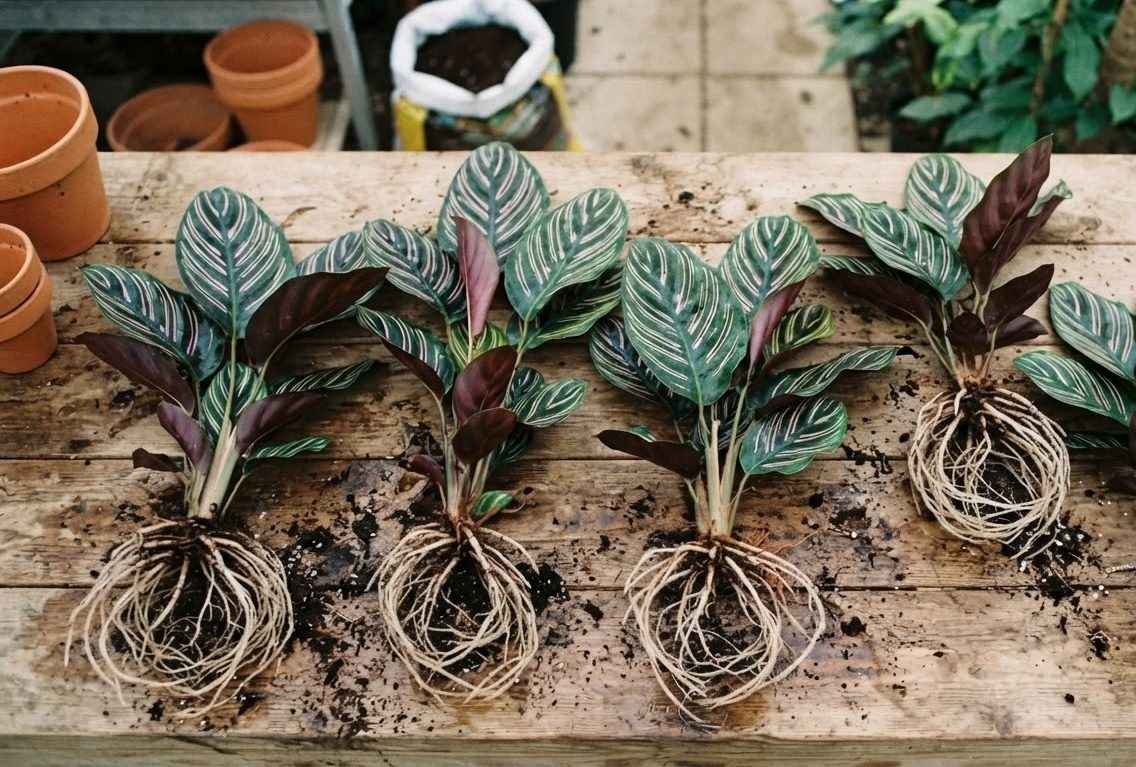
Calathea ornata doesn’t have real stems to take cuttings from, so it’s propagated by dividing the rhizome, ideally during a repot in spring or early summer while the plant is actively growing. NC State Extension names rhizomatous root division as the best method for this species. UF/IFAS says each piece needs at least one leaf, but I would keep divisions larger, with several leaves and their own roots, because small sections are slower to establish and more vulnerable to setbacks.
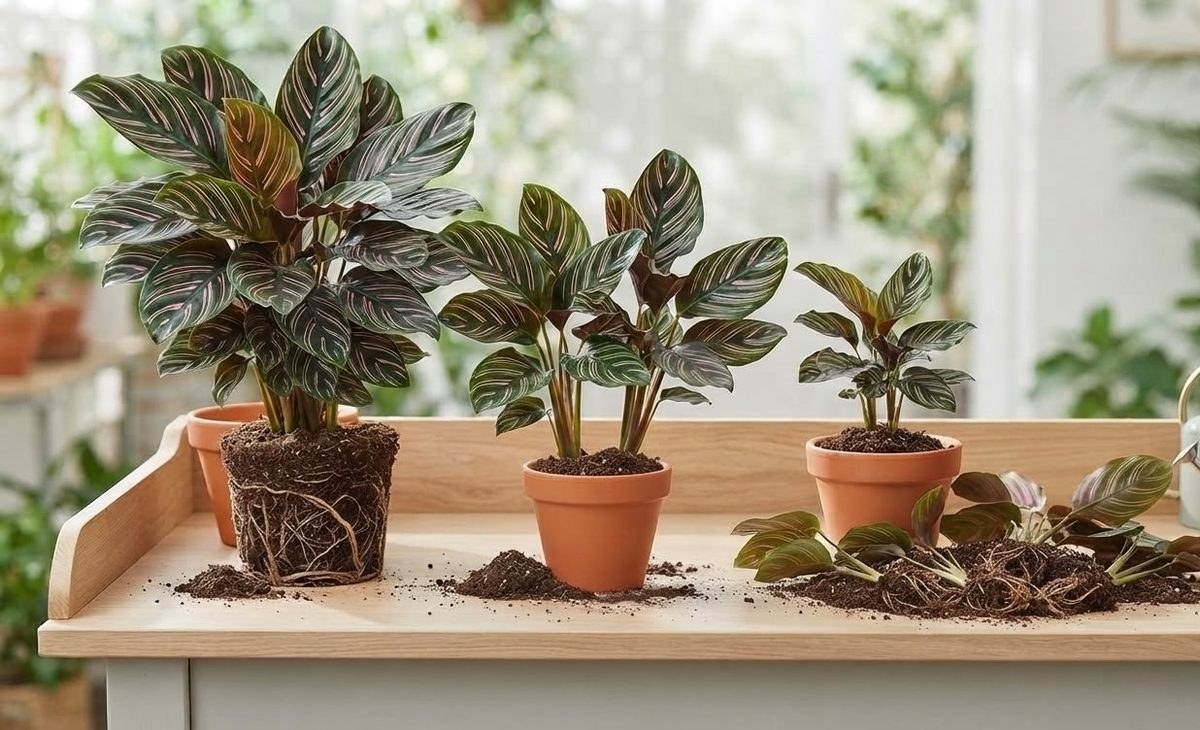
Loosen the root ball, gently separate or cut sections apart with a clean, sharp knife, and pot each division into well-drained, peat-based mix. Calathea often sulks after disturbance, so keep newly divided plants in humid air (around 60%), bright indirect light, and evenly moist (never soggy) soil while they recover. A new leaf unfurling is the sign a division has taken; expect it to need this extra care for several weeks before treating it as an established plant.
What Pests Attack Calathea Ornata?
Spider Mites
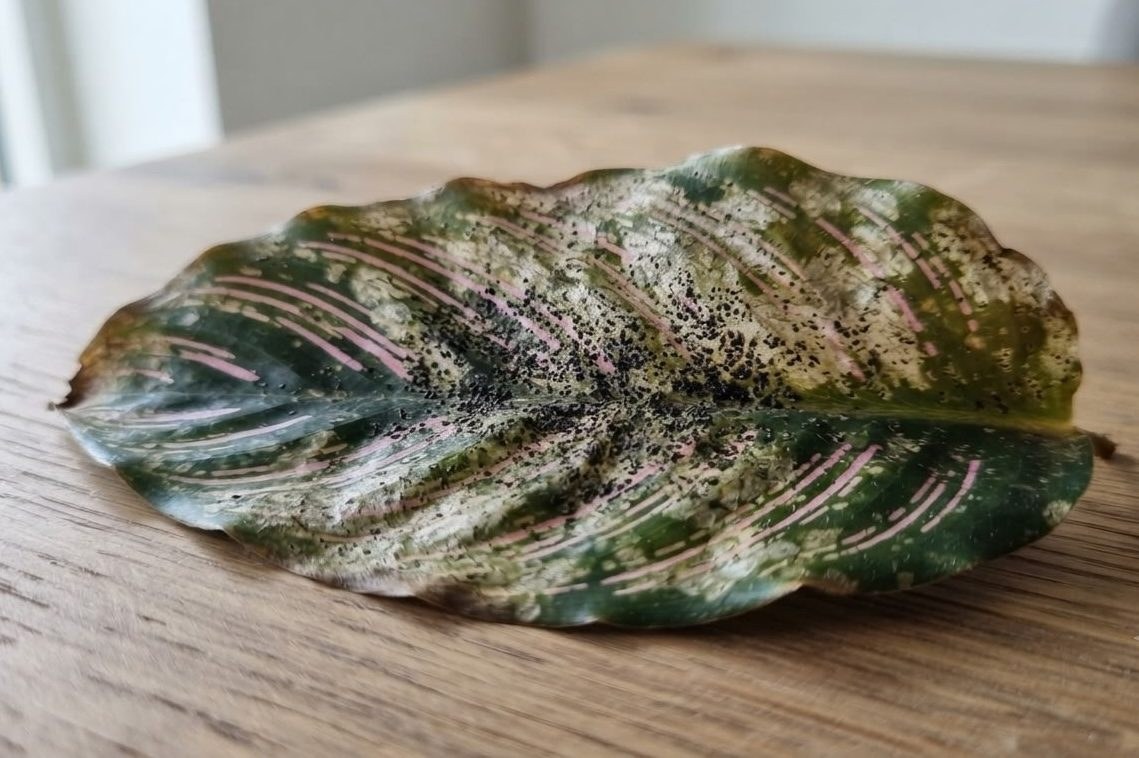
One of the most common pests on calathea; NC State and RHS both list spider mites. Fine stippling or silvery patches on the leaf surface, sometimes with webbing on the undersides. Spider mites favor warm, dry conditions, so raising humidity helps prevent them. Treat with insecticidal soap or neem oil sprayed onto both leaf surfaces weekly for 3-4 rounds. Rinse the plant thoroughly before each application.
Mealybugs
White cottony clusters at stem joints and leaf bases. Treat with rubbing alcohol on a cotton swab. Inspect new growth carefully as mealybugs favor tender developing leaves.
Fungus Gnats
Small flies that lay eggs in moist soil. More common in calathea than succulents because the soil stays consistently moist. Allow the top inch to dry slightly between waterings (without letting the plant fully dry out) and apply beneficial nematodes or BTi (Bacillus thuringiensis israelensis) to the soil to interrupt the larval stage.
Common Mistakes With Calathea Ornata
Using tap water and wondering why brown tips persist after adding a humidifier. Humidity and water quality can both play a part. If your tap water is fluoridated or hard, a humidifier alone will not stop salts and fluoride building up in the potting mix, so check humidity, water and fertilizer together rather than expecting one fix to solve everything.
Moving it frequently to troubleshoot. Calathea ornata drops leaves and develops more brown tips in response to environmental changes. If it’s in an adequate location, I would leave it there for at least a month before judging the result. Constant moving to “better spots” creates more stress than it solves.
Placing in very low light because it “doesn’t need much light.” Calathea ornata tolerates fairly low light, but UF/IFAS puts its optimal indoor light level well above that minimum, and growth slows in dim spots. Bright to medium indirect light is where it looks its best.
Frequently Asked Questions
Why are my calathea ornata leaves curling?
Leaf curl (rolling inward along the midrib) indicates underwatering, cold temperature stress, or very low humidity. Check soil moisture first; if it is bone dry, water immediately (NC State links leaf curl to too little water). If moisture is adequate, check for cold drafts or air conditioning nearby. Mildly curled leaves usually open again once the cause is fixed.
How fast does calathea ornata grow?
Moderate growth rate during the warm months, with new leaves appearing steadily in good conditions. Growth slows or stops in winter. Patience is required: damaged leaves with brown tips cannot be repaired, but new leaves growing under improved conditions will be noticeably cleaner.
Do I need to repot calathea ornata?
Every 1-2 years in spring, or when roots are circling the inside of the pot and growth has slowed. Choose a pot only 1-2 inches larger. Repotting in fresh soil also removes some accumulated mineral salts, which benefits plants with a history of tap water use.
Why does my calathea ornata have yellow leaves?
Yellow leaves usually indicate overwatering or root rot, so check whether the soil has been consistently wet and whether roots look dark and mushy. Nutrient deficiency in depleted old soil is another cause (uniform yellowing). Natural aging of older lower leaves is also normal: one or two yellowing leaves from the base of the plant while the rest look healthy is not a problem.
Is “pin stripe calathea” the same plant as pinstripe calathea?
Yes. Pinstripe calathea, calathea pinstripe, pin stripe calathea, and pin-stripe calathea are all the same plant; spelling and word order vary by source, but they refer to Calathea ornata (Goeppertia ornata).