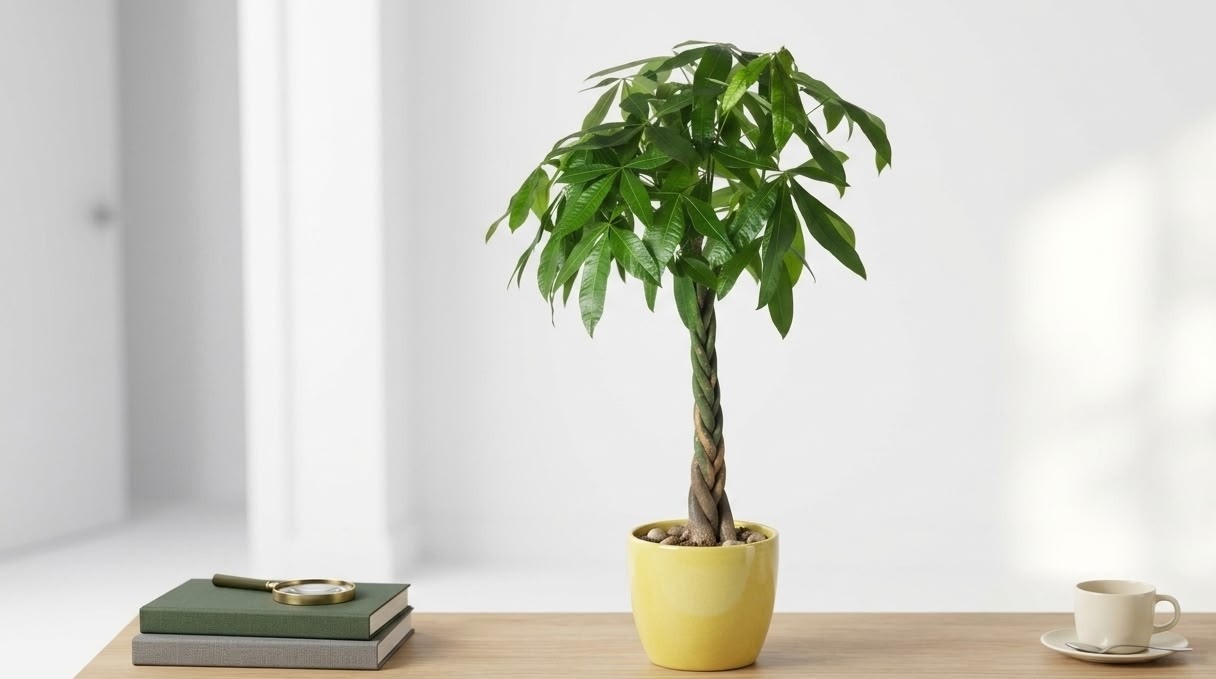
Pachira aquatica is sold in virtually every plant shop and garden center under the name “money tree”, often with five stems braided together and marketed as a Feng Shui good-luck plant. Many of these plants are actually the near-identical Pachira glabra, which is routinely sold under the aquatica name; the care is the same. The braiding is completely artificial (done when the stems are young and flexible) and has no effect on care, but it does make every care article written for the botanical name look like a different plant from those sold in stores. This guide covers what Pachira aquatica actually needs, why it drops leaves (and what to do about it), and whether it is safe for pets.
| Pachira aquatica Quick Care Summary | |
|---|---|
| Light | Bright indirect light; tolerates some direct morning sun |
| Water | Every 7–14 days; let top 2–3 inches dry |
| Humidity | 50%+ |
| Temperature | 65–85°F (18–29°C) |
| Fertilizer | Monthly spring–summer, balanced liquid fertilizer |
What Is the Braided Trunk, and Does It Affect Care?
The braided trunk seen on money trees sold as houseplants is done by nurseries when the plants are young and stems are pliable. Three to five young Pachira stems, each a separate plant, are braided together. As the stems thicken they lock against each other and the braid becomes permanent. I would remove any wire or tape left from the nursery, because ties can cut into the stems as they widen.
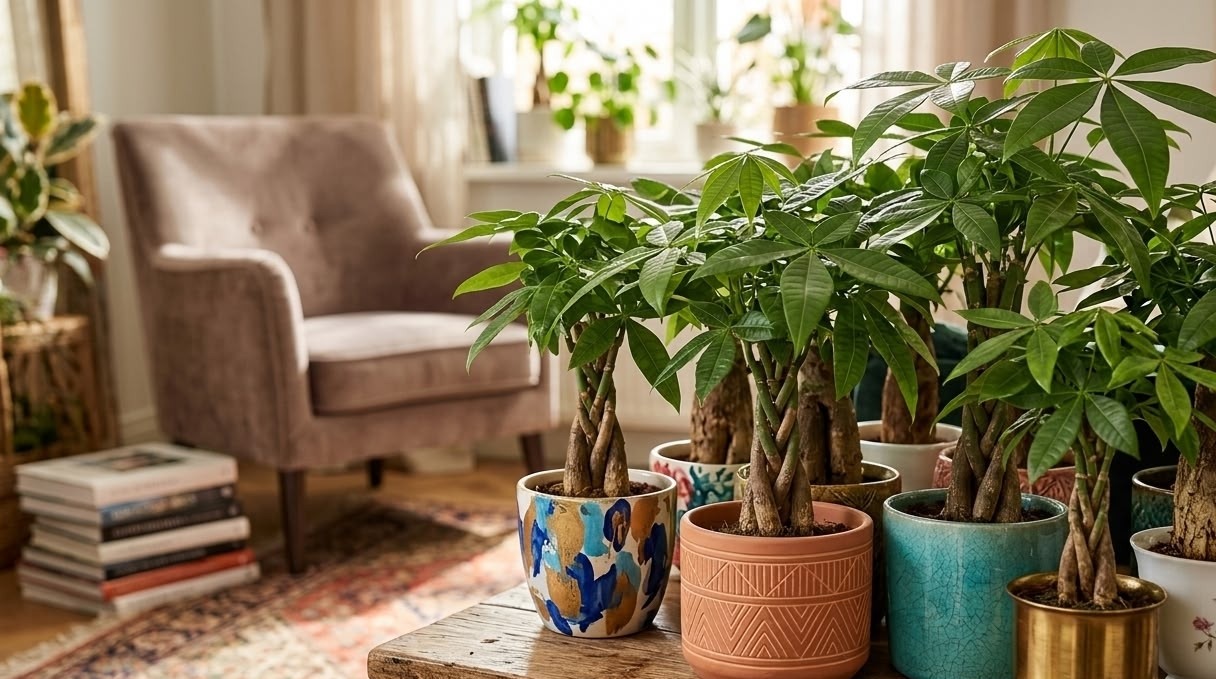
The braiding does not affect care or plant health. A braid is really several plants sharing one pot, each with its own roots, but together they need the same care as an unbraided specimen. The only practical difference: if one stem dies, it can be cut out at soil level and the rest of the braid carries on.
Why Is My Money Tree Dropping Leaves?
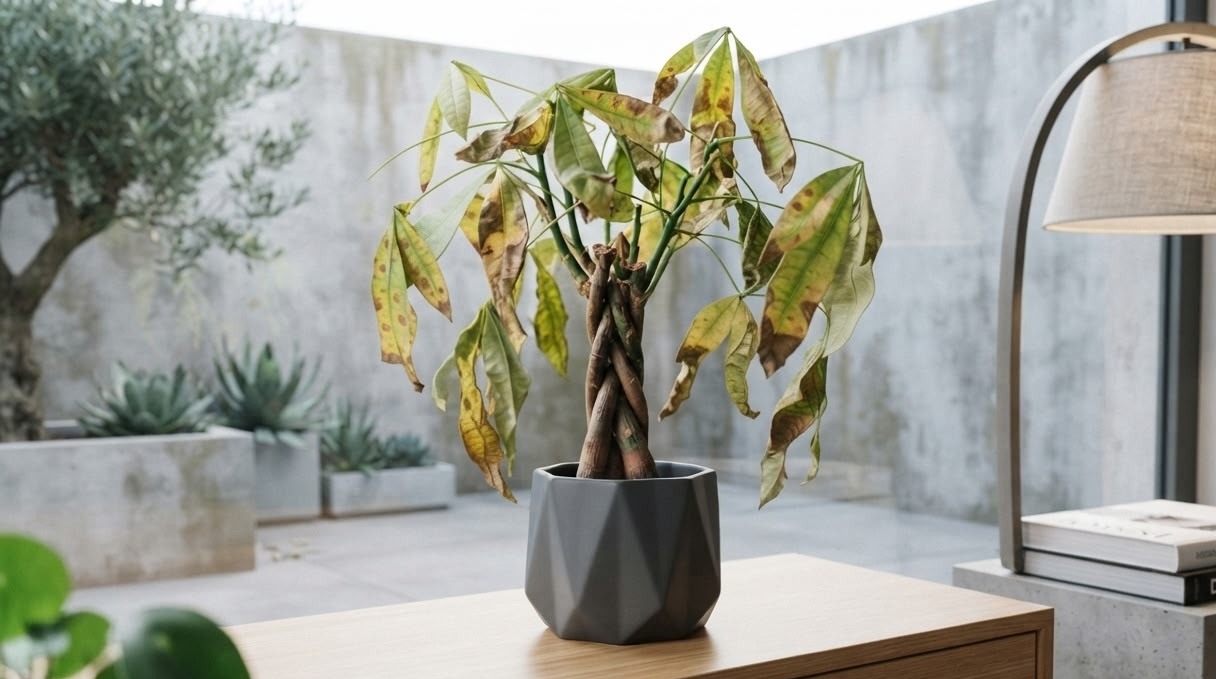
Leaf drop is the most common complaint with Pachira aquatica. The causes in order of likelihood:
Overwatering
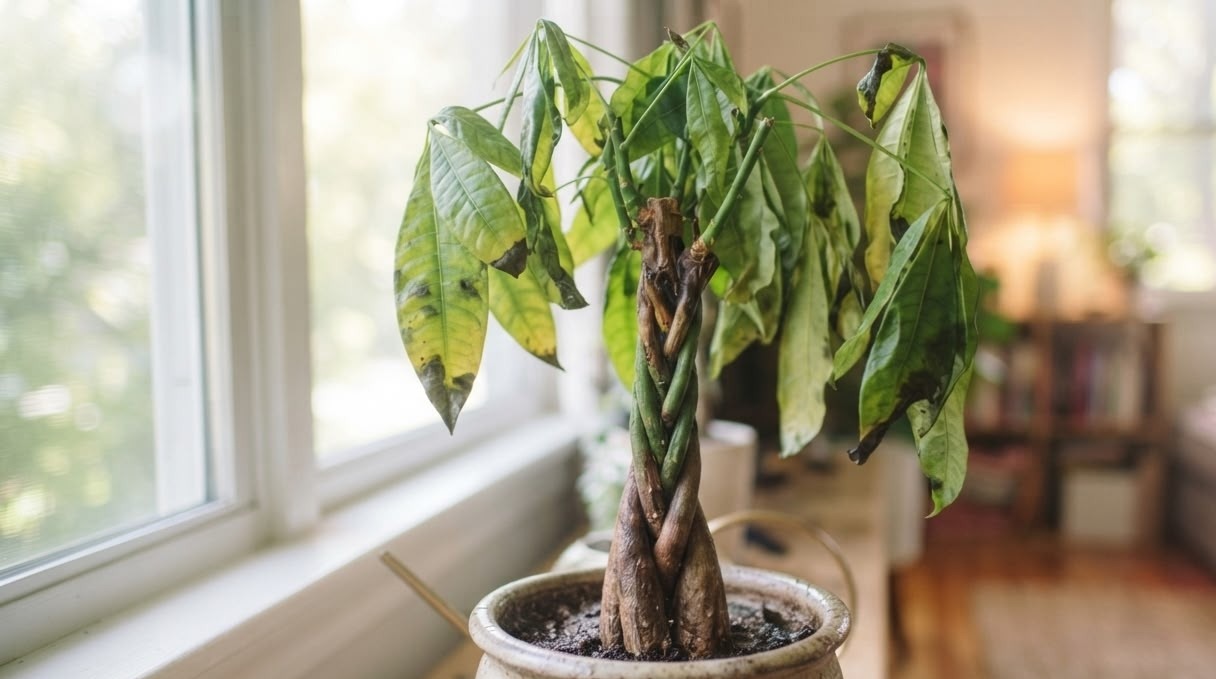
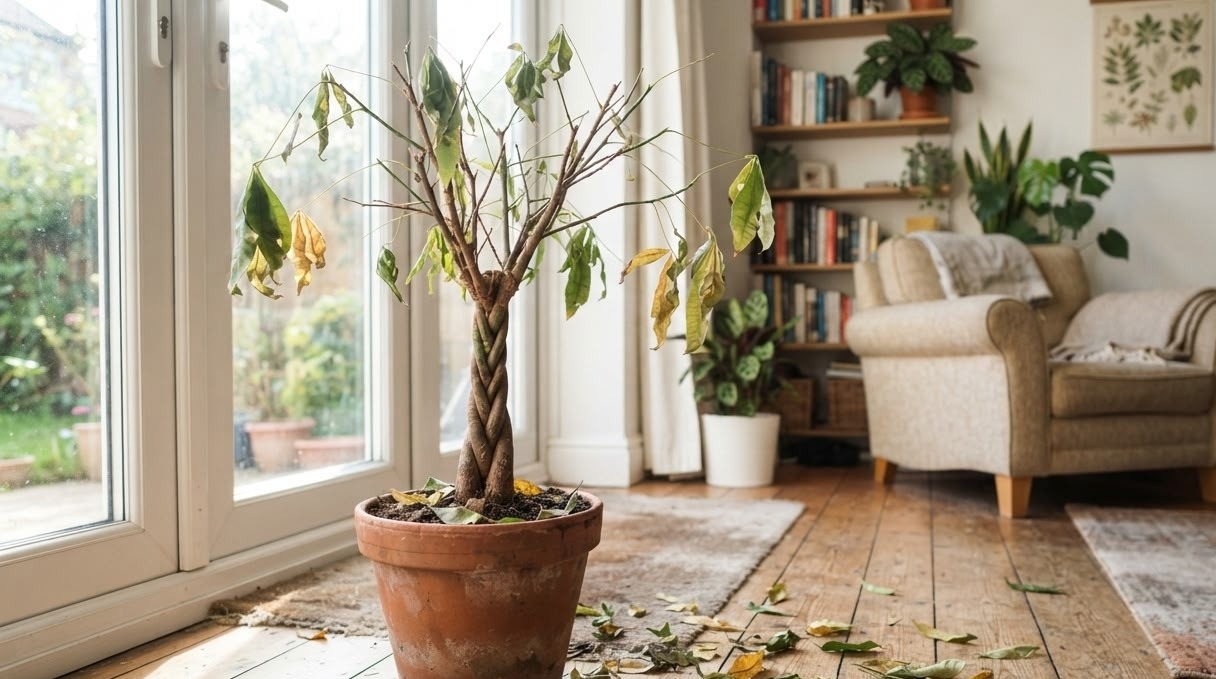
The most frequent cause. Money tree roots cannot tolerate sitting in wet soil: overwatering causes root rot, which cuts off water and nutrient supply to the leaves. The leaves yellow first, then drop. If the soil has been consistently moist and leaf drop is happening, stop watering immediately. Check whether the roots have rotted (dark, mushy, foul-smelling). If root rot is present, remove affected roots, repot in fresh dry mix, and allow the soil to dry thoroughly between waterings going forward. My advice is to check the soil with a finger before every watering instead of watering on a fixed day. The same overwatering pattern is the leading cause of leaf loss in schefflera arboricola, another popular beginner tree.
Relocation Shock
Moving the plant from a bright, humid nursery or greenhouse to a typical home triggers rapid leaf drop in some specimens. The plant adjusts to new light levels, humidity, and temperature by shedding leaves it can no longer support. This can happen even when care is correct. Usually stabilizes within 4-6 weeks. Do not change watering in response to relocation shock; this often makes it worse.
Insufficient Light
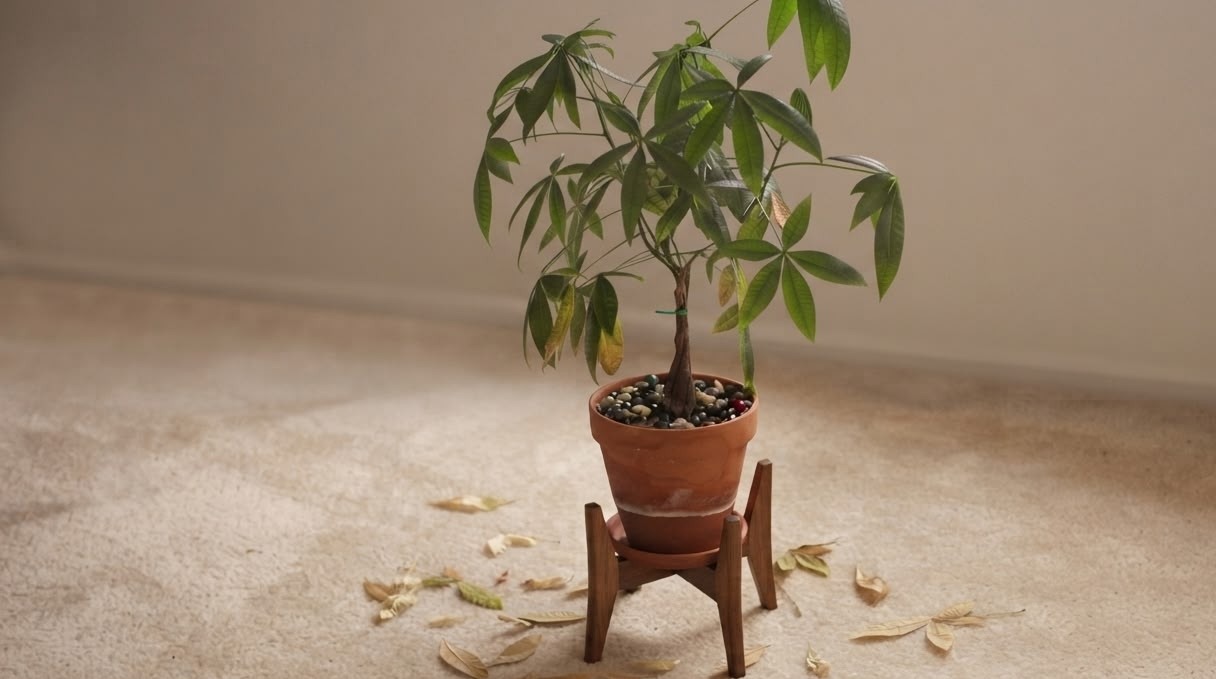
In low light, the plant sheds older leaves progressively as it cannot photosynthesize enough energy to maintain them. The drop is slow (weeks, not days) and typically starts with lower leaves. Move to a brighter spot: bright indirect light is the minimum for sustained health.
Underwatering
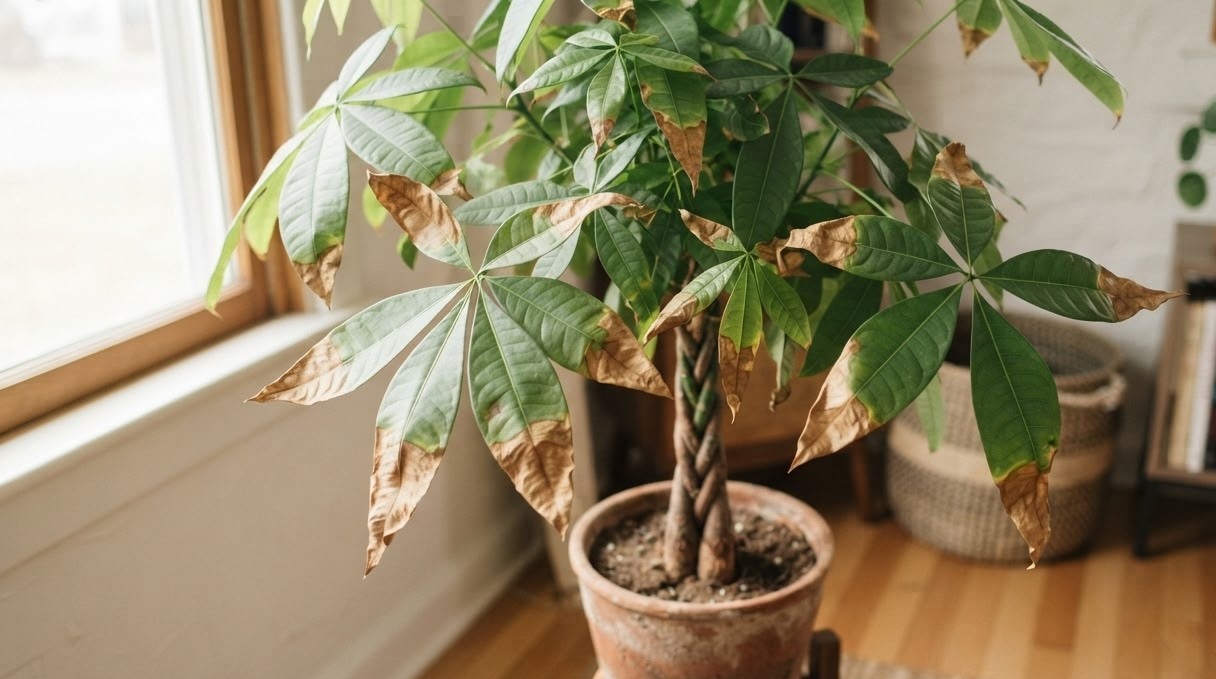
Dry, crispy leaf edges followed by drop indicate underwatering. The money tree is more drought-tolerant than many tropical houseplants but will shed leaves during extended dry periods. Water thoroughly when the top 2-3 inches of soil are dry. If your tree drops leaves even when watering is right, compare the triggers in our China doll plant guide: Radermachera reacts to moves and drafts far more dramatically.
How to Care for Pachira Aquatica
What Light Does Pachira Aquatica Need?
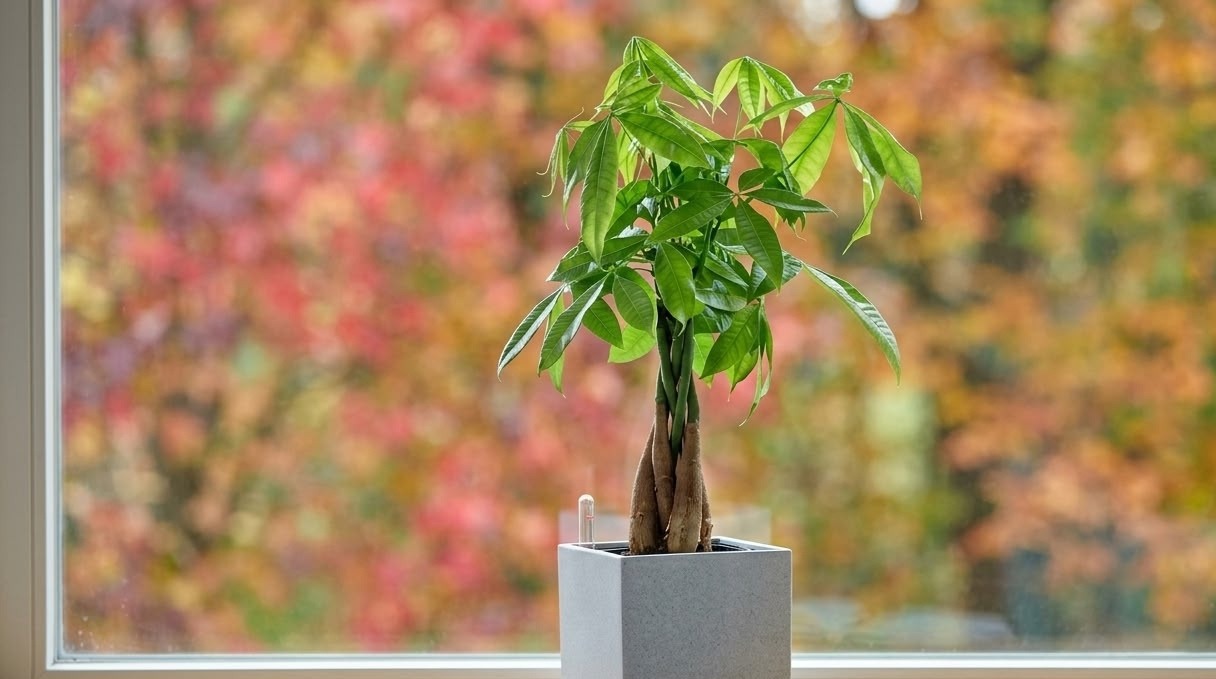
Bright indirect light for best growth. A spot near a south or east-facing window, out of strong midday and afternoon sun, is ideal; gentle morning sun is fine. Money tree tolerates medium light (3-4 feet from a bright window) but grows slowly and is more susceptible to problems in lower conditions. Direct afternoon sun scorches the leaves; deep shade causes progressive leaf drop.
How Often Should You Water Money Tree?
Water thoroughly when the top 2-3 inches of soil feel dry, roughly every 1-2 weeks in the growing season, every 3 weeks in winter. The money tree is somewhat drought-tolerant: an occasional missed watering is less damaging than chronic overwatering. Always allow excess water to drain fully and never let the pot sit in standing water.
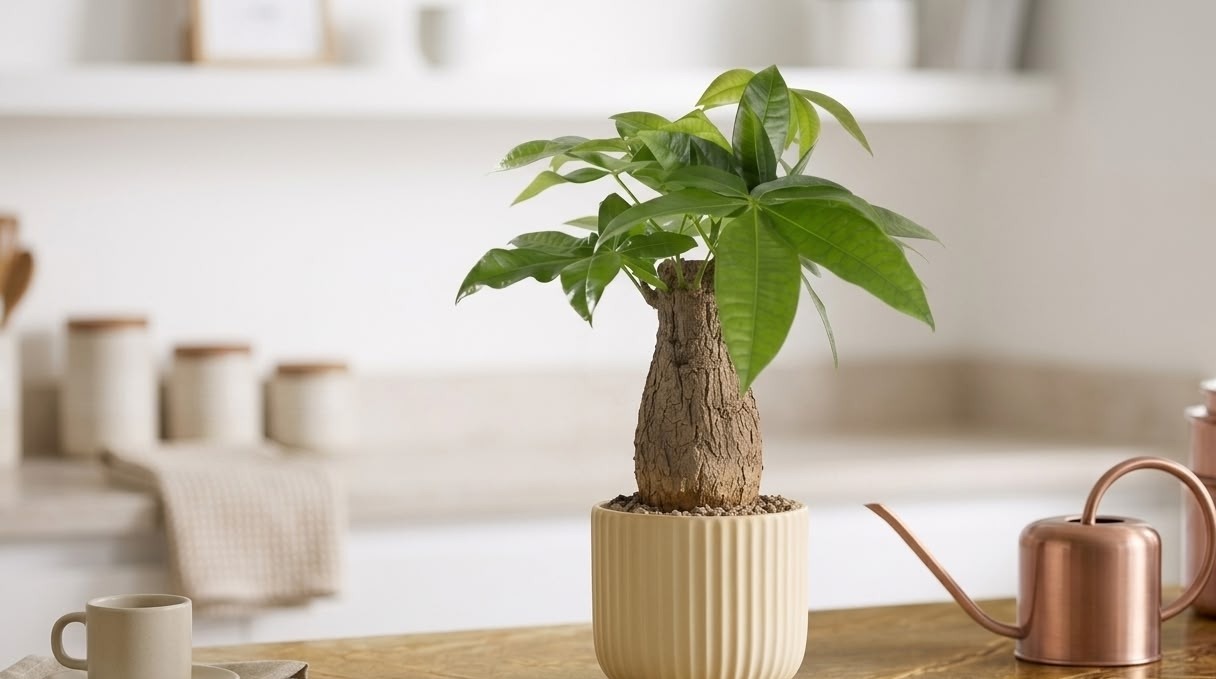
The swollen trunk of Pachira aquatica stores water, so the plant copes with a missed watering far better than with soggy soil. In a pot, standing water leads to root rot (NC State Extension).
What Soil Does Pachira Aquatica Need?
Well-draining potting mix: a standard houseplant soil with added perlite (20-30% by volume) works well. Avoid dense, water-retaining mixes. The soil should feel dry 2-3 inches down within 5-7 days of watering in a normally lit room. If it stays wet longer, either add more perlite or move to a faster-draining pot. I would always pick a pot with a drainage hole; a decorative pot without one is fine only as an outer cover.
What Temperature Does Money Tree Prefer?
65-85°F (18-29°C). Pachira aquatica is native to tropical Central and South America, so it needs consistent warmth and dislikes cold drafts. Temperatures below 55°F (13°C) cause leaf drop and slow growth. Keep away from exterior doors in winter and air conditioning vents in summer.
What Humidity Does Money Tree Need?
Moderate humidity (50%+) is preferable, though the money tree tolerates drier conditions better than many tropical houseplants. In very dry air (below 30%, common in heated rooms in winter), the leaf edges may turn brown. A pebble tray or occasional misting helps in dry conditions.
How Often Should You Fertilize Pachira Aquatica?
Monthly with a balanced liquid fertilizer during the growing season (spring through early autumn). Feed sparingly, if at all, in winter, when growth almost stops. Avoid over-fertilizing: excessive fertilizer causes salt buildup that burns the roots, showing as brown leaf tips and edges.
When and How to Repot Money Tree
Repot every 2-3 years in spring, or when roots begin circling the inside of the pot and growing from the drainage hole. Pachira aquatica grows moderately fast: a plant bought in a 6-inch pot typically needs an 8-inch pot within 2 years. I’d wait for spring even if roots show earlier, because growth almost stops in winter and the plant recovers more slowly then.
Choose a pot only 2 inches larger in diameter than the current one. Oversized pots retain excess moisture the plant cannot use. When repotting, check the root condition. Healthy roots are white or cream-colored and firm. Dark, mushy roots indicate root rot and should be trimmed away before repotting in fresh mix.
What Pests Attack Pachira Aquatica?
Mealybugs
White, cottony clusters at stem joints and where the braided trunks meet (a favorite hiding spot given the dense braid structure). Treat with rubbing alcohol on a cotton swab. The braid creates many crevices, so be thorough when treating. Repeat every 7 days until clear.
Scale Insects
Small brown waxy bumps on stems and the braided trunk. Scrape off manually, then treat with neem oil. Systemic insecticide in the soil handles persistent infestations.
Spider Mites
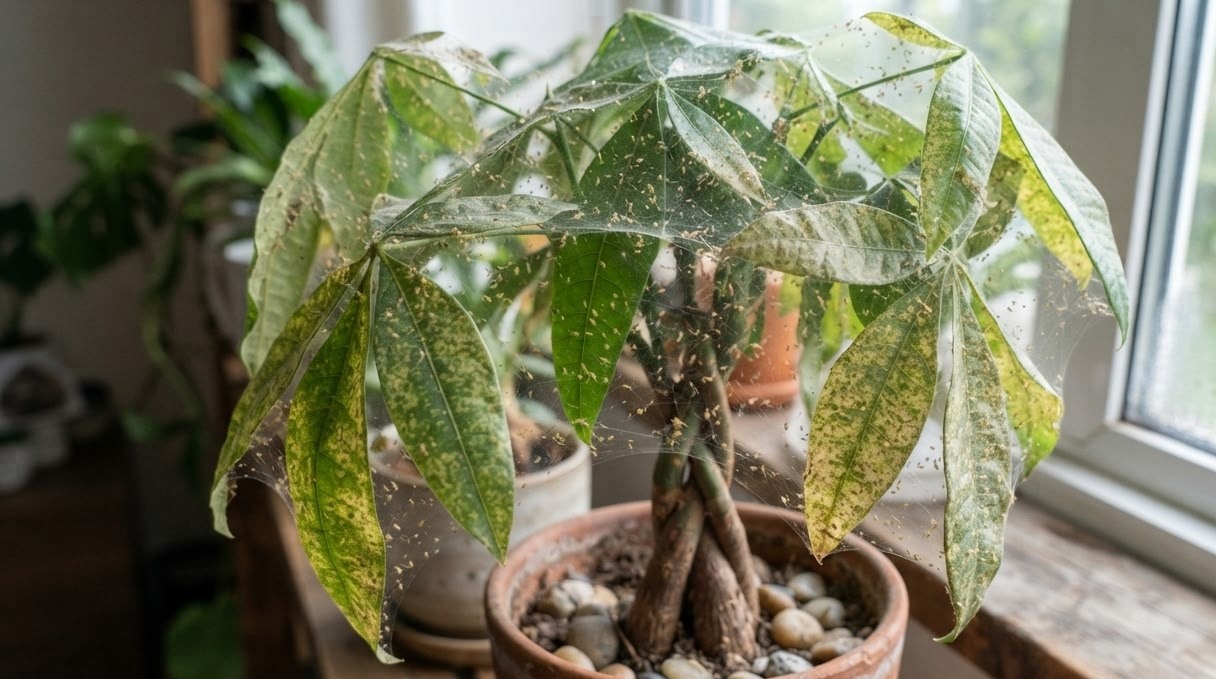
Fine stippling on leaves, sometimes with webbing. More common in dry conditions. Raise humidity, rinse the plant, and treat with insecticidal soap or neem oil weekly until clear.
Is Pachira Aquatica Toxic to Cats and Dogs?
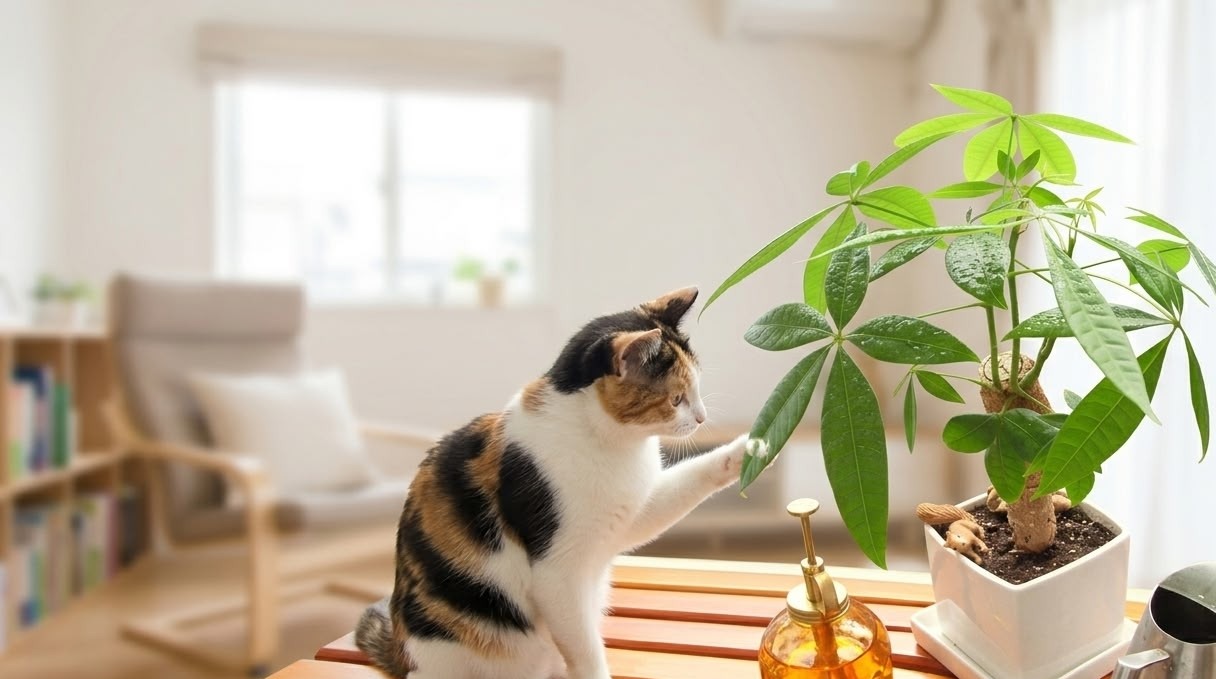
No. The ASPCA lists Pachira aquatica (money tree) as non-toxic to cats, dogs, and horses. That makes it a good choice for households with cats or dogs who tend to chew plants. Two caveats: NC State Extension notes that the raw seeds contain cyclopropenoid fatty acids and lists possible mild stomach upset in cats, and the ASPCA points out that eating any plant material can cause vomiting. I would still move it out of reach of a pet that chews leaves constantly.
Common Mistakes With Pachira Aquatica
Overwatering in response to leaf drop. When the money tree drops leaves, the instinct is to water more thinking it’s thirsty. More often, leaf drop is caused by overwatering (root rot) or relocation shock. Check the soil before adding more water: if it’s moist, the problem is not drought.
Moving it repeatedly. The money tree drops leaves in response to environmental changes. Moving it from spot to spot while troubleshooting causes multiple stress episodes. Choose the best available spot (bright indirect light), place it there, and allow 4-6 weeks for adjustment before evaluating.
Putting it in low light because “it doesn’t need much light.” Money tree tolerates lower light than some tropical plants, but it will not thrive or look impressive in deep shade. Bright indirect light produces the dense, lush canopy most people want.
Frequently Asked Questions
Is money tree the same as Pachira aquatica?
Yes. “Money tree” is the common name for Pachira aquatica. The same plant is also called Malabar chestnut, Guiana chestnut, and French peanut. The braided trunk version is the most commonly sold form as a houseplant.
How fast does Pachira aquatica grow?
Moderate growth rate, typically 12-24 inches per year in good conditions (bright light, regular watering, monthly fertilizing). Growth slows significantly in low light and stops almost entirely in winter.
Can I put my money tree outside in summer?
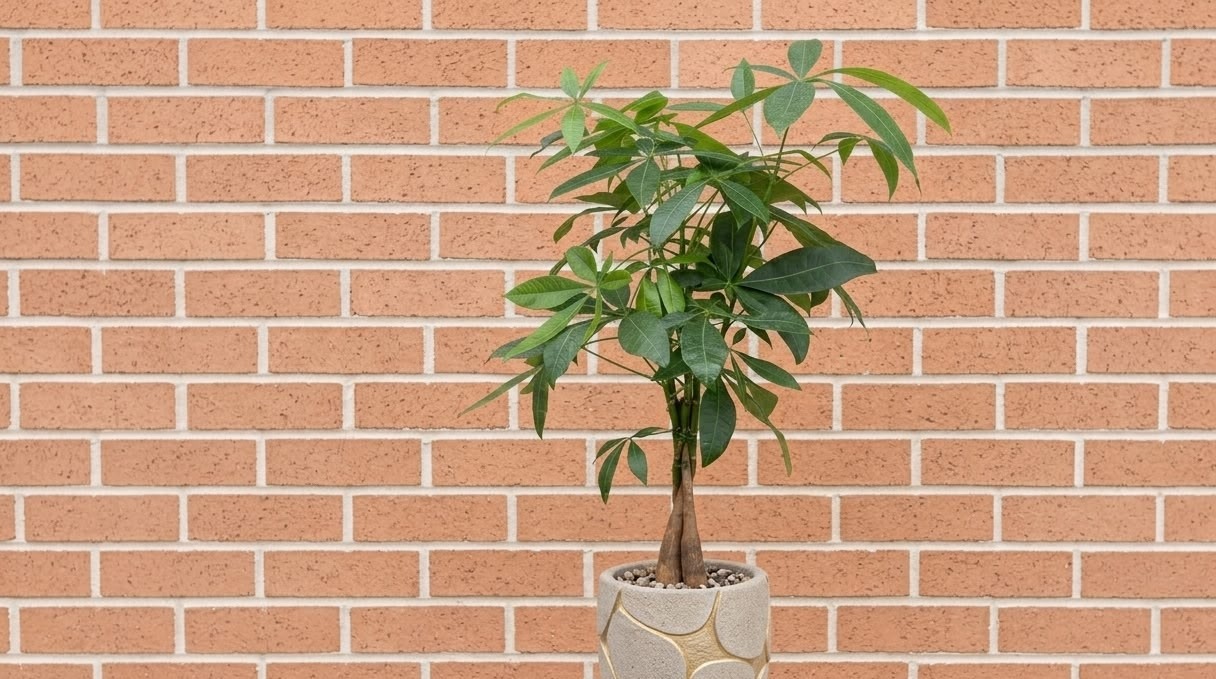
Yes, in a spot with bright indirect light or dappled sun. Avoid direct afternoon sun outdoors, which is much more intense than indoor light and causes rapid leaf scorch. Bring inside before temperatures drop below 55°F (13°C).
Why does my money tree have brown leaf tips?
Brown tips are usually caused by low humidity, fertilizer salt buildup, or fluoride/chlorine in tap water. Try filtered water or rainwater; letting tap water stand overnight lets chlorine escape but does not remove fluoride. Flush the soil monthly to remove salt accumulation. Raise humidity if the tips are consistently browning.