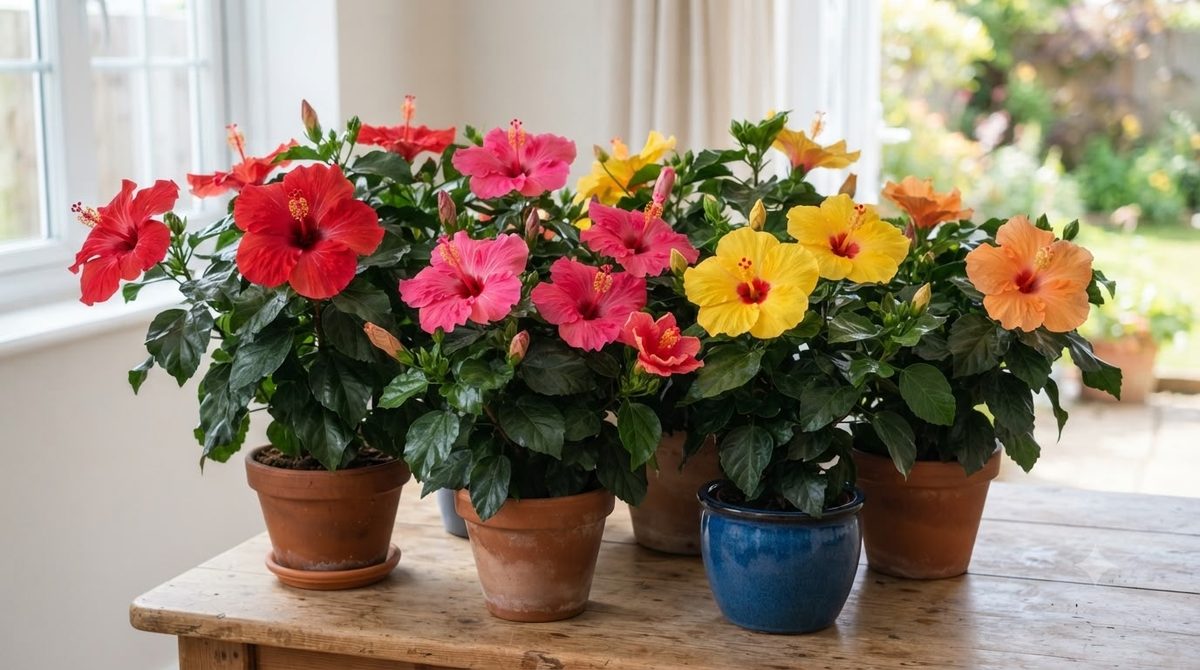
Tropical hibiscus (Hibiscus rosa-sinensis) is not really sold as a houseplant — it is sold as an outdoor patio plant or garden accent. But with the right conditions, it grows remarkably well indoors year-round and produces large flowers repeatedly through the warm months. The challenge: indoor conditions almost always fail it in one or more of the three areas that trigger blooming. This guide explains what those are, why buds drop before opening (a different problem than not budding at all), and how to keep a tropical hibiscus thriving inside through every season.
| Indoor Hibiscus Quick Care Summary | |
|---|---|
| Light | Full sun, 6+ hours direct daily (south-facing window) |
| Water | Every 7–10 days; let top inch dry |
| Humidity | 50–60% |
| Temperature | 65–85°F (18–29°C) |
| Fertilizer | Weekly during bloom with high-potassium formula (e.g. 17-5-24) |
Why Won’t My Indoor Hibiscus Bloom?
Hibiscus blooms on new growth — flowers only appear on the current season’s stems, not on old wood. This means the conditions that produce abundant new growth are also the conditions that produce abundant flowers. There are three main reasons an indoor hibiscus stops blooming:
Insufficient Light

The most common cause. Tropical hibiscus needs a minimum of 6 hours of direct or very bright indirect sunlight daily to flower. Most indoor spots — even near a window — do not meet this threshold. A south-facing window with direct sun from spring through autumn is the minimum. An east or west window can work if the plant gets 4-5 hours of direct sun plus bright indirect light throughout the day. Without adequate light, the plant puts energy into maintaining existing foliage rather than producing new growth (and therefore new flowers).
Wrong Fertilizer
Hibiscus needs high potassium (the third number in NPK) to produce flowers. The generic balanced fertilizers (10-10-10) most people use push foliage at the expense of blooms. During the growing season, use a fertilizer specifically formulated for hibiscus or a high-potassium formula (such as 17-5-24 or similar). Feed every 2 weeks from spring through early autumn. Do not fertilize in winter when growth slows.
Insufficient Pruning
Because hibiscus blooms on new growth, the more new stems it produces, the more flowers it makes. Regular light pruning stimulates branching and new shoot production. Prune back stems by one-third in early spring before the main growing season. During summer, tip-prune spent flower stems after flowers drop to encourage new shoots rather than seed pod development.
Bloom-cycle troubleshooting is similar across flowering tropicals — see our indoor fuchsia care guide and bird of paradise care guide for related bloom triggers.
Why Are My Hibiscus Buds Dropping Before They Open?

Bud drop (buds forming but falling off before opening) is a distinct problem from not forming buds at all. The plant is initiating flowers but something is killing the buds before they open. The most common causes:
- Low humidity: Hibiscus buds are sensitive to dry air. Below 50% relative humidity, bud drop increases significantly. Misting the plant (not the open flowers) or placing on a pebble tray with water helps. A humidifier near the plant is the most reliable solution.
- Temperature fluctuations: A bud that forms in warm conditions can drop if overnight temperatures fall below 55°F (13°C). Bud drop is common near cold windows in autumn when night temperatures drop.
- Inconsistent watering: A severe dry spell followed by heavy watering triggers bud drop. The plant needs consistent moisture during the budding period.
- Pest damage: The hibiscus gall midge (Contarinia maculipennis) lays eggs inside buds, which then deform and drop. Inspect dropping buds for tiny larvae inside. Treatment: remove and destroy affected buds; apply a systemic insecticide for persistent infestations.
How to Keep Hibiscus as a Year-Round Houseplant
How Much Light Does Indoor Hibiscus Need?

As much direct sun as possible — 6+ hours daily for best flowering. A south-facing window is ideal from spring through autumn. In winter when light is weaker, move as close to the window as possible. Supplemental grow lighting (12-14 hours daily) can maintain growth and occasional blooms through winter. Without winter light supplementation, the plant typically enters a semi-dormant slow-growth phase — this is normal.
How Often Should You Water Indoor Hibiscus?
Water when the top inch of soil feels dry — roughly every 3-5 days in summer, every 7-10 days in winter. Hibiscus is thirstier than many houseplants due to its large leaves and active growth. During peak summer, wilting can occur between waterings if the plant is in full sun. Never let it sit in standing water — root rot develops quickly. Good drainage is essential.
What Soil Does Indoor Hibiscus Need?
Rich, well-draining potting mix. A standard potting soil with added perlite (25-30% by volume) provides good drainage while retaining the moisture hibiscus needs. Do not use a cactus or succulent mix — hibiscus needs more consistent moisture than those allow.
What Temperature Does Indoor Hibiscus Prefer?
65-85°F (18-29°C) during active growth. Hibiscus can survive brief dips to 50°F (10°C) but sustained cold stops growth and causes leaf drop. In winter, if kept above 60°F, the plant will continue slowly growing. Below 50°F it goes dormant and may lose most of its leaves — but typically recovers when returned to warmth in spring.
What Humidity Does Indoor Hibiscus Need?
50-60% relative humidity. Standard indoor air (especially in winter with heating running) often falls below 30%, which causes bud drop, brown leaf edges, and increased spider mite pressure. A pebble tray or humidifier near the plant significantly improves both growth and flowering. Avoid placing near heating vents, which create dry air pockets.
How to Propagate Indoor Hibiscus

Stem cuttings are the standard propagation method for tropical hibiscus. Take a pencil-thick, 5-6 inch cutting of firm new growth in spring, when rooting is fastest (Clemson HGIC) — avoid old, woody stems. Strip the lower leaves, leaving 2-3 leaves at the tip, and leave 1-2 leafless nodes bare for inserting into the medium.

Rooting hormone is optional — hibiscus is considered an easy-to-root plant (UF/IFAS Gardening Solutions) — but a dip in IBA powder speeds things up. Clemson HGIC recommends a 3-parts-sand to 1-part-peat mix as a tested rooting medium; keep it consistently moist, not soggy, and provide bright indirect light and high humidity (a loose plastic bag or humidity dome helps). Expect roots in 4-6 weeks. Gentle resistance when you tug the cutting, plus new leaf growth, means it has rooted and is ready to pot up.
For multi-colored or harder-to-root cultivars, air layering is a more reliable alternative to stem cuttings.
Why Are My Hibiscus Leaves Turning Yellow?
Yellow leaves on hibiscus have three common causes:
Iron or Magnesium Deficiency

The most frequent cause in indoor hibiscus — yellowing between the leaf veins (interveinal chlorosis) while the veins stay green. Hibiscus is a heavy feeder that depletes soil nutrients quickly. Treat with a fertilizer that includes micronutrients (iron, magnesium, manganese), or apply chelated iron directly. Slightly acidifying the soil (pH 6.0-6.5) improves nutrient availability. This is often mistaken for overwatering because the symptoms look similar at a glance.
Overwatering
Uniform yellowing of entire leaves, often starting at the base of the plant. The soil will feel consistently wet. Reduce watering frequency, ensure proper drainage, and check whether root rot has developed.
Natural Aging
Older lower leaves yellow and drop as the plant redirects energy to new growth. One or two yellow leaves from the bottom of the plant while the rest look healthy is normal, especially during periods of active growth and flowering.
Winter Care for Indoor Hibiscus

In temperate climates, winter is the main challenge for keeping hibiscus indoors. Two approaches:
Keep it actively growing: Place in the brightest available window and supplement with a grow light. Maintain temperatures above 65°F. Continue watering (less frequently) and fertilize every 4-6 weeks at reduced rates. The plant will grow slowly and may produce occasional flowers.
Allow semi-dormancy: Move to a cool but frost-free location (50-55°F). Reduce watering to once every 2-3 weeks. Stop fertilizing. The plant will drop some or all leaves. Resume normal care in spring when new growth emerges.
Either approach works. Active overwintering maintains the plant better but requires more effort. Semi-dormancy is low-maintenance but requires the plant to rebuild foliage in spring before flowering begins.
Is Hibiscus Toxic to Cats and Dogs?

The ASPCA lists Hibiscus rosa-sinensis (tropical hibiscus) as toxic to cats, dogs, and horses. Toxic effects are primarily gastrointestinal: nausea, vomiting, and diarrhea. The toxicity is considered mild — symptoms are unpleasant but typically not life-threatening from typical exposure. Keep out of reach of pets nonetheless, and call your vet if ingestion occurs.
Note on Rose of Sharon: Hibiscus syriacus (Rose of Sharon), a different species sometimes confused with tropical hibiscus, is also listed by the ASPCA as having similar toxicity effects. Do not confuse the two species — they look quite different and have different growth habits, but both are flagged by the ASPCA for pets.
Common Mistakes With Indoor Hibiscus

Not giving it enough sun. Hibiscus needs more light than almost any other popular houseplant. Placing it near (but not in) a window, or in a room with indirect light all day, will produce a plant that looks acceptable but never blooms. It needs direct sun, not just bright conditions.
Using a balanced fertilizer and wondering why it won’t bloom. Balanced fertilizers promote leafy growth. Hibiscus flowers require high potassium. Switch to a high-potassium or hibiscus-specific fertilizer during the growing season and most non-blooming cases resolve within 4-6 weeks.
Not pruning it. Without pruning, hibiscus grows as a single-stemmed, top-heavy plant with flowers only at the tips of long bare branches. Regular tip-pruning produces a bushier plant with more flowering shoots and more blooms per season.
Frequently Asked Questions
Can hibiscus survive indoors year-round?
Yes — with adequate light (6+ hours daily), consistent watering, and monthly fertilizing with a high-potassium formula. Many people grow tropical hibiscus as a full-time houseplant with great success. The key limitation is light — homes without a sunny south or west window may struggle.
Why does my hibiscus have buds but they fall off before opening?
Bud drop is usually caused by low humidity, temperature fluctuations (especially cold drafts near windows at night), or inconsistent watering during the bud development period. Check all three. The hibiscus gall midge (small larvae inside dropped buds) is another cause — inspect fallen buds.
How often does indoor hibiscus bloom?
In good conditions, tropical hibiscus can bloom almost continuously from spring through late autumn, with individual flowers lasting 1-2 days. Each flower is short-lived, but a healthy plant in full sun will produce a constant succession of new buds.
When should I repot my hibiscus?
Every 1-2 years in spring, or when roots fill the pot and growth slows significantly. Choose a pot 2 inches larger in diameter. Hibiscus responds well to fresh soil — repotting in spring before the growing season often triggers a surge of new growth and flowers.