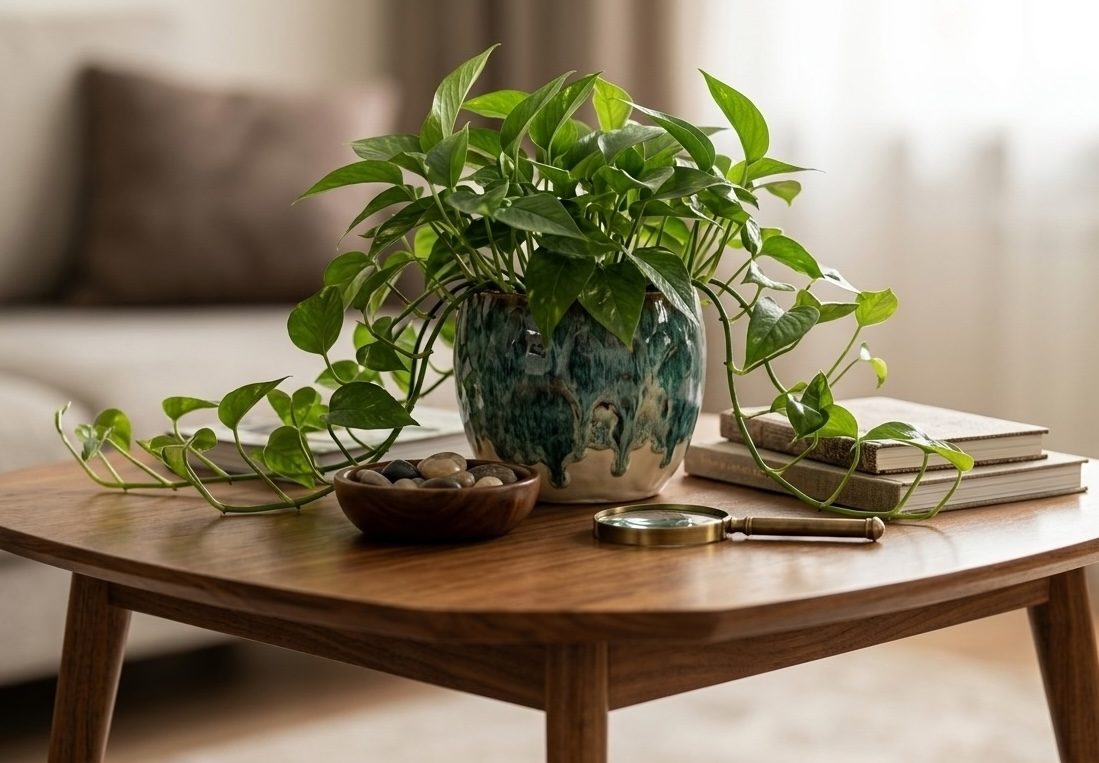
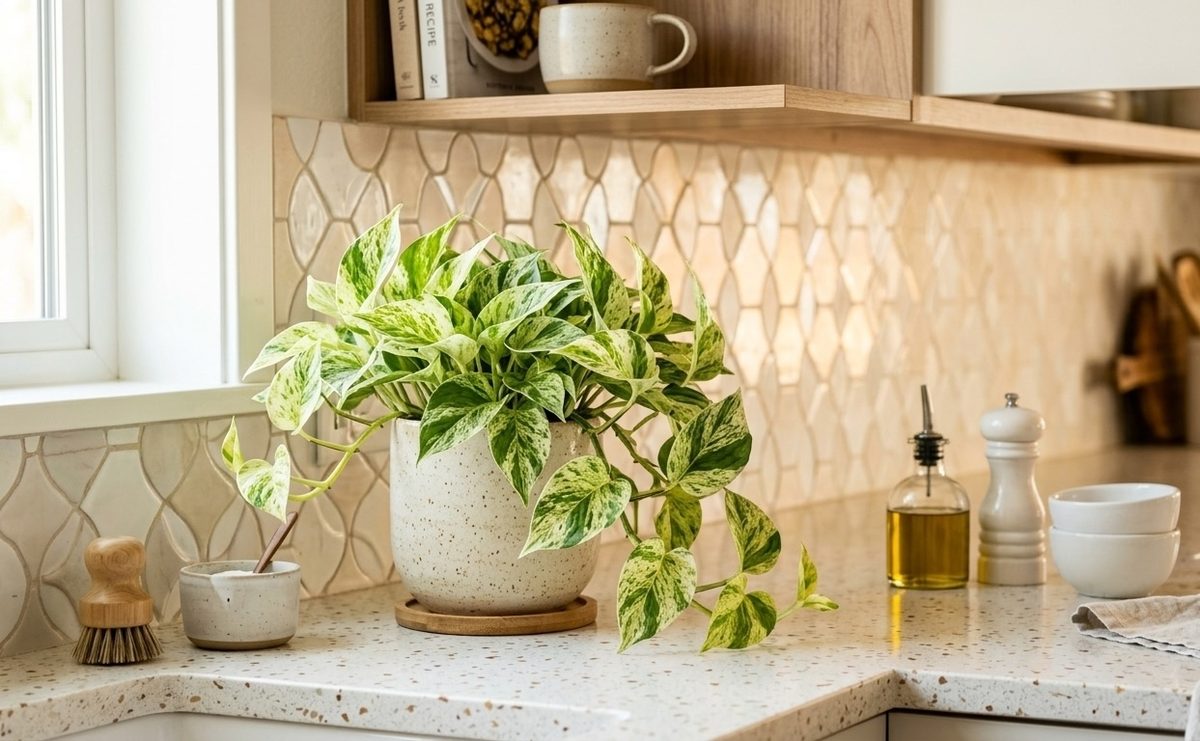
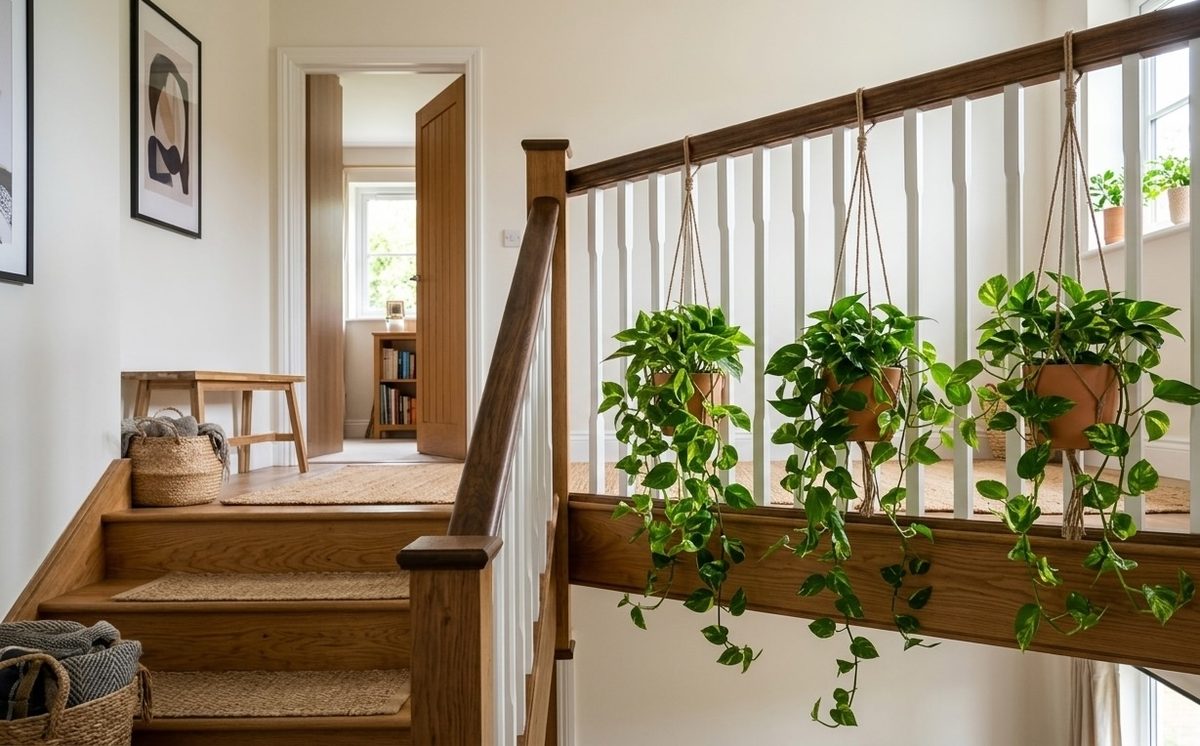
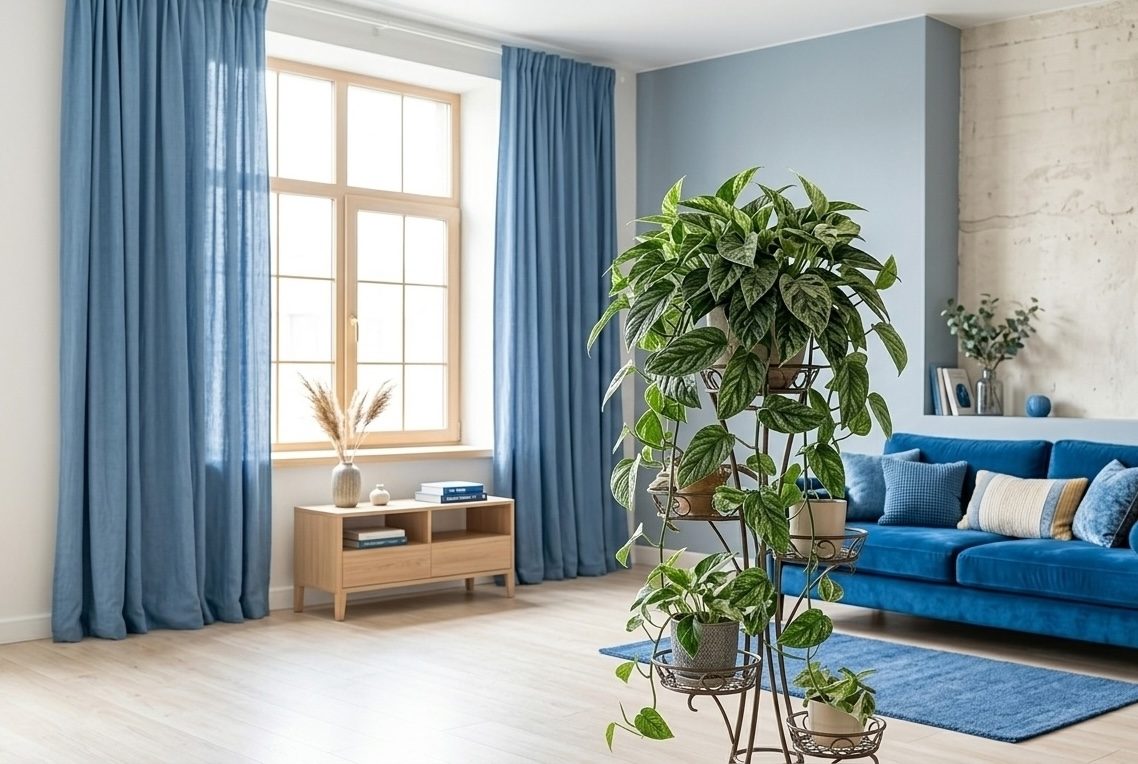
Epipremnum pinnatum is sold in most garden centers in the same conditions as its cousin golden pothos (Epipremnum aureum): trailing from a hanging basket, small leaves, no holes. This makes it look unremarkable. What most sellers don’t show is what happens when this plant is given a vertical support and allowed to climb: the leaves grow progressively larger and develop deep pinnate cuts (fenestrations) along the sides, creating a dramatically different appearance from the juvenile trailing form. Understanding that E. pinnatum is fundamentally a climbing plant — not a trailing one — changes how you grow it and what you can expect.
Epipremnum pinnatum Quick Care Summary
Light
Bright to moderate indirect light; some direct morning sun OK
Water
Every 7–10 days; let top 1–2 inches dry
Humidity
50–60%
Temperature
60–85°F (15–29°C)
Fertilizer
Monthly spring–summer, balanced liquid fertilizer
Epipremnum pinnatum — dragon tail plant indoors
What Is Epipremnum Pinnatum? How Does It Differ From Pothos?
Epipremnum pinnatum is in the same genus as golden pothos (E. aureum) but is a distinct species. Key differences:
Leaf fenestrations: E. pinnatum develops deep lateral cuts (pinnate fenestrations) along the leaf margins as it matures on a climbing support. Golden pothos does not develop fenestrations regardless of support — its leaves remain oval.
Leaf shape: Juvenile E. pinnatum leaves are elongated and slightly narrower than the heart-shaped leaves of golden pothos.
Cebu Blue variety: The most widely sold form of E. pinnatum has a distinctive blue-green, almost silvery coloration in good light. This “Cebu Blue pothos” (the pothos part of the common name is a misnomer — it is not a Pothos genus plant) is a cultivar of E. pinnatum.
Natural habitat: E. pinnatum is native to tropical Asia, the Pacific islands, and Australia. E. aureum (golden pothos) is native to the Society Islands.
Variegated cultivars: Beyond Cebu Blue, E. pinnatum has produced variegated forms with white or cream marbling on the leaves (E. pinnatum ‘Albo Variegata’). These forms are slower-growing due to reduced chlorophyll and are considerably rarer than the standard green or Cebu Blue forms. Care is the same, but they require brighter light to maintain variegation.
How Do You Get Epipremnum Pinnatum to Fenestrate
Fenestrated mature Epipremnum pinnatum leaf on a moss pole
?
Fenestrations develop only when the plant climbs — specifically when aerial roots make contact with a rough, moisture-retaining surface that mimics tree bark. This is the key mechanism:
Why Climbing Triggers Fenestrations
In nature, E. pinnatum climbs tree trunks using aerial roots that grip the bark surface. As the plant ascends, it enters a more mature growth phase: leaves grow larger and develop fenestrations. The plant perceives the climb as a signal that it has reached a position with more light (higher up in the forest canopy) and invests in larger, more complex leaves accordingly. Trailing downward — even in the same light — keeps the plant in permanent juvenile form.
What Support Should You Use?
A moss pole is the most effective option — the moist moss allows aerial roots to penetrate and grip, closely mimicking the bark surface the plant evolved to climb. Keep the moss moist; dry moss does not trigger root engagement. Wooden boards with coco coir attached, or cork bark panels, also work well. Plain wooden stakes and metal poles provide physical support but fewer anchor points for aerial roots; fenestrations may develop more slowly.
Once roots have attached to the support and the plant is actively climbing, fenestrations typically begin appearing within 3-6 months in good growing conditions.
How to Care for Epipremnum Pinnatum
What Light Does Epipremnum Pinnatum Need?
Bright indirect light to moderate indirect light. E. pinnatum tolerates a wider light range than most tropical aroids — from direct morning sun to the dim corner of a room. However, brighter conditions produce larger leaves and encourage faster fenestration development. The Cebu Blue variety’s silvery-blue coloration is most pronounced in bright indirect light; in low light the leaves appear more matte green. Avoid prolonged direct afternoon sun, which scorches the leaves.
How Often Should You Water Epipremnum Pinnatum?
Water when the top 1-2 inches of soil feel dry — roughly every 7-10 days in the growing season. E. pinnatum is drought-tolerant and stems store some water. Occasional missed waterings cause temporary wilting but no permanent damage. Overwatering causes root rot; ensure the pot drains fully after each watering and never sits in standing water.
What Soil Does Epipremnum Pinnatum Need?
A loose, well-draining aroid mix. Equal parts potting soil and perlite works well. If using a moss pole, the aerial roots access moisture from the moss independently of soil moisture — this means the plant can tolerate the soil drying out more between waterings once it is actively climbing.
What Temperature Does Epipremnum Pinnatum Prefer?
60-85°F (15-29°C). Similar to golden pothos — it tolerates normal household temperatures without complaint. Below 55°F (13°C), growth slows significantly. Cold drafts cause yellowing of the nearest leaves.
What Humidity Does Epipremnum Pinnatum Need?
Moderate — 50-60%. It tolerates normal household humidity (40-50%) without significant brown tipping, making it easier than calathea or alocasia in this regard. Higher humidity accelerates growth and encourages aerial root development. Keeping the moss pole moist raises local humidity around the plant.
How Often Should You Fertilize Epipremnum Pinnatum?
Monthly with balanced liquid fertilizer during spring and summer. Reduce to every 6-8 weeks in autumn. Stop in winter. Over-fertilizing in low light produces soft, weak growth. The plant fertilizes itself to some extent by absorbing nutrients from the moist moss through aerial roots — another argument for keeping the moss pole moist.
Epipremnum Pinnatum vs Epipremnum Aureum: Which Is Better?
The choice depends on what you want from the plant:
E. aureum (golden pothos): Faster-growing, more forgiving, wider variegation range (golden, marble queen, neon, etc.). Does not fenestrate. Better for fast, easy coverage in hanging baskets.
E. pinnatum (dragon tail / Cebu Blue): Unique fenestrated mature form impossible to get from aureum. More dramatic mature appearance when climbing. Slightly more demanding about light. Better as a statement climbing plant on a moss pole.
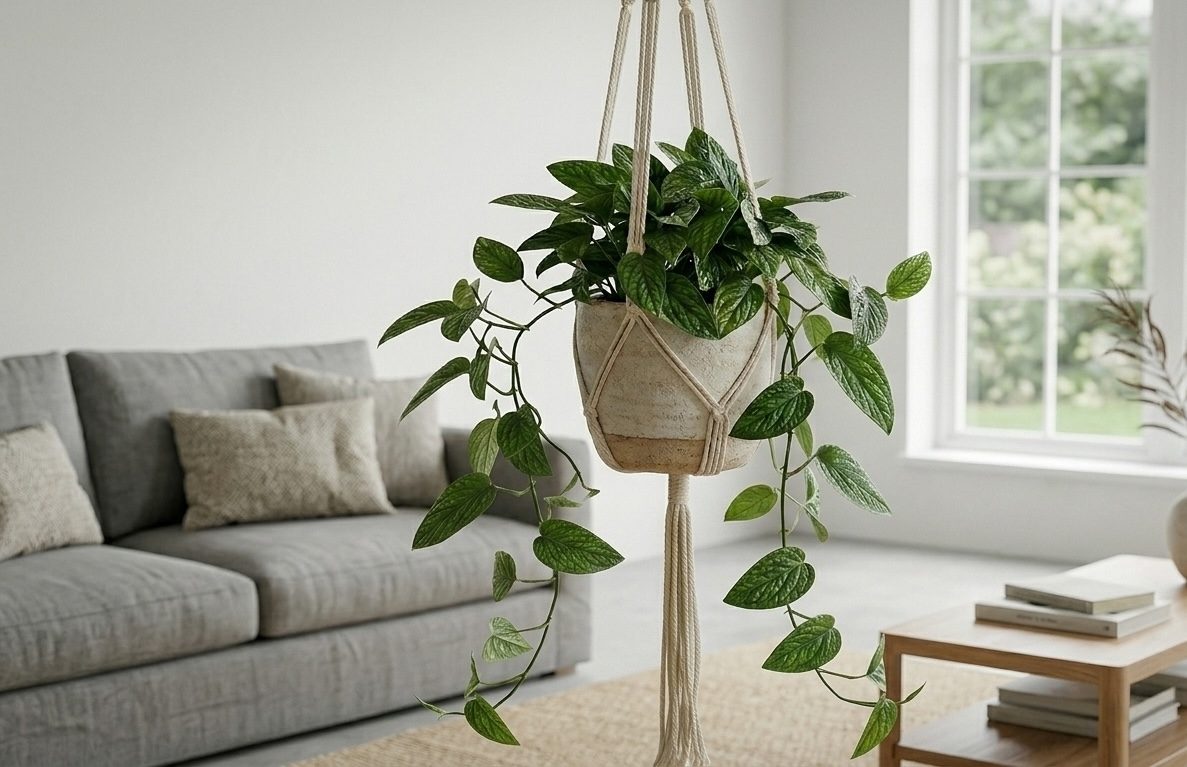
Epipremnum pinnatum in hanging baskets — the juvenile trailing form works for display, but won’t fenestrate without a climbing support
Both have essentially the same care requirements. The key distinction is the end result: pinnatum rewards the effort of providing a climbing support with a genuinely different adult form; aureum does not change appearance with maturity.
Is Epipremnum Pinnatum Toxic
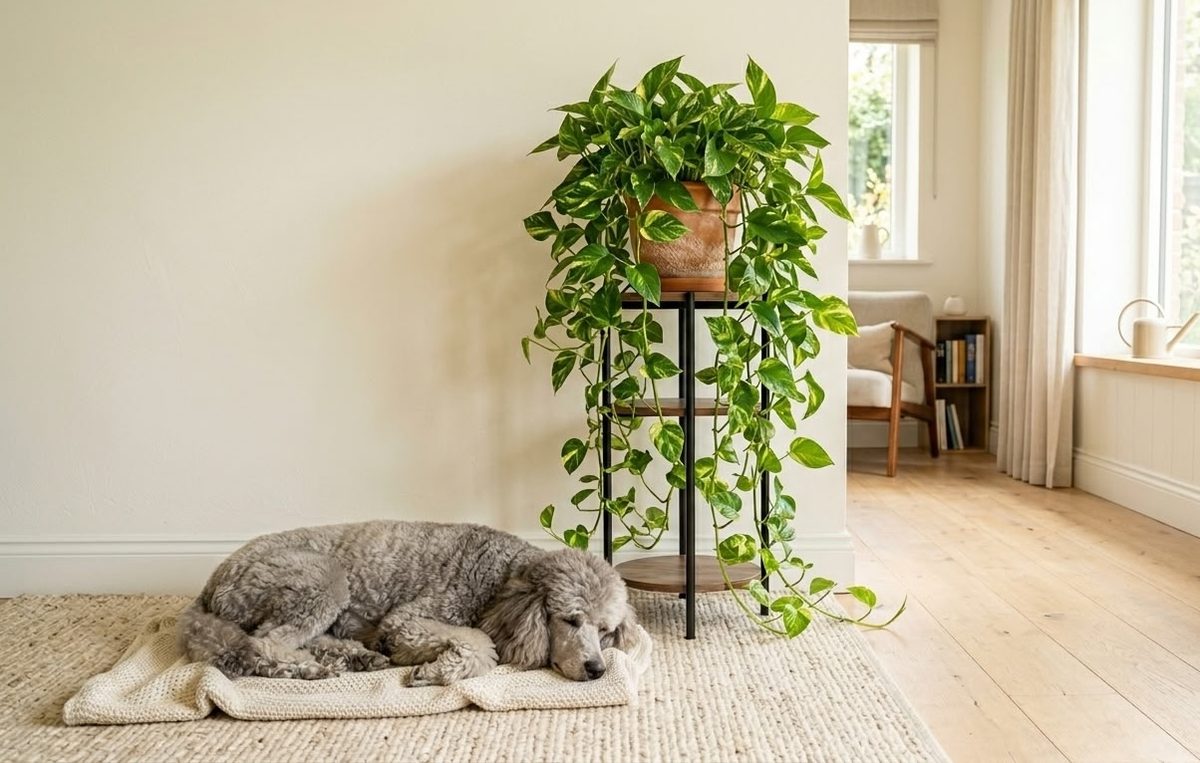
Epipremnum pinnatum — keep away from pets
to Cats and Dogs?
Yes. Like all Epipremnum species, E. pinnatum is toxic to cats, dogs, and horses due to insoluble calcium oxalate crystals. Ingestion causes immediate oral burning, drooling, vomiting, and difficulty swallowing. The plant was previously classified under the genus Pothos (hence “Cebu Blue pothos” as a common name), and our existing article Is Pothos Toxic to Cats? covers the toxicity mechanism in detail for all Epipremnum species. Keep all Epipremnum out of reach of pets.
How to Propagate Epipremnum Pinnatum
E. pinnatum propagates easily from stem cuttings taken any time during the growing season:
Cut below a node. Take a 4–6 inch cutting with at least one node (the bump where a leaf attaches to the stem) and one or two leaves. Remove any leaf that would sit below the waterline.
Root in water or sphagnum moss. Place the cutting in a glass of water, keeping the node submerged. Roots develop within 2–4 weeks. Alternatively, press the node into moist sphagnum moss — roots adapt to soil faster than water-rooted cuttings.
Move to soil when roots reach 1–2 inches. Water-rooted cuttings transplanted at this stage establish without setback. Waiting longer produces roots adapted to water that struggle in soil.
Provide a climbing support from the start. If you want the new plant to eventually fenestrate, give it a small moss pole immediately rather than starting it in a trailing basket. The climbing habit begins from the first leaf.
One important detail: cuttings taken from a mature fenestrated plant do not carry fenestration forward — new growth starts in juvenile form regardless of where the cutting came from. The plant must re-climb to re-enter the mature growth phase.
A newly propagated Epipremnum pinnatum in a macramé hanging basket — give it a support to eventually fenestrate
Why Do Epipremnum Pinnatum Leaves Get Brown Spots?
Brown spots on E. pinnatum are distinct from yellowing and point to different causes:
Root rot (wet, spreading brown patches at leaf base or center). The most common culprit. Caused by soil that stays consistently wet. Affected leaves show soft, mushy brown patches that spread. Check the roots — healthy roots are white or tan; rotted roots are brown and smell earthy-sour. Unpot, trim dead roots, let the root ball air-dry for an hour, then repot in fresh dry mix.
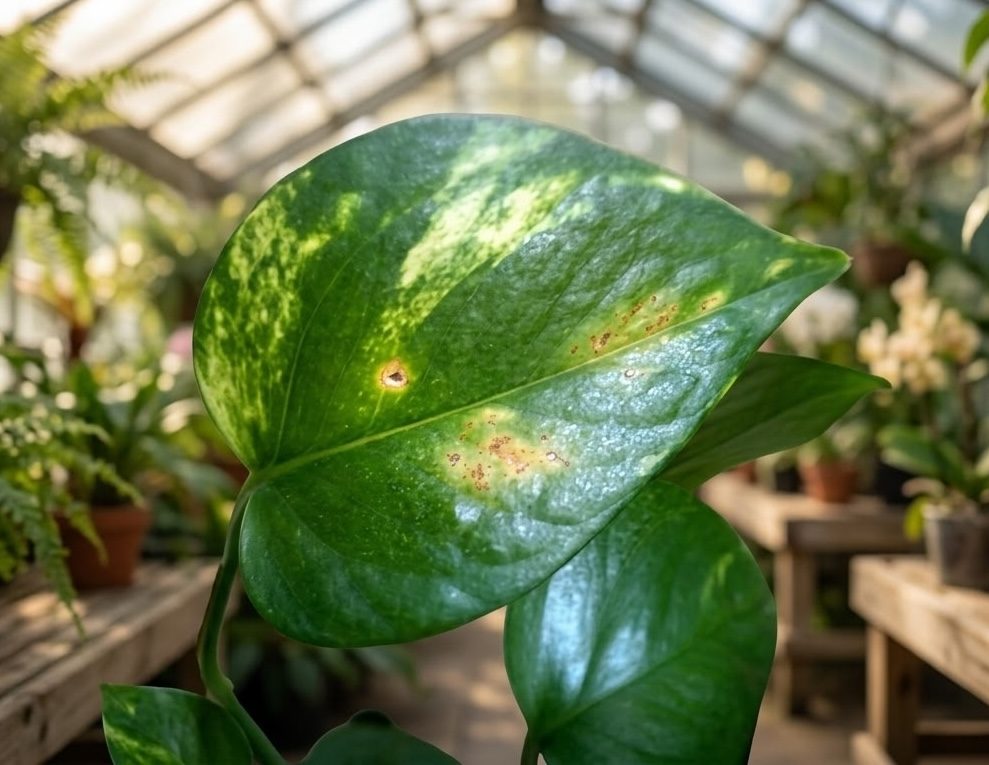
Fungal leaf spot (circular brown spots with a yellow halo). Water sitting on leaves combined with low air movement creates fungal conditions. The spots are typically small, round, and distinct — not spreading. Water at the base of the plant; improve ventilation; remove and dispose of heavily affected leaves.
Cold damage (irregular brown or grey-brown patches). Leaves nearest a cold window in winter, an air conditioning vent, or a drafty exterior door show irregular discoloration. E. pinnatum is sensitive below 55°F (13°C) — even brief cold exposure damages the nearest leaves.
Spider mite damage (pale stippling, not spots). Spider mites produce tiny pale specks across the leaf surface — not circular spots — along with fine webbing on the undersides. Treat with neem oil or insecticidal soap spray.
Circular brown spots with yellow margins on Epipremnum pinnatum — typical fungal leaf spot from water sitting on leaves
Common Mistakes
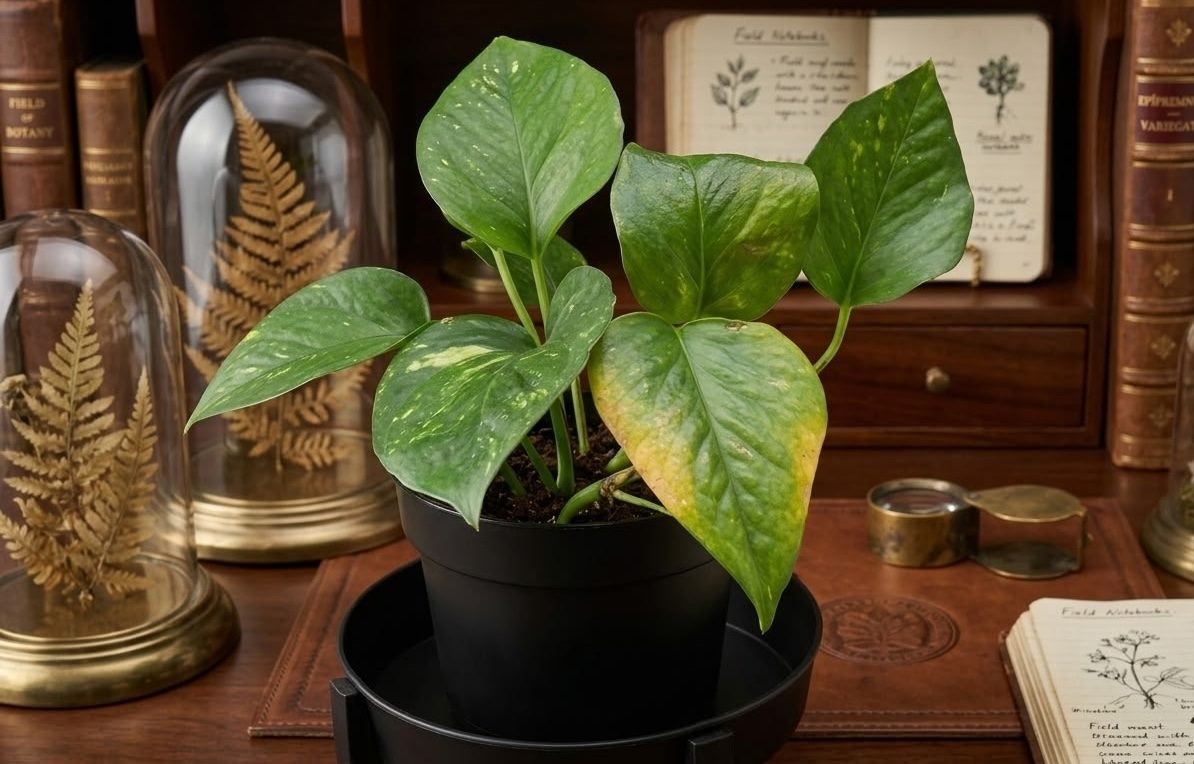
Epipremnum pinnatum trailing without a climbing support
With Epipremnum Pinnatum
Hanging it in a basket and wondering why it never fenestrates. Trailing down from a basket keeps the plant in juvenile form indefinitely. Give it a moss pole, train the stems upward, and keep the moss moist. Fenestrations follow within months of the plant actively climbing.
Letting the moss pole dry out. A dry moss pole does not engage the aerial roots. If aerial roots just dangle in the air next to a dry support, the plant gets no benefit from it. Keep the moss consistently moist — mist it regularly or use a self-watering moss pole.
Confusing it with Monstera or Rhaphidophora. Fenestrated E. pinnatum leaves are sometimes sold as or confused with Monstera deliciosa (which has holes in the center of the leaf, not cuts along the edges) or Rhaphidophora tetrasperma (which has smaller split leaves from a different genus). E. pinnatum fenestrations are deep cuts along the leaf margins on either side of the midrib.
Frequently Asked Questions
Epipremnum pinnatum care summary
What is “Cebu Blue pothos”?
Cebu Blue is a cultivar of Epipremnum pinnatum, not a Pothos species. The common name includes “pothos” because Epipremnum was once classified in the Pothos genus (now reclassified). Its distinctive feature is the blue-green, silvery coloration of the leaves in good light. Care is identical to other E. pinnatum forms.
How long does it take for Epipremnum pinnatum to fenestrate?
Once climbing on a moist moss pole in bright indirect light, the first fenestrated leaves typically appear within 3-6 months. Fenestration size and depth increase progressively — early fenestrations are shallow notches; mature climbing plants develop deeply pinnate leaves that resemble a different plant entirely.
Can Epipremnum pinnatum live outdoors?
In USDA zones 10-12 (tropical and subtropical), yes — and it grows aggressively, reaching 40+ feet climbing trees in suitable climates. In temperate climates, it can go outside in summer (partial shade) but must be brought in before temperatures fall below 55°F (13°C).
Why are my Epipremnum pinnatum leaves yellowing?
Most commonly overwatering (check if soil is consistently wet). Natural aging of older leaves is also normal — a yellow leaf at the base of the plant while the growing tip looks healthy is not a problem. Low light causes slow yellowing of multiple leaves over weeks.