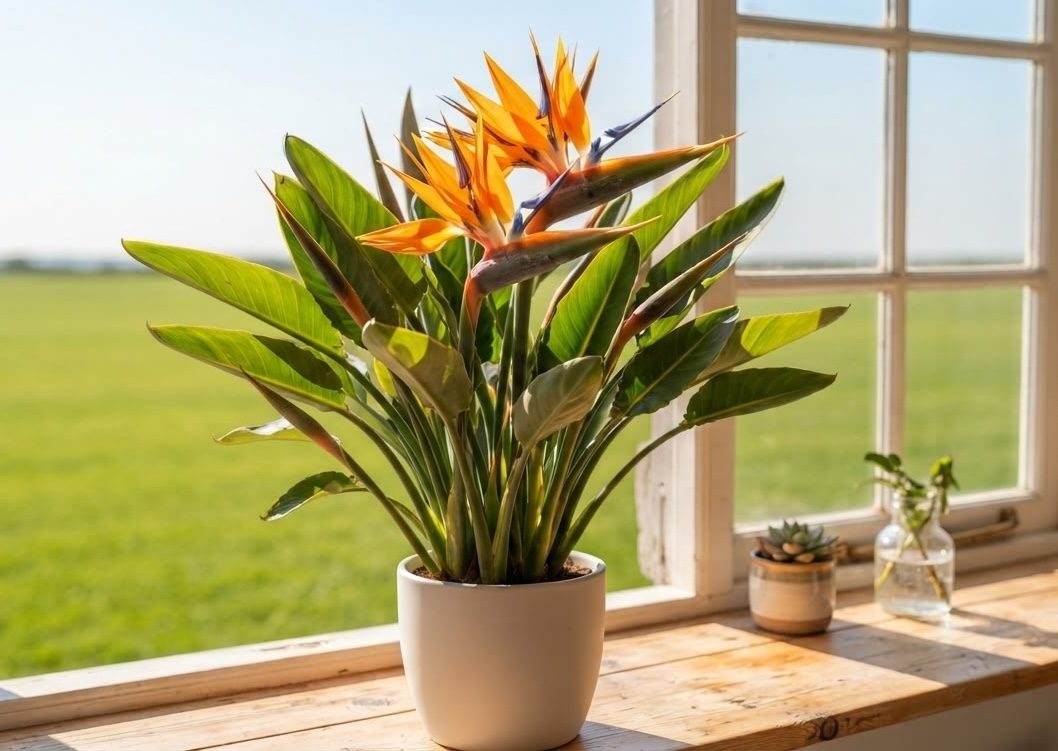
Strelitzia reginae — the bird of paradise — is bought and grown for its extraordinary flowers: a structure of bright orange and deep blue petals emerging from a boat-shaped spathe, resembling a tropical bird in flight. (If your plant is much larger and tree-like with white flowers, you likely have its bigger relative — see our Strelitzia nicolai care guide.) It is also one of the most frequently disappointing houseplants: spectacular in photographs, commonly purchased, and very rarely brought to bloom indoors. This guide explains what actually causes that disappointment, what it takes to get a bird of paradise to flower indoors, and the toxicity warning that matters for pet owners.
| Bird of Paradise Quick Care Summary | |
|---|---|
| Light | Full sun to bright indirect; 4–6 hours direct sun for blooming |
| Water | Every 7–14 days; let top 2 inches dry |
| Humidity | 40–60% |
| Temperature | 65–85°F (18–29°C) |
| Fertilizer | Monthly spring–summer, balanced or high-phosphorus |
Why Is My Bird of Paradise Not Blooming?
The list of specific conditions Strelitzia reginae requires to produce flowers indoors is demanding. Most plants never bloom because at least one is missing:
For another sun-hungry bloomer with its own light-and-fertilizer checklist, see our indoor hibiscus care guide.
Does the Plant Need to Be Root-Bound to Bloom?
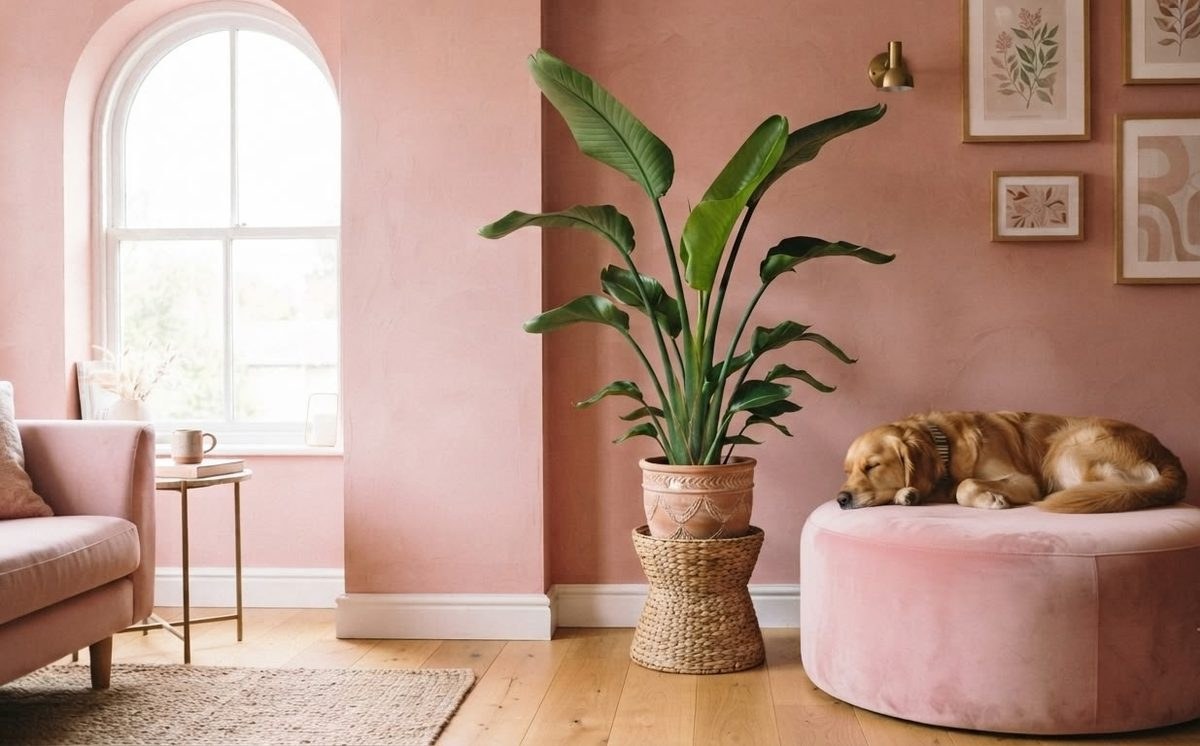
Yes — and this is the most counterintuitive requirement. Strelitzia reginae blooms most reliably when its roots are crowded and pot-bound. In nature it grows in rocky, nutrient-poor soils where roots are constrained. Indoors, keeping it in a pot that feels too small — roots visible from the drainage hole, circling densely inside — sends a flowering signal. Frequent repotting into larger containers resets the plant into vegetative growth mode and delays blooming by years. Only repot when absolutely necessary, and then go up only one size.
What Light Does Bird of Paradise Need to Bloom?
Direct sun — a minimum of 4-6 hours of direct sunlight daily. Bird of paradise is a full-sun plant from the dry, bright coastal regions of South Africa. Indoors, it needs the most direct sun available: ideally a south-facing window with unobstructed light from spring through autumn. In insufficient light, the plant produces abundant, attractive paddle-shaped leaves but no flower stalks. This is the most common reason for non-blooming: even “bright indirect light” is usually not enough.
How Old Does Bird of Paradise Need to Be to Bloom?
Mature. A Strelitzia reginae grown from seed requires 3-5 years before it has enough rhizome size and stored energy to produce flowers. Plants divided from a mature clump bloom faster. If you bought a small plant from a grocery store or garden center, it is almost certainly in juvenile stage regardless of how well you care for it. Patience is a non-negotiable requirement.
Does It Need Drought Stress to Bloom?
Yes — allowing the soil to dry out significantly between waterings in late autumn encourages flower stalk initiation. Strelitzia reginae’s native habitat has a distinct dry season. Reducing water from October through December (when bloom is being triggered for the following spring) mimics this cycle. Resume regular watering in late winter. Plants kept consistently moist year-round often grow vegetatively but skip the drought signal that initiates flowering.
Full Bird of Paradise Care Requirements
How Much Light Does Indoor Bird of Paradise Need?
Maximum available direct sunlight. A south-facing window with clear, unobstructed exposure is the minimum for reliable blooming. A west-facing window with 4+ hours of direct afternoon sun is acceptable. North or east windows typically provide insufficient light for flowering, though the plant will grow attractively as a foliage specimen. If direct sun is not available, the plant is being kept as a foliage plant — set expectations accordingly.
How Often Should You Water Bird of Paradise?
Water thoroughly when the top 2 inches of soil feel dry — approximately every 1-2 weeks during the growing season. In autumn and early winter, reduce watering to allow the soil to dry out more between waterings (drought stress period to initiate blooming). Bird of paradise is more drought-tolerant than its tropical appearance suggests; overwatering causes root rot and yellowing. Always ensure complete drainage.
What Soil Does Bird of Paradise Need?
Rich, well-draining potting mix. A standard potting soil with 20-25% perlite provides good drainage while retaining adequate moisture. A large pot with drainage holes is essential — the dense root mass of a mature bird of paradise can split plastic pots. Ceramic or fabric pots handle the root pressure better.
What Temperature Does Bird of Paradise Prefer?
55-80°F (13-27°C). Strelitzia reginae tolerates temperatures down to about 28°F (-2°C) briefly and can be grown outdoors in USDA zones 10-12. Indoors it handles normal household temperature ranges without issue. It does not need the consistently high temperatures required by true tropical plants — the cooler winter period (55-65°F) actually helps trigger blooming.
What Humidity Does Bird of Paradise Need?
Normal household humidity (40-50%) is adequate. Unlike most tropical foliage plants, bird of paradise does not require high humidity. It is native to coastal scrubland in South Africa — a warm but often windy and relatively dry environment. No misting or humidifiers required.
How Often Should You Fertilize Bird of Paradise?
Monthly from spring through late summer with a balanced fertilizer, followed by a high-potassium fertilizer (higher third NPK number) in early autumn to support flower initiation. Do not fertilize in winter. Established, blooming-sized plants benefit from fertilizing more than young plants; young plants in vegetative mode need less encouragement to grow than to flower.
Why Are Bird of Paradise Leaves Splitting?
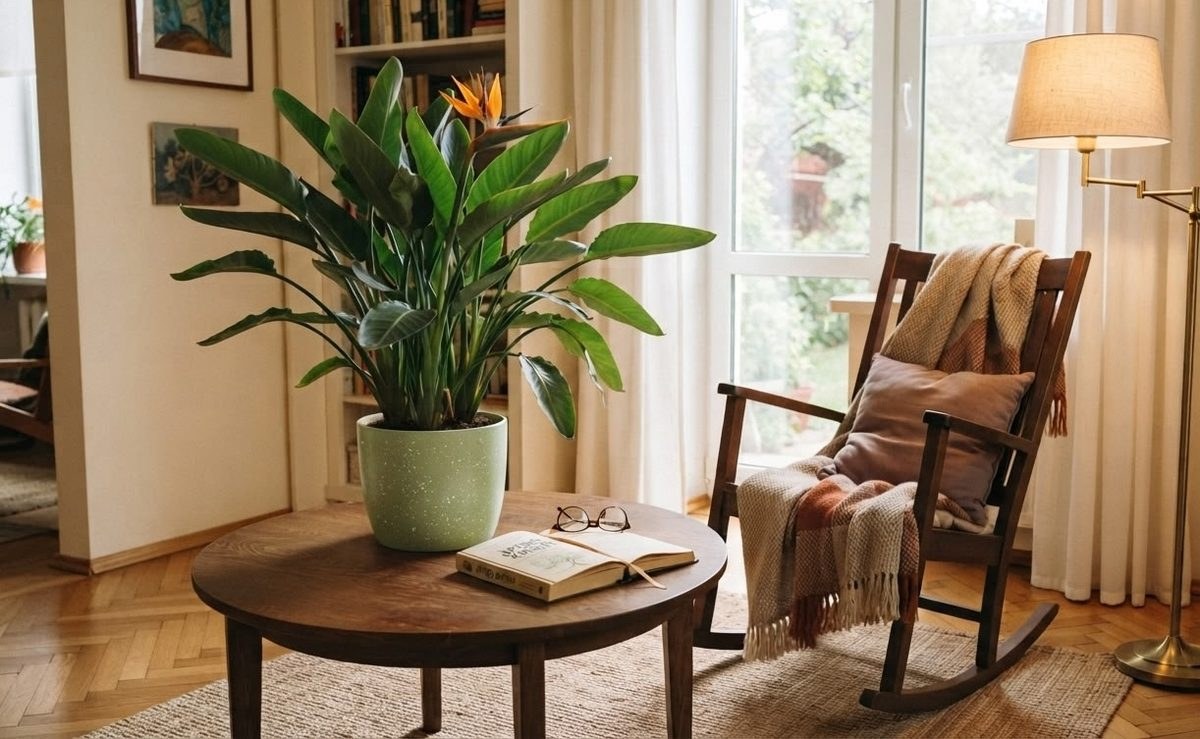
The splits that appear along the margins and through the midrib of bird of paradise leaves are natural and deliberate — an adaptation to reduce wind resistance in its native coastal habitat. They are not signs of disease, pests, or incorrect care. Entire, unsplit leaves appear only on very young plants; splits develop as the leaves mature outdoors. Indoor plants may retain more unsplit leaves due to absence of wind, but some splitting still occurs naturally as leaves age.
Why Are Bird of Paradise Leaves Curling or Drooping?
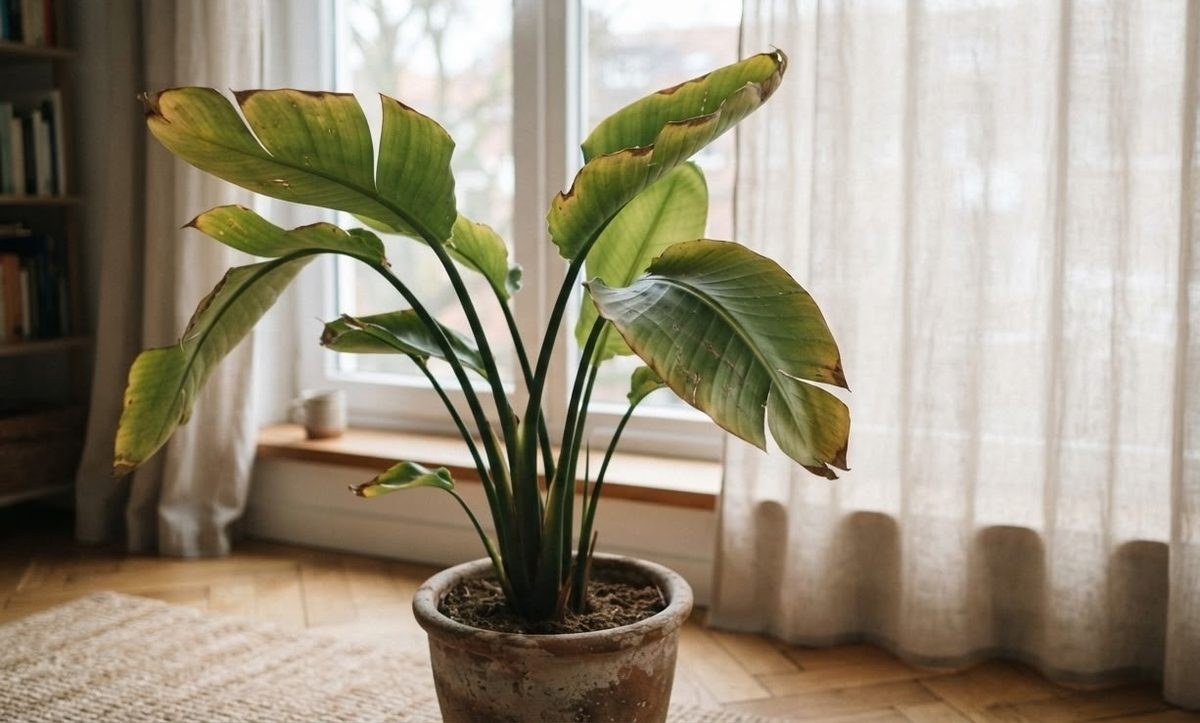
Curling inward along the midrib usually indicates underwatering or very low humidity. Water more frequently and check air conditions.
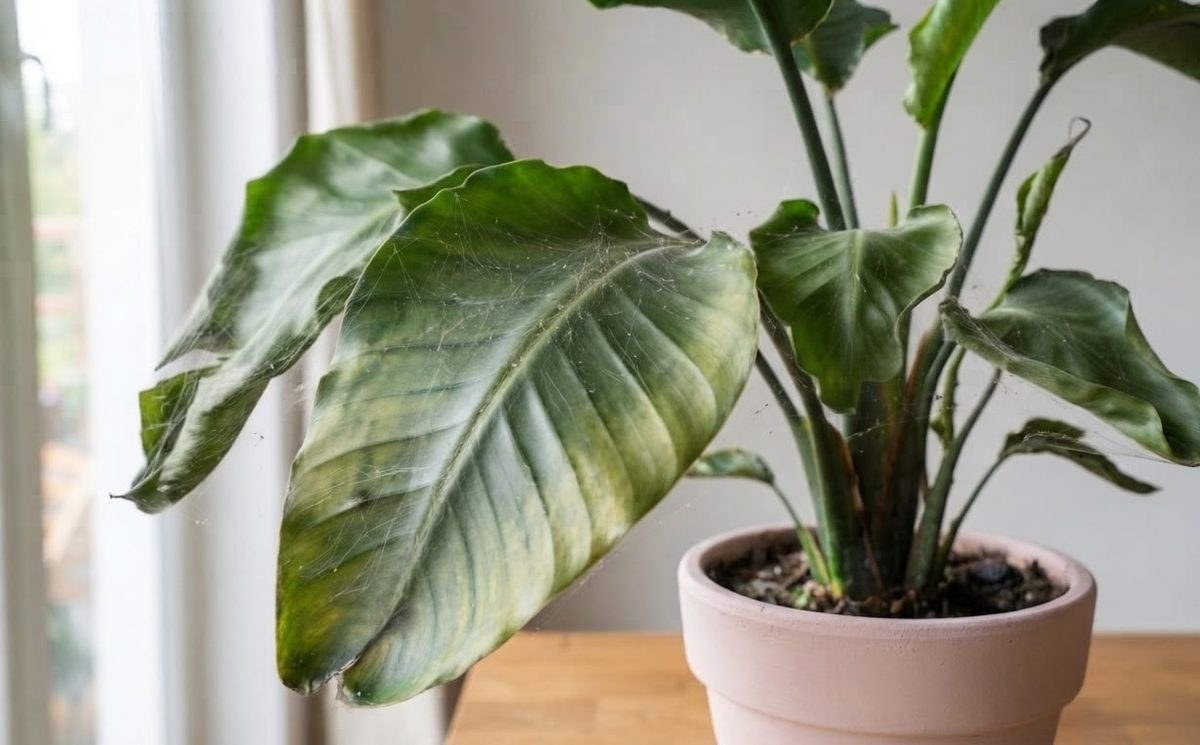
Drooping (entire leaves sagging) is most often overwatering — the roots can no longer move water upward efficiently. Check whether the soil is consistently wet and whether roots have rotted.
Brown leaf edges indicate low humidity, inconsistent watering, or root-bound stress. These are permanent — trim with sharp scissors along the natural leaf edge to maintain appearance.
How to Propagate Bird of Paradise by Division
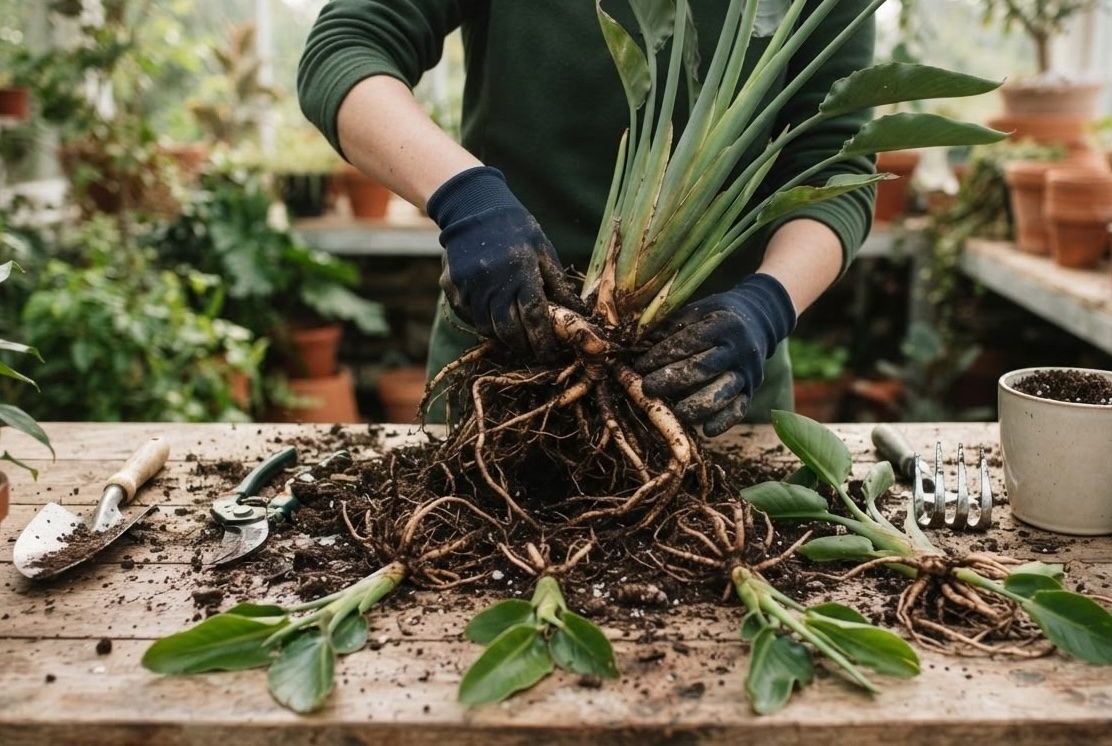
Bird of paradise doesn’t have a stem to take cuttings from — it grows from a rhizome, so division is the propagation method. Only divide a mature plant that has already bloomed for at least 3 years and has multiple fans of leaves; young plants won’t tolerate it. Divide in early spring, before new growth starts, when the plant recovers fastest.
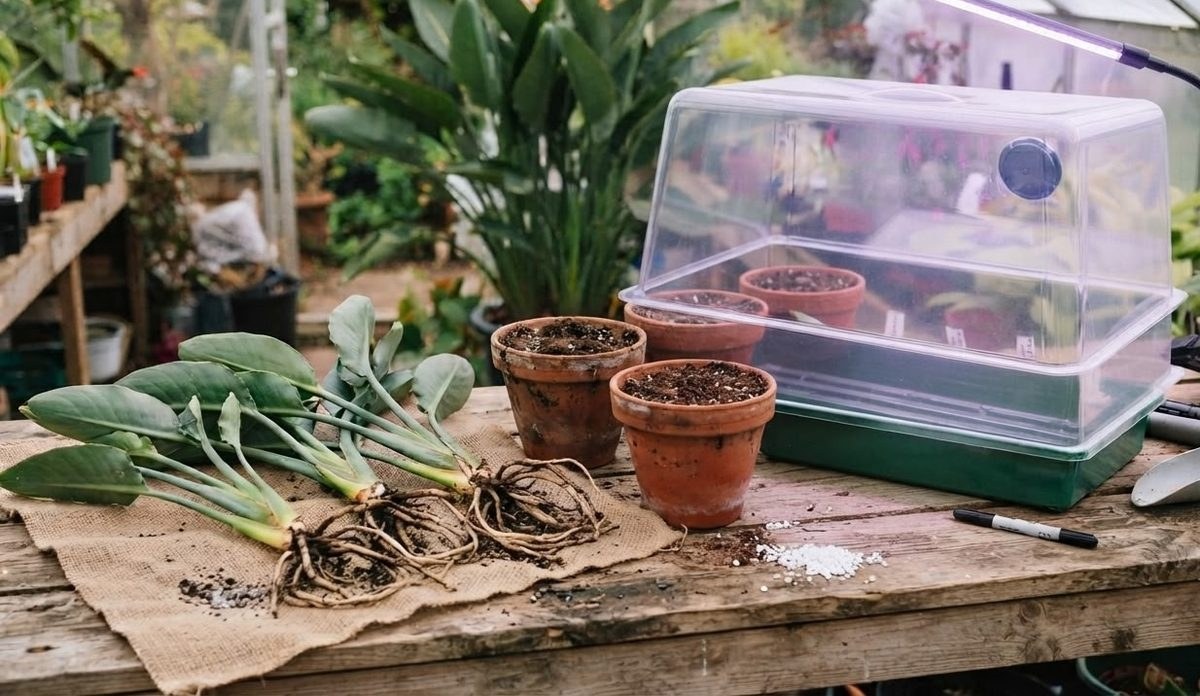
Lift the whole clump and loosen the root ball by hand. With a clean, sharp knife, cut the rhizome so each division keeps a fan of leaves attached to its own roots — that’s the minimum viable section. Pot each division at the same depth it was growing before, in well-draining soil.
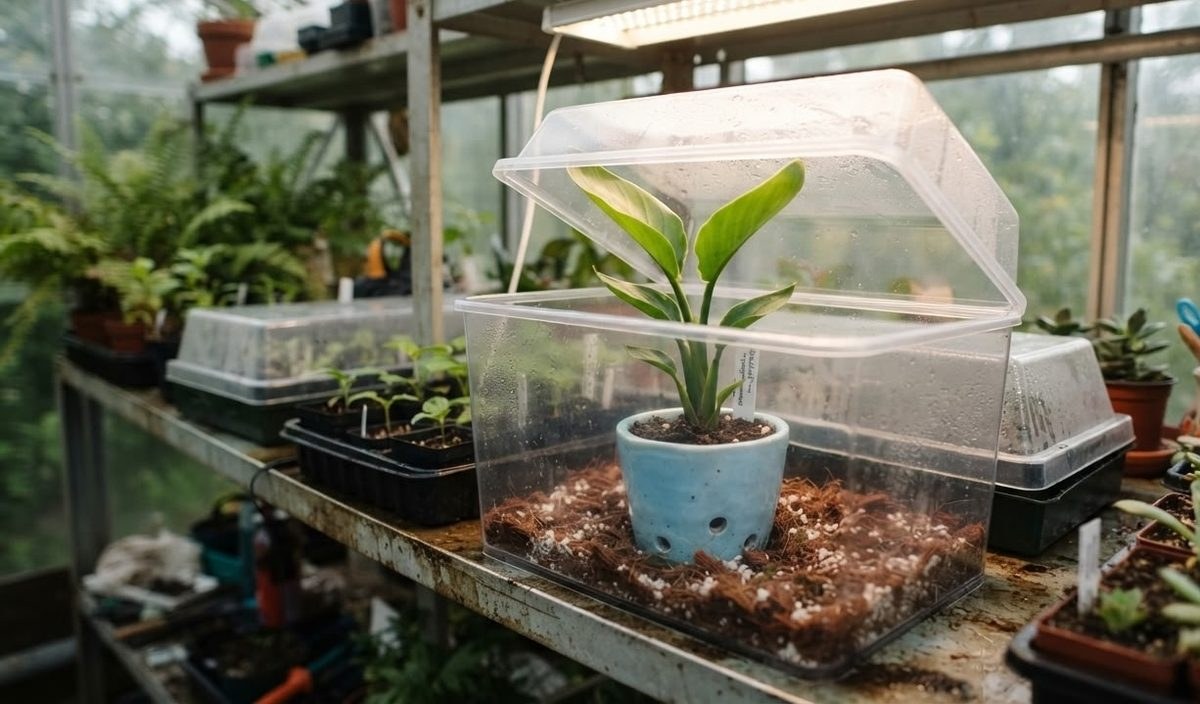
Keep divisions in a warm spot with bright, indirect light — not direct sun — for about 8 weeks while roots establish, then gradually move to brighter light. Division resets the bloom clock: expect roughly 2-3 years before a divided section flowers again, since bird of paradise blooms best when root-bound and undisturbed. The main failure risk is rot from overly wet soil on the freshly cut rhizome, so err on the side of underwatering until new growth confirms the division has taken.
Is Bird of Paradise Toxic to Cats and Dogs?
Yes. The ASPCA lists Strelitzia reginae as toxic to cats, dogs, and horses. The toxic principles are listed as strelitzine and related alkaloids. Clinical signs include nausea, vomiting, and drowsiness.
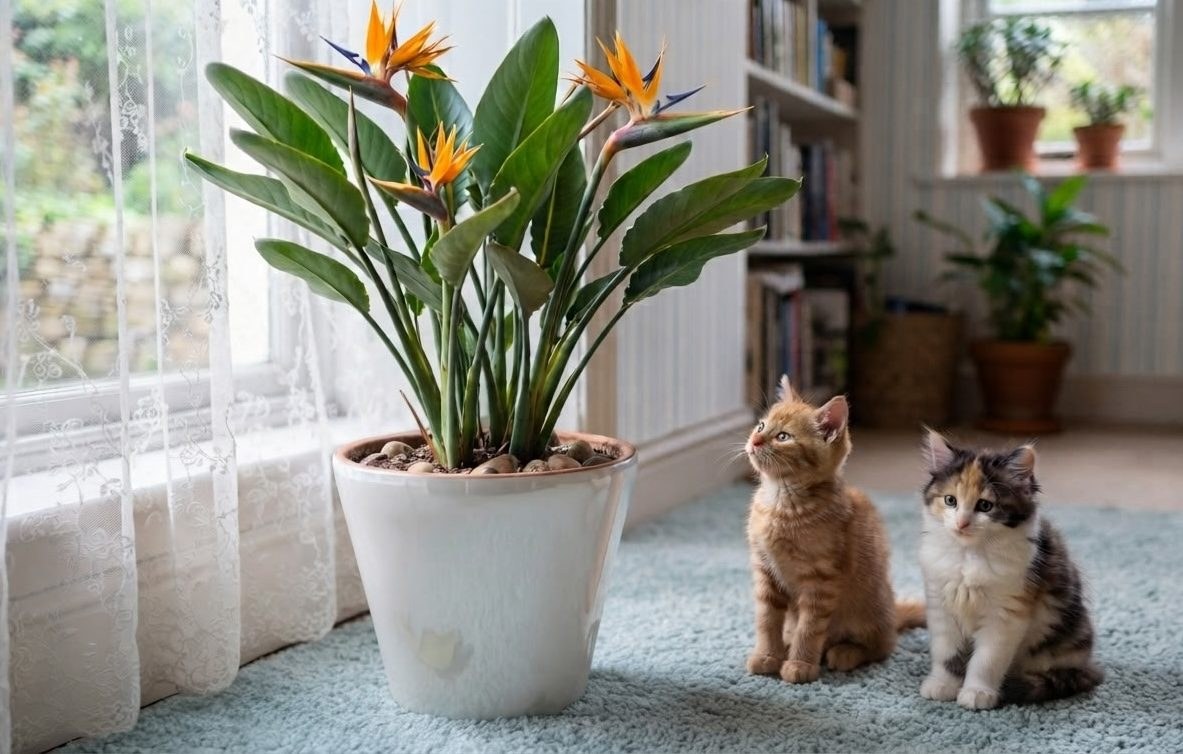
The flowers and seeds are the most concentrated source. See our full breakdown at Is Bird of Paradise Toxic to Cats?
Note: Caesalpinia species (also called bird of paradise in some regions) are different plants with their own toxicity profile — see the toxicity article for the distinction.
Common Mistakes With Indoor Bird of Paradise
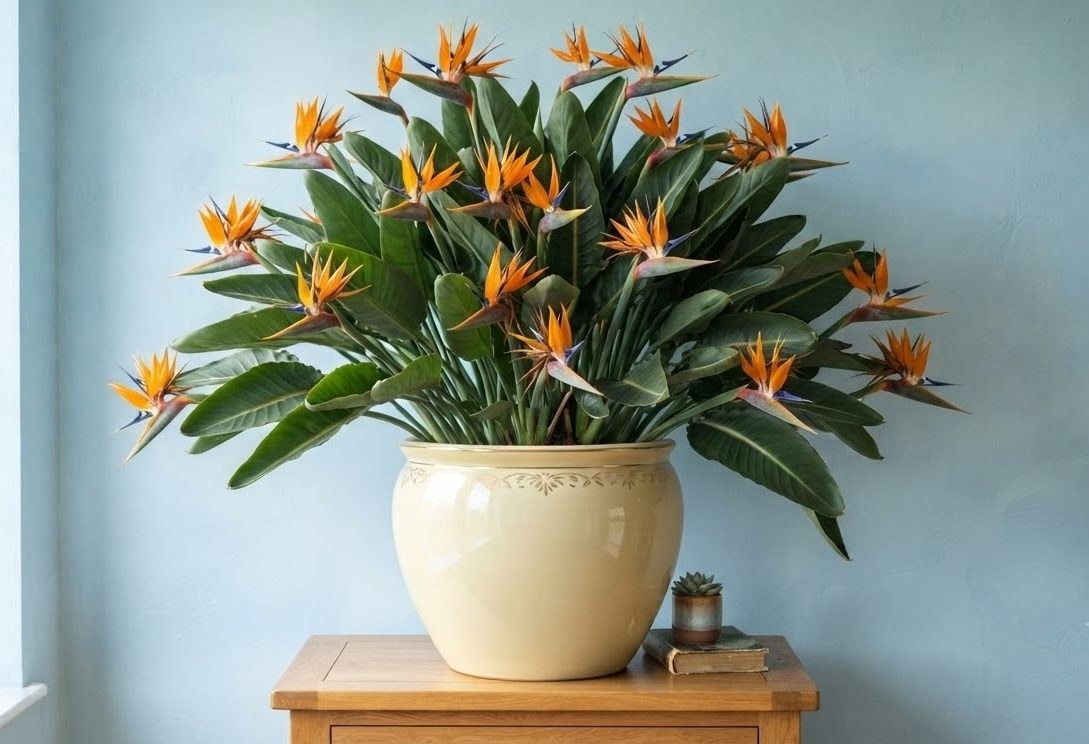
Repotting too frequently. Repotting resets the plant into vegetative mode and delays blooming. A bird of paradise in a tight pot that has been root-bound for 2-3 years is much closer to blooming than a recently repotted plant in a spacious new container. Resist the impulse to give it more room.
Keeping it in bright indirect light and expecting blooms. Indirect light produces beautiful foliage. Blooms require direct sun. The distinction is meaningful: a bright spot 3 feet from a window is indirect light; a spot where the sun actually falls on the leaves for hours is direct light. Bird of paradise needs the latter.
Watering consistently through winter. The drought stress period in autumn and early winter is part of what triggers flowering. Keeping the plant evenly moist year-round removes this signal.
Frequently Asked Questions
How long does it take bird of paradise to bloom indoors?
A plant grown from seed: 3-5 years minimum. A plant divided from a mature clump: 1-2 years. A young plant from a garden center that is already 2-3 feet tall: typically 2-4 years in ideal conditions. The wait is long, but the flower is extraordinary.
Does bird of paradise need a big pot?
Counterintuitively, no. Smaller, tighter pots that restrict the roots encourage flowering. Only repot when roots are severely pot-bound and growth has noticeably slowed — and then go up only one container size.
Can bird of paradise be grown from seed?
Yes, but it is slow and takes patience. Seeds should be soaked in water for 24-48 hours before planting; the orange seed coat must be removed (it inhibits germination). Germination takes 1-3 months. Plants from seed typically bloom after 4-6 years.
Why are my bird of paradise leaves turning yellow?
Overwatering (most common — check soil moisture and roots), nutrient deficiency in old soil, or natural aging of very old lower leaves. Yellow leaves from the base of the plant while new growth looks healthy is normal aging.