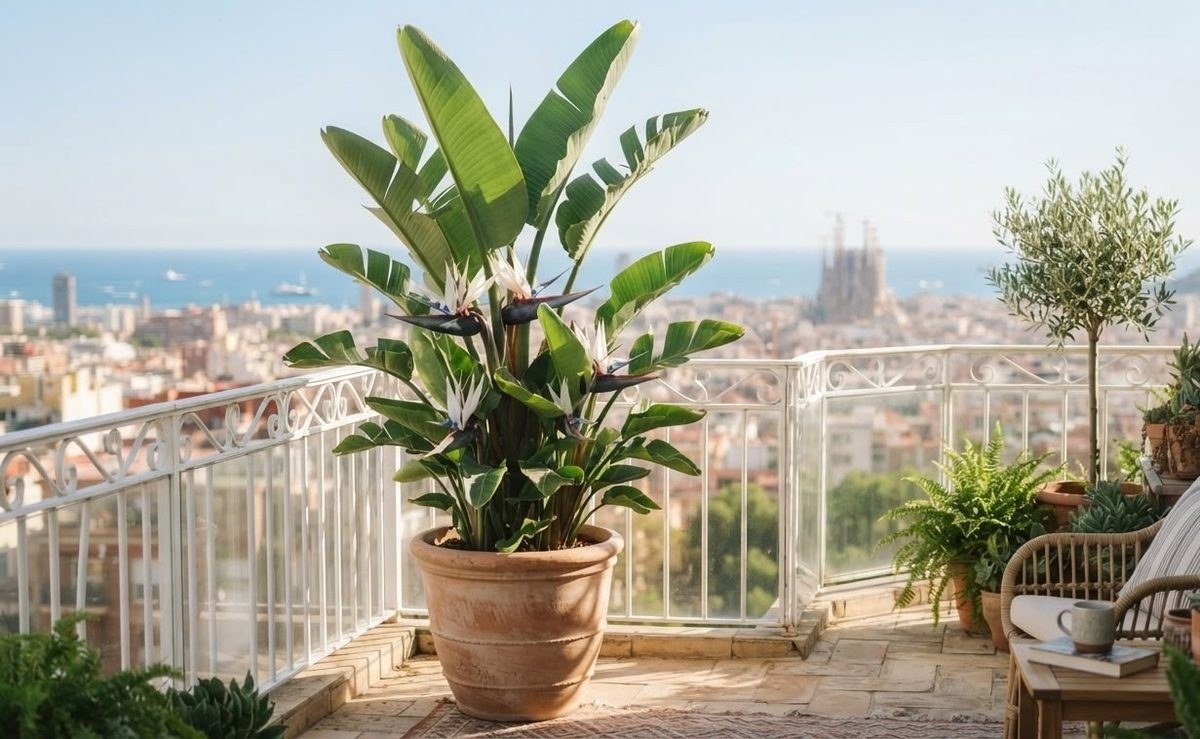
White bird of paradise is not a color variant of the orange-flowered plant most people picture — it’s a different species entirely. Strelitzia nicolai grows as a genuine tree in its native South Africa, reaching 20 to 30 feet tall, and the white and blue flowers that give it its name resemble a bird’s head emerging from a dark purplish-black bract. Kept indoors, it stays a large architectural houseplant rather than a small flowering one, and getting it to actually bloom is a much longer game than its smaller orange-flowered relative.
| Strelitzia Nicolai Quick Care Summary | |
|---|---|
| Light | Bright indirect to partial direct sun |
| Water | Regular in growing season; drier in winter |
| Humidity | Prefers high humidity |
| Temperature | 65-85°F (18-29°C); avoid below 50°F |
| Fertilizer | Balanced feed during active growth |
Is White Bird of Paradise the Same as Regular Bird of Paradise?
No — they’re related but distinct species, and the difference matters a lot if you’re choosing one for a home. See our full Strelitzia reginae care guide if that’s the plant you actually have. Strelitzia reginae, the classic “bird of paradise,” is a container-sized plant, 3 to 4 feet tall and wide as a houseplant, with orange sepals and blue petals in a flower under a compact bract, according to NC State Extension’s Plant Toolbox. Strelitzia nicolai — the plant behind “white bird of paradise” and “giant bird of paradise” — is a different animal altogether: 20 to 30 feet tall and 6 to 10 feet wide in its native habitat, with woody stems that can reach a foot and a half in diameter.
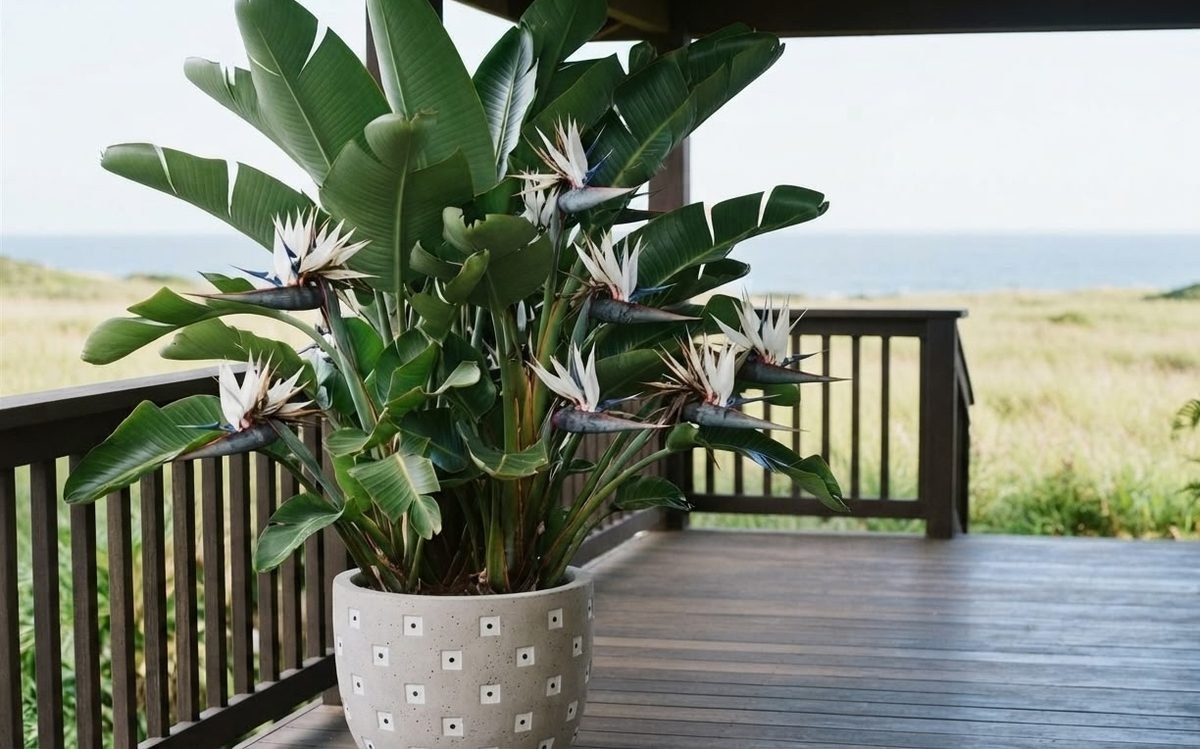
Between the two Strelitzia types commonly grown as houseplants, these size and flower differences are really what separates the varieties. The leaves scale with the plant. S. reginae has gray-green, oval leaves up to 4 feet long; S. nicolai has grayish-green, oblong, banana-like leaves up to 6.5 feet long that tear easily in wind — a trait it shares with true banana plants, though the two aren’t related.
Why Won’t My White Bird of Paradise Bloom?
Because it usually just isn’t old enough yet, and that’s the honest answer rather than a fixable care mistake. NC State Extension notes S. nicolai takes 5 to 6 years before flowering, needing to reach a mature size first — a sharp contrast to S. reginae, which blooms intermittently throughout the year once it matures. If you bought a young plant specifically hoping for the dramatic white-and-blue flowers, expect a long wait measured in years, not seasons, and know that many indoor specimens never reach flowering size at all given typical home ceiling heights.
What you get in the meantime is the plant itself — large, glossy, banana-like foliage that reads as a statement piece regardless of whether it ever flowers indoors.
What Light Does Strelitzia Nicolai Need?
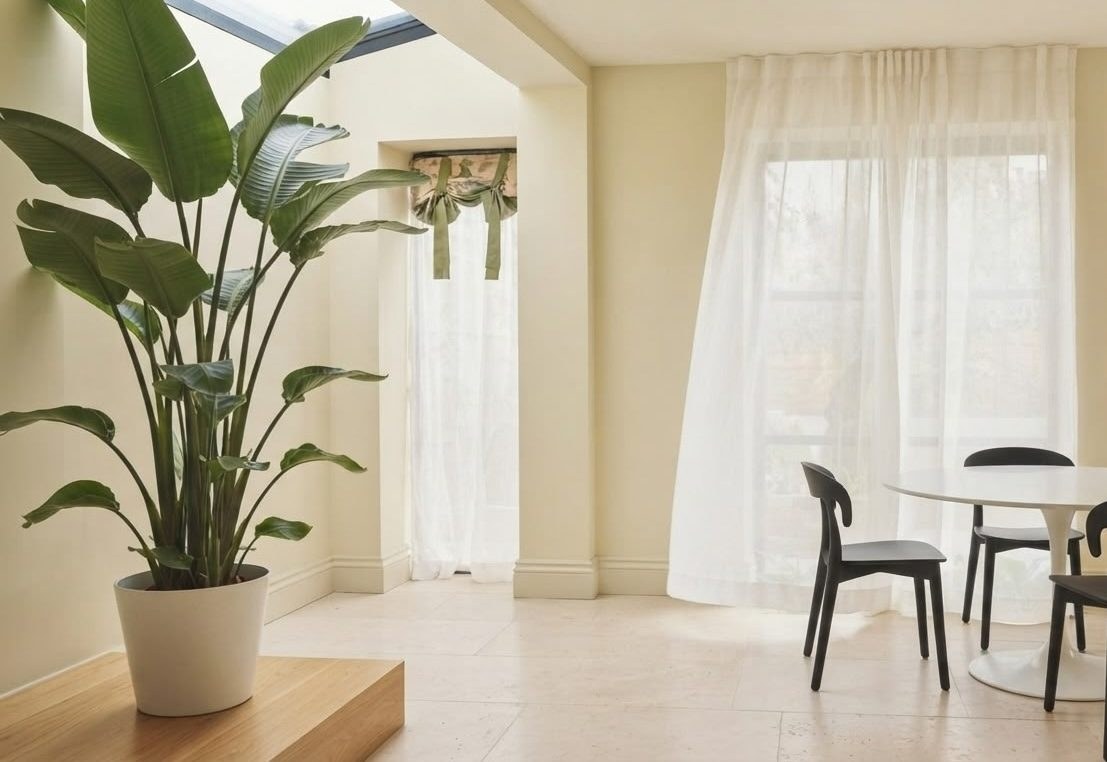
Bright indirect light to partial direct sun. Like its smaller relative, it wants as much bright light as a room can offer — a south- or west-facing window is typically the best spot for a plant this size.
How Often Should You Water Strelitzia Nicolai?
Regular watering through the growing season, cutting back in winter as growth slows. Given the plant’s size, this usually means watering thoroughly and less frequently rather than little and often — let the top few inches of soil dry before watering again, and always let excess water drain away rather than sitting in a saucer.
What Temperature and Humidity Does It Need?
65-85°F (18-29°C) is the comfortable range, and NC State Extension specifically flags temperatures below 50°F as a threshold to avoid — this is a tropical plant with no frost tolerance. It prefers high humidity, more so than the average home provides in winter, so a humidifier or a spot away from heating vents helps keep the large leaves from drying out at the edges.
How Big Does White Bird of Paradise Get Indoors?
A full grown white bird of paradise needs real planning for indoor space. In native habitat it reaches 20 to 30 feet, and while indoor conditions and pot size naturally restrict that, it’s still one of the biggest houseplants commonly sold — expect a mature indoor specimen to need substantial floor space and ceiling height, not a spot on a shelf or side table. Choose its location with its eventual size in mind rather than how it looks as a young plant.
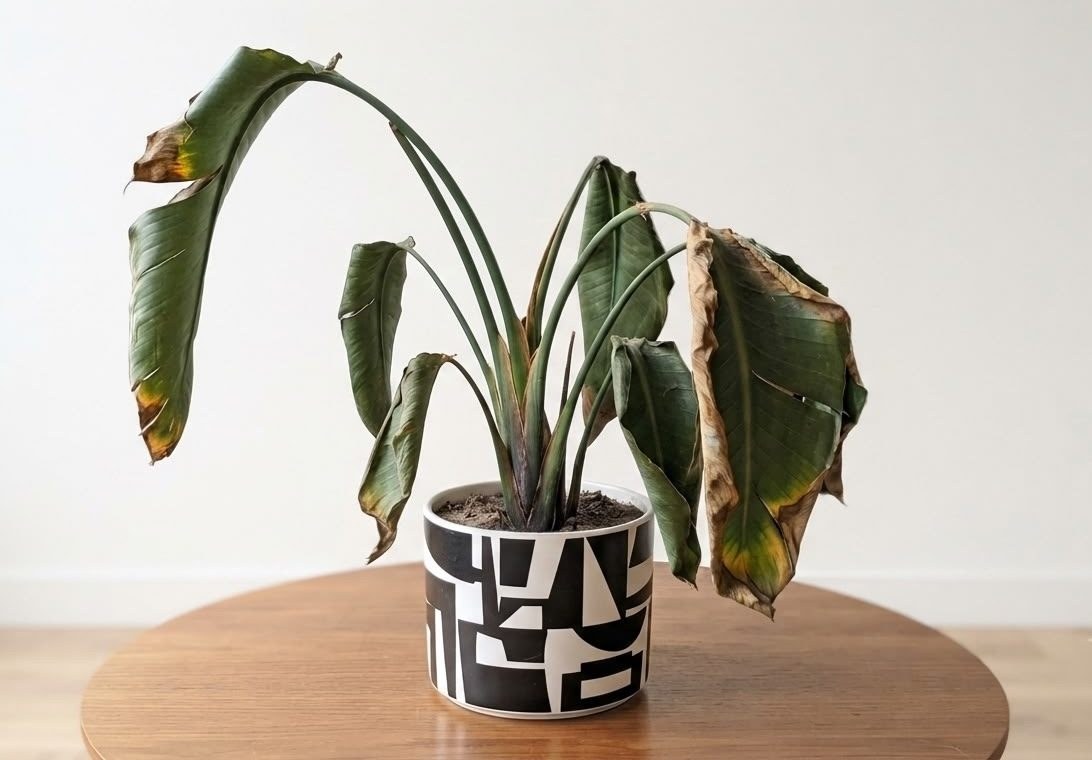
How to Propagate Strelitzia Nicolai
NC State Extension is direct about this: “the best method of propagation is by division or seeds” — and stem or leaf cuttings simply don’t work on this plant. A leaf stalk has no dormant bud to grow from, so a cut leaf can stay green for weeks in water before you realize it was never going to root.
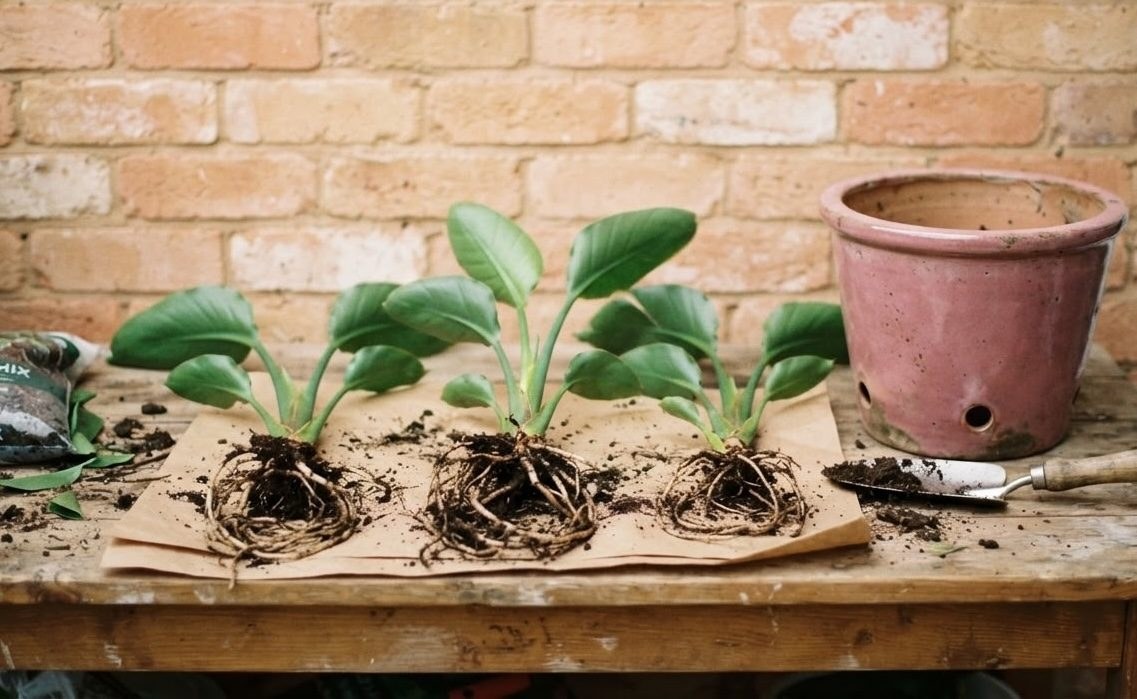
Dividing Strelitzia Nicolai
Divide in spring to early summer while the plant is actively growing. Dig around an offshoot to preserve as much of its root system as possible, then gently separate it from the parent clump by hand rather than forcing a cut through healthy tissue. A viable division needs its own roots, an attached section of rhizome, and ideally a few leaves already growing — commonly cited as at least three leaves per division, from a parent clump mature enough to have three or four fans to spare.
Let any cut surfaces callus for an hour or two before replanting, keep the division at the same soil depth and light exposure it had before, and expect roots to establish over roughly 8 weeks in a container. Flowering after division is still years away, not months — dividing gets you a mature-looking plant faster than seed, but it doesn’t shortcut the maturity clock that triggers blooming.
Growing Strelitzia Nicolai From Seed
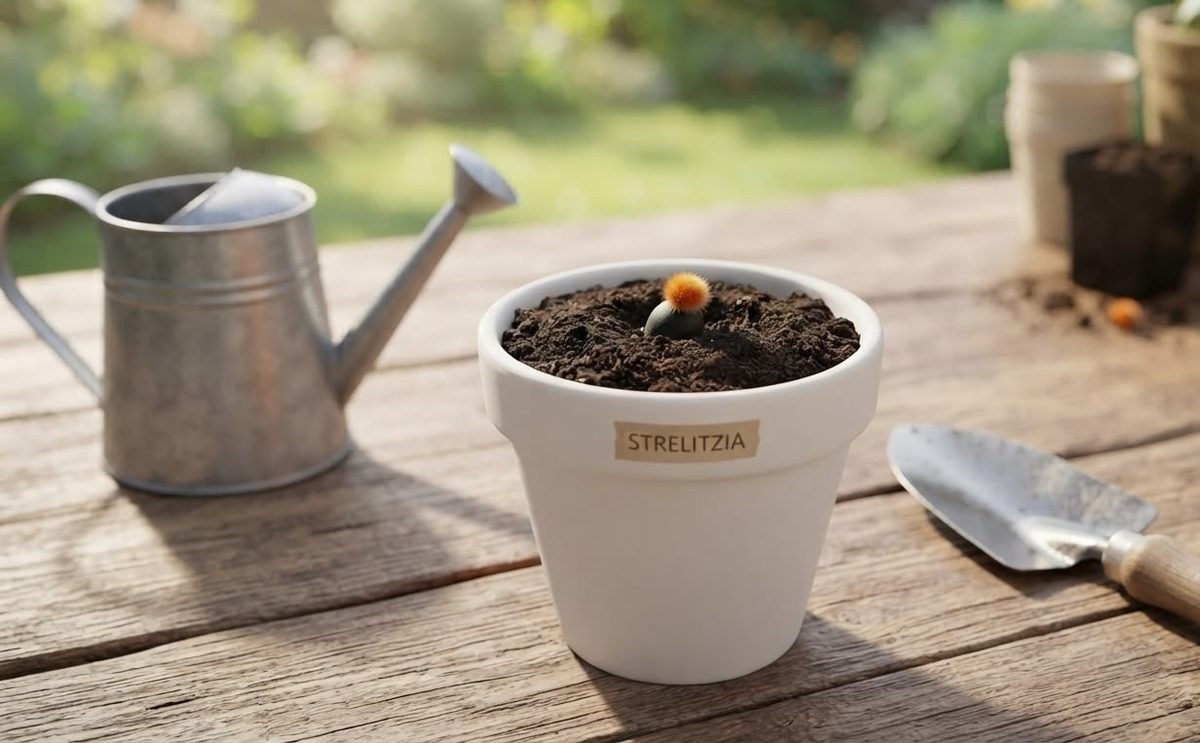
Seed propagation works and is how patient growers and breeders often start this species, but it’s slow on both ends: germination alone can take one to six months after soaking the seed for a day or two, and a seed-grown plant typically takes three to five years to flower — sometimes up to a decade. Division is the faster route to an established-looking plant if that’s the goal.
Is White Bird of Paradise Toxic to Cats and Dogs?
Treat it as toxic, though the sourcing here is worth being precise about. The ASPCA’s toxicity listing for “bird of paradise” specifically names Strelitzia reginae, with mild nausea, vomiting, and drowsiness caused mainly by the fruit and seeds — there’s no separate ASPCA entry for S. nicolai by name.
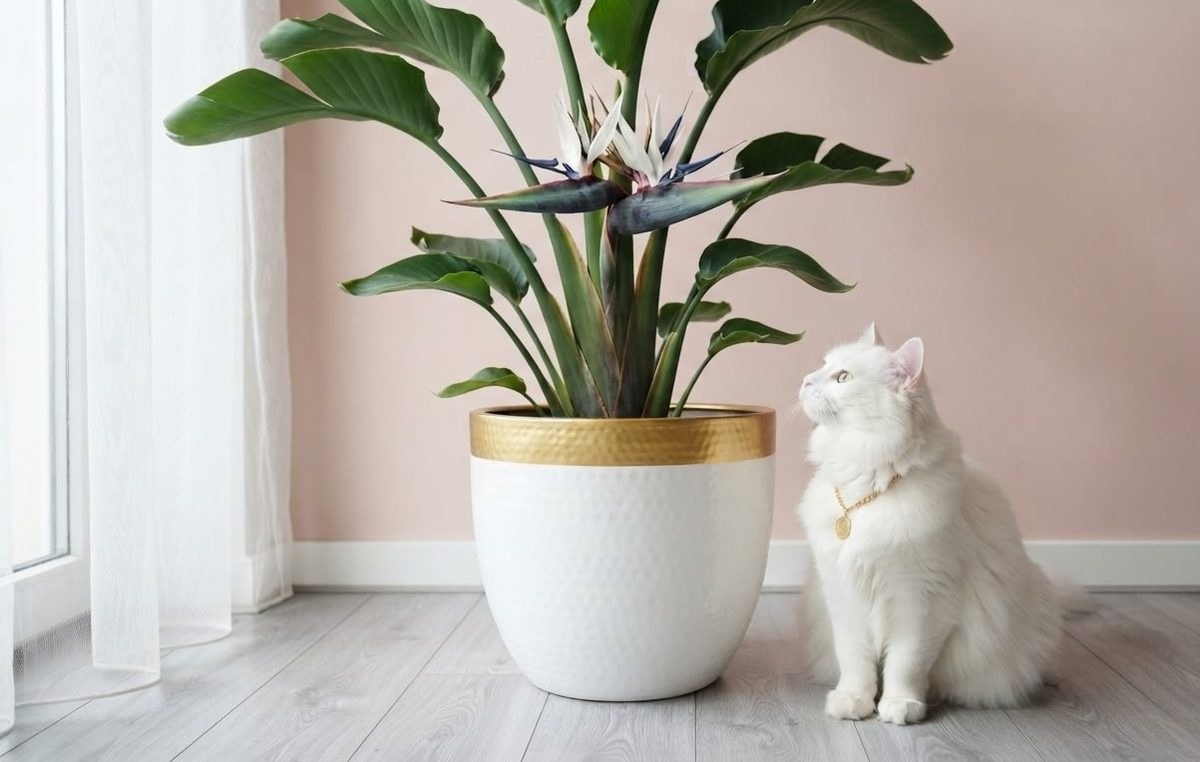
NC State Extension’s page for S. nicolai does independently list it as toxic, citing abdominal cramps, nausea, vomiting, diarrhea, and contact dermatitis. Since this comes from an extension source rather than ASPCA directly, and the two Strelitzia species share the same general toxic profile, the safest approach is to treat S. nicolai with the same caution as its ASPCA-listed relative — keep it out of reach of pets regardless of which species you have.
Common Mistakes With Strelitzia Nicolai
Expecting flowers from a young plant. This is the single most common disappointment with white bird of paradise. A 5-to-6-year maturity window before flowering is normal, not a sign anything is wrong with your care.
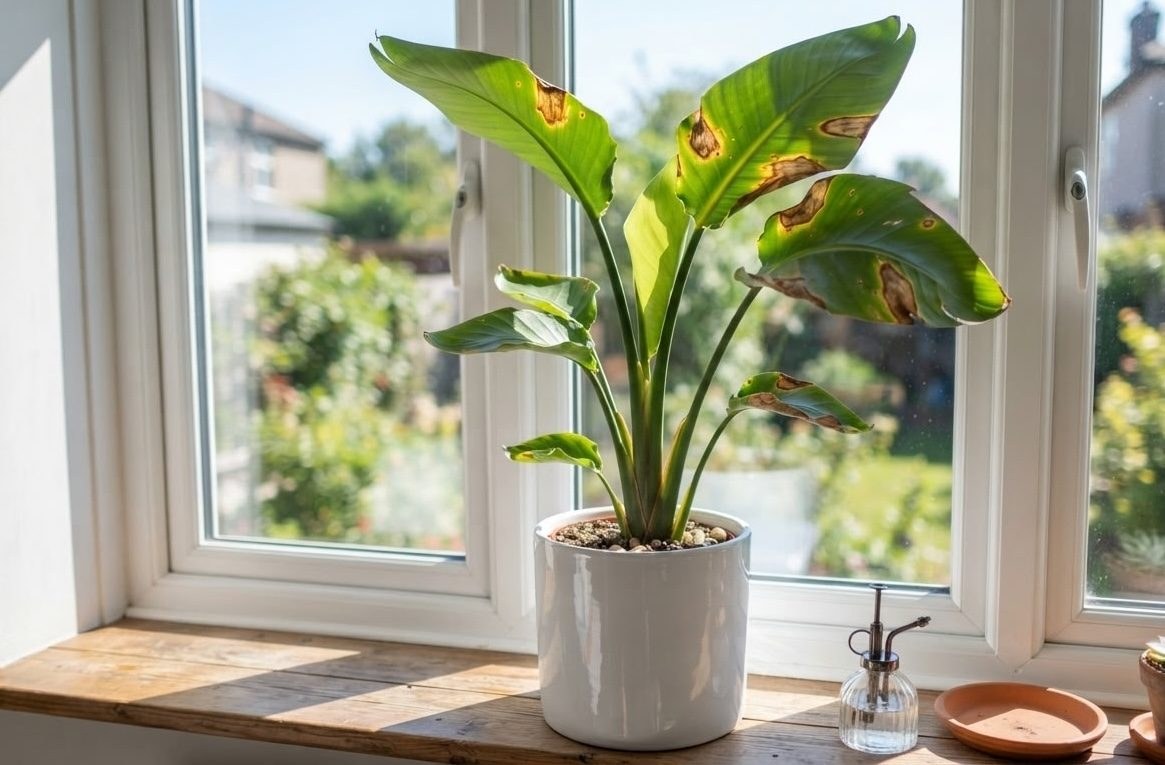
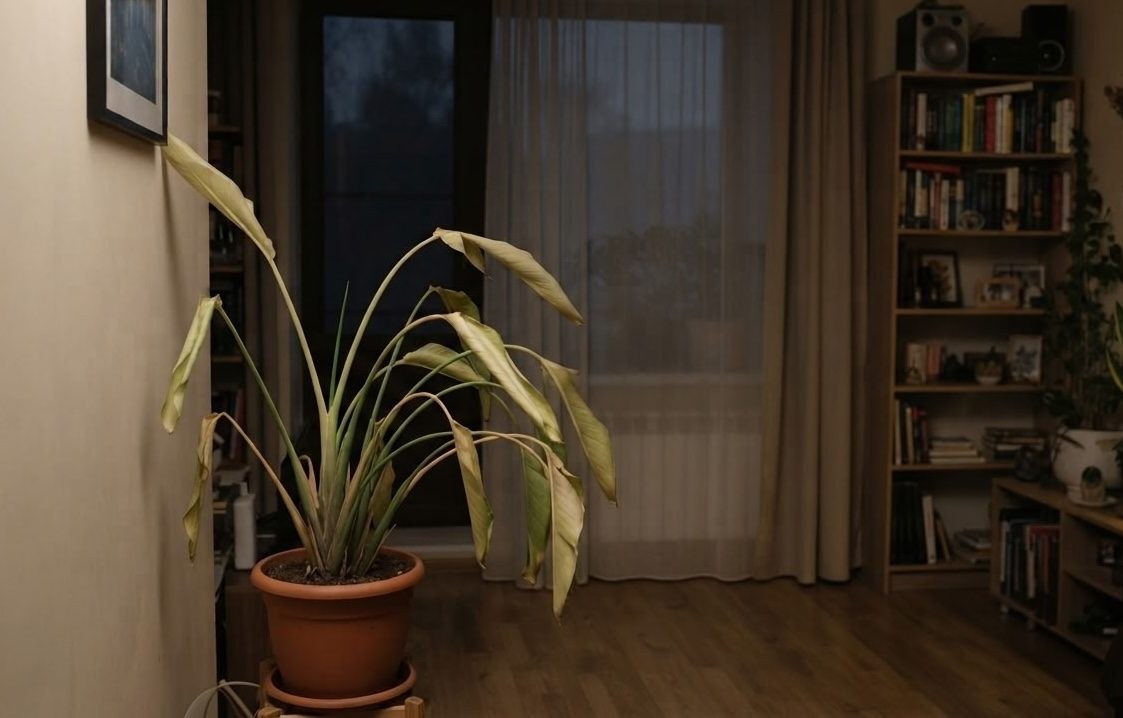
Underestimating its mature size when choosing a spot. This plant outgrows small rooms. Placing it somewhere without room to reach several feet in height and width means an eventual repotting-and-relocation project, or leaves constantly brushing furniture and walls.
Keeping it somewhere drafty or below 50°F. An unheated sunroom or a spot near a frequently opened door in winter can chill the plant below its tolerance, causing leaf damage even without a hard frost.
Frequently Asked Questions
Is white bird of paradise the same plant as orange bird of paradise?
No. White bird of paradise (Strelitzia nicolai) and orange bird of paradise (Strelitzia reginae) are related but separate species, differing mainly in size — nicolai grows tree-sized, reginae stays container-sized — and flower color.
How long does it take for a giant bird of paradise to flower?
Around 5 to 6 years, and only once the plant reaches sufficient maturity and size, according to NC State Extension. Many indoor specimens never flower simply due to space constraints limiting how large they can grow.
Is strelitzia nicolai toxic to dogs?
Treat it as toxic. NC State Extension lists it as toxic with symptoms including abdominal cramps, nausea, vomiting, diarrhea, and contact dermatitis. The ASPCA’s listing covers the related Strelitzia reginae specifically, but both species should be kept away from pets.
How big of a pot does white bird of paradise need?
Large and heavy enough to support a substantial plant — as it grows toward its mature size, expect to size up pots progressively rather than planting a young specimen directly into its final container, which can hold more water than young roots can use.