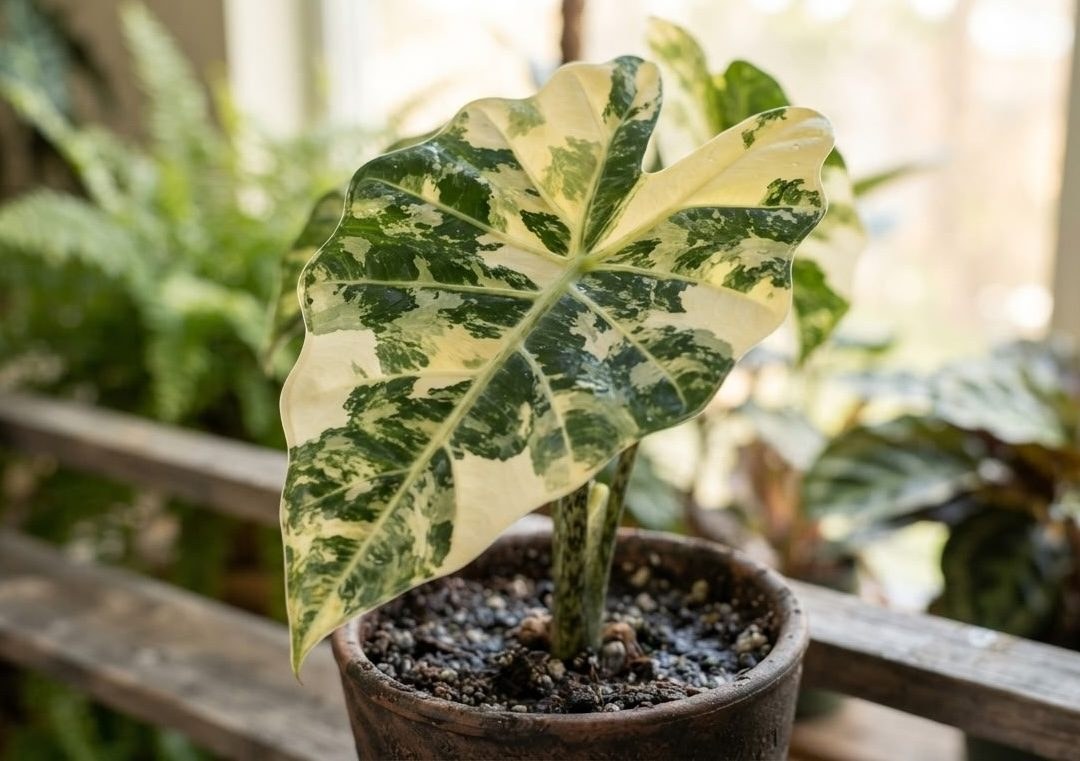
Every autumn, plenty of alocasia owners panic. The plant they bought in spring, which had been growing beautifully all summer, suddenly starts dropping leaves. By November or December it may have no leaves at all, just bare stems above a corm in the soil. Usually this is not a care failure but dormancy, and the plant is still alive. This guide covers what dormancy actually looks like, how to tell it from actual plant death, how to wake it up in spring, and everything else you need to keep alocasia thriving year-round.
| Alocasia Quick Care Summary | |
|---|---|
| Light | Bright indirect light; no direct sun |
| Water | When the top 1–2 in of soil is dry (often about weekly); minimal in dormancy |
| Humidity | Medium to high; more than dry, heated indoor air |
| Temperature | 65–85°F (18–29°C) in growth; keep above 60°F (16°C), no cold drafts |
| Fertilizer | Monthly spring–summer; stop at dormancy |
Why Did My Alocasia Drop All Its Leaves?
Alocasia is native to tropical and subtropical Asia and eastern Australia, mostly in warm, wet forests. Indoors in temperate climates, when light levels drop and temperatures fall in autumn, many alocasias slow down and go dormant: a state of greatly reduced growth in which the plant lives off its corm.
During dormancy, the plant reabsorbs nutrients from its leaves before dropping them, conserves energy in the underground corm (bulb-like storage organ), and essentially waits out the unfavorable period. This is not a slow death; it is a survival strategy.
Is My Alocasia Dead or Dormant?
This is the most important question to answer before doing anything. The test is simple:
Check the Corm
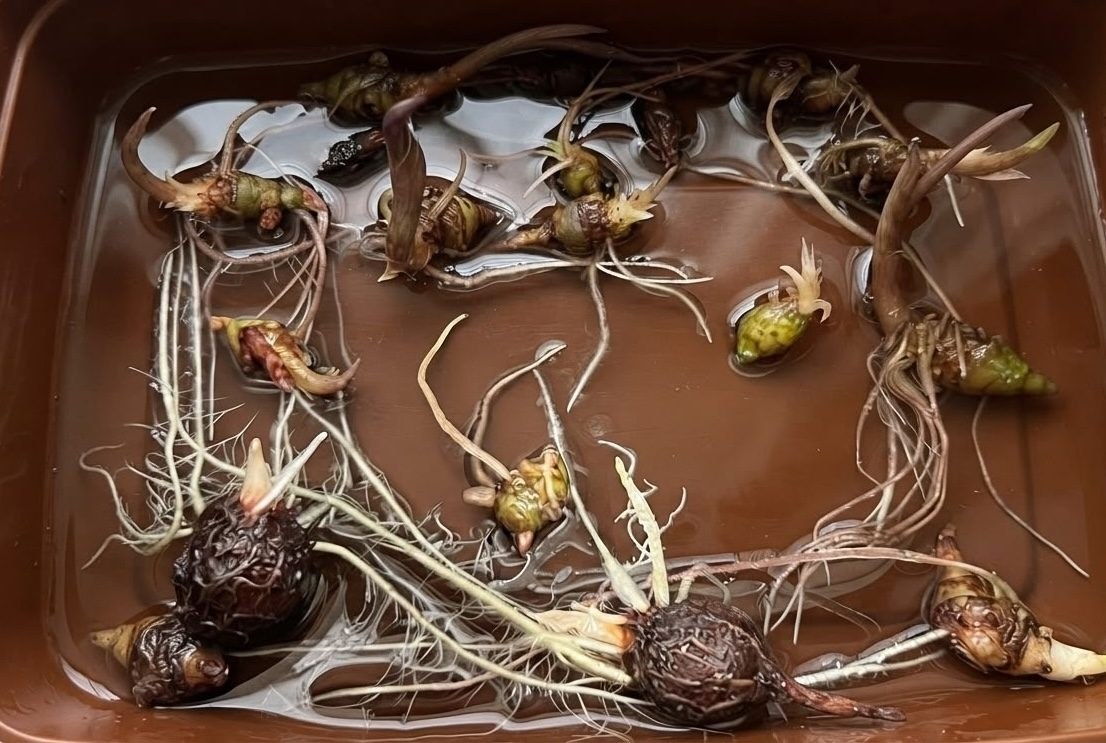
Gently dig around the base of the plant and locate the corm, the swollen, bulb-like structure at or just below soil level. If the corm is firm and has no soft, mushy areas or foul smell, the plant is alive and dormant. A dormant corm feels like a healthy potato: solid and intact.
If the corm is soft, dark, smells bad, or collapses when gently pressed, the plant has rotted, usually from overwatering during the dormant period. If the whole corm has gone soft, the plant cannot be saved, but any firm offset corms around it are still worth potting up.
Check the Stems
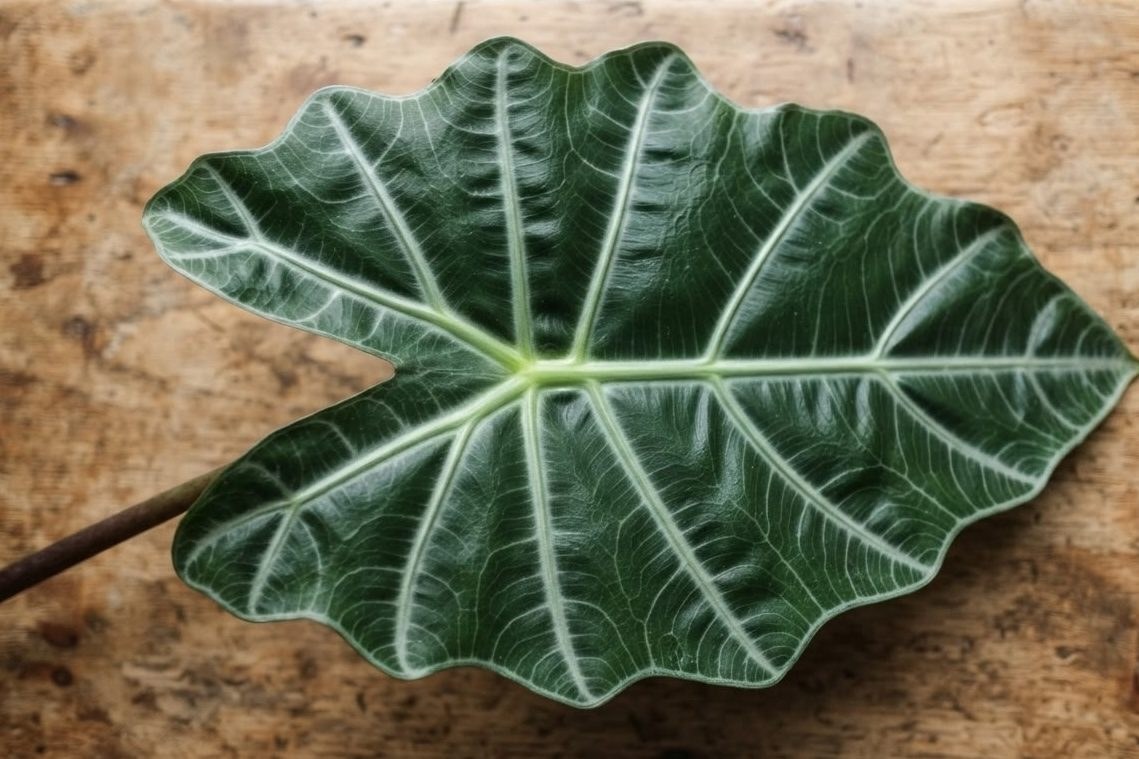
Dormant alocasia stems may look dry but should still be green or cream-colored inside if you scratch the surface lightly. Completely brown, dried stems from top to bottom are a sign the above-ground portion has died back entirely, but if the corm below is healthy, new growth will emerge.
How to Care for Alocasia During Dormancy
Stop Watering (Almost)
During active dormancy, reduce watering to a light drink every few weeks, just enough to keep the corm from drying out completely. A common reason dormant alocasias die is continued regular watering: without leaves, the plant uses very little water, and the corm sits in wet soil until it rots.
Keep It Warm
The colder the plant gets, the higher the risk of damage and rot. Keep the pot where temperatures stay above 60°F (16°C) if you can, and never let it drop below 50°F (10°C). A cool spare room is fine; an unheated garage is not, even if it stays frost-free.
Minimal Light Is Fine
A dormant alocasia with no leaves does not need bright light. Indirect light or even a low-light location is adequate during dormancy. Save the prime window spots for plants that are actively growing.
How to Wake Up a Dormant Alocasia in Spring
When temperatures rise in late winter or early spring (March-April for most Northern Hemisphere households), begin the process of waking the plant:
- Move to a warm, bright spot. Warmth and light are the signals the plant needs to start growing again. A spot near a window where temperatures stay above 65°F (18°C) consistently is ideal.
- Start watering gradually. Begin with small amounts of water every 10-14 days, then increase frequency as you see new growth emerging. Do not resume normal watering until a new leaf is actively unfurling.
- Wait. The first sign of new growth is a pale, tightly furled new leaf emerging from the center of the corm. This can take several weeks after conditions improve. Do not dig up the corm repeatedly to check, because each disturbance can damage new roots.
- Resume normal care. Once you have 2-3 new leaves, return to the normal watering and fertilizing schedule.
Alocasia Polly vs Other Varieties: What’s the Difference?
Alocasia ‘Polly’ (Alocasia × mortfontanensis ‘Polly’)
The most widely sold variety. Dark green, shield-shaped leaves with dramatic white veining and wavy edges. “Polly” is a compact cultivar, up to about 2 ft tall, of Alocasia × mortfontanensis, a hybrid of Alocasia longiloba and Alocasia sanderiana that was long sold as Alocasia × amazonica. It is a cultivated hybrid, not a wild species. I would pick Polly as a first alocasia because it is compact and easy to find, but it still needs warmth and humid air.
Alocasia Amazonica (African Mask, Alocasia × mortfontanensis)
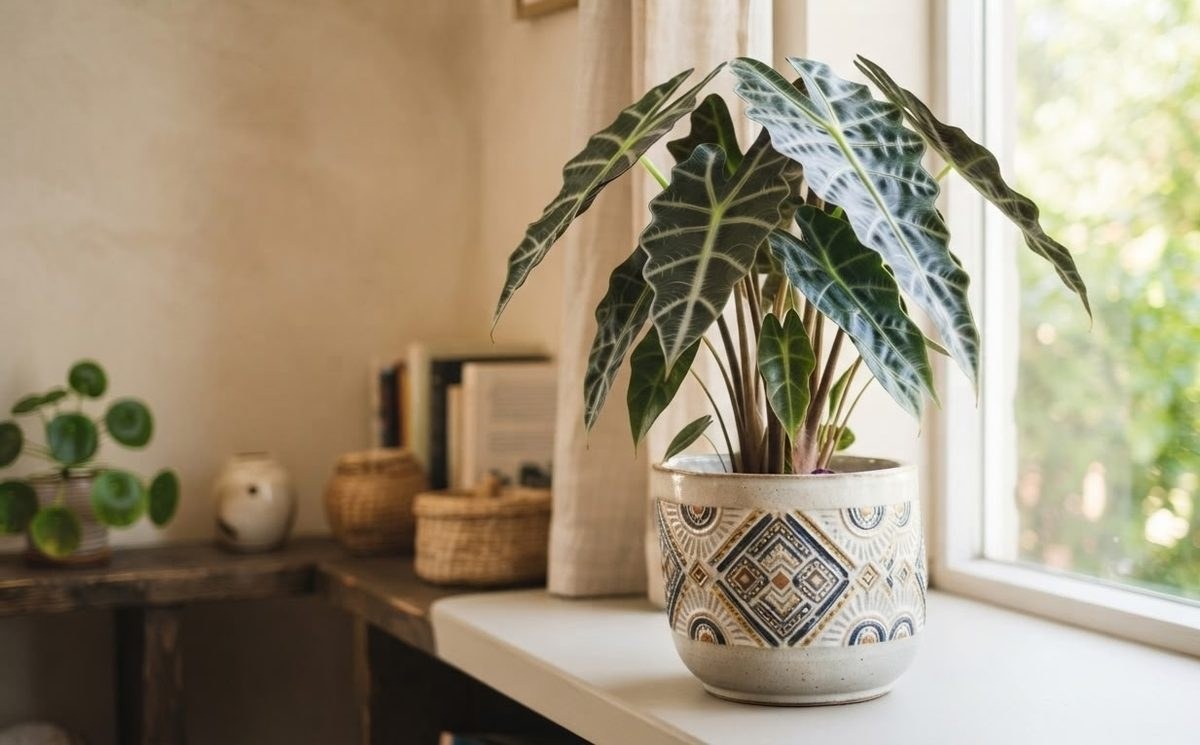
The full-size form of the same hybrid, sold as Alocasia amazonica, Amazonica or African Mask. Despite the name, it has no link to the Amazon: both parents are Asian species, and the cross was made in France by the horticulturist Chantrier at Mortefontaine, which gave the hybrid its name. Larger leaves, similar appearance, less compact than Polly. The × in the name means it is a hybrid, not a naturally occurring species.
Alocasia zebrina
Distinctive striped, zebra-patterned stems (petioles) with large arrowhead-shaped leaves. Less dramatic leaf patterning than Polly but remarkable stem markings. It wants the same bright, indirect light as the others.
Alocasia macrorrhizos (Giant Taro)
Often sold under the older name A. macrorrhiza. A very large species: NC State describes its glossy green leaves as 3 to 6 ft long on plants grown outdoors, so indoors it needs a big pot and plenty of room. Solid green leaves without prominent veining. Less commonly sold as a houseplant but seen in large indoor spaces.
Alocasia Frydek (Alocasia micholitziana ‘Frydek’)
Matte, velvety, deep green arrow-shaped leaves with bright white veins. Unlike Polly, Frydek is not a hybrid: it is a form of Alocasia micholitziana, a species from Luzon in the Philippines, also sold as Green Velvet. It usually stays 1–3 ft tall and is especially prone to spider mites in dry winter air. Our Alocasia Frydek care guide covers its light, watering, common problems and corm propagation.
Full Alocasia Care Requirements
What Light Does Alocasia Need?
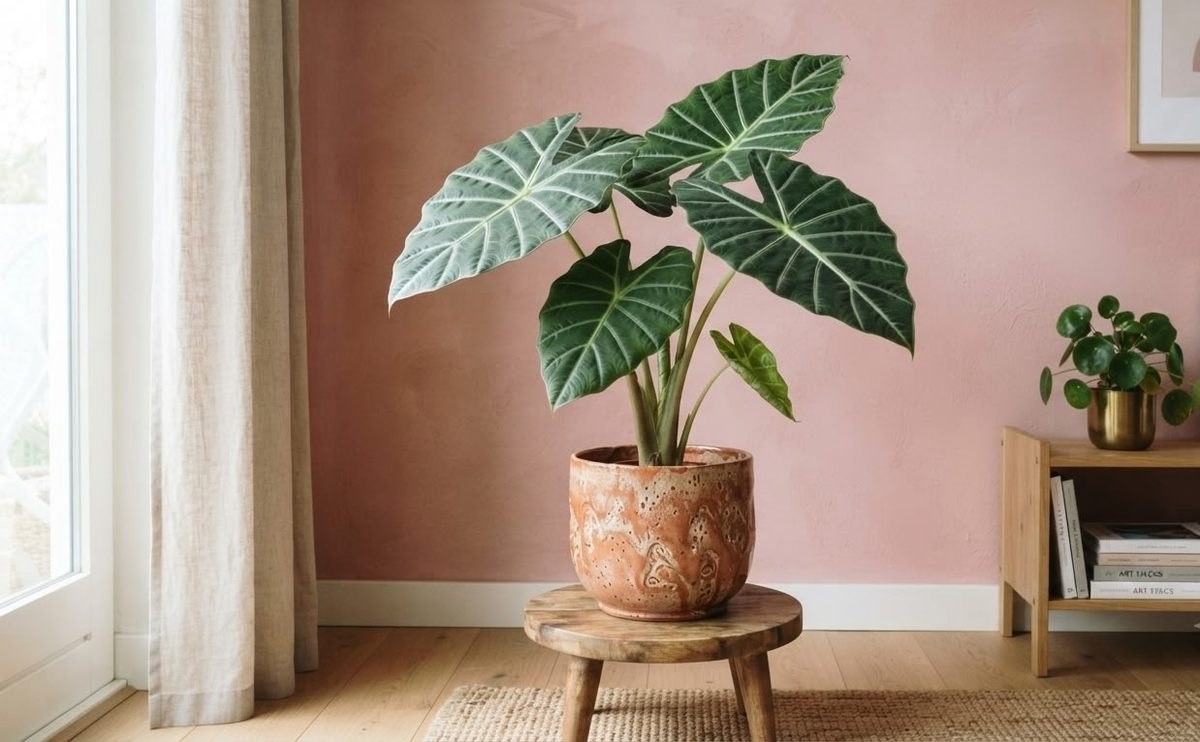
Bright indirect light, similar to the dappled light on a forest floor. A spot 2-4 feet from a bright window works well. Direct sun scorches the leaves; low light causes the plant to produce few leaves, stretch toward the light, and enter a semi-dormant state even in summer.
Polly and other decorative varieties with dark, patterned leaves need more light than solid-green species to maintain their coloration and grow at a reasonable rate.
How Often Should You Water Alocasia?
Water when the top 1-2 inches of soil feel dry, often about once a week in the growing season, depending on pot size, light and warmth. Alocasia is not drought-tolerant; it wilts quickly when underwatered (leaves droop and lose their rigidity). But it is equally sensitive to overwatering: consistently wet soil causes rapid root rot. The sweet spot is a consistently moist but well-draining medium.
What Humidity Does Alocasia Need?
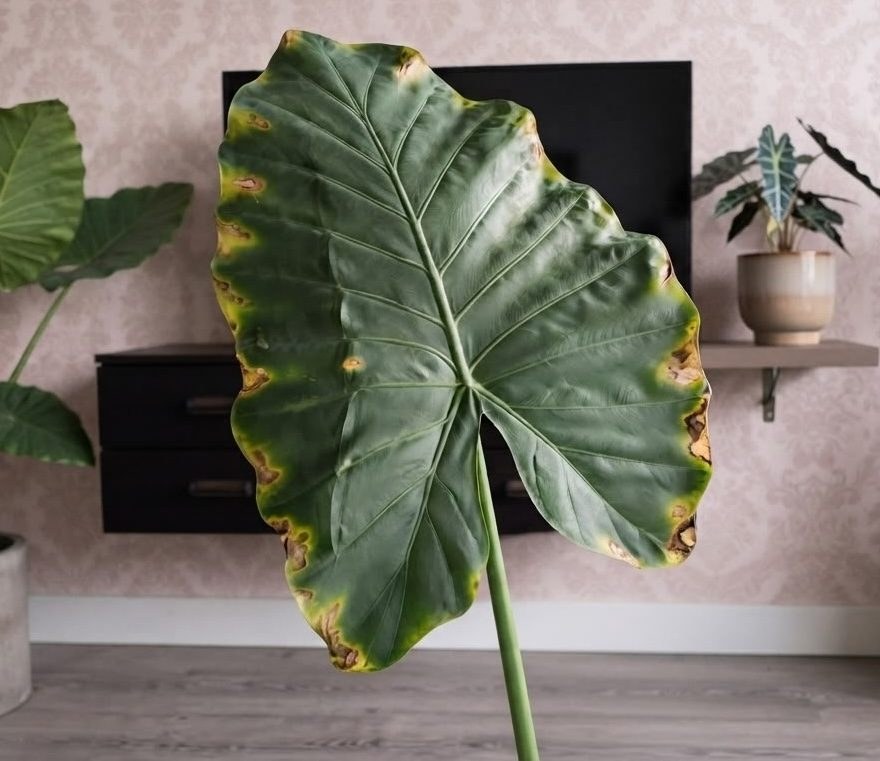
Medium to high humidity. Heated homes in winter are often much drier than that, so alocasia usually needs some help. Low humidity is one of the main reasons alocasia leaves develop brown edges, and the RHS notes that dry air also attracts red spider mites. A humidifier near the plant is the most effective solution; a pebble tray adds a modest benefit. My advice is to run a small humidifier through the heating season rather than rely on misting, which raises humidity for only a few minutes.
What Temperature Does Alocasia Prefer?
65-85°F (18-29°C) during active growth. Below 60°F (16°C), growth slows and the plant may head into dormancy. Below 50°F (10°C), cold damage is likely. Sudden temperature changes cause leaf drop, so keep it away from exterior doors and cold drafts in winter.
How Often Should You Fertilize Alocasia?
Monthly with a balanced liquid fertilizer at half strength during the growing season (spring through summer). Do not fertilize during dormancy or when the plant is producing no new leaves. Overfertilizing in poor light conditions causes the plant to produce soft, weak growth.
Why Are My Alocasia Leaves Drooping?
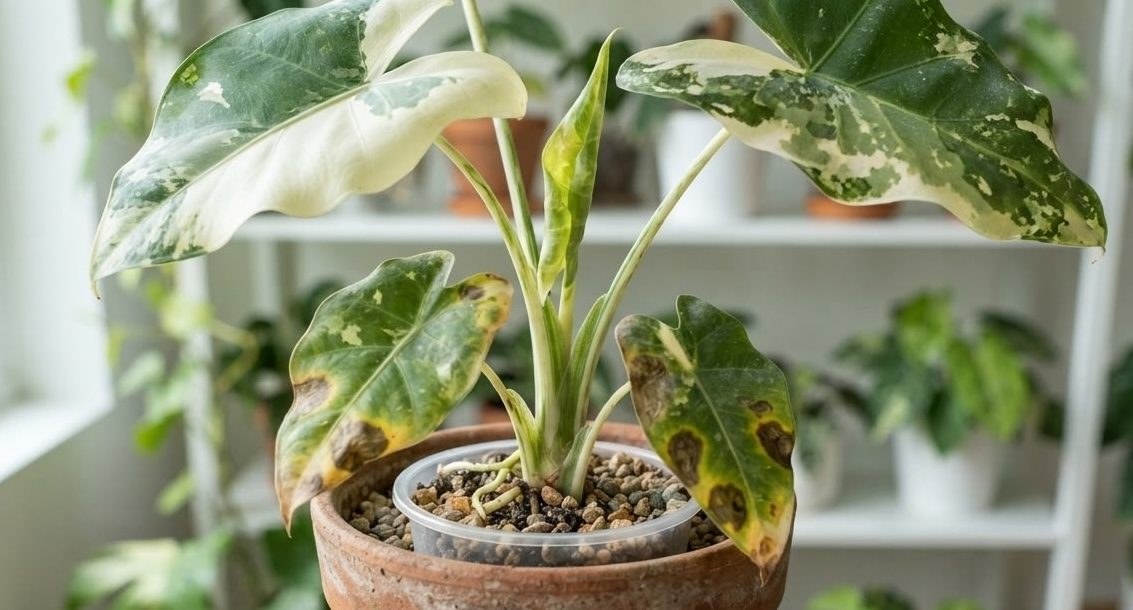
Underwatering is a common cause. The large leaves lose turgor pressure rapidly when the plant is thirsty. Water immediately and the leaves should recover within a few hours to a day.
Overwatering with root rot also causes drooping, but the soil will be wet and the roots will look dark and mushy rather than white and firm. If overwatering is the cause, the plant needs to come out of the pot, have rotted roots removed, and be repotted in fresh, dry mix.
Low light causes gradual drooping as the plant cannot maintain its leaf structure without adequate photosynthesis.
Root-bound condition. Roots circling the inside of the pot have nowhere to grow and cannot absorb water efficiently, causing wilting even when the soil appears moist. Repot in a container 1-2 inches larger.
If you’re troubleshooting a related aroid, see our anthurium care guide for a similar drooping and yellow-leaf diagnosis.
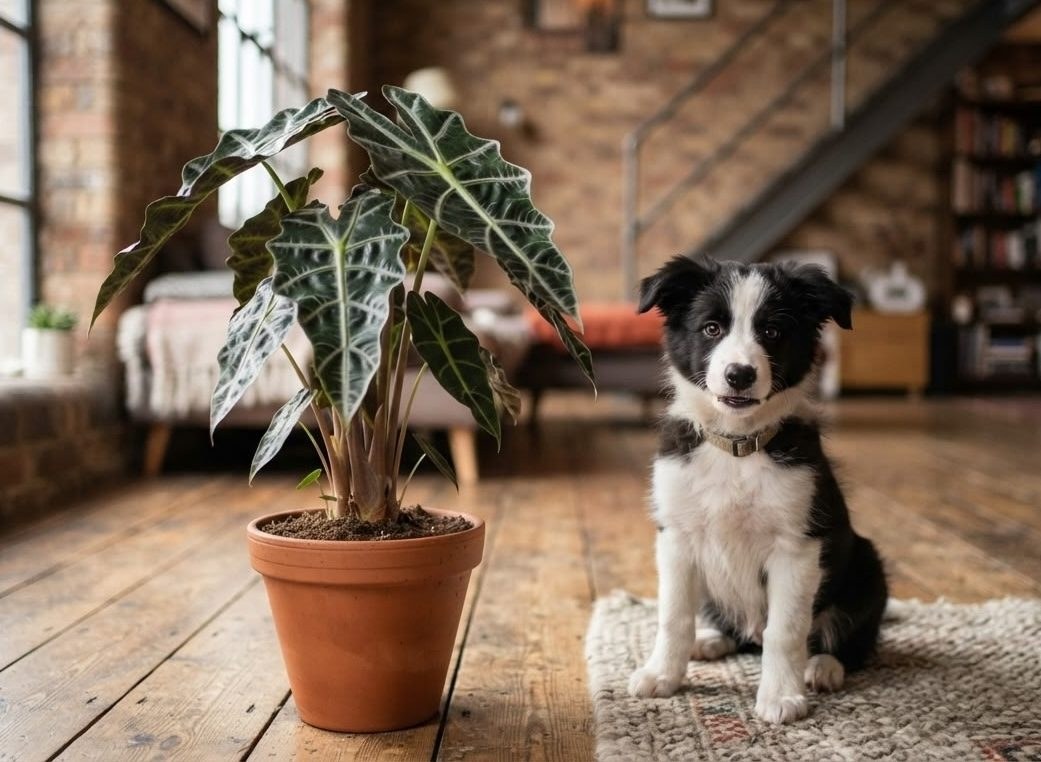
Is Alocasia Toxic to Cats and Dogs?
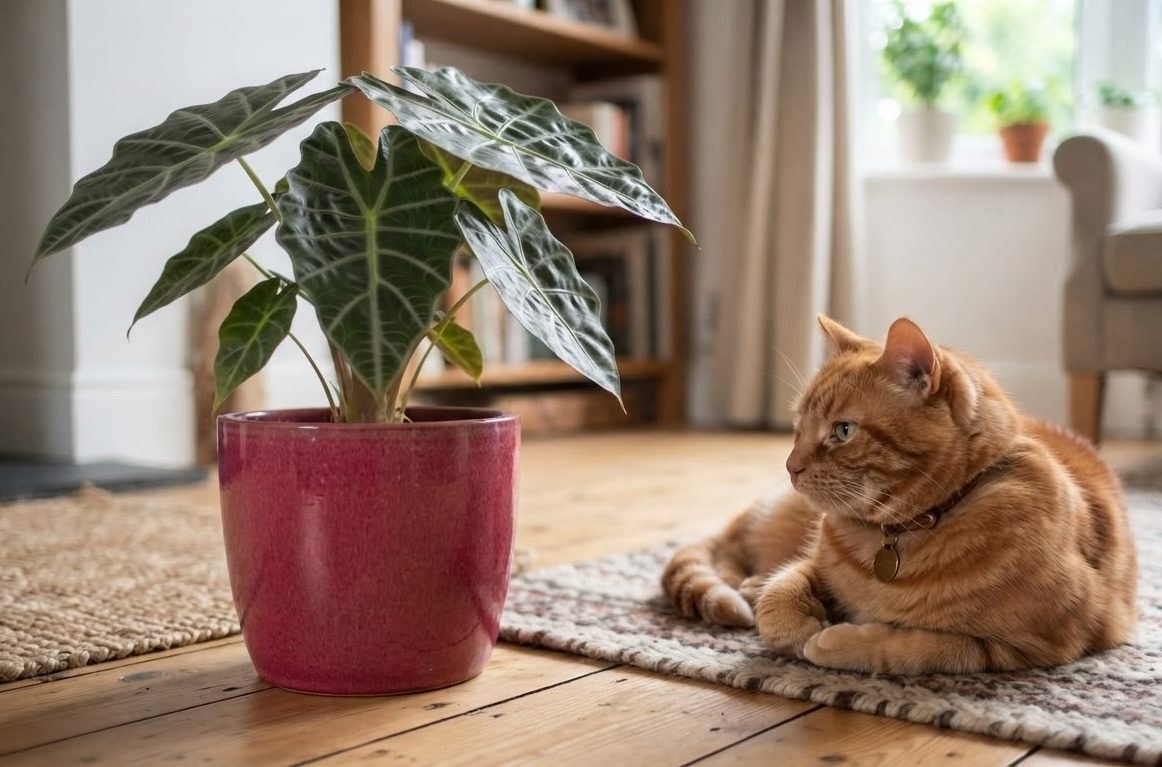
Yes. The ASPCA lists Alocasia (also called Elephant’s Ear) as toxic to dogs, cats, and horses. The toxic principle is insoluble calcium oxalates. Signs include oral irritation, pain and swelling of the mouth, tongue and lips, excessive drooling, vomiting (not in horses) and difficulty swallowing.
The calcium oxalate crystals act mechanically, embedding in soft tissue and causing intense pain. This typically prevents large-scale ingestion, but any confirmed contact warrants a vet call. Keep alocasia out of reach of pets, particularly cats who may chew on the attractive large leaves. If your cat chews plants, I would keep alocasia in a room the cat cannot enter rather than trust a high shelf, since cats climb.
Calcium oxalate toxicity is common among aroids, and although it is not an aroid, schefflera arboricola carries the same risk.
What Soil Mix Does Alocasia Need?
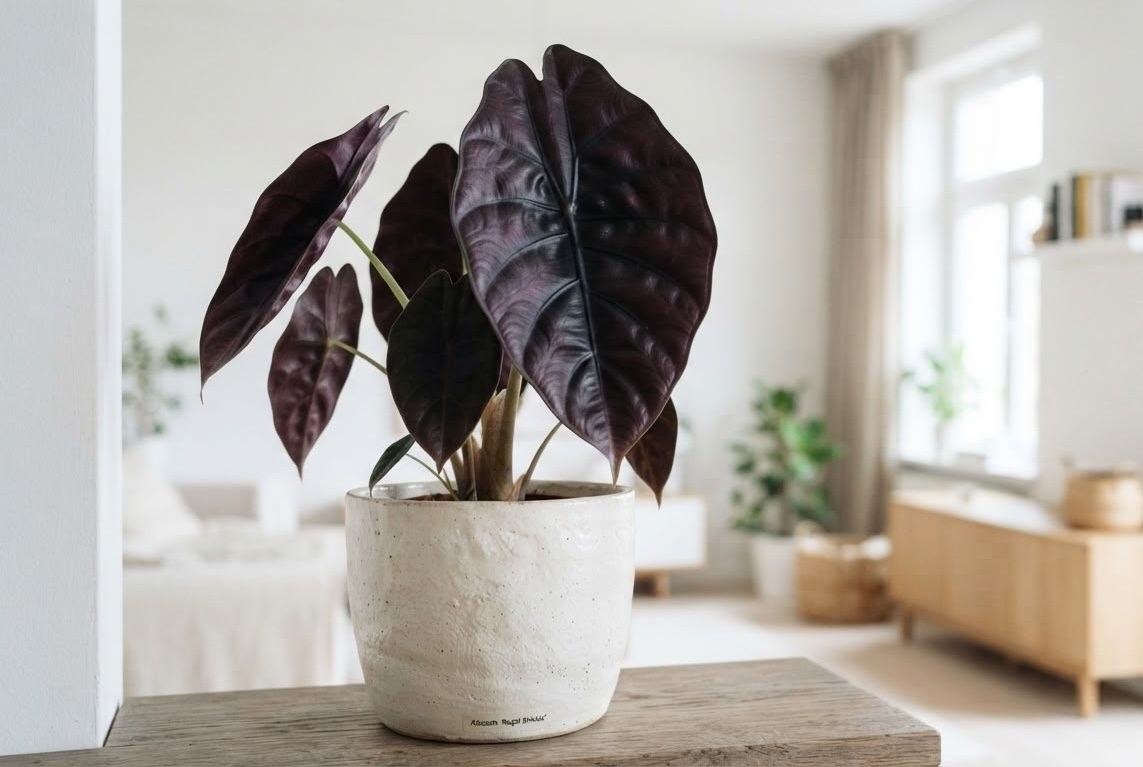
A loose, well-aerated mix, not dense potting soil. One common recipe: 40% standard potting mix + 30% perlite + 30% orchid bark (or coconut coir chips). This combination retains enough moisture for alocasia’s regular thirst while providing the drainage and air pockets its roots require. The bark keeps the mix open, closer to the loose, humus-rich forest soil alocasias grow in.
Alocasia shares this well-draining, chunky mix preference with other aroids like heartleaf philodendron.
Avoid: peat-heavy mixes (compact over time, block drainage), regular cactus mix (too dry), and any mix with nothing coarse (perlite, bark or grit) added. Repot every 1-2 years or when roots fill the pot, using fresh mix each time. Old, compacted soil is a common cause of persistent root rot even in plants that are watered correctly.
How to Propagate Alocasia via Corm Division
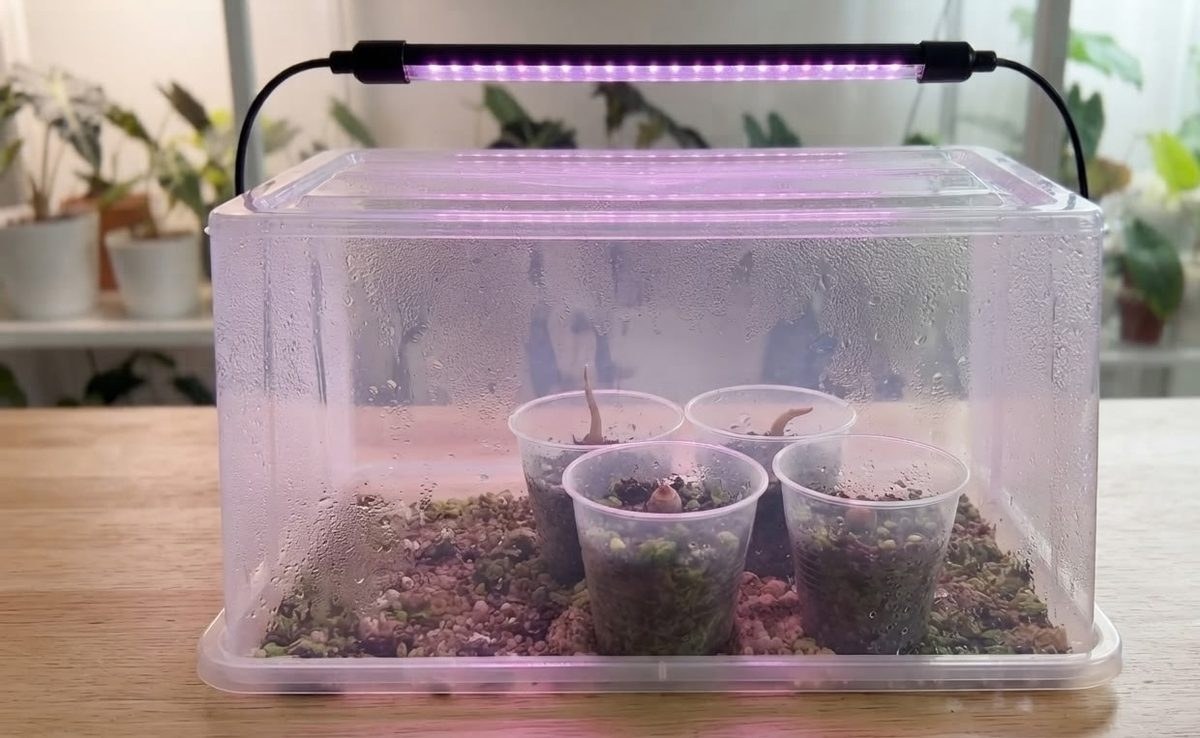
The most successful method for alocasia propagation uses the corms: the small, potato-like storage organs that develop around the base of the main plant. When repotting, you will often find several small corms attached to or separate from the main corm.
Carefully remove these corms. If they still have small white roots attached, pot individually in a slightly moist mix of sphagnum moss and perlite. If they are bare, press them just below the soil surface in the same mix. Place in a warm spot (70°F+) with indirect light and cover loosely with a clear plastic bag to retain humidity. New growth usually appears within a few weeks to a couple of months. I would separate offset corms in spring, when you repot anyway, rather than in autumn when the plant is heading into dormancy.
Do not expect fast results, as corm propagation is slower than stem cuttings for other plants. But it is the most reliable method for alocasia, and the small plants that emerge are genetically identical to the parent.
For a climbing aroid that propagates differently (via stem cuttings and a moss pole), see our Rhaphidophora tetrasperma care guide.
Common Mistakes With Alocasia
Overwatering during dormancy. The most lethal mistake. A dormant alocasia with no leaves needs almost no water, a light drink every few weeks at most. Regular watering of a dormant plant results in a rotted corm that cannot recover.
Throwing away a dormant plant thinking it’s dead. Many alocasias are discarded every winter because they lose their leaves and owners assume the plant has died. Check the corm first. If it’s firm, the plant is alive and will grow again in spring.
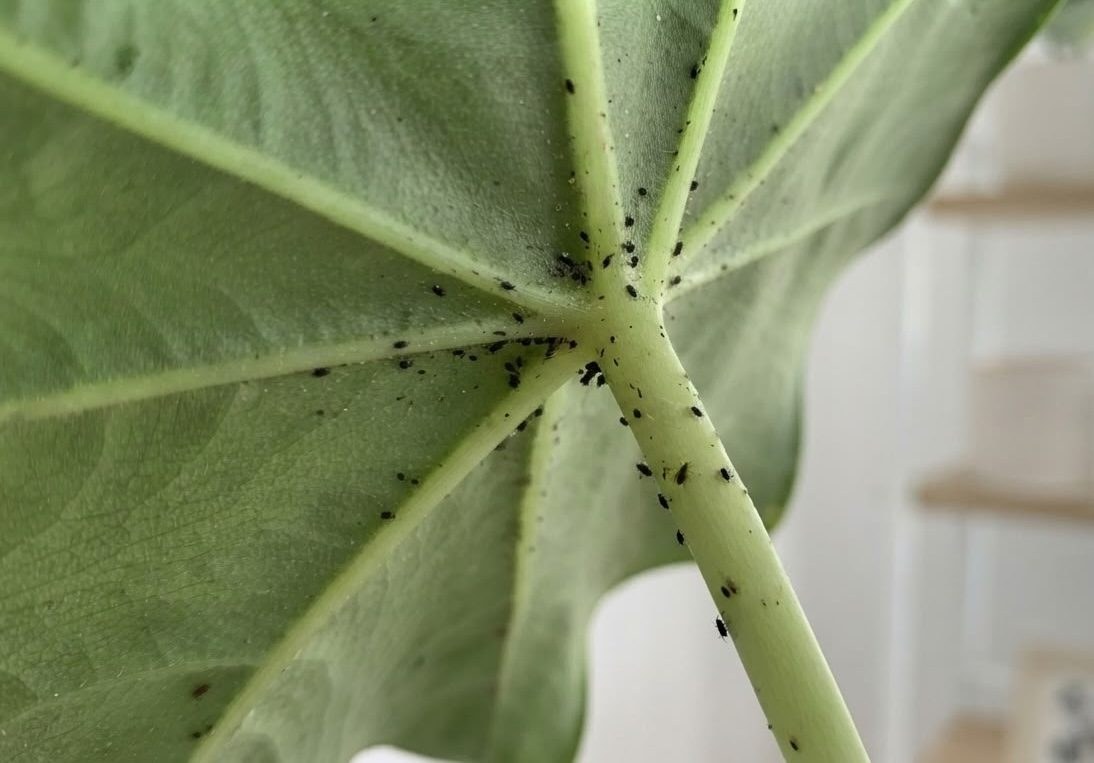
Insufficient humidity. Brown leaf edges that appear despite correct watering and light are very often a humidity problem. Alocasia likes medium to high humidity, more than dry, heated indoor air usually provides. Dry air also brings spider mites, a pest alocasias are prone to, so I would check the leaf undersides for fine webbing and speckling every week or two in winter.
Frequently Asked Questions
My alocasia has no leaves. Is it dead?
Check the corm at the base of the plant. If it’s firm and shows no signs of rot (soft areas, dark color, bad smell), the plant is alive and dormant. Move to a warm spot and wait. New leaves typically emerge in spring when temperatures and light increase.
How long does alocasia dormancy last?
Usually a few months, through winter until spring warmth returns, depending on indoor conditions. Dormancy is shorter in warmer, brighter environments and longer in cool, dark conditions. Alocasias kept above 65°F year-round with grow lights may have little or no dormancy.
Why does my alocasia keep losing leaves?
Alocasia naturally replaces its leaves over time, and an old leaf often yellows and drops as a new one unfurls. If it’s losing leaves faster than producing them, the cause is usually overwatering, insufficient light, or low humidity. Count: if new leaves are emerging at the same rate or faster than leaves are dropping, the plant is healthy.
Can alocasia tolerate low light?
It survives in low light but does not thrive. In low light, growth nearly stops, leaves become smaller and spaced further apart, and the plant is more susceptible to root rot from slow water usage. Bright indirect light produces the dramatic, large-leaved growth alocasia is known for.