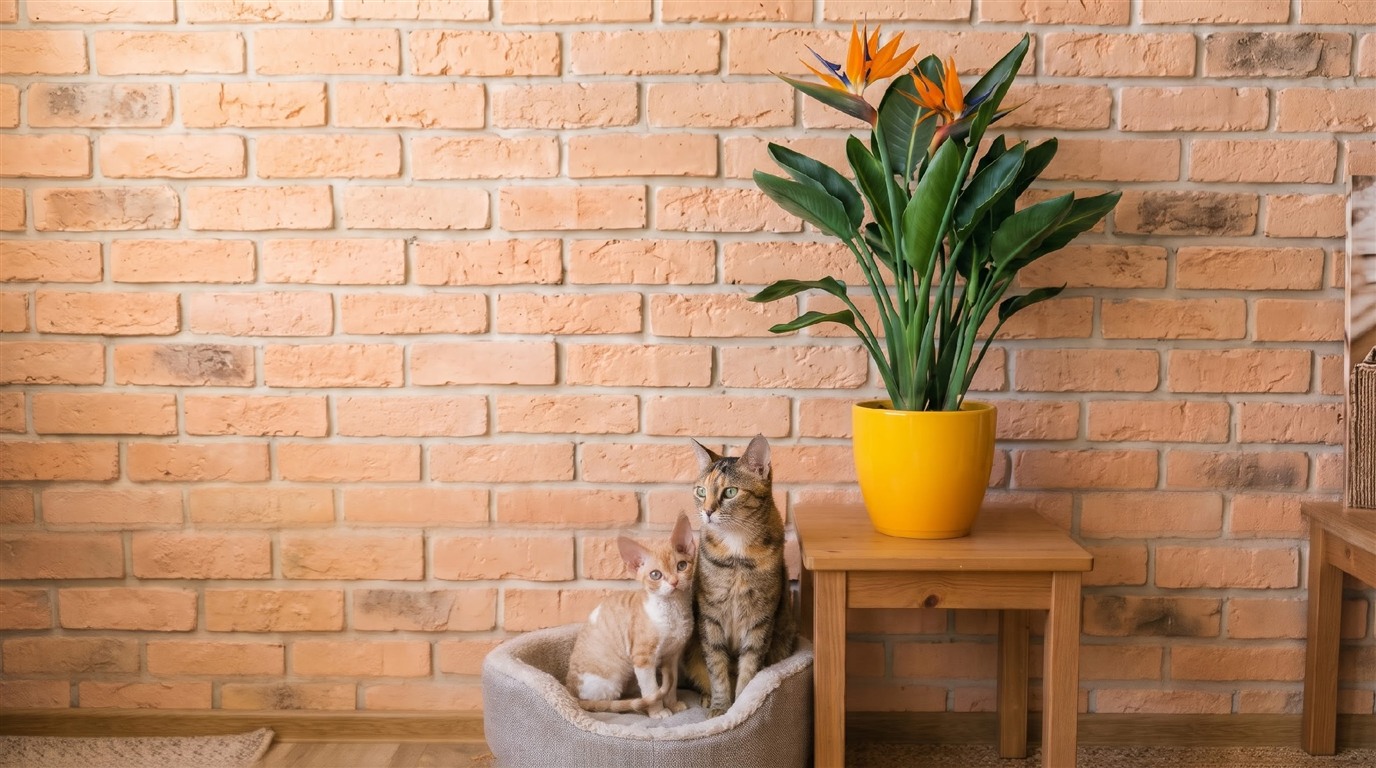
The short answer: yes, bird of paradise is toxic to cats. But the full answer matters more than the headline, because two completely different plants share this common name, and their toxicity profiles are not the same. One is linked to mild stomach upset; the other is described by the ASPCA as more toxic. If you have a cat and a bird of paradise at home, the most important thing you can do right now is identify which plant you actually have. This guide covers both, with the toxicity data taken from the ASPCA’s plant entries.
First: Which Bird of Paradise Do You Have?
Two botanically unrelated plants are both commonly sold and planted under the name “bird of paradise.” One is a popular tropical houseplant found in living rooms and offices across the country. The other is an ornamental outdoor shrub grown in warm climates. They look completely different, but the shared common name creates constant confusion, including in search results and general pet safety articles that treat them as the same plant. The ASPCA lists them separately and explicitly notes that one is more toxic than the other.
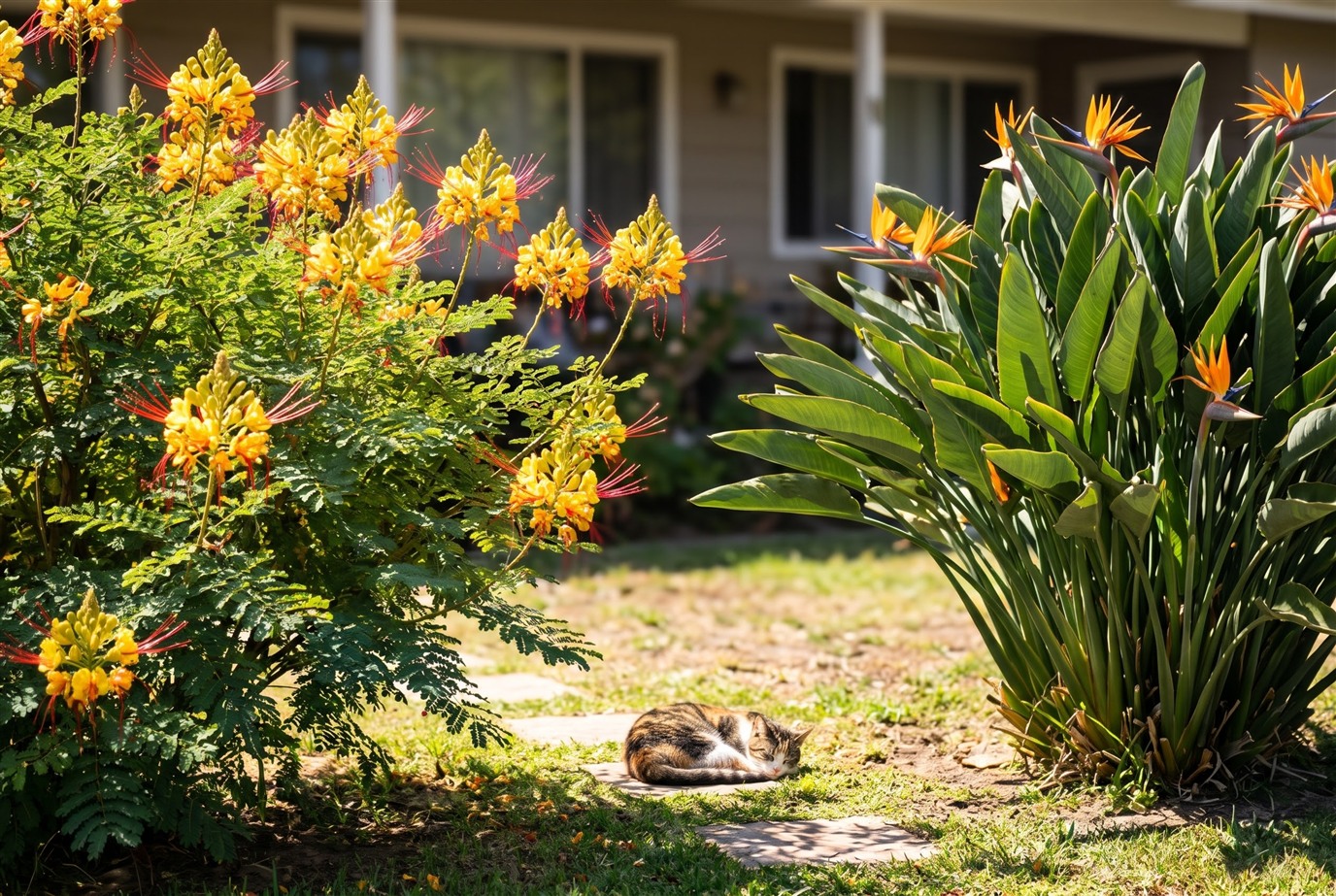
Strelitzia reginae / Strelitzia nicolai (The Common Houseplant)
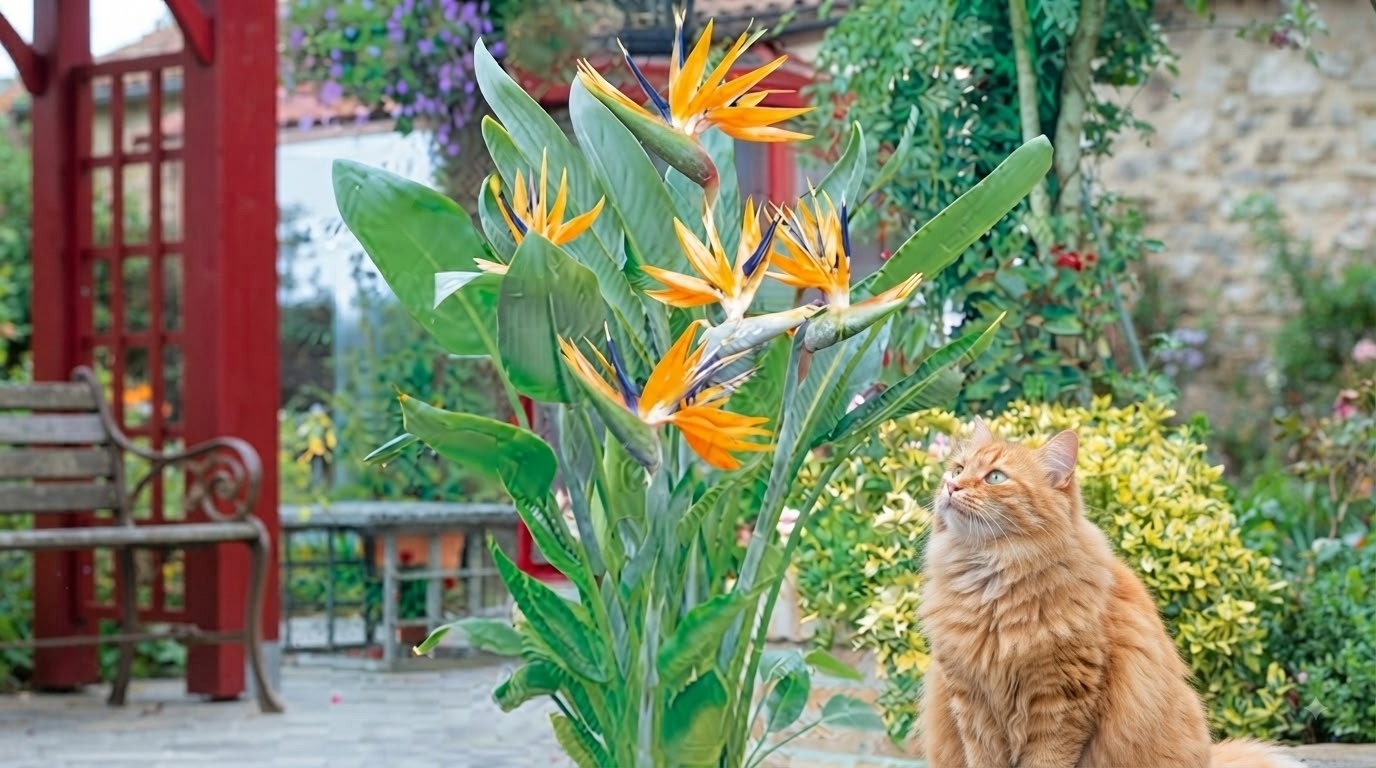
Strelitzia reginae is what most people picture when they hear “bird of paradise.” It’s a tropical plant with large, glossy, paddle-shaped leaves on long upright stalks and spectacular orange-and-blue flowers that resemble a bird in flight. Compact enough for indoor use, it’s one of the most popular statement plants sold at garden centers, IKEA, and home decor stores. Strelitzia nicolai (the white bird of paradise) is a close relative in the same genus. It grows considerably taller (commonly 6 feet or more indoors), has larger leaves, and produces white flowers. Both are widely sold as houseplants.
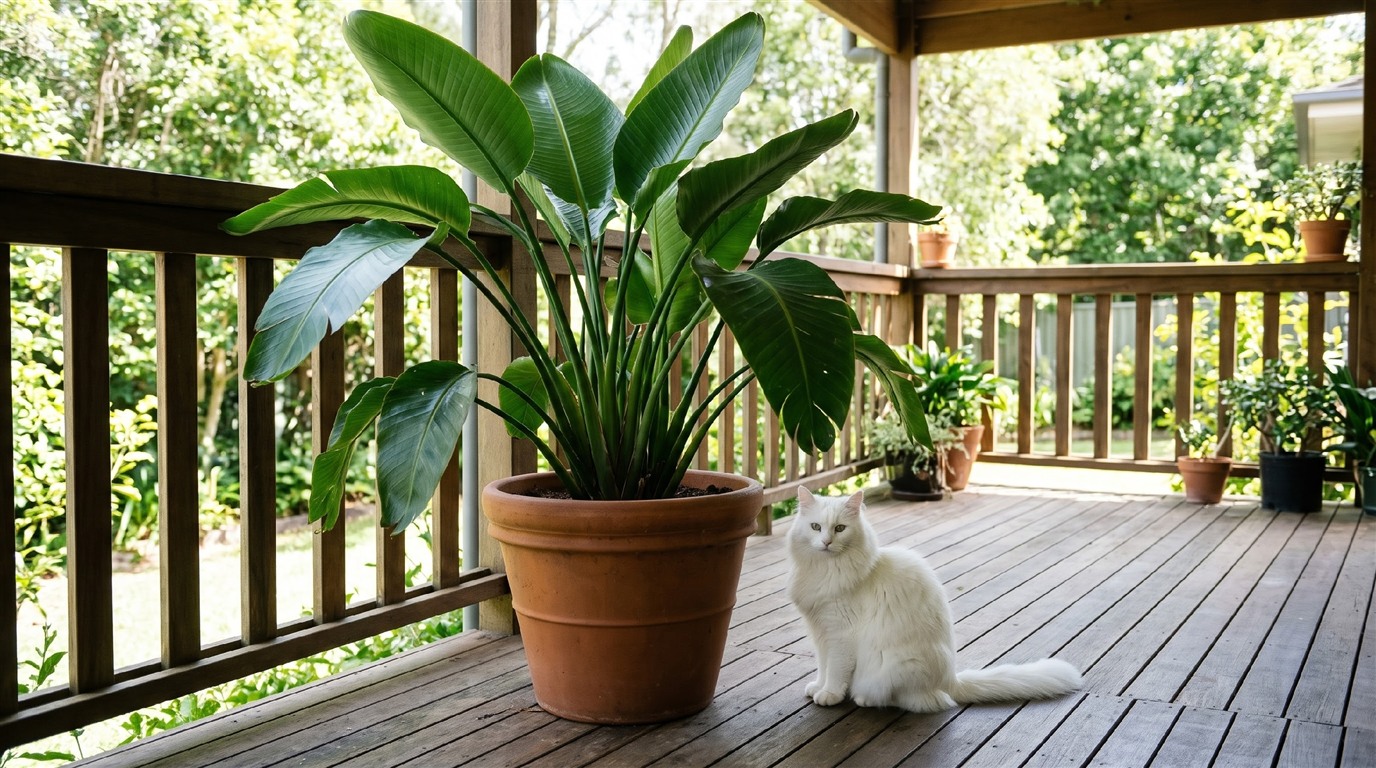
If your plant has large, oval or oblong leaves on long individual stalks with an overall architectural, tropical silhouette, you almost certainly have a Strelitzia. This is by far the most common plant sold under the “bird of paradise” label.
Caesalpinia gilliesii (The Ornamental Garden Shrub)
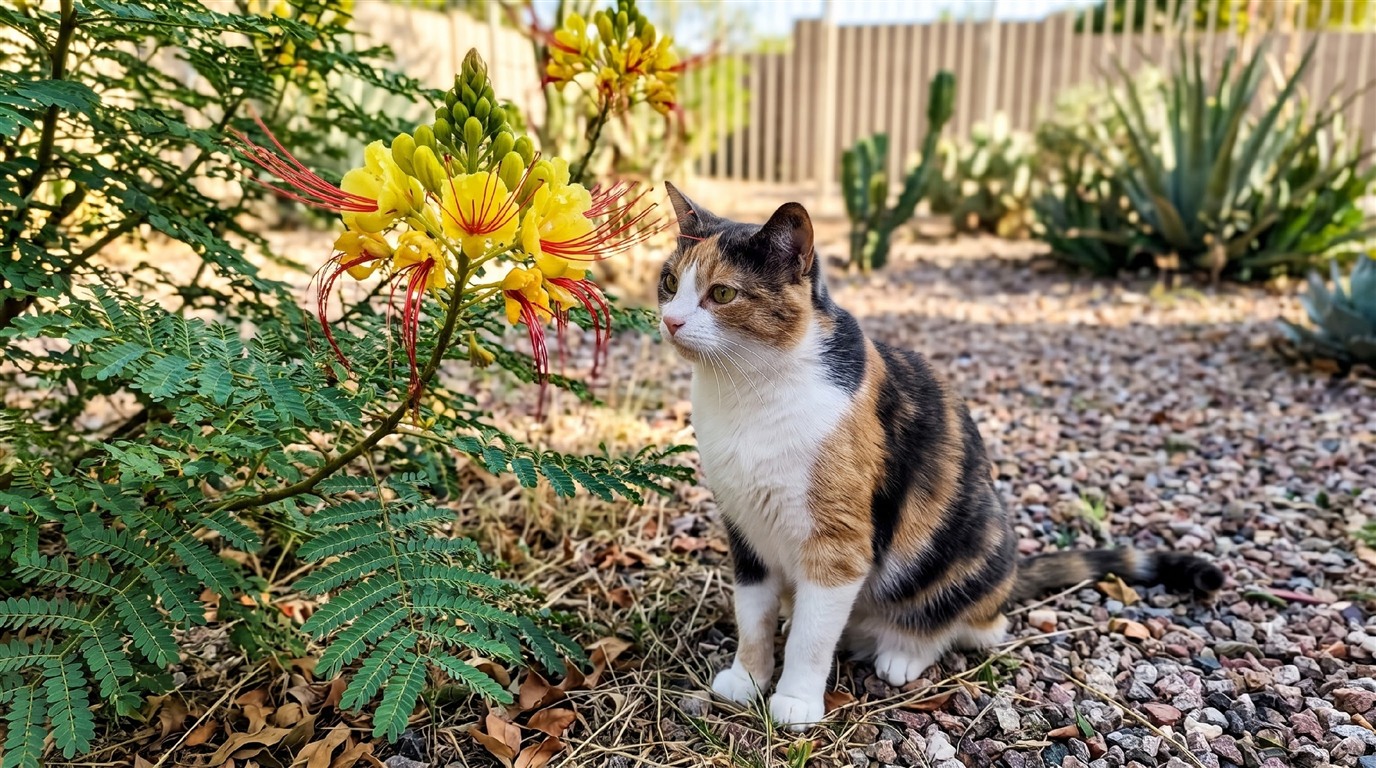
Caesalpinia gilliesii, usually called yellow bird of paradise or desert bird of paradise, is an entirely different plant: a member of the pea family native to Argentina, now placed by many botanists in the genus Erythrostemon. It’s a multi-stemmed woody shrub with feathery, fern-like compound leaves and showy yellow flowers with long, dramatic red stamens. It’s grown outdoors in warm, dry climates (most often listed for USDA zones 8–11) and is rarely encountered as a houseplant. The ASPCA’s Strelitzia entry also refers to it by its older botanical name, Poinciana gilliesii. The ASPCA’s own entry for this shrub lists Peacock Flower, Barbados Pride, Poinciana and Pride of Barbados as other names, but in horticulture those names usually belong to its close relative Caesalpinia pulcherrima (red bird of paradise). Flower color helps: C. gilliesii has yellow flowers with long red stamens, while C. pulcherrima is usually red and orange. If I were not sure which shrub was in my yard, I would treat it as the more toxic Caesalpinia until a nursery or local extension office confirmed the ID.
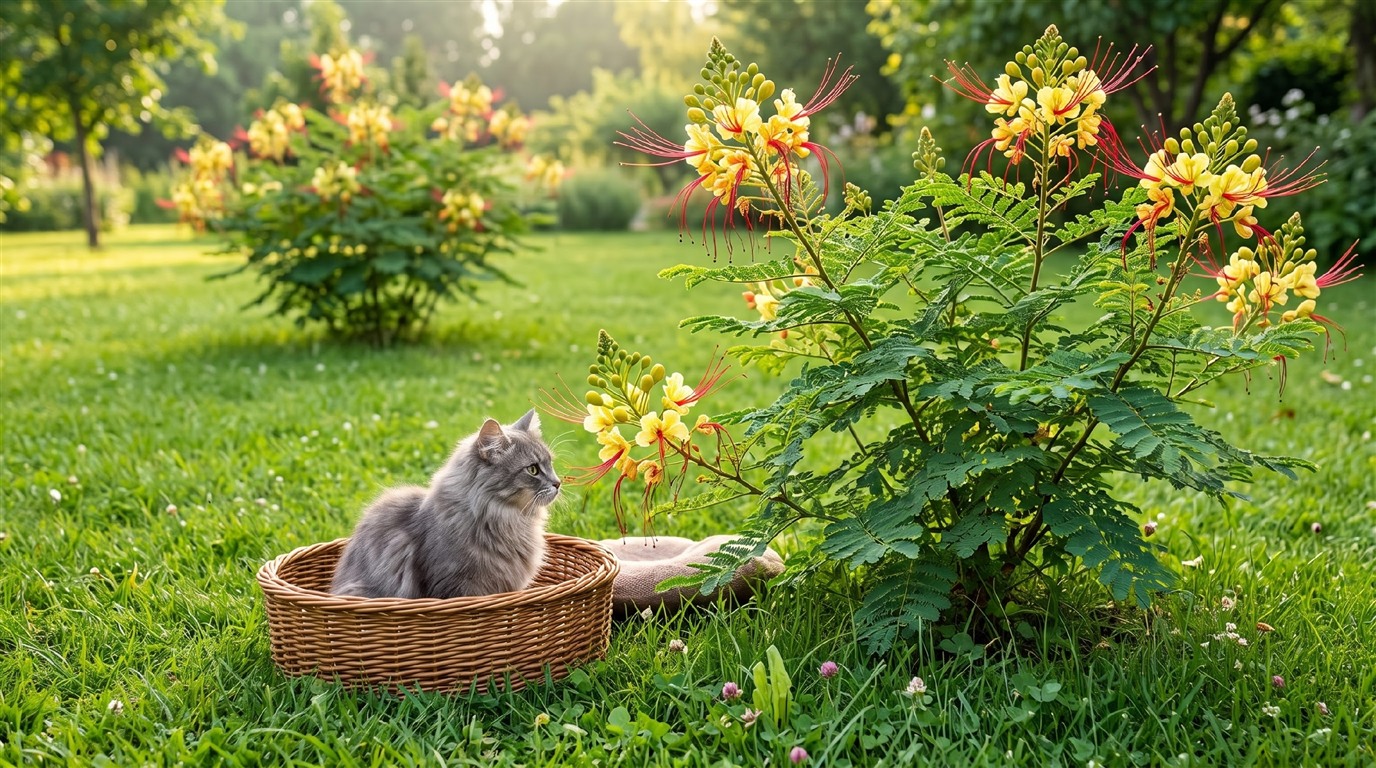
If you have a bird of paradise growing outdoors in your yard in the American Southwest, Texas, or another warm-weather region, it may well be Caesalpinia. If you purchased your “bird of paradise” from a plant shop or home goods store for indoor display, you almost certainly have a Strelitzia.
Is Strelitzia (Houseplant Bird of Paradise) Toxic to Cats?
Yes. The ASPCA classifies Strelitzia reginae (listed on their site under the common name “Bird of Paradise Flower”) as toxic to cats, dogs, and horses. The toxic principles are listed as GI irritants. The clinical signs are: mild nausea, vomiting, and drowsiness. The ASPCA adds that these signs are caused mainly by the fruit and seeds.
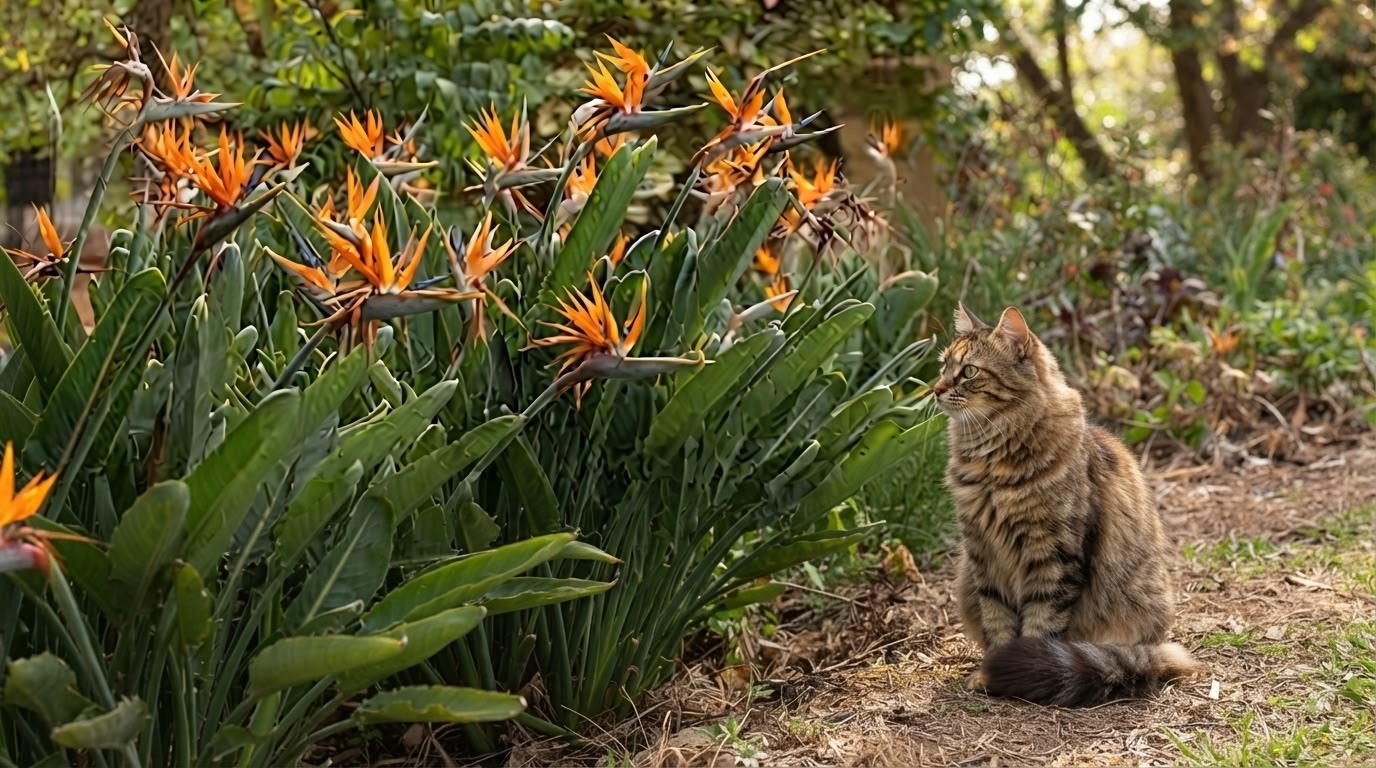
This is important context for calibrating your response. Strelitzia is on the toxic list, but it sits toward the milder end of the spectrum. The ASPCA’s own entry for Strelitzia includes a direct note that it should not be confused with Caesalpinia gilliesii, and explicitly describes Caesalpinia as “more toxic.” So while you should absolutely keep Strelitzia away from your cat and contact your vet if ingestion occurs, this is generally not in the same category of urgency as a lily or sago palm exposure.
If your cat chewed a leaf: monitor closely and call your vet. If your cat accessed seed pods or fruit: call your vet without waiting for symptoms to appear.
What Happens If a Cat Eats Bird of Paradise?
Based on ASPCA data for Strelitzia, the primary clinical signs are mild nausea, vomiting, and drowsiness. The ASPCA does not say how quickly signs appear, and it links them mainly to the fruit and seeds. A cat that chewed a leaf may show some drooling, a bout of vomiting, or sleepiness. A cat that ate seeds or fruit has eaten the parts the ASPCA singles out, so a stronger reaction is more likely.
Because the listed signs are mild, full recovery with supportive care is the usual expectation for a leaf-chewing exposure. Your vet may recommend monitoring at home if symptoms are mild, or may want to see the cat for anti-nausea medication or supportive fluids if the cat is vomiting repeatedly. If your cat shows any neurological signs (wobbliness, collapse, or seizures), seek emergency veterinary care immediately. None of these are on the ASPCA list for Strelitzia; incoordination is listed for Caesalpinia, so it may point to a different plant or another cause.
For Caesalpinia ingestion, the ASPCA lists more severe signs: intense burning and irritation of the mouth, tongue, and lips, excessive drooling, vomiting, diarrhea, difficulty swallowing, and possible incoordination. If you have reason to believe your cat accessed a Caesalpinia plant rather than a Strelitzia, treat it as a higher-urgency situation and call your vet or ASPCA Poison Control immediately.
Which Parts Are Most Toxic?
The ASPCA states that clinical signs from Strelitzia are caused mainly by the fruit and seeds. The seeds of Strelitzia reginae are hard and black with a bright orange tuft of hairs (the aril) at one end, striking in appearance and potentially attractive to a curious cat. The ASPCA does not explain why these parts cause more trouble, but the practical point is clear: the seed pods are the part to keep away from pets. My advice is to cut off spent flower heads before they set seed on any plant a cat can reach.
The leaves, while still part of a plant classified as toxic, pose a lower immediate risk than the seeds or fruit. If your cat chewed or batted at a leaf, the concern level is lower than if the cat ate part of a seed pod. This distinction matters for how urgently you act: monitor carefully for leaf exposure, call your vet promptly for seed or fruit exposure.
Is White Bird of Paradise (Strelitzia nicolai) Toxic to Cats?
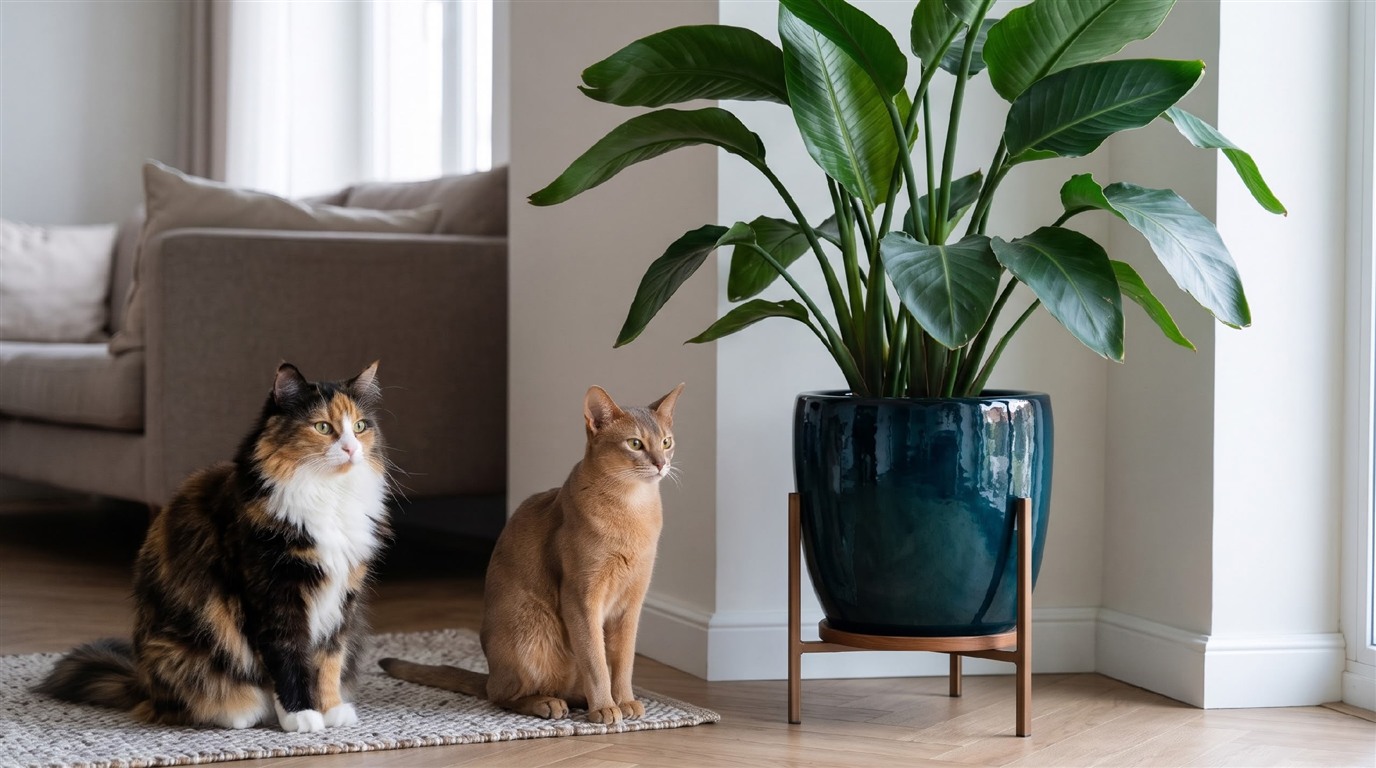
Assume yes. The ASPCA does not have a separate entry for Strelitzia nicolai, and there is little published toxicity data specific to it. Because it belongs to the same genus and family (Strelitziaceae) as the listed Strelitzia reginae, I would treat it exactly the same way. If you have the large, white-flowered version, apply the same precautions: keep it away from cats, and contact your vet if ingestion occurs, with higher urgency if seeds or fruit were eaten.
Is Bird of Paradise Toxic to Dogs?
Yes. The ASPCA lists Strelitzia reginae as toxic to dogs as well as cats and horses. The toxic principles and clinical signs are the same: GI irritants causing mild nausea, vomiting, and drowsiness, with symptoms most likely after ingestion of fruit and seeds. Dogs tend to be less selective than cats about what they chew, which makes seed pods a particular concern if the plant is accessible at floor level.
Caesalpinia gilliesii is also toxic to dogs, with the more severe symptom profile: oral burning, excessive drooling, vomiting, diarrhea, difficulty swallowing, and possible incoordination. The ASPCA also notes that deaths have been reported in rabbits from Caesalpinia ingestion.
What to Do If Your Cat Ate Bird of Paradise
- Identify the plant. Is it Strelitzia (the houseplant with paddle leaves) or Caesalpinia (the outdoor shrub with feathery leaves and yellow-red flowers)? This determines urgency level.
- Remove the cat from the plant and secure the plant out of reach.
- Check for symptoms: drooling, vomiting, lethargy, drowsiness, or any difficulty swallowing.
- If mild symptoms and leaf ingestion (Strelitzia): monitor closely for the rest of the day; call your vet if symptoms do not settle or get worse.
- Call your vet or ASPCA Poison Control: (888) 426-4435. Have the plant name ready: specifying Strelitzia vs. Caesalpinia will help them advise you accurately. The ASPCA notes that a consultation fee may apply. My advice is to snap a photo of the plant, and of any chewed leaves or pods, before you call; it settles the Strelitzia vs. Caesalpinia question faster than a description.
- If the cat ate seeds or fruit, or if it’s Caesalpinia: call your vet immediately; do not wait for symptoms.
When you speak with your vet or the poison control hotline, describe: which plant species it was, which part of the plant was eaten (leaf, seed, or fruit), the estimated amount, and any symptoms you’re already seeing. Your vet may recommend monitoring at home for mild Strelitzia leaf exposure, or may want to see your cat for supportive care: anti-nausea medication, activated charcoal, or IV fluids for more serious ingestions.
Common Misconceptions About Bird of Paradise Toxicity
Because “bird of paradise” is a popular and widely available houseplant, several misconceptions circulate about its safety:
- “It’s just a tropical plant, it must be fine”: popularity does not equal safety. Bird of paradise (Strelitzia) is in the same aesthetic category as other tropical statement plants, but unlike calathea or spider plant, it is listed as toxic by the ASPCA. Popularity has no correlation with pet safety.
- “My cat only chewed a leaf, so there’s nothing to worry about”: for Strelitzia, leaf ingestion typically causes mild GI upset, which may indeed be minor. However, if the cat got into the seeds or fruit portions of the plant, the concern level is significantly higher. The specific part eaten matters.
- “Bird of paradise and bird of paradise shrub are the same thing”: they are not. Strelitzia (the common houseplant) and Caesalpinia gilliesii (the garden shrub also called bird of paradise) are botanically unrelated and have different toxicity profiles. Caesalpinia is more toxic, with a separate ASPCA entry and more severe clinical signs.
- “It’s not that toxic, so I don’t need to do anything”: mild toxicity does not mean no action required. If symptoms appear (drooling, vomiting, lethargy), call your vet. The symptoms themselves (especially vomiting in a cat) can cause dehydration if extended.
Safe Plant Alternatives for Cat Owners
If you want dramatic tropical foliage without the toxicity risk, several cat-safe options can give you a similar aesthetic. Calathea offers bold, patterned leaves and is listed as non-toxic to cats by the ASPCA (its prayer plant entry is Calathea insignis). Spider plant (Chlorophytum comosum) is widely available and non-toxic, though some cats are attracted to its dangling offshoots. Haworthia succulents are compact and safe. For the large-format architectural drama of a white bird of paradise, a Kentia palm (Howea forsteriana) is a non-toxic alternative that can reach similar heights indoors. If a cat shares the room, I’d pick the Kentia over a tall Strelitzia on a stand, because a plant that size is hard to keep fully out of reach. Keep in mind that the ASPCA notes any plant material may cause vomiting or stomach upset if a pet eats it.
If your cat is persistent about investigating plants, relocating the bird of paradise to a surface the cat cannot reach is a short-term fix; replacing it with a cat-safe plant is the more reliable long-term solution. You can also check our guide on whether zebra plants are toxic to cats for another common plant comparison.
Toxicity Summary Table
| Plant | Common Name | Toxic to Cats | Toxic to Dogs | Severity | Key Symptoms |
|---|---|---|---|---|---|
| Strelitzia reginae | Bird of paradise (houseplant), Crane flower | Yes | Yes | Mild | Mild nausea, vomiting, drowsiness (mainly from fruit/seeds) |
| Strelitzia nicolai | White bird of paradise | Assume yes (not listed separately) | Assume yes (not listed separately) | Mild | Same as S. reginae |
| Caesalpinia gilliesii / Poinciana gilliesii | Yellow bird of paradise, desert bird of paradise (ASPCA also lists Barbados pride, peacock flower, Pride of Barbados) | Yes | Yes | Higher (ASPCA: more toxic) | Oral burning, excessive drooling, vomiting, diarrhea, difficulty swallowing, possible incoordination |
FAQ: Is Bird of Paradise Toxic to Cats?
Is bird of paradise toxic to cats?
Yes, both plants commonly called “bird of paradise” are toxic to cats. Strelitzia reginae (the houseplant) is mildly toxic, with GI irritants causing nausea, vomiting, and drowsiness, primarily from fruit and seeds. Caesalpinia gilliesii (the outdoor shrub) is more toxic per the ASPCA, involving possible hydrocyanic acid and more severe symptoms including oral burning, drooling, vomiting, diarrhea, and difficulty swallowing.
Is white bird of paradise toxic to cats?
Yes. Strelitzia nicolai (white bird of paradise) shares the same genus as Strelitzia reginae, so it should be treated as having the same toxicity profile. The ASPCA does not list it separately; the safe approach is to handle it like S. reginae: toxic to cats, with symptoms linked mainly to seeds and fruit.
What are the symptoms of bird of paradise poisoning in cats?
For Strelitzia (the common houseplant), the ASPCA lists mild nausea, vomiting, and drowsiness, symptoms caused mainly by the fruit and seeds. For Caesalpinia (the outdoor shrub), symptoms are more severe: intense burning and irritation of the mouth, tongue, and lips, excessive drooling, vomiting, diarrhea, difficulty swallowing, and possible incoordination.
Which part of bird of paradise is most dangerous?
For Strelitzia, the ASPCA specifically states that symptoms are caused mainly by the fruit and seeds. The leaves are still part of a plant listed as toxic, but the ASPCA singles out the seeds and fruit. If your cat accessed seed pods, treat it as a higher-urgency situation than a leaf chew.
Can bird of paradise kill a cat?
A fatal outcome from Strelitzia ingestion is not expected; the ASPCA lists GI irritants as the toxic principle and only mild signs. However, if a cat ingested a significant amount of seeds or fruit, prompt veterinary care is still warranted. Caesalpinia is more toxic, with the ASPCA noting deaths have been reported in rabbits. The ASPCA entry for Strelitzia mentions no deaths, but this should never be a reason to delay calling your vet after any confirmed plant ingestion.
Is bird of paradise toxic to dogs?
Yes. The ASPCA lists Strelitzia reginae as toxic to dogs and horses, with the same toxic principles and clinical signs as for cats. Caesalpinia gilliesii is also toxic to dogs, with more severe symptoms: oral burning, excessive drooling, vomiting, diarrhea, difficulty swallowing, and possible incoordination.
How do I keep my cat away from bird of paradise?
Place the plant on a high surface or hanging planter the cat cannot reach. Many cats seem to avoid citrus smells, so a few fresh orange peels near the pot base may help, though it does not work for every cat. Avoid citrus oil sprays: Pet Poison Helpline lists citrus oil (d-limonene) among the essential oils known to poison cats. Double-sided tape around the pot deters paws. If your cat is persistent and the plant is accessible, replacing it with a cat-safe alternative (calathea, spider plant, or Kentia palm) is the most reliable long-term solution.