Yes — peace lilies (Spathiphyllum) are toxic to cats and dogs. But “toxic” here means something specific: calcium oxalate crystals causing immediate oral and throat irritation, not organ failure. The severity is real but manageable, and understanding the actual mechanism matters far more than a blanket warning — especially if you’re trying to decide whether your pet needs emergency care right now.
Are Peace Lilies Toxic to Cats?
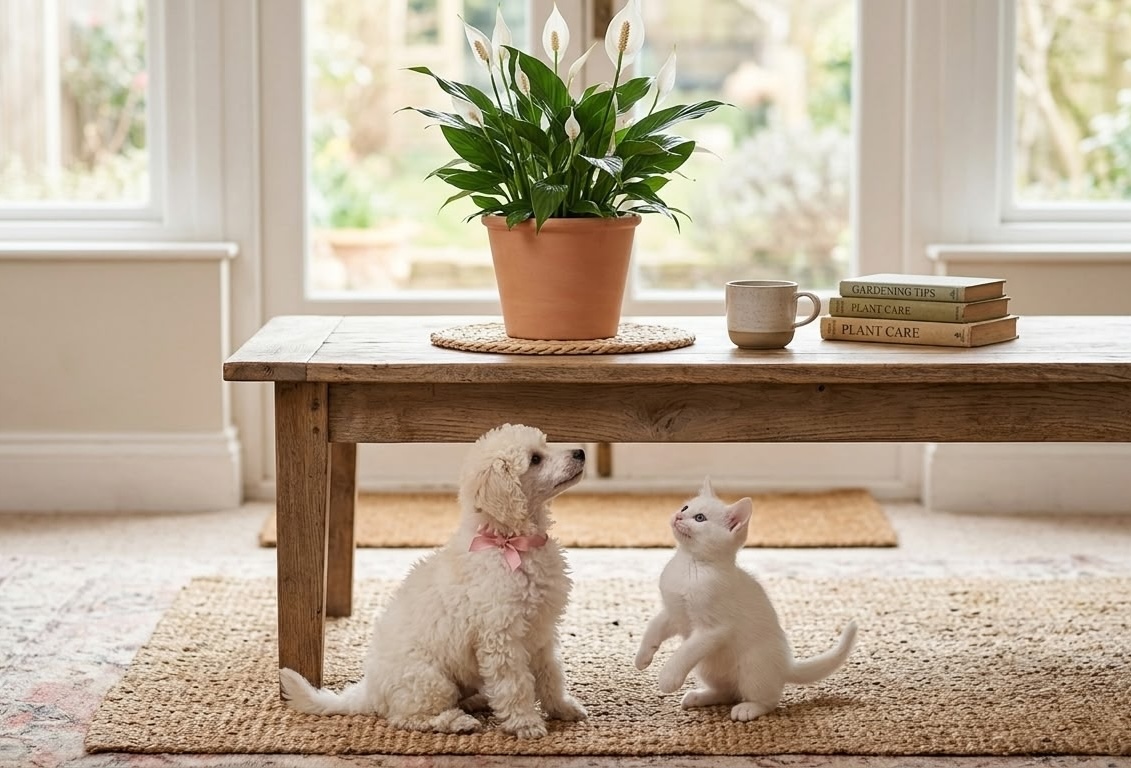
Yes. The ASPCA lists peace lily (Spathiphyllum) as toxic to cats. The plant contains insoluble calcium oxalate crystals — microscopic needle-shaped structures called raphides — packed throughout its leaves, stems, and flowers. When a cat chews any part of the plant, these crystals are released and physically embed in the soft tissues of the mouth, tongue, and throat.
The reaction is fast and unmistakable: within minutes of chewing, a cat will start drooling, pawing at its mouth, and retching. Most cats stop immediately because the pain is sharp and immediate — which is actually why serious peace lily poisoning in cats is relatively rare. The plant announces itself as harmful before much is ingested.
I’ve had two friends with cats who’ve each gone through this. In both cases the cat drooled for an hour, looked thoroughly put out, and was eating normally by dinnertime. Neither needed to call a vet.
The good news: calcium oxalate crystals cause irritation and inflammation, not organ damage. A cat that chews a peace lily leaf will be uncomfortable. It will not go into kidney failure.
Are Peace Lilies Toxic to Dogs?
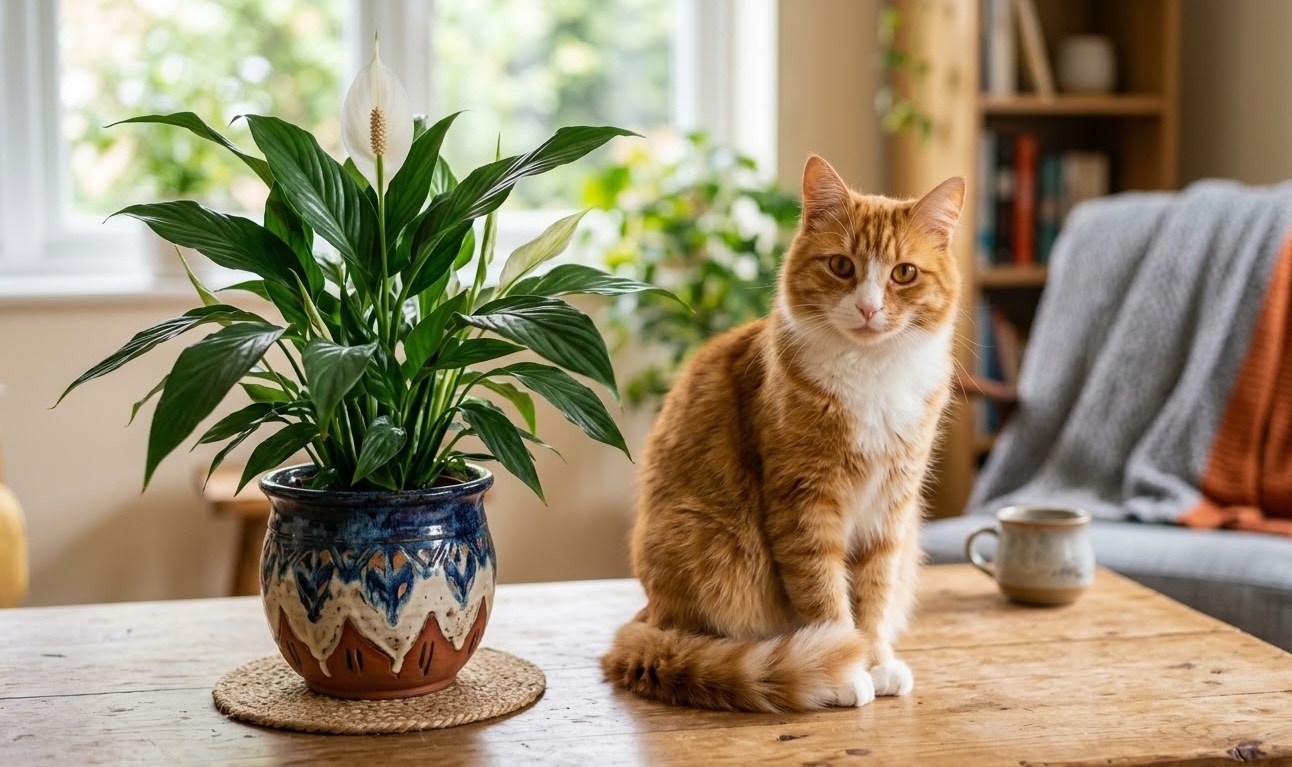
Yes, through the same mechanism. The calcium oxalate crystals cause the same immediate oral irritation in dogs as in cats — drooling, pawing at the mouth, and potential vomiting. Dogs tend to chew more aggressively than cats and may get a larger mouthful before stopping, but the outcome is the same: self-limiting irritation that resolves on its own in most cases.
The ASPCA also lists peace lily as toxic to dogs. As with cats, the toxicity is classified as mild to moderate — significantly less dangerous than plants like sago palm, autumn crocus, or oleander, which cause serious systemic damage.

Peace Lily vs. True Lily: A Critical Difference
This distinction can save a cat’s life — and prevents unnecessary panic when it’s not warranted.
Peace lily (Spathiphyllum) is not a true lily. Despite the name, it belongs to the Araceae family, not Liliaceae. True lilies — Easter lily, tiger lily, Asiatic lily, daylily — belong to the Lilium or Hemerocallis genera and cause acute kidney failure in cats from even tiny amounts. A cat that licks pollen from an Easter lily or chews a single leaf can develop irreversible renal failure within 24–72 hours without aggressive veterinary treatment.
Peace lily does not cause kidney failure. The mechanism is entirely different: calcium oxalate crystal irritation affects the mouth and GI tract, not the kidneys. A cat that ingests a peace lily leaf may vomit and drool for a few hours. A cat that ingests an Easter lily may die without emergency intervention.
This is the distinction I find myself explaining most often to worried plant owners. The name ‘peace lily’ creates genuine confusion — people hear ‘lily’ and immediately think Easter lily, which is justified panic for that plant. These are completely different risks with completely different outcomes.
If you’re not sure which plant your cat got into — or if the plant label says “lily” without specifying — treat it as a potential true lily exposure and call your vet or ASPCA Animal Poison Control immediately. When in doubt, escalate.
What Makes Peace Lilies Toxic? The Calcium Oxalate Mechanism
The toxic agent is insoluble calcium oxalate crystals — specifically raphides, which are bundles of needle-shaped crystals packed into specialized cells throughout every part of the plant. When a cell is disrupted by chewing, these crystals are released and physically penetrate the soft mucous membranes of the mouth, throat, and digestive tract.
The irritation is purely mechanical. The crystals don’t dissolve and can’t be neutralized by stomach acid. All parts of the peace lily contain them: leaves, stems, flowers (the spathe and spadix), and the roots. There is no “safe” part of the plant to chew.
Because the mechanism is physical rather than chemical, the severity scales with how much material is chewed — but the bitter taste and immediate pain almost always stop pets from ingesting large amounts.
How Much Peace Lily Is Dangerous?
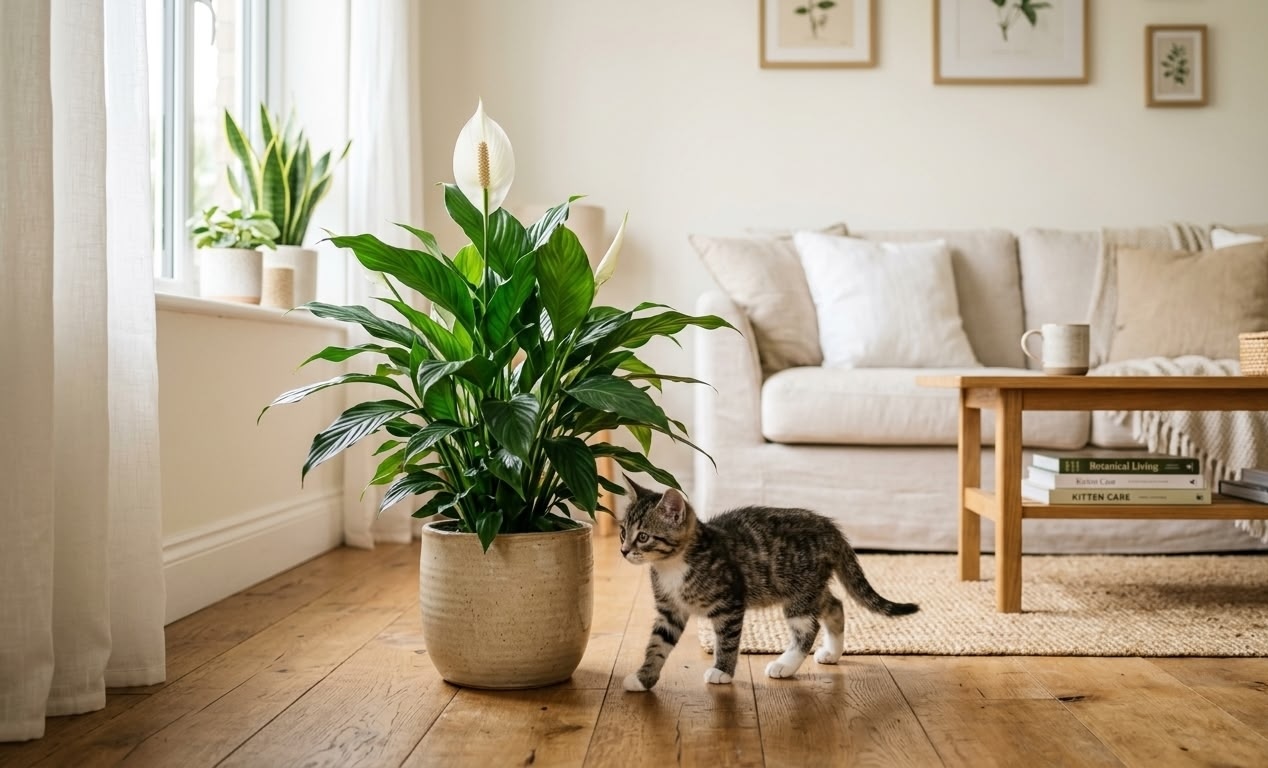
There’s no established toxic dose for peace lily in cats or dogs — the ASPCA and veterinary toxicology sources don’t publish a specific mg/kg threshold. What is known: the reaction scales with the amount of plant tissue chewed and cell disruption. A cat that licks a leaf and moves on will likely show mild or no symptoms. A dog that chews through several leaves will have a more pronounced reaction.
The practical risk assessment: if your pet chewed and swallowed part of a peace lily, expect mouth irritation symptoms. If your pet only mouthed the plant briefly or you’re not sure any was ingested, monitor closely for 2 hours. If no symptoms appear, the risk is low. The plant’s bitter taste and immediate discomfort are natural deterrents — most animals self-limit their exposure.
Symptoms of Peace Lily Poisoning in Cats and Dogs
| Symptom | Timing | Notes |
|---|---|---|
| Excessive drooling | Within minutes | Body’s response to oral irritation |
| Pawing at the mouth | Within minutes | Sign of pain or burning sensation |
| Retching or vomiting | Within 30 minutes | More common in cats; possible in dogs |
| Difficulty swallowing | Varies | If throat tissue is inflamed |
| Loss of appetite | Hours after | Usually temporary, resolves in 1–2 days |
| Oral swelling | Minutes to hours | Lips, tongue, or gums may appear red/swollen |
| Eye or skin irritation | On contact with sap | From handling or contact with cut stems |
Symptoms NOT associated with peace lily ingestion: kidney failure, seizures, collapse, respiratory distress, or prolonged neurological symptoms. If any of these occur after suspected plant ingestion, the cause is something other than peace lily toxicity and requires immediate veterinary attention.
What to Do If Your Pet Eats a Peace Lily
- Stay calm. Most peace lily ingestions result in mild, self-limiting symptoms. This is not a life-threatening emergency in the way a true lily exposure is.
- Remove access to the plant. Move it immediately so no more can be consumed.
- Rinse the mouth if possible. For dogs, gently rinse the mouth with water to remove residual crystal particles. Most cats won’t tolerate this.
- Offer a small amount of dairy. Milk, plain yogurt, or vanilla ice cream can help coat the irritated tissues and reduce burning from the crystals — a recommendation from the ASPCA for calcium oxalate exposures. This surprised me when I first read it, but the logic holds: dairy proteins bind to calcium oxalate and reduce the burning sensation on contact.
- Offer water. Encourage drinking to help flush the mouth and throat.
- Monitor for 2–4 hours. Mild drooling and retching should subside as the irritation resolves. Watch for worsening symptoms, persistent vomiting, or significant swelling.
- Call poison control if unsure. The ASPCA Animal Poison Control Center is available 24/7 at (888) 426-4435 (consultation fee applies). Your vet can also advise based on your pet’s size and how much was consumed.
When to Call the Vet vs. Monitor at Home
Monitor at home if:
- Symptoms are limited to brief drooling and pawing at the mouth
- Your pet is acting normally otherwise (alert, moving, eating after 1-2 hours)
- You’re confident only a small amount was ingested
- Symptoms are improving within 2 hours of the exposure
Call your vet or ASPCA Poison Control at (888) 426-4435 if:
- Vomiting is persistent (more than 2-3 times or continuing after 2 hours)
- Your pet is very small, very young, elderly, or has existing health conditions
- Visible swelling of the mouth, lips, or throat
- Your pet seems lethargic, uncoordinated, or significantly distressed
- You’re not sure how much was consumed or which plant was involved
- Symptoms are worsening rather than improving
The honest reality: most peace lily exposures don’t require a vet visit. But the ASPCA hotline call is worth making if you’re uncertain — it’s faster than searching online and gives you an assessment based on your specific pet’s weight and what was ingested.
How Serious Is Peace Lily Toxicity?
Mild to moderate for normal leaf-chewing exposure. The ASPCA classifies peace lily toxicity as significantly less dangerous than true lilies, sago palm, oleander, or autumn crocus — all of which can cause organ failure or death.
The realistic scenario for most pet owners: your cat chews a peace lily leaf, drools dramatically and looks miserable for an hour or two, then recovers completely without veterinary intervention. The more concerning scenario — a very small animal ingesting a large amount — is rare because the immediate pain stops most pets quickly.
Context matters for severity assessment:
- Animal size: A 5-pound cat faces higher relative exposure than a 60-pound dog from the same amount of plant material.
- Amount ingested: Licking a leaf vs. chewing several stems are very different situations.
- Age and health: Kittens, puppies, elderly pets, or animals with existing health conditions may be more vulnerable.
When in doubt, call rather than searching the internet. You’ll spend 20 minutes reading increasingly alarming forum posts when a two-minute call gives you a direct answer for your specific pet and situation.
When in doubt, call. The ASPCA Poison Control line exists precisely for these situations and can assess risk based on your specific pet and what was ingested. See our complete peace lily care guide for more on the plant itself, including our humidifier setup guide for humidity-specific advice.
How to Keep Pets Safe Around Peace Lilies
You don’t necessarily have to choose between your plant and your pet. Several practical approaches work well:
- Elevation. Peace lilies thrive on high shelves, bookcases, or plant stands out of reach. They tolerate low light and don’t need regular access for watering — a closed shelf works fine. High shelves work particularly well for peace lilies because the plant tolerates neglect so well you can genuinely forget it’s there for weeks.
- Room separation. Keep the plant in a room that stays closed — a home office, bathroom, or bedroom your pet doesn’t access. Peace lilies do well in smaller rooms with indirect light.
- Physical barriers. Decorative terrariums or caged plant stands can work for cats that actively climb. Less practical for dogs but effective for preventing casual contact.
- Training. Some pet owners successfully teach “leave it” commands for plants. More reliable for dogs than cats, and works better as a preventive measure than a response to established interest.

Pet-Safe Alternatives to Peace Lily
If your home situation makes keeping a peace lily safely out of reach impractical, these popular houseplants are confirmed non-toxic to cats and dogs by the ASPCA:
- Spider plant (Chlorophytum comosum) — one of the most forgiving houseplants, tolerates low light, produces runners and spiderettes, non-toxic. See our spider plant care guide for details.
- Calathea — striking patterned leaves, similar tropical look, non-toxic, tolerates low light.
- Parlor palm (Chamaedorea elegans) — non-toxic, elegant, does well in indirect light.
- Boston fern — classic hanging plant, non-toxic, adds lush greenery without pet risk.
- Peperomia — compact, easy care, wide variety of leaf shapes, non-toxic.
I replaced a peace lily with a spider plant in the same shelf spot after a friend’s cat kept eyeing it. Same watering schedule, same indirect light — honestly the spider plant looks better in that corner and I stopped worrying about it. The ASPCA maintains a searchable database of toxic and non-toxic plants at aspca.org — worth bookmarking if you regularly bring new plants into a home with pets.

Frequently Asked Questions
Are peace lilies toxic to cats?
Yes. The ASPCA classifies peace lily (Spathiphyllum) as toxic to cats due to insoluble calcium oxalate crystals throughout the plant. These cause immediate oral irritation, drooling, and vomiting when chewed. Symptoms are self-limiting and typically resolve within a few hours. Peace lily does not cause kidney failure — that risk is specific to true lilies (Lilium genus).
Are peace lilies toxic to dogs?
Yes, through the same mechanism as cats — calcium oxalate crystals cause oral irritation, drooling, and potential vomiting. Dogs may get a larger mouthful before stopping due to their chewing habits, but the outcome is the same: mild to moderate, self-limiting irritation. Not life-threatening in typical exposures. Contact ASPCA Poison Control at (888) 426-4435 if you’re concerned about the amount ingested.
Is peace lily the same as a true lily?
No — this is a critical distinction. Peace lily (Spathiphyllum) is not a true lily. True lilies (Lilium genus: Easter lily, tiger lily, Asiatic lily) and daylilies (Hemerocallis) cause acute kidney failure in cats from tiny amounts and are life-threatening without emergency treatment. Peace lily causes oral irritation but does not affect the kidneys. If you’re unsure which plant your cat ingested, treat it as a true lily exposure and call your vet immediately.
What should I do if my cat eats a peace lily?
Remove access to the plant, rinse the mouth if possible, offer a small amount of dairy (milk or plain yogurt) and water, and monitor for 2–4 hours. Mild drooling and retching should subside on their own. Call your vet or ASPCA Animal Poison Control at (888) 426-4435 if symptoms worsen, your pet is very small or young, or you’re unsure how much was consumed.
Can peace lilies kill cats?
In typical leaf-chewing exposures, no — peace lily toxicity causes oral irritation and GI upset but not organ failure or death. The ASPCA classifies it as mild to moderate toxicity. Severe complications from peace lily ingestion are extremely rare. True lilies (Easter lily, tiger lily) are the genuinely life-threatening risk for cats, not peace lily.
Are there pet-safe plants that look like peace lilies?
Yes. Spider plants (Chlorophytum comosum) offer a similar tropical, lush look and are confirmed non-toxic by the ASPCA. Calathea varieties provide dramatic foliage and are non-toxic. Parlor palms offer an elegant, leafy presence without pet risk. All three are widely available and do well in similar light conditions as peace lily.