Peace lilies are one of the few houseplants that genuinely thrive in low light, bloom indoors without special treatment, and tell you clearly when they need water — by drooping dramatically and then recovering almost immediately after a good drink. Spathiphyllum is also one of the most popular plants for offices, apartments, and shaded indoor spaces for exactly this reason. That said, peace lilies have specific humidity requirements that most care guides understate, and they’re toxic to cats and dogs — two things worth knowing before you bring one home.
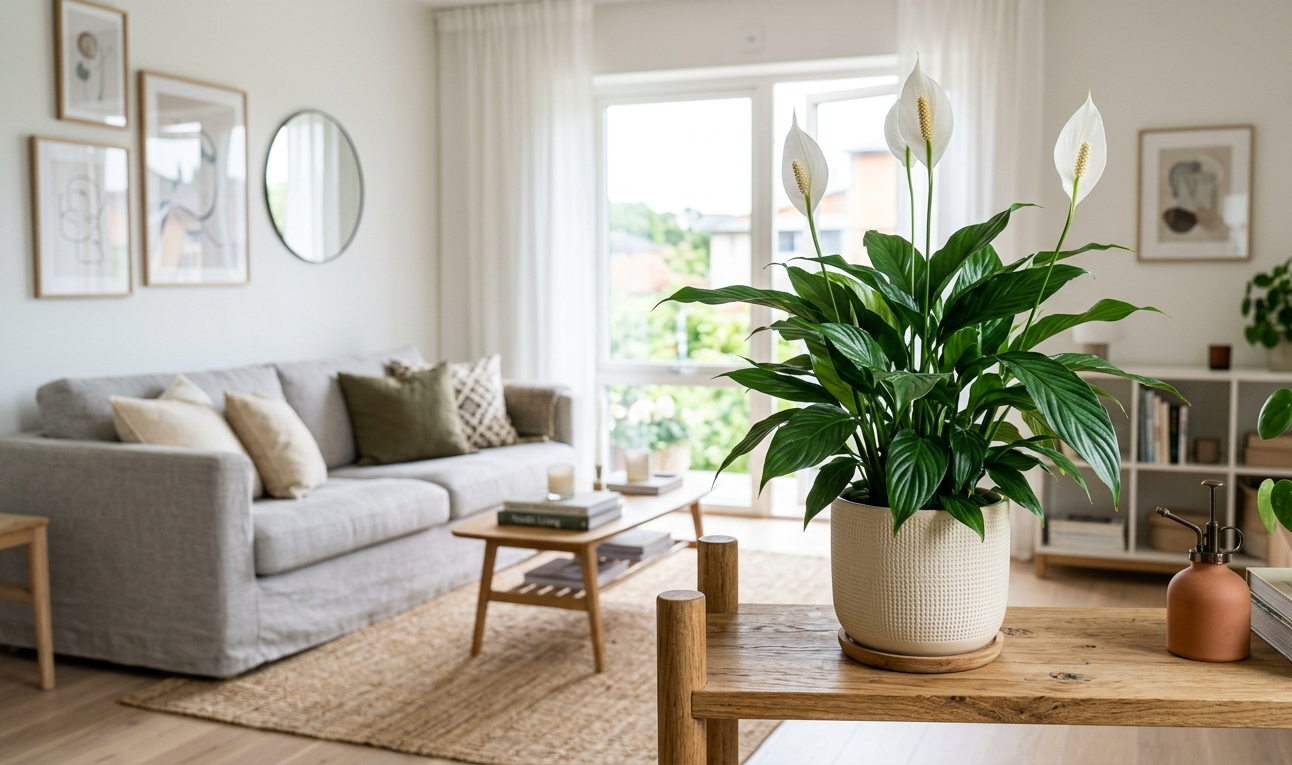
Peace Lily Care at a Glance
| Factor | What peace lilies need |
|---|---|
| Light | Low to medium indirect light; tolerates shade |
| Water | Every 1–2 weeks; drooping = needs water |
| Humidity | 50–60% minimum; higher than average home |
| Temperature | 65–85°F (18–29°C); no cold drafts |
| Soil | Rich, well-draining peat-based mix |
| Fertilizer | Monthly spring/summer, balanced liquid |
| Repotting | Every 1–2 years |
| Toxic to pets? | Yes — toxic to cats and dogs (calcium oxalate) |
How Much Light Does a Peace Lily Need?
Peace lilies are one of the most light-tolerant houseplants available. They survive in dim corners, offices with only fluorescent lighting, and rooms with north-facing windows — conditions that would kill most other flowering plants. In these low-light situations, a peace lily will grow slowly and produce fewer flowers, but it stays healthy.
For better growth and regular blooming, bright indirect light is ideal. I had a peace lily in a windowless hallway for two years — it stayed glossy green and healthy but never once flowered. Moved it to a bright east-facing spot and it bloomed three months later. A spot 3–5 feet from an east or north-facing window hits the sweet spot. Direct sun — especially through south or west windows — scorches the leaves quickly, turning them pale yellow or developing brown patches. If your peace lily’s leaves look bleached or papery, move it away from direct sun.
One thing most guides don’t mention: nurseries routinely apply gibberellic acid (GA3) to peace lilies before sale to force simultaneous flowering for display. This is why a newly purchased peace lily often has multiple flowers. Once those nursery-forced blooms fade, the plant grows on its own timeline — which may mean no flowers for 6–12 months as it acclimates to your home. It’s not something you’ve done wrong; it’s just the difference between forced and natural blooming.
One pattern worth knowing: peace lilies in very low light sometimes stop blooming entirely but keep producing healthy foliage. If you want the white flowers, give the plant more light. If you only care about the foliage, a dim corner works fine.
How Often Should You Water a Peace Lily?
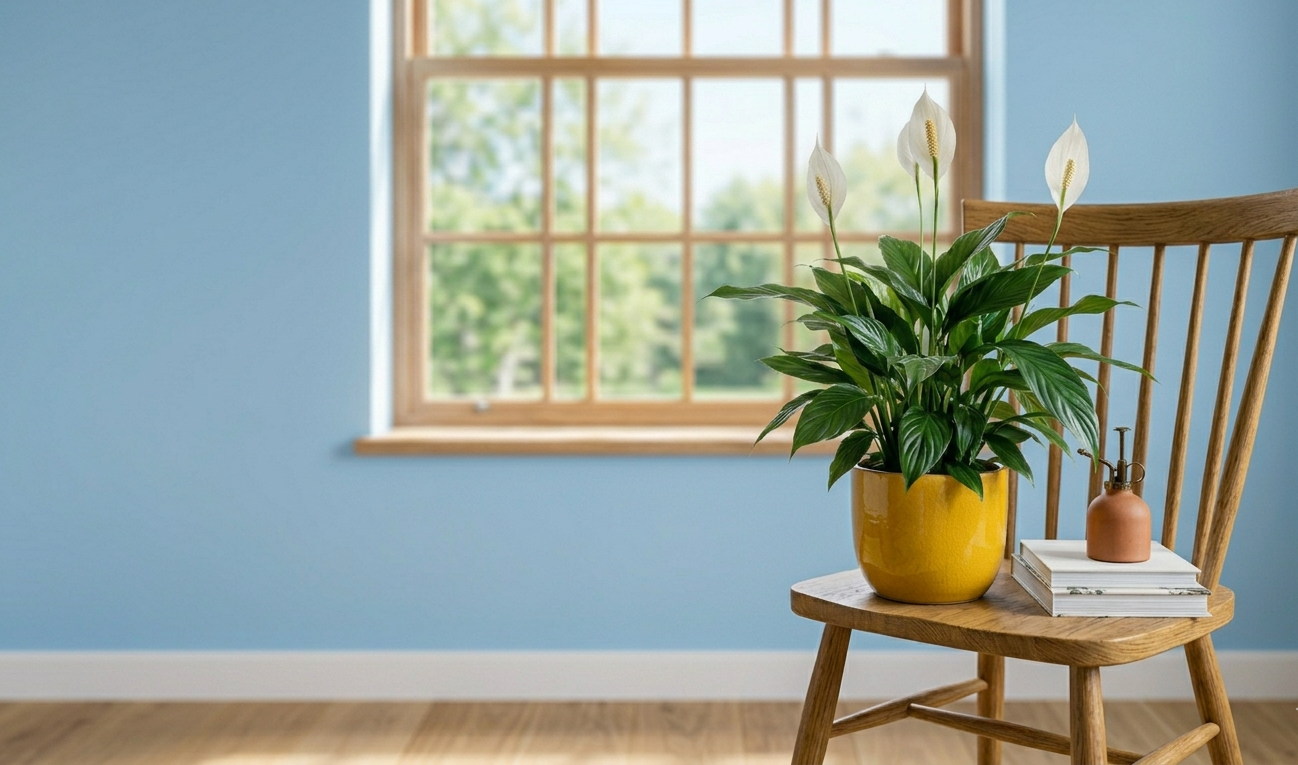
Water when the top inch of soil feels dry — typically every 1–2 weeks in spring and summer, and every 2–3 weeks in fall and winter. Peace lilies communicate water stress more clearly than most houseplants: when they need water, they droop noticeably. After watering, they recover within a few hours — sometimes by that evening, sometimes overnight depending on how severely the plant has wilted. This drooping-and-recovery cycle is normal and reliable. Don’t wait for dramatic drooping every time, but if you’re unsure, a gentle droop is a safe signal.
Peace lilies are sensitive to fluoride in tap water — the same issue as spider plants. Fluoride accumulates in the soil over time and causes brown leaf tips even when watering and humidity are correct. If your peace lily consistently develops brown tips despite proper care, switch to distilled or filtered water. Letting tap water sit overnight helps dissipate chlorine but not fluoride.
I watered a peace lily with tap water for about eight months before making the switch. The brown tips on the older leaves never fully recovered — you trim those — but new growth since switching has come in clean. Water quality matters more than most people expect with this plant.
Humidity: The Most Underrated Part of Peace Lily Care
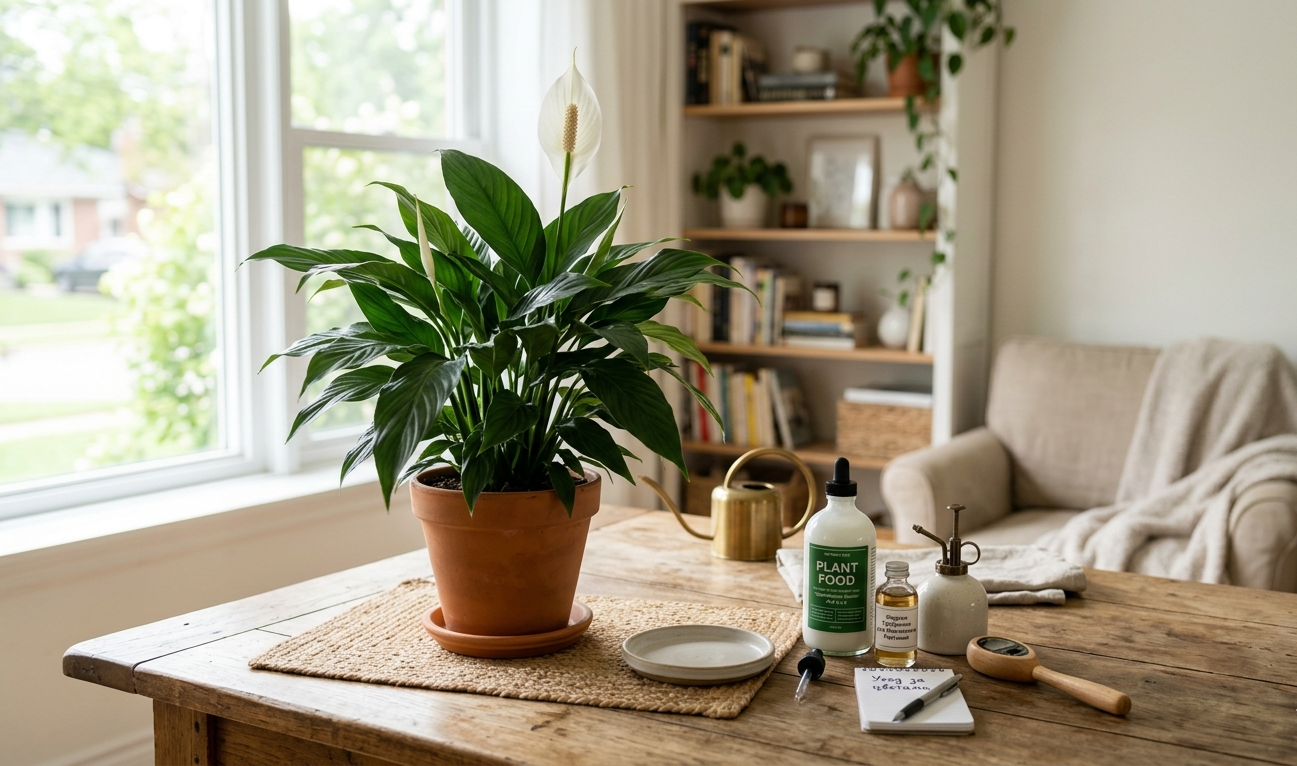
Peace lilies are native to the tropical rainforests of Colombia and Venezuela, where humidity runs 70–80% year-round. In the average home (30–50% humidity), they survive — but they don’t thrive. At minimum, peace lilies need 50% relative humidity. Below that, brown leaf tips appear even with perfect watering, and the plant looks dull rather than glossy.
This is why “humidifier for peace lily” is one of the most searched care questions — and why most care guides don’t answer it well.
My peace lily started getting persistent brown tips within weeks of moving to an apartment with forced-air heating. Watering, water type, fertilizer — nothing fixed it. A small ultrasonic humidifier running a few hours each morning solved the problem within one growing cycle.
Humidifier Options
For a full breakdown of humidifier types, placement, and setup for peace lily, see our humidifier for peace lily guide.
Ultrasonic cool mist humidifiers are the most popular choice for plant rooms. One important note: ultrasonic units aerosolize the water directly — if you use tap water, the dissolved minerals (including fluoride) are misted onto the leaves as fine white dust. Over time this clogs leaf stomata and causes the same tip-browning as fluoride in soil water. Use distilled water in the reservoir. They run quietly, use relatively little power, and maintain consistent humidity levels. Place within 3–5 feet of the plant and aim for 55–65% relative humidity. Use distilled water in the humidifier to prevent white mineral deposits on the leaves.
Evaporative humidifiers work well for larger rooms and naturally regulate output based on ambient humidity — they slow down as the room reaches saturation, which prevents over-humidification. Quieter than ultrasonic at low speeds.
Pebble tray method: Place the pot on a tray filled with pebbles and water. As the water evaporates, it raises local humidity around the plant. Effective but limited — it raises humidity by 5–10% at most, enough for mild improvement but not enough if your home is particularly dry.
Misting: A fine mist sprayer helps temporarily but doesn’t maintain elevated humidity. Mist in the morning so leaves dry before evening, which reduces the risk of fungal issues. Worth doing but not a substitute for a humidifier if your home is consistently dry.
Soil and Potting
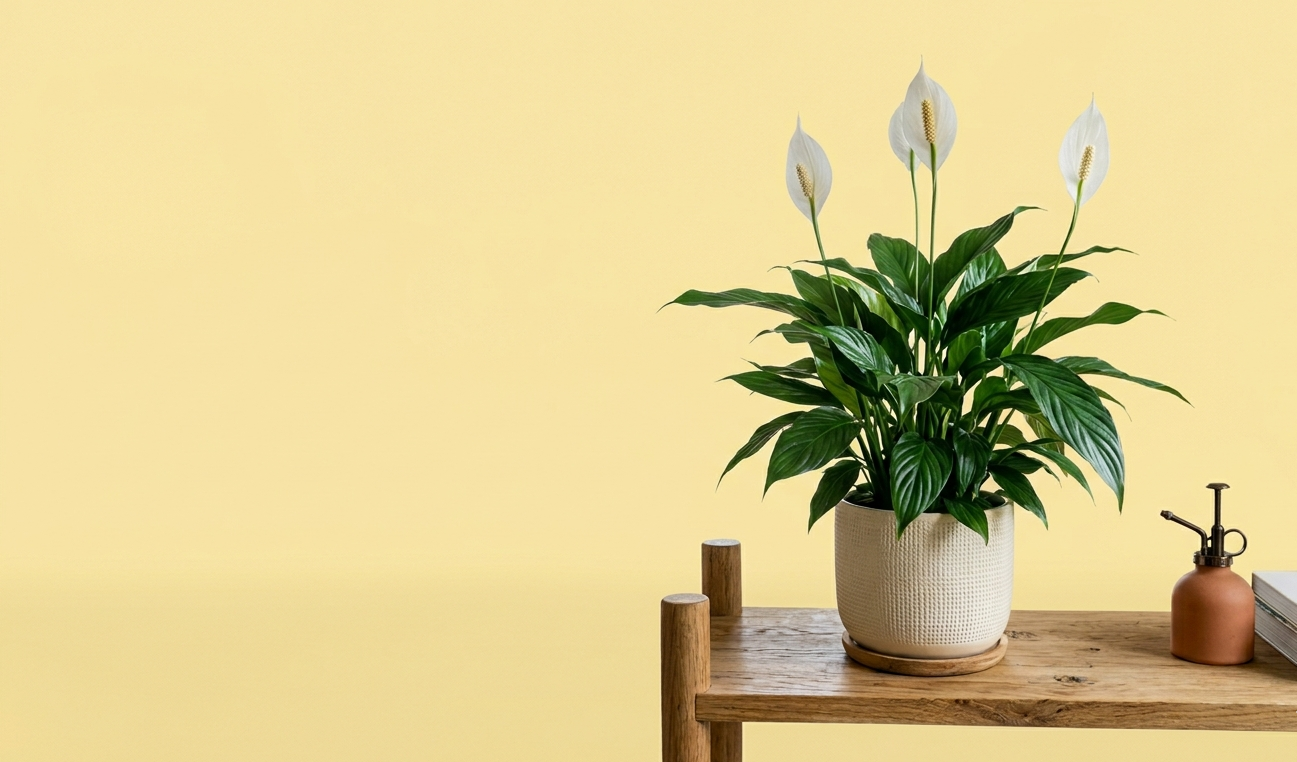
Peace lilies grow best in a rich, well-draining potting mix. A peat-based mix with added perlite works well — the peat retains moisture and nutrients while perlite prevents waterlogging. Aim for a slightly acidic pH between 5.5 and 6.5. Standard potting soil is usually fine without modification, but avoid mixes with heavy bark or large chunky material that drains too fast.
Repot every 1–2 years, or when roots are circling the bottom of the pot or pushing through drainage holes. Peace lilies tolerate being slightly root-bound — they often bloom more reliably when a little pot-bound — but once roots are severely crowded, water and nutrients can’t penetrate effectively. Go up one pot size at a time; a pot more than 2 inches larger than the current one holds too much wet soil and invites root rot.
Fertilizing a Peace Lily
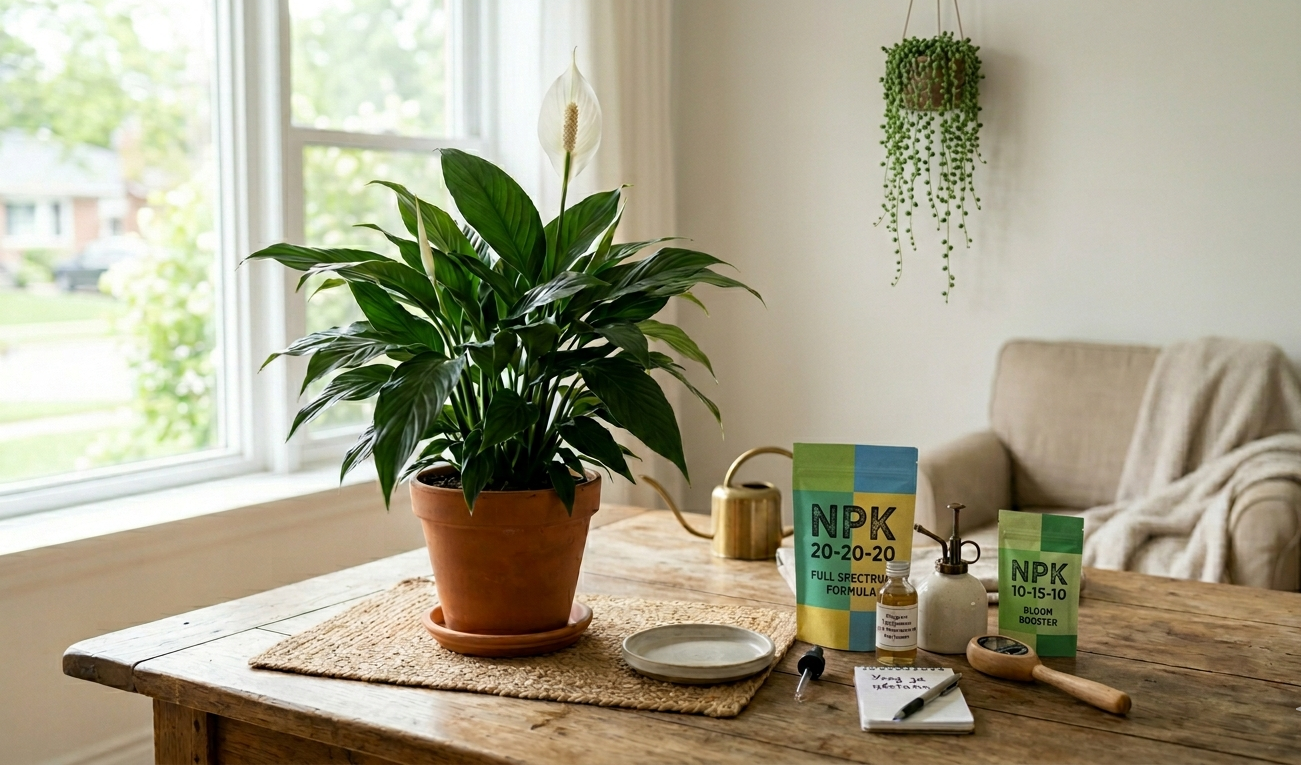
A balanced liquid fertilizer (20-20-20 or similar) at half strength once a month during spring and summer is sufficient. Peace lilies are moderate feeders — they respond well to regular fertilizing but don’t need heavy feeding. Skip fall and winter fertilizing when the plant is growing slowly.
Signs of over-fertilizing: brown leaf tips not related to water quality, white salt crust on the soil surface, or leaves with chemically burned edges. If this happens, flush the soil thoroughly with water and stop fertilizing for 6–8 weeks. Accumulated fertilizer salts cause the same brown-tip symptom as fluoride toxicity, so if you’re already using distilled water and still seeing tips brown, over-fertilizing is worth checking.
Peace Lily Varieties Worth Knowing
Most peace lilies sold in garden centers are standard Spathiphyllum wallisii, but several varieties are widely available and worth knowing before you buy.
Sensation
The largest variety — Spathiphyllum ‘Sensation’ reaches 4–6 feet tall with large, deeply ribbed leaves. Impressive as a statement plant in a corner or entryway. Slower growing than standard varieties and needs more space, but the same basic care.
Domino
A variegated cultivar with green leaves streaked and speckled with white. More visually striking than the standard variety, and slightly more finicky — it needs a bit more light to maintain the variegation. A beautiful option if you have a bright spot for it.
Mauna Loa
One of the most fragrant peace lily varieties — the flowers have a light, sweet scent that most peace lilies lack. Mid-size plant, widely available. Good choice if you want both flowers and fragrance.
Sweet Pablo
Compact variety, stays under 2 feet. Good for smaller spaces, desks, or shelves where a full-size peace lily would be too large.
Platinum Mist
Distinctive silvery-green leaves with a metallic sheen. Same care as standard varieties. Rarer in garden centers but increasingly available online.
Can Peace Lilies Live Outside?
Year-round outdoor growing is only practical in USDA zones 10–12, where winters are frost-free and temperatures stay above 60°F (15°C). In these zones, peace lilies grow larger outdoors than in any pot, often reaching impressive sizes in shaded garden beds.
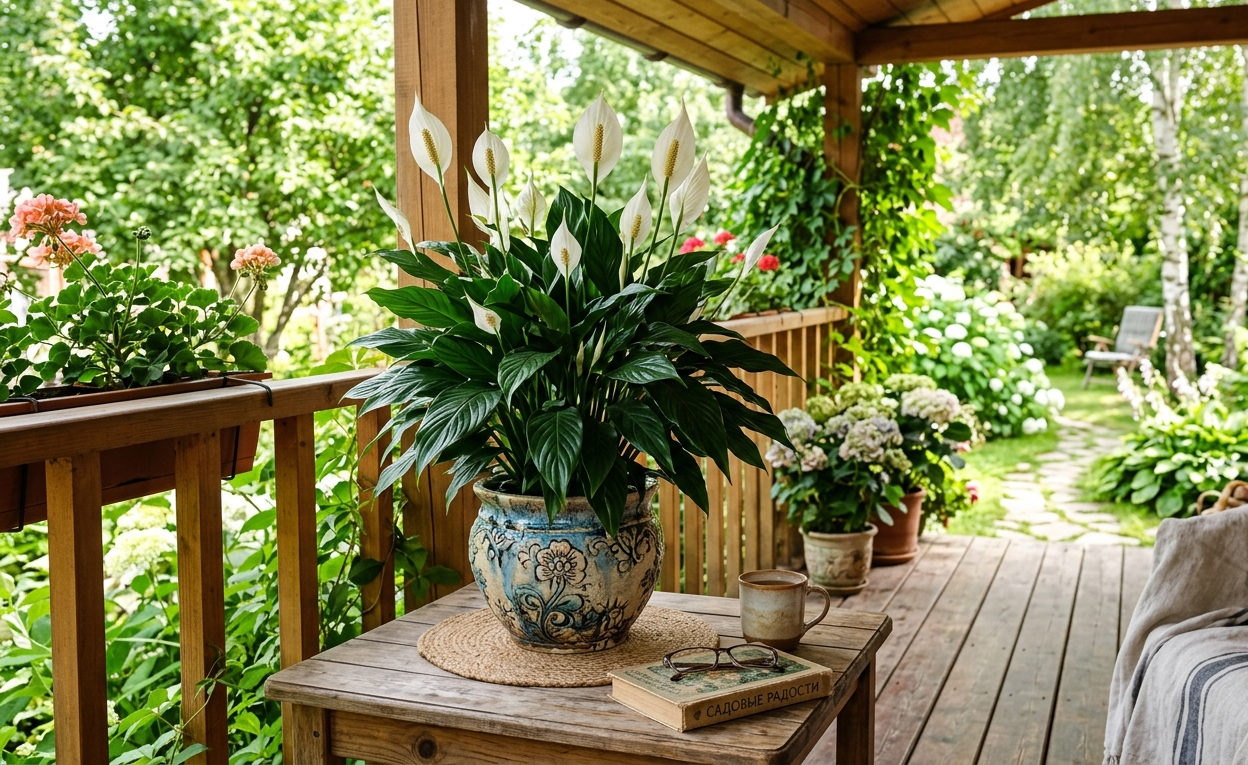
In cooler climates, peace lilies work well as seasonal outdoor plants — move them outside after the last frost and bring them back in when temperatures approach 55°F (13°C) in fall — peace lilies are more cold-sensitive than most tropical houseplants. Outdoors, they need full shade or deep dappled shade; direct outdoor sun causes severe leaf scorch within days. A covered porch, under a tree canopy, or on a north-facing patio are ideal spots.
Peace Lily Meaning and Symbolism
The peace lily’s name isn’t accidental. The white spathes (the modified leaf that surrounds the flower spike) have long been associated with peace, purity, and hope across multiple cultures. In feng shui, peace lilies are considered to bring calming, cleansing energy to a space — one reason they’re commonly placed in bedrooms and meditation rooms.
The peace lily is one of the most traditional funeral and sympathy plants in Western culture. The white flowers represent the soul’s transition, innocence, and sympathy — making them a standard choice for condolence arrangements and memorial services. Unlike cut flowers that last days, a peace lily as a living plant offers lasting comfort and can be kept for years.
The plant also carries associations with rebirth and new beginnings — the white flower emerging from the green foliage is read symbolically across many traditions as renewal after difficulty. This dual symbolism (sympathy and hope) is part of why it appears at both funerals and housewarmings.
How to Propagate a Peace Lily
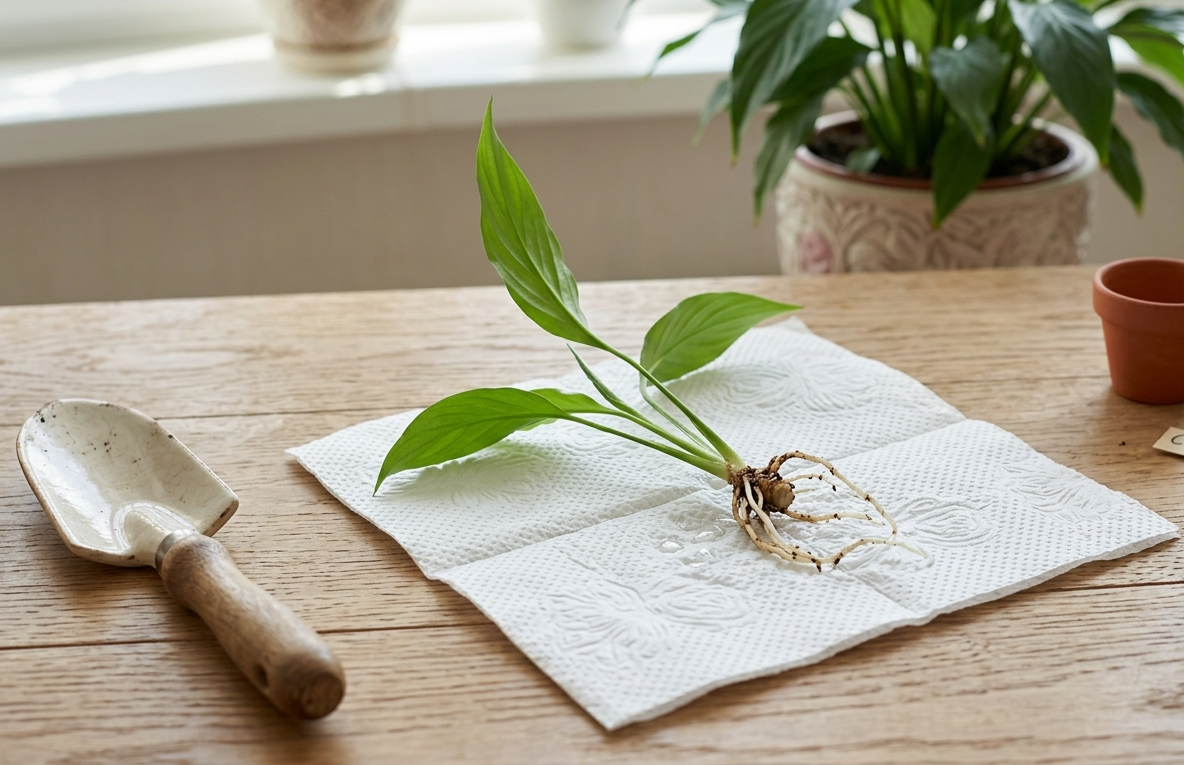
Peace lilies propagate through division only — unlike many houseplants, they don’t root from stem or leaf cuttings. Division is straightforward and most easily done during repotting in spring.
- Remove the plant from its pot and gently shake off excess soil to expose the root mass.
- Identify natural separation points — clusters of stems with their own roots that can be divided without cutting through the main rhizome.
- Pull apart or cut the root ball into sections, each with at least 2–3 stems and healthy roots attached.
- Let any cut surfaces air-dry for an hour before potting.
- Plant each division in fresh, moist potting mix. Water lightly and keep in a warm, humid spot for 2–4 weeks while the division establishes.
I divided a large peace lily during repotting and got three sections, each with 4-5 stems. Two established well; one dropped every leaf and looked dead for six weeks before pushing new growth from the base. Division stress is real but usually survivable.
Expect some temporary drooping and possibly a dropped leaf or two after division — this is normal stress response. New growth typically appears within 4–6 weeks.
Do Peace Lilies Purify the Air?
Peace lilies appear on NASA’s famous 1989 list of air-purifying plants — but the study was conducted in sealed chambers, not homes. The number of plants needed to have a measurable effect on air quality in a real room is estimated at 10–1,000 plants per square meter. Peace lilies are excellent houseplants, but choosing them for air purification isn’t practical. Choose them because they’re beautiful, forgiving, and one of the few flowering plants that tolerate low light.
Why Is My Peace Lily Drooping?
Drooping is the most common peace lily complaint, and the causes are different depending on the context.
The first time my peace lily dramatically drooped, I was convinced I’d killed it. Watered it, and by that evening it had perked back up. The second time — right after moving it to a new spot — the drooping took two days to resolve. Context matters when diagnosing.
Underwatering — the most common cause. The plant droops, you water it, it recovers within an hour or two. If this is what’s happening, you’re fine. Just water slightly more frequently.
Low humidity — in very dry conditions (below 30% humidity), peace lilies droop even with adequate soil moisture. If the soil is damp but the plant is drooping, humidity is the likely issue. A humidifier or moving the plant to a more humid location (bathroom, kitchen) often resolves this.
Root bound — a severely pot-bound peace lily can’t absorb water efficiently even when the soil is watered. If drooping persists after watering and the plant hasn’t been repotted in 2+ years, check the roots.
Cold drafts or temperature stress — peace lilies near air conditioning vents, exterior doors in winter, or cold windowsills droop from temperature stress. Move away from drafts.
Overwatering and root rot — if drooping is accompanied by yellowing leaves and the soil smells sour, root rot is possible. Unpot, check the roots, and trim any black or slimy ones before repotting in fresh soil.
The key distinction: healthy drooping (needs water, recovers quickly) vs. distress drooping (doesn’t fully recover after watering, accompanied by yellowing or other symptoms). The first is normal. The second needs investigation.
Brown Tips and Edges on Peace Lily Leaves
Brown leaf tips almost always trace to one of three causes: low humidity, fluoride in tap water, or fertilizer salt buildup. These produce similar-looking damage at the leaf edges and tips.
Start with water quality — switch to distilled or filtered water for 6–8 weeks and see if new growth comes in without browning. If it does, fluoride or mineral buildup was the cause. If tips still brown on new growth, check humidity (aim for 50%+ with a hygrometer) and fertilizing frequency.
Brown edges on the interior of leaves — not just the tips — often indicate overwatering or root rot. Brown patches in the middle of otherwise healthy leaves suggest direct sun exposure.
Trimming brown tips with clean scissors (cut at a slight angle to mimic the natural leaf shape) keeps the plant looking tidy. The underlying cause needs to be addressed for new growth to come in clean.
Peace Lily Flowers Turning Brown
Brown peace lily flowers (the white spathe) are a normal part of the bloom cycle — the flowers last 1–2 months, then brown and die back naturally. Cut the brown flower stalk at the base once the bloom is fully spent. This is not a care problem; it’s just the end of that bloom cycle. New flowers will follow given adequate light and time.
If flower spathes brown prematurely — within 1–2 weeks of opening — the most common cause is low humidity or inconsistent watering during the bloom period. Flowers are more sensitive to environmental stress than leaves.
Are Peace Lilies Toxic to Cats and Dogs?
Yes — peace lilies are toxic to cats and dogs. The mechanism is the same insoluble calcium oxalate crystals found in ZZ plants — physical irritation rather than a systemic poison. The plant contains insoluble calcium oxalate crystals throughout all plant parts (leaves, stems, flowers), which cause immediate oral irritation, drooling, pawing at the mouth, and vomiting when chewed. The mechanism is the same as ZZ plants — physical irritation from the crystals, not a systemic toxin.
If you’re looking for a truly pet-safe alternative with a similar tropical look, spider plants are confirmed non-toxic to cats and dogs by the ASPCA. Important distinction: Peace lily (Spathiphyllum) is not a true lily (Lilium genus). True lilies — Easter lily, tiger lily, daylily — cause acute kidney failure in cats from even tiny amounts and are genuinely life-threatening. Peace lily toxicity is significantly less severe: unpleasant and worth treating, but not typically life-threatening in the amounts a pet would ingest from chewing a leaf.
A friend’s cat got into her peace lily while she was at work. The cat drooled and looked uncomfortable for a few hours but recovered completely with no intervention. Her vet confirmed it wasn’t dangerous — the concern would have been an Easter lily or tiger lily, not a Spathiphyllum.
If your cat or dog chews a peace lily: rinse the mouth if possible, offer water, and monitor for 2–4 hours. Mild drooling and vomiting should subside. Contact the ASPCA Animal Poison Control Center at (888) 426-4435 or your vet if symptoms are severe or persist. Keep peace lilies out of reach of pets that actively chew plants.
Frequently Asked Questions
How often should I water a peace lily?
Every 1–2 weeks in spring and summer, and every 2–3 weeks in fall and winter. Water when the top inch of soil is dry. Peace lilies droop visibly when they need water and recover quickly after watering — this drooping-and-recovery cycle is a reliable watering signal.
Why is my peace lily drooping?
The most common cause is underwatering — water the plant and it should recover within 1–2 hours. If the soil is damp but the plant is drooping, low humidity is likely the issue. Other causes include being severely root-bound, cold drafts, or (less commonly) root rot from overwatering.
Are peace lilies toxic to cats and dogs?
Yes. Peace lilies contain calcium oxalate crystals that cause oral irritation, drooling, and vomiting in cats and dogs. Keep the plant out of reach of pets that chew plants. Important: peace lily (Spathiphyllum) is much less dangerous than true lilies (Lilium), which cause kidney failure in cats. If your pet ingests peace lily, contact ASPCA Poison Control at (888) 426-4435.
Why won’t my peace lily bloom?
The most common reasons are insufficient light or an immature plant. Peace lilies need at least medium indirect light to bloom reliably. Move to a brighter spot (not direct sun) and wait — plants that were in very low light may take a full growing season to resume blooming after being moved. Age matters too; newly purchased young plants sometimes need a year to settle before flowering.
Can peace lilies live outside?
Year-round in USDA zones 10–12 only, where winters are frost-free. In cooler climates, peace lilies work as seasonal outdoor plants — move outside after last frost, bring in before temperatures drop below 50°F (10°C). Outdoors they need full shade or deep dappled shade; direct outdoor sun scorches the leaves quickly.
How big do peace lilies get?
Most standard varieties reach 2–3 feet tall indoors. The Sensation variety can reach 4–6 feet. Compact varieties like Sweet Pablo stay under 2 feet. Peace lilies grow larger when given more light, humidity, and root space — outdoor plants in zones 10–12 can significantly exceed typical indoor sizes.