ZZ plants are easy to propagate — but the method you choose makes a significant difference in how long you wait. Division gives you a new plant in weeks. Leaf cuttings technically work but take over a year to produce anything worth keeping. Knowing which method fits your timeline saves a lot of frustration. For a full overview of ongoing ZZ plant care, see our ZZ plant care guide.
This ZZ plant propagation guide covers the three methods that actually work — division, stem cuttings, and water propagation — plus an honest look at leaf propagation and why most people give up on it before it pays off.
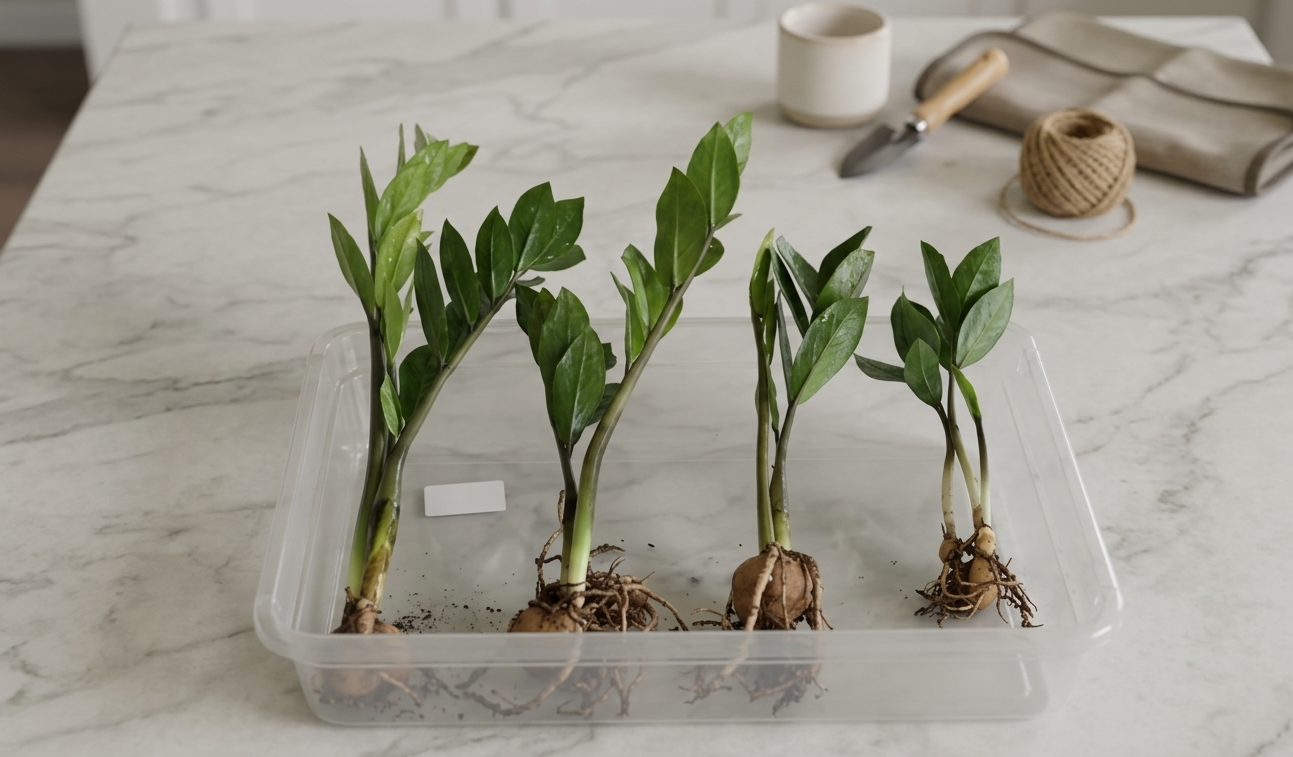
Can You Propagate a ZZ Plant?
Yes — and it’s more straightforward than most houseplant propagation. ZZ plants can be multiplied through division (splitting the rhizomes), stem cuttings in soil, stem cuttings in water, or individual leaf cuttings. Each method works, but they vary significantly in how long they take and how much effort they require.
One note if you own a Raven ZZ plant: the ‘Dowon’ cultivar is patented, which means propagating it for sale or distribution is illegal. Propagating it for your own personal use is a grey area, but something worth knowing.
When Is the Best Time to Propagate a ZZ Plant?
Spring through early summer is ideal. The plant is coming out of its slow winter period and actively pushing new growth — cuttings root faster and divisions establish more quickly when the plant has momentum. That said, ZZ plants can be propagated at any time of year. You’ll just wait longer for roots in fall or winter.
Method 1: Division (Fastest Results)
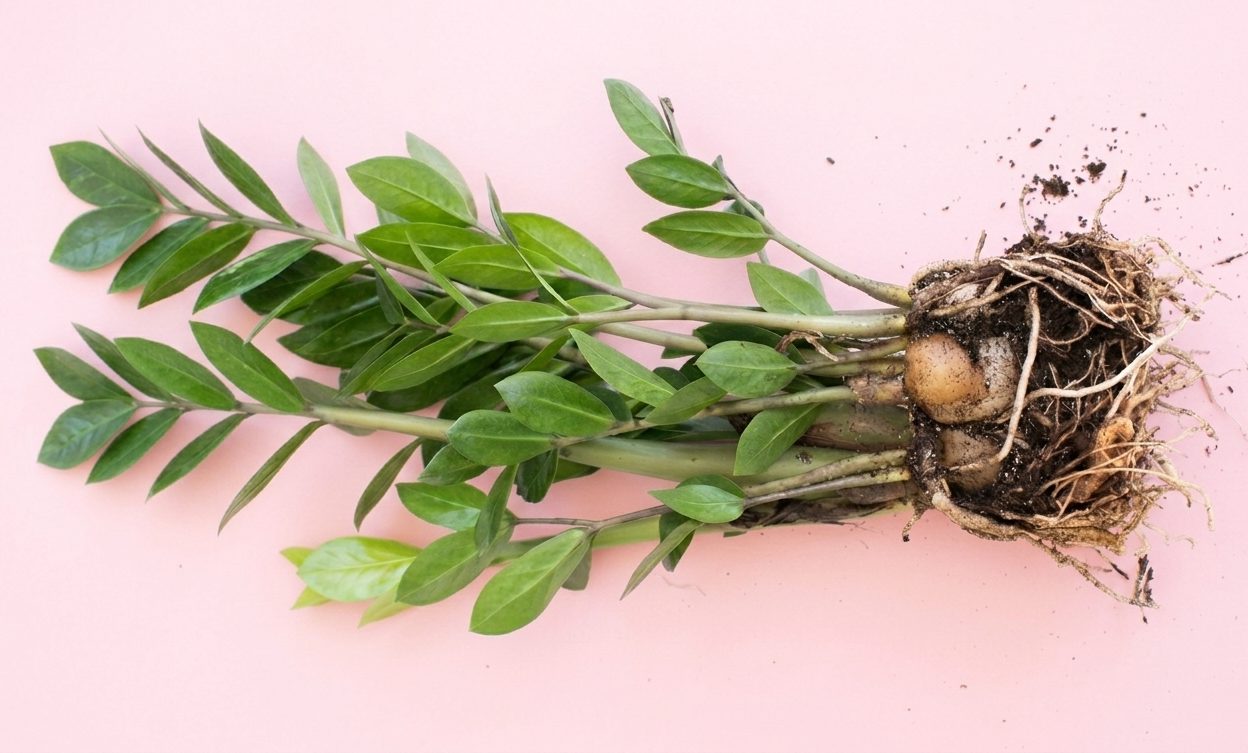
If your ZZ plant has multiple stems growing from separate rhizomes, division is by far the quickest way to get a new plant. You’re not waiting for roots to form — the divided section already has an established root system. I use this method whenever a plant has outgrown its pot and needs repotting anyway. You solve two problems at once.
What You Need
- A pot-bound ZZ plant with multiple rhizomes
- Clean, sharp knife or pruning shears
- Fresh well-draining potting mix
- Two pots with drainage holes
How to Divide a ZZ Plant
- Remove the plant from its pot and gently shake off excess soil to expose the rhizomes.
- Identify natural separation points — clusters of rhizomes that can be separated without cutting through a large root mass.
- Pull apart or cut the rhizomes into sections, making sure each division has at least one stem and a healthy rhizome with some roots attached.
- Let any cut surfaces dry for a few hours before potting.
- Plant each division in fresh potting mix at the same depth it was growing before. Water lightly and place in bright indirect light.
Expect some leaf drop in the first 2–4 weeks as the plant adjusts to its new pot — this is normal. First new growth typically appears within 4–8 weeks, and the division will be fully established in 3–6 months. That’s still far faster than waiting for a cutting to form rhizomes from scratch.
Method 2: Stem Cuttings in Soil
Stem cuttings work reliably — just not quickly. It typically takes 4–6 months to see roots, and the new rhizome that will eventually support the plant takes longer still — sometimes up to a year before the cutting looks like a proper plant. The wait is the main reason people give up on this method too soon. I left my first stem cutting alone for nearly five months with zero visible progress — then one morning there was a firm resistance when I tugged it. Roots.
How to Propagate ZZ Plant from Stem Cuttings
- Cut a healthy stem 3–5 inches long, making sure it includes at least one point where leaves attach. Use a clean knife or scissors — dirty cuts invite rot.
- Let the cut end air-dry for 1–2 hours. Unlike succulents, ZZ cuttings don’t need a long drying period — just enough time for the cut surface to dry slightly before it touches soil.
- Fill a small pot with well-draining mix (perlite-heavy works well for cuttings).
- Insert the cutting about 1–2 inches deep and firm the soil around it.
- Water lightly and place in bright indirect light. Cover loosely with a clear plastic bag or dome to increase humidity around the cutting.
- Check every 2–3 weeks by giving the cutting a very gentle tug. When it resists, roots have formed.
How Long Does ZZ Plant Propagation Take?
For stem cuttings, expect:
| Stage | Timeline |
|---|---|
| Callusing after cut | 12–24 hours |
| First roots forming | 4–8 weeks |
| Roots established, cutting stable | 3–4 months |
| Small rhizome visible | 6–9 months |
| New leaves from cutting | 9–12 months |
The slow timeline isn’t failure — it’s just how ZZ plants work. The rhizome has to develop before the cutting can support significant new growth.
Method 3: ZZ Plant Propagation in Water
Water propagation follows the same process as soil, but you watch the roots develop through the container. You can watch the roots develop through the container as they form — and they often appear slightly faster than in soil — typically 4–8 weeks. The trade-off: water-rooted cuttings need a careful transition to soil since the roots adapt to their growing environment.
How to Propagate ZZ Plant in Water
- Take a stem cutting 3–5 inches long and let it air-dry for 1–2 hours.
- Place the cutting in a glass or jar with enough water to submerge the bottom 1–2 inches of stem, keeping the leaves above the waterline.
- Set in bright indirect light and change the water every 5–7 days to prevent bacterial buildup.
- Once roots are 1–2 inches long, transition to soil. Plant in well-draining mix, water lightly, and keep humidity slightly higher for the first few weeks while the roots adjust.
Don’t leave cuttings in water indefinitely. I once kept one in water for almost four months because the roots looked so good — the transfer to soil knocked it back noticeably, and it took weeks to recover. Water roots are structurally thinner than soil roots; the longer you wait to transfer, the harder the adjustment.
ZZ Plant Leaf Propagation: Does It Work?
Technically, yes. In practice, it’s the method most people regret choosing. A single ZZ leaf will eventually form a small rhizome and then a new plantlet — but “eventually” means 9–12 months at minimum, often longer, before you have anything worth potting up as a plant. The first time I tried it, I honestly thought the leaf had failed for months before anything appeared.
The process: remove a healthy leaf with its petiole (the small stalk attaching it to the stem) intact, let it callus for a day, then plant it upright in a moist, well-draining mix about half an inch deep. Keep it in a warm spot with indirect light and maintain light moisture. Don’t expect visible progress for months.
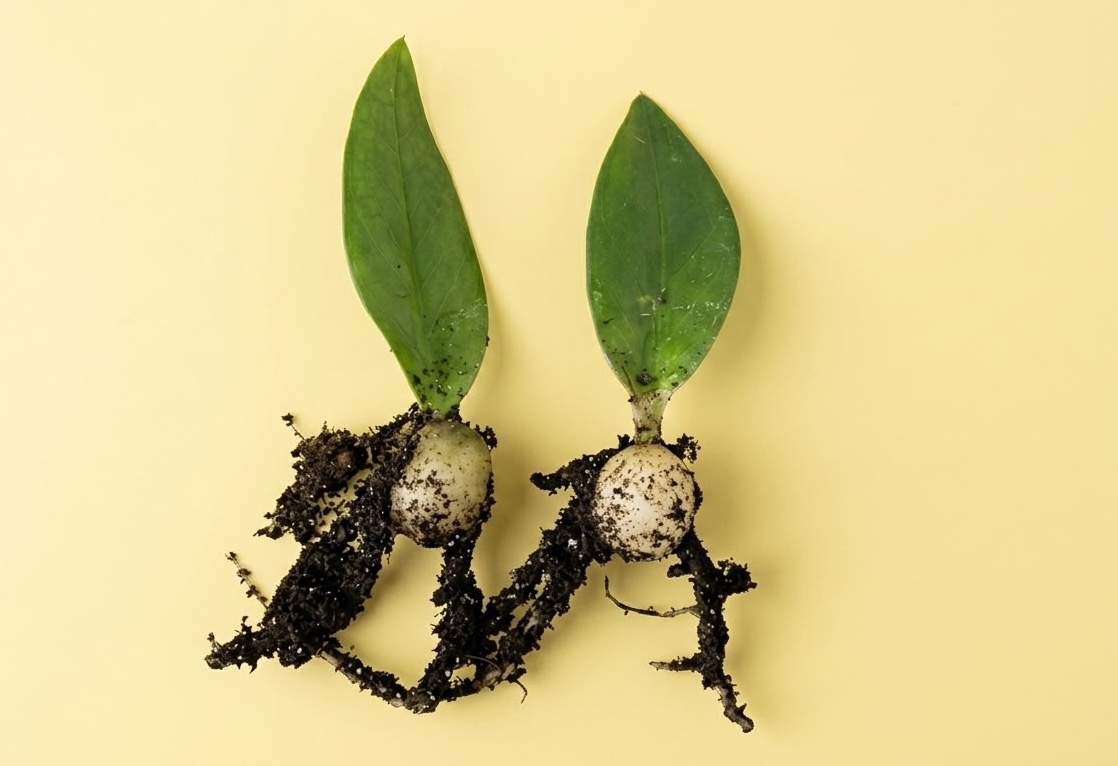
If you have extra leaves from pruning, try it — it’s a genuinely interesting process to watch. Just don’t do it expecting a new plant by next season.
Should You Use Rooting Hormone on ZZ Plant Cuttings?
It helps, but it’s not essential. ZZ plants root without it — the rhizomes store enough energy to eventually push out roots on their own. That said, a rooting hormone powder or gel applied to the cut end before planting can speed up the process by a few weeks and improve the success rate on cuttings that might otherwise rot before rooting.
If you’re propagating in soil, use a powder or gel rooting hormone and coat the bottom inch of the cutting before planting. If you’re propagating in water, skip it — it disperses and doesn’t do much in that environment. Division doesn’t need it at all since you’re working with an established root system.
Why Is My ZZ Plant Cutting Not Rooting?
A few common reasons cuttings stall:
- Too much water. This is the most frequent culprit. Cuttings sitting in wet soil rot before they root. The mix should be barely moist, not wet.
- Not enough light. Cuttings need bright indirect light to develop roots. A dim corner will produce very slow or no progress.
- Cut wasn’t calloused. Putting a fresh-cut stem directly into moist soil often leads to rot at the cut end. Let it dry for at least 12 hours first.
- It’s just too soon. ZZ propagation is genuinely slow. What looks like failure at 6 weeks is often just the plant taking its time. Give stem cuttings at least 3–4 months before concluding they haven’t worked.
Frequently Asked Questions
How long does ZZ plant propagation take?
It depends on the method. Division gives you an established plant almost immediately — a few weeks for it to settle in. Stem cuttings take 3–4 months to root properly and up to a year before the new plant looks substantial. Leaf propagation takes the longest: 9–12+ months before a small plantlet appears.
Can you propagate a ZZ plant in water?
Yes. Take a 4–6 inch stem cutting, let it air-dry for 1–2 hours, then place the base in water. Roots typically form in 4–8 weeks. Transfer to soil once roots are 1–2 inches long — don’t wait too long, as water roots are structurally different from soil roots and the transition gets harder the longer you wait.
What is the fastest way to propagate a ZZ plant?
Division is by far the fastest method. If your ZZ plant has multiple rhizome clusters, you can split them during repotting and have a new established plant within a few weeks. Cuttings take months; division gives you a plant with roots already in place.
Can you propagate ZZ plant from a single leaf?
Yes, but it’s very slow. A single leaf with its petiole intact will eventually form a small rhizome and then a plantlet, but the process takes 9–12 months or longer. Stem cuttings or division are more practical if you want results in a reasonable timeframe.
Why isn’t my ZZ plant cutting rooting?
The most common causes are too much moisture (the mix should be barely damp, not wet), skipping the callusing step before planting, or simply not waiting long enough — ZZ cuttings can take 3–4 months to root. Give it more time before concluding it has failed.