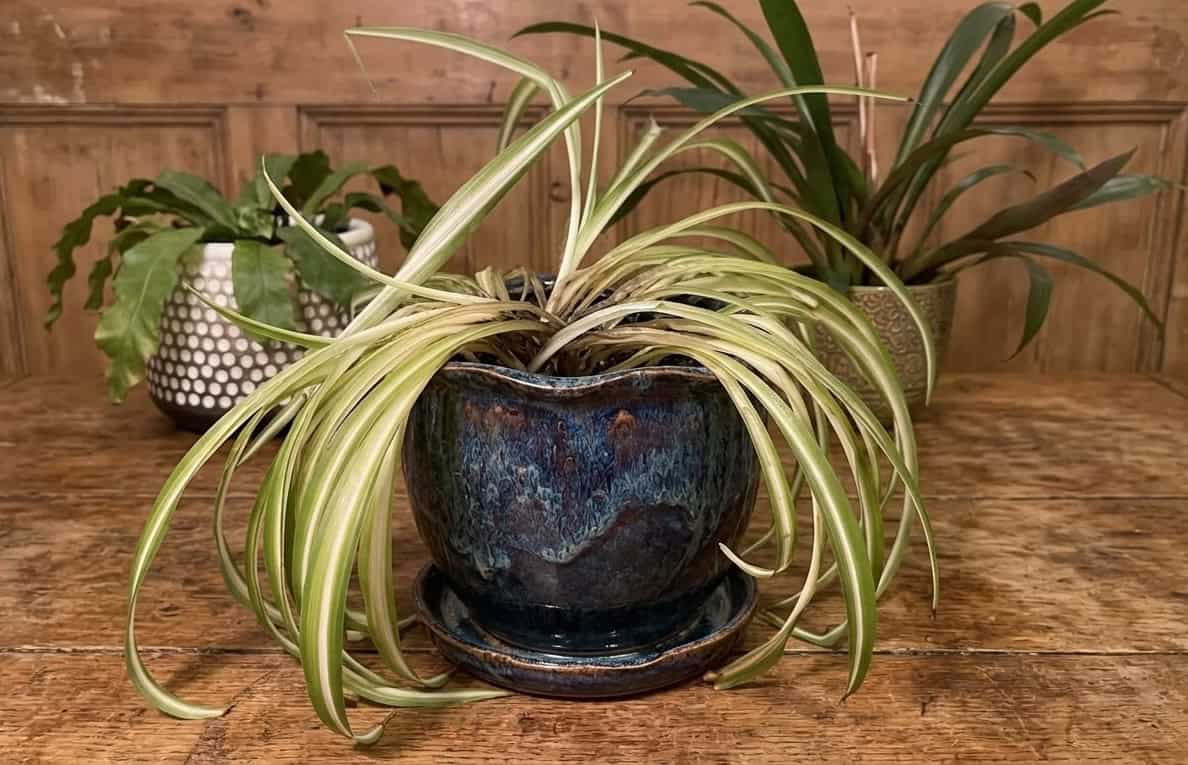
Spider plant problems range from easy fixes to genuinely urgent ones — and the symptoms often look the same at first glance. Brown tips can mean fluoride sensitivity, low humidity, or salt buildup. Yellow leaves might signal overwatering, underwatering, or pests. Getting the diagnosis right is everything, because the wrong fix usually makes things worse.
I’ve been growing spider plants for over 15 years in Zone 8, and I’ve made most of these mistakes myself. This guide covers every common spider plant problem: what’s causing it, how to confirm the diagnosis, and what actually works. For basic spider plant care requirements, start there first.
Quick Visual Diagnosis: What’s Wrong with Your Spider Plant
Before getting into the details, here’s a fast reference. Match your plant’s symptoms to the most likely cause.
| Symptom | Most Likely Cause | Quick Fix |
|---|---|---|
| Brown tips, otherwise healthy | Fluoride in tap water, low humidity, or salt buildup | Switch to distilled water; flush soil |
| Yellow lower leaves, wet soil | Overwatering / root rot | Let dry out; check roots |
| Pale, washed-out leaves | Too little light or fading variegation | Move to brighter indirect light |
| Bleached yellow patches | Direct sun scorch | Move away from direct sun |
| Drooping, dry soil | Underwatering or root-bound | Water thoroughly; check if pot-bound |
| Drooping, wet soil | Overwatering; root rot | Unpot and inspect roots |
| Sticky leaves or surface below pot | Scale insects | Rubbing alcohol on cotton swab; insecticidal soap |
| Fine webbing on leaves | Spider mites | Increase humidity; insecticidal soap |
| No spiderettes forming | Too much light at night; over-fertilizing | Ensure <12 hrs light/day for 3+ weeks; stop feeding |
| Leaves curling inward | Underwatering, heat stress, or root-bound | Water thoroughly; move from heat source; check roots |
| White cottony fuzz on stems or leaf joints | Mealybugs | Rubbing alcohol on cotton swab; insecticidal soap |
| Black or mushy stems at base | Advanced root rot | Unpot, remove dead roots, repot in fresh mix |
Why Does My Spider Plant Have Brown Tips?
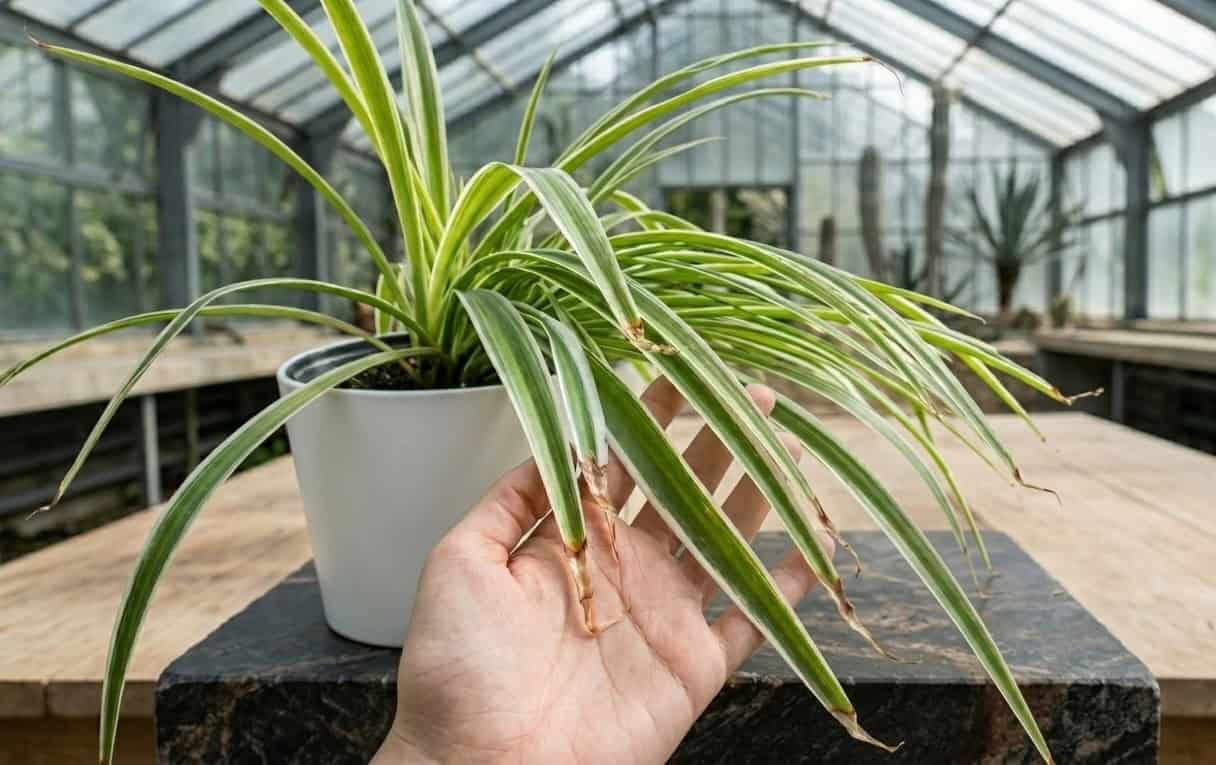
Brown tips are the most common spider plant complaint — and the most misdiagnosed. Most people assume underwatering and start watering more, which either does nothing or introduces root rot. The actual cause in the vast majority of cases is fluoride sensitivity, low humidity, or salt buildup from fertilizer.
Fluoride and Chlorine in Tap Water
Spider plants are particularly sensitive to fluoridated water. According to UF/IFAS, the plant accumulates fluoride in its leaf tissue, and the damage shows up as tip burn that starts at the very end of the leaf and moves inward as exposure continues. NC State Extension specifically advises against watering with tap water for this reason.
If your municipal water is fluoridated (most US cities treat to 0.7 ppm), switch to distilled water or collected rainwater. Letting tap water sit overnight reduces chlorine but doesn’t remove fluoride — you need distilled or filtered water for that.
I noticed my spider plants getting progressively worse brown tips over about three months despite consistent watering. The only thing that changed the outcome was switching to rainwater I collect in buckets off my gutters. Within six weeks, the new growth was coming in completely clean. I hadn’t changed anything else.
Low Humidity
Low humidity is the second most common cause, especially in winter when indoor heating dries out the air. Missouri Botanical Garden lists low humidity alongside fluoride as a primary trigger for leaf tip burn. Even well-watered plants show tip burn in very dry conditions because the leaf margins desiccate faster than the plant can replace moisture.
A pebble tray with water under the pot, grouping plants together, or a small humidifier nearby all raise local humidity without overwatering. Misting is less effective — it provides a very brief humidity spike and can encourage fungal spots if water sits on leaves.

Too Much Fertilizer or Salt Buildup
Excess fertilizer — or fertilizing too frequently — causes soluble salts to accumulate in the soil, which burns leaf tips from the inside out (Clemson HGIC). A white crust on the soil surface or along the pot rim is a sign of salt buildup.
Fix it by flushing the soil: run water through the pot slowly for several minutes and let it drain completely. Do this every three to four months. Resume fertilizing with half the recommended dose, once a month in spring and summer only. Don’t feed in fall and winter.
Should You Cut the Brown Tips Off?
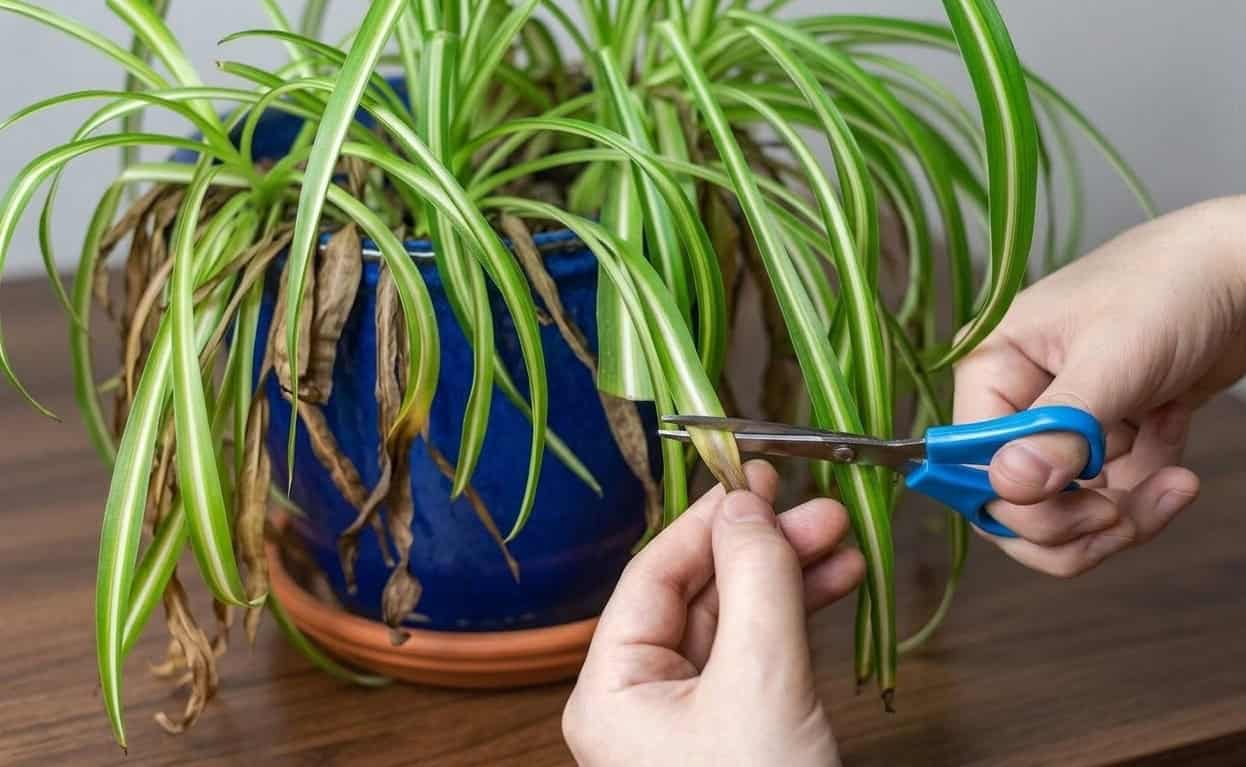
Yes — but do it right. Brown tips don’t turn green again; trimming removes the visual problem without fixing the underlying cause. Use clean scissors and cut at an angle that follows the natural taper of the leaf. Cutting straight across looks unnatural and draws attention to the cut. Fix the cause first, or the new growth will brown too.
Why Are My Spider Plant Leaves Turning Yellow?
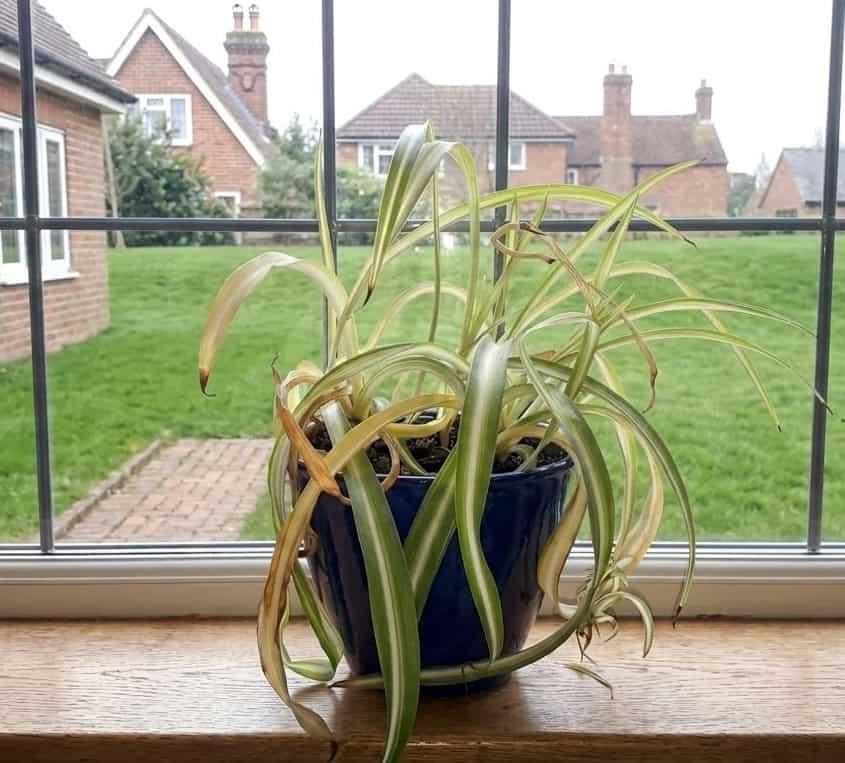
Yellow leaves have four main causes, and they can look similar in the early stages. The pattern and location of the yellowing is your best diagnostic clue.
Overwatering
Yellowing lower leaves that progress upward — often mistaken for underwatering — is a hallmark of overwatering, according to Missouri Botanical Garden. The roots suffocate in waterlogged soil and die from lack of oxygen. The plant can’t take up water even when the soil is wet, which creates the wilting that gets misread as drought.
Check the soil: stick your finger 1 inch deep. If it’s wet and the leaves are yellowing, stop watering and let the soil dry fully before watering again. In winter, extend the interval significantly. Spider plants have fleshy tuberous roots that store moisture — they need less water than you think.
Too Little or Too Much Light
In very low light, the variegation — the white or cream stripes — fades as chlorophyll production increases. Pale, yellow-green leaves with disappearing stripes usually mean insufficient light. Move to a bright location with indirect light; an east-facing window works well. The opposite problem is direct afternoon sun through a window, which scorches the leaves, causing bleached yellow patches (Missouri Botanical Garden). Spider plants need bright indirect light, not full sun.
Why Are My Spider Plant’s White Stripes Fading?
Loss of variegation — the white or cream stripes turning solid green — is a separate problem from general yellowing. It happens when the plant isn’t getting enough light to maintain the variegated pattern. Chlorophyll production ramps up and overtakes the lighter tissue. The fix is straightforward: move the plant to a brighter location with indirect light. The existing leaves won’t recover their stripes, but new growth will come in variegated once light improves. Putting a variegated spider plant in deep shade for extended periods eventually produces an entirely green plant.
Nutrient Deficiency
Uniform yellowing throughout the plant — not just tips, not just lower leaves — often indicates nitrogen deficiency, especially in a pot that hasn’t been fertilized in over a year. Apply a balanced liquid fertilizer (10-10-10) at half strength once a month during the growing season. Skip fall and winter.
Pests
Aphids and whiteflies both cause yellowing and leaf distortion as they drain sap from the plant (Clemson HGIC). Check the undersides of leaves and new growth for clusters of small insects. Treat with insecticidal soap spray every five to seven days for three to four weeks.
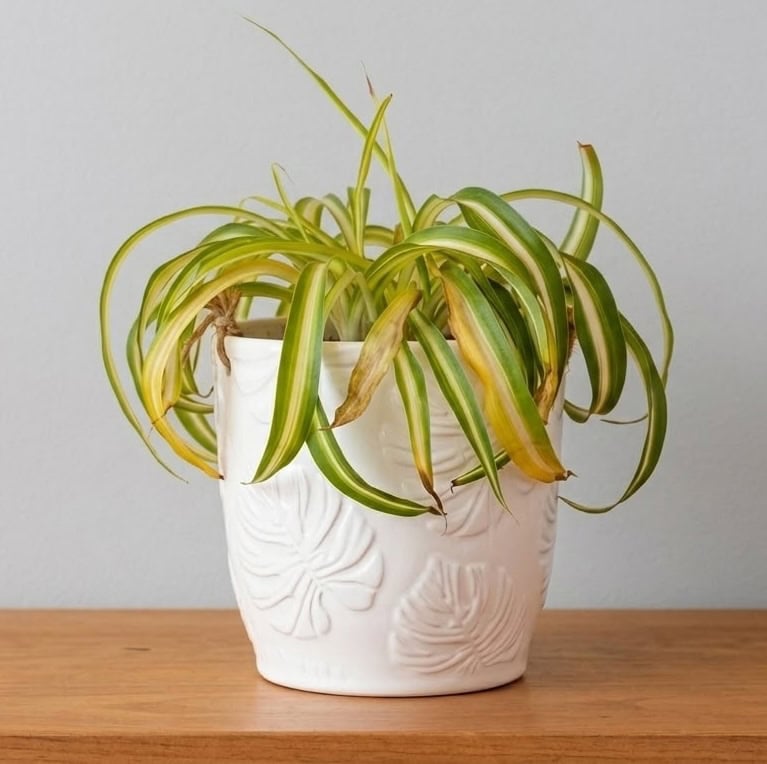
Why Is My Spider Plant Drooping or Wilting?
Drooping signals opposite problems — too much water or too little. Here’s how to tell them apart.
| Sign | Underwatering | Overwatering |
|---|---|---|
| Soil | Dry, pulling away from pot edges | Wet or soggy |
| Leaf texture | Crispy, dry, papery | Soft, limp, translucent |
| Where it starts | Leaf tips first | Lower leaves first, moving up |
| Root color | Tan, dry | Brown, mushy, may smell sour |
| Fix | Water thoroughly; check drainage | Let dry out; unpot and check roots |
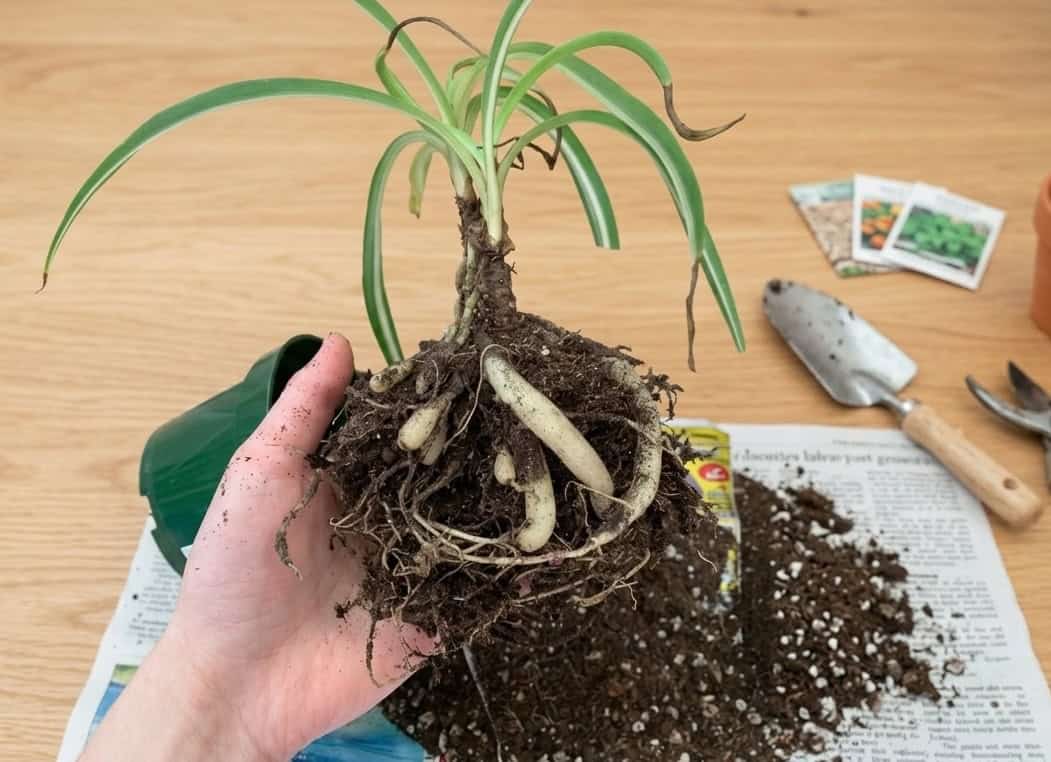
Missouri Botanical Garden specifically warns about this confusion: “People often mistake overwatering-induced wilting for lack of water and add more water” — which accelerates root rot. When in doubt, unpot and look at the roots. White and firm means healthy. Brown and mushy means rot.
Root-Bound Plants
NC State Extension notes that root-bound plants wilt because there isn’t enough soil to hold water for all the roots. Spider plants are heavy rooters — their fleshy tuberous roots fill pots quickly. If your plant dries out within a day or two of watering, or if roots are visible through drainage holes or circling the bottom, it’s time to repot. Go up one pot size (1–2 inches wider), not more.
Why Are My Spider Plant Leaves Curling?
Curling leaves — inward or upward — usually means the plant is stressed from underwatering or heat exposure. When the soil dries out completely, leaves curl to reduce surface area and slow moisture loss. Move the pot away from heating vents, radiators, and direct sun. Water thoroughly and most plants respond within a day or two once the roots rehydrate, though heavily stressed plants may take longer.
One exception: curly spider plant (Bonnie) is a cultivar that curls naturally — that’s its normal growth pattern, not a problem. If you have a Bonnie and the curl is tight and uniform across the whole plant, it’s healthy. If only some leaves curl while others don’t, or the curl is accompanied by crispy edges, that’s stress.
How to Identify and Fix Spider Plant Root Rot
Root rot is serious but salvageable if caught early. It’s caused by consistently wet soil or poor drainage (Clemson HGIC, Missouri Botanical Garden). The plant can look fine above soil while roots are already compromised below.
Signs of root rot:
- Yellowing lower leaves progressing upward
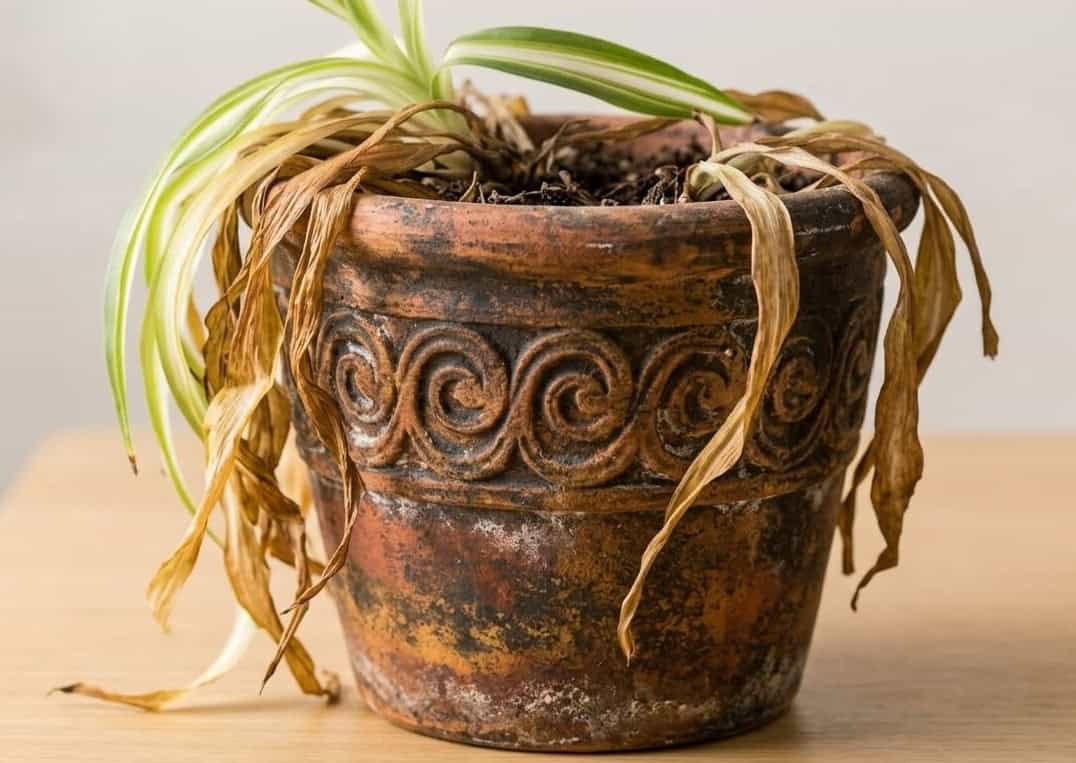
- Dark brown or black leaves in advanced stages
- Soft, mushy stems at the base
- Foul or sour smell from the soil
- Roots that are brown, soft, and fall apart when touched — healthy roots are white and firm (UC IPM)

How to treat it:
- Unpot the plant and remove all soil
- Rinse roots gently under room-temperature water
- Cut away all brown, mushy roots with sterilized scissors
- Let the root ball air dry for one to two hours
- Repot in fresh, well-draining mix in a clean pot with drainage holes
- Water sparingly for the first few weeks
I made the overwatering mistake with a spider plant I kept in a north-facing bathroom. It drooped, I watered more, it drooped worse. When I finally unpotted it, half the roots were black and mushy. I cut away everything dead, repotted into dry gritty mix, and it recovered — but it took about two months and I lost a lot of growth that could have been saved by catching it earlier.
Why Is My Spider Plant Sticky? (Scale Insects)
Sticky residue on the leaves or on the surface directly beneath your plant is almost always scale insects. Scales feed by piercing stems and leaves to extract sap, secreting a sticky substance called honeydew as a byproduct (Clemson HGIC). You’ll often see small brown bumps on stems or undersides of leaves that blend in easily and get missed entirely.
This is one of the most underreported spider plant problems — most guides jump to brown tips and skip scale. If your plant looks dull and lackluster with no obvious cause, check for stickiness and look closely at the stems.
Treatment:
- Manual removal with a cotton swab dipped in rubbing alcohol — tedious but effective
- Insecticidal soap spray every five to seven days for three to four weeks (targets the crawler stage)
- Neem oil as follow-up for prevention
- Isolate the plant immediately — scale spreads easily
I once spent two weeks trying to figure out why one of my spider plants had lost its shine. There was a faint stickiness on the shelf underneath. The scale bumps were tiny and matched the stem color almost exactly. Three rounds of alcohol swabs over a month cleared it fully — one round is never enough.
Common Spider Plant Pests and How to Get Rid of Them
Clemson HGIC and Missouri Botanical Garden list the same four core pests: whiteflies, spider mites, scale, and aphids.
Spider Mites
Spider mites thrive in hot, dry conditions. Look for fine webbing on leaf undersides and tiny pale stippling on the upper surface — the plant looks dusty or faded overall. Increase humidity to make the environment less hospitable, then spray with insecticidal soap or neem oil every five to seven days. Multiple treatments are necessary since eggs are resistant to most sprays.
Aphids
Aphids cluster on new growth and cause yellowing and distorted leaves. They reproduce fast — a small colony becomes a serious infestation within a week. Knock them off first with a strong stream of water, then follow immediately with insecticidal soap. Check new growth weekly for at least a month.
Whiteflies
Whiteflies rise in a white cloud when you disturb the plant. They cause yellowing and leaf drop. Yellow sticky traps help monitor the population; insecticidal soap or neem oil treats active infestations. Whiteflies spread to nearby plants quickly — isolate affected plants.
Fungus Gnats
Fungus gnats are tiny black flies hovering around moist soil. The adults are harmless, but their larvae feed on root hairs and weaken the plant. The fix: let the soil dry more thoroughly between waterings — larvae need moisture to survive. Yellow sticky traps catch adults. For persistent infestations, beneficial nematodes (Steinernema feltiae) added to the soil target larvae directly.
Mealybugs
Mealybugs look different from scale — instead of flat brown bumps, they leave white cottony or waxy clusters, usually in leaf axils (where leaves meet the stem) and on undersides of leaves. If your spider plant has white fuzz, especially concentrated at stem joints, mealybugs are the most likely culprit. Treatment is the same as scale: a cotton swab dipped in rubbing alcohol, followed by insecticidal soap spray every five to seven days. Check every few days for three to four weeks — mealybugs are persistent across multiple life stages.
Why Won’t My Spider Plant Produce Babies?
Spider plants form spiderettes under two specific conditions. Most plants that aren’t producing babies are missing one or both.
1. Short day length. Both NC State Extension and Missouri Botanical Garden confirm that spiderettes form when the plant receives less than 12 hours of light per day for at least three consecutive weeks. This happens naturally in fall. If your spider plant is near artificial lights that stay on late into the evening, it may never get the uninterrupted darkness it needs.
2. Low nitrogen. Overfeeding — particularly high-nitrogen fertilizers — drives leafy growth at the expense of plantlet formation (NC State Extension, UC ANR). A lush, full-looking plant with zero babies is a classic sign of over-fertilizing. Clemson HGIC notes that plants produce most offshoots when days shorten naturally in fall.
Fix: move the plant to a spot with natural darkness after sundown, stop fertilizing for four to six weeks, and let the shorter fall days do the work. Most plants respond within two to three months.
I had a large spider plant I’d brought inside for winter in my Zone 8 garden — beautiful, absolutely no babies. It sat near my reading lamp that stayed on until 11pm. After I moved it to a different shelf with complete darkness by 8pm, it started sending out runners within about five weeks. Nothing else changed.
Mistakes That Make Spider Plant Problems Worse
Flushing brown tips with tap water. If fluoride is the cause, watering with more fluoridated tap water continues the damage. Use distilled or rainwater for the flush itself.
Misting to raise humidity. Misting provides a very brief spike and can leave moisture on leaf surfaces, encouraging fungal spots. A pebble tray or humidifier is more effective and consistent.
Moving the plant when it droops. If the real cause is root rot, changing the location doesn’t help — it delays diagnosis. Check the roots first.
Cutting brown tips straight across. It looks worse than the original damage and draws the eye directly to the cut. Follow the natural leaf angle instead.
Adding fertilizer to fix slow winter growth. Slow growth in fall and winter is normal dormancy, not deficiency. Fertilizing then causes salt buildup that creates the very brown tips you’re trying to prevent.
Spider Plant Problems: FAQ
Why are my spider plant leaves turning brown and crispy?
Crispy brown tips are almost always caused by fluoride or chlorine in tap water, low humidity, or salt buildup from excess fertilizer. Mushy brown is different — that indicates rot from overwatering.
Should I cut the brown tips off my spider plant?
Yes — they won’t green up again. Cut at an angle following the leaf shape with clean, sharp scissors. Fix the underlying cause first, or new growth will brown the same way.
How do I know if my spider plant is dying?
A plant in serious decline has leaves turning uniformly brown or black (not just tips), mushy or collapsed stems at the base, and roots that are dark and fall apart when touched. If only the tips are brown and new growth is emerging, the plant is dealing with a fixable problem.
Can a dying spider plant be saved?
Usually yes, unless root rot has reached 100% of the root system. Cut away all dead roots, repot in fresh dry mix, and give it several weeks. Spider plants have resilient root systems and often recover from what looks like a terminal state.
What does an overwatered spider plant look like?
Soft, yellowing lower leaves, soggy soil, and sometimes a sour smell from the pot. Unlike underwatering, the leaves feel limp and almost translucent rather than crispy or papery.
Why are my spider plant leaves turning pale?
Pale leaves with fading variegation typically mean insufficient light. Move to a brighter location with indirect light. If pale leaves also have brown tips, low humidity or fluoride may also be contributing.
Should I remove yellow leaves from my spider plant?
Yes — yellow leaves don’t recover. Remove them cleanly at the base to redirect the plant’s energy to healthy growth. But removing leaves treats the symptom, not the cause. Identify why they’re yellowing first — otherwise more will follow.
What is the white fuzz on my spider plant?
White cottony clusters at leaf bases and stem joints are mealybugs. Treat with a cotton swab dipped in rubbing alcohol, then follow up with insecticidal soap every five to seven days. Scale insects look different — flat brown bumps, not white or fluffy.
Why is my spider plant leaning to one side?
Spider plants grow toward their light source. Rotate the pot a quarter turn every two to three weeks to encourage even, symmetrical growth.
Are spider plant problems dangerous to cats?
No — spider plants are non-toxic to cats and dogs according to ASPCA. See our full guide on whether spider plants are toxic to cats and dogs.
Recommended Products
As an Amazon Associate, Two Leaf Garden earns from qualifying purchases.