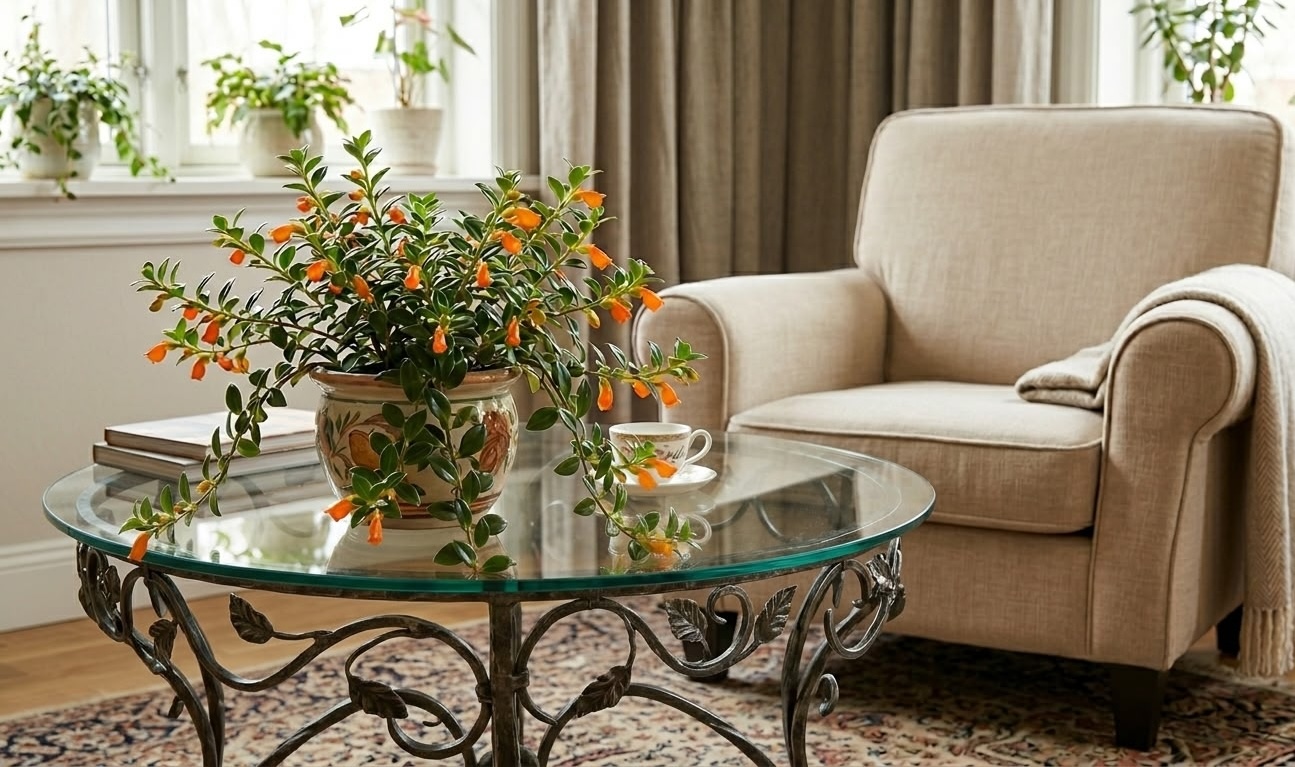
The goldfish plant earns its name the moment it blooms: dozens of small orange flowers curl and pucker at the lip, shaped almost exactly like a fish mid-leap. It’s one of those houseplants that looks like it belongs in a botanical garden, yet it actually does fine on a bright windowsill if you know what it wants — and what it absolutely doesn’t.
The catch is that “goldfish plant” refers to a plant that stops flowering the moment conditions aren’t quite right. Most people buy it in bloom at a nursery, bring it home, and never see another flower. That’s not bad luck — it’s a care problem with a specific fix. This guide walks through everything: light, water, humidity, the blooming trigger most articles skip, and how to propagate it from cuttings in a glass of water.
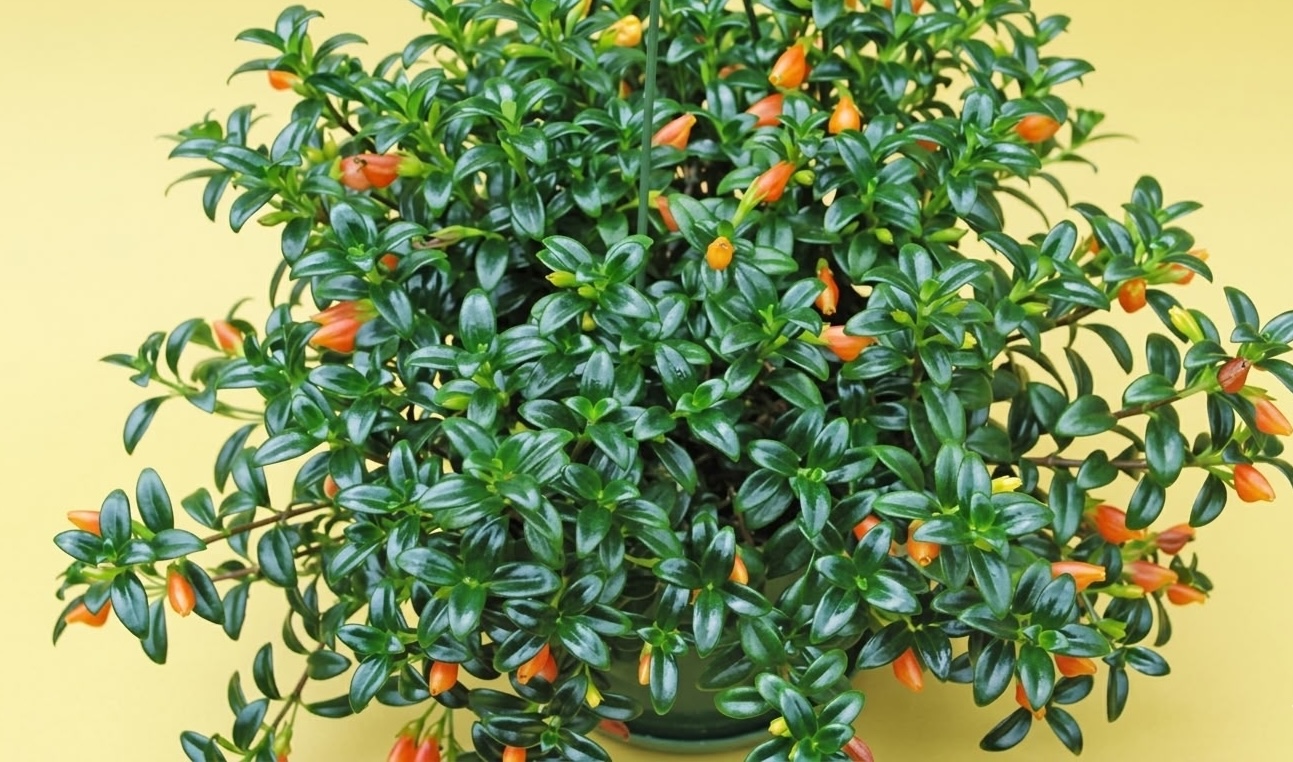
Goldfish Plant Quick Care Overview
| Factor | Requirement |
|---|---|
| Scientific name | Nematanthus gregarius |
| Common names | Goldfish plant, Guppy plant |
| Family | Gesneriaceae |
| Light | Bright indirect light, 4–6 hours daily |
| Water | When top inch of soil is dry; reduce in fall |
| Humidity | 50–60%+ |
| Temperature | 60–80°F (15–27°C); avoid below 50°F |
| Soil | Well-draining, slightly acidic, epiphyte mix |
| Fertilizer | Balanced liquid monthly, spring–summer; stop in fall |
| Bloom season | Spring and fall after a cool rest period |
| Propagation | Stem cuttings, roots in 3–4 weeks |
| Toxicity | Not listed on ASPCA toxic plant database |
What Is a Goldfish Plant?
Nematanthus gregarius is a tropical epiphyte native to Brazil, where it grows clinging to tree bark in the Atlantic Forest understory. The genus name comes from Greek: nema (thread) and anthos (flower), referring to the slender flower stalks. In the wild, it’s pollinated by hummingbirds drawn to those bright tubular orange flowers.
You’ll sometimes see Columnea species sold under the “goldfish plant” label too — particularly Columnea gloriosa. Both belong to the Gesneriaceae family and have similar care needs, but Nematanthus gregarius is the one most commonly stocked in US garden centers. The flowers are the giveaway: Nematanthus blooms are plumper and more round-bellied, while Columnea flowers are longer and more tubular.
Indoors, goldfish plants grow as trailing or semi-cascading plants, with stems reaching 12–36 inches long. The glossy, dark green leaves are small and slightly waxy — an adaptation to the humid but well-drained conditions of their native canopy habitat. That waxy leaf surface is also why the plant tolerates lower humidity better than many tropicals, though it still prefers a humid environment.
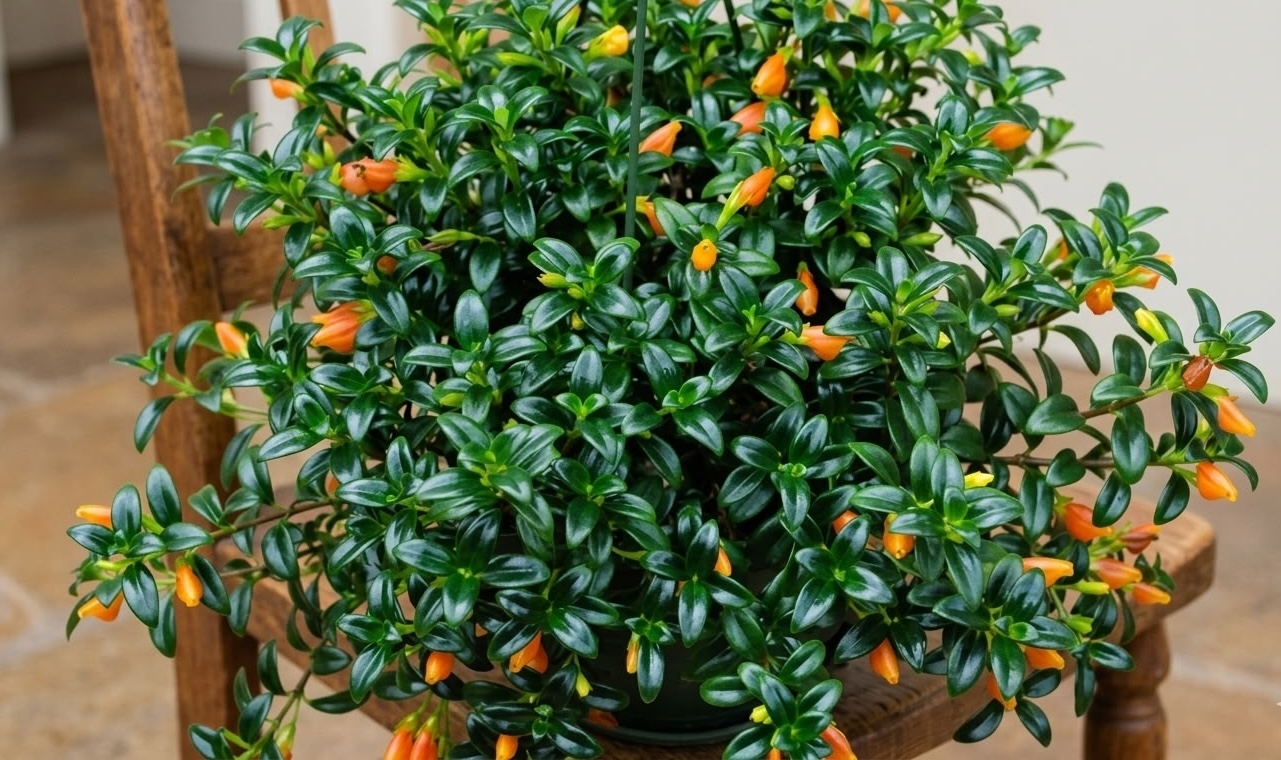
Common Goldfish Plant Varieties
Most garden centers stock Nematanthus gregarius without specifying a cultivar — and in most cases that unnamed plant is one of the most reliable bloomers available. Named varieties do exist and are sold through specialty growers:
- ‘Tropicana’ — orange flowers with red striping, one of the most prolific bloomers; widely available through specialty nurseries
- ‘Black Gold’ — striking dark burgundy leaf undersides, standard orange flowers; grown as much for foliage as flowers
- ‘Green Magic’ — described by growers as the most reliable indoor bloomer; compact growth, slightly smaller flowers
Care requirements are identical across varieties — the same light, watering, humidity, and fall rest protocol applies to all of them. If you’re choosing based on bloom performance rather than aesthetics, any compact Nematanthus gregarius from a reputable source will perform similarly.
Light: Bright Indirect Is Non-Negotiable
Get the light wrong and nothing else matters. Too little light and the plant stays green but never blooms. Too much direct sun and the leaves bleach yellow and the flowers drop before they open.
How Much Light Does a Goldfish Plant Need?
Goldfish plant grows best in bright indirect light — the kind you’d get a few feet back from a south- or east-facing window. A north-facing windowsill almost never works; west-facing works if the afternoon sun doesn’t hit the leaves directly.
A practical test: if you can comfortably read a book in natural light at that spot without straining, there’s enough light for the plant to grow. If you want it to bloom consistently, the light should be bright enough to cast a faint shadow at midday.
Outdoors light levels in summer can be too intense in full sun but excellent in dappled shade — under a porch overhang or the canopy of a deciduous tree works well in USDA zones 10–11 where it can stay outside year-round.
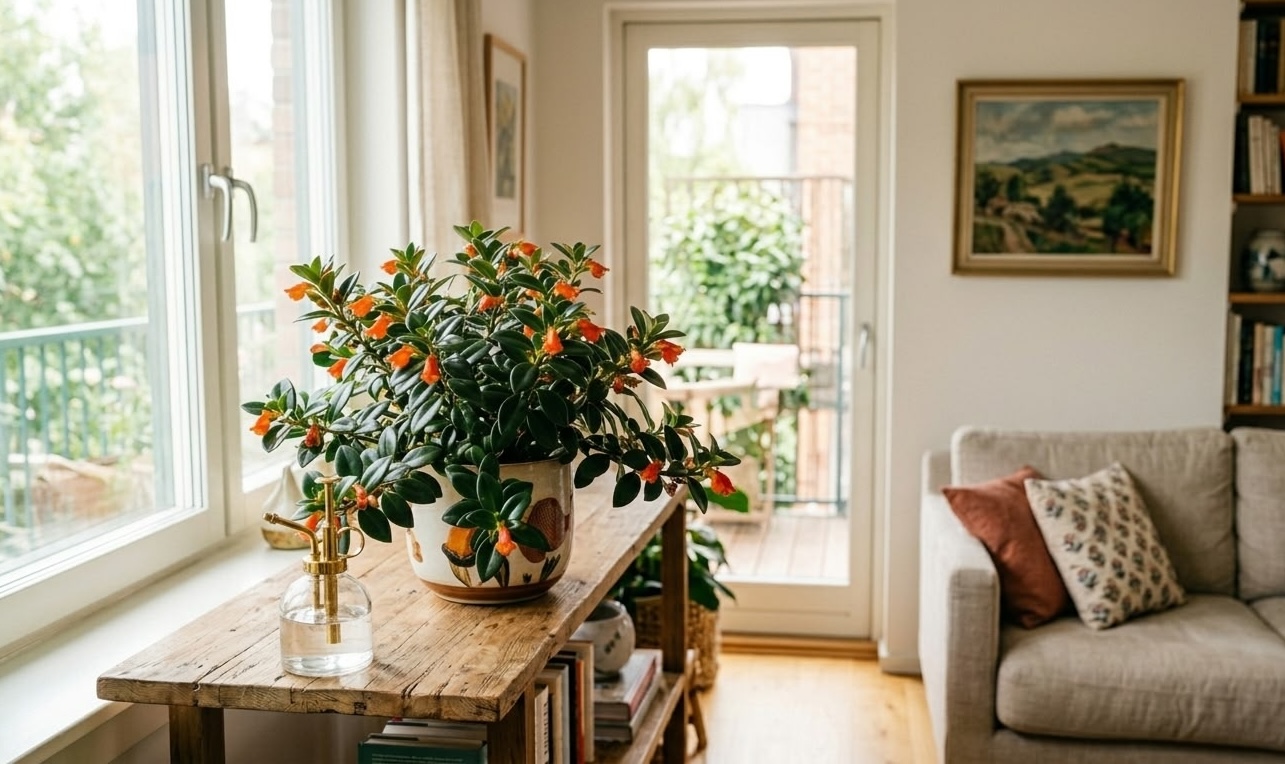
Can a Goldfish Plant Grow Under Artificial Light?
Yes, and it does well under it. A full-spectrum LED grow light positioned 6–12 inches above the plant for 12–14 hours a day gives enough intensity for both growth and blooming. If you’re growing it in a room with no good natural light, artificial light is a realistic substitute, not just a last resort.
One thing to watch: if you’re using artificial light to try to trigger blooming, you’ll need to deliberately shorten the light period to 10–11 hours in fall. More on that in the blooming section.
How to Water a Goldfish Plant
The goldfish plant is a semi-succulent epiphyte — it stores some water in its waxy leaves and is more forgiving of a missed watering than of sitting in soggy soil. Overwatering is the most common reason these plants decline.
Water when the top inch of soil feels dry. In a 6-inch pot during summer, that usually means every 5–7 days. In winter or fall when you’re triggering blooming, stretch that to every 10–14 days. Always water thoroughly until it runs out of the drainage holes, then empty the saucer.
Signs You’re Overwatering
- Leaves turning yellow starting with lower or older leaves
- Leaves feel soft or mushy rather than firm
- Stem base feels soft or looks dark at the soil line
- Soil stays wet more than 10 days after watering
- Leaves dropping in clusters, not just occasional shedding
If the stem base has gone soft and brown, that’s root rot — the plant may be unsalvageable at the roots, but stem cuttings taken from healthy upper growth can still be propagated.
Signs You’re Underwatering
- Leaves look slightly wrinkled or feel less firm than usual
- Soil is pulling away from the pot edges
- Plant wilts but recovers quickly after watering
- Leaf edges dry out or crisp
Cassie keeps her goldfish plant in a terracotta pot specifically because it dries out faster than plastic — she checks it every 4–5 days and has never had rot since making the switch.
Humidity and Temperature
Does a Goldfish Plant Need a Humidifier?
It prefers 50–60% relative humidity, which is above average indoor humidity (most US homes run 30–50% in summer and drop to 20–30% in winter when heating is on). If your home is in the lower range of that, a small ultrasonic humidifier placed 18–24 inches from the plant makes a noticeable difference in leaf health and flower production.
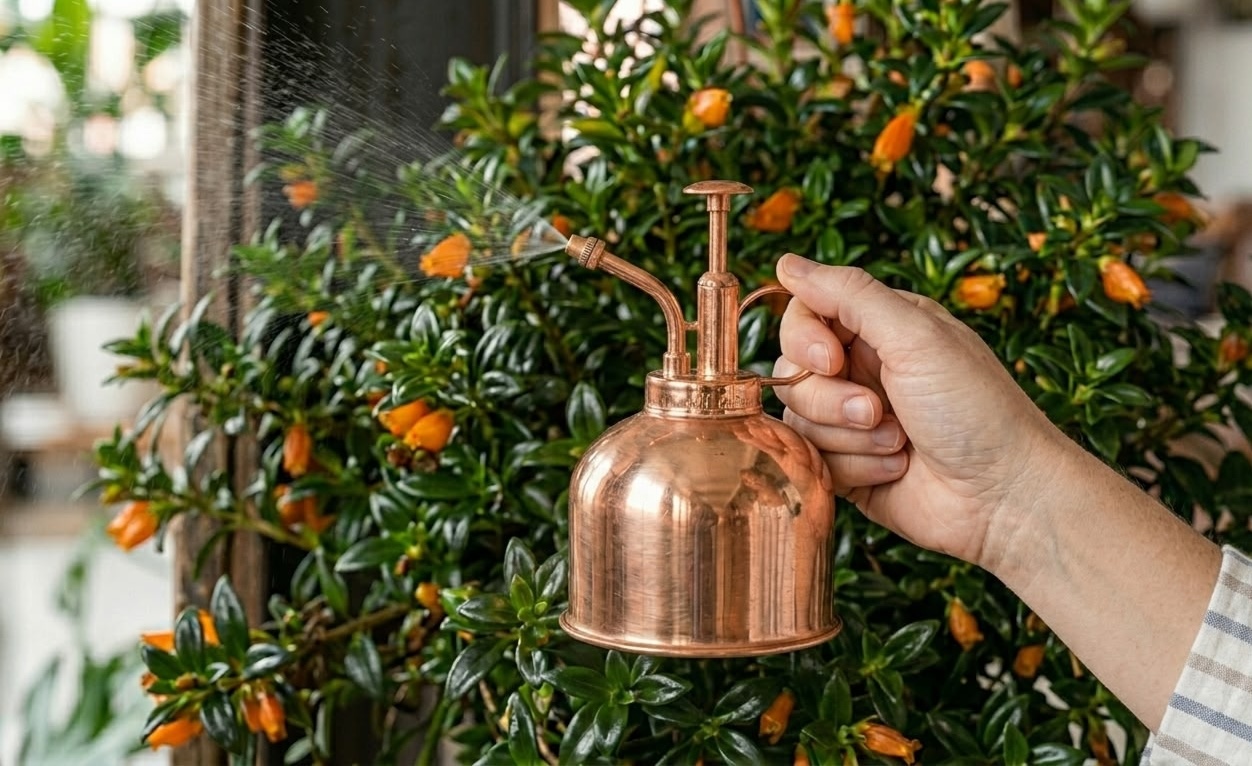
Grouping it with other plants and placing the pot on a pebble tray with water are lower-impact options, but neither raises ambient humidity as reliably as a humidifier. Misting the leaves is fine occasionally but doesn’t meaningfully increase humidity — water evaporates too fast to matter.
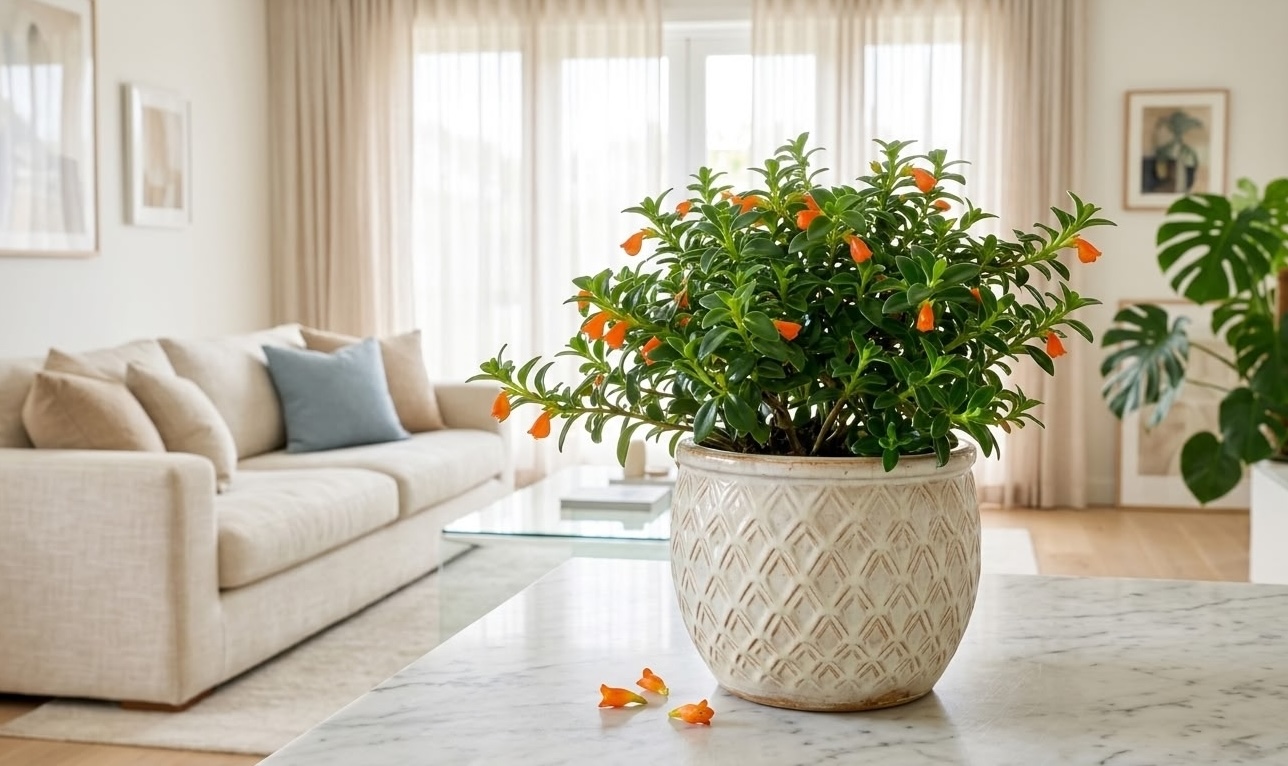
For peace lily owners: if you already run a humidifier for that plant, your goldfish plant will be happy in the same room. Both need similar humidity ranges.
Temperature: Stay Above 50°F
Goldfish plants grow best between 60–80°F. NC State Extension confirms they cannot tolerate temperatures below 50°F — exposure to that level causes leaf drop fast, sometimes within 24 hours. The upper limit matters just as much: above 80°F, the plant will also rapidly shed leaves, so avoid placing it near heat vents or in a hot south window in summer.
Keep them away from drafty windows in winter and air conditioning vents in summer. A moderate temperature drop in fall — to the low 60s°F at night — is actually useful for triggering blooms. That’s different from cold stress; it’s a gentle cool-down, not a chill.
Soil, Pot, and Repotting
Best Soil Mix for a Goldfish Plant
Because goldfish plant is an epiphyte, it needs a mix that drains fast and stays airy rather than compacting. Standard potting soil holds too much water and tends to suffocate the roots.
A reliable mix: two parts peat-based potting mix (or coco coir) plus one part perlite. You can also use an African violet mix straight from the bag — it’s slightly acidic and drains well, which suits Gesneriaceae plants generally. Avoid heavy garden soil or mixes with a lot of added moisture-retaining crystals.
Target soil pH: 5.8–6.5 (slightly acidic). Most standard potting mixes fall in this range without any amendments.
When to Repot a Goldfish Plant
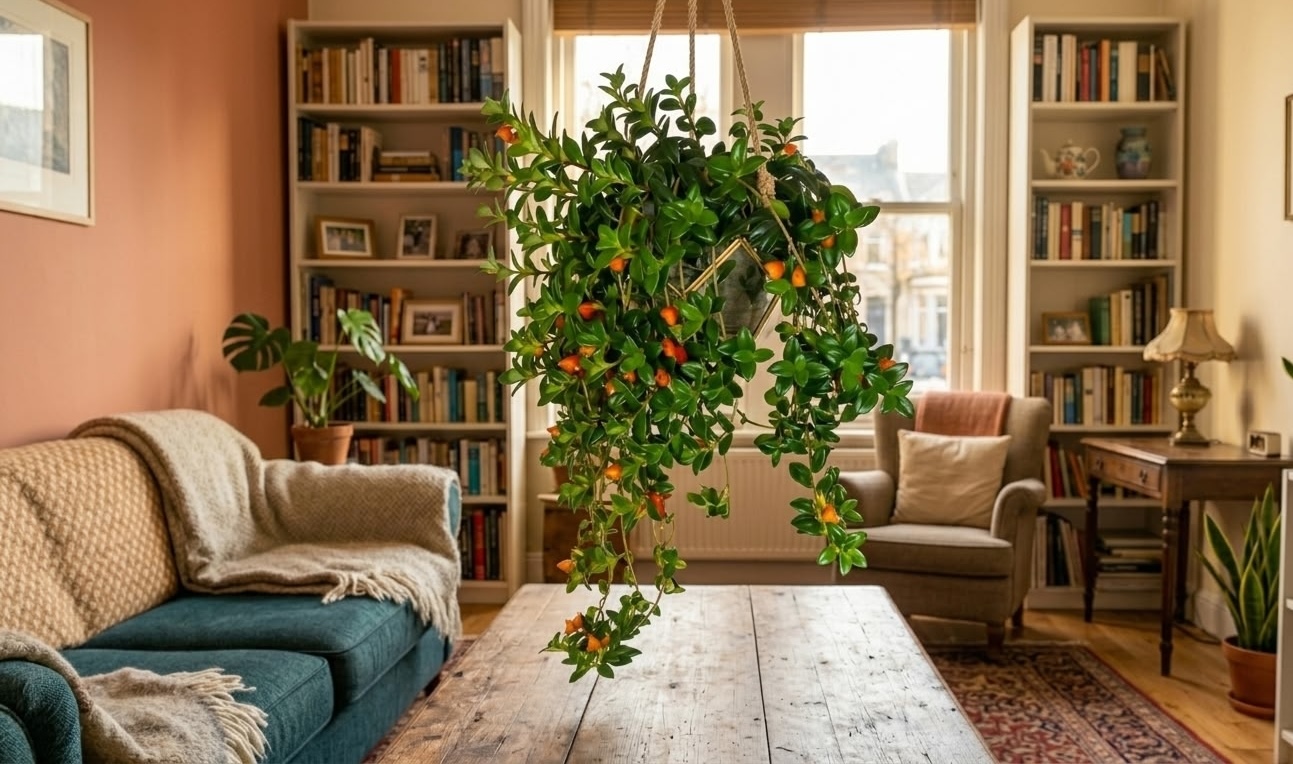
Repot when roots start emerging from drainage holes or circling visibly at the soil surface — usually every 2 years. Choose a pot only one size up (1–2 inches larger in diameter); oversized pots hold excess moisture around the roots.
Best time to repot: early spring, before the main growing season starts. Avoid repotting when the plant is actively blooming.
One counter-intuitive fact: goldfish plants are slightly bloom-prone when slightly root-bound. If yours is in a proportionate pot and blooming well, there’s no reason to move it up a size.
Fertilizing
Feed with a balanced liquid fertilizer (10-10-10 or 20-20-20 diluted to half strength) monthly from March through August. In September, switch to a bloom-booster fertilizer with higher phosphorus (like 7-9-5 or similar) to support flower bud formation — and stop fertilizing entirely by October to let the plant enter its rest period.
Over-fertilizing, particularly with too much nitrogen, produces lush green growth at the expense of flowers. If your goldfish plant has a lot of long leafy stems but never blooms, excess nitrogen is a common culprit — cut fertilizing back and let it go lean for a season.
How to Get a Goldfish Plant to Bloom
This is the question most care guides answer vaguely or not at all. Here’s what actually triggers blooming in Nematanthus: a combination of shorter days, slightly cooler temperatures, and reduced watering in fall — mimicking the dry season in its native Brazil.
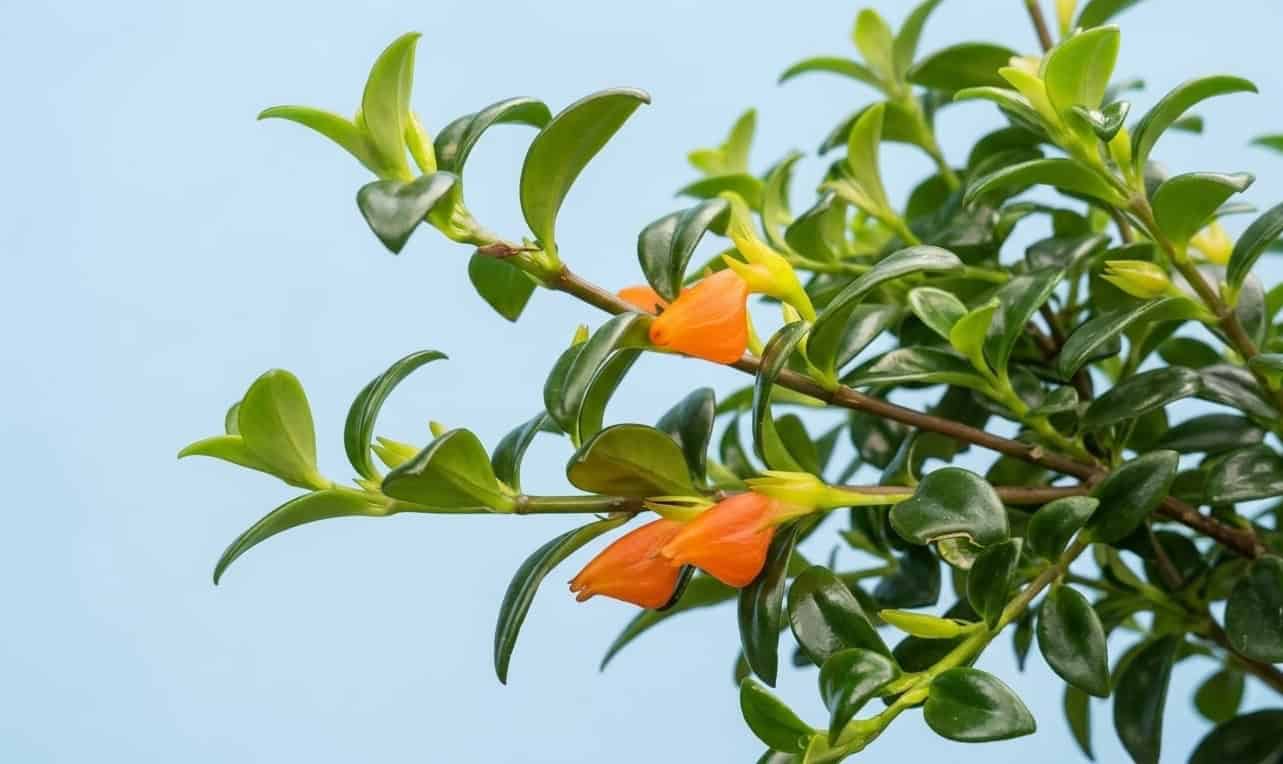
The Fall Rest Period: What It Is and How to Do It
Starting in late September or early October:
- Reduce watering — let the top 1.5–2 inches dry out between waterings instead of the usual 1 inch.
- Stop fertilizing completely.
- Allow cooler nights — if possible, move the plant to a spot where nighttime temperatures drop to 60–65°F. A cool windowsill works well if it doesn’t get below 55°F.
- Limit light to 10–11 hours daily — shorter days naturally happen as fall progresses, so in most cases you don’t need to do anything special if the plant is in natural light.
Keep this up for 4–6 weeks, then gradually resume normal watering and move back to a warmer spot. Flower buds should begin appearing within 6–8 weeks of starting the rest period.
Why Your Goldfish Plant Won’t Bloom
| Reason | Fix |
|---|---|
| No rest period in fall | Reduce watering, lower temp, shorten light period in Oct–Nov |
| Light too low year-round | Move to brightest indirect spot; consider grow light |
| Too much nitrogen fertilizer | Switch to bloom booster or stop fertilizing for a season |
| Temperatures always above 75°F | Cooler fall nights help trigger bud formation |
| Plant too young | Newly propagated plants may take 1–2 years to bloom |
Growing a Goldfish Plant in a Hanging Basket
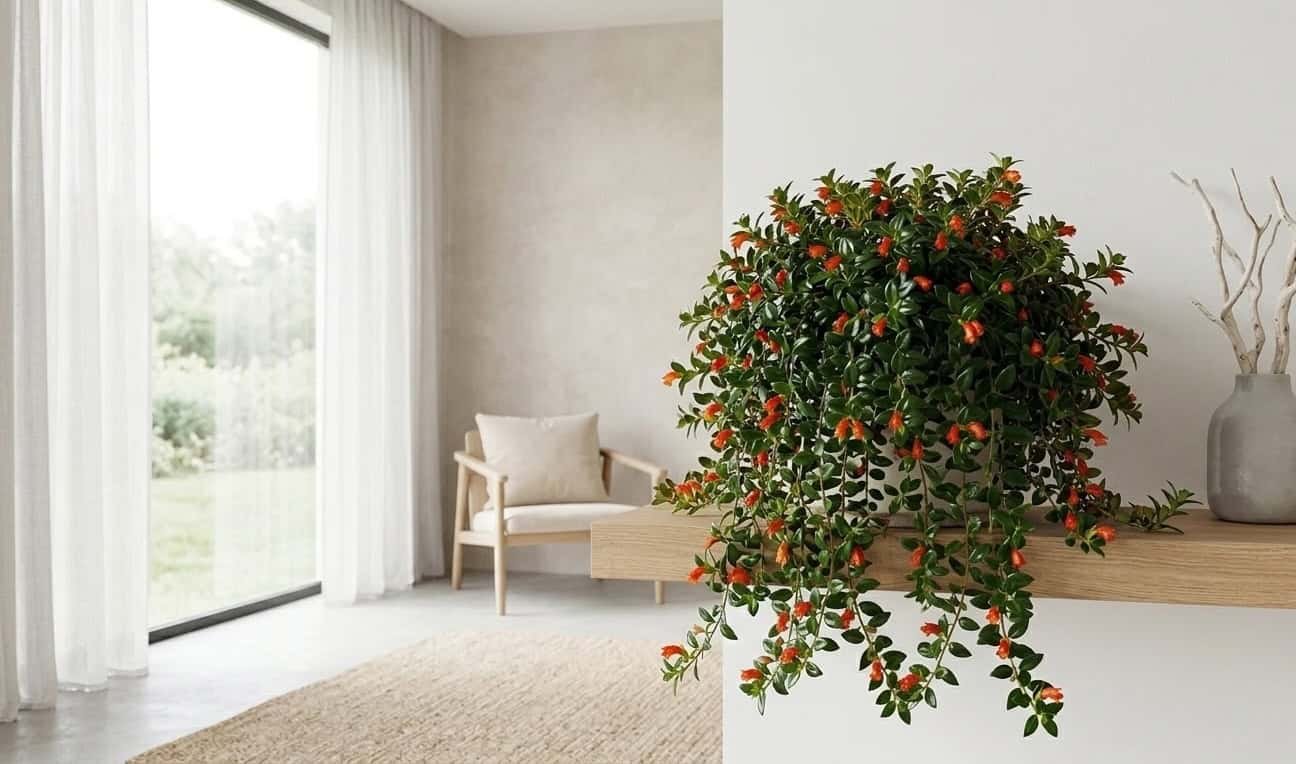
This is how goldfish plant looks its best — stems spilling 18–24 inches over the sides of a hanging basket, covered in orange flowers. Most nurseries sell it in a standard pot, but transferring it to a hanging basket within the first season makes a real difference in how the plant develops.
Placement and Basket Considerations
Hang it where it gets bright light from the side, not just from directly above. A spot near an east- or south-facing window where morning or indirect light reaches the sides of the basket works well.
Coco liner baskets dry out faster than plastic nursery pots — you’ll need to water more frequently, often every 3–4 days in summer. Check the soil regularly. A hanging basket that’s lightweight when you lift it is almost always ready to water.
Pruning for a Fuller Hanging Shape
After blooming ends, trim stems back by one-third. This encourages branching and more stem tips — which is where flowers form. A plant with 20 stem tips produces far more flowers than one with 5 long stems. Pinching the growing tips in spring (before the bloom season) also helps fill out the basket shape.
How to Propagate a Goldfish Plant
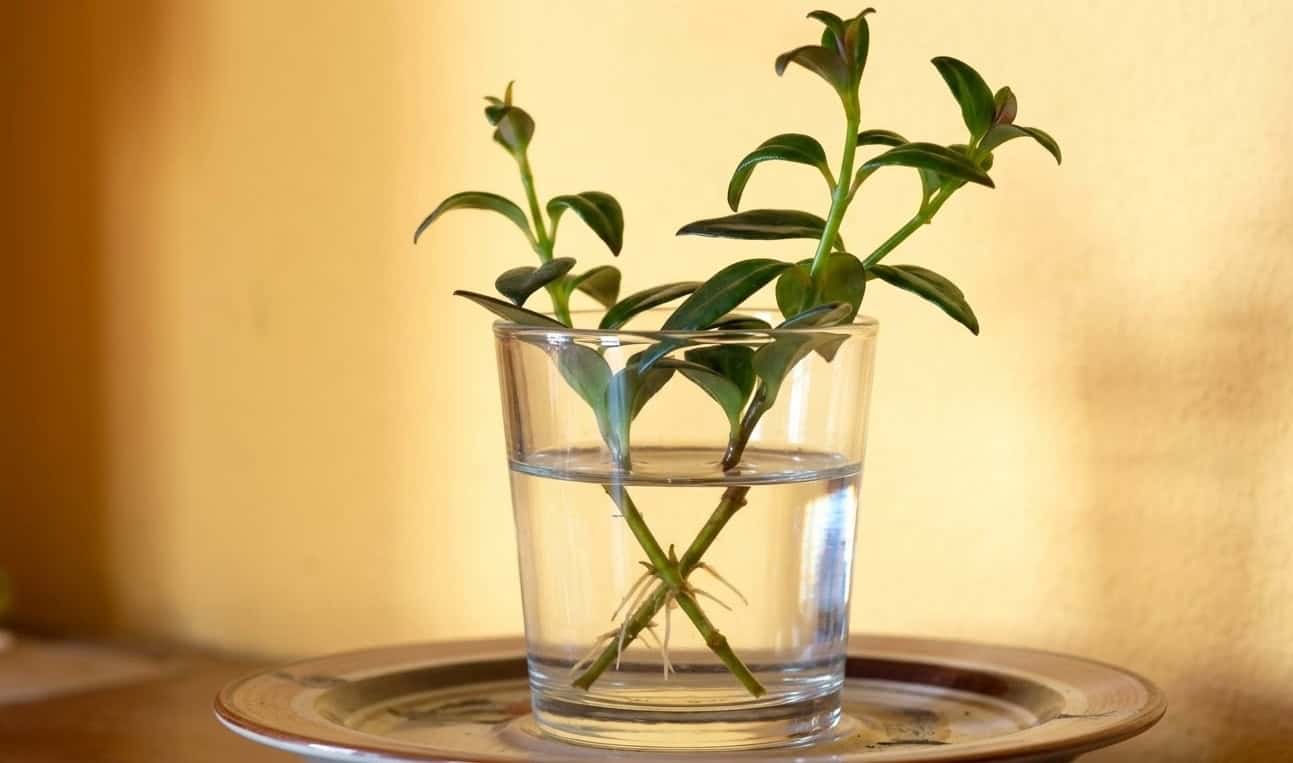
Stem cuttings are the most reliable method and root surprisingly easily — in water or a moist propagation mix.
Propagating in Water
- Take a stem cutting 3–4 inches long with at least 2–3 leaf nodes. Cut just below a node.
- Remove leaves from the bottom 1–2 inches of the stem.
- Place in a glass of room-temperature water so the bare stem is submerged but the leaves are above water.
- Set in bright indirect light. Change the water every 3–4 days to prevent bacterial buildup.
- Roots appear within 2–4 weeks. When roots are ½–1 inch long, pot into moist soil.
Propagating in Soil
Dip the cut end in rooting hormone powder, then insert into a moist mix of perlite and peat (50/50). Cover loosely with a clear plastic bag to hold humidity and keep in bright indirect light. Remove the bag for 30 minutes daily to prevent mold. Roots form in 3–4 weeks; tug gently to check resistance before potting up.
Best time to take cuttings: spring, right after the bloom period, when the plant is actively growing. Late-season cuttings root more slowly.
How and When to Prune a Goldfish Plant
Pruning directly controls how many flowers your plant produces — and skipping it is one of the main reasons plants with good light and care still don’t bloom well. Flowers form at stem tips, so the more tips you have, the more flowers you get.
When to Prune
Prune once after each bloom period ends — never mid-bloom, since cutting active stems removes flowers before they open. Spring is the primary pruning window, right before the main growing season. A second light trim in late summer is fine if stems have gotten leggy.
How Much to Cut
Remove no more than one-third of any stem at a time. Cut just above a leaf node — the small bump where a leaf attaches — not into bare stem. Each cut stem will fork into two new branches, which double your tip count and, eventually, your flower count. A plant pruned down from 8 long stems to 16 shorter ones will typically bloom twice as heavily the following season.
Pinching for More Blooms
Pinching is a lighter version of pruning: use your fingers or small scissors to nip just the growing tip (the top 1–2 inches of a stem) during the spring growing season. Do this every 2–3 weeks from April through June. It slows vertical growth and forces lateral branching. On a hanging basket plant, this is what creates that full, cascading appearance rather than sparse, leggy stems.
Common Goldfish Plant Problems
Leaves Falling Off
Sudden leaf drop, especially if it happens fast and affects multiple stems, almost always comes down to one of three things: cold draft, cold tap water hitting the leaves during watering, or a major change in light (like moving the plant from a bright nursery to a dimmer room).
Cold tap water is an underrated cause — water it with room-temperature water, not cold from the faucet. The waxy leaves react to temperature shock similarly to African violets.
Gradual leaf drop from older, lower leaves is normal — the plant naturally sheds its oldest growth.
Yellow Leaves
Yellow leaves on a goldfish plant usually mean overwatering or insufficient light. If the yellowing starts with lower, older leaves and the soil stays wet longer than a week, pull back on watering and check drainage. If the whole plant looks pale and yellow even when watering is correct, it needs more light.
Occasional yellow leaf here and there is normal and not a sign of a problem.
Pests: Spider Mites, Mealybugs, and Aphids
Spider mites are the most common pest — they thrive in dry conditions and show up as fine webbing between stems and stippled, dull-looking leaves. Raise humidity, rinse the plant in the shower, and treat with neem oil or insecticidal soap spray.
Mealybugs appear as white cottony clusters in stem joints. Dab individual bugs with a cotton swab dipped in rubbing alcohol, then follow with an insecticidal soap treatment once a week for three weeks to catch any that hatch from eggs.
Aphids tend to cluster on new growth — both NC State Extension and RHS flag them as a common pest, particularly on young stems. A strong spray of water dislodges most colonies; follow up with insecticidal soap if they return. Whiteflies are less common but can appear in warm conditions; yellow sticky traps help catch them early.
Brown leaf edges or a white crust on the soil surface can also signal mineral buildup from hard tap water. Missouri Botanical Garden notes calcium accumulation as a cause of leaf browning in this plant — flush the soil thoroughly every few months with distilled or filtered water to clear it.
Leaf Spots and Gray Mold (Botrytis)
Brown or gray spots on leaves, sometimes with a fuzzy gray coating, usually indicate botrytis (gray mold) — a fungal issue that develops when foliage stays wet in low-airflow conditions. The most common cause is misting with cold water and leaving the plant in a poorly ventilated spot. Remove affected leaves, improve air circulation, and if misting, do it in the morning so foliage dries before evening. Always use room-temperature water.
Is Goldfish Plant Toxic to Cats and Dogs?
Good news for pet owners: the ASPCA lists Nematanthus as non-toxic to cats and dogs. The database includes four separate entries covering this plant — under “Gold-Fish Plant,” “Nematanthus spp.,” “Hypocyrta” (the old genus name), and “Candycorn Plant” — and all four confirm non-toxic status. NC State Extension independently corroborates this.
That said, non-toxic doesn’t mean harmless if eaten in quantity. If your pet chews on the plant and shows vomiting, drooling, or lethargy, contact your vet or the ASPCA Animal Poison Control Center at (888) 426-4435. For a full overview of pet-safe options, see our guide to spider plant care — another ASPCA-confirmed non-toxic houseplant.
Goldfish Plant Care: Common Mistakes
- Skipping the fall rest period — the single most common reason for no flowers
- Planting in regular potting soil without added perlite — roots suffocate in dense soil
- Watering with cold tap water — temperature shock causes rapid leaf drop
- Keeping it too warm year-round — constant heat prevents bloom induction
- Over-fertilizing with nitrogen — builds leaves, not flowers
- Ignoring spider mites until it’s severe — they spread fast in dry indoor conditions
Frequently Asked Questions
How often should I water a goldfish plant?
Water when the top inch of soil is dry — roughly every 5–7 days in summer and every 10–14 days in fall and winter. Always check the soil rather than following a fixed schedule, since humidity, pot size, and light all affect how quickly it dries out.
Why is my goldfish plant not blooming?
The most likely cause is that it didn’t get a proper rest period in fall. Nematanthus needs shorter days, slightly cooler temperatures (60–65°F nights), and reduced watering for 4–6 weeks before it will set flower buds. Without that, it may grow fine but stay flowerless.
How much light does a goldfish plant need?
Bright indirect light for 4–6 hours daily. It can take gentle morning sun but burns in direct afternoon sun. If your home is dark, a full-spectrum LED grow light on a 12-hour timer works well.
Can I grow a goldfish plant in a hanging basket?
Yes, and it’s actually the best way to display it. The trailing stems can reach 18–24 inches long and look striking covered in orange flowers. Hang it near a bright window and expect to water more frequently than a standard pot — check every 3–4 days in summer.
How do I propagate a goldfish plant?
Take 3–4 inch stem cuttings in spring, remove the lower leaves, and root them in a glass of water or moist perlite mix. Roots form in 2–4 weeks. Water propagation works well and lets you monitor root development easily.
Why are my goldfish plant leaves falling off?
Most often it’s cold shock — either from a draft, cold tap water, or a sudden drop in temperature. Move the plant away from windows that get cold at night and switch to room-temperature water. Overwatering can also cause leaf drop, especially if the stem base has gone soft.
Is goldfish plant easy to care for?
It’s moderate. The basic care — light, watering, humidity — isn’t difficult once you get the rhythm right. The trickier part is understanding the fall rest period, which most new owners skip. With that piece in place, it’s a reliable and long-lived houseplant.
How long does a goldfish plant live?
With proper care, goldfish plants can live for many years — 5 to 10 years is realistic indoors. Plants tend to get leggy over time; pruning after each bloom period and occasional propagation from cuttings keeps them looking full and healthy.
What is the difference between a goldfish plant and a guppy plant?
Do goldfish plants like to be outside?
Yes, with conditions. In USDA zones 10–11 they can grow outdoors year-round in a shaded or dappled-light spot. In colder zones, they can summer outside once nighttime temperatures stay reliably above 55°F — a shaded porch or north-facing patio works well. Bring them back inside before temperatures dip in September. Outdoor summers often result in stronger blooming the following season.
Is a goldfish plant a succulent?
No, though the waxy leaves can suggest it. Goldfish plant is a tropical epiphyte — it comes from humid forest environments, not dry ones. While it’s more drought-tolerant than many tropicals (thanks to those waxy leaves), it needs regular watering and higher humidity than true succulents. Treating it like a succulent — infrequent watering, dry air, full sun — is a quick way to stress it.
Can I propagate goldfish plant from a fallen leaf?
No. Goldfish plant doesn’t propagate from individual leaves the way succulents do. You need a stem cutting with at least 2–3 leaf nodes to get roots. A leaf alone, even a healthy one, won’t develop into a new plant. Use stem tip cuttings taken in spring for the best rooting success.
“Guppy plant” is an alternate common name for the same plant — Nematanthus gregarius. Both names refer to the fish-like shape of the flowers. You’ll see both used interchangeably at garden centers and in plant communities online.