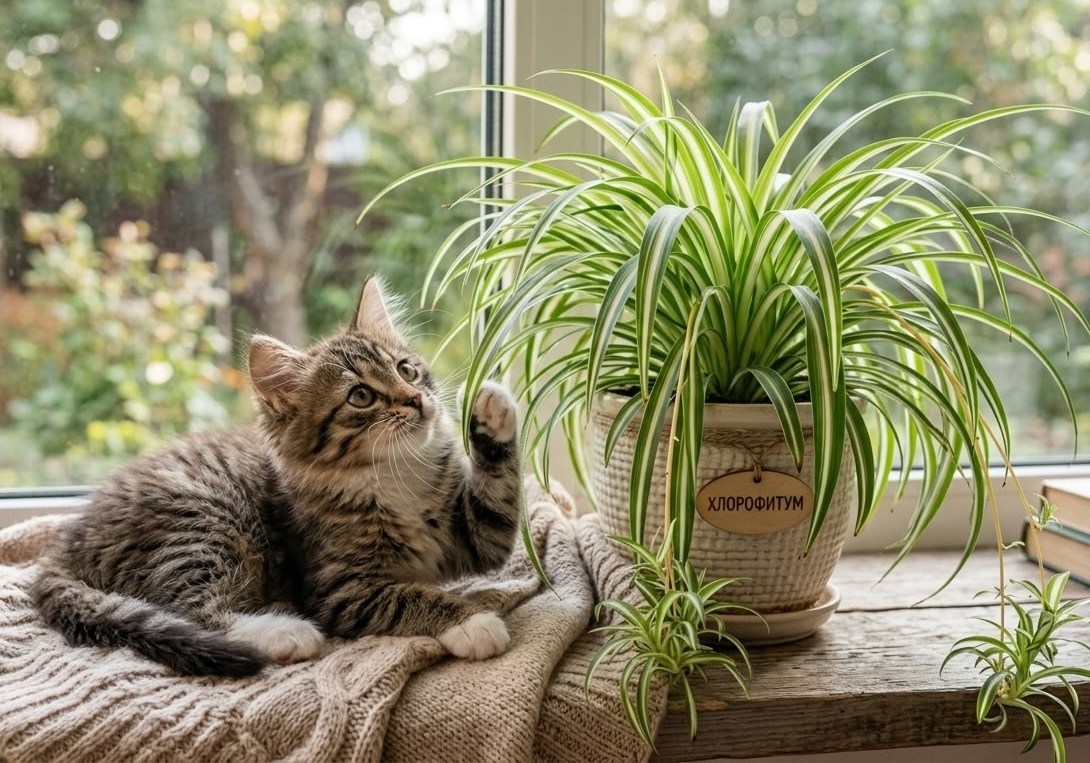
Spider plants are not toxic to cats or dogs. The ASPCA explicitly classifies Chlorophytum comosum as non-toxic to both cats and dogs — it appears on their confirmed safe plant list, not their toxic plant list. If your cat just chewed on your spider plant, you can breathe. That said, there are a few things worth knowing: why cats are attracted to this plant, what can happen if they eat enough of it, and one genuine risk that most articles completely miss.
Are Spider Plants Toxic to Cats?
No. The ASPCA lists spider plant (Chlorophytum comosum) as non-toxic to cats. Spider plants do not contain compounds that cause organ damage, kidney failure, or systemic poisoning in cats. This puts them in a fundamentally different category from genuinely dangerous plants like lilies, which can cause acute kidney failure in cats from a single leaf.
What spider plants do contain are saponins — chemical compounds that can irritate the digestive tract if a cat eats a significant amount. The result is GI upset (vomiting, loose stool) that is unpleasant but self-resolving. The plant also contains compounds that may have a mild euphoric effect on cats, which is why cats seek it out more than other houseplants — more on this below.
When my neighbor called in a panic because her cat had been chewing on her spider plant for an hour, the first thing I told her was: check the ASPCA website right now, and you’ll see “Non-Toxic to Cats” in plain text. It took about 30 seconds to go from panic to relief. The plant’s non-toxic status is the correct answer — the rest of this article is about what else matters.
Are Spider Plants Toxic to Dogs?
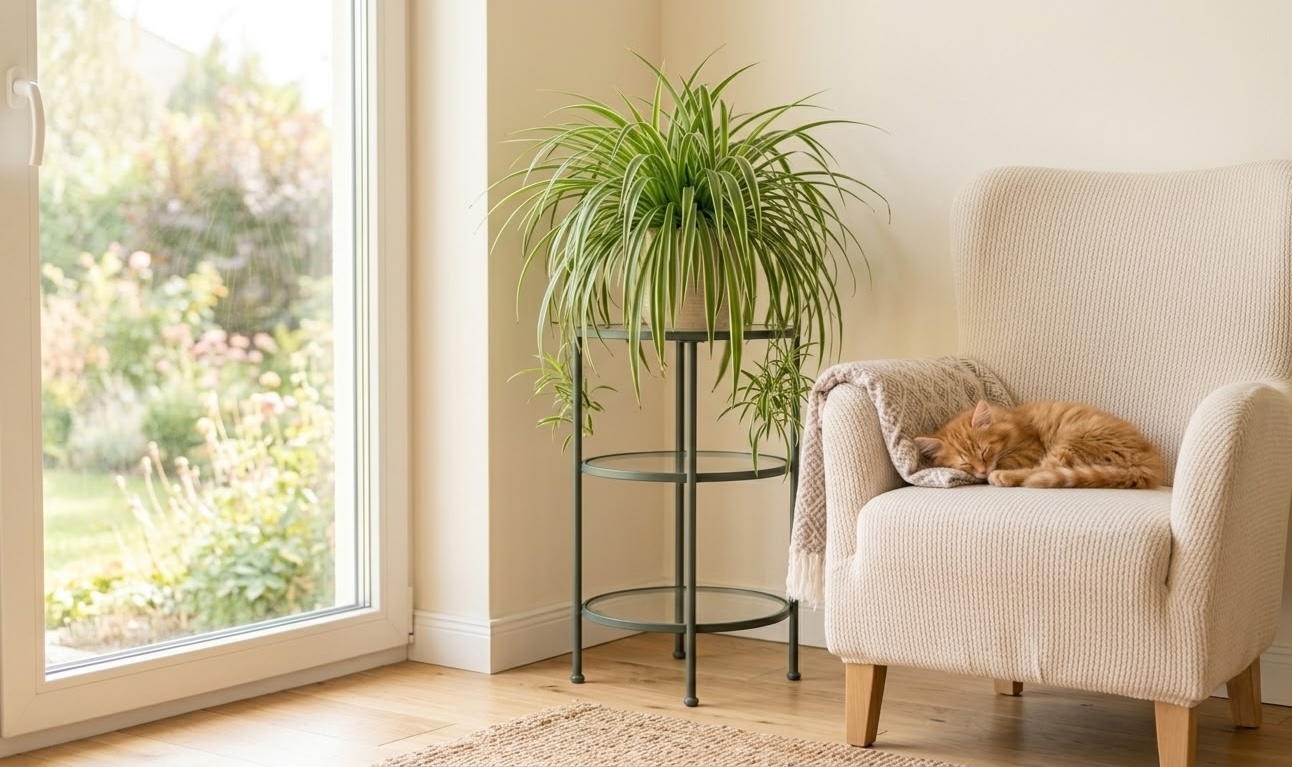
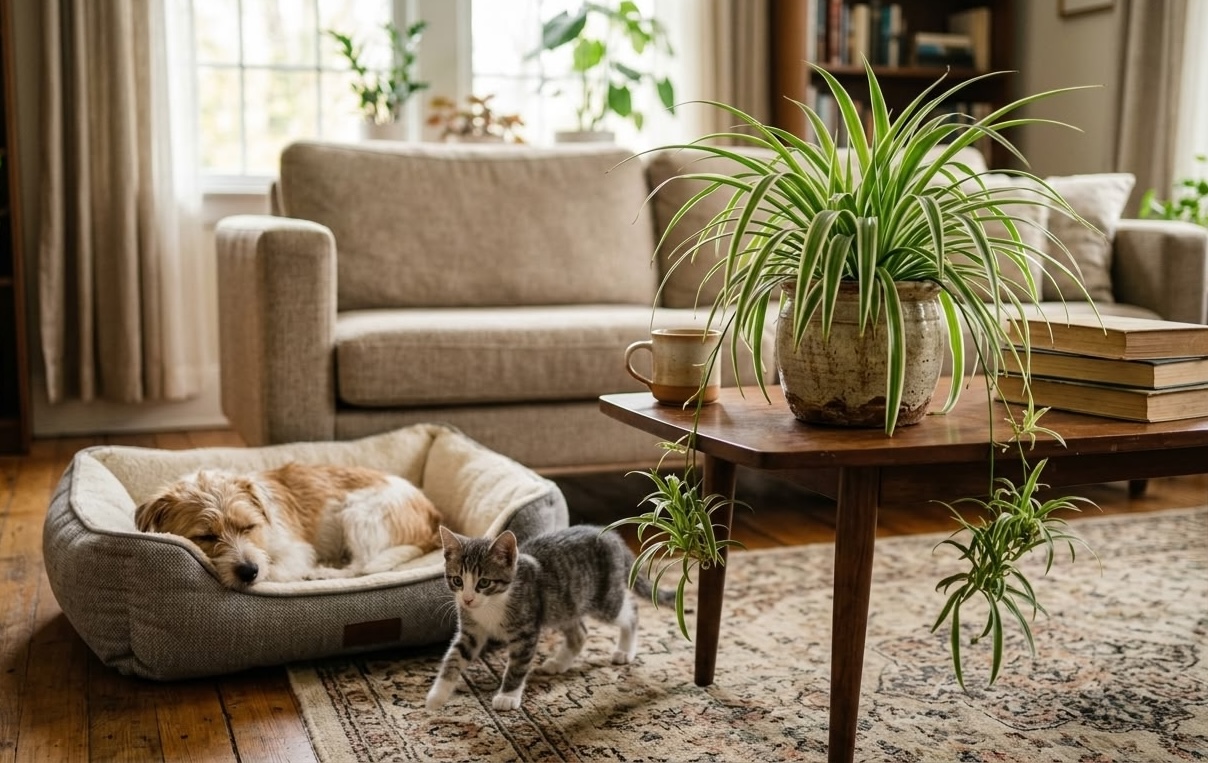
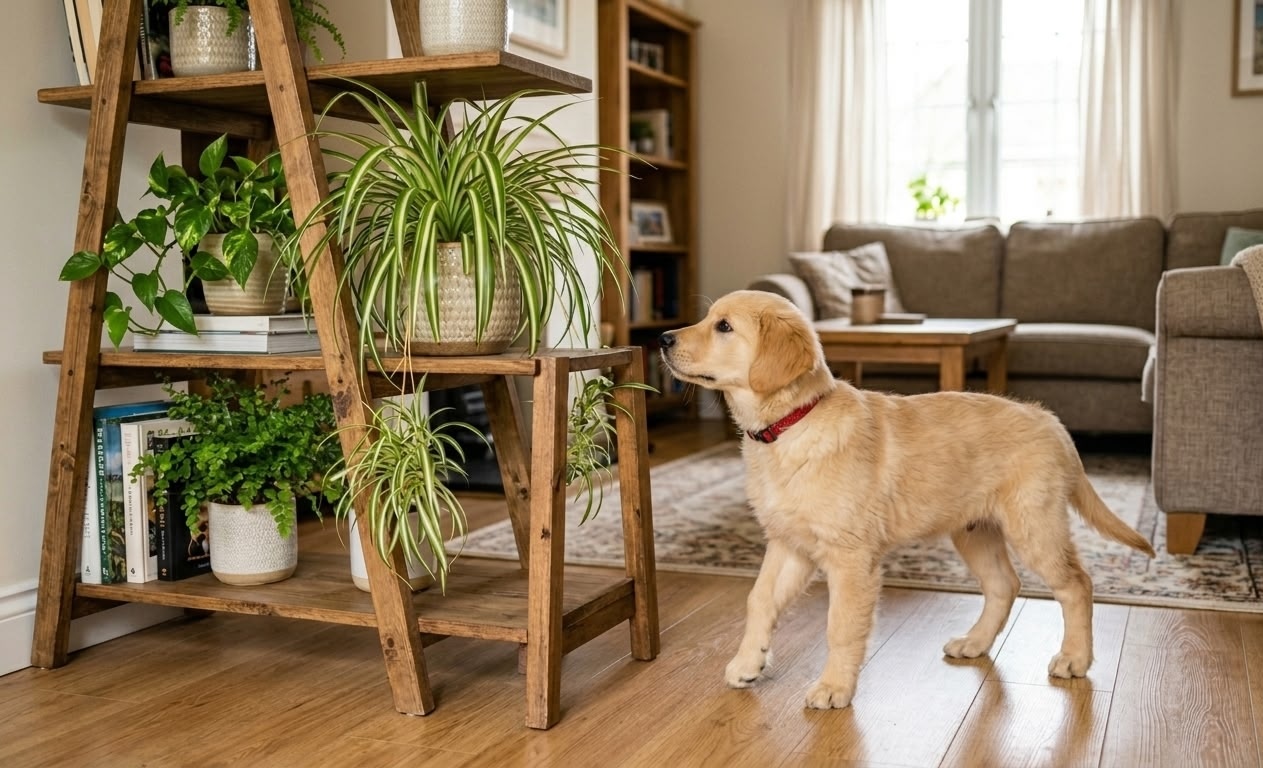
No — also non-toxic to dogs by the same ASPCA classification. The mechanism of any GI upset (saponins) is the same for dogs as for cats, and the non-toxic classification applies to both. Dogs that chew spider plants may experience vomiting or loose stools if they eat a substantial amount, but there’s no systemic toxicity concern.
Dogs are generally less attracted to spider plants than cats — they don’t experience the same behavioral response to the plant’s compounds. A dog chewing a spider plant is usually doing it out of boredom or play, not because the plant is compelling to them the way it is to many cats.
Why Are Cats So Attracted to Spider Plants?
Two separate mechanisms explain why cats go after spider plants so reliably — and understanding them helps you manage the behavior more effectively.
The Movement Factor
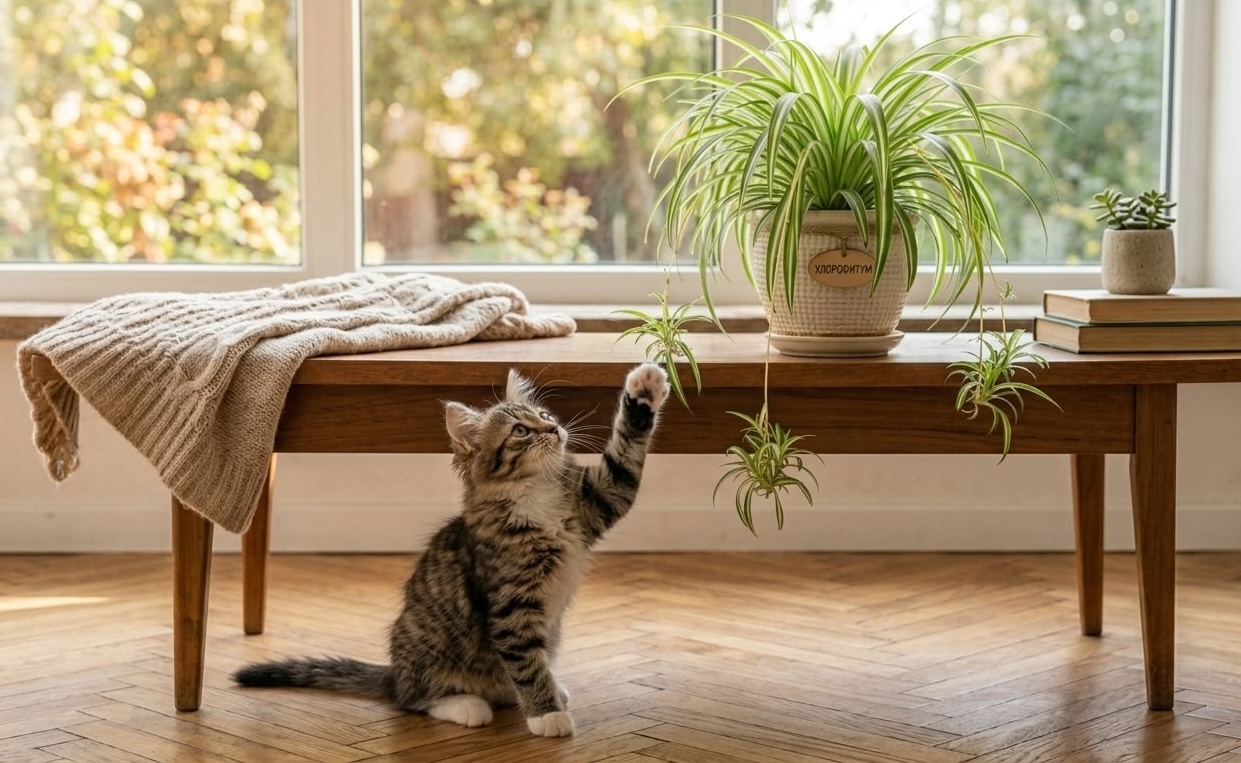
Spider plants produce long arching runners with small plantlets (spiderettes) hanging at the ends. These dangle and sway with air movement — almost exactly mimicking prey. A cat’s hunting instinct responds to dangling movement in the same way it responds to a toy on a string. The spiderettes are actually more compelling than the main plant body for this reason, and they’re often at a more accessible height. A cat that ignores a spider plant on a high shelf will sometimes attack the spiderettes that hang down toward cat level.
My cat ignored our spider plant for a year. Then we moved it to a lower shelf and the spiderettes were hanging at just the right height. Within a week she’d pulled off two of them. The plant itself wasn’t interesting — it was the movement and the reach of the babies.
The Chemical Factor
Multiple sources, including Gardening Know How and PlantCareToday, cite chemical compounds in spider plants described as “related to opium” that produce a mild euphoric or hallucinogenic effect similar to catnip. This would explain why some cats seek out spider plants even when they’re not dangling at the right height, and why some cats return repeatedly rather than just batting at them once.
The honest caveat: the ASPCA does not mention any psychoactive compounds on their spider plant page, and at least one vet-focused publication (Kinship) states there is “no research to back up” the hallucinogenic claim. The behavioral attraction is real and well-documented — cats do seek out spider plants more than most other houseplants. The exact biochemical reason is less settled. Whether it’s a movement response, a chemical response, or both, the practical result is the same: many cats find spider plants compelling and will return to them repeatedly.
What Happens If Your Cat Eats a Spider Plant?
Most cats that nibble a leaf or bat at a spiderette will show no symptoms at all. The risk increases with the amount consumed. Here’s what to expect based on how much was eaten:
| Amount ingested | Likely symptoms | Onset | Resolution |
|---|---|---|---|
| Single leaf or spiderette | Typically none | — | — |
| Several leaves, small cat | Mild vomiting, loose stool | 2–6 hours | Within 24 hours |
| Large amount (multiple stems) | Vomiting, diarrhea, lethargy | 2–6 hours | Within 24–48 hours |
| Behavioral signs only | Hyperactivity, acting “spacey,” rolling | Within 30 min | 1–3 hours |
The behavioral signs — a cat acting hyperactive, rolling around, or seeming briefly disoriented — are similar to the catnip response and are not medically concerning. They resolve on their own. GI symptoms (vomiting, diarrhea) are also self-limiting. A friend’s cat ate a meaningful amount of spider plant one afternoon and acted “completely stoned” for about two hours, then vomited once and went to sleep. By morning it was entirely normal.
The Hidden Risk: Fertilizer and Soil Treatments
This is the most important thing most guides get wrong — or simply don’t mention at all.
Spider plant itself is non-toxic. But if your spider plant has been recently fertilized with synthetic fertilizers, the compounds in the treated soil can be harmful to cats. Common nitrogen-based fertilizers, systemic pesticides, and insecticidal soil treatments are all toxic to cats if ingested. If your cat chews the plant and also digs in or licks the soil, and the plant has been treated recently, that’s a different situation from eating an untreated plant.
This is the part that caught me off guard: I’d been so focused on whether the spider plant itself was toxic that I never considered the fertilizer I’d applied two weeks earlier. When a cat acts unwell after contact with a “non-toxic” plant, fertilizer or soil treatment is often the culprit — not the plant.
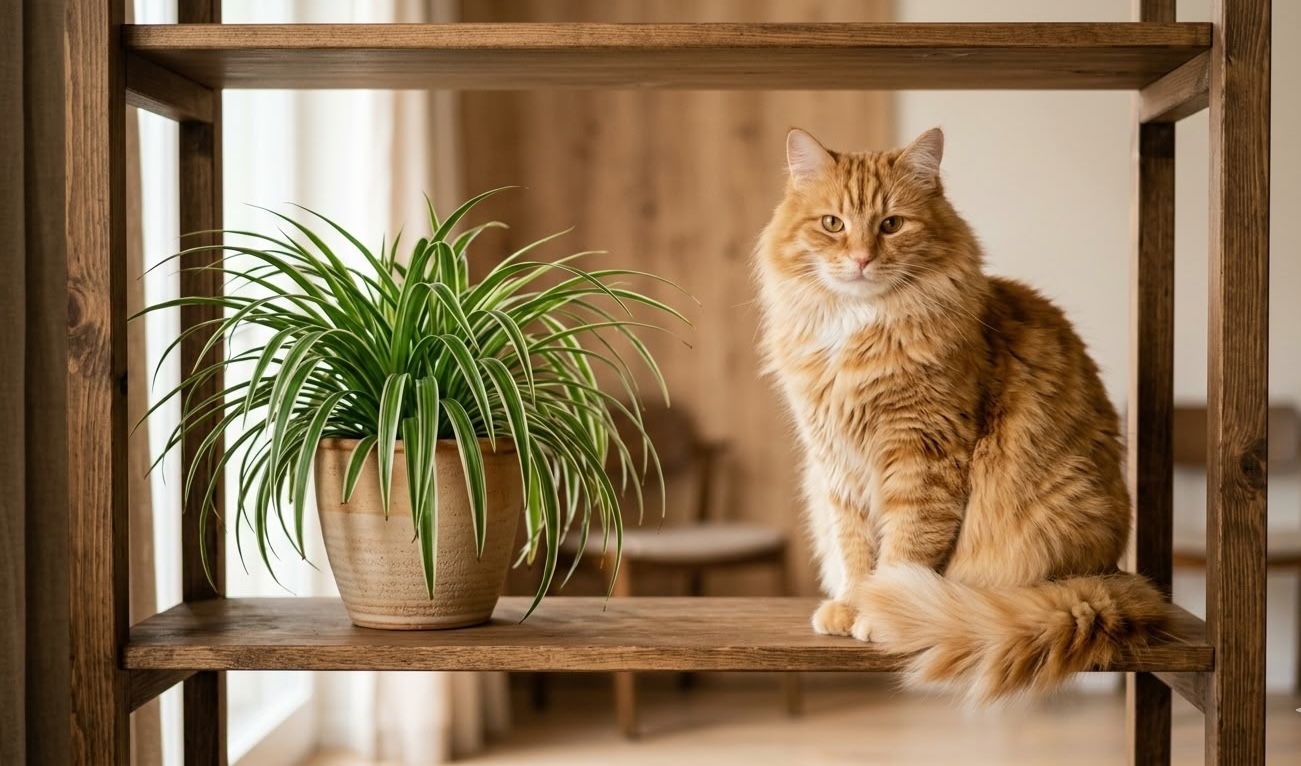
Practical rule: If you use any fertilizer, pesticide, or soil treatment on your spider plant, keep cats away from it for at least 2–3 weeks after application and until the soil surface is visibly dry. Liquid fertilizers can remain active in the top layer of soil well after application. When in doubt, use organic fertilizers only, or switch to a controlled-release granular formula that stays deeper in the soil.
How Much Spider Plant Is Dangerous?
For the plant itself (not fertilizer): there is no established toxic dose because the plant isn’t classified as toxic. The saponins that cause GI upset are dose-dependent — more plant, more upset. As a rough guide used by some vet sources: 1–2 leaves nibbled is typically harmless in an adult cat; repeated eating over days, or a large amount at once, is more likely to cause GI symptoms.
Size matters: a 4-pound kitten eating the same amount as an 11-pound adult cat faces a much higher relative exposure. Small kittens should be kept away from spider plants more strictly than adult cats for this reason.
One additional risk specific to spiderettes: small kittens can potentially choke on detached plantlets, especially the runner (the long stem attaching the baby to the mother plant). This isn’t a toxicity issue but a mechanical one. If you have very young kittens, trim the runners to keep spiderettes from hanging at floor level.
What to Do Right Now
If your cat has just eaten a spider plant:
- Check whether the plant was recently fertilized or treated. If yes, this changes the risk level. Call your vet or ASPCA Poison Control at (888) 426-4435 immediately.
- If the plant is untreated: Remove the cat’s access, offer water, and monitor for 2–4 hours.
- Watch for GI symptoms — vomiting or loose stool are likely to appear within 2–6 hours if they’re going to appear at all. These are self-resolving in most cases.
- Behavioral symptoms (acting hyperactive, spacey, or uncoordinated) are short-lived and not medically concerning — similar to catnip.
- Call your vet if: vomiting is persistent after 4 hours, your cat seems genuinely distressed rather than just “high,” symptoms are worsening, your cat is a young kitten or has health conditions.
What to tell the vet (if you call): your cat’s weight and age, which part of the plant was eaten (leaf, spiderette, runner, soil), approximately how much, when it happened, and what symptoms you’re seeing now. This information makes the call much faster and more useful.
How to Keep Cats Away from Spider Plants
Since spider plants are non-toxic, keeping cats away is about protecting the plant and preventing GI upset from repeated gorging — not about preventing poisoning. Practical approaches:
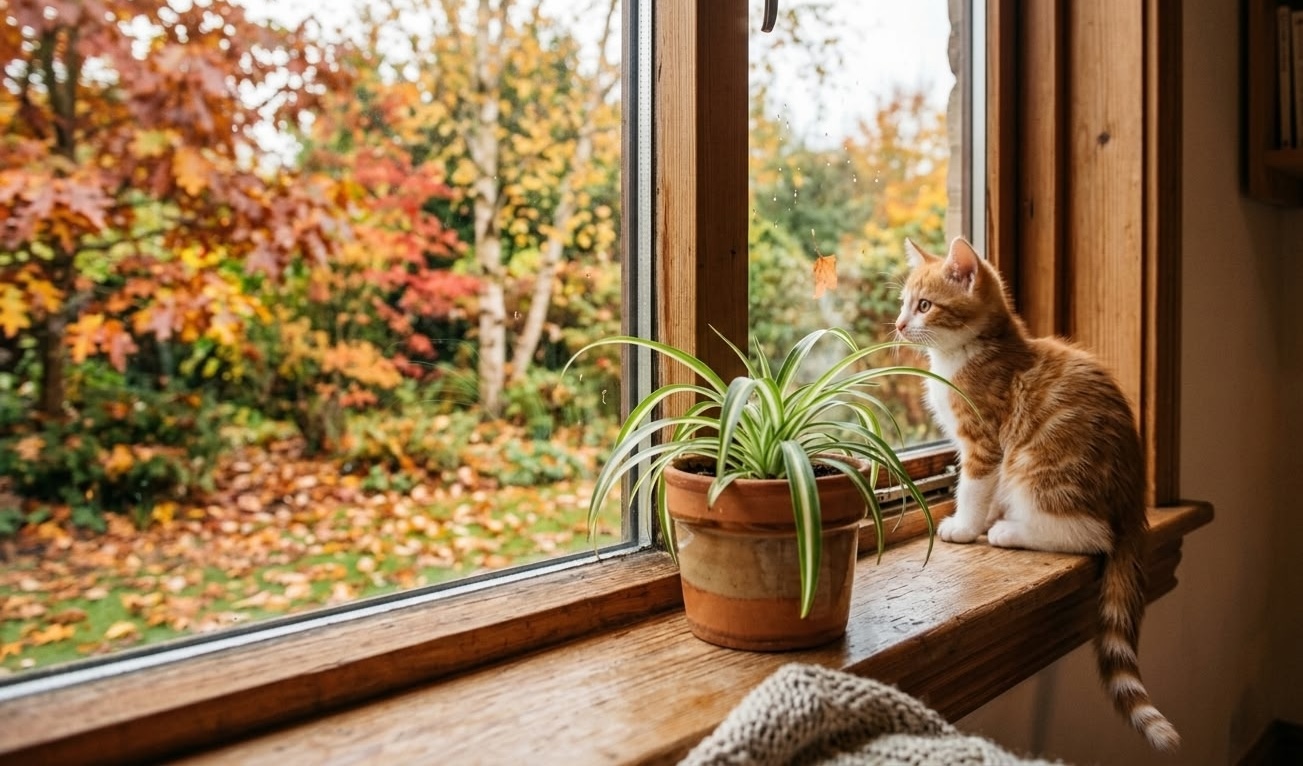
- Elevation. Spider plants do well in hanging baskets or on high shelves. The spiderettes will still dangle, but if the main plant is above jumping height, most cats won’t bother. The most effective thing I found was placing the plant out of jumping range — my cat is persistent, but she does have limits.
- Trim the runners. Spiderettes dangling at cat-level are the main trigger. Trimming them off (you can propagate them separately) removes the “prey” stimulus without removing the plant.
- Provide cat grass or catnip alternatives. If your cat is seeking out the spider plant for its possible euphoric compounds, giving them a dedicated cat-safe plant to chew (cat grass, catnip, valerian) often reduces interest in the spider plant.
- Physical barriers. Decorative cages around the pot or a closed room work well for persistent chewers.
For full care guidance including watering, light, and soil, see our spider plant care guide.
Spider Plant vs. Actually Toxic Houseplants
The confusion between spider plants and toxic houseplants is one of the most common plant-safety questions — especially because several toxic plants share a similar visual style. Here’s a clear comparison:
| Plant | Toxic to cats? | Mechanism | Severity |
|---|---|---|---|
| Spider plant (Chlorophytum comosum) | No — ASPCA confirmed non-toxic | Saponins → mild GI | Very low |
| ZZ plant (Zamioculcas zamiifolia) | Yes | Calcium oxalate crystals | Moderate (oral/GI) |
| Peace lily (Spathiphyllum) | Yes | Calcium oxalate crystals | Moderate (oral/GI) |
| Ficus / Rubber plant | Yes | Ficin + psoralens | Moderate |
| True lily (Easter, tiger, Asiatic) | Yes — life-threatening | Unknown nephrotoxin | Severe (kidney failure) |
| Pothos (Epipremnum aureum) | Yes | Calcium oxalate crystals | Moderate (oral/GI) |
| Sago palm | Yes — life-threatening | Cycasin (hepatotoxin) | Severe (liver failure) |
After my neighbor’s spider plant scare, she asked about the peace lily in her bedroom. That conversation went very differently. Spider plant: non-toxic, relax. Peace lily: toxic, move it. For a full rundown on ZZ plants, see our ZZ plant toxicity guide, and for ficus, see our ficus toxicity guide.

Frequently Asked Questions
Are spider plants safe for cats?
Yes. The ASPCA classifies spider plants (Chlorophytum comosum) as non-toxic to cats and dogs. Eating a small amount may cause mild GI upset (vomiting, loose stool) from saponins in the plant, but there’s no risk of organ damage or systemic toxicity. Spider plants are one of the genuinely pet-safe houseplants.
What happens if my cat eats a spider plant?
Usually nothing. A small nibble typically causes no symptoms. Larger amounts may cause vomiting or loose stool within 2–6 hours, which resolves on its own within 24 hours. Some cats show catnip-like behavioral effects (hyperactivity, rolling, seeming spacey) that also resolve within 1–3 hours. The main exception: if the plant was recently fertilized with synthetic fertilizers, those chemicals can be harmful — call your vet in that case.
Why do cats eat spider plants?
Two reasons: the dangling spiderettes (plantlets on long runners) mimic prey movement and trigger hunting instinct, and the plant may contain compounds with a mild euphoric effect similar to catnip. The behavioral attraction is well-documented; the exact chemical mechanism is less scientifically confirmed. Either way, many cats return to spider plants repeatedly.
Are spider plants hallucinogenic to cats?
Multiple sources describe spider plants as containing “opium-related compounds” that produce mild hallucinogenic effects in cats. The behavioral observation is real — some cats act euphoric after contact. However, ASPCA does not confirm any psychoactive compounds on their spider plant entry, and at least one vet-reviewed publication says there’s “no research to back up” the hallucinogenic claim. The attraction is real; the exact mechanism is not fully confirmed.
Are spider plants safe for dogs?
Yes — ASPCA confirms non-toxic to dogs as well as cats. Dogs that chew spider plants may experience mild vomiting or GI upset from saponins if they eat a substantial amount, but there’s no toxic risk. The same fertilizer caveat applies: if the plant has been treated with synthetic fertilizers or pesticides recently, keep dogs away from the soil.
Are spider plant babies (spiderettes) safe for cats?
Yes, the spiderettes have the same non-toxic classification as the parent plant. However, dangling spiderettes are more accessible to cats and more likely to be chewed in quantity. For very small kittens, detached spiderettes or long runners could be a choking hazard — trim runners that hang to floor level if you have young kittens.
How do I stop my cat from eating my spider plant?
Elevation is the most effective solution: hanging baskets or high shelves put the main plant out of reach. Trim the spiderette runners to remove the dangling “prey” that triggers hunting instinct. Providing cat grass or catnip as an alternative often reduces interest in the spider plant. Physical barriers (decorative cages around the pot) work for persistent chewers.
Is the fertilizer in my spider plant’s soil dangerous to cats?
Yes, potentially. While the spider plant itself is non-toxic, synthetic fertilizers, systemic pesticides, and insecticidal soil treatments can be harmful if a cat ingests treated soil. If your plant was recently fertilized and your cat has been digging in or licking the soil, contact your vet. Use organic fertilizers and keep cats away from treated plants for 2–3 weeks after any soil treatment.