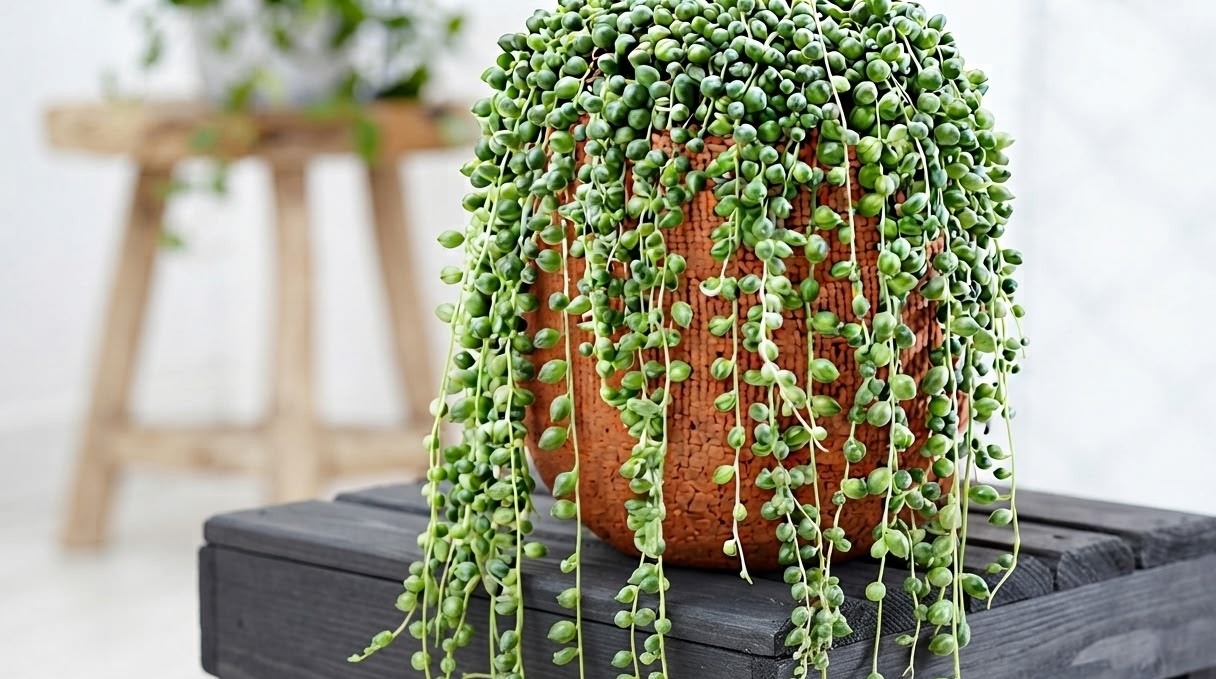
String of pearls is sold as Senecio rowleyanus on almost every plant label, but that name was officially reclassified. The correct current name is Curio rowleyanus, following P.V. Heath’s 1999 transfer of the species to the genus Curio (it was originally described as Senecio rowleyanus by H. Jacobsen). This is more than a trivia point: it explains why you may find conflicting care advice online written under different names, and it signals that this plant belongs to a different evolutionary branch than many of the “senecio” plants it’s grouped with in garden centers.
| String of Pearls Quick Care Summary | |
|---|---|
| Light | Bright light, e.g. near an east- or west-facing window; shade from midday summer sun |
| Water | When the soil has dried out and the beads start to soften; sparingly in winter |
| Humidity | Low; dislikes humid air, do not mist |
| Temperature | 50–75°F (10–25°C); a cooler 50–60°F in winter is fine |
| Fertilizer | Once a month or less, April–September, half-strength liquid feed |
The plant itself is a South African succulent with spherical leaves on trailing stems that can reach about 3 feet (90 cm) long. It is native to dry areas of South Africa’s Cape Provinces, where it grows as a creeping vine along the ground. Getting the care right means understanding where it actually comes from, not where the label says it belongs. Another South African native with unusual needs is Frizzle Sizzle, a bulb that grows in winter and rests in summer.
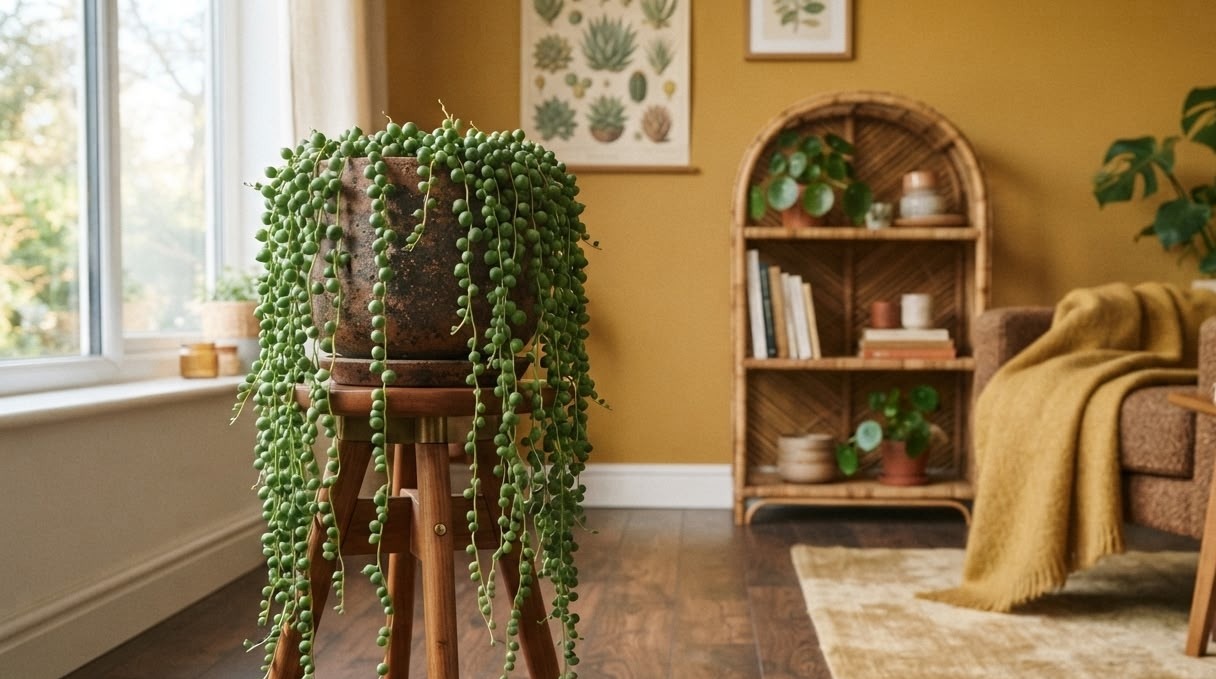
Why Is My String of Pearls Shriveling?
This is the most common question, and the answer depends on how the beads are shriveling:
- Wrinkled, deflated beads with dry soil: Underwatering. The beads lose water stored inside them. Water thoroughly and they should gradually plump back up.
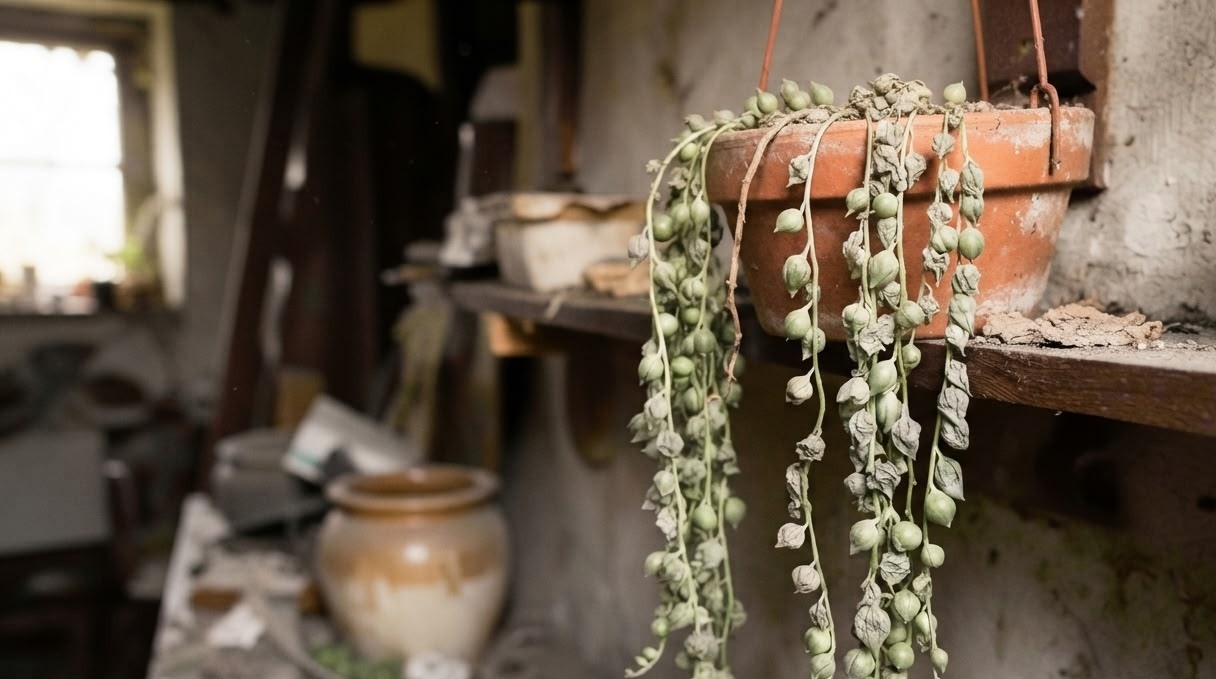
- Mushy, soft, translucent beads: Overwatering or root rot. The cells burst from excess moisture. Remove the plant from its pot, trim rotted roots, and repot in dry mix. Then water sparingly until the plant shows new growth.
- Shriveling only at stem tips: Can be a sign of root rot: even though the beads near the base look fine, the roots can no longer move water upward.
The two causes produce completely opposite treatments. Diagnosing which one you have before acting is critical. A soil moisture meter or simply sticking your finger 2 inches into the soil will tell you immediately.
What Is the Correct Name: Senecio or Curio Rowleyanus?
Both appear in plant databases and garden centers, but the current accepted scientific name is Curio rowleyanus. The reclassification moved string of pearls and several related plants out of the genus Senecio and into the genus Curio. The combination Curio rowleyanus was published by P.V. Heath in 1999, and Kew’s Plants of the World Online lists it as the accepted name.
For practical purposes, the two names refer to the same plant. When searching for care information, you may need to search both names to find everything that’s been written about it. Plant labels, books, and many older articles still use the old name.
String of Pearls vs. String of Bananas: What’s the Difference?
String of bananas (Curio radicans, formerly Senecio radicans) is closely related (same genus, similar trailing habit), but the bead shape is different. String of pearls has round, spherical beads. String of bananas has elongated, crescent-shaped beads that resemble tiny bananas.
Care is similar. NC State Extension describes string of bananas as fast growing and drought tolerant, with thicker, less delicate stems than string of pearls, which is why many growers find it the easier of the two. Both contain pyrrolizidine alkaloids and have the same basic light and water needs. Do not apply this care to string of turtles, though. Despite the similar name, it is a rainforest peperomia that wants regular water. If you need a pet-safe trailing plant instead, hoya carnosa is ASPCA-listed as non-toxic.
How to Care for String of Pearls
How Much Light Does String of Pearls Need?
Bright light, such as a spot near an east- or west-facing window. The RHS advises keeping it out of direct sun in the middle of the day in summer, because that can scorch the beads, and notes that south-facing positions aren’t ideal for that reason. NC State Extension also recommends bright, indirect sunlight indoors. String of pearls is a succulent from a semi-arid environment, and in too little light it becomes weak and straggly. I would pick an east-facing window over a south-facing one: it gives bright light with only gentle morning sun.
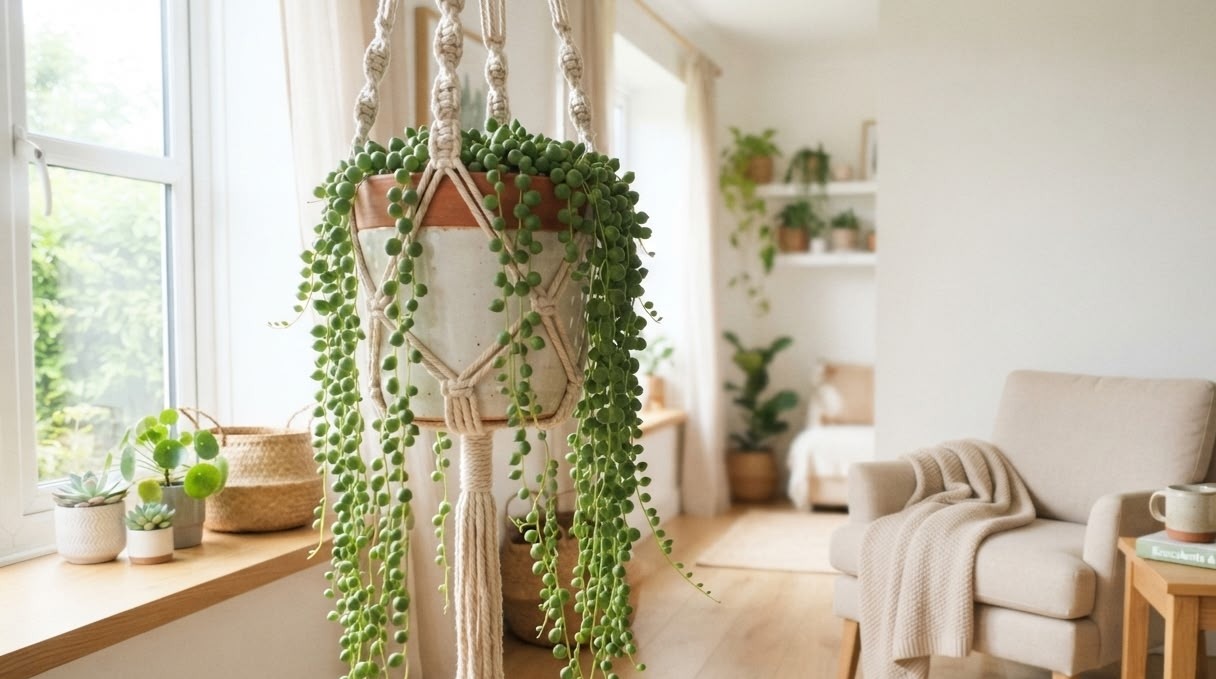
Insufficient light is another common cause of failure. Without adequate light, stems grow long and leggy with widely spaced beads, and the plant loses its dense, lush cascade. In low light, it simply declines slowly.
How Often Should You Water String of Pearls?
Water thoroughly, then allow the soil to dry out before watering again. The RHS treats April to September as the growing season and advises watering only sparingly, if at all, in winter. String of pearls is drought-adapted; its beads store water reserves.
The “when to water” test: squeeze a bead gently. If it feels firm and plump, wait. If it feels slightly soft or the beads look like they’ve lost some roundness, water now. This is more reliable than any fixed schedule, which changes with season, pot size, and humidity. My advice is to trust the squeeze test over the calendar, and if you are unsure, wait a few more days: a thirsty plant recovers far more easily than one with rotted roots.
What Soil Does String of Pearls Need?
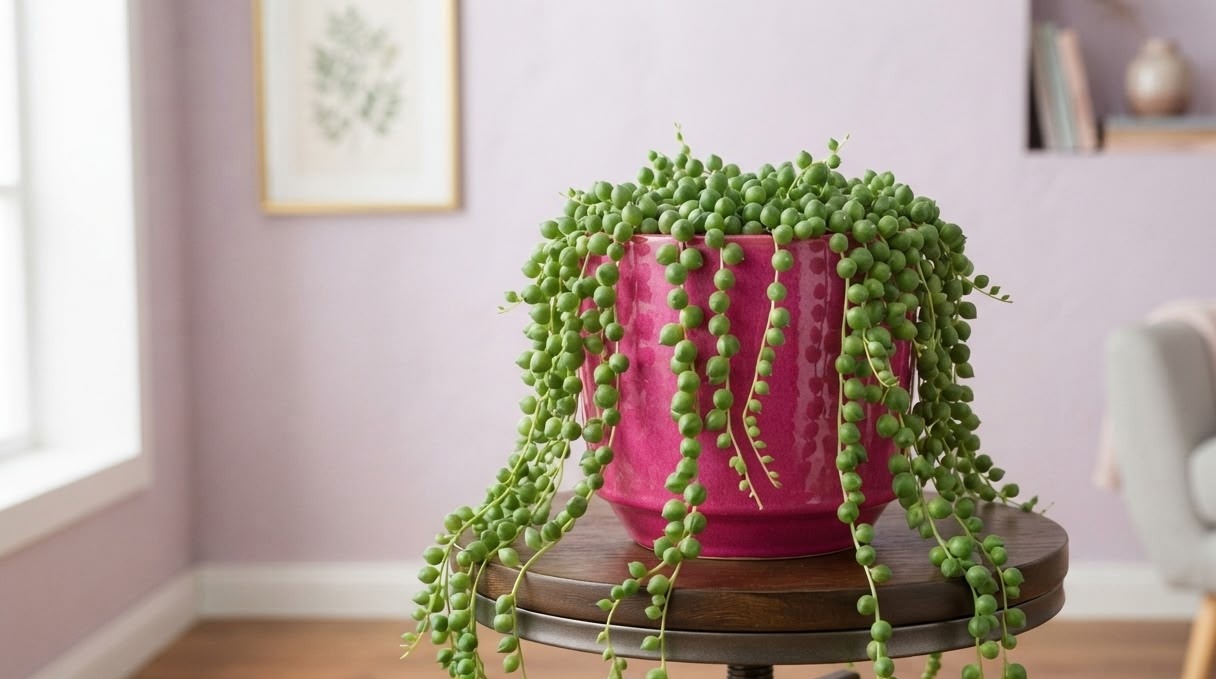
Fast-draining succulent or cactus mix. Standard potting soil retains too much moisture and causes root rot. Mixing in grit, pumice, or perlite improves drainage; the University of Wisconsin suggests adding inorganic material at up to a 1:1 ratio with the potting mix. If the mix stays wet for a long time after watering, either it is too dense or the pot is too large.
Pot size matters: string of pearls does better slightly pot-bound than in an oversized container. A pot with drainage holes is non-negotiable. I would choose terracotta over plastic or glazed ceramic: the University of Wisconsin notes that clay lets moisture evaporate through the sides, so the mix dries out faster.
What Temperature Does String of Pearls Prefer?
The RHS gives a range of 10–25°C (50–75°F). NC State Extension suggests 70–80°F in summer and a cooler 50–60°F in winter. The plant is not frost hardy, so bring outdoor plants inside before the first fall frost, and keep it away from cold draughts.
What Humidity Does String of Pearls Need?
Low to average household humidity is fine. The RHS notes that these plants dislike humidity, so don’t mist them or crowd them among other plants. String of pearls is adapted to arid conditions and does not need the high humidity that tropical houseplants require. Standard household air in most climates is adequate. Avoid placing it near humidifiers or in steamy rooms like bathrooms, where the mix stays damp longer.
How Often Should You Fertilize String of Pearls?
Once a month or less during the growing season (April to September, per the RHS) with a half-strength general-purpose liquid fertilizer or a succulent formula. Do not fertilize in winter. Overfertilizing can cause soft, squishy growth that breaks easily and is prone to pest problems.
Does String of Pearls Go Dormant?
It has a winter rest rather than a true dormancy. The University of Wisconsin recommends a cool rest period in winter at 55 to 60°F, and the RHS advises watering only sparingly, if at all, in winter. Summer is part of the growing season (the RHS gives April to September), not a rest period.
During the winter rest, reduce watering significantly. The beads may look slightly less plump at this time. This is normal as long as the soil is dry and the beads don’t look mushy. Growth picks up again in spring as days lengthen and temperatures rise.
How to Get String of Pearls to Bloom
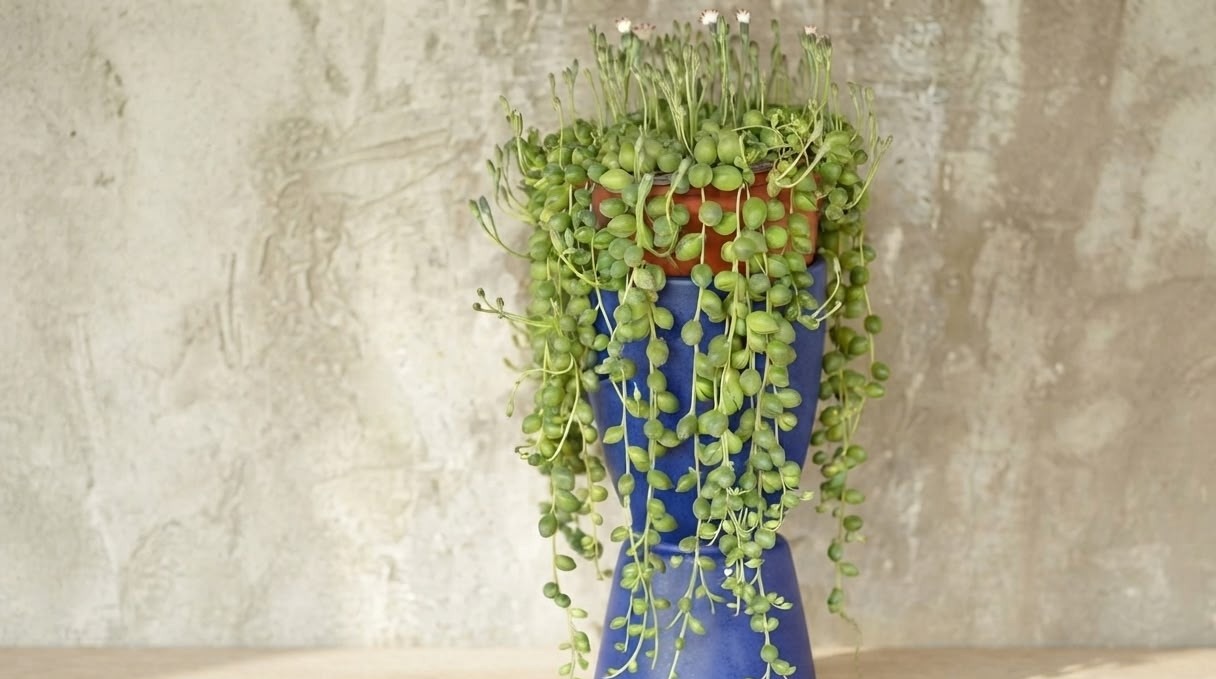
Mature plants produce small, daisy-like white flowers with a cinnamon-like scent, usually in summer according to NC State Extension and the University of Wisconsin. NC State notes that it rarely blooms indoors. The University of Wisconsin recommends a cool winter rest at 55 to 60°F and says dry conditions may promote blooming in summer.
A plant kept warm all year misses that cool winter rest, which may be one reason indoor plants rarely flower. A cool, bright windowsill in winter is the simplest way to give it that rest.
Is String of Pearls Toxic to Cats and Dogs?
Yes, treat it as toxic to dogs and cats. String of pearls is not in the ASPCA’s main toxic plant database, but an ASPCA article on succulents lists it among toxic succulents and says it can cause stomach upset, mainly vomiting, and lethargy. Pet Poison Helpline also lists it as toxic to cats. NC State Extension names pyrrolizidine alkaloids as the toxic principle, rates poison severity as low, and notes that eating the leaves can cause vomiting and diarrhea, while the sap can irritate skin. For the closely related string of bananas, NC State adds that large amounts of these alkaloids can cause liver disease, so take any heavy chewing seriously.
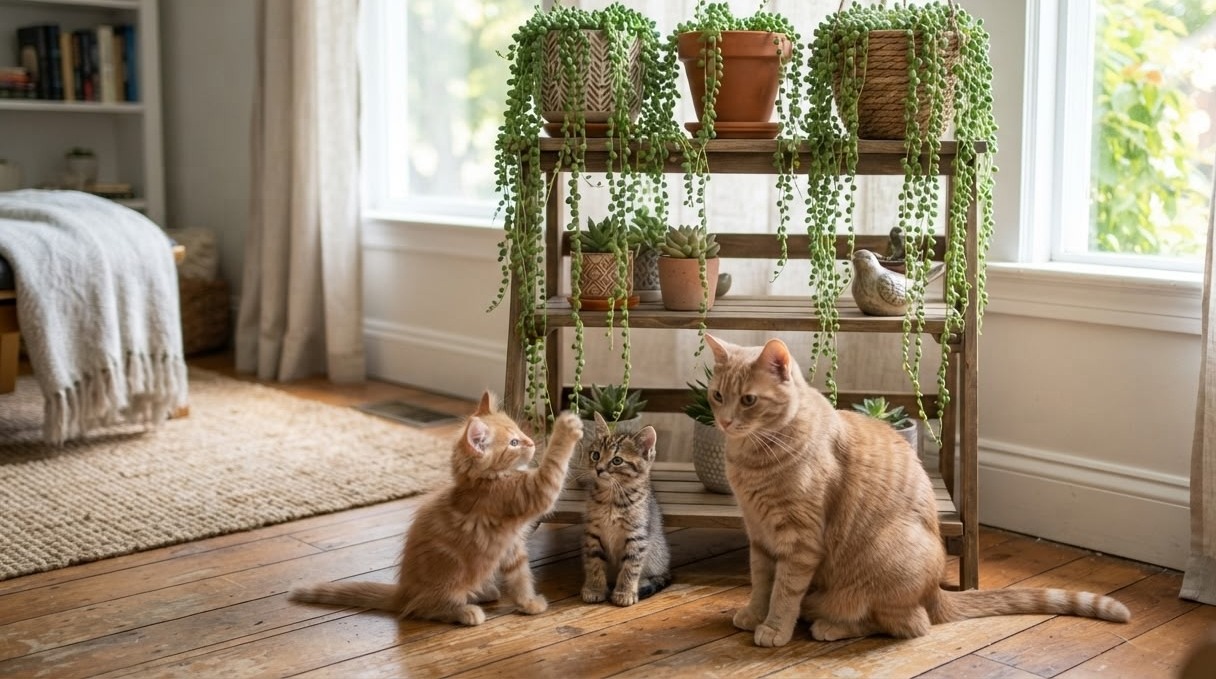
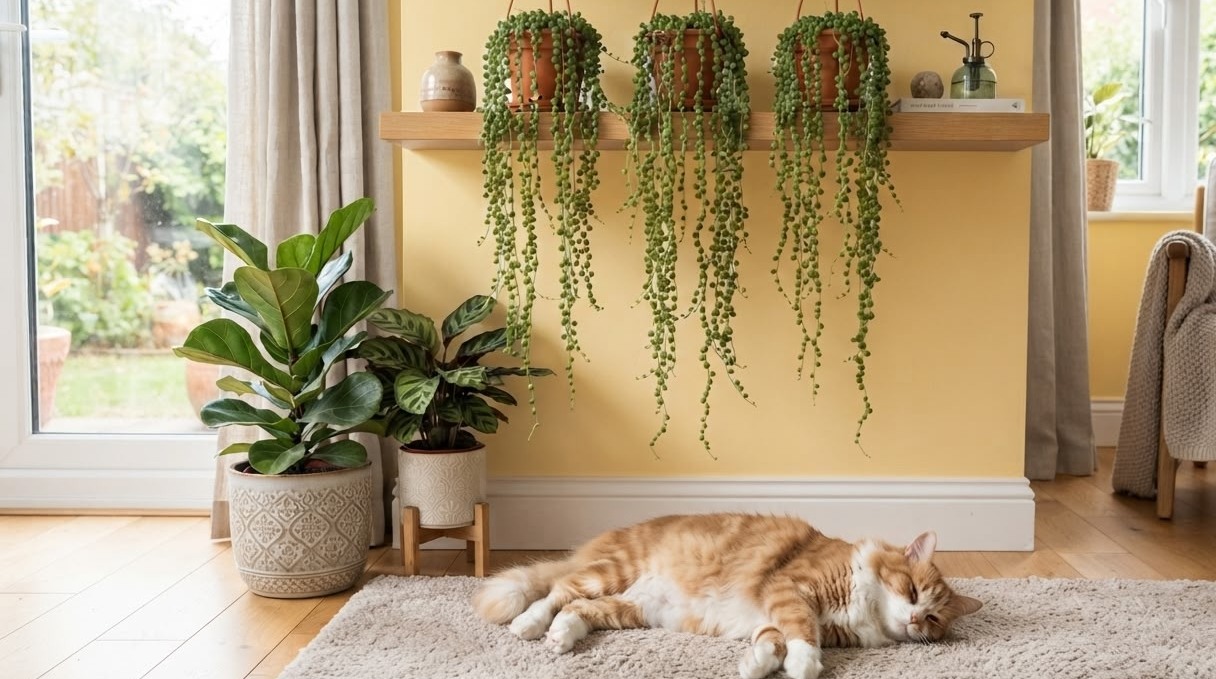
Keep string of pearls in hanging positions or on shelves that cats cannot reach. The ASPCA points out that it works well as a hanging plant, which makes it easier to keep out of pets’ reach. If you have a cat that chews plants, I’d hang it well above jumping height or choose a pet-safe hoya instead. If ingestion is suspected, contact your vet or the ASPCA Animal Poison Control Center.
Common Problems With String of Pearls
Why Are the Beads Falling Off?
Often overwatering. When the soil stays wet too long, the beads become waterlogged, turn soft, and detach from the stems. Other causes include physical impact (the beads detach easily when touched roughly) and low light combined with cool temperatures. Reduce watering and move to a brighter, warmer location.
Why Are the Stems Growing Long With Widely Spaced Beads?
Etiolation: the plant is stretching toward light. This happens when light is insufficient. Move it to the brightest available spot, shaded from harsh midday sun in summer. Trim leggy stems and propagate the healthy parts; a more compact plant will grow from the base.
Why Are the Beads Turning Brown or Yellow?
Brown, dry beads: scorch from strong midday sun or underwatering. Yellow, soft beads: overwatering. Brown only at stem tips: possibly root rot blocking water uptake from below. Diagnose by checking soil moisture and whether the discoloration starts at tips or throughout the strand.
How to Propagate String of Pearls
Stem cuttings root easily. Take 3-4 inch cuttings, remove the bottom few beads to expose the stem node, and place on slightly moist cactus mix (don’t bury them; lay them on the surface and let the nodes contact the soil). Cuttings can also be rooted in water. The RHS says stem cuttings root easily, in about a month.
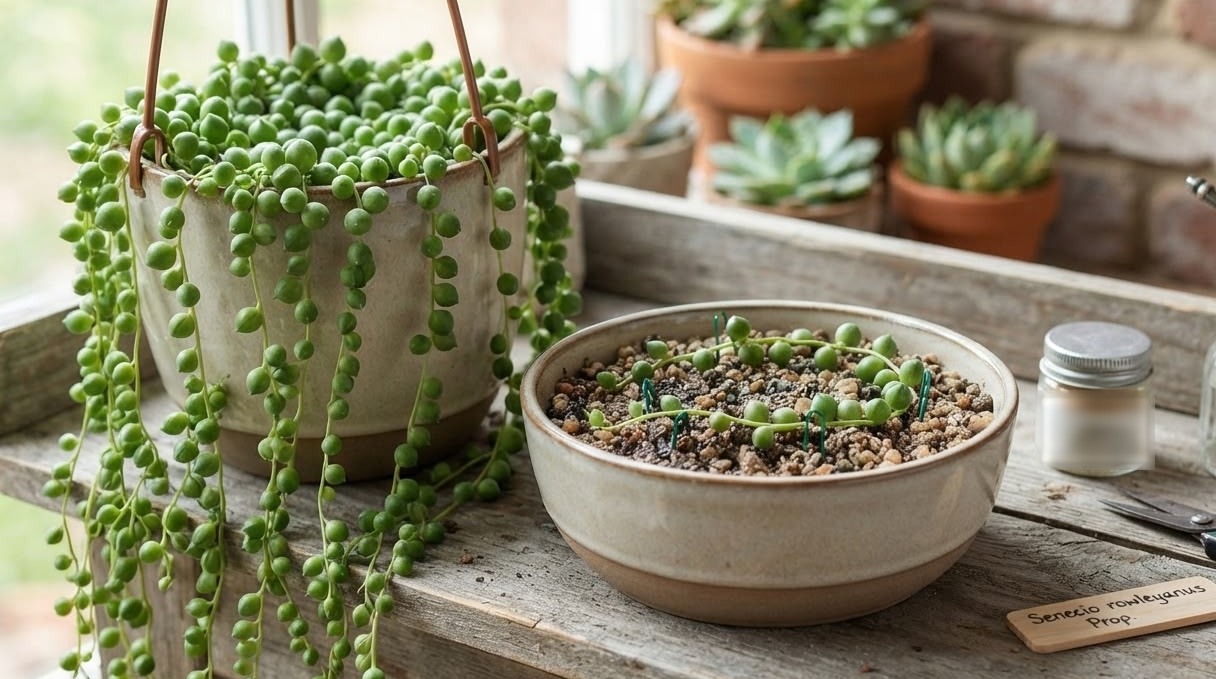
Take cuttings during the growing season (spring through summer) and avoid winter, when the plant is resting. I’d always root a few spare cuttings from a healthy strand: NC State suggests starting again from cuttings rather than trying to revive an old, declining plant, and spares give you that option if the parent ever rots.
Common Mistakes With String of Pearls
Watering on a fixed schedule. One of the most common ways to kill it. Water only when the beads tell you they’re thirsty (slightly soft or lost roundness). This changes drastically with season, pot size, and light level, and a schedule cannot account for it.
Putting it in a dark corner. The plant looks dramatic as a trailing decoration, but without bright light it becomes weak and straggly and slowly declines. A well-lit window is mandatory, not optional.
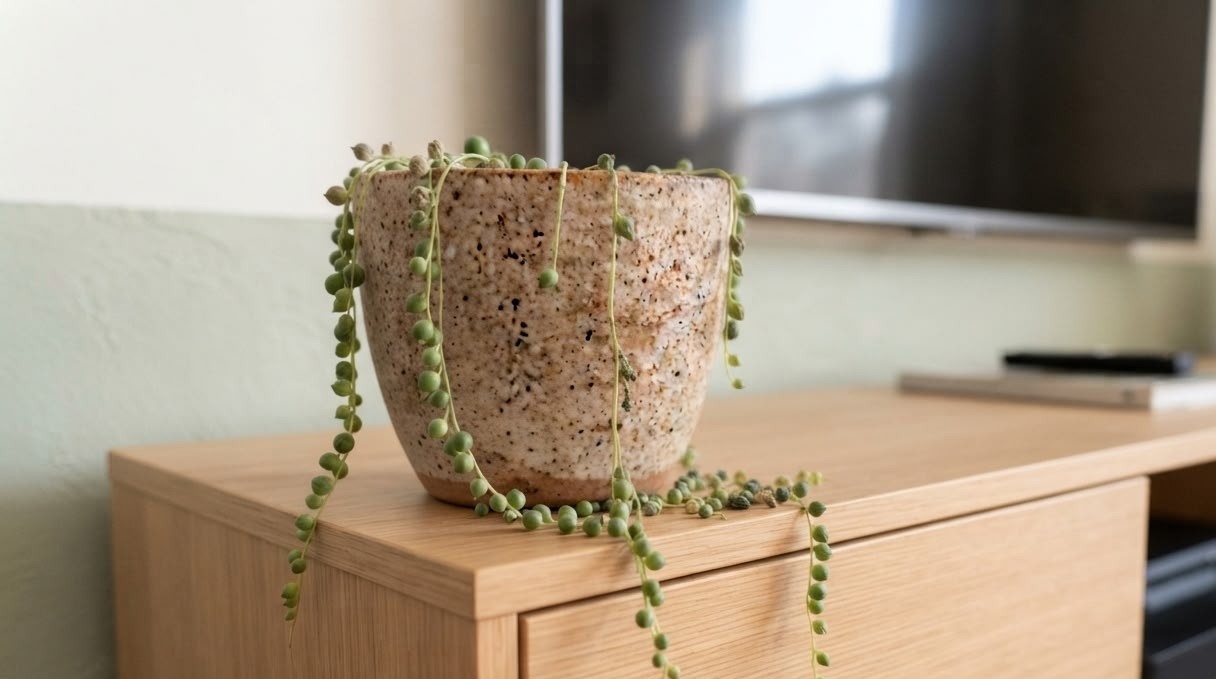
Using regular potting mix. Standard potting mix holds more water than string of pearls wants. Always add perlite or use a dedicated succulent mix.
Frequently Asked Questions
Why is my string of pearls shriveling even though I just watered it?
If the beads are soft rather than firm, root rot is likely: the roots can no longer absorb water. Remove from pot, trim dark or mushy roots, and repot in dry mix. If the beads are firm but wrinkled, the soil may have dried too fast. A mix that’s too gritty can cause this.
Is string of pearls hard to keep alive?
It has a reputation for difficulty, but many failures come from overwatering. In bright light with very infrequent watering and fast-draining soil, it is surprisingly resilient.
How long do string of pearls strands grow?
The RHS says stems can reach up to 90 cm (3 ft) long, and the University of Wisconsin also gives up to three feet. Growth rate slows significantly without adequate light.
What is the difference between Senecio and Curio rowleyanus?
They refer to the same plant, string of pearls. The name changed when P.V. Heath moved the plant from the genus Senecio to Curio in 1999. Both names are still widely used; Curio rowleyanus is the currently accepted scientific name.