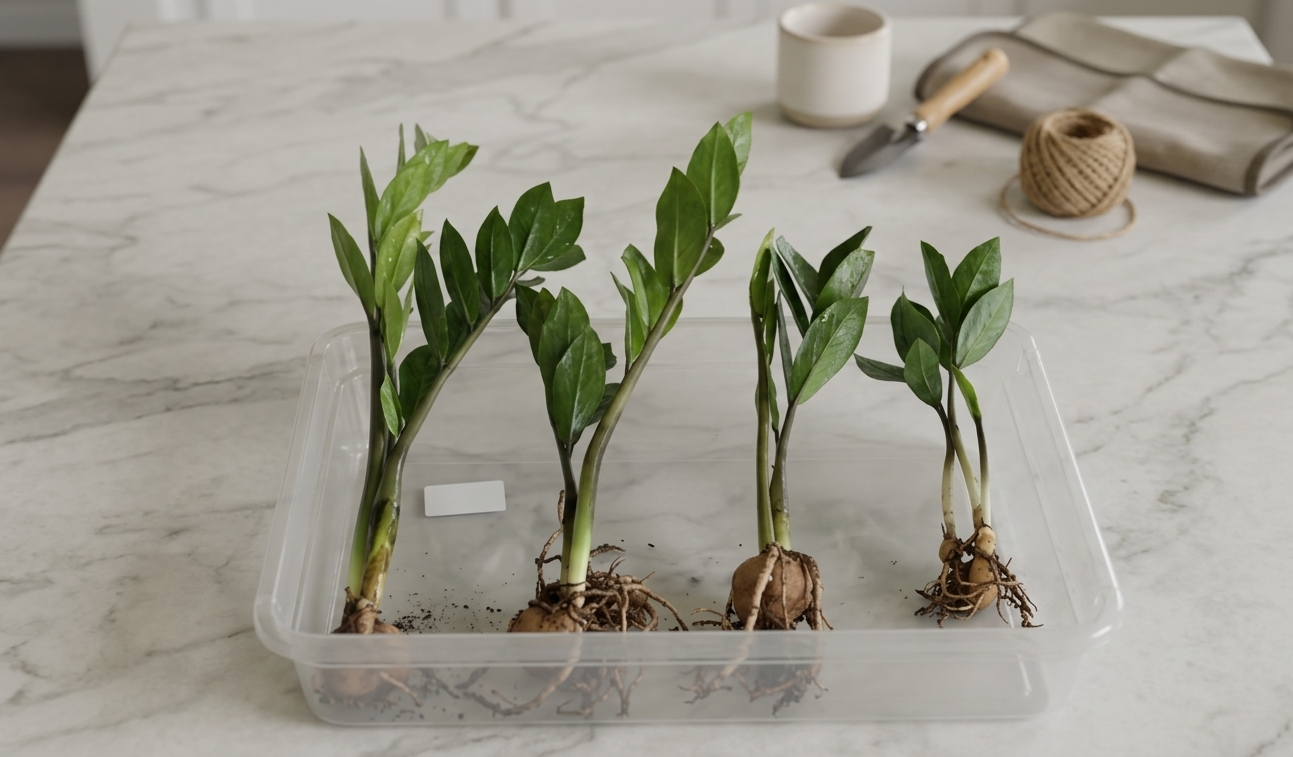
ZZ plants are easy to propagate, but the method you choose makes a big difference in how long you wait. Division gives you a new plant in weeks. Leaf cuttings technically work but take over a year to produce anything worth keeping. Knowing which method fits your timeline saves a lot of frustration. For a full overview of ongoing ZZ plant care, see our ZZ plant care guide.
This ZZ plant propagation guide covers the three methods that actually work (division, stem cuttings, and water propagation), plus an honest look at leaf propagation and why it takes so much patience.
Can You Propagate a ZZ Plant?
Yes, and it’s more straightforward than most houseplant propagation. ZZ plants can be multiplied through division (splitting the rhizomes), stem cuttings in soil, stem cuttings in water, or individual leaf cuttings. Each method works, but they vary significantly in how long they take and how much effort they require. One botanical note: UF/IFAS describes the ZZ plant as stemless, with petioles arising directly from the rhizome, so what this guide (like most) calls a stem is really a whole leaf, and a stem cutting is a leaf cutting with several leaflets still attached.
One note if you own a Raven ZZ plant: the ‘Dowon’ cultivar is covered by US Plant Patent PP30,035, and Costa Farms, which grows it under license, tags it Propagation Prohibited. Under US law (35 U.S.C. 163), a plant patent gives its owner the right to exclude others from asexually reproducing the plant, and the statute has no separate exception for home use. I would not divide or root a Raven ZZ without permission while the patent is in force.
When Is the Best Time to Propagate a ZZ Plant?
Spring through early summer is ideal. The plant is coming out of its slow winter period and actively pushing new growth, so cuttings root faster and divisions establish more quickly when the plant has momentum. That said, ZZ plants can be propagated at any time of year. You’ll just wait longer for roots in fall or winter.
Method 1: Division (Fastest Results)
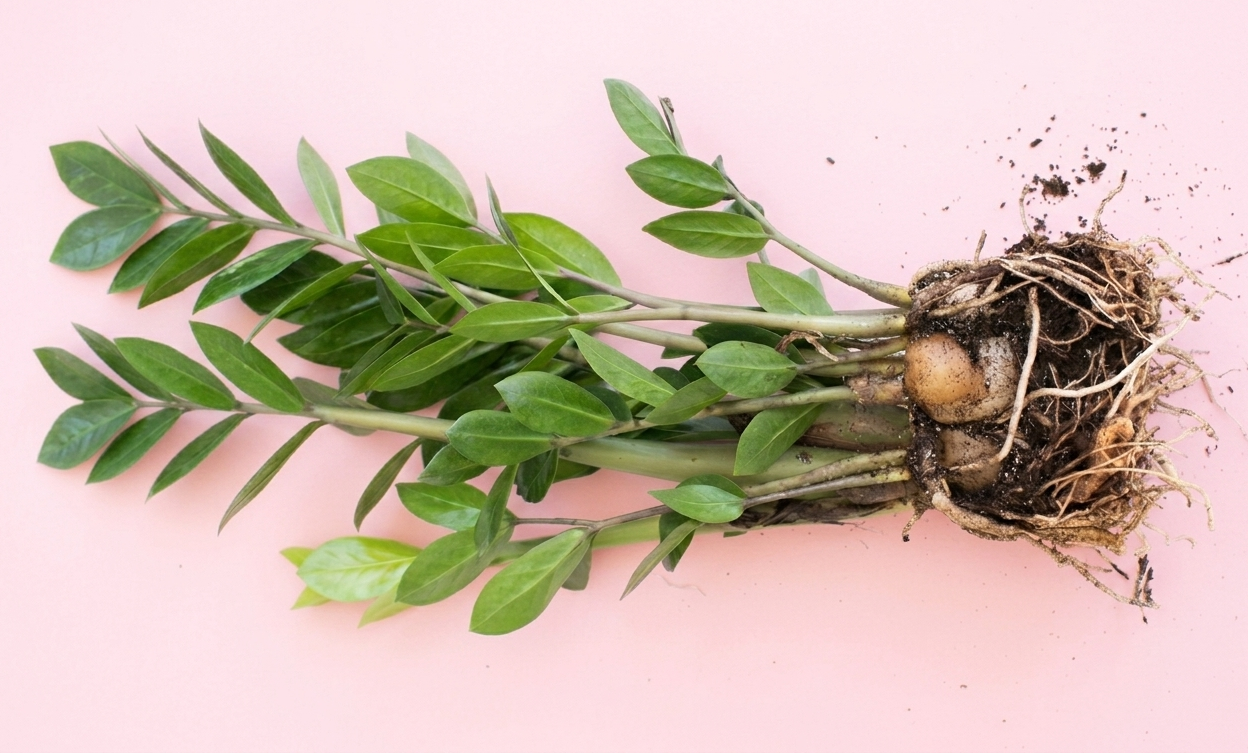
If your ZZ plant has multiple stems growing from separate rhizomes, division is by far the quickest way to get a new plant. You’re not waiting for roots to form: the divided section already has an established root system. I would save division for the moment a plant has outgrown its pot and needs repotting anyway, so you solve two problems at once.
What You Need
- A pot-bound ZZ plant with multiple rhizomes
- Clean, sharp knife or pruning shears
- Fresh well-draining potting mix
- Two pots with drainage holes
How to Divide a ZZ Plant
- Remove the plant from its pot and gently shake off excess soil to expose the rhizomes.
- Identify natural separation points: clusters of rhizomes that can be separated without cutting through a large root mass.
- Pull apart or cut the rhizomes into sections, making sure each division has at least one stem and a healthy rhizome with some roots attached.
- Let any cut surfaces dry for a few hours before potting.
- Plant each division in fresh potting mix at the same depth it was growing before. Water lightly and place in bright indirect light.
Some yellowing or dropped leaflets while a division adjusts to its new pot are common and usually not a cause for worry. ZZ is slow-growing even under favorable conditions (UF/IFAS), so new shoots can take a few months to appear, especially in a cool room. That’s still far faster than waiting for a cutting to form rhizomes from scratch.
Method 2: Stem Cuttings in Soil
Stem cuttings work reliably, just not quickly. In warm, humid conditions, ZZ cuttings usually form roots and a small rhizome within one to two and a half months, but at ordinary room temperature it can take a year or more before the cutting looks like a proper plant. The wait is the main reason people give up on this method too soon. My advice is to take two or three cuttings at once, so one slow cutting doesn’t convince you the method has failed.
How to Propagate ZZ Plant from Stem Cuttings
- Cut a healthy stem at its base, or take a top section 3–5 inches long that still carries several leaflets. Bare stalk is not worth sticking: a Michigan State study cited by Illinois Extension found that a stem cutting without an attached leaf did not callus or root. Use a clean knife or scissors, since dirty cuts invite rot.
- Let the cut end dry and callus for a few days before it touches soil. Illinois Extension recommends this step to reduce the risk of rot.
- Fill a small pot with well-draining mix (perlite-heavy works well for cuttings).
- Insert the cutting about 1–2 inches deep and firm the soil around it.
- Water lightly and place in bright indirect light. Cover loosely with a clear plastic bag or dome to increase humidity around the cutting. Keep it warm: Illinois Extension says ZZ cuttings do best with air temperatures near 80°F and relatively high humidity.
- Check every 2–3 weeks by giving the cutting a very gentle tug. When it resists, roots have formed.
How Long Does ZZ Plant Propagation Take?
For cuttings kept warm, research on commercial ZZ propagation gives roughly this sequence. A cool room stretches every stage.
| Stage | Timeline |
|---|---|
| Drying (callusing) the cut end | A few days |
| Small rhizome and first roots | About 1–2.5 months |
| First new shoot (tiny, two leaflets) | Around 2–4 months after sticking |
| Saleable plant, grown on at 84–90°F | About 6–8 months more |
| Decent-sized plant at room temperature | A year or more |
The slow timeline isn’t failure; it’s just how ZZ plants work. The rhizome has to develop before the cutting can support significant new growth.
Method 3: ZZ Plant Propagation in Water
Water propagation follows the same process as soil, but you can watch the roots develop through the glass. Illinois Extension lists a shallow container of water as an option for ZZ cuttings, with the same slow, months-long timeline. The trade-off: water-rooted cuttings need a careful transition to soil since the roots adapt to their growing environment.
How to Propagate ZZ Plant in Water
- Take a stem cutting 3–5 inches long with several leaflets attached and let the cut end dry for a few days.
- Place the cutting in a glass or jar with enough water to submerge the bottom 1–2 inches of stem, keeping the leaves above the waterline.
- Set in bright indirect light and change the water every 5–7 days to prevent bacterial buildup.
- Once roots and a small rhizome have formed, transition to soil, as Illinois Extension advises. Plant in well-draining mix, water lightly, and keep humidity slightly higher for the first few weeks while the roots adjust.
Don’t leave cuttings in water indefinitely. Roots that form in water are adapted to water, and the longer you wait to transfer, the harder the adjustment to soil tends to be.
ZZ Plant Leaf Propagation: Does It Work?
Yes, and commercial growers use leaflet cuttings routinely. A single ZZ leaflet forms a small rhizome and roots, and then a new shoot. Under warm, humid production conditions, UF researchers Chen and Henny reported the first shoot about 65 days after sticking, but that shoot is tiny, usually with just two leaflets, and it takes a year or more to grow a leaflet cutting into a plant of decent size. In a cooler living room, expect every stage to take longer.
The process: remove a healthy leaflet cleanly where it joins the central stalk, let the cut end callus for a few days, then plant it upright in a moist, well-draining mix about half an inch deep. Keep it in a warm spot with indirect light and maintain light moisture. Don’t expect visible progress for months.
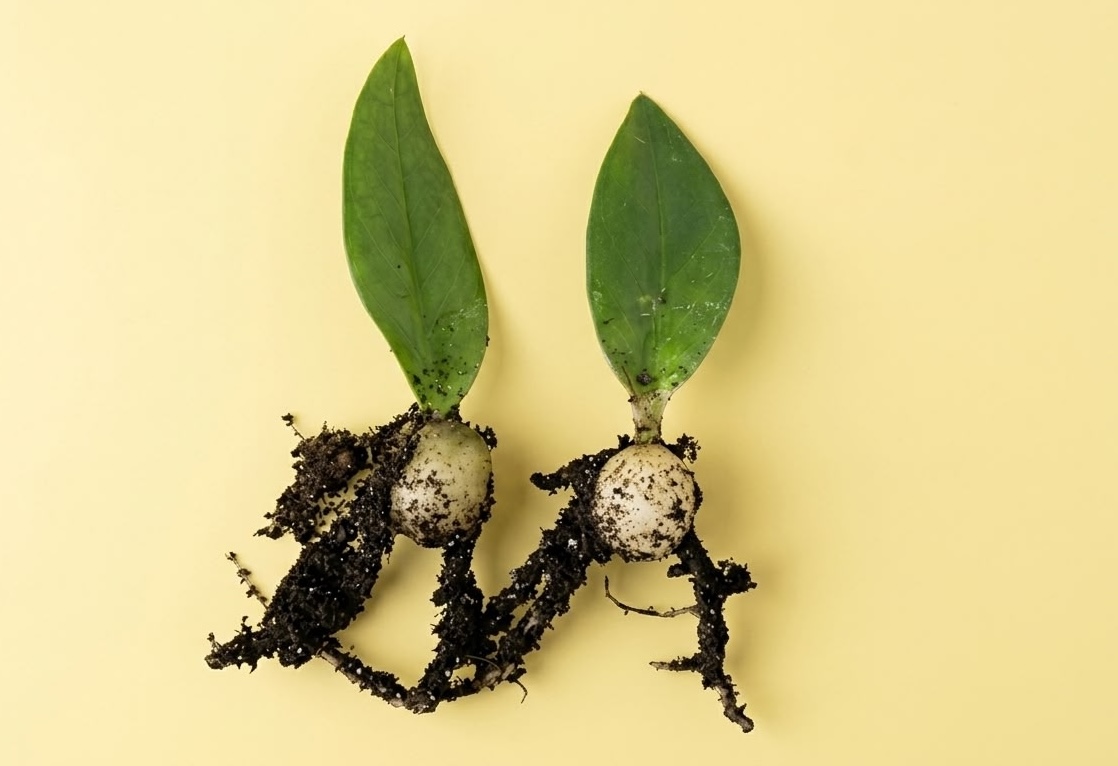
If you have spare leaflets from pruning, try it: it’s a genuinely interesting process to watch. If it were my plant, I would stick several leaflets at once, because a whole leaflet usually produces just one small rhizome. Just don’t do it expecting a sizeable plant by next season.
Should You Use Rooting Hormone on ZZ Plant Cuttings?
It’s optional, and for ZZ plants usually unnecessary. UF researchers Chen and Henny reported that leaflet cuttings root at a high rate without a rooting stimulant, and in a Kasetsart University trial, leaflet cuttings given no growth regulators reached 90 to 100% rooting and rhizome formation. The cutting’s own stored reserves fuel the new roots and rhizome. I would skip rooting hormone for ZZ and put the effort into warmth and a mix that stays barely moist.
If you still want to use it in soil, coat the bottom inch of the cutting with powder or gel before planting. If you’re propagating in water, skip it: it disperses and doesn’t do much in that environment. Division doesn’t need it at all since you’re working with an established root system.
Why Is My ZZ Plant Cutting Not Rooting?
A few common reasons cuttings stall:
- Too much water. This is the most frequent culprit. Cuttings sitting in wet soil rot before they root. The mix should be barely moist, not wet.
- Not enough light. Cuttings need bright indirect light to develop roots. A dim corner will produce very slow or no progress. Warmth matters too: a cold windowsill slows rooting, and Illinois Extension suggests keeping cuttings near 80°F.
- Cut wasn’t calloused. Putting a fresh-cut stem directly into moist soil often leads to rot at the cut end. Let it dry for a few days first.
- It’s just too soon. ZZ propagation is genuinely slow. What looks like failure at 6 weeks is often just the plant taking its time. Give stem cuttings at least 3–4 months before concluding they haven’t worked.
Frequently Asked Questions
How long does ZZ plant propagation take?
It depends on the method. Division gives you an established plant almost immediately, though it needs a few weeks to settle in. Stem and leaflet cuttings kept warm usually form roots and a small rhizome within one to two and a half months, but they take a year or more before the new plant looks substantial, and longer in a cool room.
Can you propagate a ZZ plant in water?
Yes. Take a 3–5 inch stem cutting with leaflets attached, let the cut end dry for a few days, then place the base in water. In warm conditions, roots and a small rhizome usually form within one to two and a half months. Transfer to soil once roots and a rhizome have developed. Don’t wait too long, as roots formed in water are adapted to it and the move to soil gets harder the longer you wait.
What is the fastest way to propagate a ZZ plant?
Division is by far the fastest method. If your ZZ plant has multiple rhizome clusters, you can split them during repotting and have a new established plant within a few weeks. Cuttings take months; division gives you a plant with roots already in place.
Can you propagate ZZ plant from a single leaf?
Yes, but it’s slow. A single leaflet forms a small rhizome, roots and then a tiny first shoot, which in warm conditions can appear about two to four months after sticking. Growing it into a plant of decent size takes a year or more. Stem cuttings or division are more practical if you want results in a reasonable timeframe.
Why isn’t my ZZ plant cutting rooting?
The most common causes are too much moisture (the mix should be barely damp, not wet), skipping the callusing step before planting, or simply not waiting long enough: ZZ cuttings can take 3–4 months to root, longer in a cool room. Give it more time before concluding it has failed.