Polka dot plant (Hypoestes phyllostachya) is one of the most colorful houseplants you can grow — but those vibrant spots vanish fast in the wrong conditions. This guide covers everything from light and watering to the one mistake that turns your plant into a plain green shrub, so your polka dots stay bold all year.
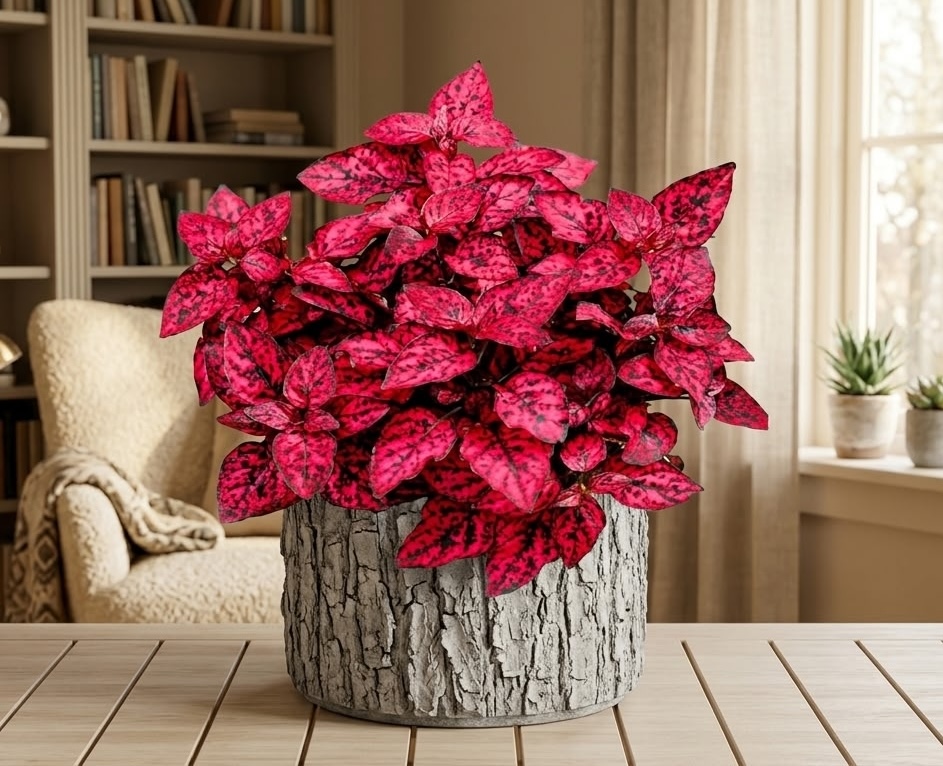

What Does a Polka Dot Plant Need to Thrive?
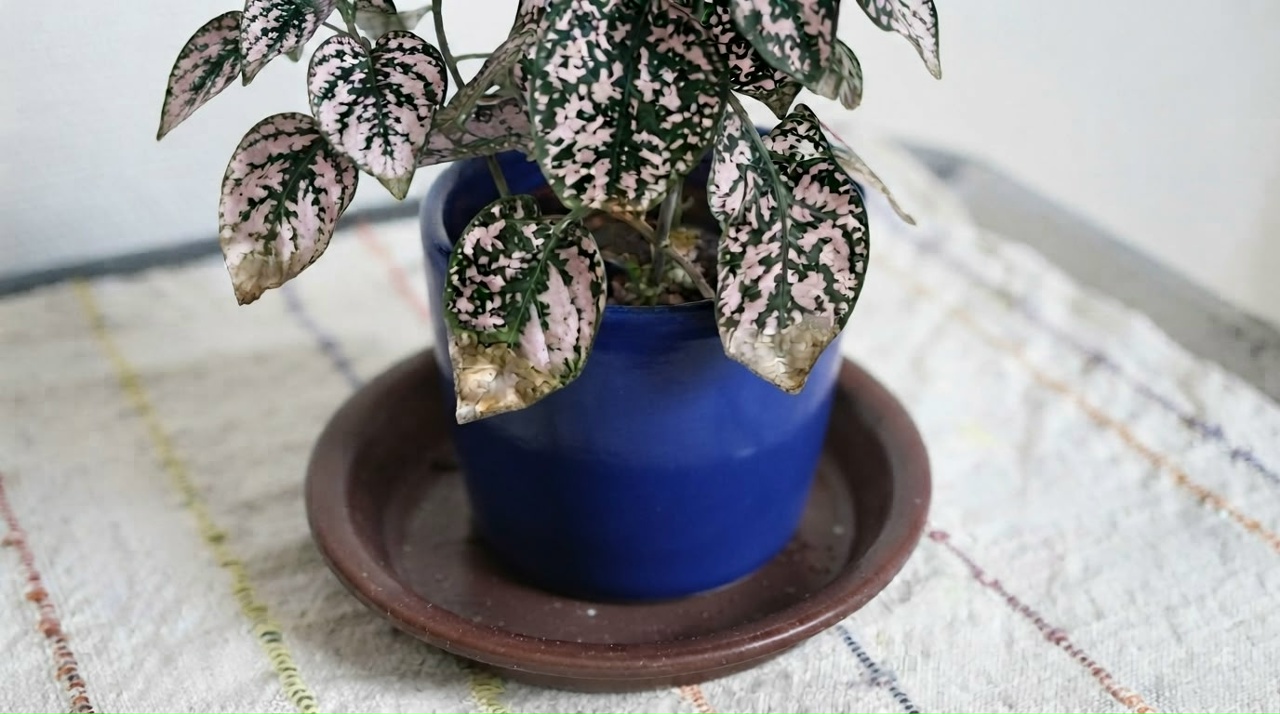
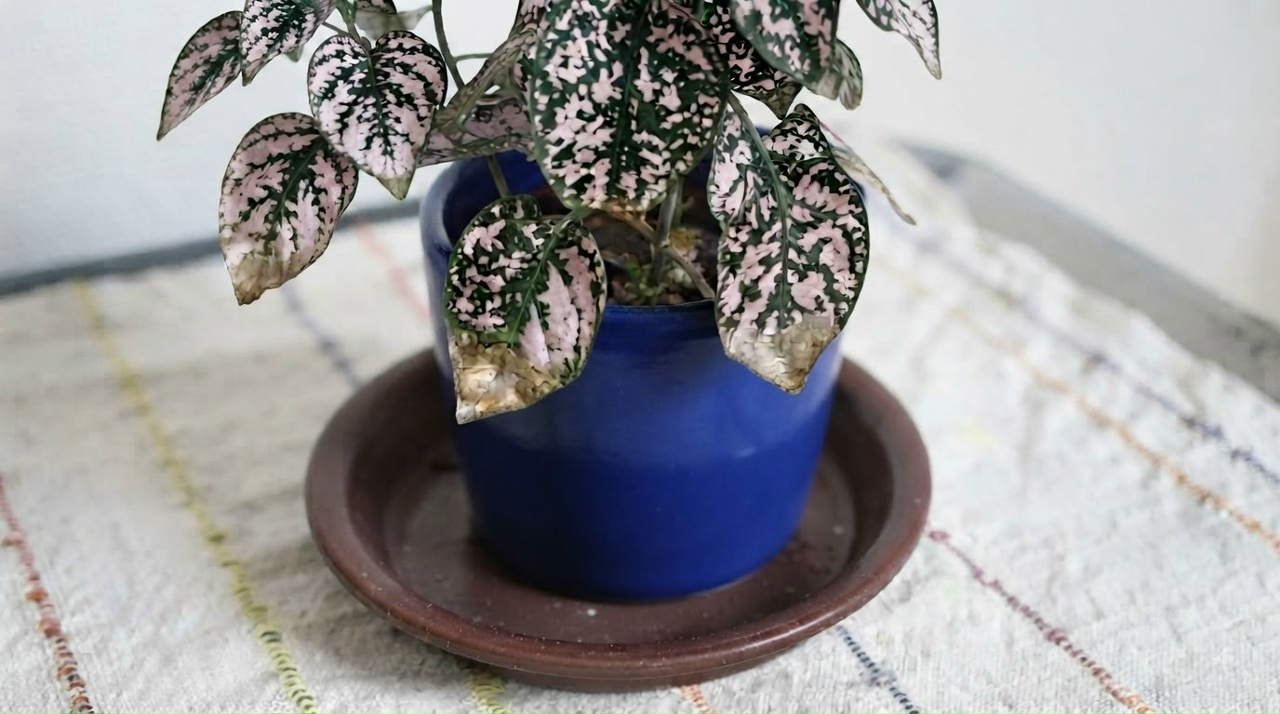
Light: The #1 Factor for Keeping Colors Bright
Polka dot plants need medium to bright indirect light. Place them near an east or north-facing window where they get plenty of light without harsh direct sun — morning sun (before 10 a.m.) is fine, but afternoon rays will bleach the leaf patterns.
Too little light is the most common reason polka dot plants lose their signature spots. In low light, the plant produces more chlorophyll to absorb whatever light it can, and the colored markings fade as the green overwhelms them.
Watering: How to Strike the Right Balance
Water your polka dot plant when the top inch of soil feels dry. This typically works out to every 7–10 days in summer and every 10–14 days in winter. The plant will droop visibly when thirsty — a handy signal, as long as you don’t wait too long.
Always water thoroughly until it drains from the bottom, then empty the saucer after 30 minutes. Standing water in the saucer leads to root rot.
Humidity and Temperature
Polka dot plants are native to Madagascar and prefer humidity between 50–60%. Most homes run at 30–40%, so you may need a pebble tray filled with water under the pot or a nearby humidifier. Misting works but can encourage powdery mildew if the leaves stay wet overnight.
Keep temperatures between 65–75°F (18–24°C). Avoid cold drafts, air conditioning vents, and temperatures below 60°F — cold air causes leaf drop.
Why Is My Polka Dot Plant Losing Its Spots?

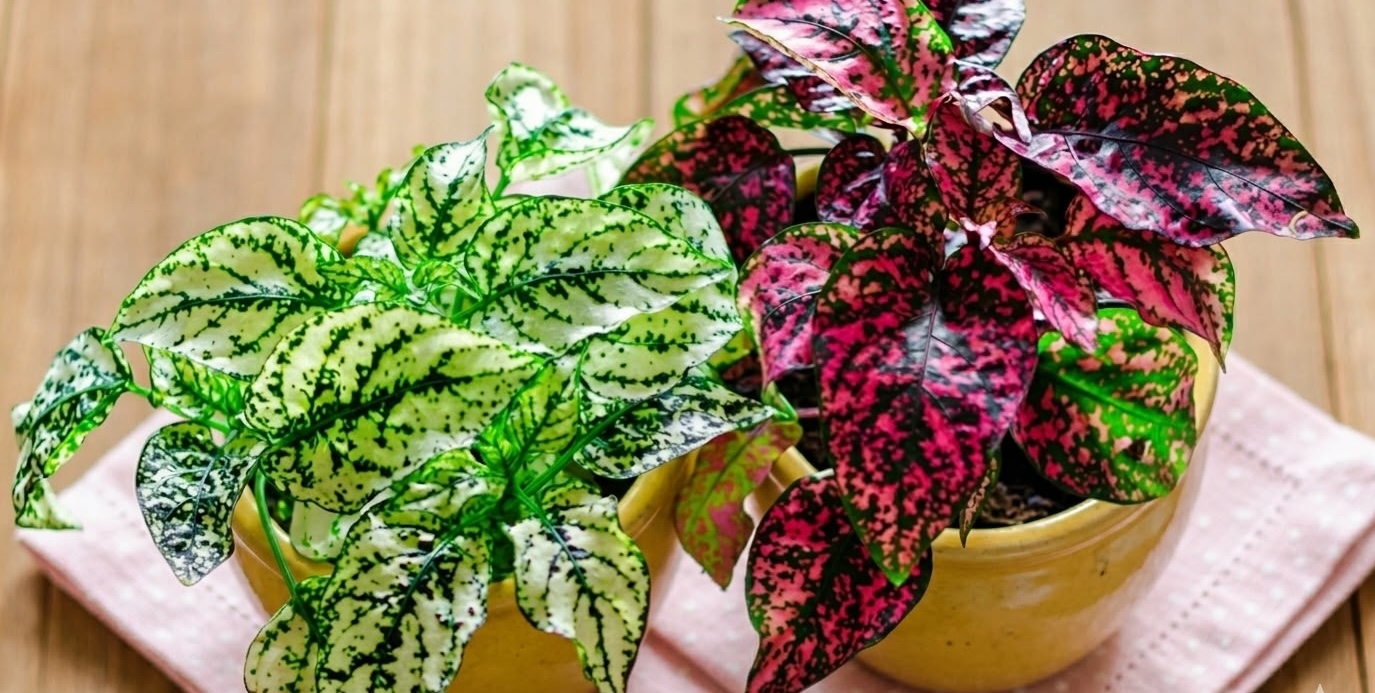
If the pink, red, or white markings on your plant are fading and it’s looking more green by the day, the cause is almost always insufficient light. Move the plant to a brighter spot — within 2–3 feet of a window — and the colors will intensify within a few weeks as new leaves grow in with stronger pigmentation.
Note that existing leaves won’t regain their color once faded; new growth will show the difference.
Why Is My Polka Dot Plant Leggy and Stretching Out?

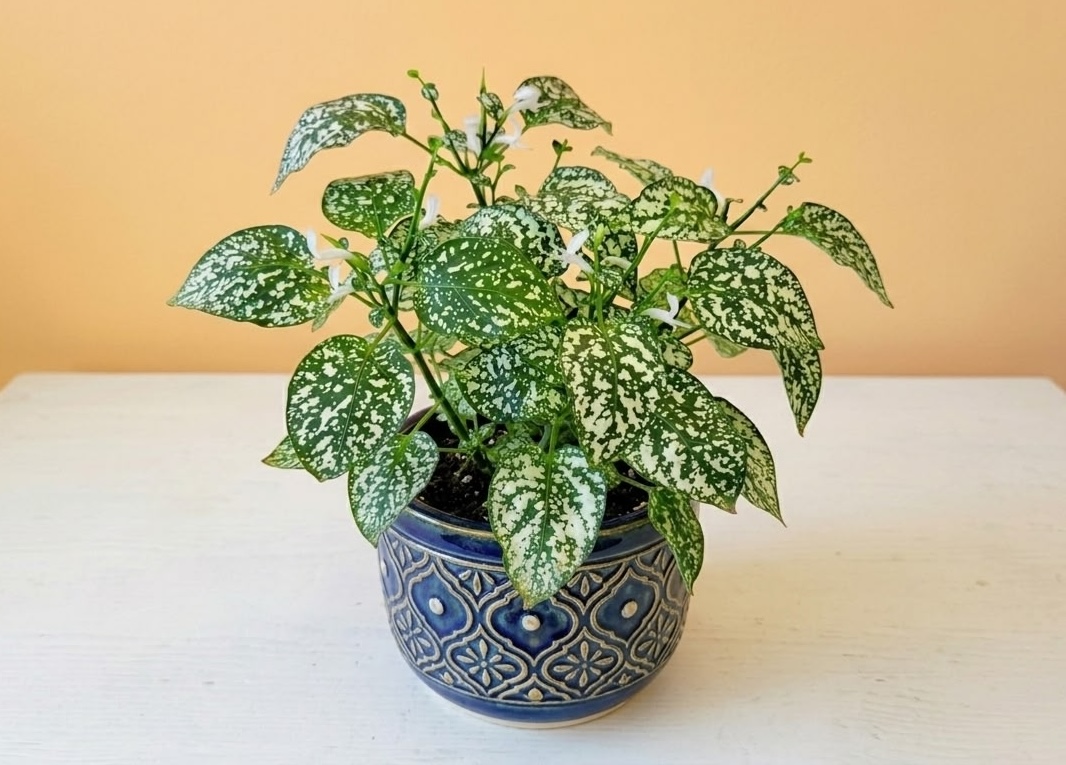
Leggy, stretched growth — long bare stems with small, widely spaced leaves — is another light problem. The plant is reaching toward any available light source. Move it closer to a window and start pinching the tips to force compact, bushy new growth.
How to Prune a Polka Dot Plant (and Why It Matters)
Pinching is the single most important maintenance task for polka dot plants. Without it, the plant grows tall and leggy, produces fewer spots, and exhausts itself early.
Pinch the stem tips every 1–2 weeks during the growing season: simply squeeze off the top pair of leaves between your thumb and forefinger. This forces the plant to branch from lower nodes, creating a fuller, denser shape.
Also pinch off flower spikes as soon as they appear. The small lilac flowers are pretty, but flowering signals the plant to slow foliage production — and after flowering, the plant declines.
What Happens When a Polka Dot Plant Flowers?

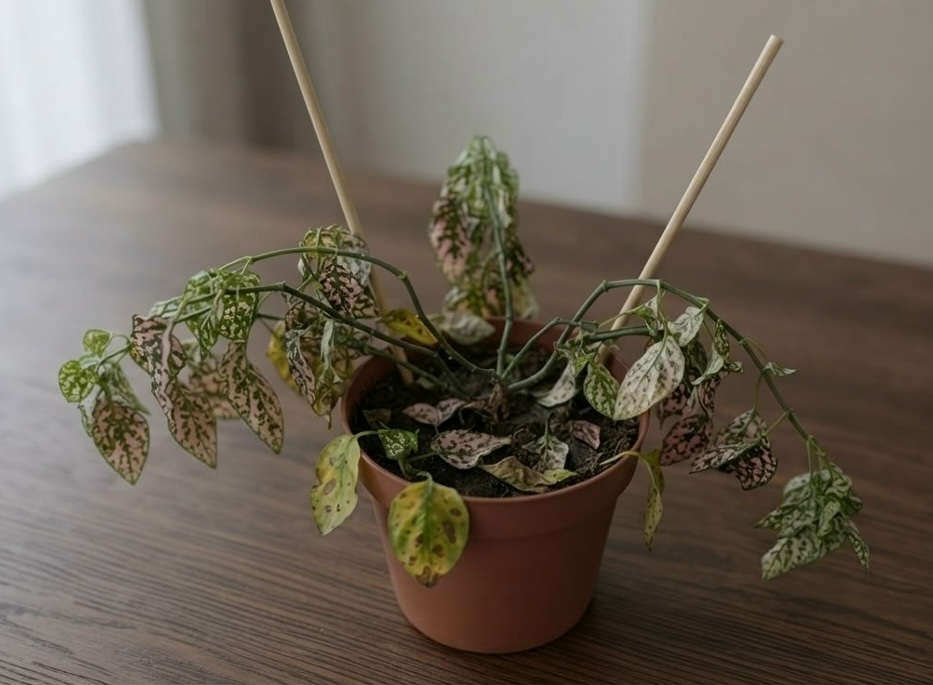
Polka dot plants behave like annuals in most indoor conditions. Once a plant flowers fully and sets seed, it begins to die back — this is normal, not a care failure. You can delay flowering by pinching flower spikes repeatedly, but eventually the plant will complete its lifecycle.
The practical solution: take stem cuttings before flowering begins and root new plants to replace the parent. That way you always have a young, vigorous plant growing.
Common Mistakes That Kill Polka Dot Plants

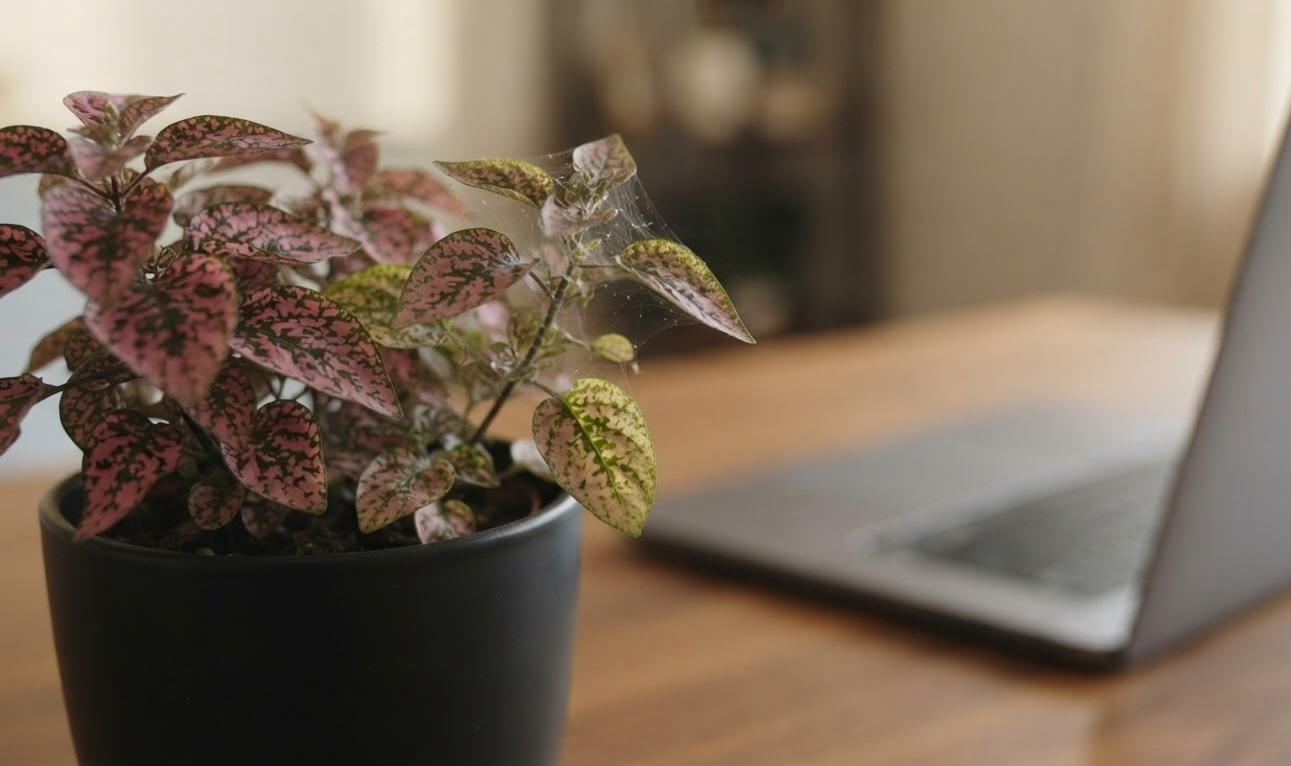
Overwatering in Low Light
A plant in dim conditions uses less water and dries out more slowly. If you keep a fixed watering schedule without checking the soil first, you’ll overwater in winter or in low-light spots. Always test the top inch of soil before watering — your finger is more reliable than a calendar.
Skipping Fertilizer in Summer
Polka dot plants are heavy feeders during active growth. Without fertilizer, the foliage becomes dull and growth slows. Apply a balanced liquid fertilizer at half strength every two weeks from spring through early fall. Stop fertilizing in winter when growth slows.
Letting Mealybugs Go Unchecked
Mealybugs are the most common pest on polka dot plants — they appear as small white cottony clusters at leaf joints and stem bases. Left untreated, they weaken the plant quickly. Wipe them off with a cotton swab dipped in rubbing alcohol and follow up with neem oil spray every 7 days until clear.
Brown Leaf Tips
Brown, crispy tips almost always mean low humidity or fluoride sensitivity from tap water. If the rest of the leaf looks healthy, it’s dry air — the plant wants 50–60% humidity and most homes run at 30–40%. Switch to filtered or distilled water and add a pebble tray under the pot. The new growth will come in clean once conditions improve.
Is Polka Dot Plant Safe for Cats and Dogs?


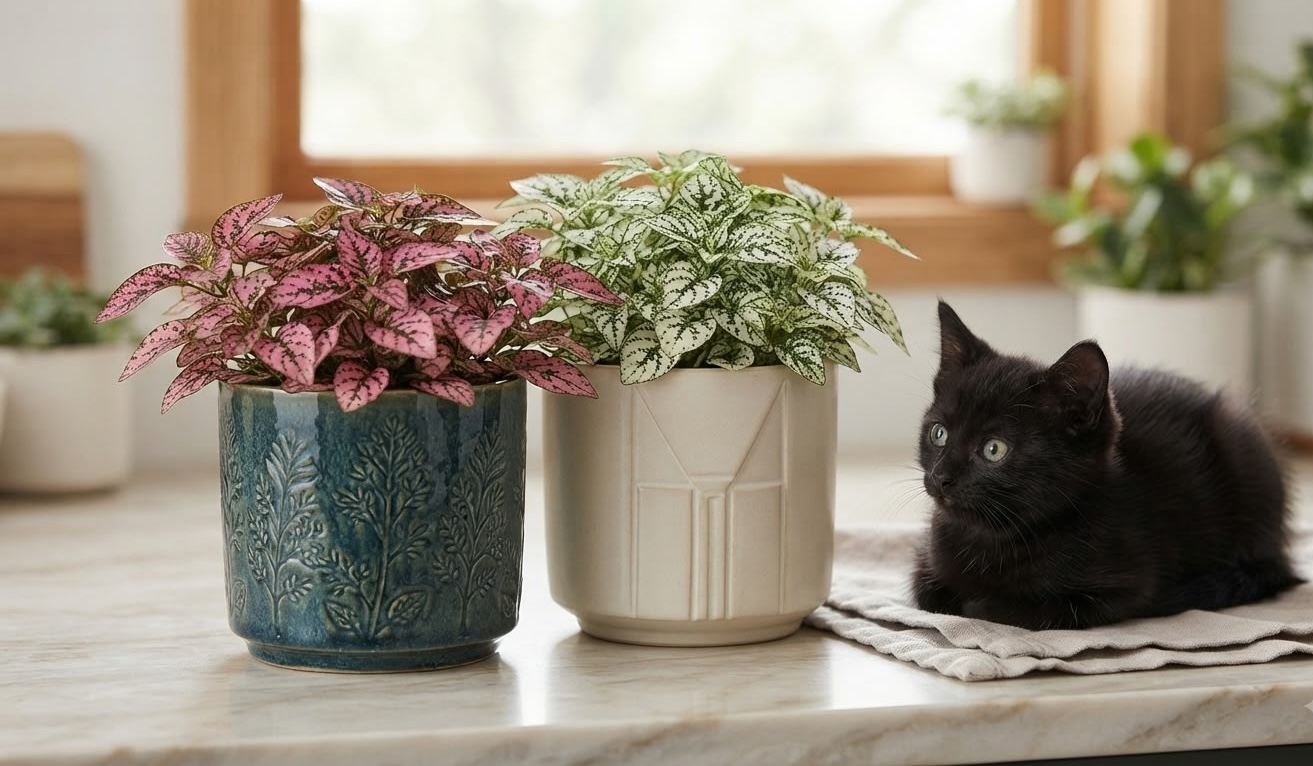
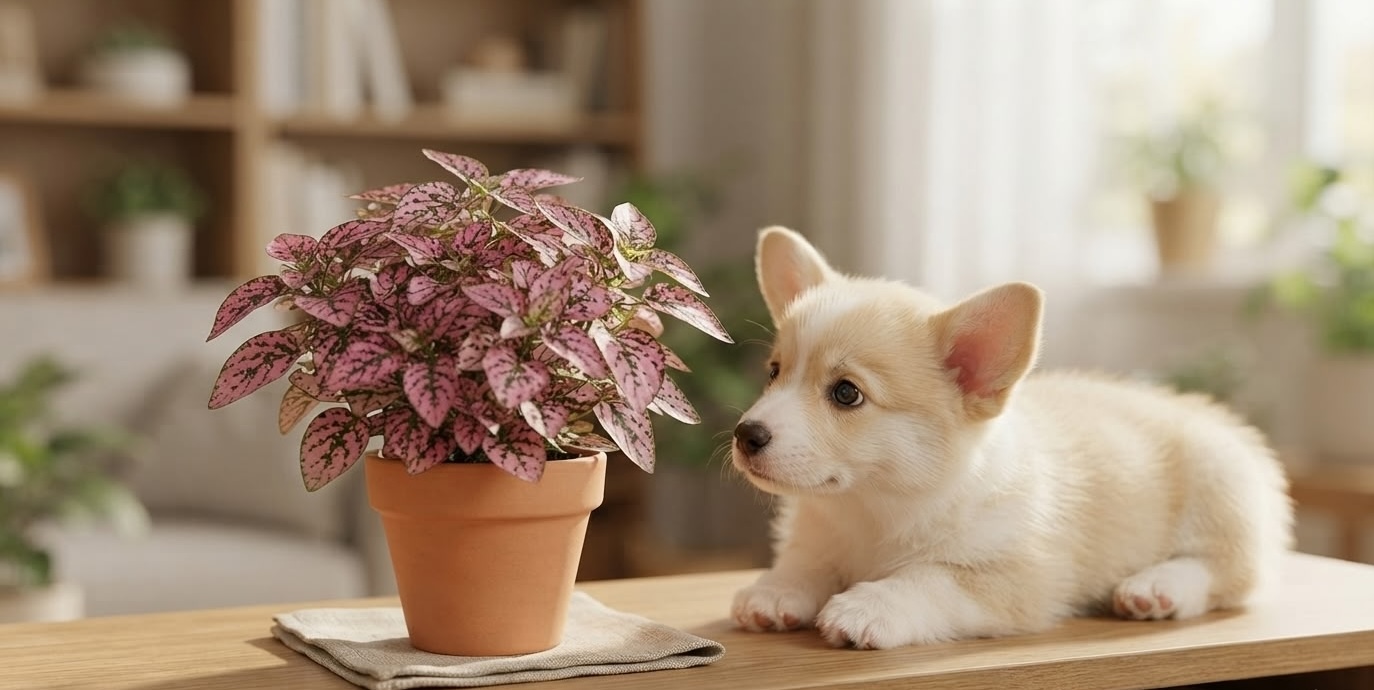
Yes — polka dot plant (Hypoestes phyllostachya) is non-toxic to cats, dogs, and horses according to the ASPCA. If a pet eats a small amount, it may experience mild stomach upset, but there are no toxic compounds involved. It’s one of the safer colorful houseplants for pet owners.
Important: do not confuse Hypoestes phyllostachya with polka dot begonia (Begonia maculata), which has a similar spotted appearance but is toxic to pets. Always verify the botanical name before purchasing.
How to Propagate Polka Dot Plant

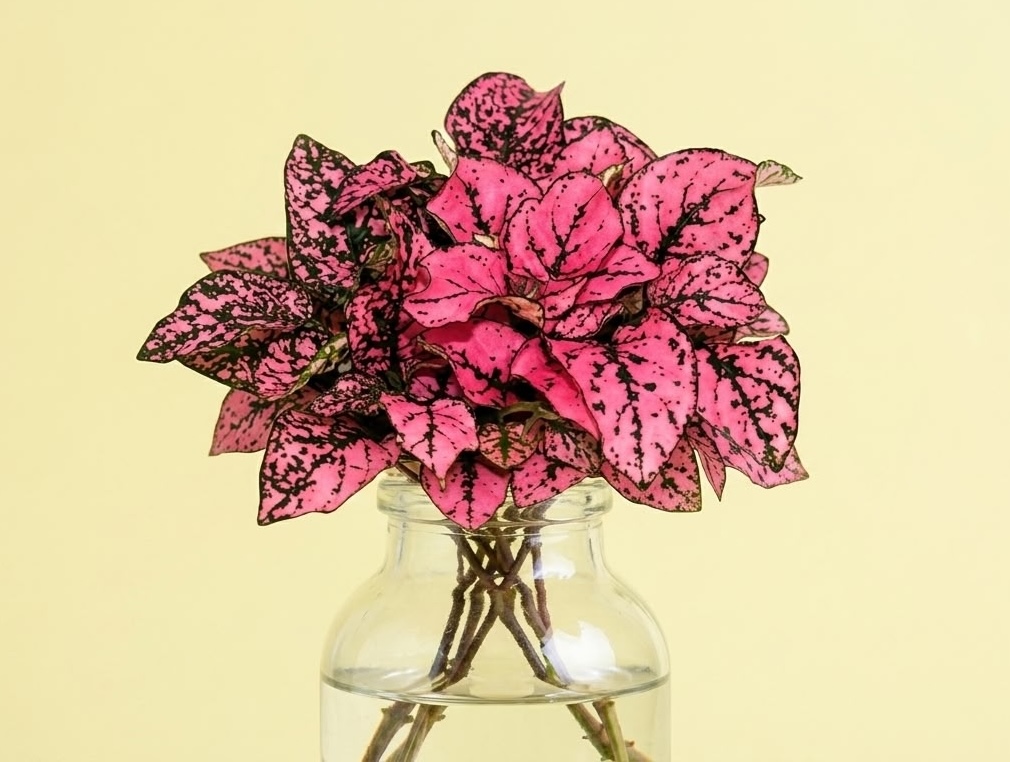
Polka dot plants root easily from stem cuttings:
- Cut a 3–4 inch stem just below a leaf node, removing the bottom leaves.
- Place the cutting in a glass of water or directly into moist potting mix.
- Keep in bright indirect light and high humidity.
- Roots develop within 2–3 weeks in water; transplant to soil once roots reach 1 inch.
Take cuttings in spring or early summer for best results. This is the best way to keep going when the parent plant begins to flower and decline.
When to Repot a Polka Dot Plant
Repot when roots push out from drainage holes or the soil dries out within a day of watering — both signal the plant has outgrown its pot. Spring is the best time. Go one size up (2 inches wider), and use fresh potting mix with extra perlite for drainage.
One caveat: polka dot plants live 1–2 years before declining after flowering. If the plant is already sending up flower spikes, skip repotting and take stem cuttings instead — you’ll get a new healthy plant faster than the parent will recover.
Polka Dot Plant Care Quick Reference
| Factor | Requirement |
|---|---|
| Light | Medium to bright indirect; some morning sun okay |
| Water | When top inch of soil is dry (every 7–10 days) |
| Humidity | 50–60% preferred |
| Temperature | 65–75°F (18–24°C); min 60°F |
| Soil | Rich, well-draining potting mix |
| Fertilizer | Half-strength balanced liquid, every 2 weeks (spring–fall) |
| Toxicity | Non-toxic to cats, dogs, horses (ASPCA) |
FAQ: Polka Dot Plant Care
How often should I water a polka dot plant?
Water when the top inch of soil is dry — usually every 7–10 days in summer and every 10–14 days in winter. The plant droops slightly when it needs water.
Why is my polka dot plant turning green?
Not enough light. Move it to a brighter location within 2–3 feet of a window. New leaves will grow with stronger color within a few weeks — existing faded leaves won’t recover.
How long does a polka dot plant live?
Typically 1–2 years as a houseplant. It declines after flowering. Take stem cuttings before it flowers to propagate new plants and continue the cycle.
Should I cut off polka dot plant flowers?
Yes. Pinch off flower spikes as soon as they appear to prolong foliage growth and delay the plant’s decline. Once it flowers fully, it will begin to die back.
Can polka dot plants grow in low light?
They survive in low light but lose their color markings and become leggy. For the best foliage color and compact growth, provide medium to bright indirect light.