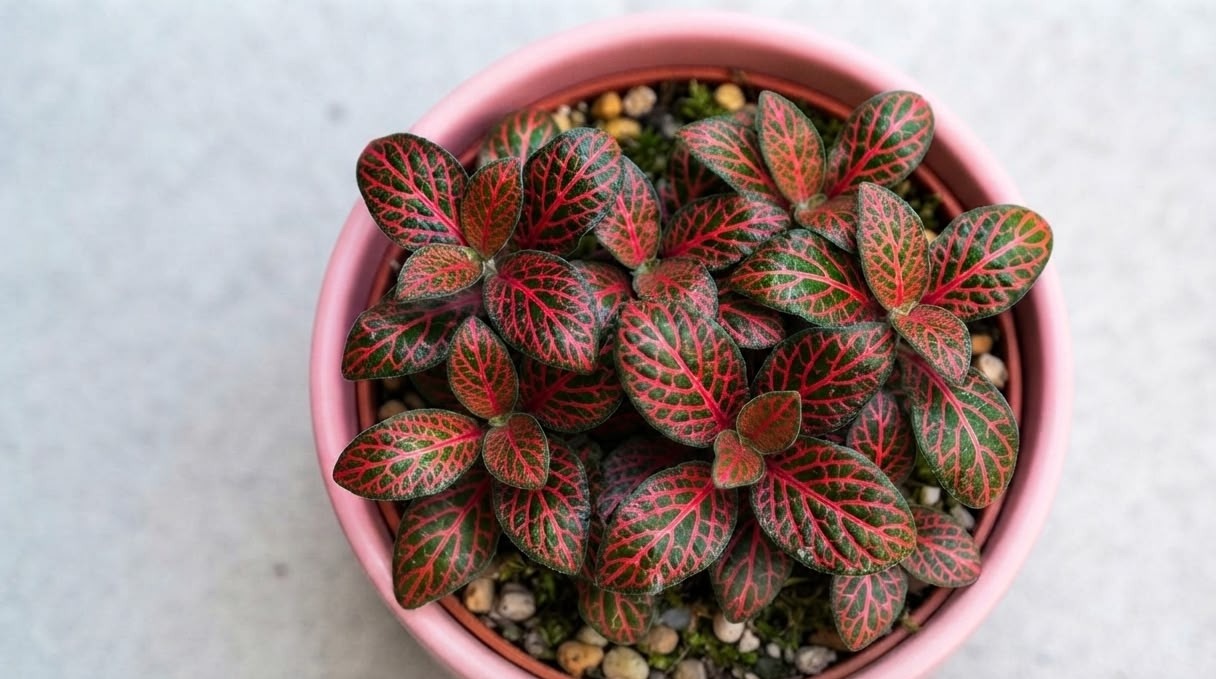
The nerve plant has a well-earned reputation for being the most dramatic houseplant in any room. When it gets thirsty, it doesn’t signal distress subtly: it collapses completely, leaves lying flat against the soil as though the plant has given up entirely. Give it a thorough drink, and it usually stands back up as if nothing happened. This guide covers everything you need to keep Fittonia genuinely thriving: the right light levels, how to handle its humidity demands, how to decode a dramatic droop from a real problem, and how to propagate new plants from cuttings.
What Makes Nerve Plant Different
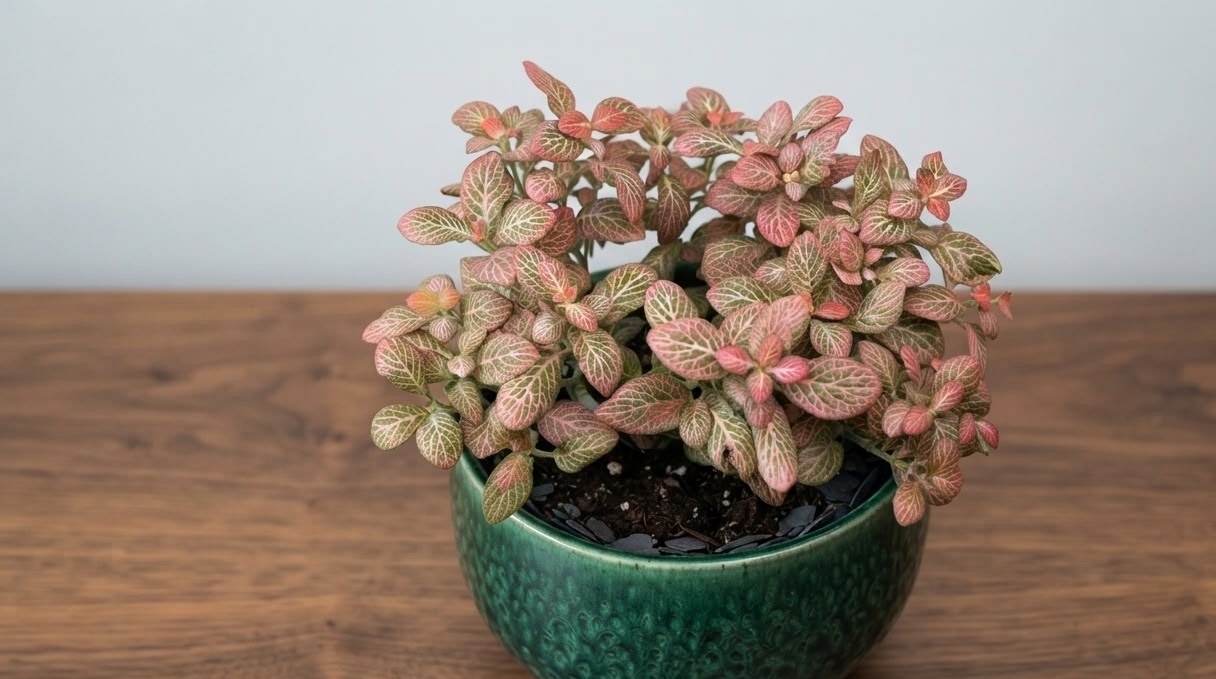
Fittonia albivenis (also known historically as Fittonia verschaffeltii) is a low-growing tropical plant native to the tropical rainforests of northern South America (Colombia, Venezuela, Ecuador, Peru, Bolivia and northern Brazil), where it grows as a low, creeping herb. Its defining feature is its foliage: deep, rich green leaves overlaid with vivid networks of white, red, or pink veins that appear almost hand-drawn. That intricate patterning is what earned it common names like nerve plant, mosaic plant, and jewel plant, all pointing to the same striking visual quality. Few houseplants deliver this level of leaf detail at such a compact size.
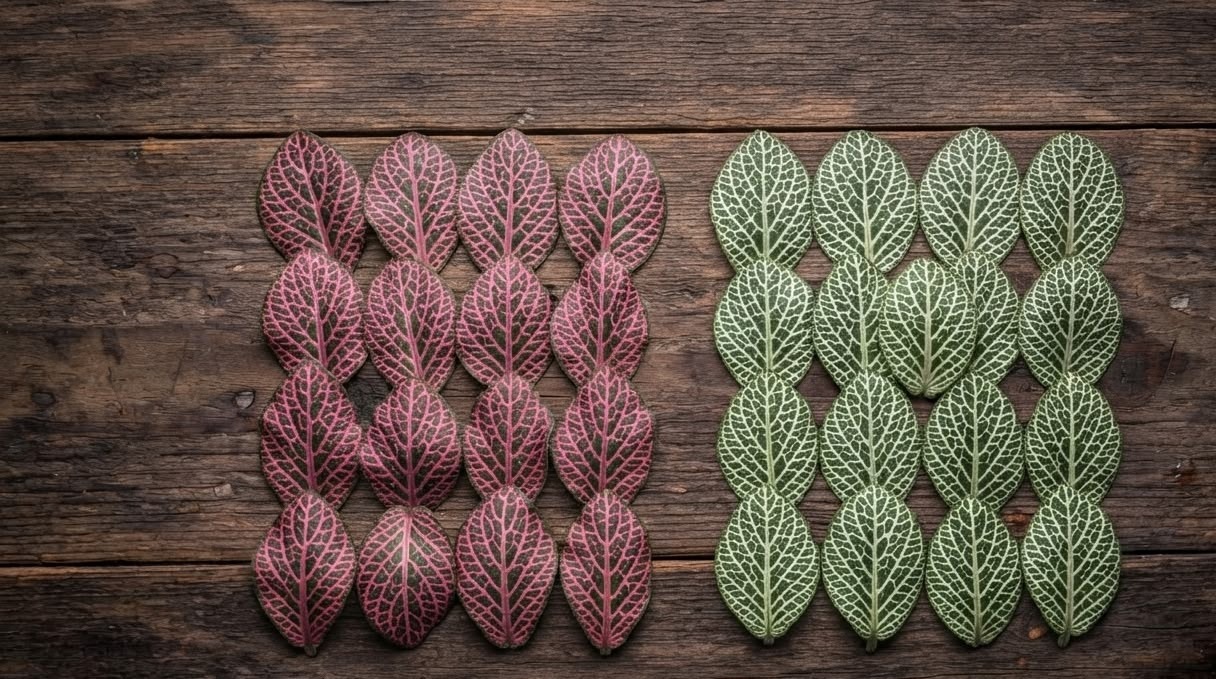
Unlike most upright houseplants, Fittonia spreads outward rather than growing tall, forming a dense, creeping mat that typically stays about 3 to 8 inches high. This spreading habit makes it a natural fit for terrariums and dish gardens, where it functions as a living carpet beneath taller specimens. Its small footprint also means it sits comfortably on narrow windowsills and shelves without competing for space. The compact size, combined with the color variety available (white-veined, deep red, bright pink) makes it popular as both a standalone plant and a component in mixed tropical arrangements. In a larger terrarium it pairs well with a compact fern such as pteris, which also appreciates steady humidity.
The feature that makes Fittonia genuinely unlike almost any other common houseplant is its wilting response. When the soil dries out too much, the plant collapses dramatically: stems folding, leaves lying sideways, looking entirely beyond saving. Most plant owners panic the first time they see this. But Fittonia uses this theatrical collapse as a built-in alarm system: it can usually tolerate the dramatic wilt and recover fully once watered, as long as it has not been left dry for too long. That said, repeated extreme wilting does stress the plant over time, making it more susceptible to pest pressure and slower to recover. The goal is to catch dryness before full collapse, not to treat the droop as a normal routine.
Nerve Plant Care Requirements
What Light Does a Nerve Plant Need?
Fittonia thrives in bright to medium indirect light and performs exceptionally well under fluorescent or grow lights, which is one reason it is so popular in offices and terrariums. A north or east-facing window is ideal: bright enough to support vigorous growth and vivid vein coloring without the intensity that causes damage. If your home has only south or west-facing windows, the plant can work there if positioned well back from the glass or behind a sheer curtain that diffuses the light.
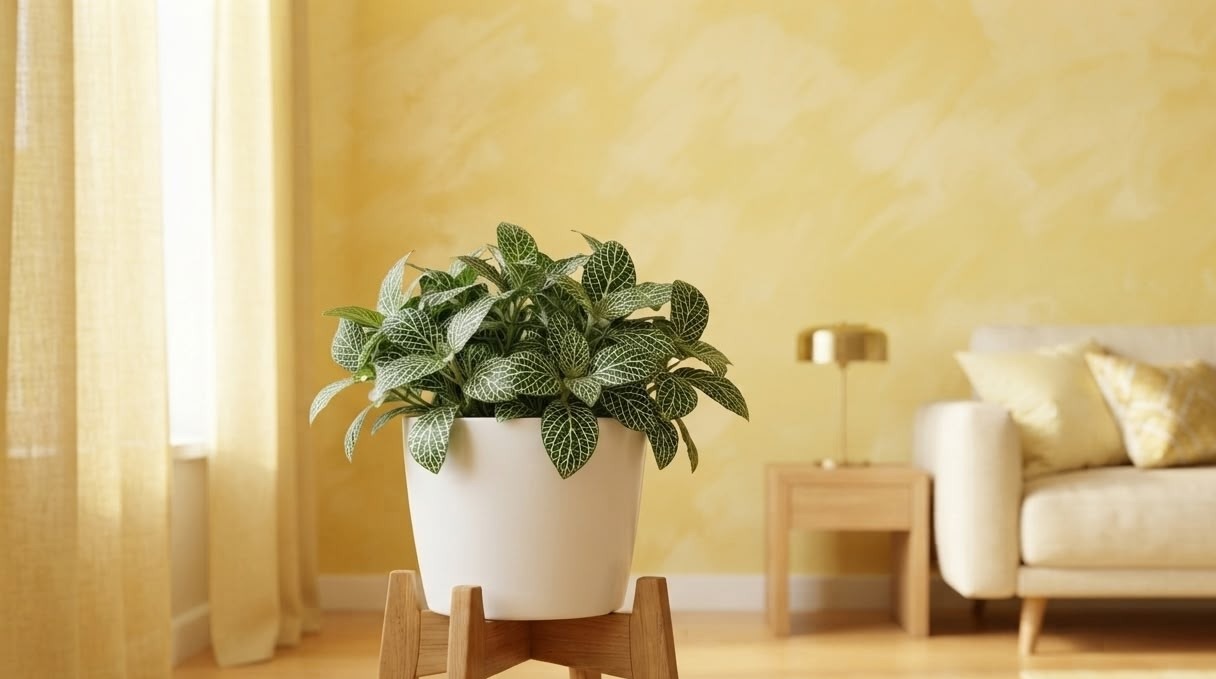
Direct sunlight is genuinely damaging. Hot direct sun, especially in the afternoon, can scorch the leaves and wash out the veins, the plant’s primary decorative feature. NC State Extension notes that the leaves shrivel and fall off in direct sun, dry air or drafts. If the distinctive veining on your nerve plant is fading or the leaves look washed out, too much direct sun is a common cause (very low light, covered below, is the other). Move it to a shadier position and the new growth should emerge with sharper contrast.
Fittonia copes with medium light, but it is not a true low-light plant: it won’t sit happily in a dim corner the way a cast iron plant would. In very low light, growth slows, the plant becomes leggy, and the vein contrast fades, signs that it needs a brighter spot, even if it’s not in distress.
Watering: the Dramatic Drooper
Watering is where most Fittonia owners have their first scare. When the plant doesn’t get enough water, it collapses fully: stems flat against the soil, leaves lying sideways. New owners often assume the plant is dead. It isn’t. This is Fittonia’s early warning system, and it works remarkably well. Water the plant thoroughly, until water runs freely from the drainage holes, and it should perk back up, provided it was not left dry for too long.
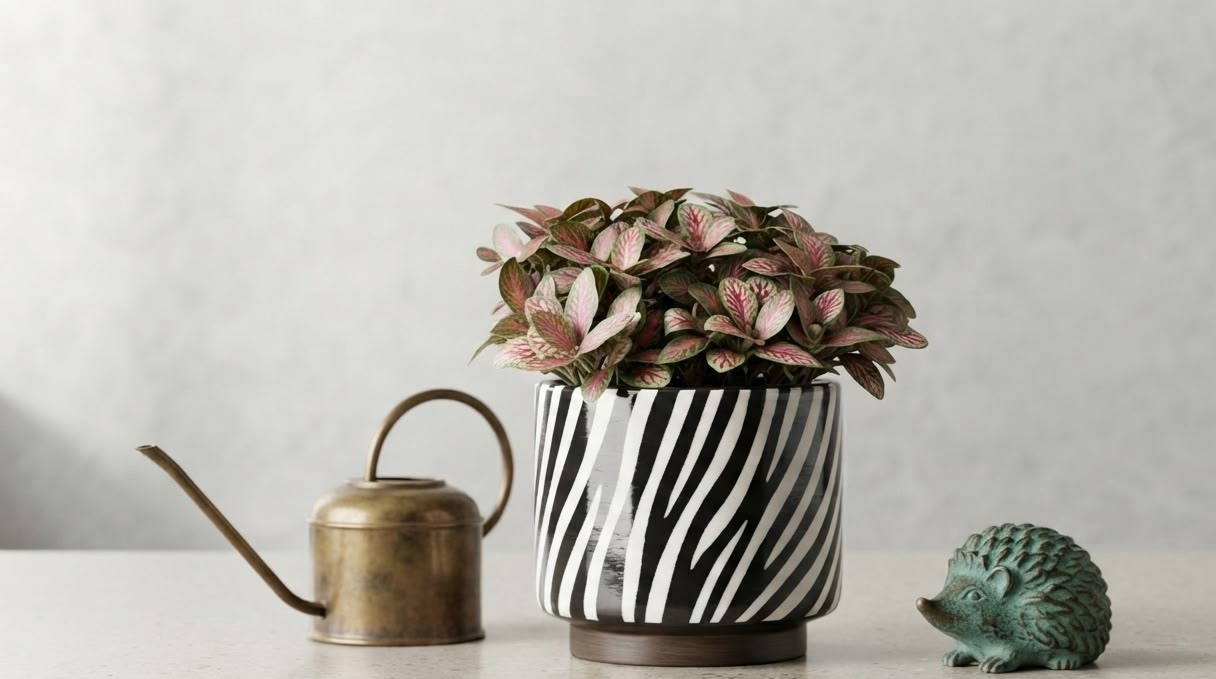
The standard watering cue is to check the top inch of soil. When it feels dry, water. In active summer growing conditions, that typically means watering every 3 to 5 days. In cooler months or lower light environments, 7 to 10 days is more typical. Rather than following a fixed calendar schedule, check the soil every few days: the top inch should feel just dry, not bone dry, not soggy. Fittonia likes consistently moist soil, not wet cycles alternating with complete drought. My advice is to put a twice-weekly soil check on your calendar instead of waiting for the collapse, because repeated wilting does add up.
What you want to avoid is waterlogged soil. Fittonia has a shallow root system that is prone to rot if it sits in wet conditions for extended periods. Always use a pot with drainage holes and empty the saucer after watering rather than letting the pot sit in standing water. If the plant wilts and the soil is already wet, that’s a different problem from underwatering; more on that in the troubleshooting section below.
How Much Humidity Does a Nerve Plant Need?
Fittonia comes from tropical South American rainforests, where the air stays humid. Heated homes in winter are often far drier than that, and that gap explains why nerve plants often struggle in standard indoor conditions even when watering and light are handled well. The first symptom of low humidity is brown, crispy leaf edges. The leaf center stays green while the margins dry out, giving the plant a scorched look that no amount of watering will fix.
The most reliable solution is a small humidifier placed nearby. A pebble tray filled with water under the pot adds modest ambient moisture as the water evaporates. Grouping Fittonia with other tropical houseplants helps too, as plants naturally transpire and raise the humidity of their immediate surroundings. The most effective environment is a terrarium: closed or semi-closed glass containers maintain high humidity passively, making them nearly ideal for Fittonia. Misting is often suggested but is not the best approach: water sitting on the leaves creates conditions for fungal problems, especially without strong air circulation. If the air in your home is very dry, I would invest in a humidifier rather than reaching for the spray bottle, and if the leaf edges still crisp up, I would move the plant into a terrarium, which the RHS names as one of the best homes for it. A humidifier also helps other humidity lovers you might keep nearby, such as tropical pitcher plants, which need 60% or more to keep making pitchers.
What Temperature Is Best for Nerve Plant?
Keep Fittonia between 60°F and 80°F (16°C to 27°C). The plant doesn’t tolerate cold: the RHS gives 15°C (about 60°F) as its minimum, growth slows noticeably below that, and anything approaching freezing will cause serious damage. Drafts are a particular hazard: air conditioning vents, single-pane windows in winter, and exterior doors all create localized cold that can cause wilting even when the rest of the care is correct. Keep the plant away from obvious draft sources and maintain consistent warmth.
What Soil Does a Nerve Plant Need?
A standard all-purpose potting mix amended with perlite works well. I would use roughly three parts potting mix to one part perlite, which holds moisture without turning soggy. The goal is a blend that retains some moisture between waterings but drains quickly enough that water doesn’t pool. Wet, compacted soil is the primary cause of root rot in Fittonia, so avoid heavy mixes without any drainage amendment.
Because Fittonia’s root system is shallow, it does better in wider, shallower pots than deep ones. A pot that’s too deep holds more soil than the roots can access, and the lower portion stays wet for too long between waterings. Drainage holes are non-negotiable. Terra cotta pots breathe and dry out faster, which guards against waterlogging, but for a plant that wants evenly moist soil I would choose plastic or glazed ceramic and simply go easy with the watering can.
How and When to Fertilize Nerve Plant
Fittonia is a light feeder. During the growing season (spring through summer), apply a balanced liquid fertilizer diluted to half the recommended strength no more than once a month. The RHS suggests feeding only every two to three months, so err on the light side. In fall and winter, stop fertilizing entirely. The plant’s growth slows significantly in low-light winter conditions, and feeding during this period leads to salt buildup without any benefit.
Over-fertilizing shows up as brown leaf edges or tips, the same symptom as low humidity, so rule out moisture issues first. If you suspect excess fertilizer, flush the soil with clean water to leach out the accumulated salts, then skip the next one or two feeding cycles. Always apply fertilizer to damp soil rather than dry, because concentrated nutrients applied to dry roots can cause chemical burn.
Why Is My Nerve Plant Drooping?
Drooping in Fittonia has two primary causes, and the soil tells you immediately which one you’re dealing with. Press a finger into the soil. Dry soil plus drooping plant means underwatering: water thoroughly and the plant should recover. This is the benign scenario, the one Fittonia was built for. It is not a sign of permanent damage as long as the plant hasn’t been left dry for long.
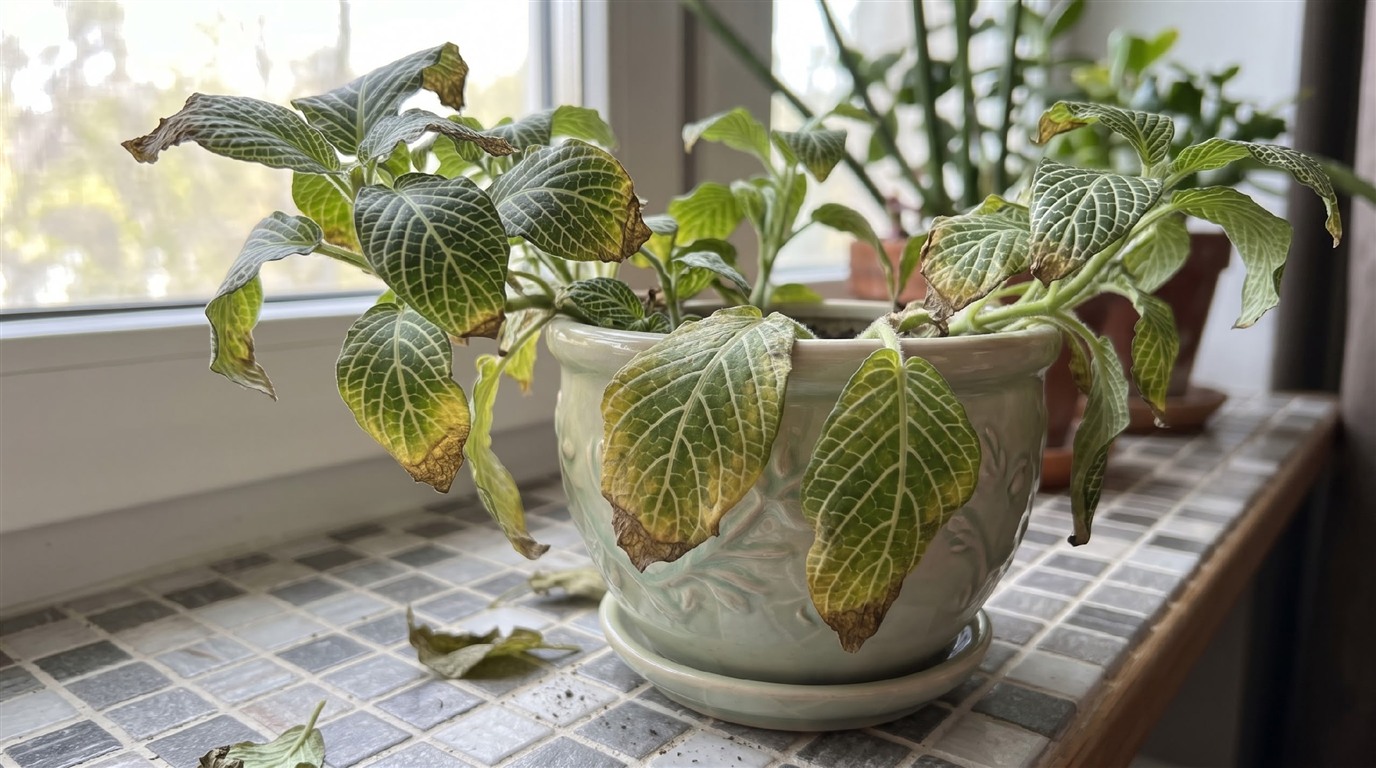
Drooping combined with wet or soggy soil is a more serious situation: root rot. When roots are damaged by too much moisture, they lose the ability to take up water even when it’s available, so the plant wilts despite wet soil. Unpot the plant and examine the roots carefully. Healthy roots are white or tan and firm to the touch. Rotted roots are brown or black, mushy, and often smell unpleasant. Using clean scissors or pruning shears, trim away all the damaged roots, let the root ball air out for an hour, then repot in fresh, well-draining potting mix. Hold off on watering for two to three days to give the disturbed root system time to stabilize before facing more moisture.
Other causes of wilting include heat or cold shock: a sudden blast from a heating vent or air conditioner can cause the plant to droop even if the soil is appropriately moist. Low humidity can also cause wilting that doesn’t fully resolve with watering, because the plant is losing water through its leaves faster than the roots can supply it. If you’ve watered, the soil is moist, and the plant remains droopy after a few hours, check the humidity level and look for any nearby draft sources.
A final, less common cause is root-bound stress. When Fittonia has outgrown its pot and the roots have nowhere left to grow, it can wilt more frequently even with correct watering. If it’s been two years or more since the last repot and the roots are circling the bottom of the pot, size up to a pot one inch larger in diameter.
How to Propagate Nerve Plant
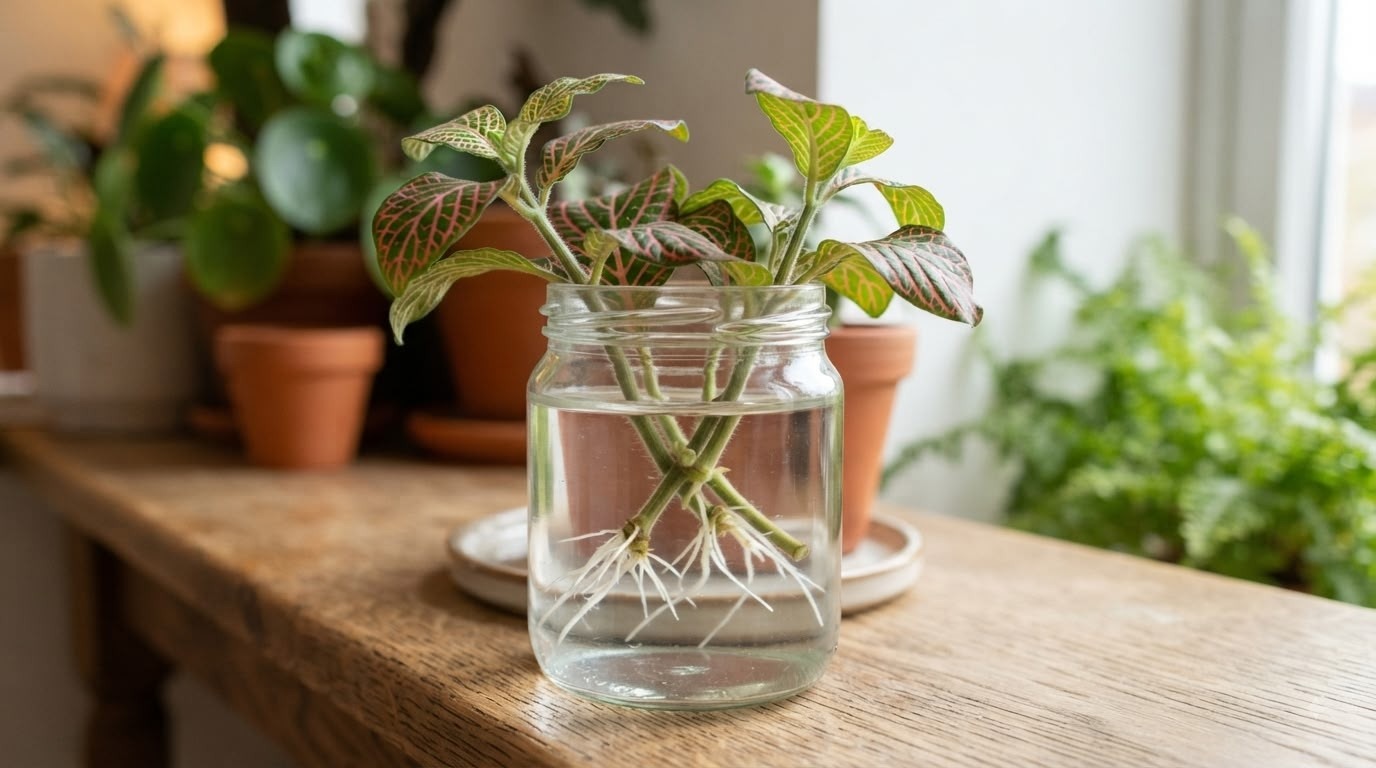
Stem cuttings are the easiest and most reliable propagation method for Fittonia. Take a cutting 2 to 4 inches long, cutting just below a leaf node with a clean blade. Remove the leaves from the bottom half of the stem, leaving at least two sets of leaves at the top. Place the cutting in a glass of water or directly into moist potting mix. In water, roots typically appear within a few weeks. Once roots reach about an inch long, transfer to soil, because roots developed in water sometimes struggle to adapt to soil if left too long in the water stage.
Propagation directly into potting mix works just as well and skips the water-to-soil transition step. Keep the soil consistently moist and place the cutting in a warm spot with bright indirect light. Covering the pot with a clear plastic bag or a propagation dome maintains the high humidity that encourages rooting and reduces the water loss through the cutting’s leaves before it has its own root system. Once new growth appears at the top, the cutting has rooted and the cover can come off.
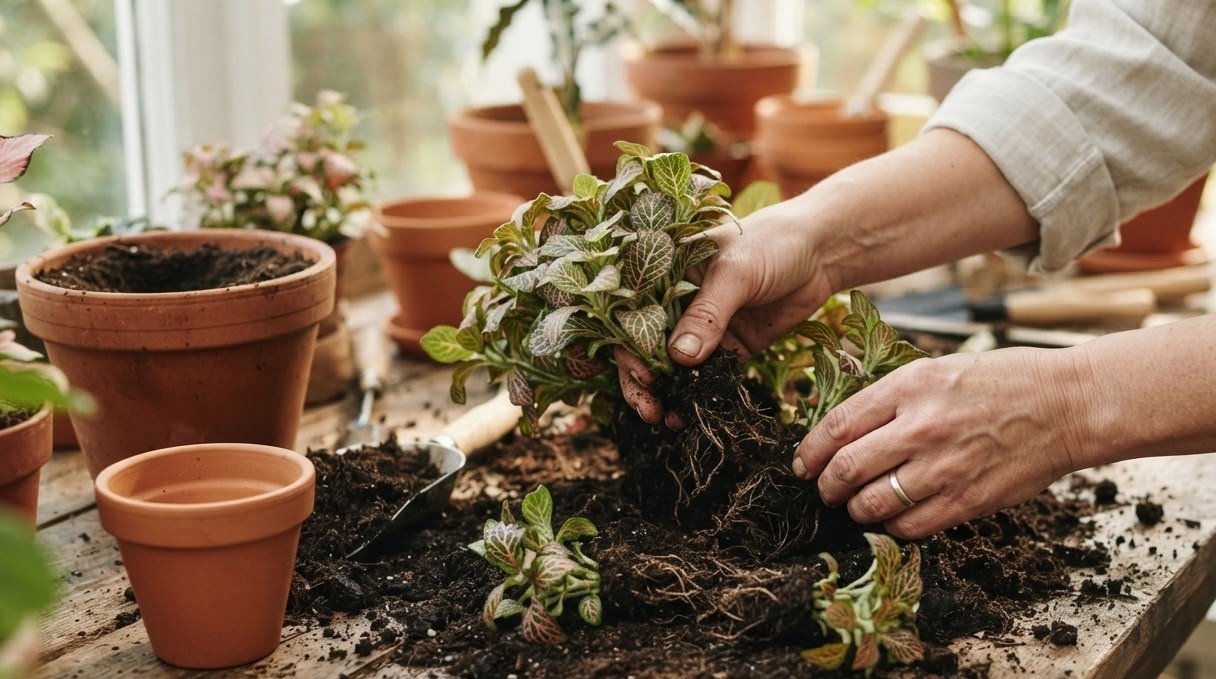
Division is the other option for established plants when repotting. Gently separate the root mass into two or three sections, each with healthy roots and stems attached. Pot each division separately into fresh mix, water lightly, and treat them as established plants. Spring and early summer are the best times for any propagation method, when growth is most vigorous and roots develop fastest. Cuttings taken in fall or winter root slowly and are more prone to rotting while waiting.
Common Nerve Plant Mistakes
- Letting soil dry out completely: The dramatic droop is a warning system, not a fatality, but repeated severe wilting weakens the plant over time. Check the soil every few days and water when the top inch is dry rather than waiting for full collapse.
- Low humidity: Brown, crispy leaf edges are the first sign the ambient moisture is too low. In dry climates or heavily air-conditioned homes, a humidifier or terrarium is the most dependable fix.
- Direct sunlight: Strong direct sun can bleach the veins and scorch the leaves. The veining is the entire point of this plant; protect it by keeping Fittonia in filtered or indirect light only.
- Leaving flower spikes on: Indoor plants rarely flower, but when Fittonia does, it produces small, unremarkable spikes. Many growers pinch them off to keep the plant focused on leaf production. It’s optional rather than urgent, but the foliage will thank you.
- Using a pot without drainage: Decorative pots without holes are common and tempting, but Fittonia’s shallow roots can’t tolerate standing water. Either add drainage holes or use a well-fitted nursery pot inside the decorative container.
Is Nerve Plant Toxic to Cats and Dogs?
According to the ASPCA, which lists it under its older name Fittonia verschaffeltii, nerve plant is non-toxic to cats, dogs, and horses. This is one of its genuine practical advantages as a houseplant: you get vivid tropical foliage and color variety without the worry that comes with many popular houseplants. Unlike toxic plants that contain insoluble calcium oxalate crystals or harmful alkaloids, Fittonia does not pose a systemic risk. As with any plant material, consuming large quantities can cause mild gastrointestinal upset, but the plant is not considered poisonous.
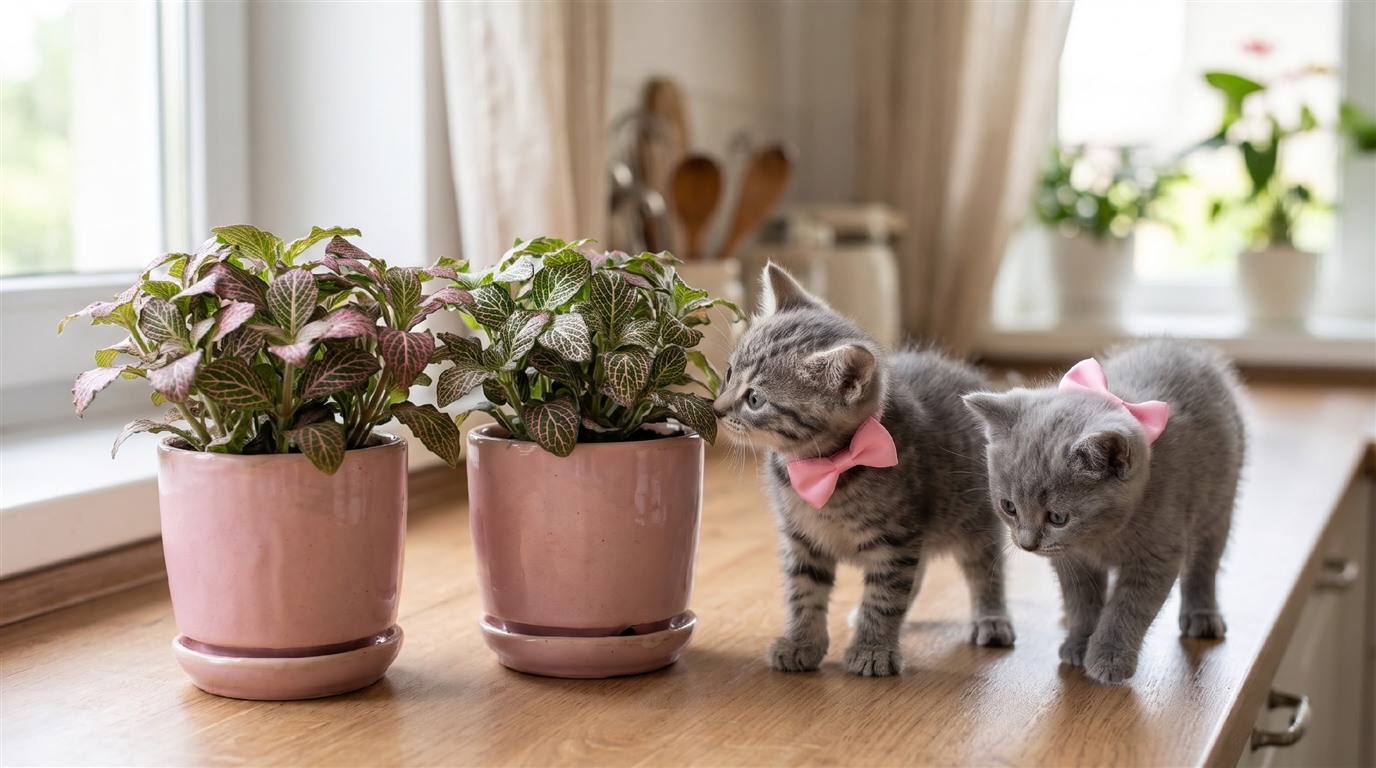
If you’re building out a pet-safe tropical plant collection, Fittonia is one of the stronger choices, and in a home with a cat that chews leaves I would pick it over most patterned tropicals. It pairs well with other non-toxic, colorful options. If you enjoy the pattern and color of nerve plant, you might also enjoy reading about polka dot plant care, another compact, patterned tropical that’s similarly safe for pets and thrives in comparable humid conditions.
Nerve Plant Pests and Problems
Nerve plant is not particularly pest-prone, but a few problems show up when care conditions are off. Besides the three below, NC State Extension lists mealybugs and scale, and the RHS mentions grey mould in very humid conditions.
Fungus Gnats
Fungus gnats are a frequent nuisance in nerve plant pots, because they breed in soil that stays wet for long periods. The adult gnats are small dark flies hovering around the soil surface. They do not feed on plants directly, but they can spread soil-borne pathogens and their presence signals larval activity below the soil surface. The larvae, however, feed on organic matter and fine roots in the top layer of soil, which can stress a plant that already has delicate roots.
To treat fungus gnats: allow the top inch of soil to dry fully between waterings, which breaks the larvae’s lifecycle. Yellow sticky traps catch the adults and help gauge the infestation size. For persistent cases, a drench of Bacillus thuringiensis var. israelensis (BTi) products like Gnatrol or Mosquito Bits kills larvae without harming the plant.
Root Rot
Root rot is not a pest, but it is one of the most serious problems with nerve plant. It develops when soil stays waterlogged, either from overwatering or from a pot without adequate drainage. By the time visible symptoms appear (yellowing leaves, collapsing stems that do not revive after watering), the roots are already compromised.
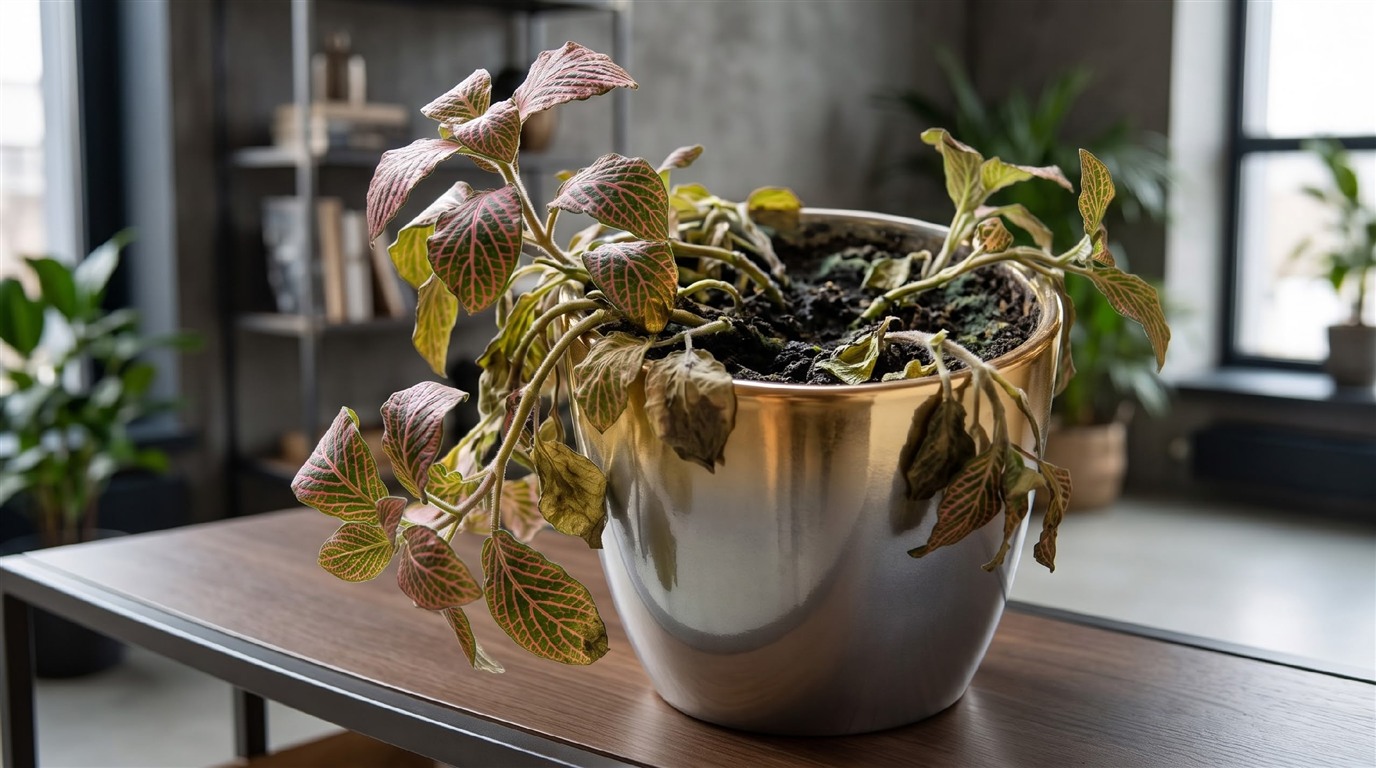
To check for root rot: unpot the plant and examine the roots. Healthy nerve plant roots are white or light tan and firm. Rotten roots are brown to black, mushy, and smell of decay. Trim all affected roots with sterilized scissors, let the remaining roots air-dry briefly, and repot in fresh, dry potting mix. Reduce watering significantly for the first two weeks after repotting.
Spider Mites
Spider mites favor warm, dry air, so they tend to show up when indoor humidity is low, especially in winter when heating systems are running. Signs: fine webbing between leaf stems, dusty or stippled leaf surface, leaves that look faded and dull. Treat with neem oil spray applied every 7 days until clear, and address the underlying humidity problem with a humidifier or pebble tray.
Nerve Plant Care Quick Reference
| Factor | Requirement |
|---|---|
| Light | Bright to medium indirect; no direct sun |
| Water | When top inch is dry; every 3–5 days in summer |
| Humidity | High; humidifier, pebble tray or terrarium |
| Temperature | 60–80°F (16–27°C); no drafts or cold |
| Soil | Well-draining potting mix with perlite; shallow pot |
| Fertilizer | Half-strength balanced liquid, monthly at most (spring–summer only) |
| Toxicity | Non-toxic to cats, dogs, and horses (ASPCA) |
FAQ: Nerve Plant Care
How often should I water a nerve plant?
Water when the top inch of soil feels dry, typically every 3 to 5 days in summer, every 7 to 10 days in winter. Check the soil rather than following a fixed calendar schedule, since watering needs vary with temperature, light levels, and pot size. Consistent moisture without waterlogging is the goal.
Does nerve plant need sunlight?
It needs bright to medium indirect light but cannot tolerate direct sunlight. Direct sun bleaches the veins and scorches the leaves. A north or east-facing window is ideal. Fittonia also performs well under fluorescent grow lights, making it a practical choice for rooms without strong natural light.
How do I make a nerve plant bushier?
Pinch back the stem tips regularly during the growing season. Removing the growing tip forces the plant to branch at the nodes below, resulting in a denser, fuller appearance over time. Do this every few weeks from spring through summer. The pinched stems can also be used as cuttings for propagation.
Why are my nerve plant leaves turning yellow?
Yellowing leaves usually indicate overwatering. Check whether the soil is soggy or consistently wet between waterings. Reduce watering frequency and ensure the pot has adequate drainage. Yellow leaves can also indicate a nutrient deficiency. If the soil moisture is correct, add a half-strength balanced liquid fertilizer during the growing season, no more than once a month.
Can nerve plant grow in a terrarium?
Yes. Terrariums are among the best environments for Fittonia because they hold the high humidity the plant needs with little extra effort. Closed terrariums work well, though some ventilation prevents fungal buildup. The compact, spreading growth habit makes Fittonia a natural fit for the terrarium floor beneath taller plants.
Should I cut the flowers off my nerve plant?
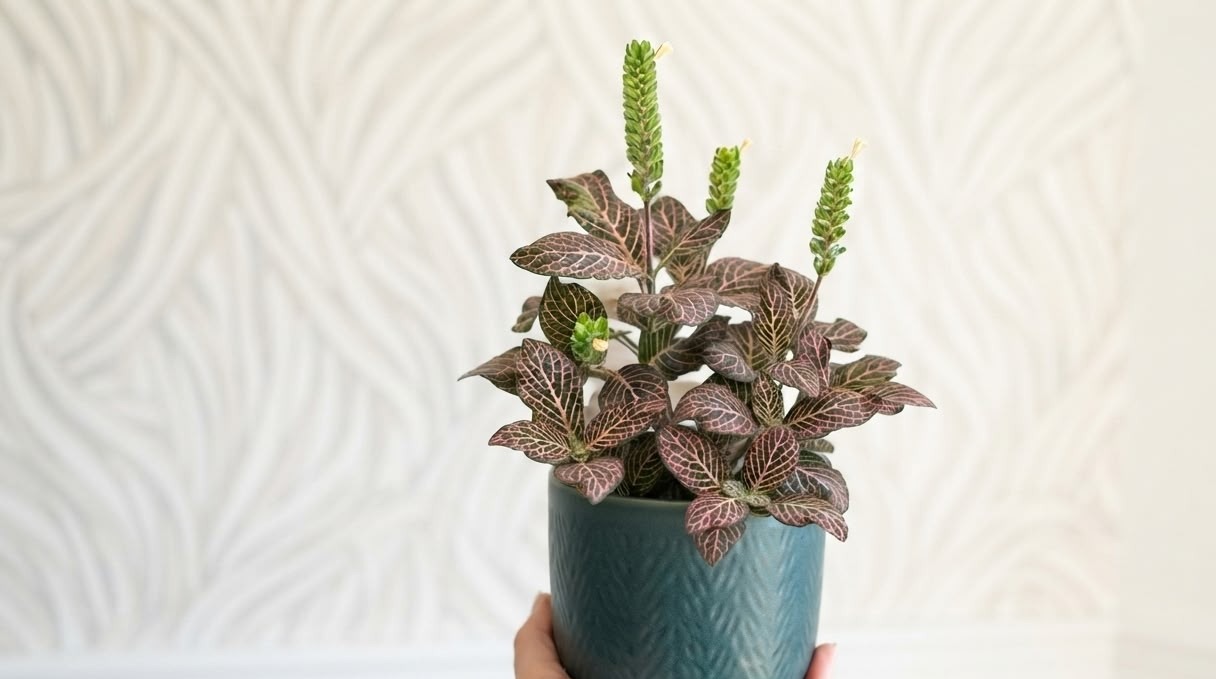
Indoor plants rarely bloom, and when they do, the flowers are small, unremarkable spikes that contribute nothing to the plant’s visual appeal compared to its foliage. Many growers remove flower stalks as they appear to direct the plant’s energy back into leaf production. It’s not harmful to leave the flowers on; it’s simply a preference, and many people feel the plain flower stalks distract from the foliage.
Why are the veins fading on my nerve plant?
Fading veins usually point to a light problem. Too much direct sunlight is the common culprit: intense light bleaches the pigmentation in the leaf veins, washing out the contrast that makes Fittonia visually distinctive. Very low light can dull the contrast too, so in either case move the plant to a spot with bright indirect light. New leaves should emerge with sharper, more vivid veining once the plant is out of direct sun, though already-bleached leaves won’t fully recover their color.