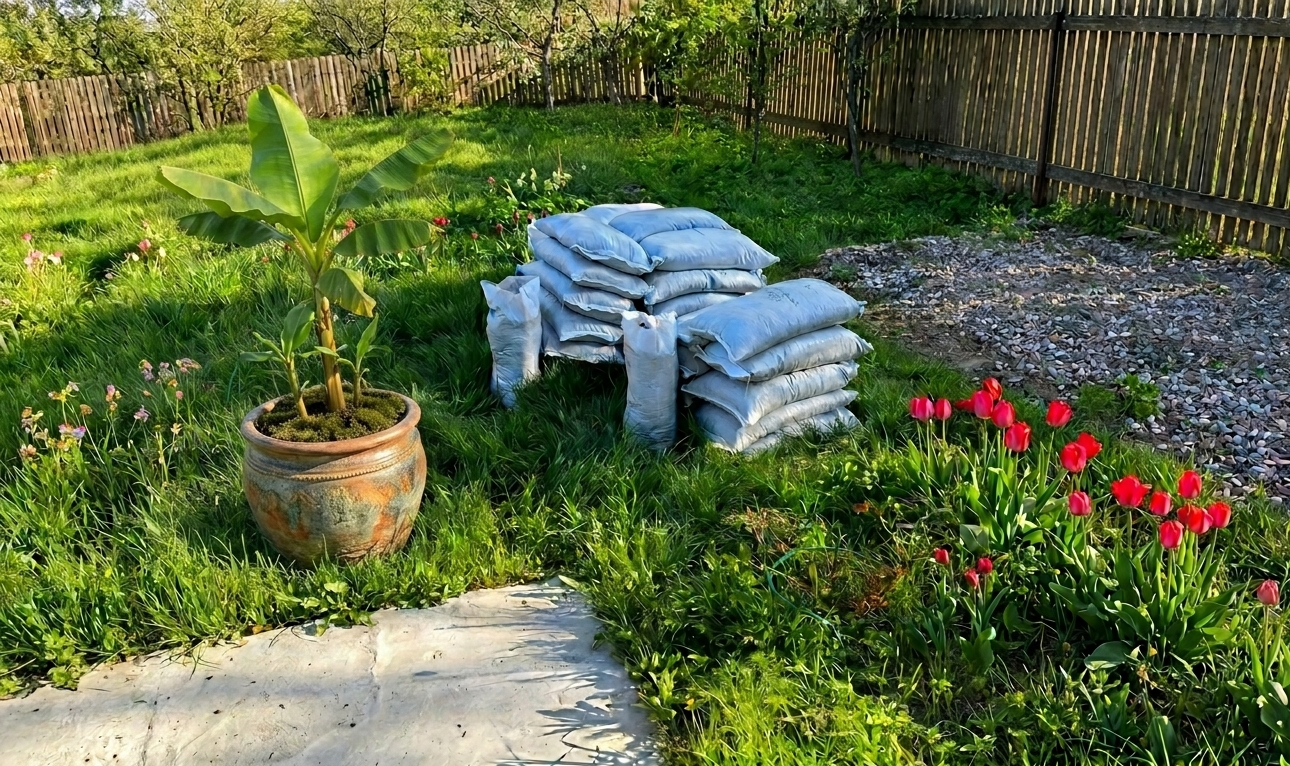
The best compost for banana trees isn’t a one-size-fits-all answer — and most guides get this wrong. I learned that the hard way in my second season, when I piled on a thick layer of spent mushroom compost in early spring, convinced I was doing right by my Musa basjoo.
I spent the rest of summer watching leaves yellow between the veins while I chased a nitrogen deficiency that turned out to be a pH problem I’d created myself. After growing both tropical and cold-hardy varieties for several seasons across zones 7 and 8, I’ve made enough composting mistakes to know that banana trees have specific needs — and the wrong compost can be just as harmful as no compost at all.
What Do Banana Trees Actually Need From Compost?
Banana trees are classified as heavy feeders, but what that actually means is more specific than it sounds. They thrive in loamy, well-draining soil with high organic matter content — and have an unusual nutrient profile compared to most garden plants: extremely high potassium demand, moderate nitrogen needs, and sensitivity to pH changes.
Why Banana Trees Are Potassium Hogs
A mature banana plant pulls more potassium from soil than almost any other common landscape plant. The pseudostem, leaves, root system, and fruit all compete for the same mineral. The first time I saw what potassium deficiency actually looks like wasn’t in a textbook — it was a Thai Dwarf I was growing in a half-barrel container in my backyard. The pseudostem looked fine until late July, then started leaning. I thought it needed staking. A soil test two weeks later showed potassium at rock bottom. The plant never fruited that season. Compost helps here not just as a direct potassium source, but by improving the cation exchange capacity of soil — its ability to hold and release nutrients over time rather than letting them leach away with every rain.
The NPK Numbers That Matter
| Nutrient | Banana Tree Priority | What Happens Without It |
|---|---|---|
| Potassium (K) | Highest | Weak stems, poor fruit, leaf scorch |
| Nitrogen (N) | High | Slow growth, yellowing older leaves |
| Phosphorus (P) | Moderate | Poor roots, delayed flowering |
| Magnesium (Mg) | Secondary | Interveinal chlorosis |
Compost delivers all of these — but not in equal proportions. Understanding which compost types lean toward nitrogen vs. potassium matters when you’re deciding what to buy or make.
What Type of Compost Is Best for Banana Trees?
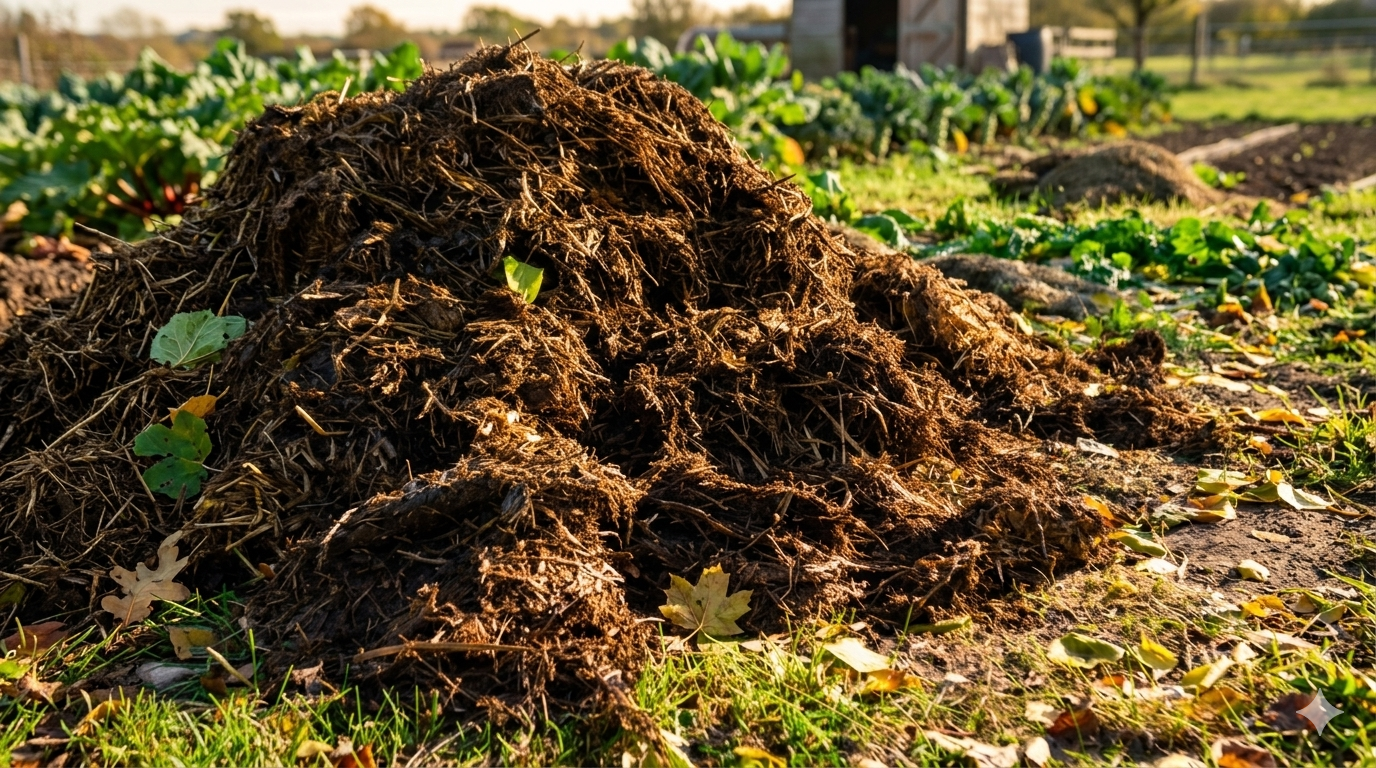
Not all compost is equal. When choosing compost for banana trees, the type matters as much as the quantity — and some popular options can actively work against you. Here’s what I’ve found works, what comes with caveats, and what to avoid.
Worm Castings: The Overachiever
Worm castings (vermicompost) are the closest thing to a perfect banana tree amendment. They’re gentle enough to apply directly against roots without burn risk, pH-neutral to slightly acidic (6.0–7.0), and loaded with micronutrients including calcium and magnesium that standard fertilizers skip entirely.
The catch: cost. Worm castings run $15–30 per cubic foot, which adds up fast for large in-ground plants. My compromise: I keep a small worm bin in the garage that produces about half a cubic foot of castings per month — enough for my two container Dwarf Cavendish plants with a little left over.
For the in-ground Basjoo clump out back, I mix store-bought castings 50/50 with homemade compost to stretch the volume. Product that’s worked consistently: Unco Industries Wiggle Worm Soil Builder — I’ve tried three or four brands and this one has the most uniform texture without the occasional anaerobic smell you get from cheaper bags.
Mushroom Compost: Good, With One Catch
Spent mushroom substrate is a solid general amendment — high in organic matter, improves soil structure, and the bags are cheap and easy to find at most garden centers in spring. I used it heavily for two seasons before I understood the pH problem.
What tipped me off was the yellowing pattern. The new center leaves were coming in pale, with darker green veins — classic interveinal chlorosis. I assumed iron deficiency and started spraying chelated iron, which helped temporarily. Then I tested soil pH and found it had climbed to 7.1. The iron was there all along; the alkaline soil was locking it out.
Two seasons of mushroom compost had moved my pH from 6.2 to 7.1. I corrected with elemental sulfur over the following season and haven’t had the issue since. Mushroom compost pH can range from 5.8 to 7.7 depending on the batch and how long it’s been cured — test pH annually if you use it heavily.
Homemade Compost: Solid All-Rounder
When it comes to compost for banana trees, well-made homemade compost is the most reliable workhorse amendment. My bin gets a lot of coffee grounds, banana peels, vegetable scraps, and shredded fall leaves — which naturally trends toward the slightly acidic range bananas prefer. After testing finished batches a few times with a cheap pH meter, mine usually comes out around 6.0–6.3, which is close to ideal.
The key word is finished. I made this mistake in year one: dug into the bottom of my pile in April thinking it was ready, because it looked dark on top. The inner material was still actively breaking down — warm to the touch, visible food scraps. I used it anyway on a newly transplanted Basjoo. The plant stalled for six weeks while soil microbes consumed nitrogen from the decomposing compost. Now I let batches cure for a minimum of 8 weeks after they stop heating before I use them on anything.
Manure-Based Compost: Proceed with Caution
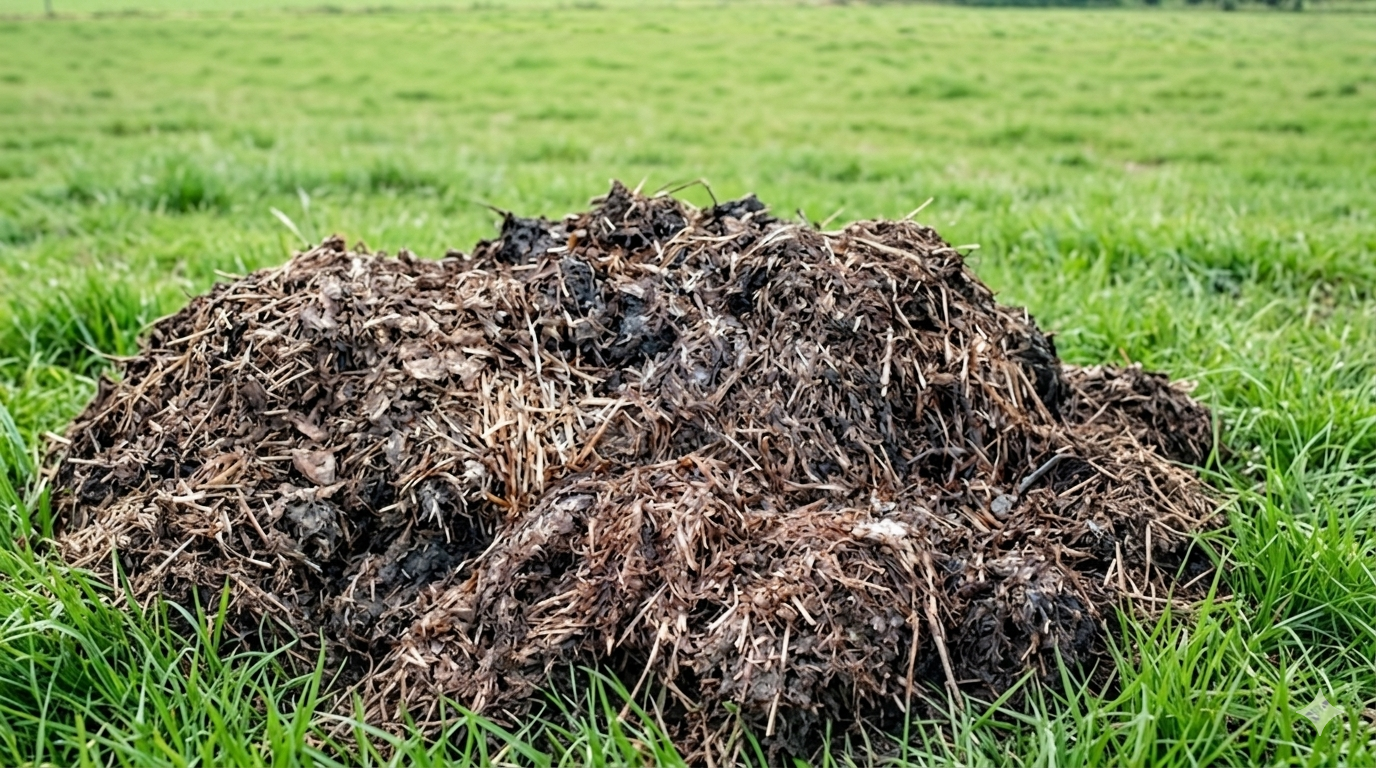
Aged, bagged manure compost works for banana trees, but has risks. Chicken manure compost is particularly high in nitrogen and can push pH higher. Fresh manure — see the mistakes section below — is a different story entirely. If you use bagged manure compost, look for products labeled “aged” or “composted” with at least 6 months of processing. Black Kow (composted cow manure) is widely available and reliably processed.
How Much Compost Does a Banana Tree Need?
The right amount of compost for banana trees depends on whether they’re growing in the ground or in containers — the two situations have very different requirements.
In-Ground Banana Trees
The most effective way to amend the soil for in-ground banana trees is to spread a 2–3 inch layer of compost around the base, extending out to the drip line (the outer edge of the leaf canopy). Keep compost at least 4–6 inches away from the pseudostem — direct contact traps moisture and creates rot conditions.
For established plants, apply 2–3 cubic feet per plant twice per growing season: once in early spring before new growth pushes, and again in midsummer during peak demand.
Container Banana Trees
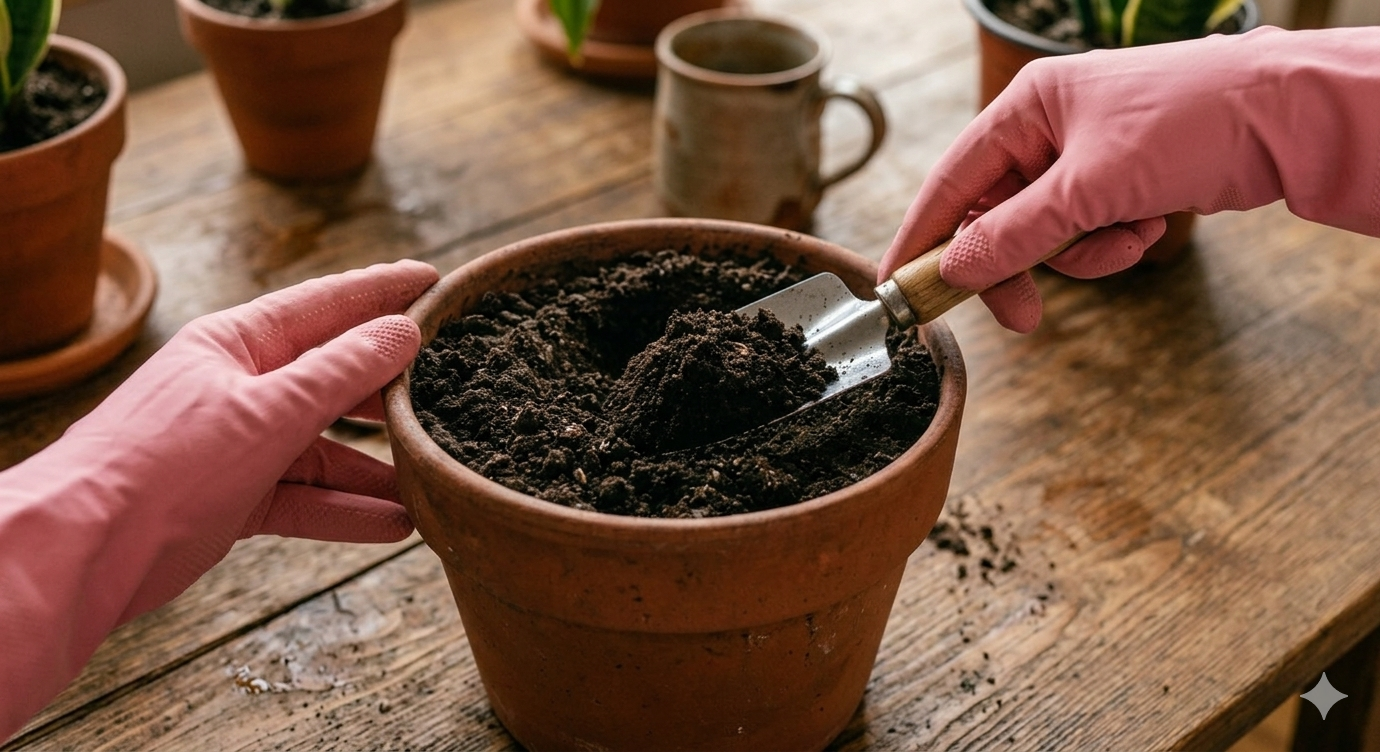
Container bananas need more frequent amendment because nutrients leach out with watering. If you’re starting fresh, a good base mix is quality potting soil with peat moss (or coco coir) and perlite in roughly a 60/20/20 ratio — this ensures drainage while retaining enough moisture. Replace the top 2–3 inches of this mix with fresh compost at the start of each season, then add a thin 1-inch top dressing every 6–8 weeks through summer.
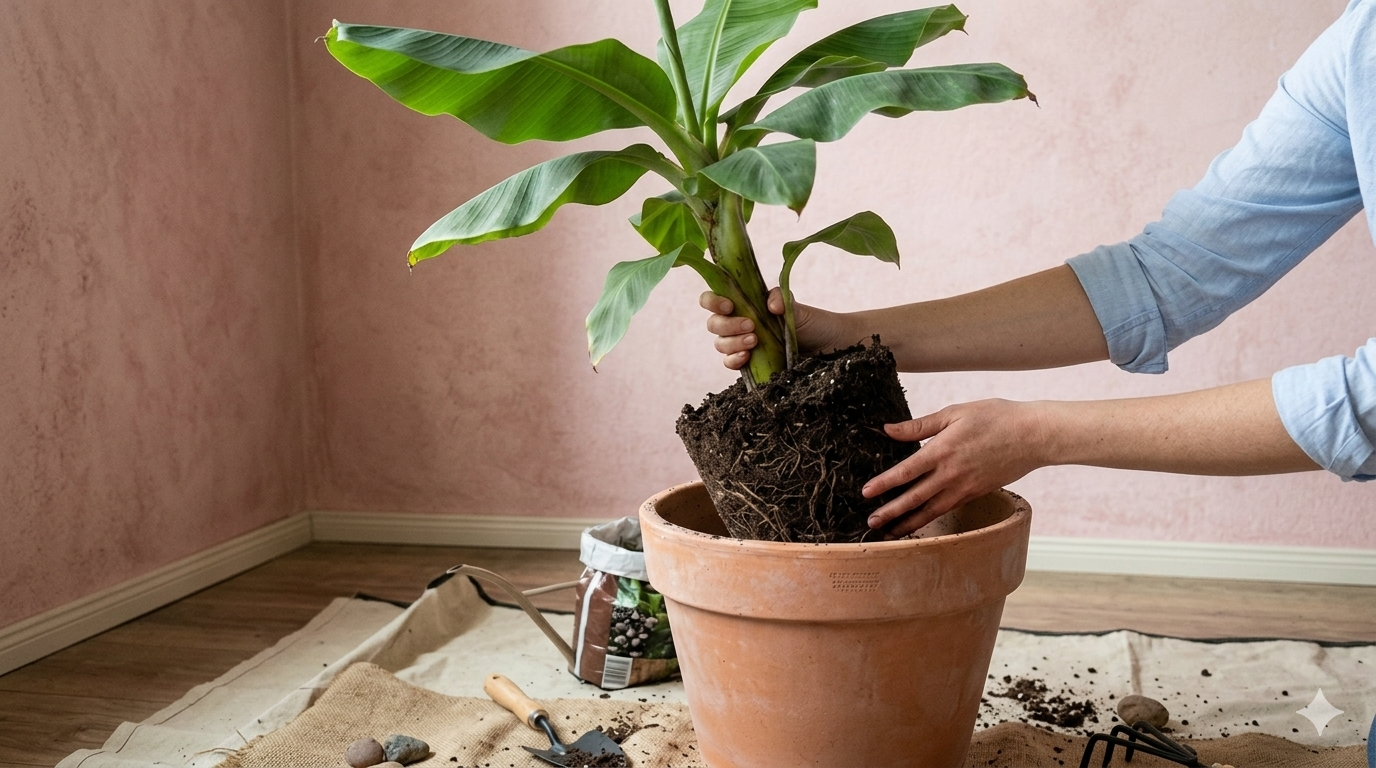
Container bananas also benefit from compost tea — steeping finished compost in water for 24–48 hours to extract soluble nutrients. Water your container plants with the strained liquid every 3–4 weeks during active growth.
When Should You Apply Compost to Banana Trees?
Timing your compost for banana trees matters as much as the type you choose. The goal is to match nutrient availability with peak plant demand.
Early spring (March–April in zones 7–9): Best time for the primary application. As soil temperatures rise above 60°F, root activity increases and the plant is primed to absorb nutrients. Apply as soon as the banana shows new growth pushing from the center.
Midsummer (June–July): Secondary application during peak growth. If the plant is developing a flower stalk, this is when potassium demand spikes. A compost top-dress here supports fruit development.
Fall: Skip it for most climates. Applying nitrogen-rich compost in fall pushes tender new growth that gets hit by the first frost. For cold-hardy varieties being overwintered, I stop all amendments by early September.
Winter: Don’t bother. Soil microbial activity that breaks down compost into plant-available nutrients slows significantly below 50°F. The compost just sits there until spring — better to apply then.
What Compost Mistakes Kill Banana Trees?
Fresh (Hot) Manure Burns Roots
Fresh manure releases ammonia as it breaks down, which burns roots directly. This isn’t a gardening myth — the mechanism is well-documented: ammonia toxicity zones spread through the root zone and cause progressive root necrosis within days of application. It can kill established plants and will definitely kill newly transplanted ones. If manure smells strongly of ammonia or hasn’t been composting for at least 3–4 months, don’t apply it to banana trees.
Too Much Compost Blocks Drainage
Applying layers thicker than 4 inches on clay-heavy soil creates a dense mat that holds water against the root zone. I lost a well-established Basjoo this way — third-year plant, three pseudostems going, looked like it was finally ready to do something impressive. I’d read that banana trees are heavy feeders and decided to be generous with a 6-inch compost layer in early May. By late June the outer pseudostems started collapsing at the base. When I dug down, the roots smelled like a river bottom. Root rot, caused by the drainage problem I’d created. My backyard has clay-heavy soil that already drains slowly — the compost turned it into a bathtub. I’ve kept layers to 2–3 inches maximum ever since.
Ignoring pH — Bananas Like It Slightly Acidic to Neutral
Banana trees perform best in soil with a pH between 5.5 and 7.0, with the sweet spot around 6.0–6.5. Penn State Extension confirms that banana plants adapt to a range of soil conditions but require correct pH to access nutrients effectively. If you’re applying compost every season without ever testing pH, you’re flying blind. Alkaline soil above 7.0 locks out iron, manganese, and zinc — all critical for banana health. I now test soil pH every April before I apply anything, using a Bluelab soil pH pen. Any time it creeps above 6.8, I work in a small amount of elemental sulfur with the season’s first compost application. If leaves show interveinal chlorosis despite correct pH, magnesium deficiency is often the culprit — a tablespoon of Epsom salts dissolved in a gallon of water applied monthly addresses this without affecting soil pH.
Can You Compost Banana Peels and Banana Leaves?
Banana Peels in the Compost Bin
Yes — banana peels are genuinely valuable when making compost for banana trees. They’re a good source of potassium, phosphorus, and calcium. They break down relatively fast compared to other fruit waste, especially if chopped or blended first. We eat a lot of bananas at home — easily 10–15 peels a week — so this is essentially free organic matter going into my compost bin, with measurable nutrient benefits. I started blending the peels with a small amount of water before adding them after I noticed whole peels were taking weeks to break down in summer heat. Blended, they disappear into the pile in about a week.
One note: don’t add them uncovered in hot weather. Two days of uncovered banana peels in July and I had a fruit fly problem in the bin that took two weeks to clear. Layer browns (dried leaves, torn cardboard) over any fresh additions immediately.
What to Do with Banana Leaves
Banana leaves can be composted, but they take significantly longer than peels — up to 12 months if left whole. The waxy surface resists microbial breakdown. To speed decomposition, chop leaves into 2–3 inch pieces or run them through a shredder. In the meantime, whole banana leaves work well as mulch directly around garden beds. Layering them with grass clippings or bark mulch creates an even more effective weed-suppressing, moisture-retaining blanket that breaks down slowly and feeds the soil over time.
Does Compost Replace Fertilizer for Banana Trees?
For ornamental and cold-hardy varieties, using compost for banana trees alone often provides enough nutrition — at least in my experience with Musa basjoo in zone 7. Two applications per year plus one spring dose of a slow-release balanced fertilizer — something in the 5-10-10 or 8-12-12 range — has kept my clump pushing new pseudostems reliably every season.
For fruiting varieties — whether Dwarf Cavendish, Blue Java, or Grand Nain — the honest answer is no. The summer I tried to grow a Dwarf Cavendish in a large container using only compost, the plant grew well vegetatively but showed clear potassium stress when it started developing a flower stalk — the bract color was off and the fingers were undersized. I added Jobe’s Organics Fruit & Citrus Fertilizer the following season during the fruiting window and the difference was visible. I now use compost as the foundation for soil health and targeted fertilizer when the plant is actively fruiting.
The bottom line: the best compost for banana trees is the one you apply consistently, at the right time, and in the right amount for your soil type. For complete overwintering and care details on cold-hardy types, see my guide on cold hardy banana trees.
Frequently Asked Questions
Can I use coffee grounds as compost for banana trees?
Yes, but with realistic expectations. Coffee grounds are high in nitrogen and add useful organic matter to your compost pile. However, the common belief that used grounds acidify soil is largely a myth — spent grounds have a nearly neutral pH around 6.5–6.8, since most acids are extracted during brewing. They won’t meaningfully shift your soil pH, but they do contribute nitrogen. Best practice: add them to your compost pile rather than top-dressing directly, where they can compact and form a water-repellent layer on the soil surface.
How long does it take for compost to improve banana tree growth?
You’ll typically see a response within 4–6 weeks of application during the growing season — new leaf production speeds up and leaves appear darker green. Soil structure improvements take longer, usually one to two full growing seasons of consistent compost application before you notice significantly better drainage or moisture retention.
Is store-bought compost as good as homemade for banana trees?
It depends on the product. Bagged compost quality varies significantly. Look for products that list specific inputs and have an earthy, non-ammonia smell. OMRI-listed products have undergone independent review. Homemade compost you’ve managed carefully is usually better — you control the inputs and can verify it’s fully finished before applying.
My banana tree leaves are turning yellow. Is it a compost problem?
Yellow leaves have several causes — nutrient deficiency is one, but overwatering and root rot are more common culprots. Check soil drainage first. If drainage is fine, determine whether yellowing is in older lower leaves (likely nitrogen deficiency) or between the veins of new leaves (likely pH-related micronutrient lockout). Test soil pH before reaching for more compost.
Can I apply compost to banana trees in pots differently than in-ground?
Yes. Container bananas need lighter, more frequent applications because pot volume limits nutrient reserves and regular watering leaches nutrients faster. Use worm castings or fine-textured compost rather than chunky garden compost in containers — coarse material disrupts the growing medium and can create drainage problems. Aim for monthly top dressings of 1 inch during the growing season rather than two large seasonal applications.