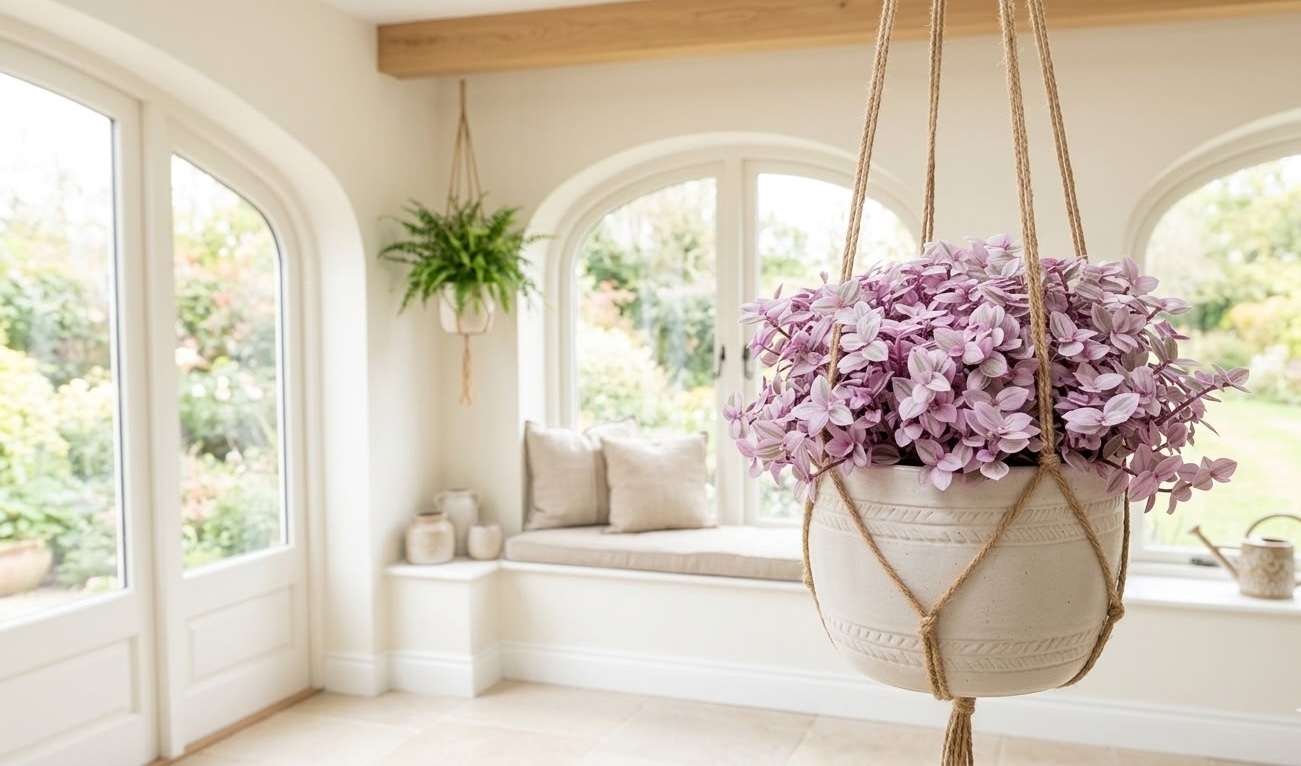
You might have grown up calling it a wandering jew plant. The plant is the same — Tradescantia zebrina — but many gardeners and plant shops have shifted to “wandering dude” as a less fraught name. Either way, it’s one of the fastest-growing, most forgiving trailing plants you can keep indoors, and one of the most frequently misunderstood.
Most people buy it because of those leaves: silver and green stripes on top, vivid purple underneath. Then they bring it home, put it in a corner, and watch it slowly go green and leggy. That’s not the plant failing — that’s a care problem with two specific fixes: light and pruning. This guide covers both, plus everything else wandering dude needs to stay full, colorful, and healthy.
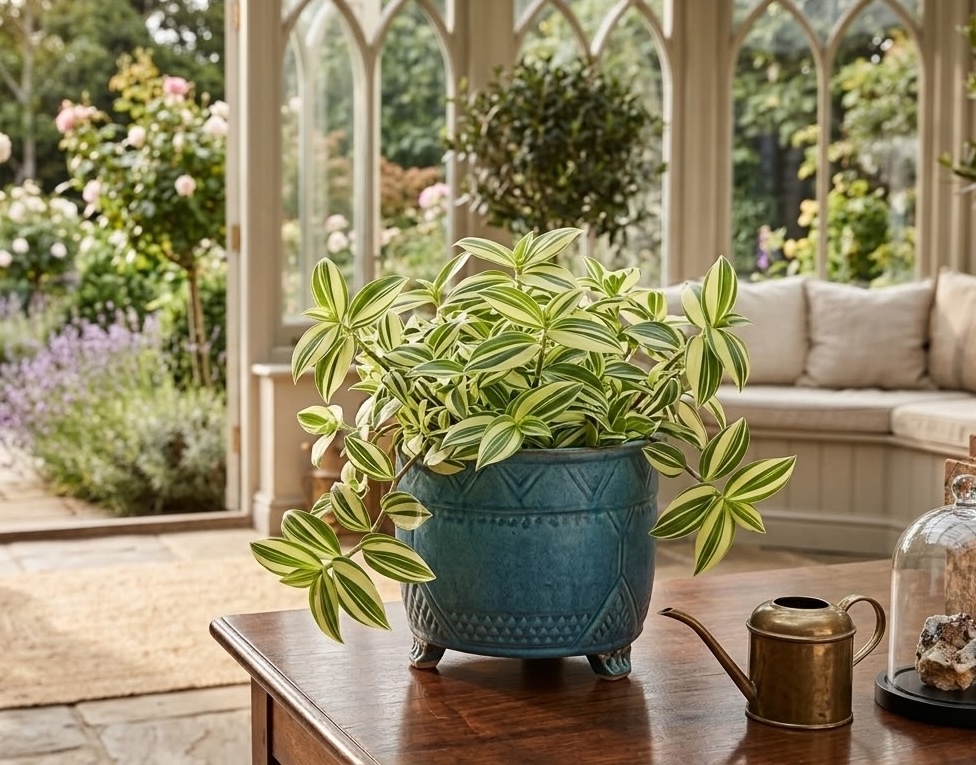
Wandering Dude Quick Care Overview
| Factor | Requirement |
|---|---|
| Scientific name | Tradescantia zebrina |
| Common names | Wandering dude, wandering jew, inch plant, silver inch plant |
| Family | Commelinaceae |
| Light | Bright indirect light; loses color in low light |
| Water | When top inch of soil is dry; roughly weekly in summer |
| Humidity | 40–60%; tolerates average household levels |
| Temperature | 50–80°F (10–27°C); avoid below 55°F |
| Soil | Well-draining potting mix with perlite; pH 6.0–8.0 |
| Fertilizer | Balanced liquid, monthly spring through summer |
| Propagation | Stem cuttings; roots in 1–2 weeks in water |
| Toxicity | Mildly toxic to cats and dogs (skin and GI irritation) |
Wandering Dude vs. Wandering Jew: Same Plant, Different Name
“Wandering dude” and “wandering jew” refer to the same plant. The name shift started gaining traction around 2019, driven partly by plant shop owners who found the original name uncomfortable and partly by broader community conversations about plant naming. Many nurseries, houseplant blogs, and online retailers have adopted “wandering dude” as the standard. The original name referenced a medieval legend — the plant earned it for its spreading, trailing growth habit, not for any deliberate association.
Other names you’ll encounter for the same plant: inch plant (common at garden centers and hardware stores), silver inch plant (more specific to T. zebrina versus other Tradescantia species), and just tradescantia among plant enthusiasts. “Spiderwort” also appears but more often refers to outdoor garden varieties like Tradescantia × andersoniana, not the houseplant.
What Does a Wandering Dude Plant Look Like?
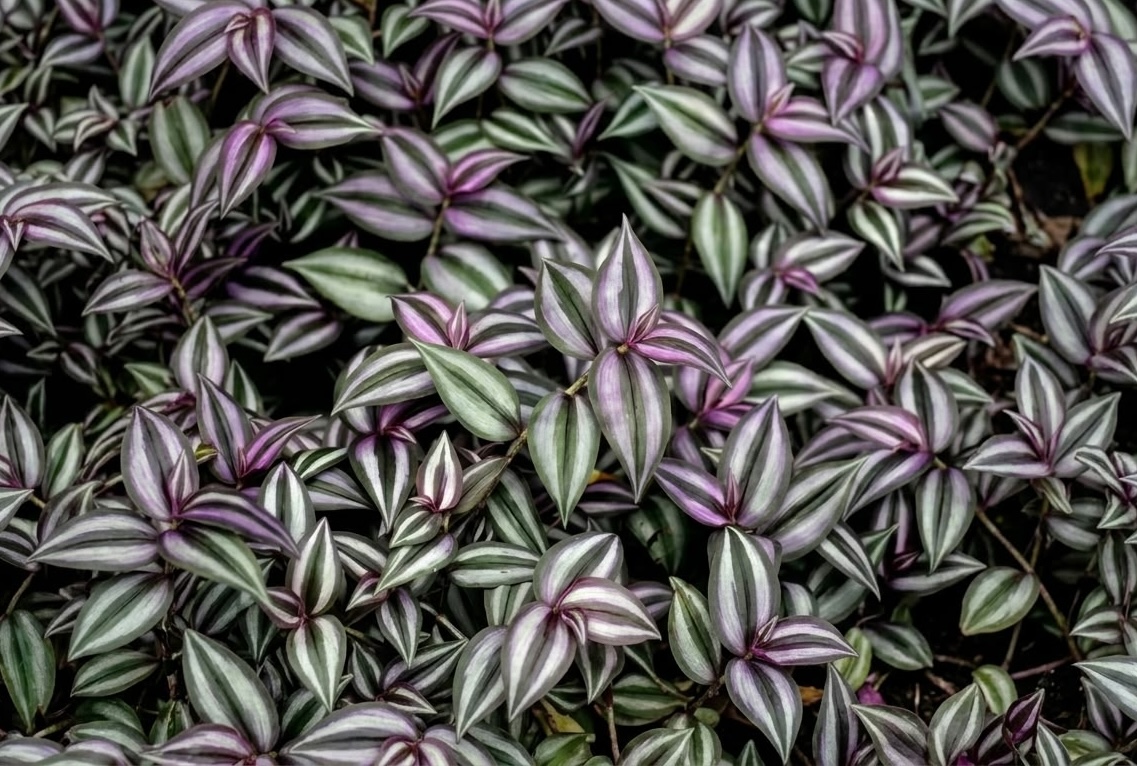
Tradescantia zebrina has oval leaves about 2–3 inches long with a distinctive two-tone pattern: the upper surface shows two silver-green stripes running lengthwise on a darker background, while the underside is solid purple. In good light, the colors are vivid and the contrast is striking. In poor light, the silver tones fade and the purple undersides pale — both are responses to reduced anthocyanin production.
The stems trail and root easily wherever a node contacts soil or water. Left unpinched, individual stems can reach 3 feet or longer, though they become increasingly bare at the base. The plant grows fast — in summer, it can add several inches per week under good conditions. Small three-petaled flowers appear occasionally (usually pink or purple), though the plant is grown almost entirely for its foliage.
Light: The Real Reason Most Wandering Dude Plants Fail
Light is where most wandering dude care goes wrong, and where most fixes start. The plant is often marketed as “low light tolerant” — and it does survive in lower light — but surviving and thriving are different things. In low light, it turns green, gets leggy, and stops looking like the plant you bought.
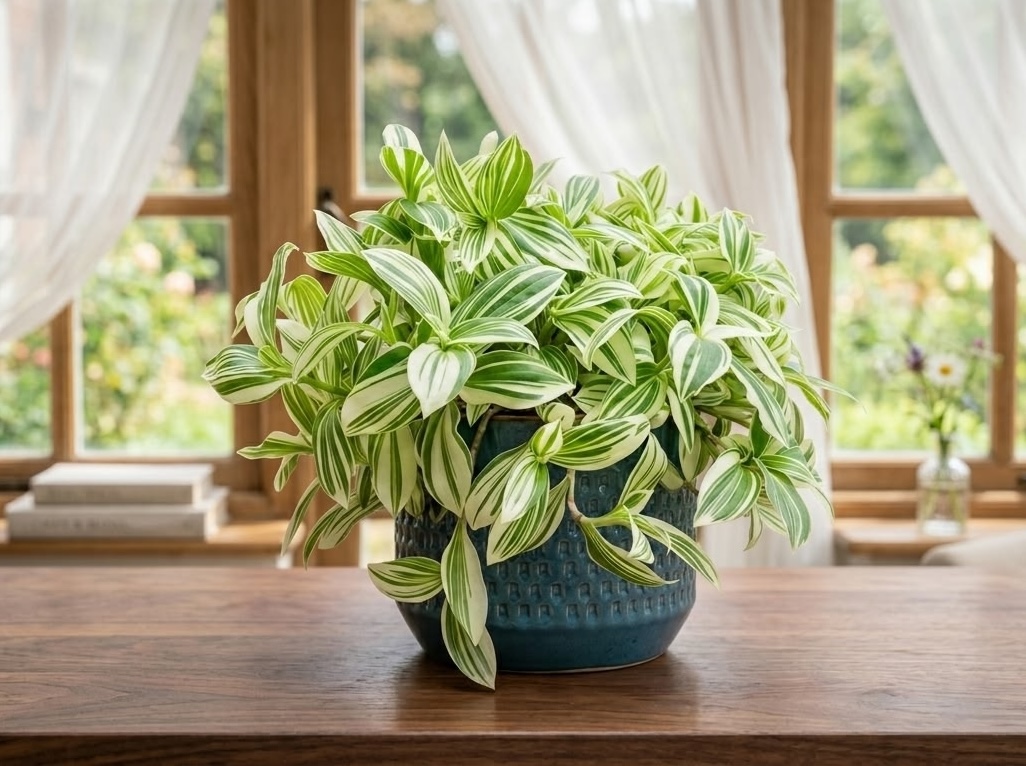
How Much Light Does a Wandering Dude Need?
Bright indirect light for 4–6 hours daily. An east-facing windowsill is ideal — morning sun is gentle enough to not scorch, and the light intensity is high enough to maintain color. A few feet back from a south- or west-facing window also works. North-facing rooms rarely provide enough light for vibrant color, though the plant survives.
Outdoors in summer, wandering dude does well in bright shade — dappled light under a tree, or a covered porch that gets reflected light. Direct afternoon sun in summer scorches the leaves, leaving bleached or translucent patches that don’t recover.
Can It Grow in Low Light?
It grows, but the color fades. The silver stripes dim, the purple undersides turn pale green, and the stems reach longer between leaves as the plant stretches toward whatever light is available. Within a week of moving to brighter light, color typically begins returning — the pigment production responds quickly to improved conditions. A full-spectrum LED grow light on a 12-hour timer is a realistic fix for dark rooms.
Why Is My Wandering Dude Turning Green?
Almost always insufficient light. The silver and purple tones in T. zebrina come from specialized cell structures and anthocyanin pigments — both require adequate light intensity to produce. When light drops below the threshold, the plant shifts to producing more chlorophyll (green) instead. It’s not a permanent change: improve the light and the colors come back, usually within 2–3 weeks.
One situation where this doesn’t fix itself: if the plant has been in low light for a long time, the new growth will come in colored once light improves, but older pale stems stay pale. Take cuttings from colored sections and propagate fresh if the plant has reverted significantly.
How to Water a Wandering Dude Plant
Tradescantia zebrina is more drought-tolerant than it looks — those fleshy stems store some moisture. Overwatering is a far more common problem than underwatering, and the consequences are more serious: root rot sets in faster than with many other houseplants because the roots are relatively thin and delicate.
Water when the top inch of soil is dry. In a standard 6-inch pot in summer, that’s roughly every 5–7 days. In winter, stretch to every 10–14 days. Always water thoroughly until it runs from the drainage holes, then empty the saucer — sitting water is where root rot starts.
Signs of Overwatering
- Leaves turning yellow, starting with lower stems
- Stems feel soft or mushy at the base
- Soil stays wet more than a week after watering
- Leaves dropping in clusters rather than occasional shedding
- Black or brown soft spots at the stem base — this is root rot
If the stem base has gone soft and brown, cut above the damage and propagate healthy stem tips. The roots are likely unsalvageable, but the top growth can become a new plant in water within two weeks.
Signs of Underwatering
- Stems look limp or slightly wilted despite being in soil
- Leaves curl slightly inward at the edges
- Oldest lower leaves dry up and fall — natural but accelerated
- Soil pulls away from the pot edges and feels bone dry
Fluoride in Tap Water and Brown Tips
Tradescantia is sensitive to fluoride, which accumulates in soil over time from tap water. The result is brown crispy leaf tips with no other obvious cause — the plant looks healthy except at the edges. Switching to filtered or distilled water stops the accumulation. Flushing the soil thoroughly every few months with clean water also helps clear built-up minerals.
Humidity, Temperature, and Soil
Does Wandering Dude Need High Humidity?
No — it tolerates average household humidity (40–50%) without problems, which is one reason it’s easier than many other tropicals. It prefers 50–60%, but unlike some plants, it doesn’t decline in standard home conditions. Brown tips from dry air are less common in wandering dude than in plants like peace lily or ferns. If you already run a humidifier for humidity-loving plants, the wandering dude will benefit too, but it’s not a requirement.
Temperature
Grows best between 65–75°F. Below 55°F, the plant suffers — leaf drop happens quickly, sometimes within 24 hours of cold exposure. Keep it away from drafty windows in winter and don’t leave it outside once nights drop below 55°F. The upper limit matters too: sustained heat above 85°F causes stress and speeds up soil drying.
Best Soil Mix for Wandering Dude
Any well-draining potting mix works. The standard improvement: mix two parts regular potting soil with one part perlite. The perlite keeps air in the mix and speeds drainage, which reduces the overwatering risk. Target pH is 6.0–8.0 — most commercial potting mixes fall in this range without any amendments.
Avoid heavy garden soil or moisture-retaining mixes marketed for succulents and cacti (too dry) or ferns (too water-retentive). A standard houseplant mix with added perlite is the reliable middle ground.
Pot Choice
Terracotta dries out faster than plastic or glazed ceramic — which is actually useful for a plant that’s prone to overwatering. A 4–6 inch pot suits a young plant; repot when roots circle the bottom or emerge from drainage holes, moving up only 1–2 inches at a time. Oversized pots hold excess moisture and increase rot risk.
Fertilizing
Feed monthly from March through August with a balanced liquid fertilizer (10-10-10 or 20-20-20) diluted to half strength. Stop fertilizing in September and don’t resume until you see active new growth in spring. Over-fertilizing produces fast, soft, pale growth that’s more prone to pests and doesn’t look as good as slower, well-lit growth.
If your plant is in lower light, fertilizer won’t compensate — it’ll push more leggy growth rather than more color. Fix the light first, then fertilize.
How to Make a Wandering Dude Plant Bushy (Not Leggy)
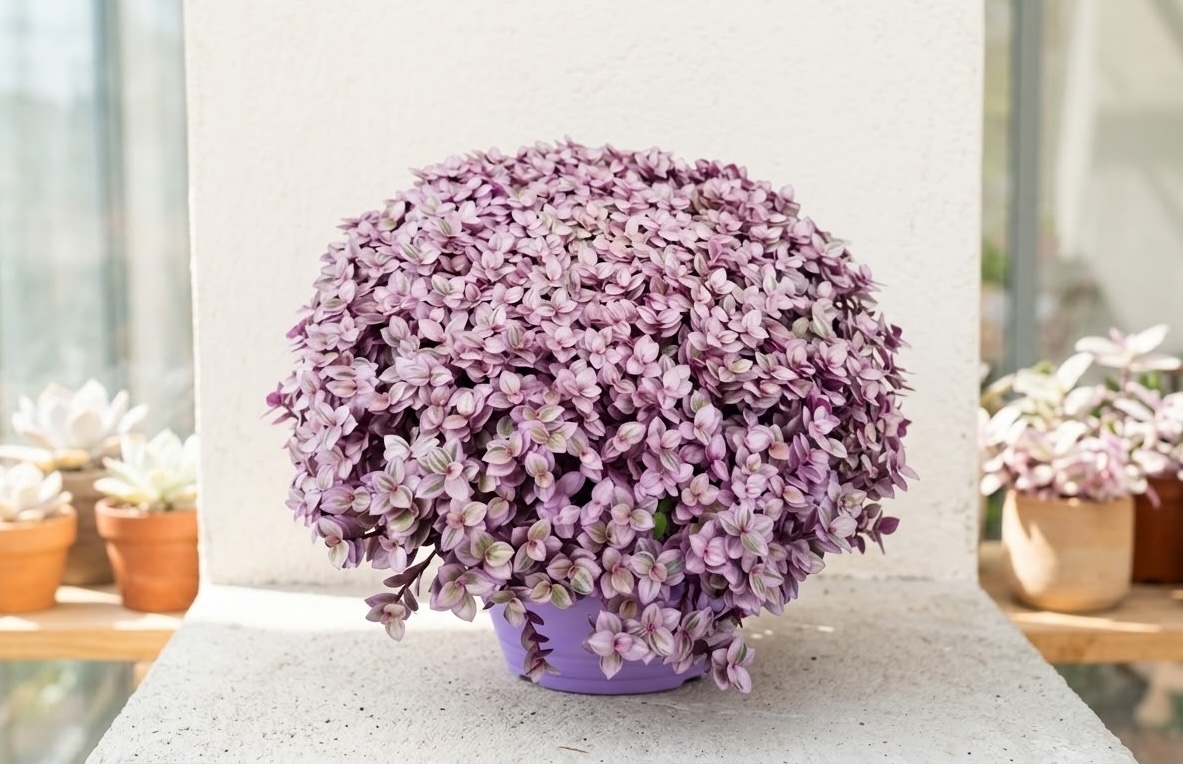
This is the question plant owners ask most, and the answer is simpler than most expect: more light plus regular pinching. Those two things, done consistently, produce the dense, full look you see at nurseries. Without them, even a healthy plant gets sparse and stringy within weeks.
Why Does Wandering Dude Get Leggy?
Each stem grows toward available light. When light is low or comes from one direction, the stems extend between nodes — getting longer and leaving more bare stem behind. New leaves form only at the growing tips, so you end up with long bare stems with a small tuft of leaves at the end. This is etiolation, and it happens fast in wandering dude — sometimes visibly within a week of a light change.
The other cause is never pinching. Each stem grows as one long runner unless you cut it back. Cutting forces the stem to branch at the node below the cut, which doubles your tip count. More tips means more leaves, which means a fuller plant.
How to Pinch and Prune for a Fuller Plant
- Pinch growing tips every 2–3 weeks during the growing season (April–August). Use your fingers or small scissors to nip the top 1–2 inches of each stem just above a leaf node. The stem forks below the cut and produces two new branches.
- After pinching consistently for a few weeks, the plant develops many more stem tips — each one is a potential new branch and leaf cluster.
- For a plant that’s already leggy: cut all stems back by one-half to two-thirds, right above a node. It looks severe but grows back quickly. Use the cuttings to propagate and fill the pot with fresh rooted stems alongside the recovering parent plant.
- Stick cuttings back into the pot after rooting — this is the nursery trick. A pot with 5 rooted cuttings plus the trimmed parent looks full within a month, compared to just letting one plant grow unchecked.
Christina keeps her wandering dude on an east-facing windowsill and pinches it every two weeks during summer. The plant hasn’t needed a hard cutback in two years — consistent small pinches prevent it from ever getting sparse in the first place.
Growing Wandering Dude in a Hanging Basket
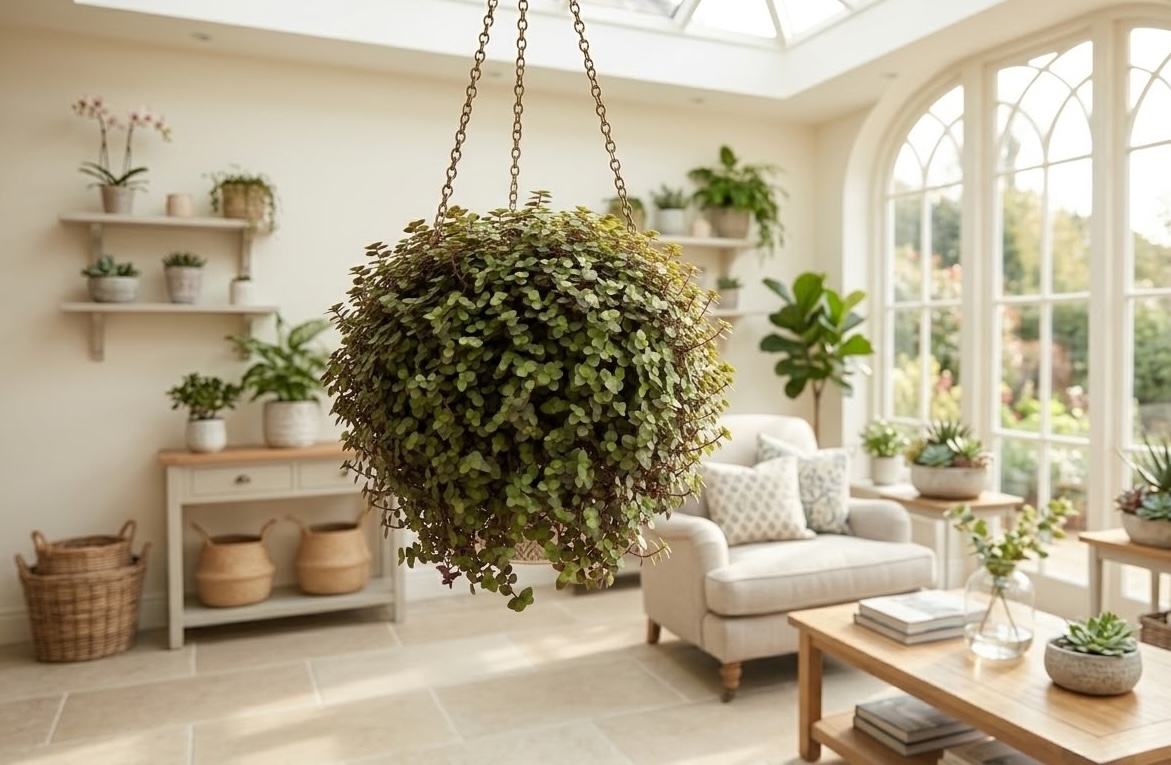
Hanging baskets are where wandering dude looks its best — stems trailing 18–24 inches with dense foliage on every branch. The trailing habit that makes it annoying to manage in a pot becomes an asset when given vertical space.
Position the basket where light reaches the sides, not just from above. An east- or south-facing room where indirect light fills the space works well. Hanging baskets dry out faster than pots on shelves — check every 3–4 days in summer and water when the soil feels dry an inch down.
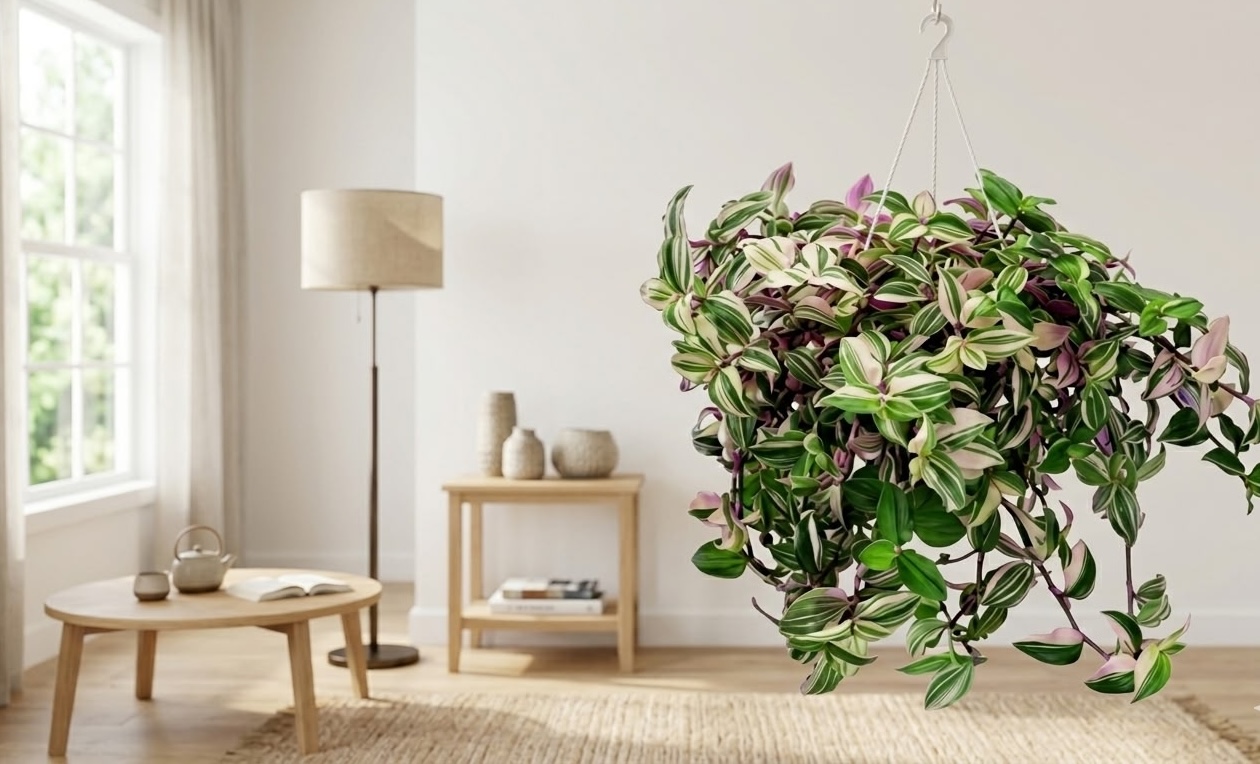
Pinching matters more in a hanging basket than a pot — without it, you get a few long trailing stems with leaves only at the tips rather than a full, cascading display. Pinch every 2–3 weeks, and push rooted cuttings back into the basket soil to fill gaps.
How to Propagate Wandering Dude
Tradescantia zebrina is one of the easiest plants to propagate. The stems root readily in water, usually within 1–2 weeks — faster than almost any other common houseplant. A single healthy parent plant can produce dozens of cuttings in one growing season.
Propagating in Water
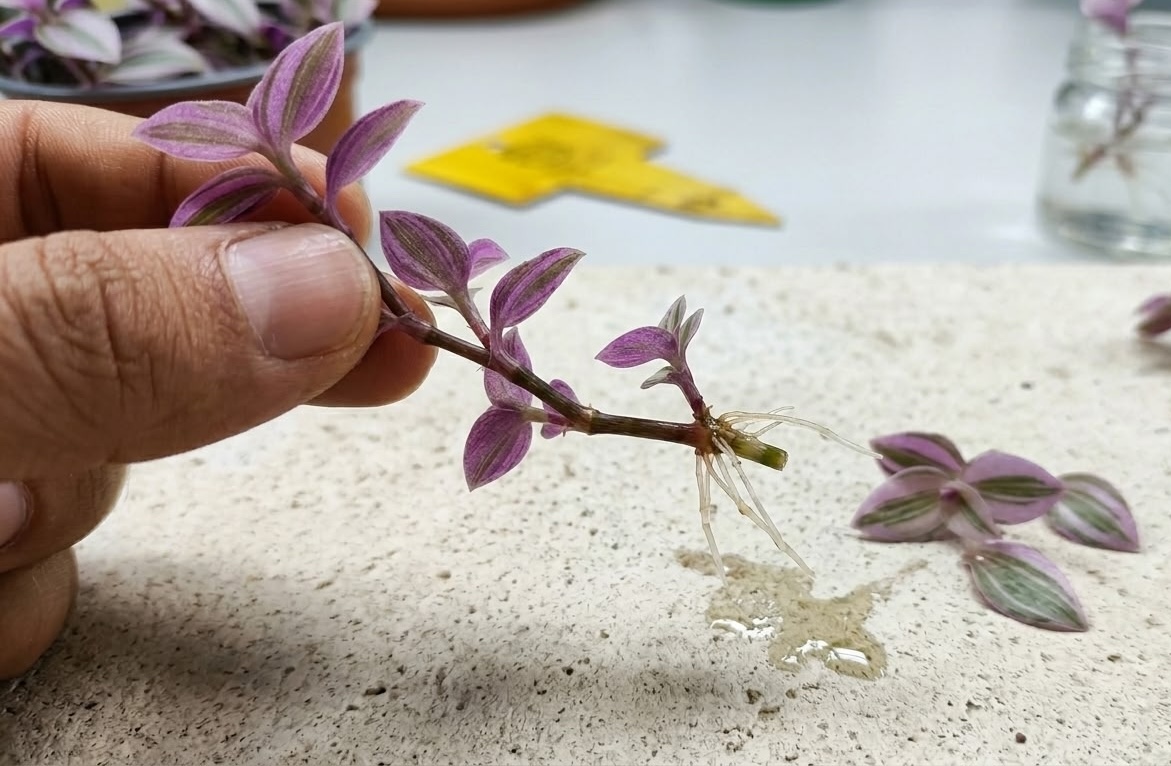
- Take a stem cutting 3–5 inches long. Cut just below a leaf node — the small bump where a leaf attaches.
- Remove the bottom 1–2 inches of leaves so the bare stem is submerged without leaves in the water.
- Place in a clear glass of room-temperature water in bright indirect light.
- Change the water every 3–4 days to prevent bacterial buildup.
- Roots appear in 7–14 days. When roots reach ½–1 inch long, pot into moist soil.
Multiple cuttings in one glass root at the same rate and can all go into the same pot — this is how you fill a new pot quickly rather than waiting for one cutting to grow out.
Propagating in Soil
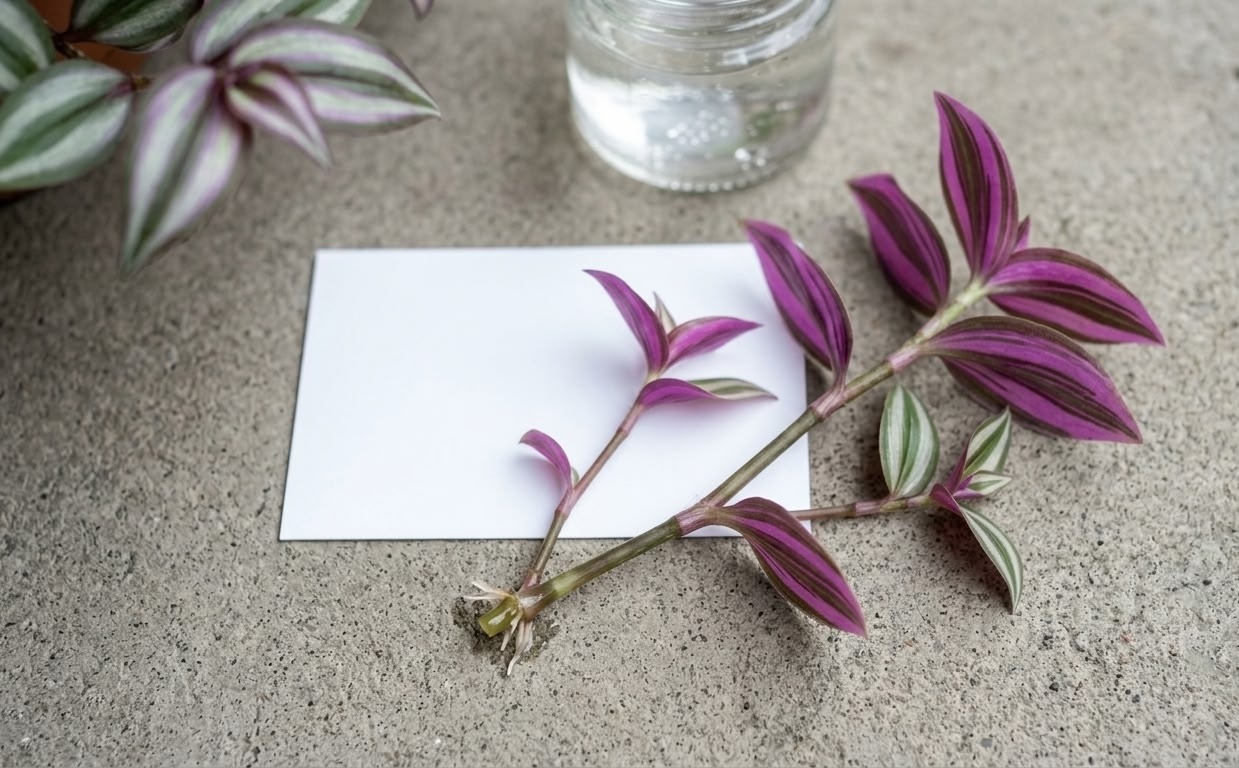
Dip the cut end in rooting hormone powder, then insert into a moist 50/50 mix of perlite and potting soil. Keep the soil consistently moist (not wet) and cover loosely with a clear plastic bag to maintain humidity. Roots form in 2–4 weeks. Check by tugging gently — resistance means roots have formed.
Why Wandering Dude Cuttings Rot in Soil
The most common cause: soil stays too wet. Tradescantia stems have thin, delicate roots — they need moisture but suffocate in waterlogged media. Use a light, well-aerated propagation mix (heavy on perlite), not standard potting soil alone. Make sure the pot has drainage. If you’re getting consistent rot, switch to water propagation and transfer to soil only once roots are established.
A second cause: leaves left below the soil line decompose and introduce bacteria. Remove all leaves from the submerged section before potting.
Common Wandering Dude Plant Problems
Why Are the Leaves Turning Yellow?
Overwatering in most cases — especially if the yellowing starts with lower, older leaves and the soil is staying wet. Pull back on watering, check that drainage isn’t blocked, and let the soil dry more between waterings. If stems are mushy at the base, it’s root rot: take cuttings from healthy growth above the damage and start fresh.
Less common causes: nutrient deficiency (yellowing across the whole plant with no mushy stems — feed with a balanced fertilizer), or underwatering (leaves look limp and dry, not mushy).
Brown Tips and Brown Spots
Brown crispy tips with no spots or softness: fluoride or mineral buildup from tap water, or low humidity. Switch to filtered water and flush the soil thoroughly. A pebble tray or positioning near other plants helps with humidity, though a small humidifier is more reliable if this is a persistent problem.
Brown spots with lighter centers, spreading: fungal leaf spot, usually from water sitting on leaves in low-airflow conditions. Remove affected leaves, improve ventilation, and water at the base rather than overhead. Always use room-temperature water — cold water on the leaves can cause spotting too.
Brown patches in the middle of leaves, bleached looking: sun scorch from direct afternoon sun. Move the plant or filter the light with a sheer curtain.
Pests
Spider mites are the most common problem, especially in dry indoor conditions. Signs: fine webbing between stems, stippled or dull-looking leaves, tiny moving dots on the undersides. Treat by rinsing the plant in the shower, raising humidity, and spraying with neem oil or insecticidal soap weekly for three weeks.
Mealybugs show as white cottony clusters in stem joints. Dab with rubbing alcohol on a cotton swab, then follow up with insecticidal soap. Aphids cluster on new growth — knock off with a strong water spray, then treat with soap if they return. Fungus gnats (small flies hovering around soil) indicate the soil is staying too wet; let it dry out more between waterings.
Can You Grow Wandering Dude Outside?
Yes, with some important caveats. In USDA zones 9–11, it can grow outdoors year-round as ground cover or in containers — it spreads vigorously and fills space fast. In zones 3–8, it can spend summers outside once nighttime temperatures stay reliably above 55°F, then come back inside before fall. A shaded porch or dappled light under a tree is ideal — too much direct sun scorches the leaves.
One important note for warmer climates: Tradescantia zebrina and related species are considered invasive in parts of Florida, Hawaii, and some Southern states, as well as in Australia and New Zealand. Before planting it in the ground outdoors in a warm-climate zone, check your local extension service guidelines. In containers outdoors, it poses no invasiveness risk.
Wandering Dude Plant Varieties
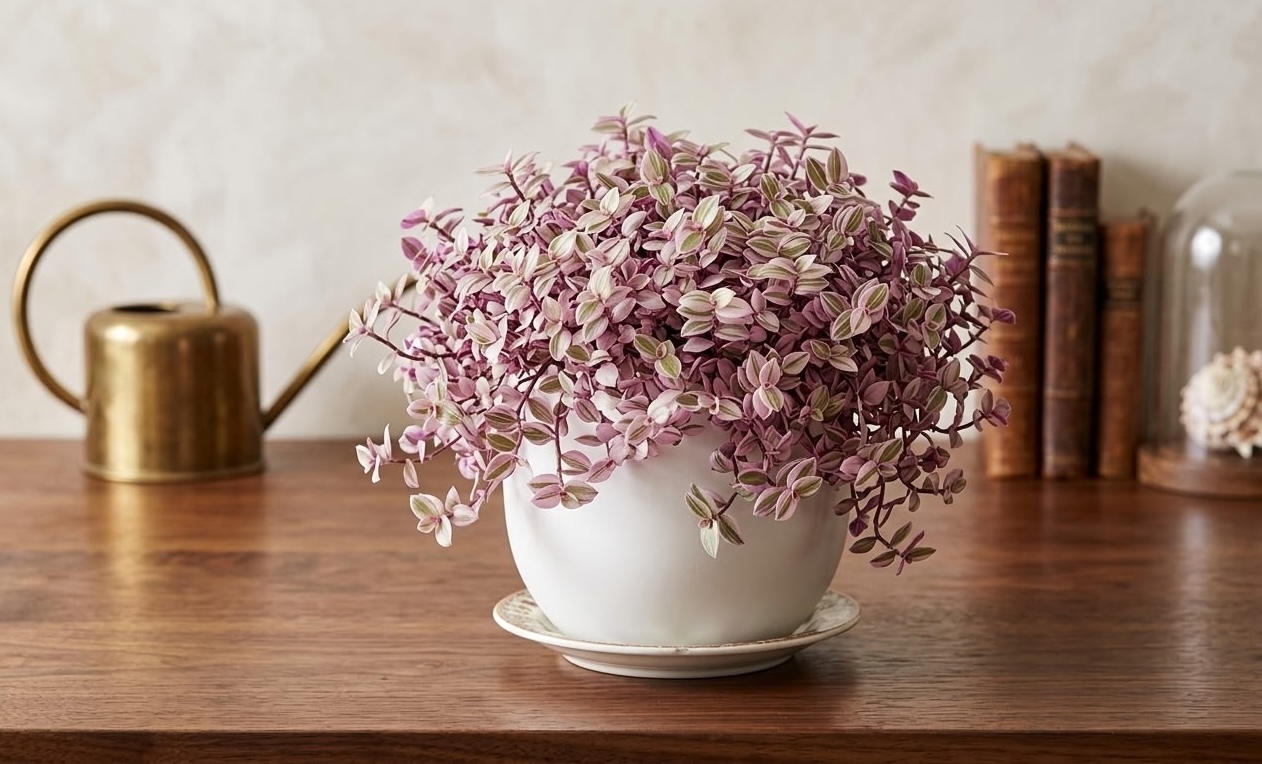
The classic Tradescantia zebrina has green leaves with silver stripes and purple undersides — the pattern that gives the species its name (“zebrina” refers to the zebra-like striping). Several popular varieties offer different color combinations:
- Tradescantia zebrina (standard) — silver-green stripes, purple undersides, most widely available
- Tradescantia Nanouk (T. fluminensis ‘Nanouk’; T. albiflora is an older synonym) — pink, purple, and cream variegation; compact growth; very popular in recent years. Technically a different species but often grouped with wandering dude. Note: water should not pool in its leaf crevices — it’s more prone to rot than the zebrina type.
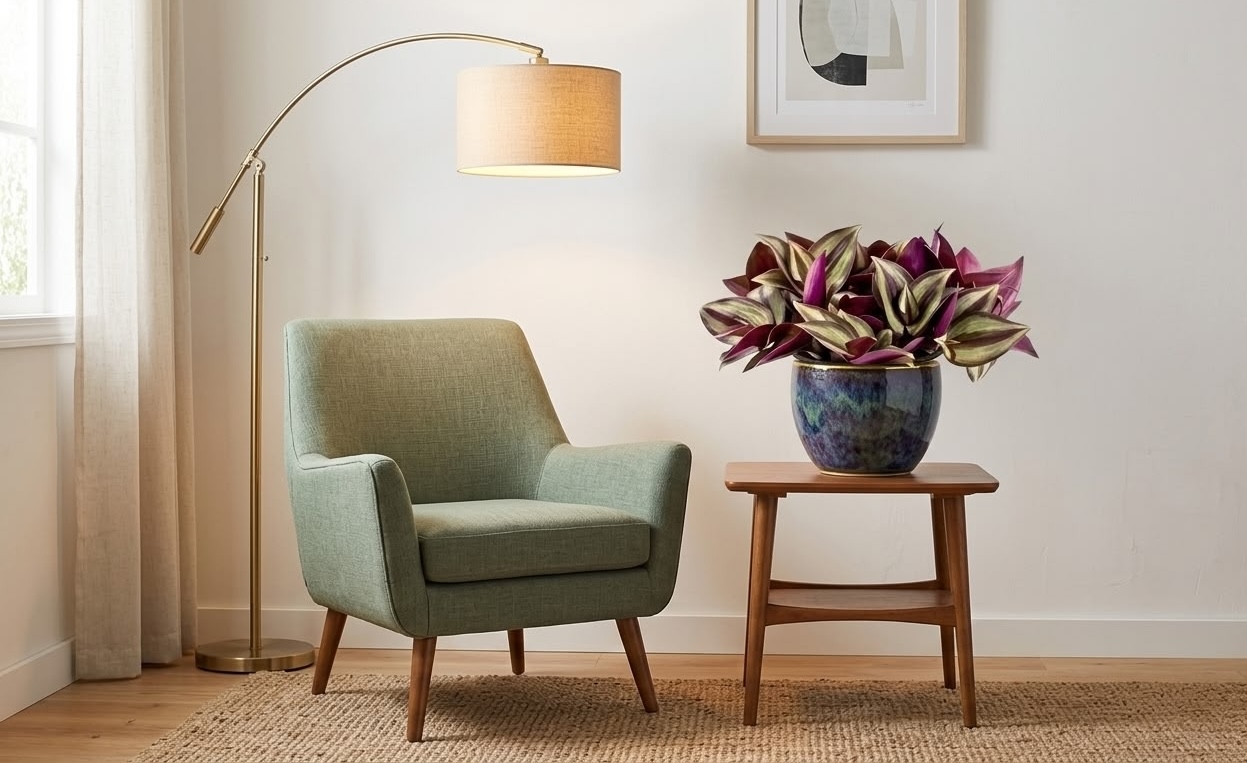
- Tradescantia pallida ‘Purple Heart’ — solid deep purple throughout, no stripes; grows upright rather than trailing; common in outdoor landscaping in warm climates
- Tradescantia zebrina ‘Purpusii’ — dark burgundy-red coloration, less silver, grows slightly more slowly; dramatic contrast against pale walls
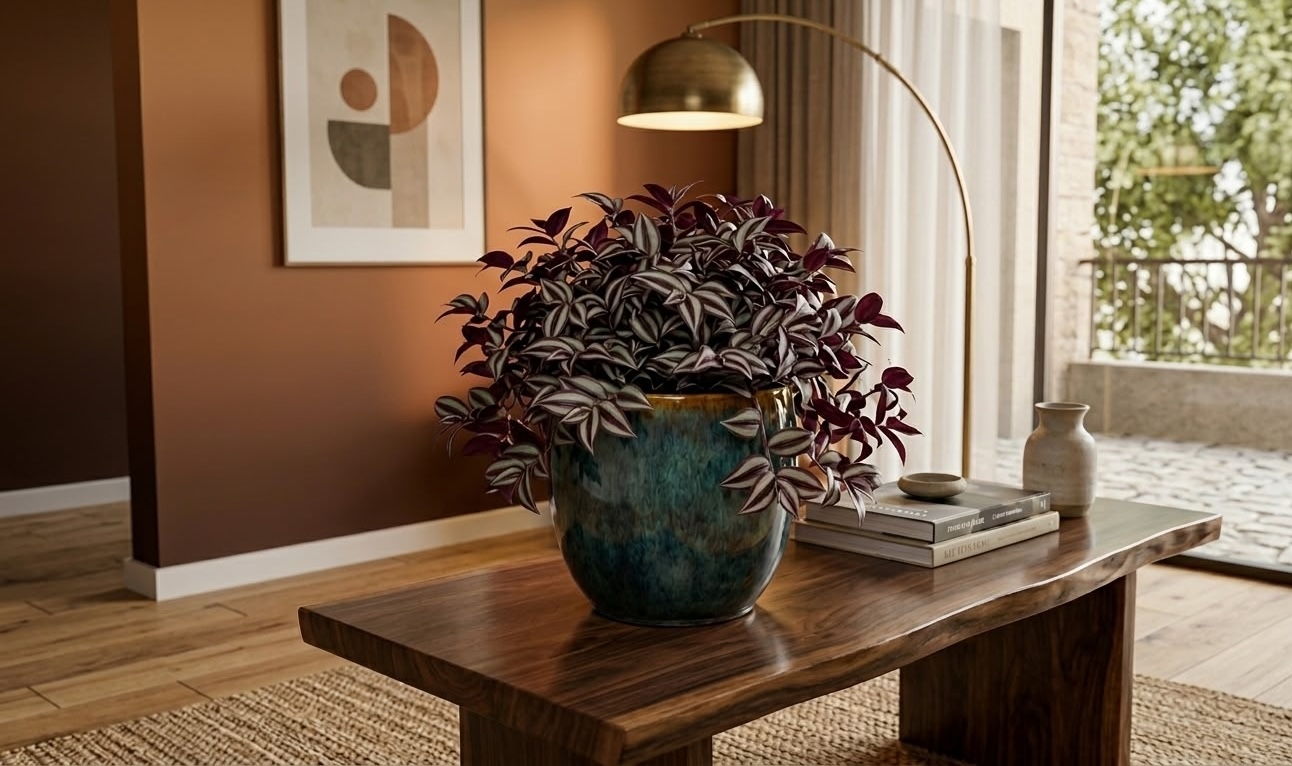
Care requirements are essentially the same across all varieties — the same light, watering, and pruning approach applies. Nanouk is slightly more sensitive to cold water on the leaves. Purple Heart is more sun-tolerant than the others and can handle more direct light outdoors.
Is Wandering Dude Toxic to Cats and Dogs?
Yes — mildly. The ASPCA specifically lists Tradescantia fluminensis (a close relative in the same genus) as toxic to cats, dogs, and horses, with dermatitis as the primary clinical sign. Tradescantia zebrina is not separately listed by ASPCA, but its sap contains similar compounds and is widely regarded as a skin and GI irritant. Ingestion may cause vomiting, drooling, or diarrhea. Not severely toxic, but not a plant to leave where curious pets can chew on it repeatedly.
Skin reactions are also possible in humans with sensitive skin — some people develop contact dermatitis from handling the sap, particularly on the stems. Gloves are a good idea when doing heavy pruning or propagation work.
If your cat or dog ingests the plant and shows symptoms, contact your vet or the ASPCA Animal Poison Control Center at (888) 426-4435. For a houseplant that is confirmed non-toxic to pets, see our guide to spider plant care or goldfish plant care — both are ASPCA-confirmed safe.
Wandering Dude Care: Common Mistakes
- Putting it in a dark corner — the plant survives but loses all its color; bright indirect light is not optional for vibrant foliage
- Never pinching or pruning — without regular pinching, every plant eventually becomes sparse and leggy no matter how good the other care is
- Overwatering — by far the most common reason wandering dude dies; check soil before every watering
- Watering on a fixed schedule — soil dries at different rates depending on humidity, pot size, and season; feel the soil, don’t count days
- Using cold tap water — temperature shock causes spotting; fluoride accumulation causes brown tips; room-temperature filtered water is better
- Expecting fertilizer to fix legginess — fertilizer pushes growth, but leggy growth in low light becomes leggier growth in low light; fix the light first
- Buying it in bloom and being surprised when it goes back to foliage — nurseries grow these under very high light. Home conditions are always lower. Plan for an adjustment period.
Frequently Asked Questions
How often should I water a wandering dude plant?
Check the top inch of soil — when it’s dry, water thoroughly. In summer that’s roughly every 5–7 days in a standard pot; in fall and winter, every 10–14 days. Pot size, humidity, and light all affect the rate, so always check rather than following a fixed schedule.
Why is my wandering dude plant turning green?
Almost always insufficient light. The silver and purple tones need adequate light intensity to produce — in low light, the plant shifts to producing more green chlorophyll instead. Move it to a brighter spot and the color returns within 2–3 weeks. New growth will come in colored; older pale leaves stay pale but get replaced.
How do I make my wandering dude plant bushy?
Two things: more light and regular pinching. Pinch the top 1–2 inches of each stem every 2–3 weeks during the growing season. Each cut forces the stem to branch, multiplying your stem tips and giving you a fuller plant. Also push rooted cuttings back into the pot alongside the parent plant — this fills it out faster than waiting for one plant to grow.
How fast does wandering dude grow?
Fast — one of the fastest-growing common houseplants. In good light during summer, stems can grow several inches per week. A small cutting can fill a 6-inch pot within a few months. This growth rate is also why regular pinching is so important — without it, the plant outruns itself and goes leggy quickly.
Can wandering dude grow in low light?
It survives, but the color fades and the stems get leggy. “Low light tolerant” means it won’t die, not that it looks good. For the silver and purple coloring that makes the plant worth growing, you need bright indirect light. If your space is genuinely dark, a full-spectrum LED grow light on a 12-hour timer is the fix.
Why are my wandering dude cuttings rotting in soil?
Most often the propagation mix is holding too much moisture. Use a light mix heavy on perlite, not standard potting soil, and make sure the pot drains freely. Remove any leaves from the stem section that will be underground — decomposing leaves introduce bacteria and cause rot. If soil propagation keeps failing, switch to water propagation and move to soil only once roots are established.
Is wandering dude a succulent?
No. It looks succulent-adjacent because of the fleshy stems and somewhat waxy leaf surface, but it’s a tropical plant from the family Commelinaceae — not related to true succulents. It needs more frequent watering than succulents, higher humidity, and less direct sun. Treating it like a succulent (infrequent water, full sun, dry air) is a reliable way to stress it.
Can I grow wandering dude outside?
Yes, in the right conditions. In USDA zones 9–11 it can stay outdoors year-round in shade or dappled light. In colder zones, bring it outside after the last frost and bring it back in before temperatures drop below 55°F in fall. Avoid full afternoon sun outdoors — it scorches. In warm climates (Florida, Hawaii), check whether local guidelines flag it as invasive before planting in the ground.
How long does a wandering dude plant live?
Indefinitely with propagation. Individual stems age and become woody at the base over time, but taking cuttings and starting fresh keeps the plant going for years — many gardeners have propagated from the same stock plant for a decade or more. Regular pruning and replanting cuttings back into the pot keeps the plant looking youthful rather than letting it age into a leggy, woody base.
What’s the difference between wandering dude and purple heart?
Different plants. Wandering dude (Tradescantia zebrina) has striped leaves with silver and green on top, purple underneath, and trails loosely. Purple heart (Tradescantia pallida) has solid deep purple leaves throughout, grows more upright, and is much more sun-tolerant — commonly used as outdoor ground cover in warm climates. Both are Tradescantia species, but they look and behave quite differently.