Haworthia fasciata is one of the easiest succulents you can grow — compact, slow-growing, and genuinely forgiving of neglect. It is also one of the most common plants sold as “zebra plant” at garden centers, which causes real confusion: the other zebra plant, Aphelandra squarrosa, needs constant moisture and high humidity. Haworthia fasciata needs the opposite. This guide covers what it actually requires, what kills it, and how to multiply it from the offsets it produces on its own.
What Does Haworthia Fasciata Look Like?
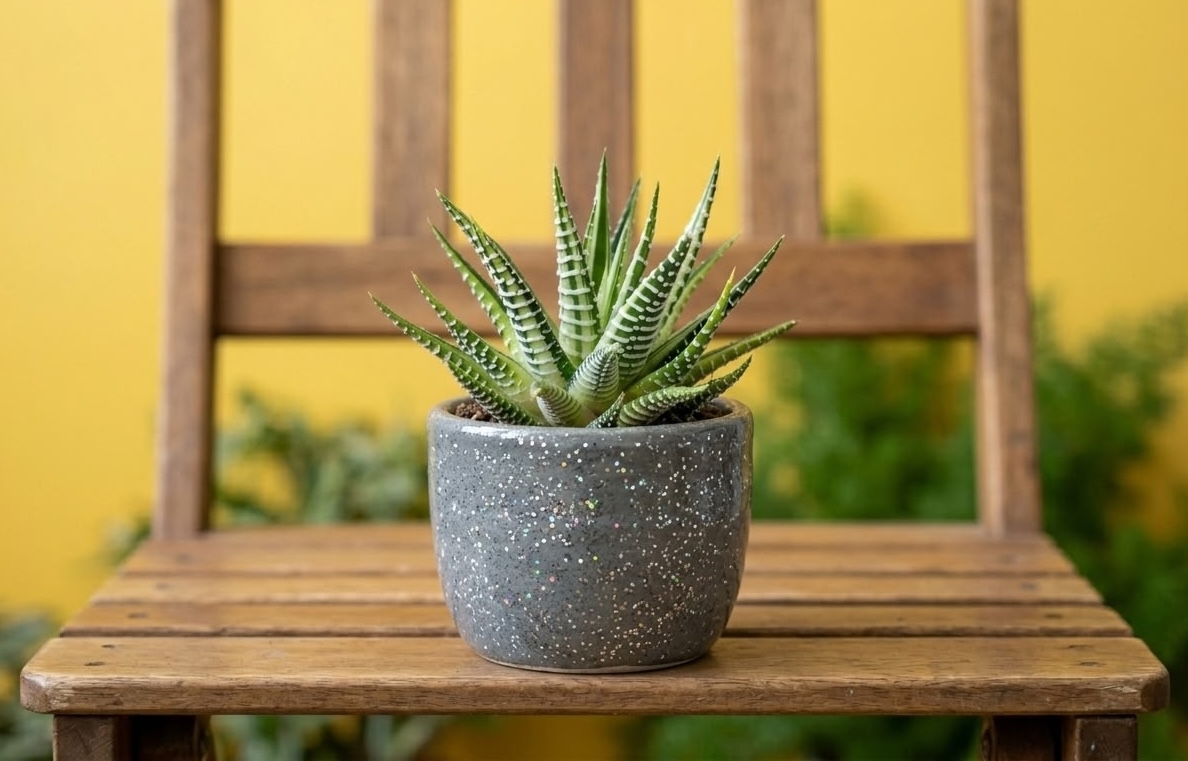
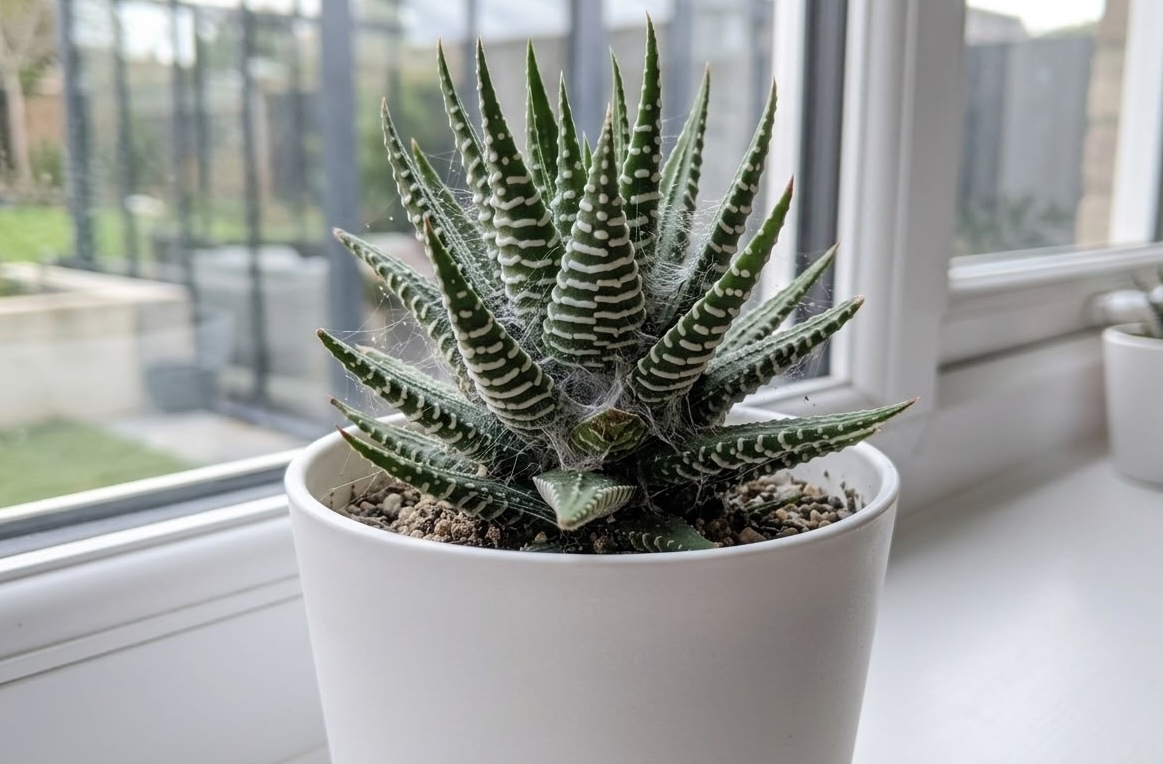
Haworthia fasciata is a small rosette-forming succulent that typically reaches 4–6 inches tall and stays compact for years. The leaves are dark green with raised white horizontal tubercles — bumpy white stripes — on the outer surface. Each leaf ends in a firm pointed tip. The plant spreads slowly by pushing out small offsets (pups) from its base.
It is sold under several names: zebra cactus, zebra haworthia, or simply zebra plant. It is not a true cactus — it lacks the areoles and true spines that define cacti. And it is not the tropical Aphelandra squarrosa that goes by the same common name. The care requirements are almost opposite: where Aphelandra needs consistent moisture and 60–70% humidity, Haworthia fasciata needs drought intervals and tolerates dry indoor air without any attention.
Haworthia Fasciata Care Requirements
Light
Haworthia fasciata tolerates lower light than most succulents — one of its real advantages for indoor growing. It survives and grows in bright indirect light near an east- or north-facing window. In dim conditions, growth slows and the plant stretches toward the light source (etiolation), losing its tight compact shape.
Direct summer sun scorches the outer leaves and triggers reddish stress coloring. A spot with bright indirect light — or morning sun only — is ideal. If you’re using grow lights, 12–14 hours at 2,000–3,000 lux keeps the plant compact and healthy.
Watering
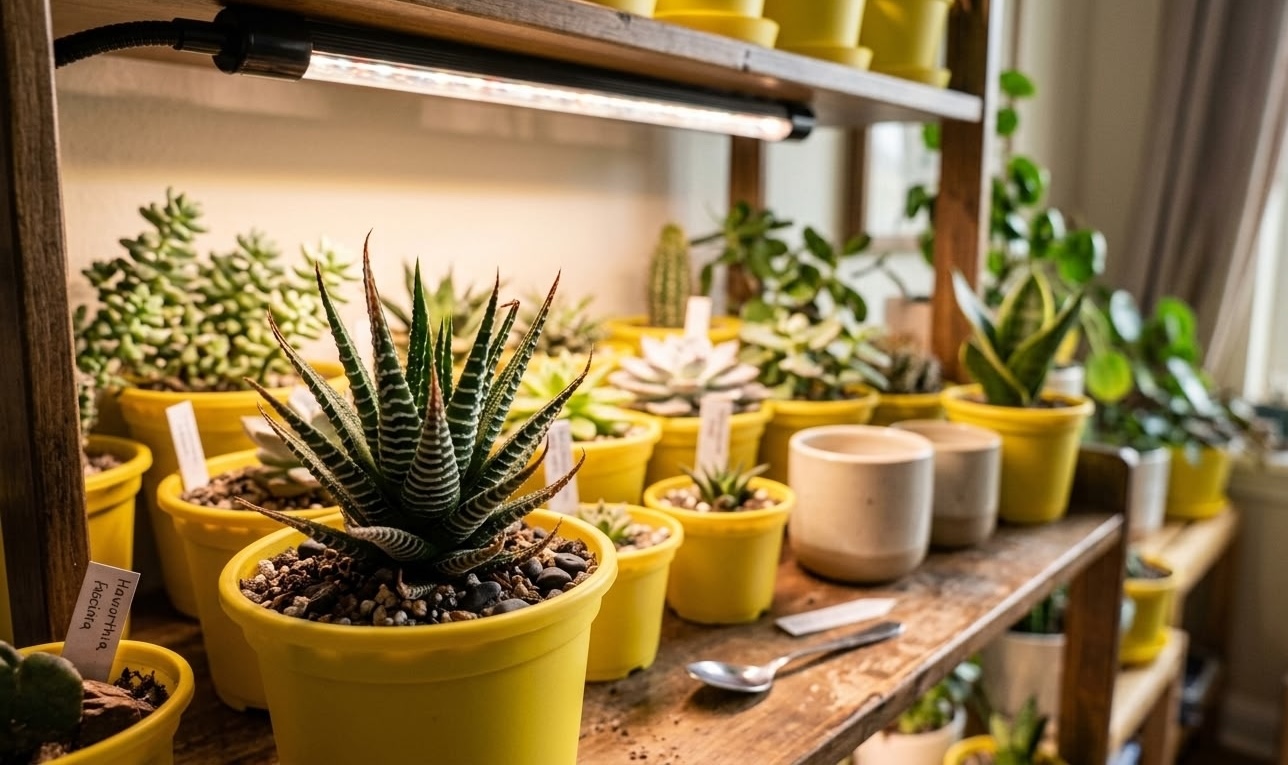
The most common mistake with Haworthia fasciata is watering it like a tropical houseplant. Let the soil dry out completely between waterings — fully dry, not just the surface. During the growing season (spring through early fall), this usually means watering every 2–3 weeks. In winter, every 4–6 weeks is enough.
Water thoroughly when you do water: pour until water drains from the bottom, then wait for the soil to dry completely before the next watering. The plant stores water in its thick leaves and is built to survive extended drought. Soggy soil causes root rot faster than almost anything else you can do wrong with this plant.
Soil and Pot
Use a gritty cactus or succulent mix — the kind with perlite or coarse sand mixed in. Standard potting soil retains too much moisture and leads to root rot even with careful watering. A terracotta pot helps further because it breathes and wicks moisture away from the roots faster than plastic or glazed ceramic.
The pot must have drainage holes. Never plant Haworthia fasciata in a pot without them, regardless of how carefully you water.
Temperature and Humidity
Comfortable at 60–80°F (15–27°C) — normal indoor temperatures suit it year-round. It tolerates brief dips to around 40°F, but is not frost-hardy; keep it indoors through winter. Humidity is not a concern: this plant is adapted to dry, arid conditions and does not need misting, a pebble tray, or a humidifier.
Fertilizing
Optional. If you choose to fertilize, use a diluted succulent fertilizer at half strength once in spring and once in early summer. Skip fall and winter — the plant is resting and excess nutrients at that stage can damage roots.
When to Repot Haworthia Fasciata
Haworthia fasciata is a slow grower and stays happily root-bound longer than most houseplants — repotting every 2–3 years is typical. Signs it actually needs a larger pot:
- Roots visibly circling out of drainage holes
- Soil dries out within a day or two of watering (the roots have displaced most of the growing medium)
- Plant feels unstable or tips easily in the pot
- Multiple offsets crowding the parent to the point of lifting out of the soil
When you repot, go up one pot size only — 1 to 2 inches wider in diameter. A too-large pot holds excess moisture around the roots and dramatically increases the risk of root rot. Spring is the best time; the plant is entering its active growth phase and recovers fastest.
Use fresh gritty cactus mix. Shake off the old soil, inspect the roots (trim any brown or mushy ones), and let the plant sit unpotted for 24 hours before replanting. Wait one week before the first watering in the new pot.
How to Propagate Haworthia Fasciata
Propagation is one of the most satisfying aspects of keeping Haworthia fasciata. The plant produces offsets (pups) freely and they root reliably. No special equipment needed.
Offset Separation (Most Reliable)
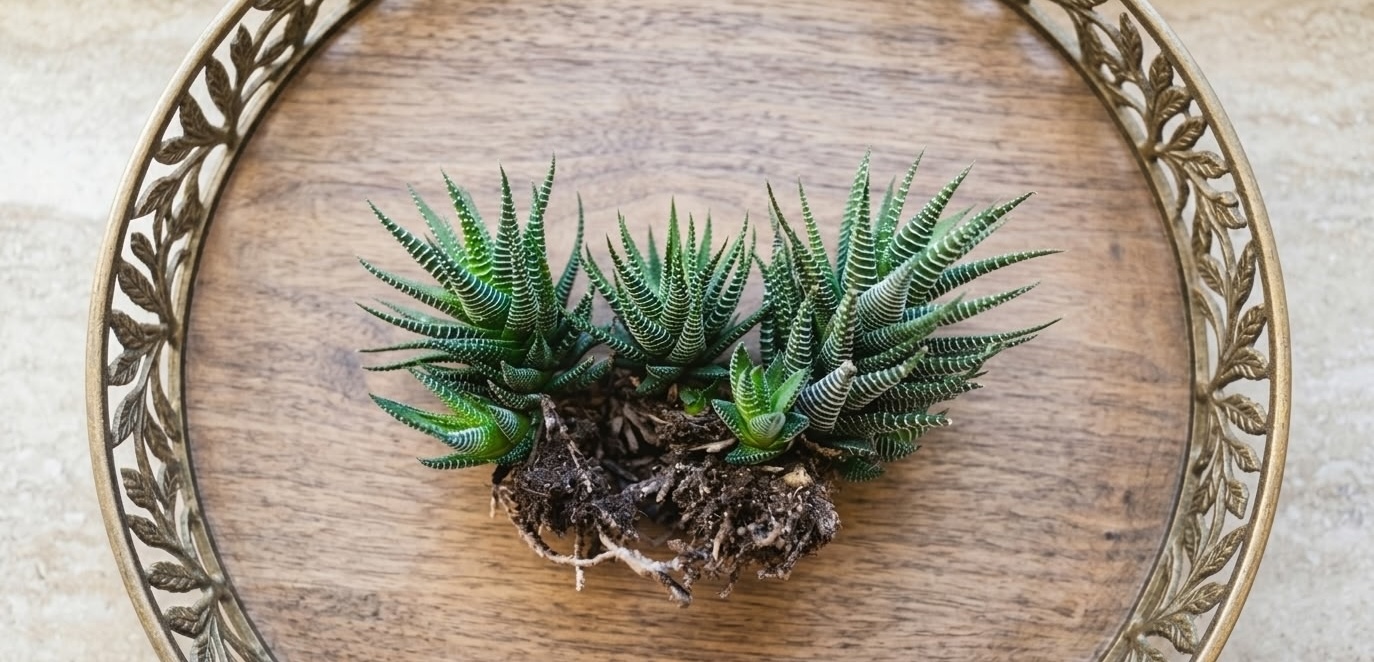
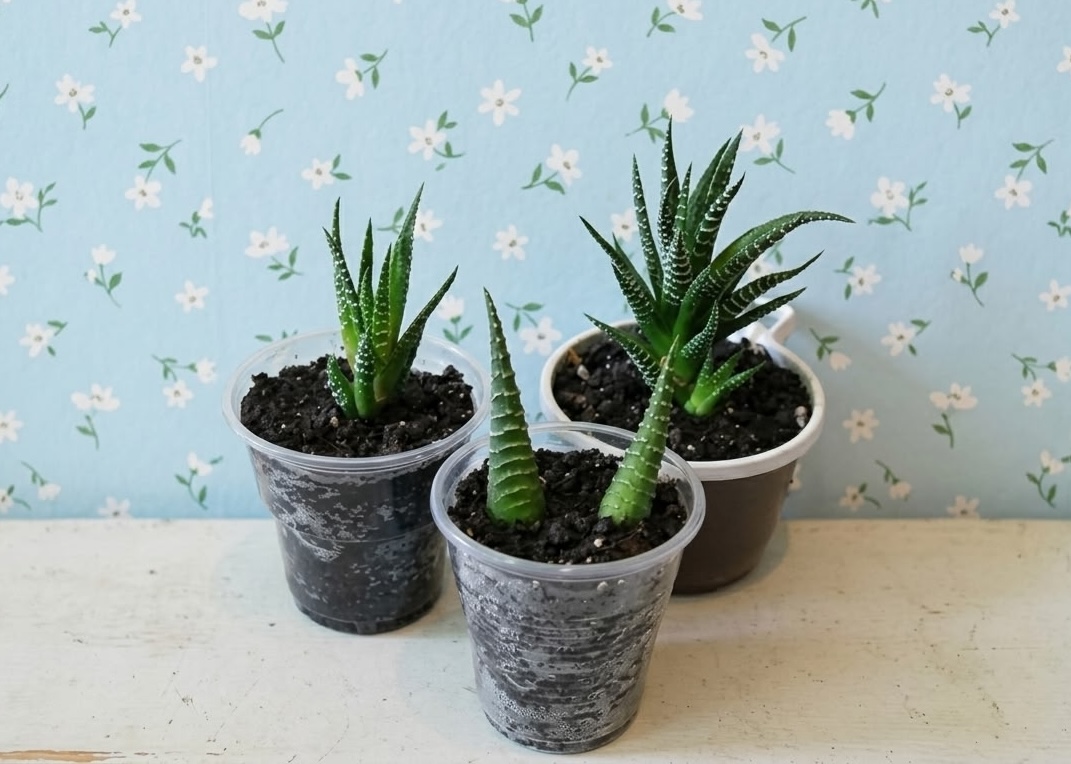
Offsets are small rosettes that form around the base of a mature plant. They root themselves and can be separated once they reach 1–2 inches across:
- Remove the parent plant from its pot.
- Gently twist or cut each offset away from the parent, keeping as many roots on the offset as possible.
- Let both the parent and offset sit uncovered for 24–48 hours so the cut surfaces callous over.
- Repot the parent; plant the offset in its own small pot with gritty cactus mix.
- Wait 2 weeks before the first watering to let new root contact establish.
Leaf Cuttings (Slower)
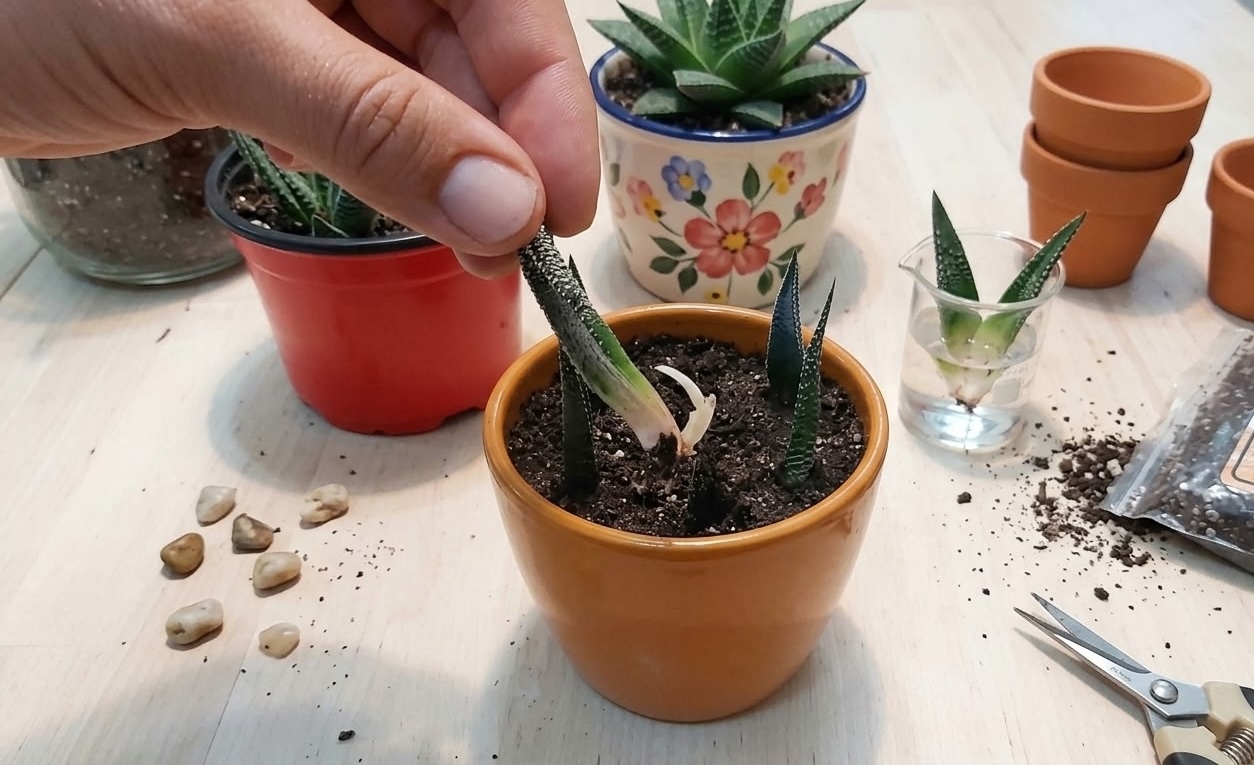
Individual leaves can be propagated, though success rates are lower and it takes 3–6 months. Gently twist a healthy outer leaf cleanly from the base — it must come away with the basal meristem tissue intact. Leave it to callous for 2–3 days, then lay it on top of moist cactus mix (not buried). A small rosette will eventually emerge from the base end. Keep the mix barely moist and wait.
Common Haworthia Fasciata Problems
Root Rot from Overwatering
Root rot is the leading cause of death. The first signs appear aboveground: leaves feel soft and mushy rather than firm, and lower leaves may turn yellow or translucent. By the time this shows, the roots below are already significantly damaged.
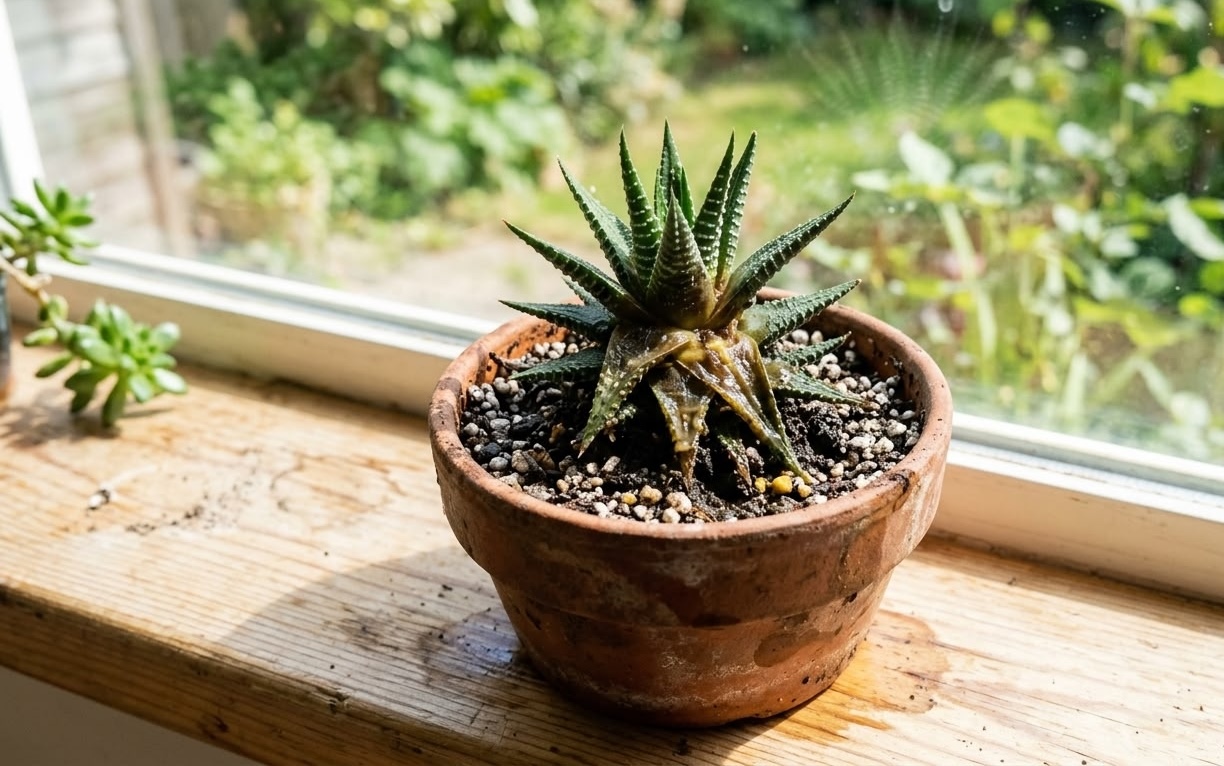
To treat: remove the plant from the pot, trim all brown and mushy roots to clean white tissue, dust cuts with cinnamon or sulfur powder, let the roots air-dry for 24 hours, and repot in fresh dry cactus mix. Wait a full week before the first watering.
Etiolation from Low Light
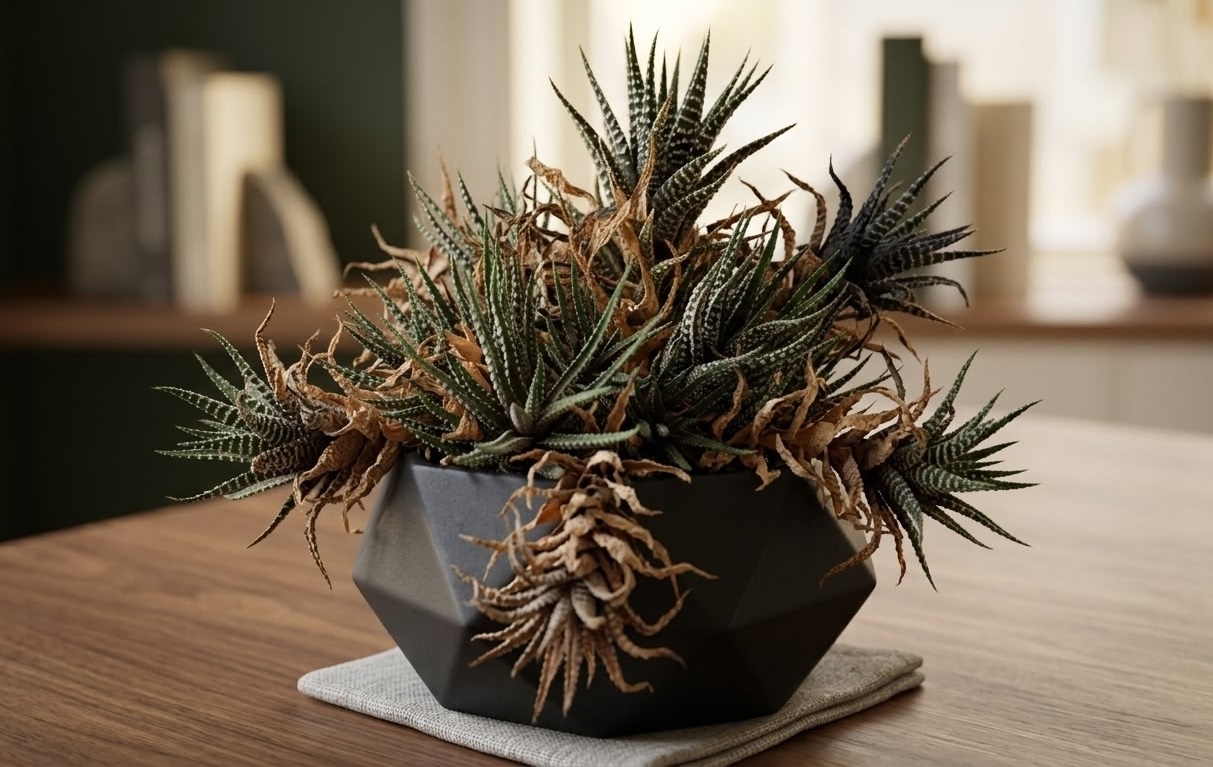
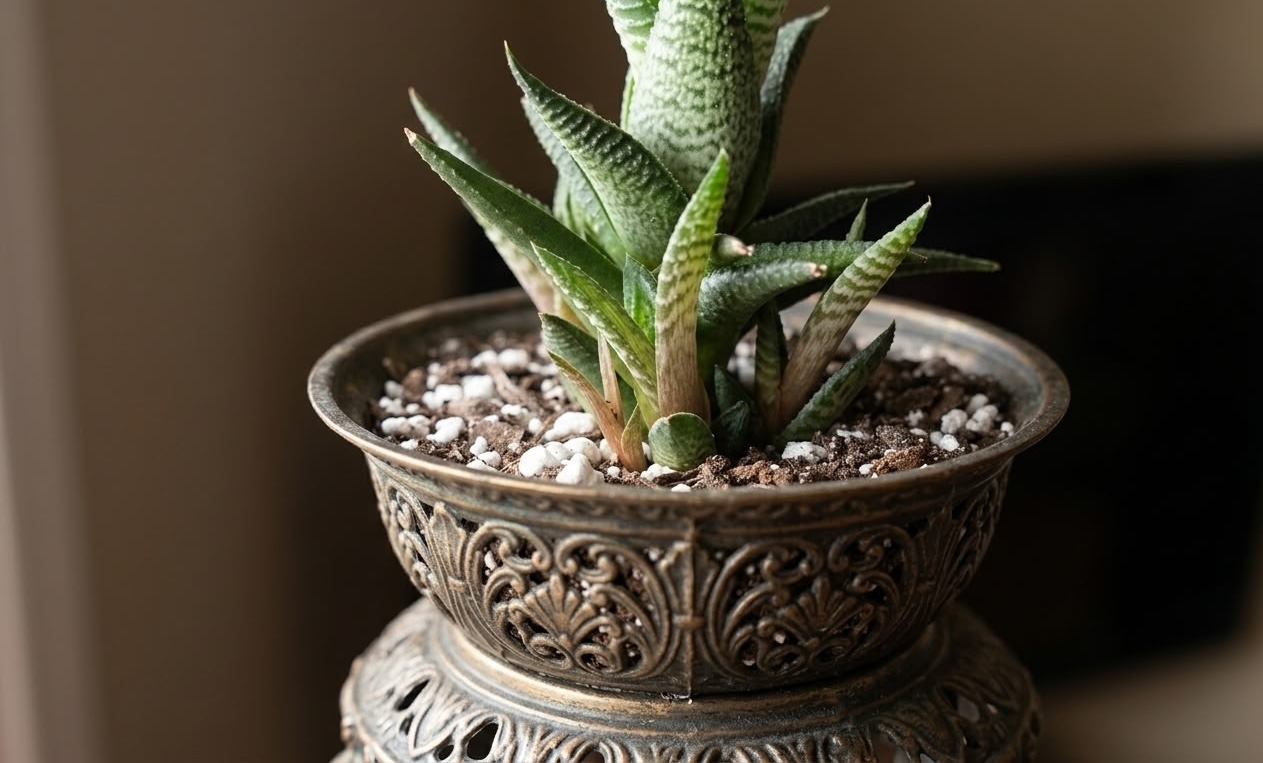
When Haworthia fasciata doesn’t get enough light, it stretches toward the nearest light source. The rosette elongates, new leaves grow longer and paler than normal, and the plant loses its compact shape. This is called etiolation and cannot be reversed on existing leaves. Move the plant to a brighter location; new growth will return to the proper compact form.
Spider Mites
The most common pest. Signs: fine webbing between leaves, tiny pale dots or stippling on leaf surfaces, and a generally dull appearance. Treat with neem oil spray every 5–7 days for 3 consecutive weeks. Move the plant to a spot with slightly better air circulation — spider mites establish faster in stagnant dry air.
Reddish Leaf Color
If the plant turns reddish or purplish, it is experiencing stress — usually too much direct sun, extreme temperature swings, or very low water. Reddish coloring is not toxic or lethal, but it signals the plant is working harder than normal. Move it to a spot with filtered light and water normally.
Is Haworthia Fasciata Safe for Cats and Dogs?
Haworthia fasciata is non-toxic to cats and dogs according to the ASPCA. (The ASPCA database does not evaluate Haworthia for horses specifically.) No toxic compounds have been identified, and no clinical signs are expected from ingestion. It is a safe choice for homes with pets.
One practical note: the pointed leaf tips are firm and sharp. A cat that chews on the plant may get minor mouth irritation from the physical points — this is mechanical, not chemical. Placing the plant slightly out of reach of very curious cats is sensible.
For a full breakdown of all three plants called “zebra plant” and their pet safety status, see Is Zebra Plant Toxic to Cats?
Haworthia Fasciata Care Quick Reference
| Factor | Requirement |
|---|---|
| Light | Bright indirect light; no harsh direct summer sun |
| Water | Every 2–3 weeks (summer); every 4–6 weeks (winter); let soil dry completely |
| Soil | Gritty cactus or succulent mix; terracotta pot preferred |
| Temperature | 60–80°F indoors; not frost-hardy |
| Humidity | Low — no misting or pebble tray needed |
| Fertilizer | Half-strength succulent fertilizer, once in spring, once in early summer |
| Toxicity | Non-toxic to cats, dogs, horses (ASPCA) |
When Haworthia Fasciata Won’t Survive Indoors
Despite its reputation for toughness, there are conditions Haworthia fasciata cannot recover from:
- Frost exposure — any temperature below 40°F causes irreversible cell damage. A single cold night near a single-pane window in winter can kill the plant.
- Chronic overwatering — root rot progresses faster than most growers expect. A plant left in soggy soil for 2–3 weeks often reaches a point where root damage is too extensive to recover from, even with correct treatment.
- Complete darkness — Haworthia tolerates low light, not no light. A plant kept in a windowless room will decline over several months: etiolation, weakening, eventual death. It needs at least some indirect daylight or grow light exposure.
- Pots without drainage — no watering technique compensates for a pot that cannot drain. Even careful watering eventually leads to water accumulation at the bottom and root rot.
If your plant shows any of these conditions, address the root cause first — moving the pot or changing the soil — before treating symptoms like mushy leaves or stretched growth.
FAQ: Haworthia Fasciata Care
How often should I water Haworthia fasciata?
Every 2–3 weeks in summer, every 4–6 weeks in winter. Always let the soil dry out completely between waterings — stick your finger 2 inches into the soil; it should feel completely dry before you water again. Frequency varies by pot type, home temperature, and season.
Why are my Haworthia leaves turning soft and mushy?
Soft, mushy leaves almost always mean root rot from overwatering. Remove the plant from the pot, trim damaged roots to clean tissue, let it dry for 24 hours, and repot in fresh cactus mix. Reduce watering frequency going forward.
Why is my Haworthia fasciata turning red?
Reddish or purplish coloring is a stress response — usually caused by too much direct sun, temperature extremes, or severe underwatering. Move the plant to bright indirect light and water normally. The color typically fades back to green once conditions improve.
How do I separate Haworthia pups?
Remove the parent plant from its pot, gently twist or cut each pup off while keeping as many roots on the pup as possible, let both cut surfaces callous for 24–48 hours, then pot the pup in its own container with gritty cactus mix. Wait 2 weeks before watering.
Does Haworthia fasciata bloom?
Yes — small white tubular flowers appear on long thin stalks in late spring or early summer. The flowers are modest compared to the foliage, and some growers remove the flower stalks to keep the plant’s energy on vegetative growth. The plant continues to grow normally whether or not it blooms.
Is Haworthia fasciata the same as the zebra plant?
It depends on which zebra plant you mean. Three different plants share that common name: Haworthia fasciata (this plant — a small succulent), Aphelandra squarrosa (a tropical shrub with yellow flower bracts), and Calathea zebrina (a prayer plant). Each has completely different care requirements. Haworthia fasciata is the easiest of the three to keep alive indoors.