Zebra plant (Aphelandra squarrosa) is one of the most dramatic-looking houseplants you can grow — bold white-veined leaves and bright yellow flower bracts that last weeks. It is also one of the more demanding. This guide covers what the plant actually needs, why it drops leaves, and how to get it to bloom again after the first flowers fade.
First: Which Zebra Plant Do You Have?
Three very different plants share the name “zebra plant”:
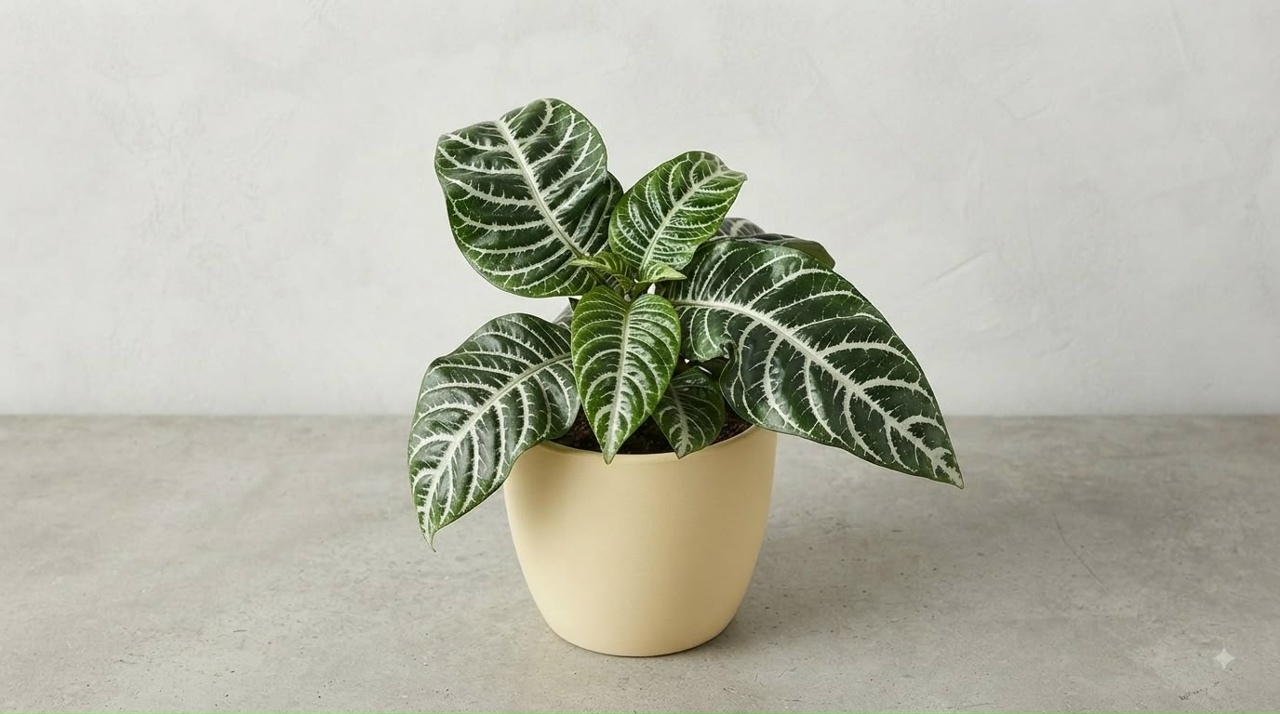
- Aphelandra squarrosa — the tropical shrub with dark green leaves and bright white veins running perpendicular to the midrib, and yellow flower spikes. This is what most garden centers sell as zebra plant and what this guide covers.
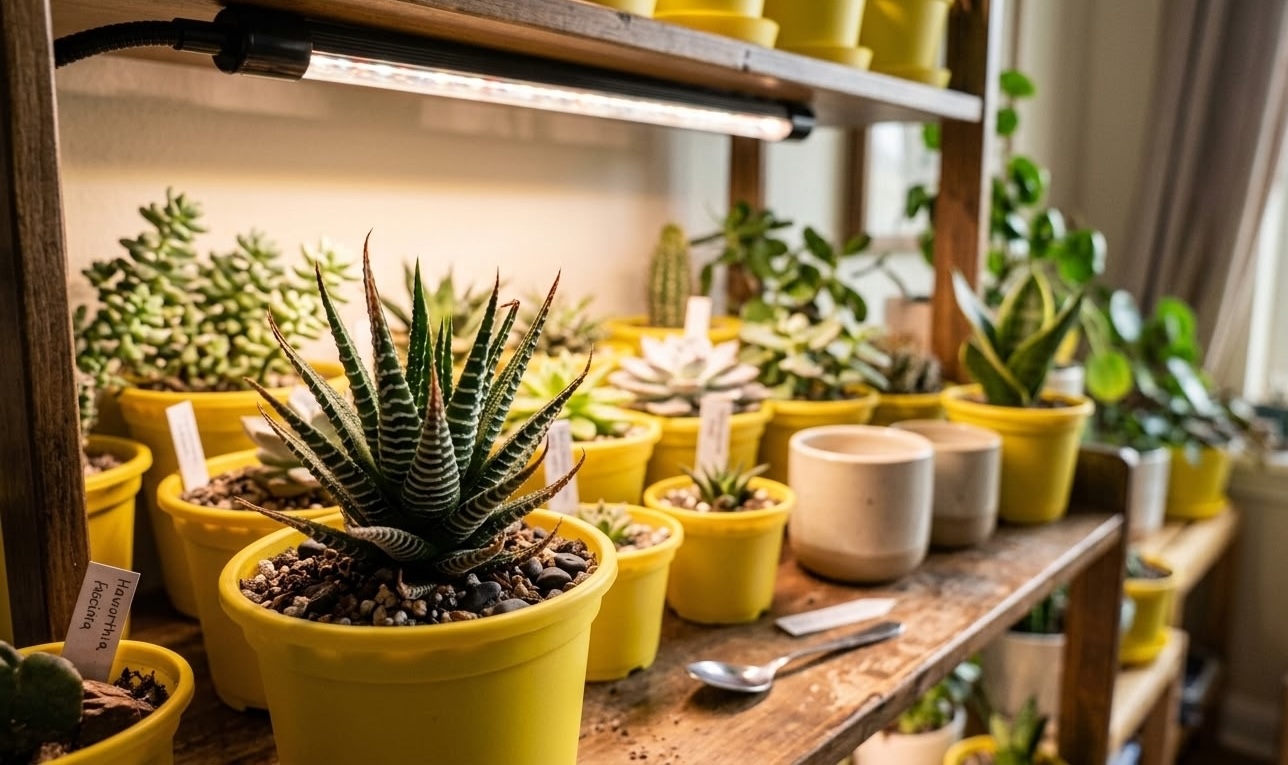
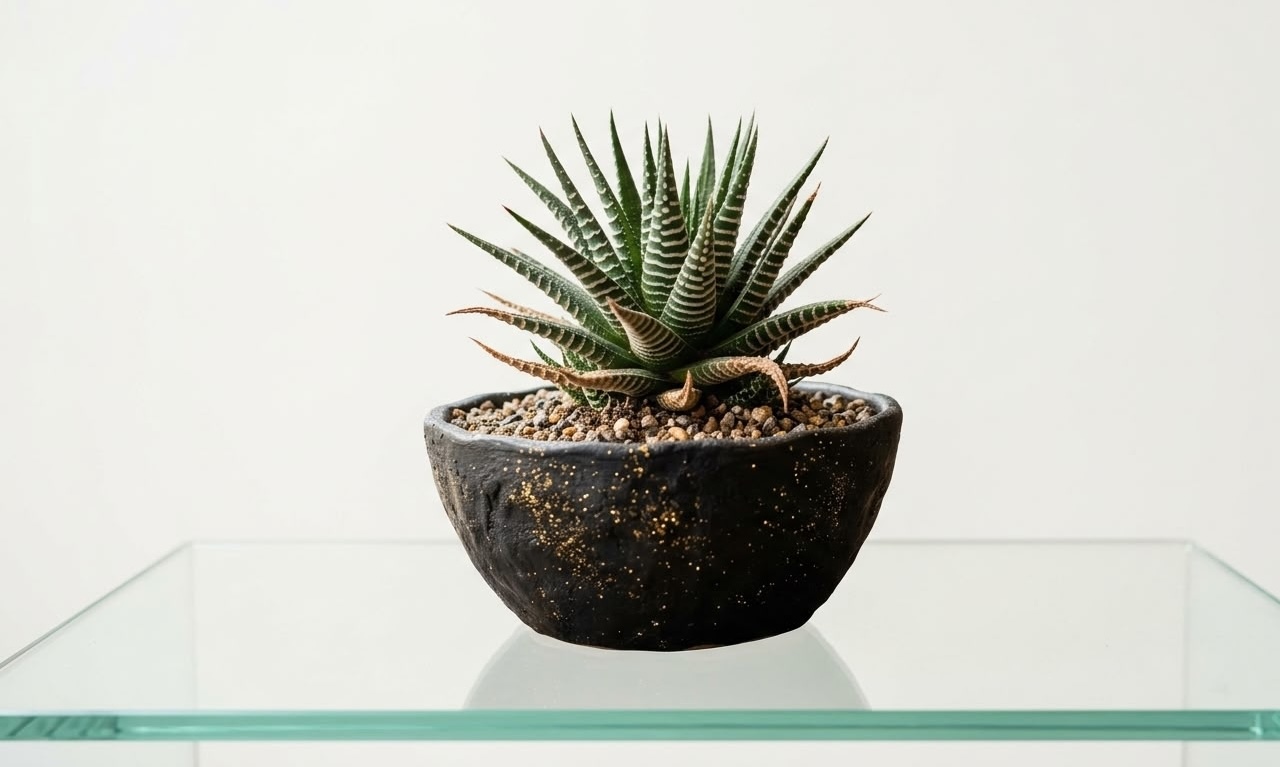
- Haworthia fasciata — a small succulent with white horizontal bands. Completely different care. See: Haworthia fasciata care guide.
- Calathea zebrina — a prayer plant with zebra-striped foliage. Also different.
If your plant has white veins running across dark green leaves and grows as a shrub with 12-18 inch stems, you have Aphelandra squarrosa. If it’s a small spiky succulent with white bands, you have Haworthia — very different care needs.
Zebra Plant Care Requirements
Light
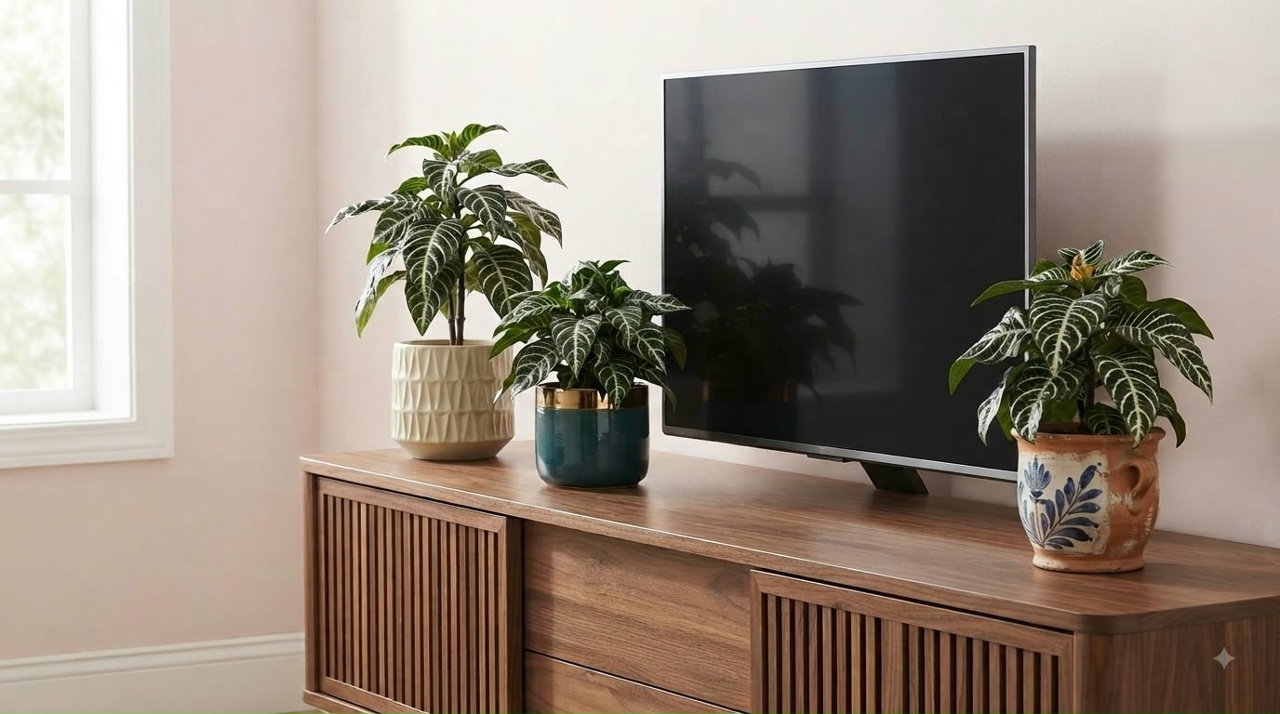
Zebra plants need bright indirect light. Place them near a window that receives good light but shield them from direct sun — direct rays scorch the leaves and fade the white veining. An east-facing window works well; north-facing is usually too dim for long-term health and will prevent flowering.
For blooming, the plant needs sustained bright indirect light — approximately 12 weeks of good light starting in spring to trigger late-summer or autumn flower buds.
Watering: The Most Important Care Factor
Consistent moisture is the foundation of zebra plant care, and also the most common mistake. Do not allow the soil to dry out completely — even one wilting episode can cause irreversible lower leaf drop. University of Arkansas Extension describes the result: “Those that have allowed their zebra plants to wilt a time or two know the results. The lower leaves fall off and the plant takes the shape of a miniature palm tree.”
At the same time, waterlogged soil causes root rot and the same symptoms. The goal is moist but never soggy — check the soil frequently and water as soon as the surface begins to dry. Use small, frequent waterings rather than occasional thorough soakings.
Use room-temperature water. Cold water shocks the roots and can trigger leaf drop. Reduce watering in winter but do not let the soil dry out completely even then.
Humidity
Zebra plants need high humidity — ideally 60-70%. Most indoor environments sit at 30-40%, which is why this plant struggles in many homes. Brown tips on otherwise healthy leaves are the first sign of insufficient humidity.
Effective options: a humidifier placed nearby, a pebble tray filled with water under the pot, or grouping the plant with other humidity-loving plants. Avoid misting the leaves directly — water sitting in the leaf axils can cause fungal issues.
Temperature
Keep zebra plants above 65°F at all times. Cold drafts from windows, air conditioning vents, or open doors cause immediate leaf drop even when the average room temperature is fine. Keep the plant away from exterior walls in winter.
Soil
Use a well-draining, slightly acidic potting mix rich in organic matter. A good option: African violet potting mix, or a DIY blend of 1 part perlite + 1 part standard potting soil + 2 parts peat moss or coir. pH should stay below 6.0.
Fertilizing
Feed with a balanced liquid fertilizer at half-strength every 1-2 weeks during spring and summer. Begin in late winter as new growth appears. Stop in autumn and winter when growth slows. Over-fertilizing causes brown leaf tips — if this happens, flush the soil and dilute the fertilizer further next time.
Why Is My Zebra Plant Dropping Leaves?
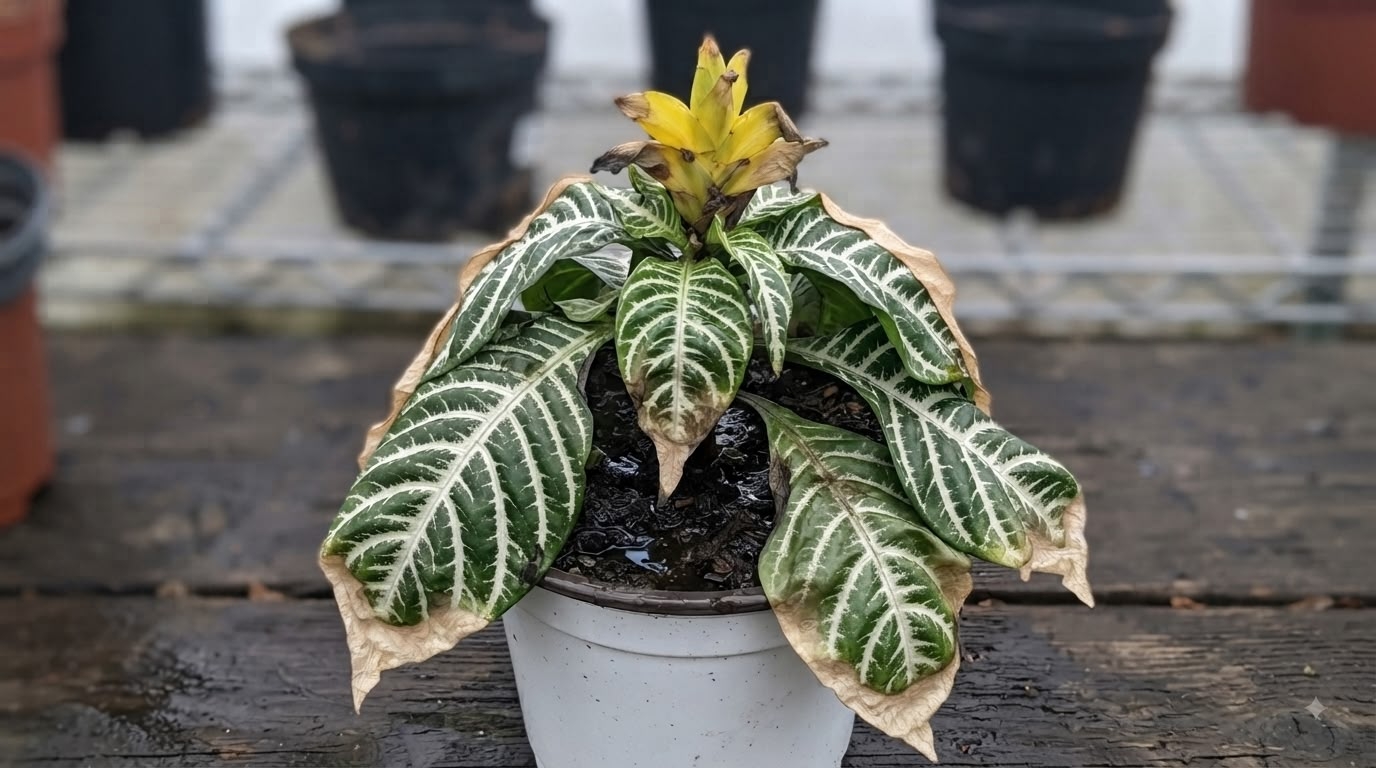
Leaf drop is the most common complaint with zebra plants. The cause is almost always one of these:
- Underwatering (soil drying out) — the number one cause. Even a single wilting episode causes lower leaves to drop permanently.
- Cold draft — from a window, AC vent, or open door. Move the plant away from any source of cold air.
- Overwatering — soggy soil causes root rot, which shows up as leaf drop. Check whether the soil is dense and wet rather than moist.
- Low temperature — prolonged exposure below 65°F stresses the plant.
- Post-purchase stress — a plant that’s been through shipping and garden center conditions often drops lower leaves in the first 2-4 weeks. Keep conditions stable and wait.
How to Get a Zebra Plant to Bloom Again
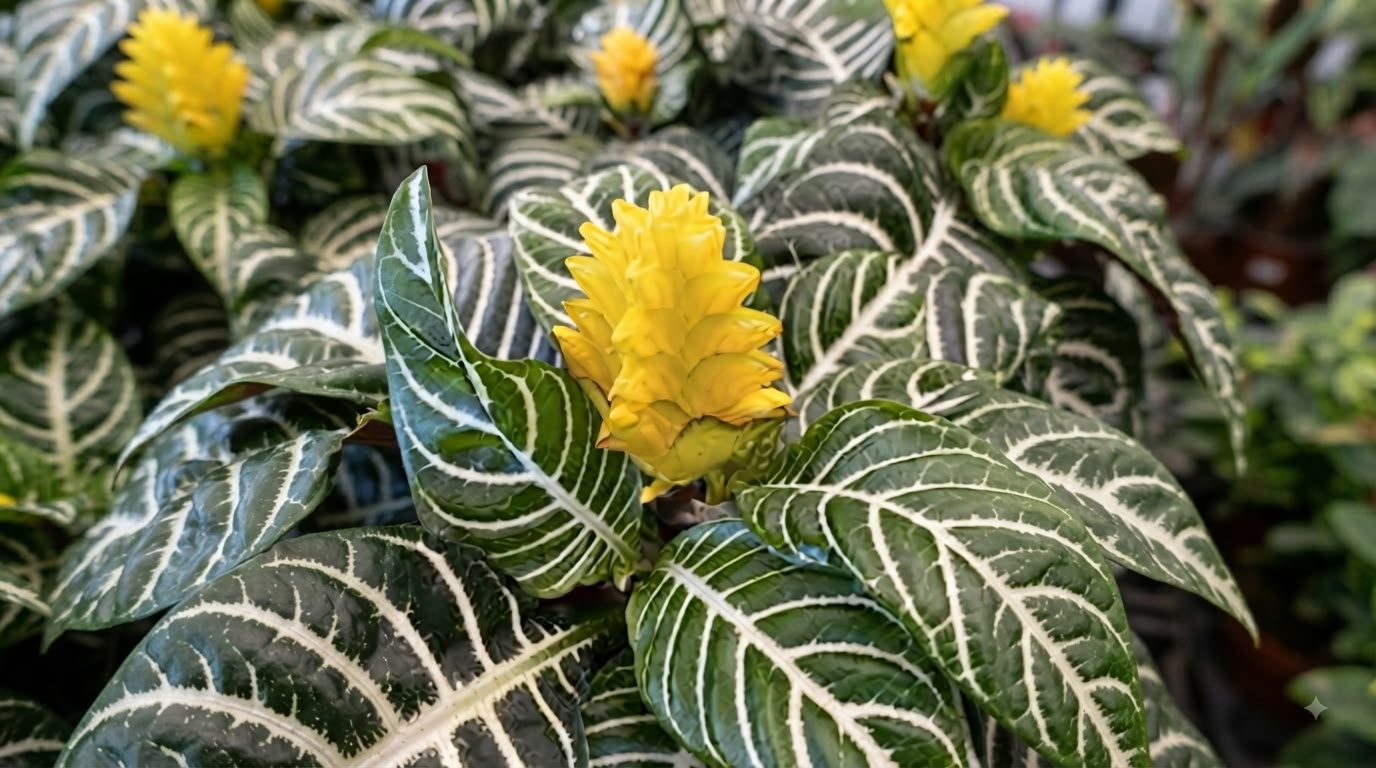
Getting a zebra plant to rebloom indoors requires sustained good light and patience:
- Provide 12+ weeks of bright indirect light starting in March or April. This is the light accumulation that triggers bud formation.
- Keep night temperatures above 65°F consistently — cool nights prevent buds from forming.
- Fertilize every 1-2 weeks through spring and early summer to support bud development.
- Expect blooms in late summer to early autumn — this is the natural flowering window for Aphelandra squarrosa.
The showy part is not the small flowers but the yellow or orange bracts — the modified leaves that hold the flower spike. These bracts last up to 6 weeks.
What to Do After a Zebra Plant Flowers
After flowering, cut the stem back by about one-third, just above a leaf node. This prevents the plant from putting energy into seed production and encourages new side shoots to develop. Move the plant to a slightly cooler, lower-light location for 6-8 weeks — a rest period after blooming helps it prepare for the next cycle.
The side shoots that develop after pruning can be used as stem cuttings for propagation.
Common Mistakes with Zebra Plants
Inconsistent Watering
Letting the soil dry out even once causes leaf drop that won’t reverse. This plant does not tolerate a “water when I remember” schedule. Check the soil surface every 2-3 days and water as soon as it starts to dry.
Placing Near Cold Air Sources
Cold drafts are the most overlooked cause of sudden leaf drop. Check that the plant is not near an exterior window that gets cold at night, an AC vent, or a frequently opened exterior door.
Low Humidity in Heated Interiors
Central heating in winter drops indoor humidity to 20-30%. Without supplemental humidity, zebra plant will develop brown tips, then brown patches, then leaf drop. A humidifier is the most effective and consistent solution.
Zebra Plant Pests and Diseases
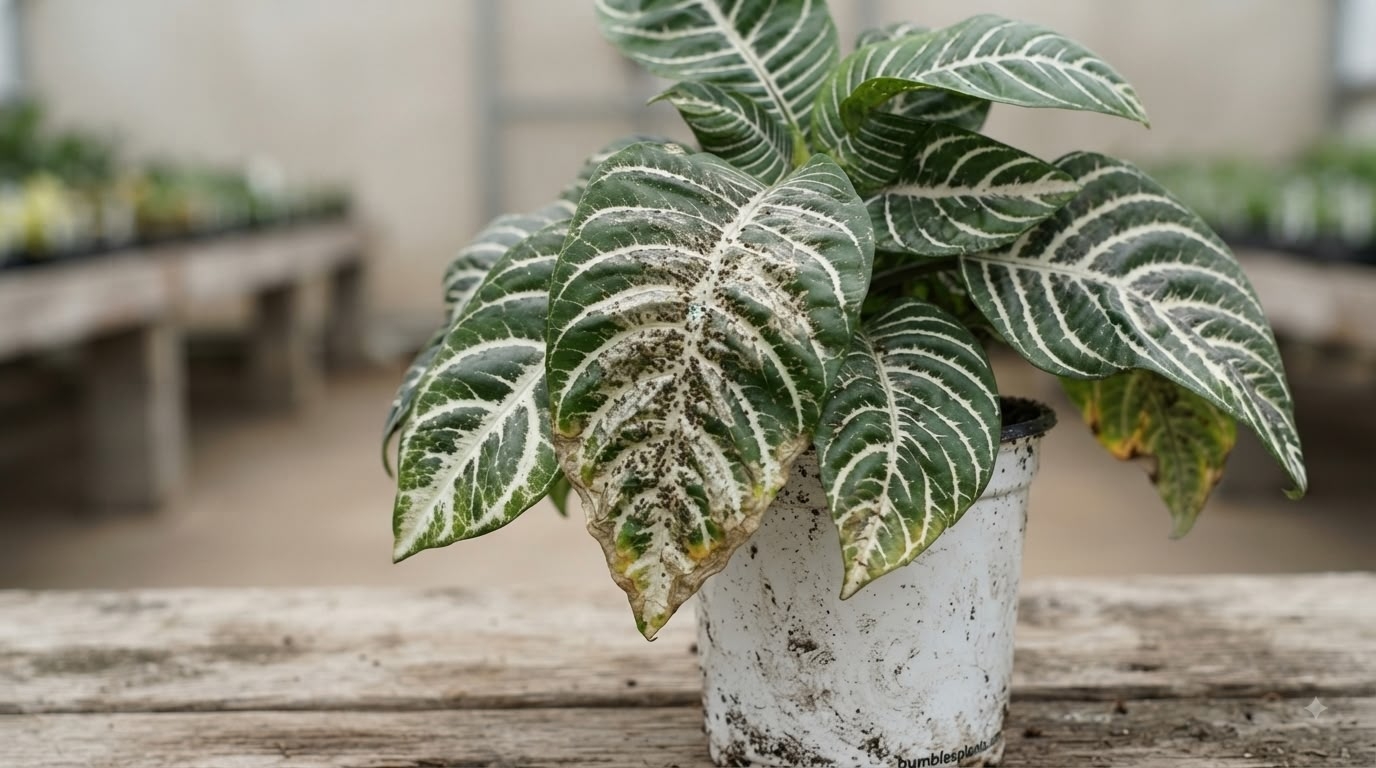
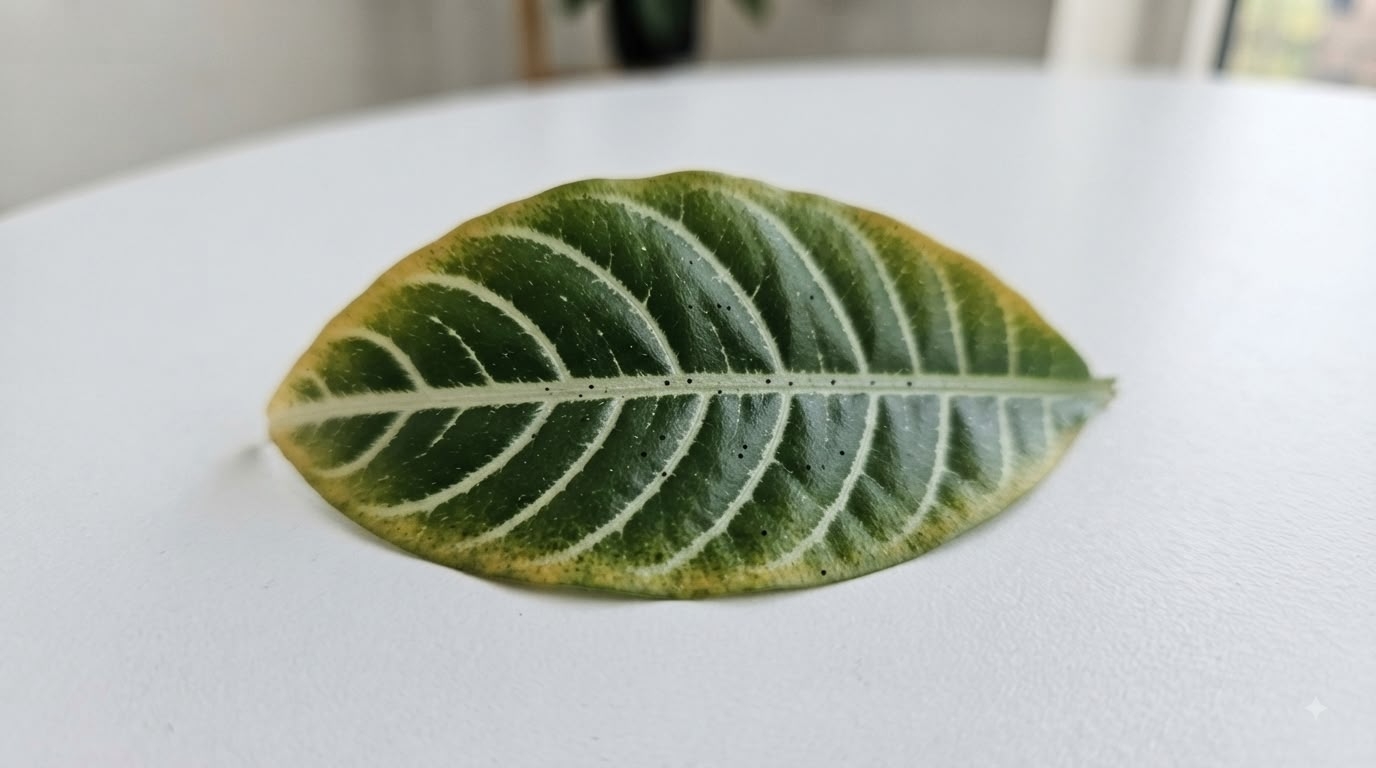
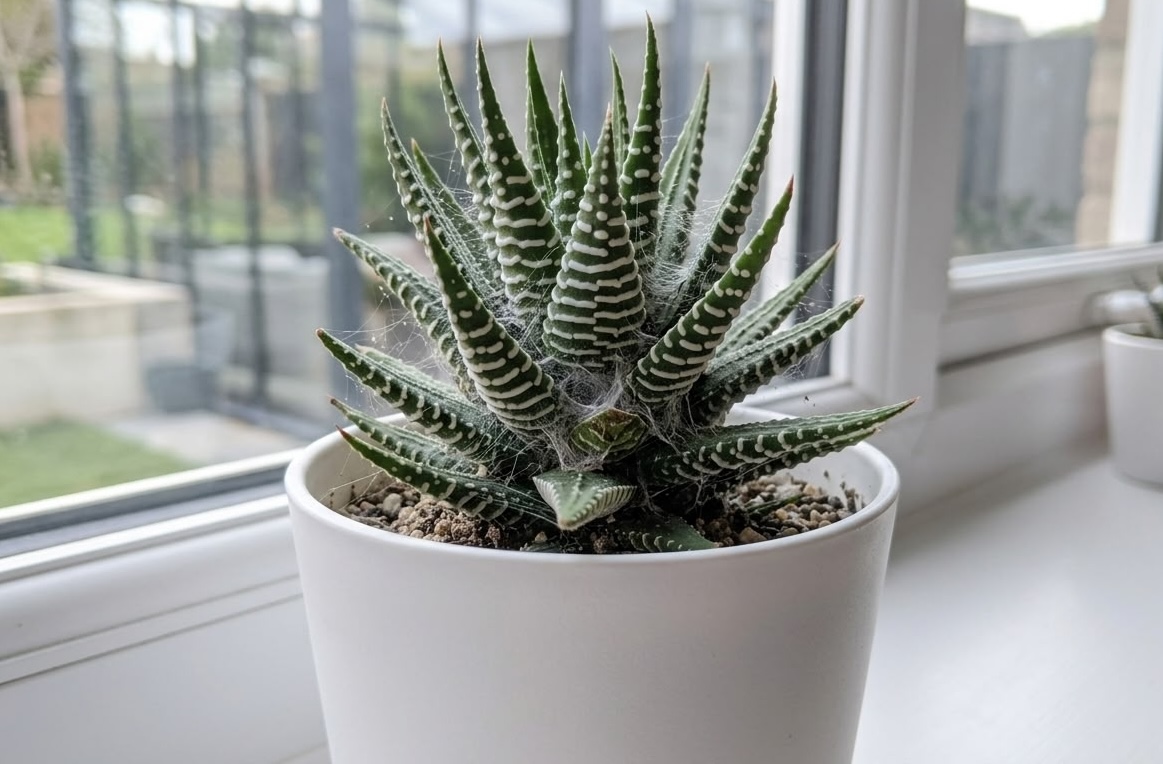
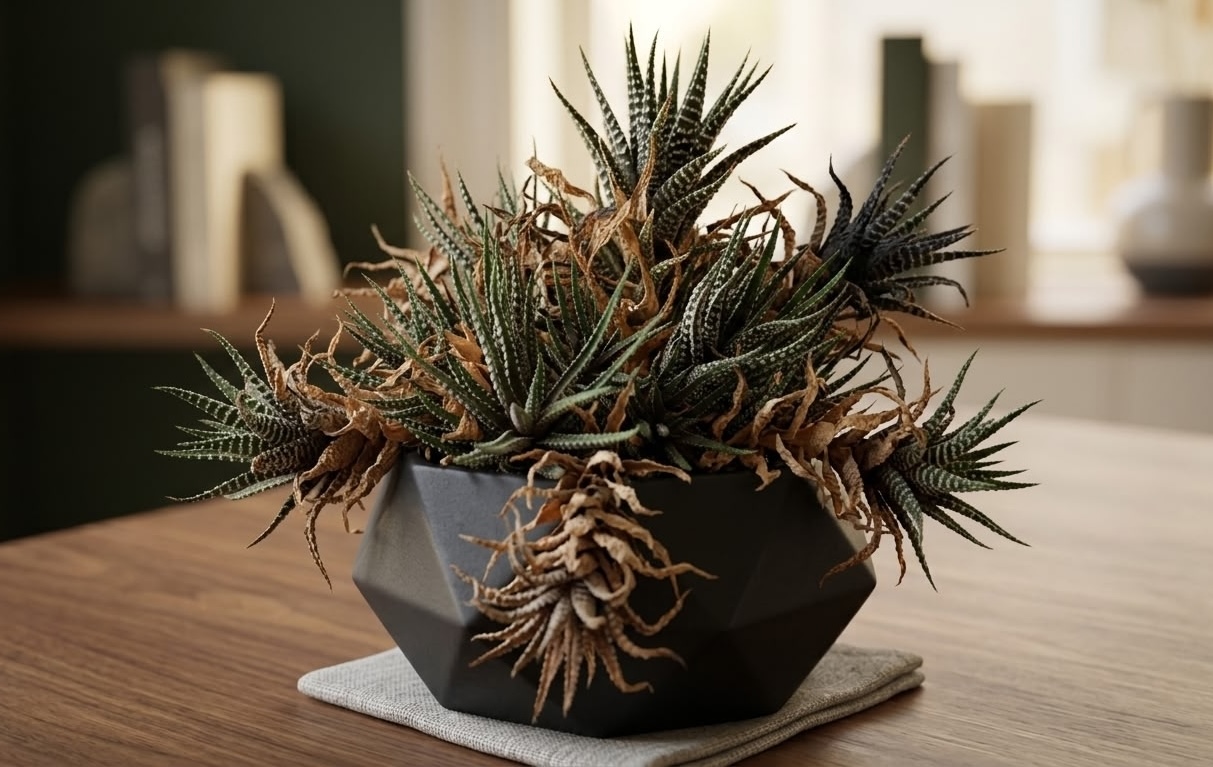
Low humidity makes zebra plant more vulnerable to pests. Check the undersides of leaves every 1–2 weeks.
Spider Mites
The most common pest on zebra plant — and directly linked to low humidity, which is already this plant’s weak point. Signs: fine webbing between leaves, tiny pale dots on leaf surfaces (stippling), and dull-looking foliage. Treat with neem oil spray every 5–7 days for 3 weeks. Raise humidity at the same time — mites thrive in dry air and will return if conditions don’t change.
Aphids
Cluster at new growth and stem tips. Knock them off with a strong stream of water, then apply insecticidal soap spray. Repeat weekly for 2–3 weeks. Aphid infestations rarely get serious on zebra plant if caught early.
Root Rot
Not a pest, but the most destructive problem zebra plants face. Caused by consistently soggy soil. Symptoms: wilting despite wet soil, lower leaves yellowing and dropping, roots that are black or mushy instead of white and firm. To treat: remove the plant from the pot, trim all damaged roots to clean tissue, dust with sulfur powder or cinnamon, and repot in fresh well-draining mix. Water less frequently going forward — moist, not wet.
Is Zebra Plant Toxic to Cats and Dogs?
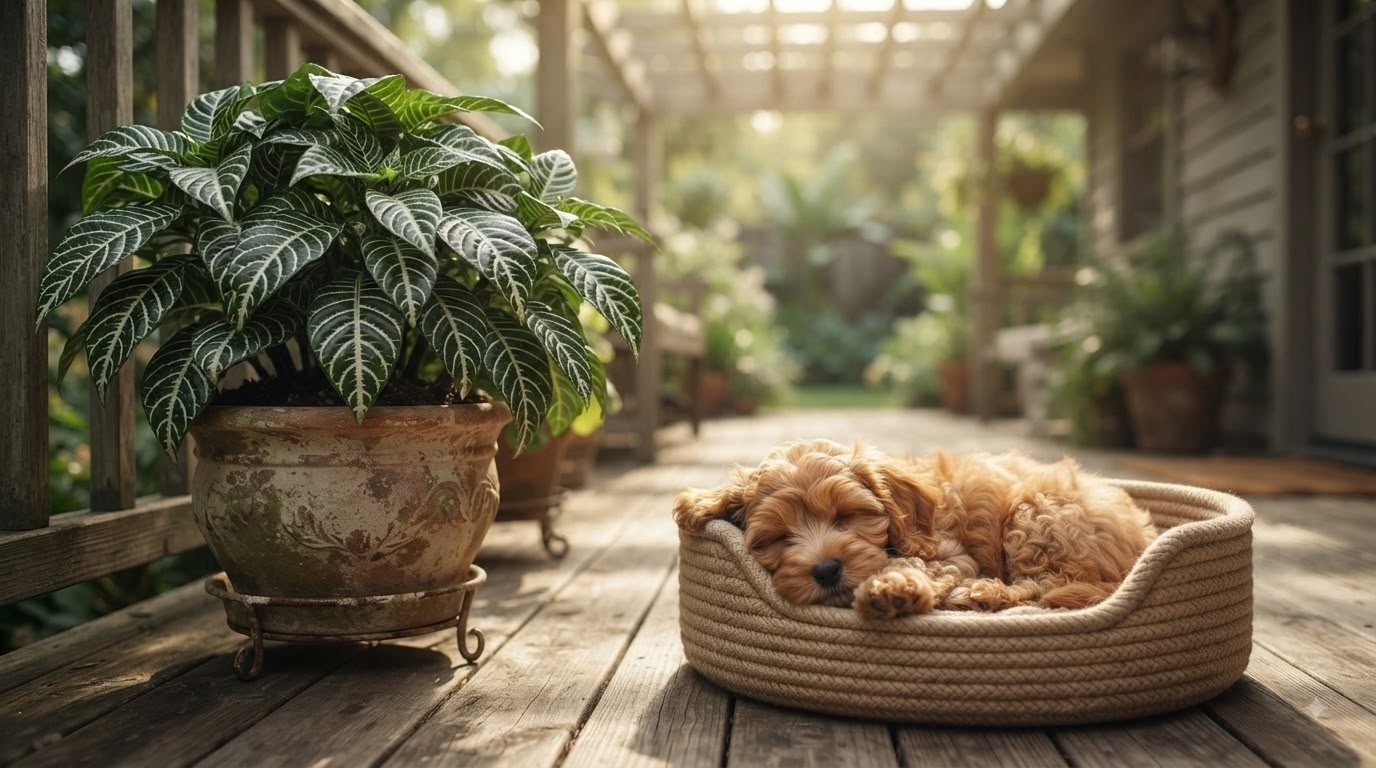
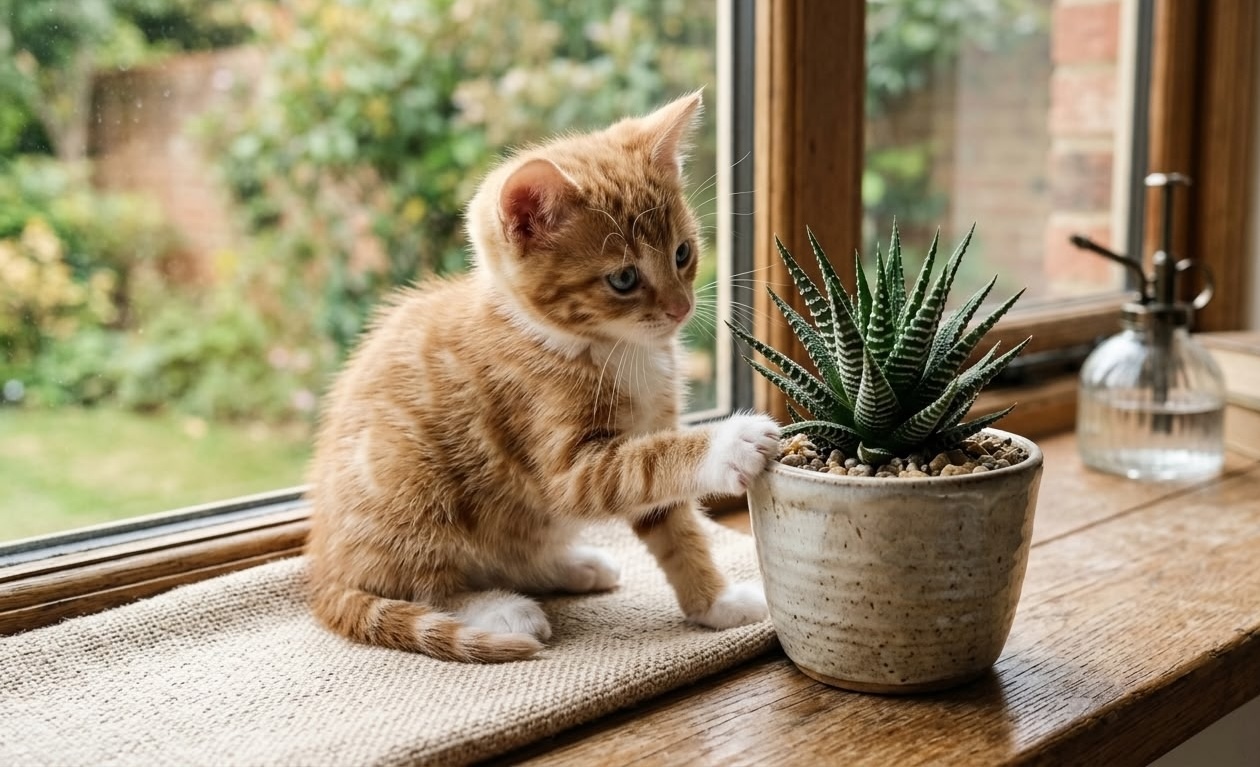
Aphelandra squarrosa is non-toxic to cats, dogs, and horses according to the ASPCA, where it is listed as “Saffron Spike Zebra.” No toxic compounds are listed, and no clinical signs are expected from ingestion. It’s a good choice for pet owners who want a dramatic-looking houseplant without toxicity concerns. For a comparison of all three zebra plant species and their pet safety status, see Is Zebra Plant Toxic to Cats?
Non-toxic options that work well alongside zebra plant: spider plant, polka dot plant, and wandering dude are all ASPCA-confirmed safe for pets.
How to Propagate Zebra Plant
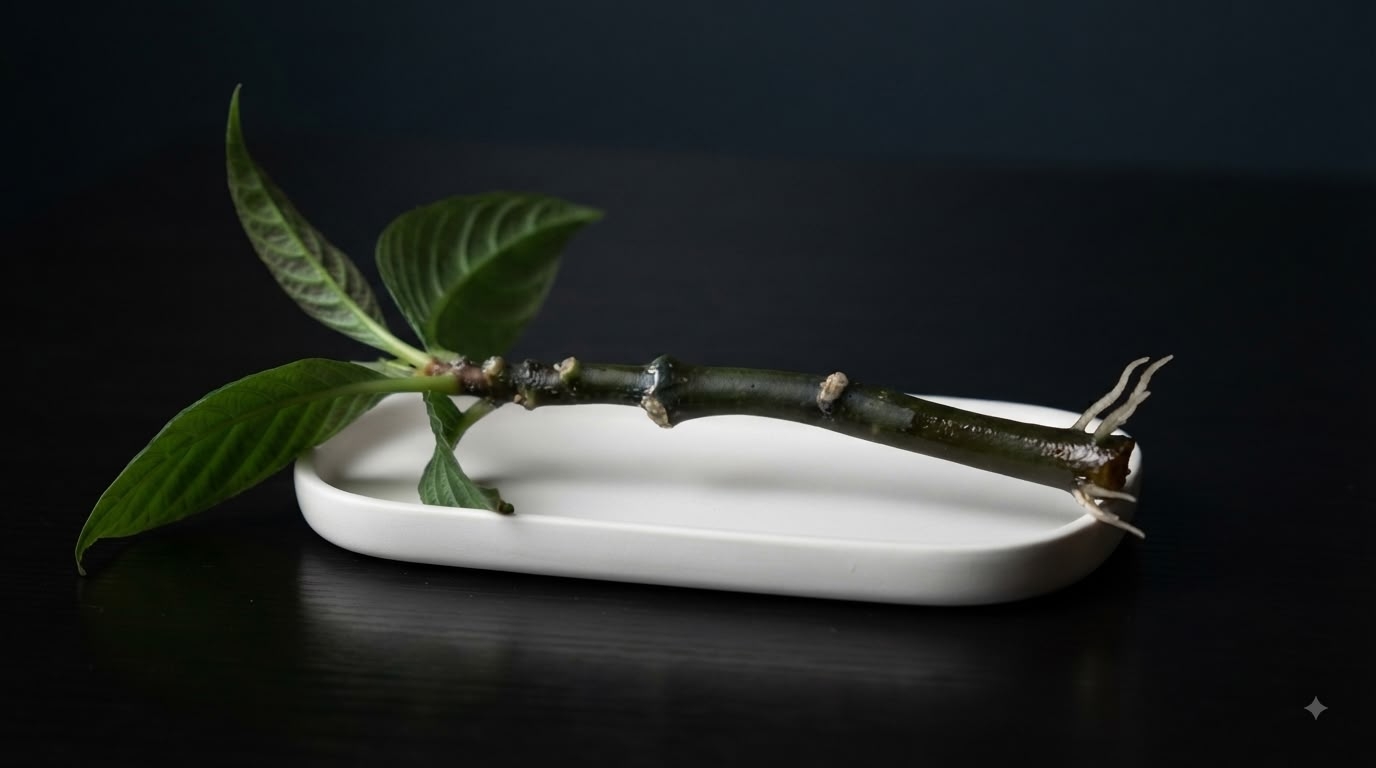
Take stem cuttings in spring or early summer, or use the side shoots that appear after post-bloom pruning:
- Cut a 4-6 inch stem below a node at a 45-degree angle using clean scissors.
- Remove lower leaves, leaving 2-3 leaves at the top.
- Dip the cut end in rooting hormone (optional but improves success rate).
- Plant in a moist peat-perlite mix and cover with a plastic bag to retain humidity.
- Place in warm, bright indirect light (65-75°F).
- Roots develop in 4-6 weeks. Ventilate the bag daily to prevent mold.
Zebra Plant Care Quick Reference
| Factor | Requirement |
|---|---|
| Light | Bright indirect light; no direct sun |
| Water | Consistently moist; never fully dry |
| Humidity | 60-70%; humidifier or pebble tray |
| Temperature | 65-80°F; no cold drafts; never below 55°F |
| Soil | Well-draining, acidic (pH below 6.0), high organic matter |
| Fertilizer | Half-strength balanced liquid, every 1-2 weeks (spring-summer) |
| Toxicity | Non-toxic to cats, dogs, horses (ASPCA) |
FAQ: Zebra Plant Care
Why does my zebra plant keep dropping leaves?
The most common causes are underwatering (soil drying out), cold drafts, and low humidity. Check all three. Even a single wilting episode causes permanent lower leaf drop — consistent soil moisture is the most important factor.
How often should I water a zebra plant?
Check the soil every 2-3 days and water as soon as the surface starts to dry. There is no fixed schedule — frequency depends on your home’s temperature, humidity, and light. In summer this often means every 3-5 days; in winter, every 7-10 days.
Can I save a zebra plant that has dropped most of its leaves?
Yes, if the stem is still firm and green. Cut the main stem back to 6-8 inches, correct the watering and humidity conditions, and wait. New growth often appears within 4-8 weeks from the remaining nodes.
How long do zebra plant blooms last?
The small flowers last only a few days, but the yellow or orange bracts — the showy modified leaves surrounding the flowers — last up to 6 weeks. After they fade, cut the stem back to encourage new growth.
Is zebra plant hard to care for?
Compared to most houseplants, yes. It needs consistent moisture, high humidity, and stable temperatures above 65°F. It will not tolerate neglect. Once you establish the right conditions — a humidity tray, a consistent watering check, and a good bright spot — it becomes manageable and is one of the most striking plants you can keep indoors.